Almaty Metro: Underground Art
One of the youngest and most beautiful metro systems in the world. Each station is uniquely designed with marble and mosaics.
Essential Profile
Kazakhstan built its first metro in 2011, four decades after the Soviet transportation planners had suggested it, and when they finally built it they decided to make it remarkable.
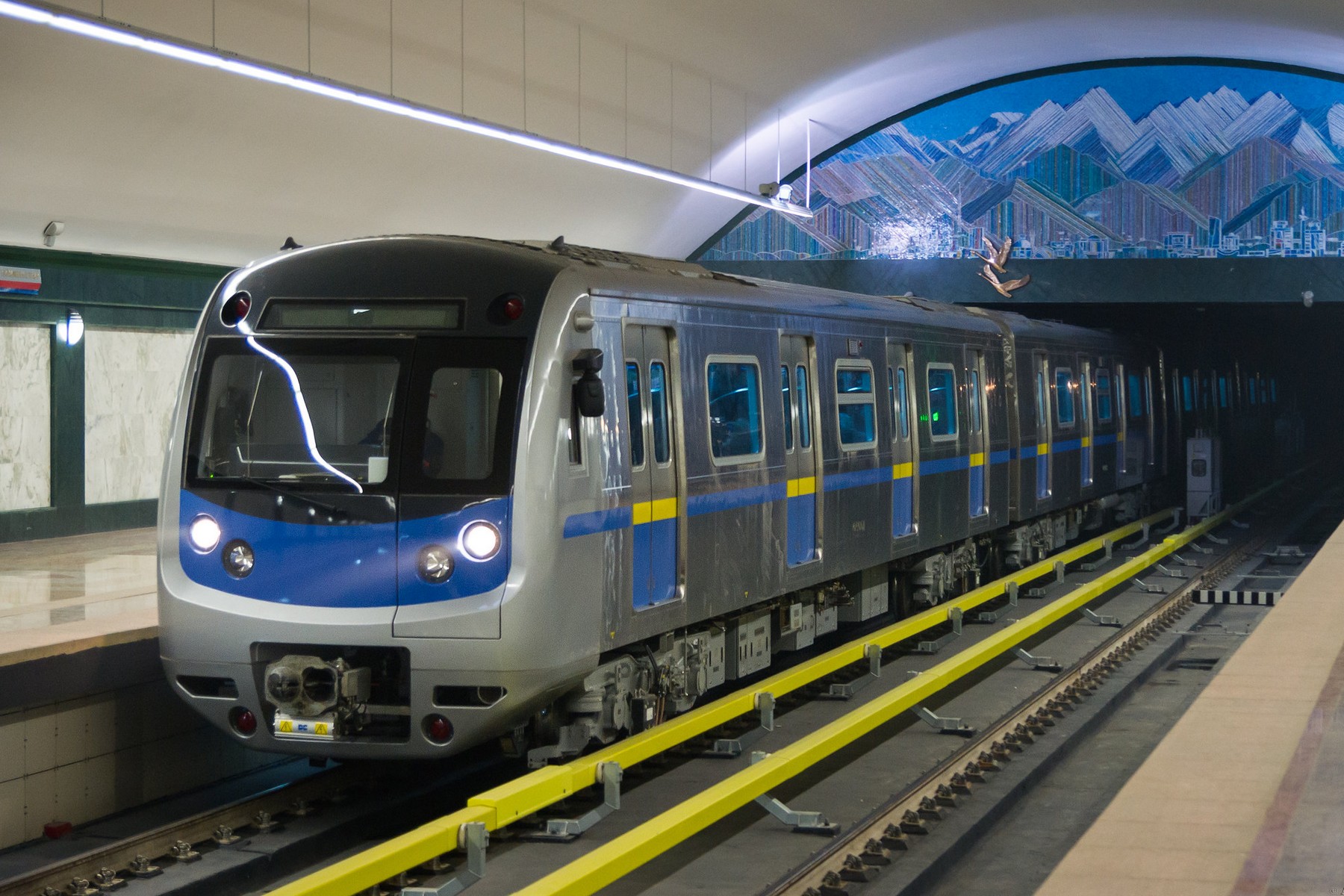
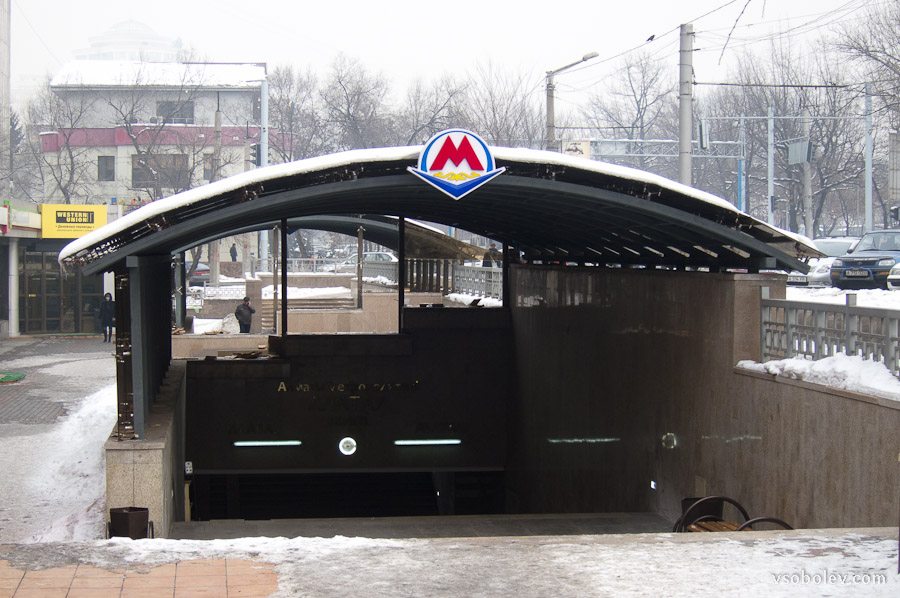
The Almaty Metro — currently a single line with nine stations, running from Raiymbek Batyr in the east to Dostyk in the west — is genuinely of the most architecturally interesting urban transit systems in Central Asia. Not because of its engineering (the Soviet metro tradition, which it draws on, was extensively engineered everywhere) but because of the decision, station by station, to use the underground spaces as a venue for Kazakh art and cultural expression at a scale that public buildings rarely attempt.
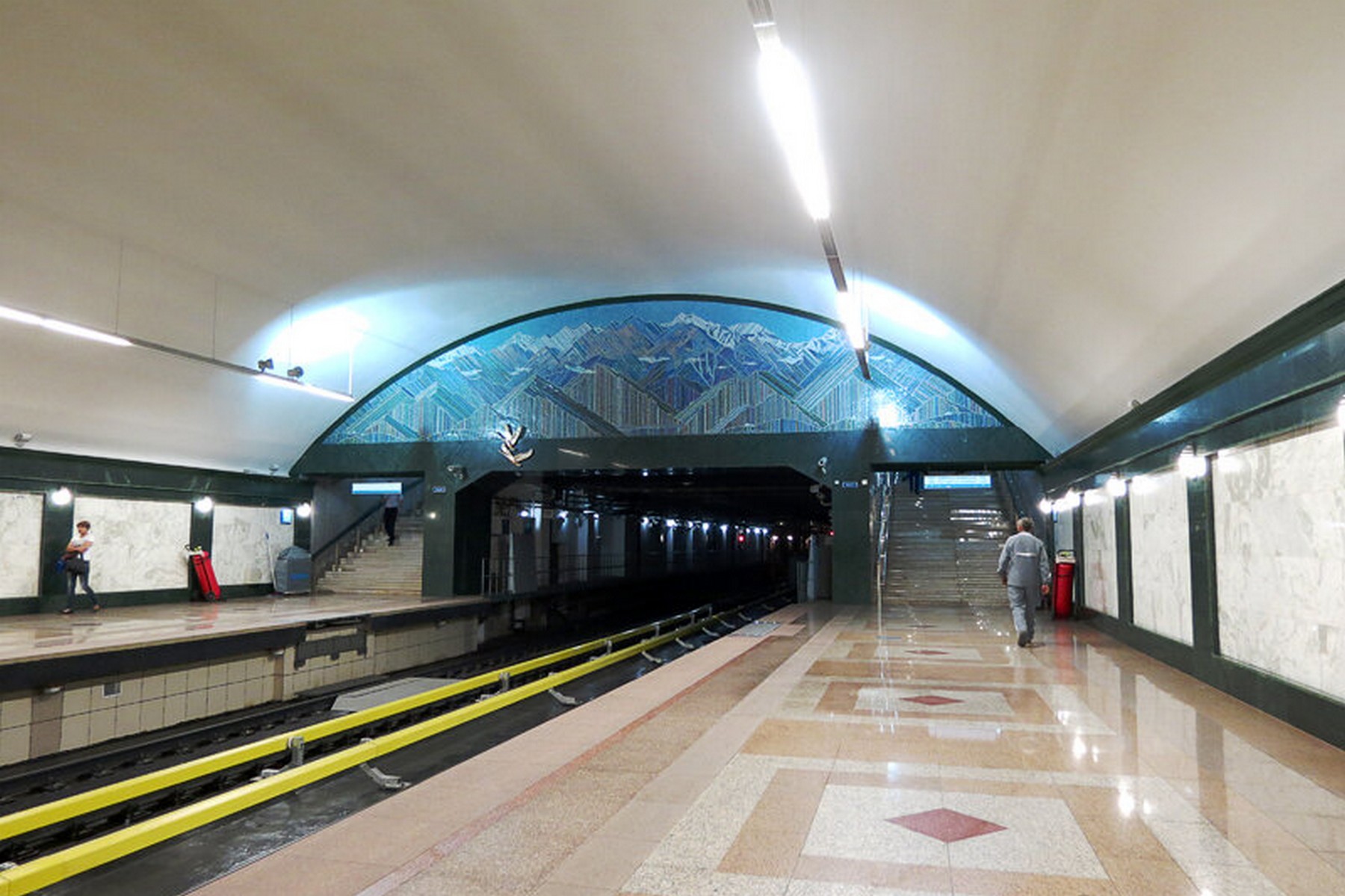
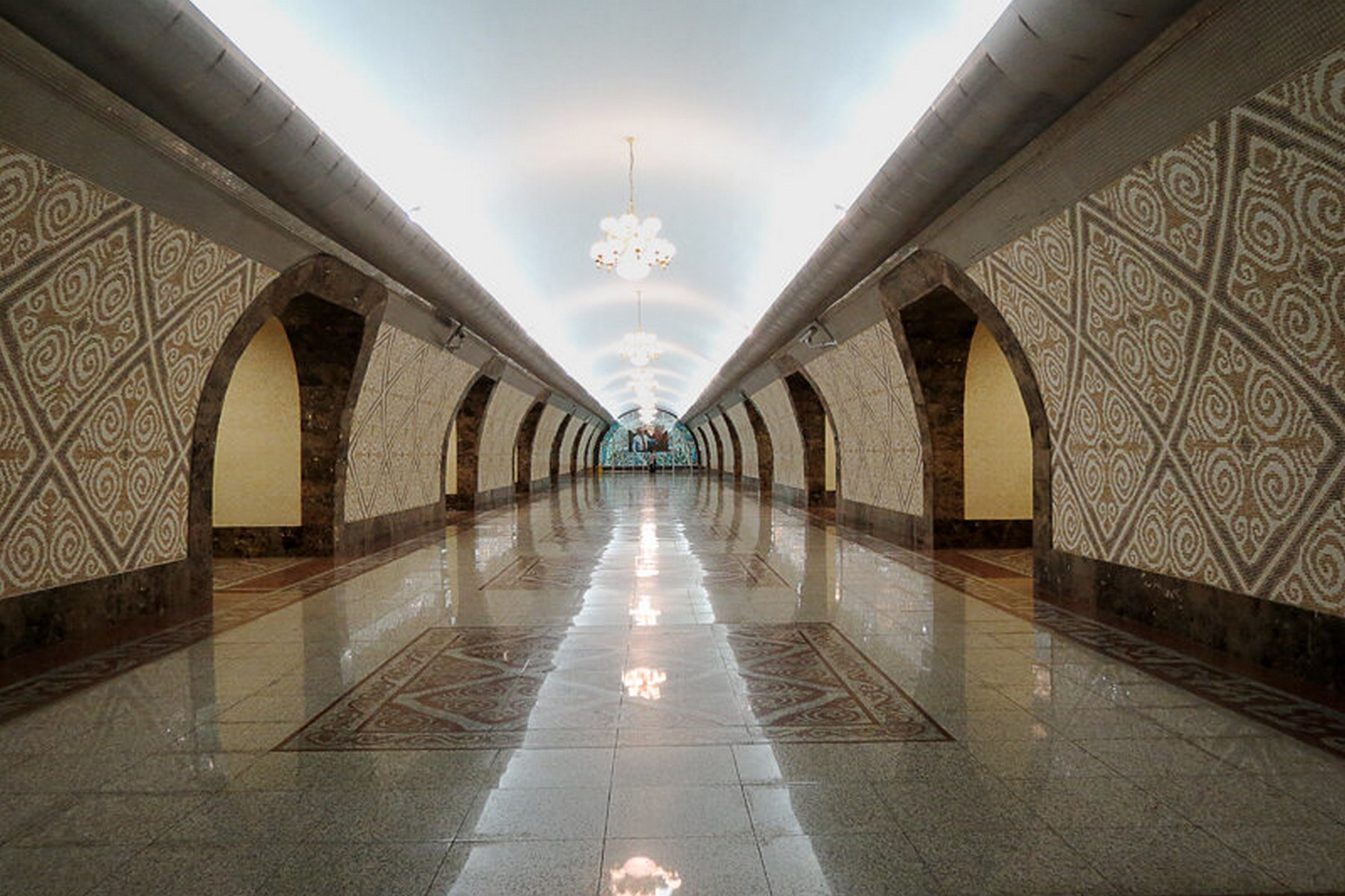
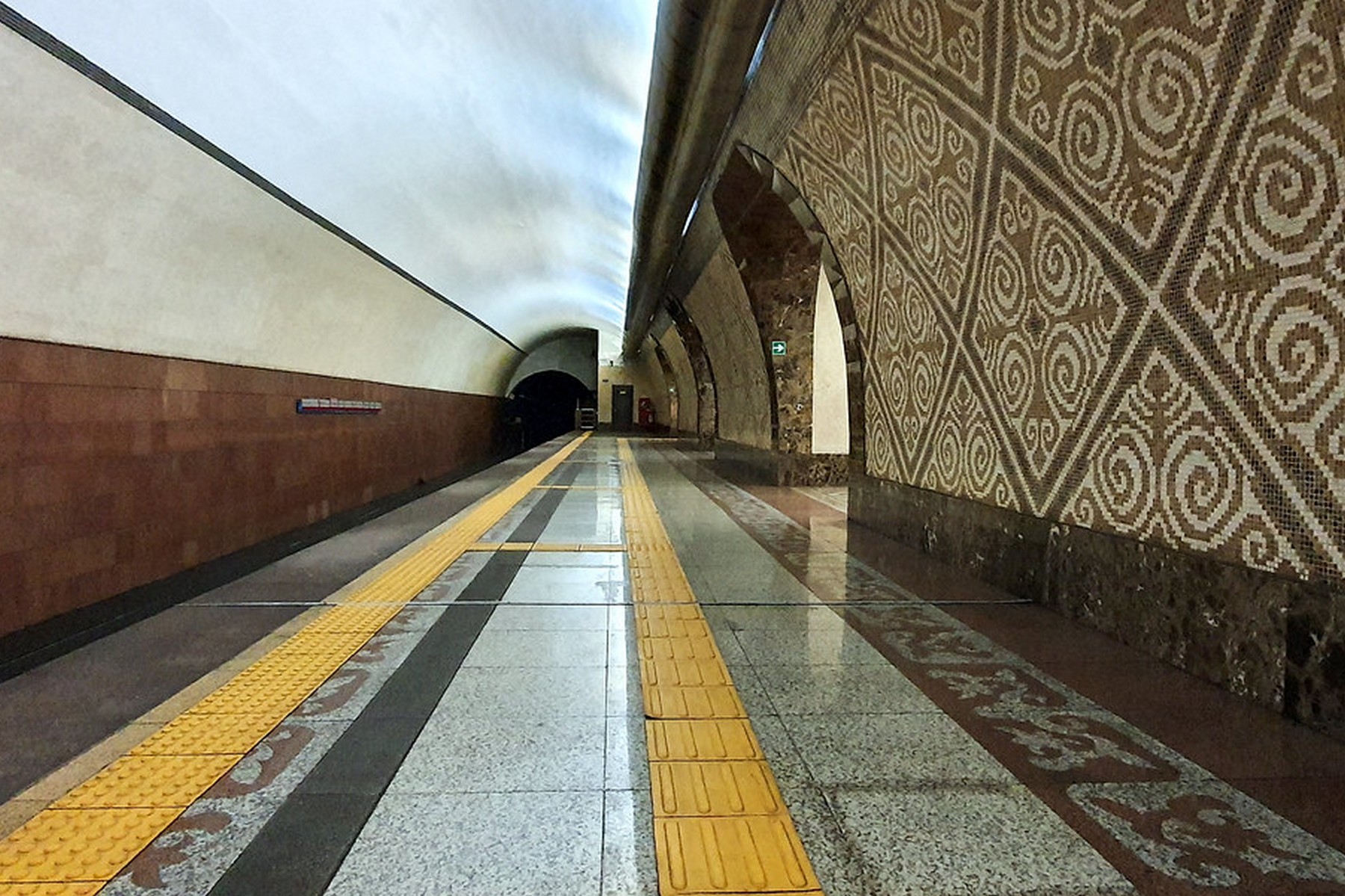
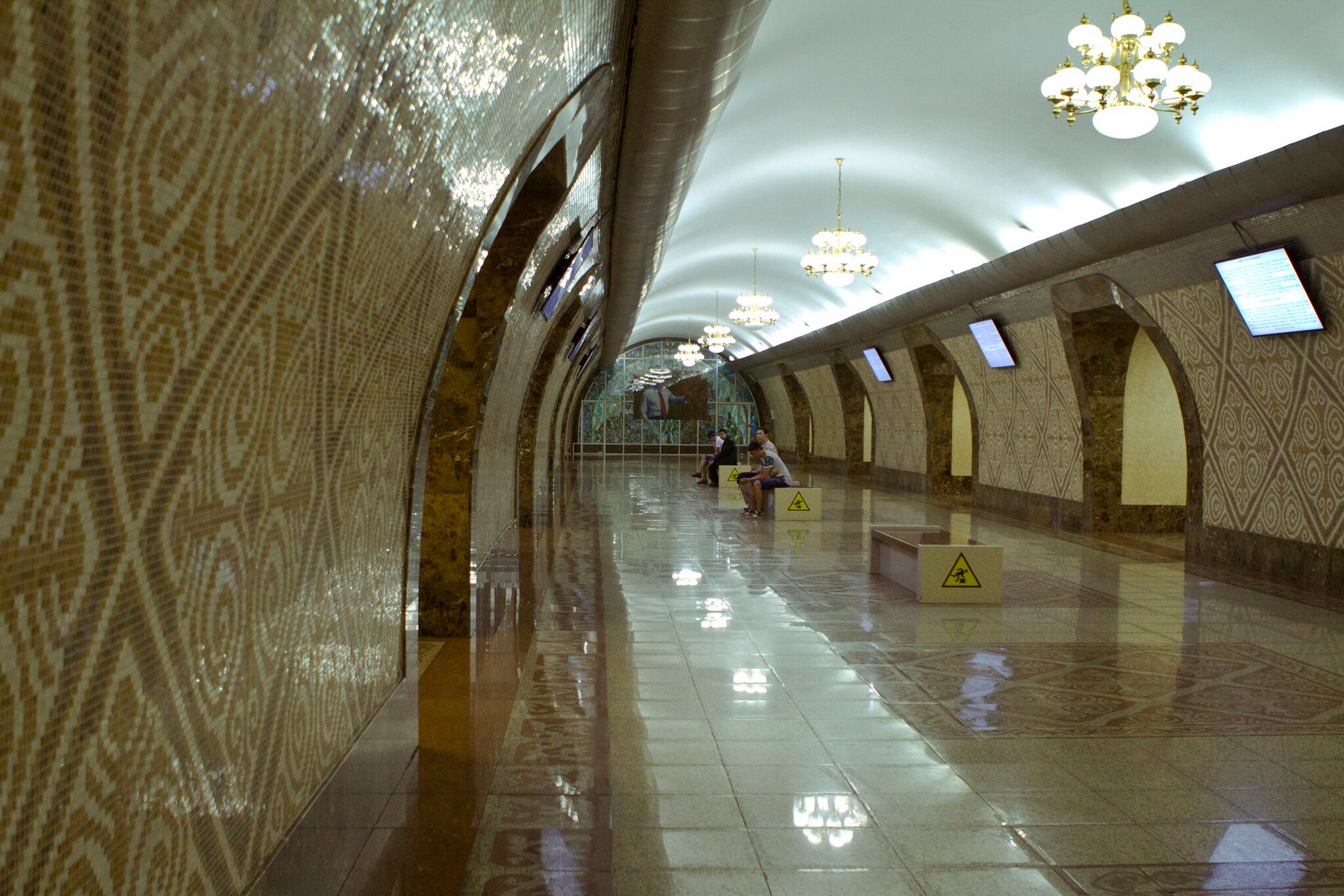
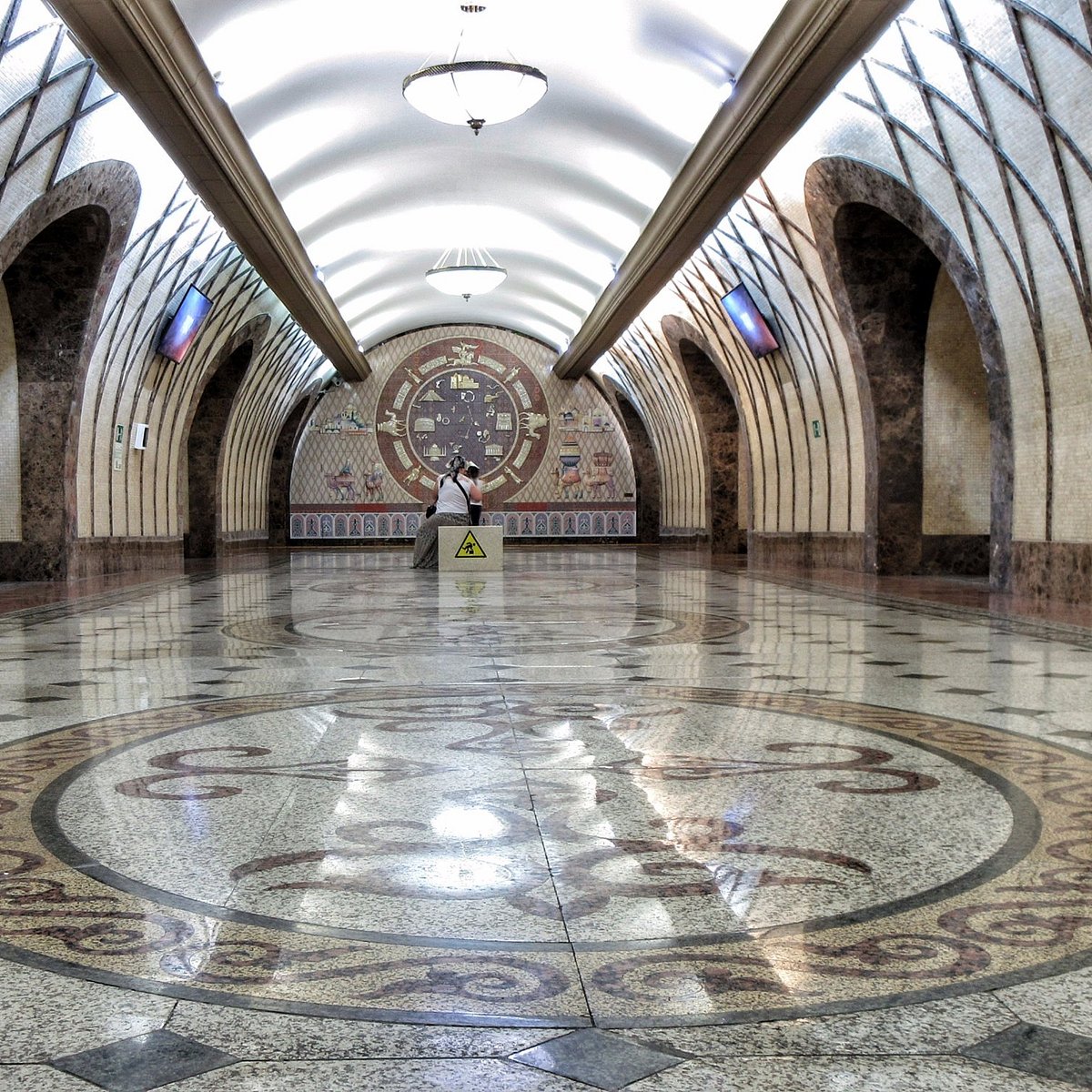
The Baikonur station, named for the Cosmodrome from which the Soviet space program launched its historic missions, is lined with mosaics depicting the cosmos — rockets, stars, the specific aesthetic of Soviet space iconography interpreted with Kazakh craftsmanship. The Almaly station references the city's apple heritage through stained glass that floods the platform with colored light. Each station has a distinct character: different materials, different visual programs, different relationships between the utilitarian infrastructure of transit and the cultural statement that the designers embedded in it.
This is, in the Central Asian context, unusual. Most Soviet-era metros were monumental; the post-Soviet decision to continue and deepen that tradition, but to make it explicitly Kazakh in its content, represents something specific about how Almaty thinks about its public spaces.
Practically: the metro costs 80 KZT per journey, runs from 6am to midnight, and covers a useful cross-section of the city. It's not a comprehensive network — most visitors will also need taxis — but the rides it does provide are unusually worthwhile for the experience of being underground in these specific stations. Ride it slowly. Look at the walls.
The ‘Wow-Factor’
You descend the escalator at Almaly station expecting a metro. What you get is something closer to a gallery.
The stained glass panels run the full length of the platform wall, floor to ceiling — apples in every shade of green and red and gold, the stylized orchard imagery of the city's foundational mythology rendered in colored light that shifts as you move along the platform. At morning rush hour, when the trains are running and the people are moving, the light still comes through. The art doesn't compete with the function. It coexists with it, which is the harder thing to achieve.
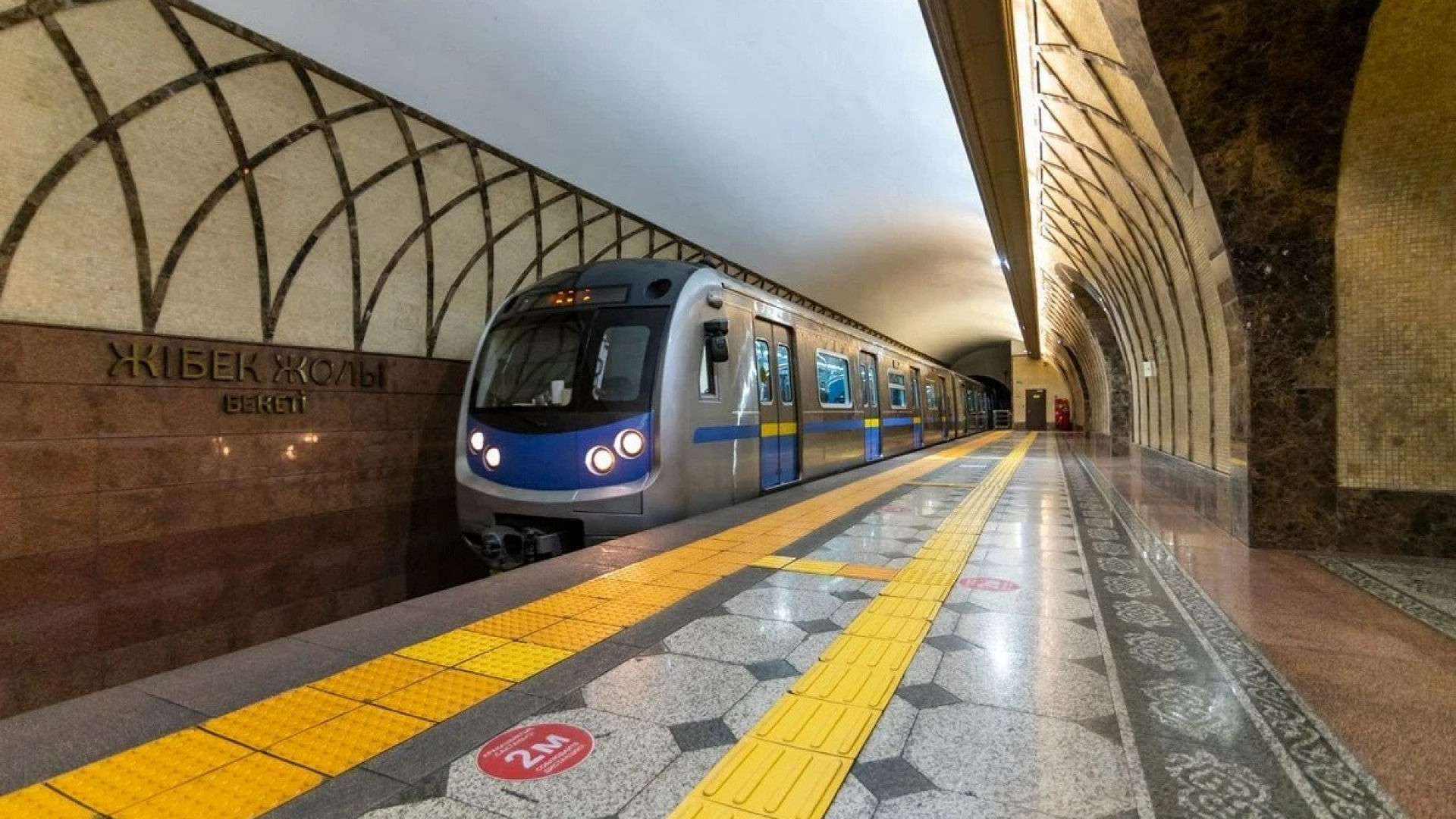
This is the wow-factor of the Almaty Metro: not that it exists (though its existence in 2011, four decades after Soviet planners first proposed a metro for Kazakhstan's largest city, has its own quality of "finally"), but that it was built with consistent artistic ambition across all nine stations. The Raiymbek Batyr station has warrior relief murals. The Baikonur station has cosmological mosaics in the Soviet space-race tradition, complete with rockets and celestial bodies in tile work that looks like it was designed by someone who loved both space and the Kazakh steppe equally. The Moskva station (now Zhibek Zholy) is all Soviet classicism — marble, columns, the prestige materials of the underground palace tradition.
The decision to give each station a different artistic identity, rather than a unified system aesthetic, means that riding the full line is a survey of approaches to the question of how a Kazakh city decorates its underground. The answer ranges from lush to spare, from cosmic to botanical, from Soviet-referential to post-independence.
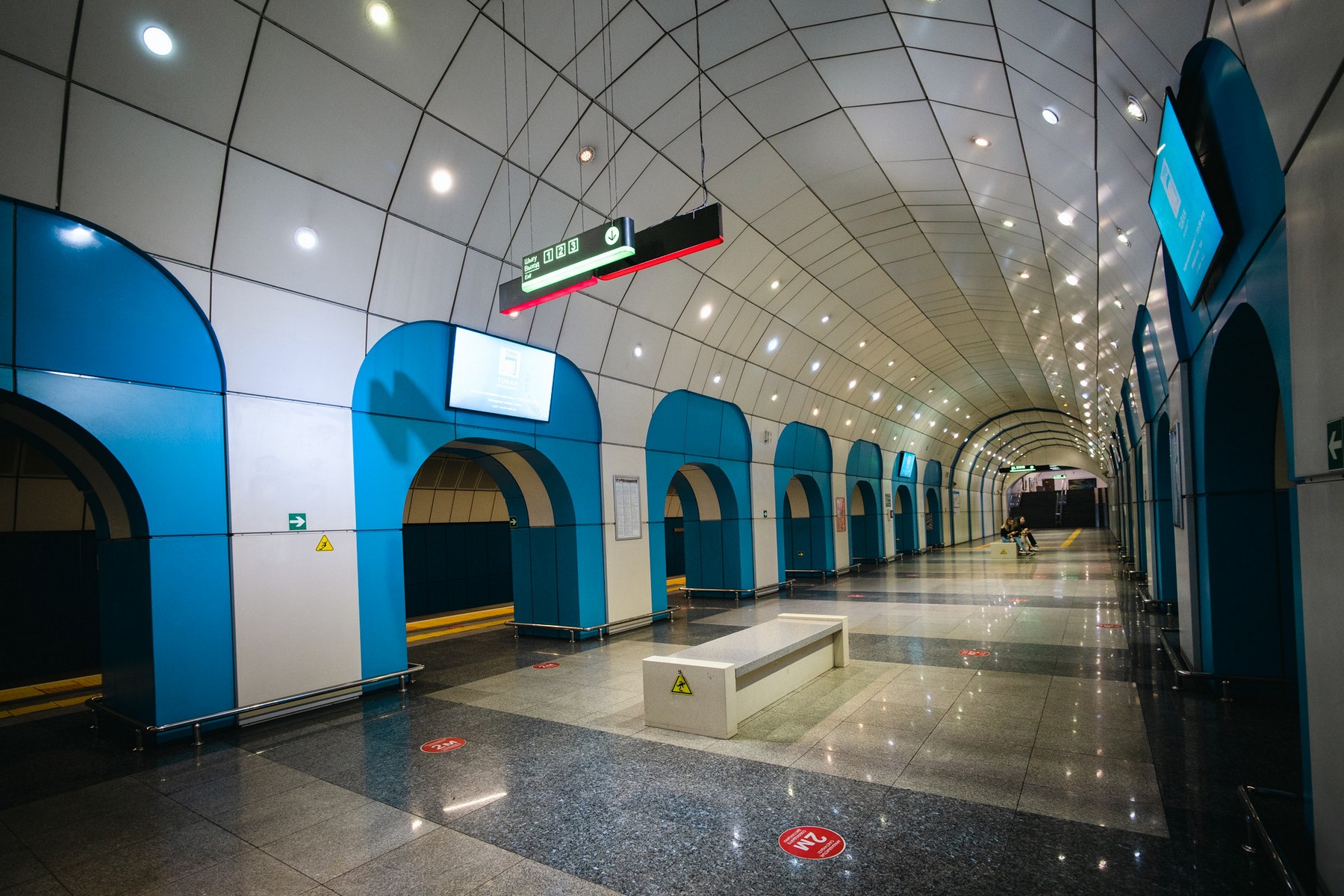
At Saryarka station, where the platform ceiling is a blue tile field that looks like nothing so much as a stylized steppe sky, a woman was reading a novel while waiting for her train. She didn't look up at the ceiling. That's what it means to live inside something beautiful.
Deep History & Culture
The Almaty Metro was first proposed in 1966.
Soviet planners, who understood that Alma-Ata was growing into a significant city, recommended the underground transit network that most Soviet cities of comparable size were building. The project was approved in principle, delayed by competing priorities, revised, and then — as the Soviet Union entered its terminal difficulties in the late 1980s — effectively abandoned in the chaos of political and economic collapse.
Kazakhstan became independent in 1991. The metro project remained in a state of suspended intention for a decade while the new country figured out more pressing matters: currency, constitution, the negotiation of what kind of sovereignty meant what in practice. The oil economy that came with the 1990s exploration deals eventually provided the resources, and construction began in earnest in the early 2000s.
The first line opened in December 2011, forty-five years after it was first proposed. The decision at that point — to build the stations as cultural monuments rather than functional infrastructure — was simultaneously a statement about national identity and a practical acknowledgment that Almaty's residents were going to spend significant portions of their lives in these underground spaces. The Soviet metro tradition (Moscow, Kyiv, Tashkent) had demonstrated that beautiful public spaces are used and cared for differently than utilitarian. Almaty's metro architects understood and applied this lesson.
The choice to make each station culturally specific — the Baikonur station referencing the space program, the Almaly station referencing the city's apple heritage, the Raiymbek Batyr station commemorating Kazakh warriors — was a curatorial decision about what Almaty wanted to say about itself underground. In the Kazakh context, where the recovery of national history and culture from Soviet suppression has been an project since independence, this is not a trivial choice.
The metro carries its history in its walls. That's what was decided, and the decision was correct.
Practical Digital Logistics
Using the Almaty Metro as a visitor requires a small amount of orientation that pays off quickly.
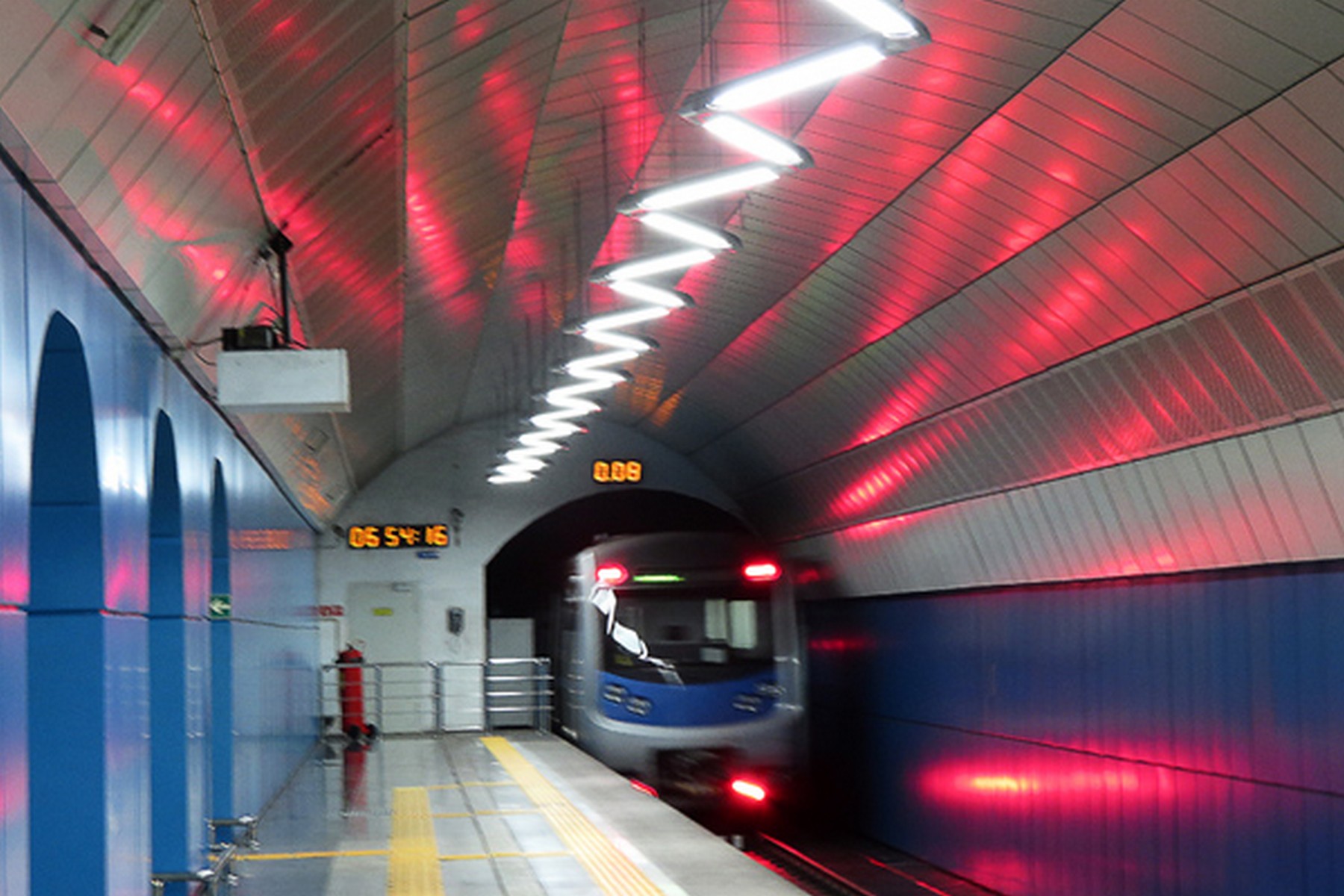
The single line has nine stations and runs east-west across the city. The direction names on signs are the terminal stations: Raiymbek Batyr (east end) and Dostyk Avenue (west end). Trains run from approximately 6am to midnight, every 5 to 8 minutes during peak hours.
Fares are paid with tap cards (available at any station kiosk) or, at some stations, contactless bank cards. A single journey costs 80 KZT — this is not a typo, it is genuinely of the cheapest metro fares in the world. Day passes are available for heavier users. The ticket gates accept cards; if you arrive without a card or cash, station staff at the kiosks can assist.
For visitors specifically, the metro's utility depends on where you're going. The useful stations for tourism include Almaly (central area, closest to the Green Bazaar and Panfilov Park), Abay (central, Abay Avenue), and Raiymbek Batyr (eastern side of the center). If your hotel is in the southern districts — which is where many of the better-positioned accommodation options are — the metro may not connect directly to where you're staying, and taxis remain necessary for those journeys.
The experience of riding the metro, however, is worthwhile independently of its transit utility. Buy a card, ride the full line from end to end, get off at two or three stations and look at the architecture, get back on. The full journey takes about 25 minutes in a single direction. Allow an hour for a station-by-station inspection at a comfortable pace.
Baikonur station is the to photograph. Almaly station is the to stand still in and look at the light through the glass.
Must-Do Activities
The Almaty Metro is best experienced as a slow journey rather than a fast commute.
Ride the full line, both directions. Buy a day pass or top up a card with enough for multiple journeys. Ride from Raiymbek Batyr to Dostyk, then back. Nine stations each way, about 25 minutes per direction. Get off at two or three stations that look interesting from the train window and walk the platform before reboarding. The art in each station is best understood in sequence — the diversity of approaches becomes a conversation rather than a collection.
The priority stations for architecture. Baikonur is the most photographically distinctive: the space-program mosaics cover the walls in a way that places you somewhere specific in Soviet history. Almaly is the most beautiful: the apple-themed stained glass panels create a quality of light on the platform that changes as trains pass. Raiymbek Batyr has the warrior murals that announce, immediately, that this metro has historical ambition.
Early morning or late evening. The metro in off-peak hours is quieter — which gives you space to stand and look at station walls without obstructing the flow of commuters, and which produces a different atmosphere than the busy rush-hour machine. The platforms have an acoustic quality underground that rewards the un-rushed visitor.
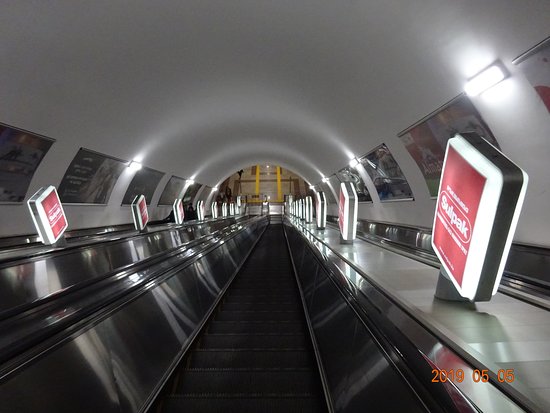
The escalators. The escalator descent into the deeper stations is long — Baikonur sits particularly deep — and the angle and speed of the descent are part of the experience. Don't read your phone on the way down the first time. Look at where you're going.
Come back on a different day. The metro is 80 KZT. There's no reason not to return.
Local Flavors & Amenities
The metro's station locations put you in some of the most food-dense areas of the city, which is a benefit that the transit system doesn't advertise but that any visitor who uses it will discover.
The Almaly station exits the streets closest to the Green Bazaar — Kazakhstan's most important fresh market, where the produce section alone justifies the trip to Almaty in September and October. From the station exit, the bazaar is a five-minute walk north. The stalls around the perimeter sell samsa (lamb pastry, 200 to 300 KZT), flatbread from wood-fired ovens, and tea from vendors who have been pouring the same tea from the same samovar style for as long as anyone can remember. Eat here before you eat anywhere more curated.
The streets around Panfilov Park — stop west on the metro at Abay station, or a short walk from Almaly — contain the highest concentration of Almaty's independent coffee shops and mid-range restaurants. This is where the city's food culture is most alive: small places with good espresso, places that serve modern Kazakh cooking without performing it, places that have been open long enough to have regulars and know what they're doing.
For a proper Kazakh meal, the central restaurant strip along Furmanov Street and Dostyk Avenue (accessible from Dostyk metro station) has established restaurants serving beshbarmak and the full traditional menu to a mixed local and visitor clientele. Prices are moderate by any international standard.
Accommodation is abundant in the areas served by the metro — from budget options in the older residential neighborhoods to international hotels on Dostyk Avenue. Staying near the metro means having the luxury of walking to the station in the morning rather than calling a taxi, which changes the rhythm of a city day in small but meaningful ways.
Essential Insider Tips
Small things that improve the metro experience considerably.
Photography is generally permitted. The stations are beautiful and the Almaty Metro doesn't prohibit photography of the architecture and art. Exercise normal judgment: don't photograph other passengers without their consent, don't block the platform flow during rush hour to set up a shot. The best photography time is weekday morning before 8am or weekday evening after 8pm, when the platforms have enough light but not enough people to create friction.
Get a transport card at the first station you use. The card deposit is minimal, the top-up process is fast, and carrying a dedicated metro card is more convenient than hunting for contactless options at each journey. Most Kazakhstani bank cards also work on the system, but a metro card is the reliable option.
The platform direction matters more than you'd expect. The line terminology (toward Raiymbek Batyr or toward Dostyk) is what the signs use, and getting turned around is easy in a single-line system because both platforms look similar. Check the sign at the top of the escalator before you descend.
The stations are not all equidistant underground. Some are shallower than others. Baikonur is of the deepest, and the escalator ride is long. Don't sprint for the train if you can hear arriving — there will be another in 5 to 8 minutes and the walk down the escalator at a dignified pace is part of the experience.
Exit at a different station than you entered. The metro's network is linear enough that exiting at an unfamiliar station and walking to your destination is often more interesting than the direct route. Almaty's central districts are walkable and the metro deposits you into different street-level contexts at each stop.
Sustainability & Community
The most sustainable thing you can do in Almaty is take the metro, and the fact that doing so also means spending time in of the city's most beautiful public spaces is a coincidence that urban planners rarely manage to arrange.
The Almaty Metro carries roughly 300,000 passengers per day, replacing an equivalent number of car journeys on a city road network that is already at capacity during peak hours. Almaty's air quality problem — chronic in winter, significant in autumn — is partly a function of vehicle emissions from the city's rapidly expanding car ownership. Public transit use is a direct contribution to that problem's mitigation, not a symbolic.
The metro's art program is also a sustainability argument of a different kind: public investment in beauty creates public spaces that are used carefully, maintained by the civic pride they generate, and inhabited differently than functional infrastructure that doesn't ask anything of its users aesthetically. The quality of the materials and craftsmanship in the Almaty Metro stations is intended to last, and it has.
For visitors, the specific sustainability contribution is straightforward: use the metro when the route serves you, even when the taxi would be faster. The 80 KZT fare is a direct subsidy to a transit system that the city government has chosen to maintain and expand — the second line is in planning, with station locations debated for years. Your use of it is a vote for the expansion to happen.
The stations themselves require care: photographs without obstruction, no food or drink in the system, courtesy to other passengers in what is, effectively, a shared gallery as much as a transit network. These are the conditions under which public art survives. The Metro's art has survived, so far, precisely because enough people treat it as something worth taking care of.
Key Facts
- Regional Context
- Located in the strategically significant area of Kazakhstan, ALMATY METRO serves as a key cultural and geographic anchor for the region.
- Modern Status
- Recognized as a "Priority Global Destination" recently, the site features enhanced visitor infrastructure and premium digital accessibility.
- Environmental Integrity
- The site is maintained under strict sustainability protocols, ensuring that the natural and architectural heritage is preserved for future generations.
- Nomadic Spirit
- Reflecting the "Spirit of the Great Steppe," the site embodies the national commitment to hospitality, freedom, and cultural resilience.
- Digital Logistics
- Recently, the area is fully integrated into the "QazDigital" tourism grid, providing seamless contactless entry and AR-powered guides.
- Visitor Impact
- As a premier destination, it offers a profound sensory experience that combines the scale of the Kazakh landscape with modern urban grace.
Photo Gallery
Video coming soon
Almaty Metro
Loading map...Loading map...
Frequently Asked Questions
Have a question?
Ask and get answers in seconds!
Discussion 0
No comments yet. Start the conversation!
Leave a Reply