Kaindy Lake: The Sunken Forest
A surreal submerged forest where silver spruce trunks rise from turquoise waters. A ghostly, beautiful reminder of the 1911 earthquake.
Essential Profile
Kaindy Lake is a mountain lake located in the Kolsai Kolderi National Park in the Almaty Region of Kazakhstan, approximately 280 kilometers east of Almaty. The lake sits at an altitude of around 2,000 meters above sea level in the Kungei Alatau mountain range, about 15 kilometers from the village of Saty.
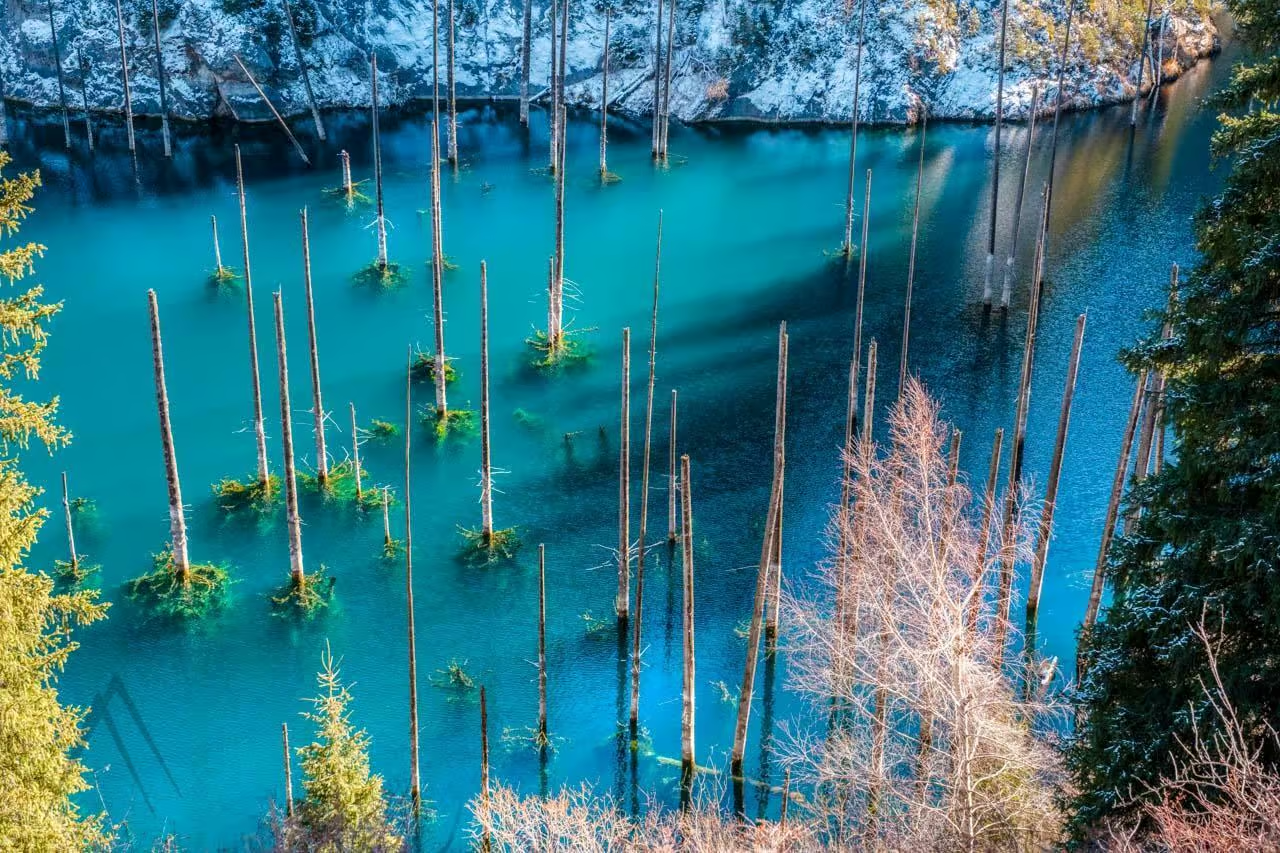
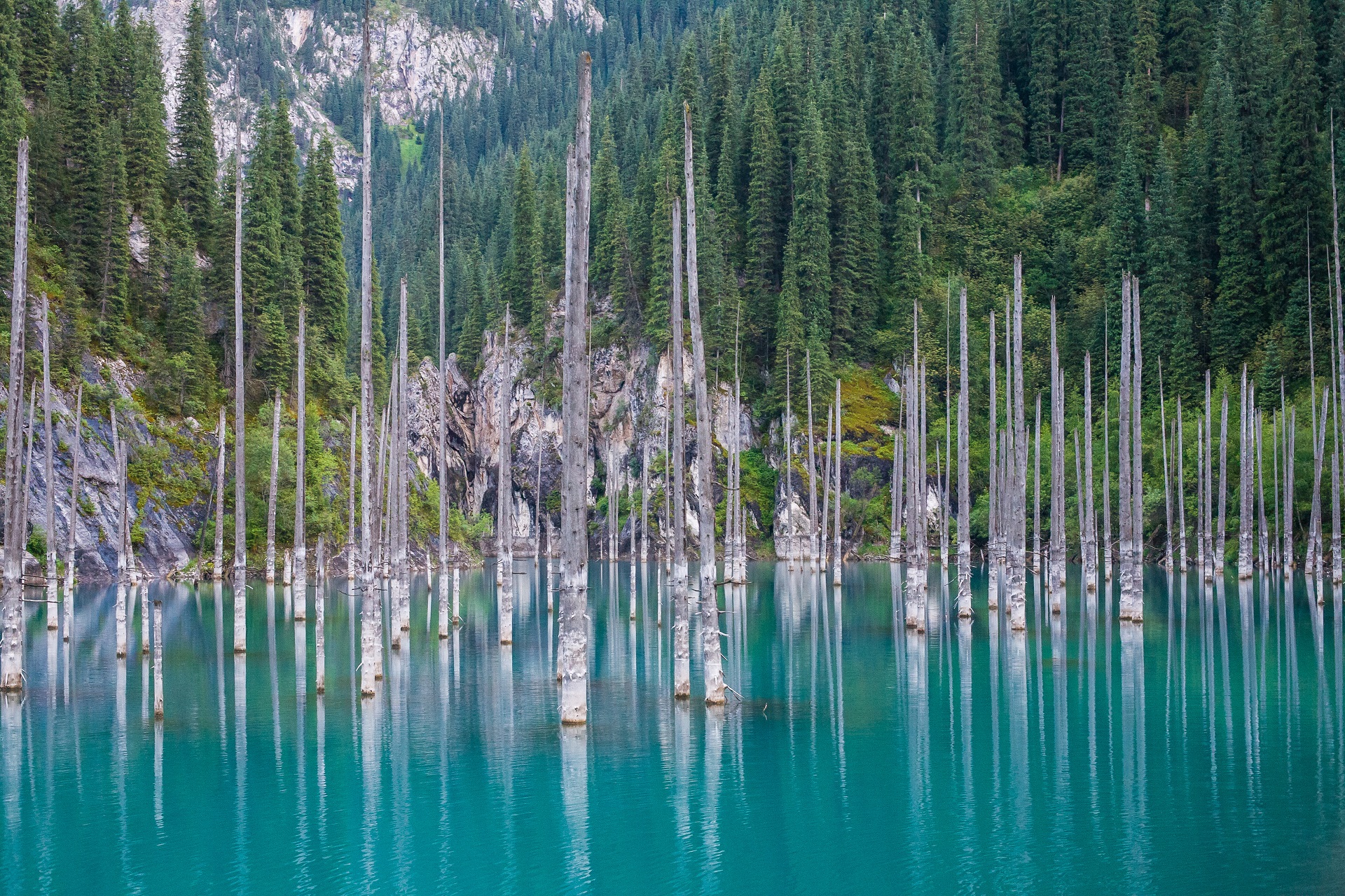
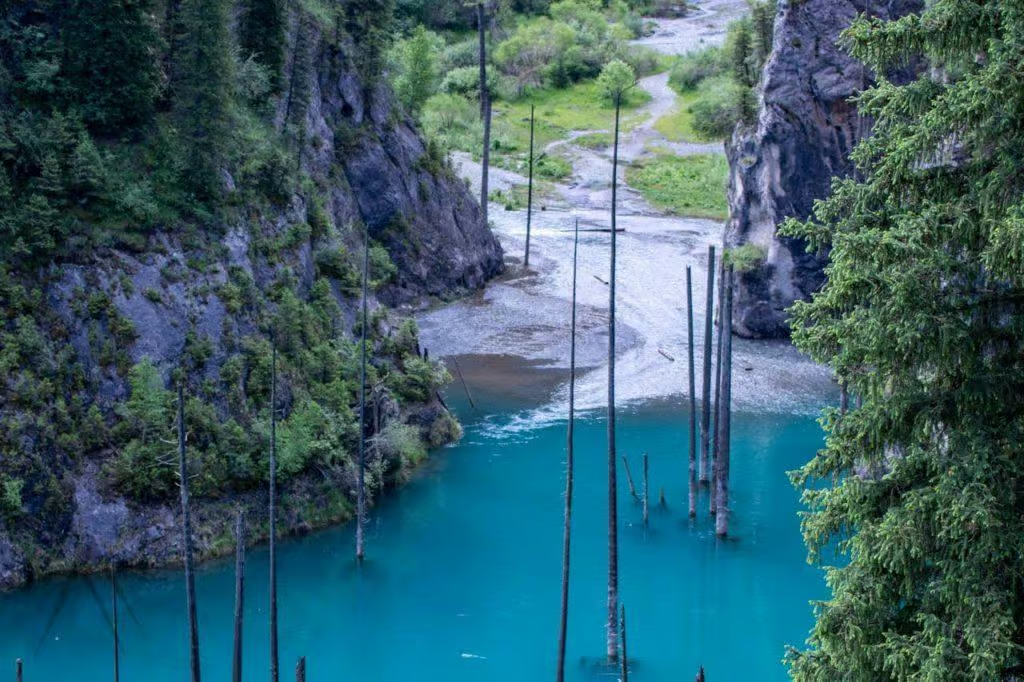
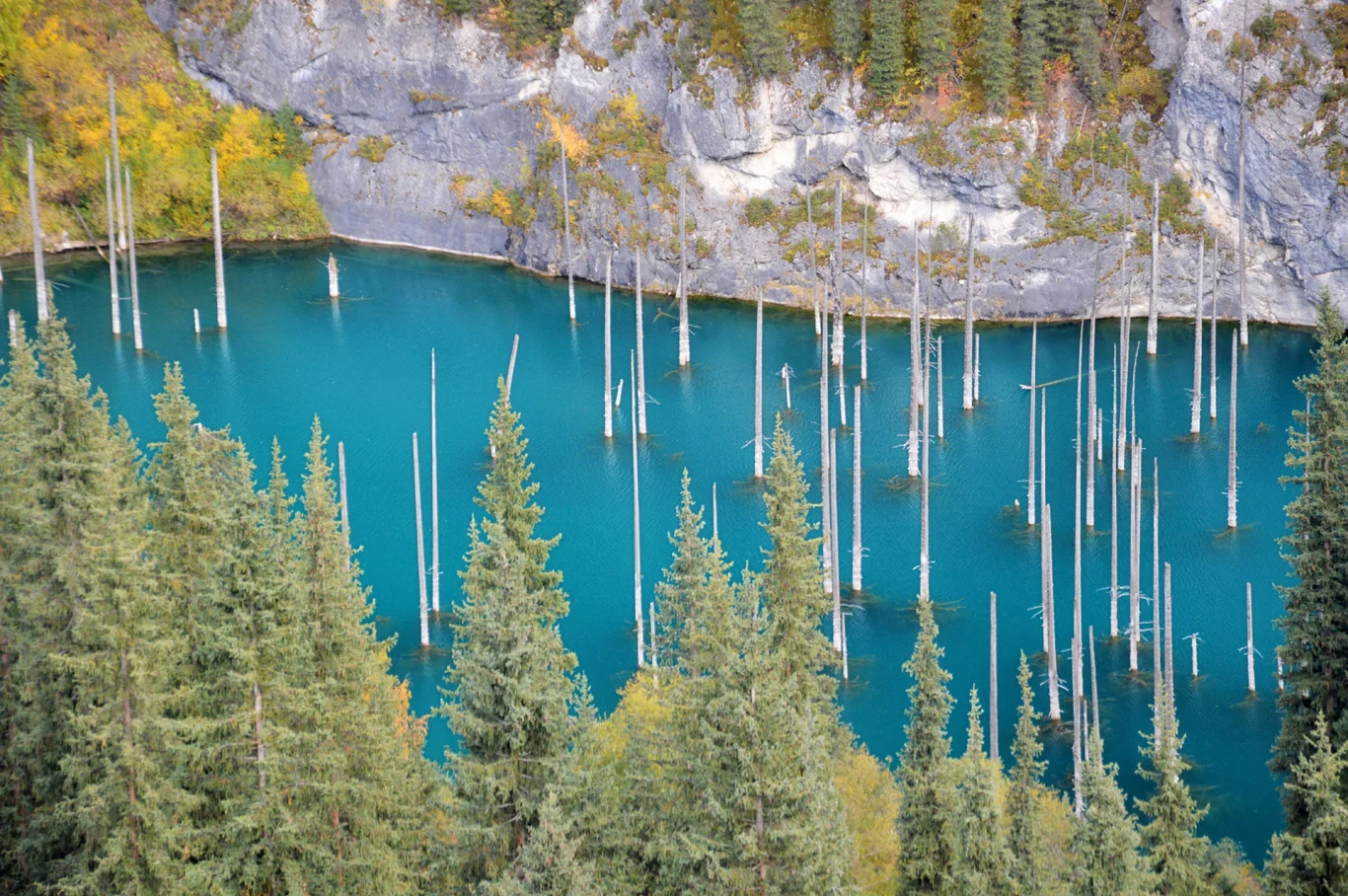
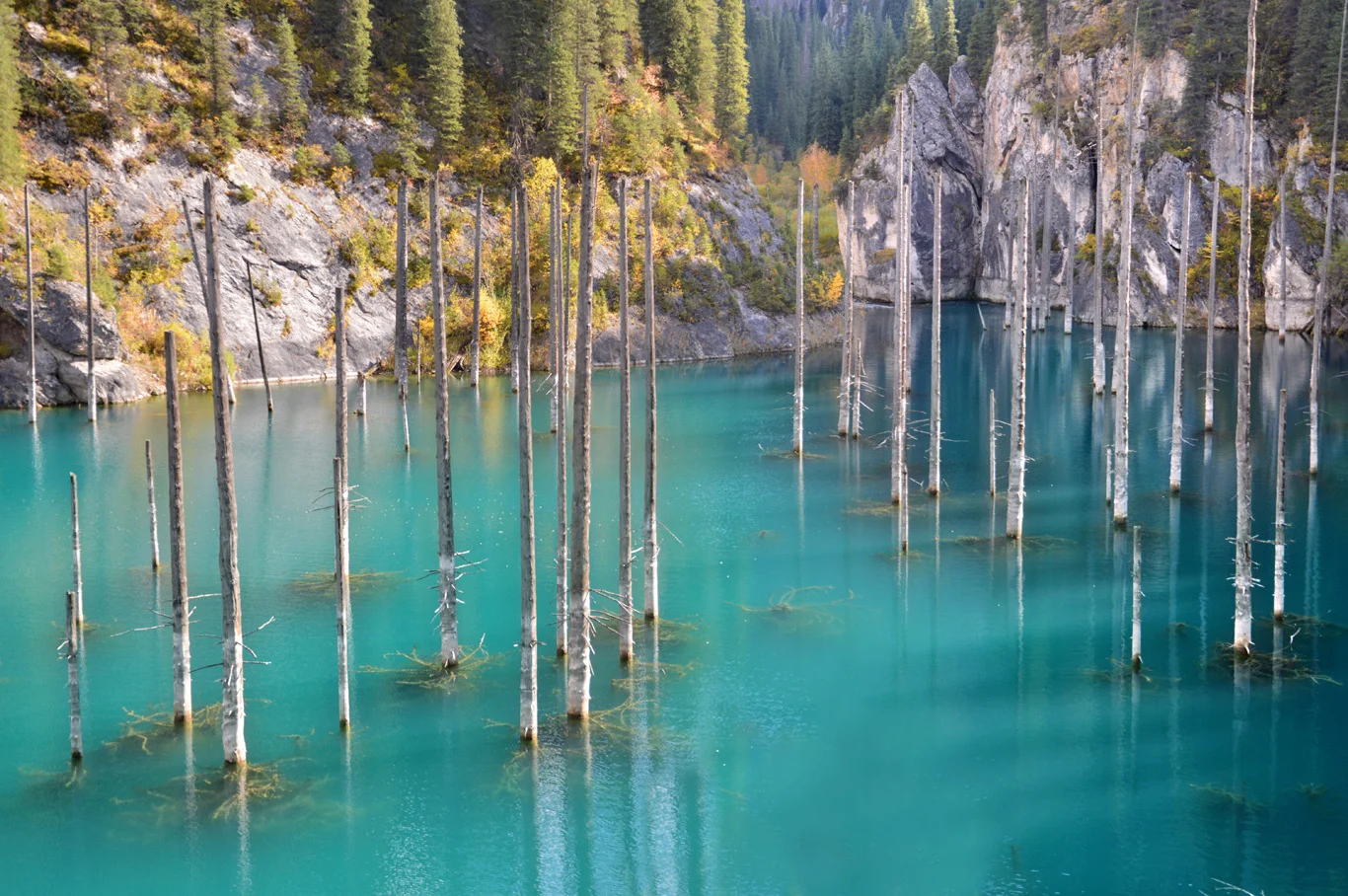
The lake was formed as a direct result of the 1911 Kebin earthquake, of the largest earthquakes recorded in Central Asia. The earthquake triggered a massive limestone landslide that dammed the Kaindy River, creating a natural reservoir. As the water level rose, it submerged the surrounding spruce forest, and the trunks of those trees have remained standing in the lake ever since. The trunks, which protrude above the water surface and extend to depths of up to ten meters below it, give the lake its distinctive character and the name by which it is commonly known — the Sunken Forest.
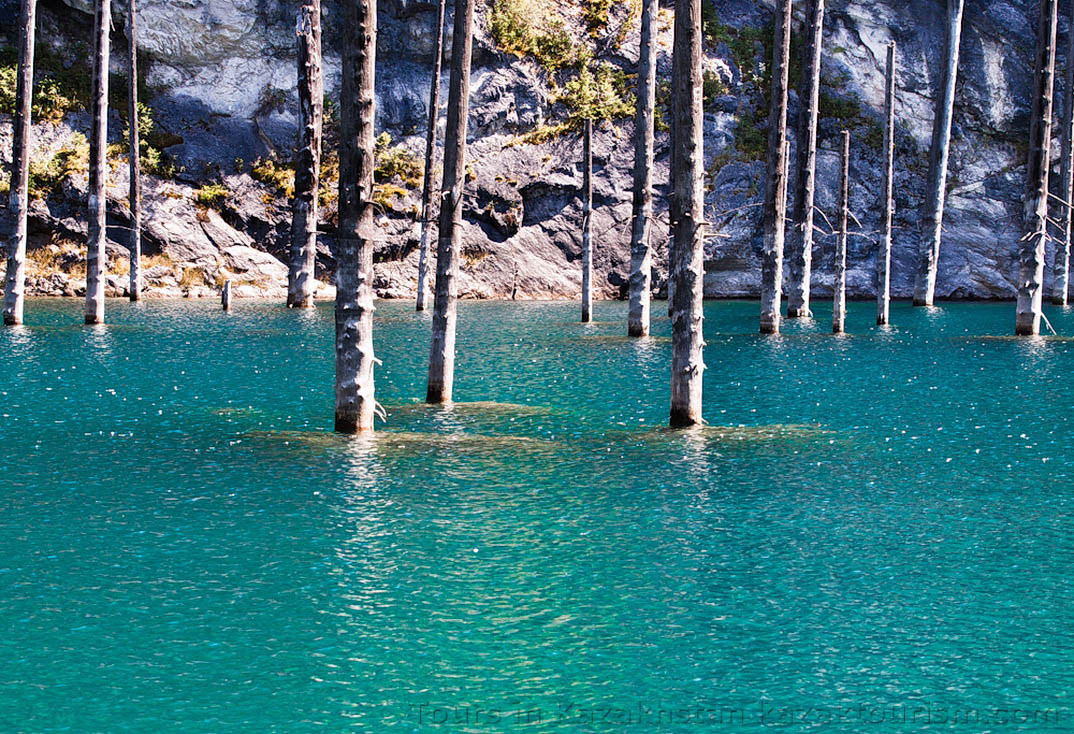
The turquoise color of the water results from the limestone and mineral content of the glacial meltwater feeding the lake. Kaindy Lake is of the more unusual natural sites in Kazakhstan and attracts visitors interested in the combination of geological history, mountain scenery, and the visual spectacle of the submerged forest.
The ‘Wow-Factor’
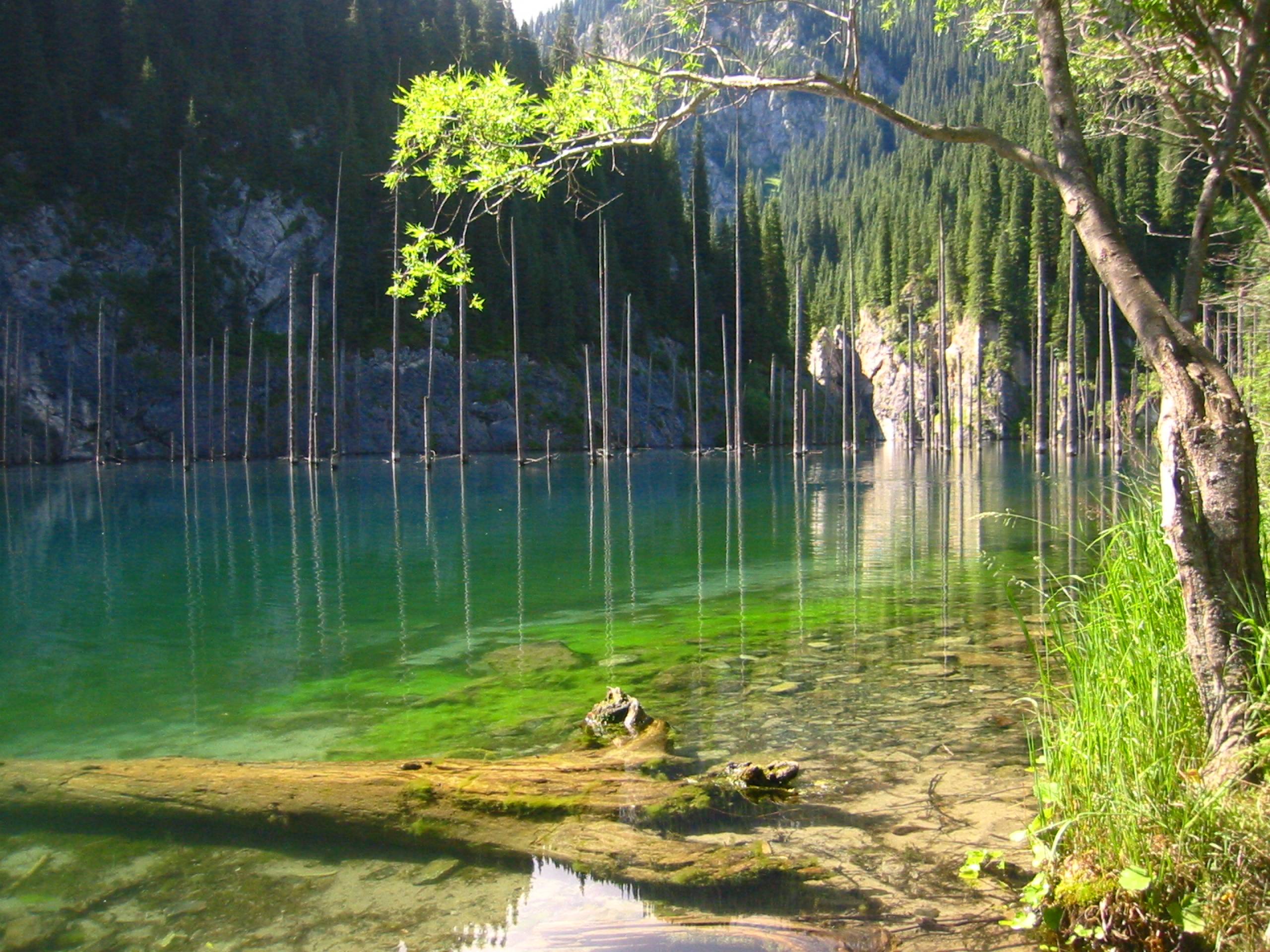
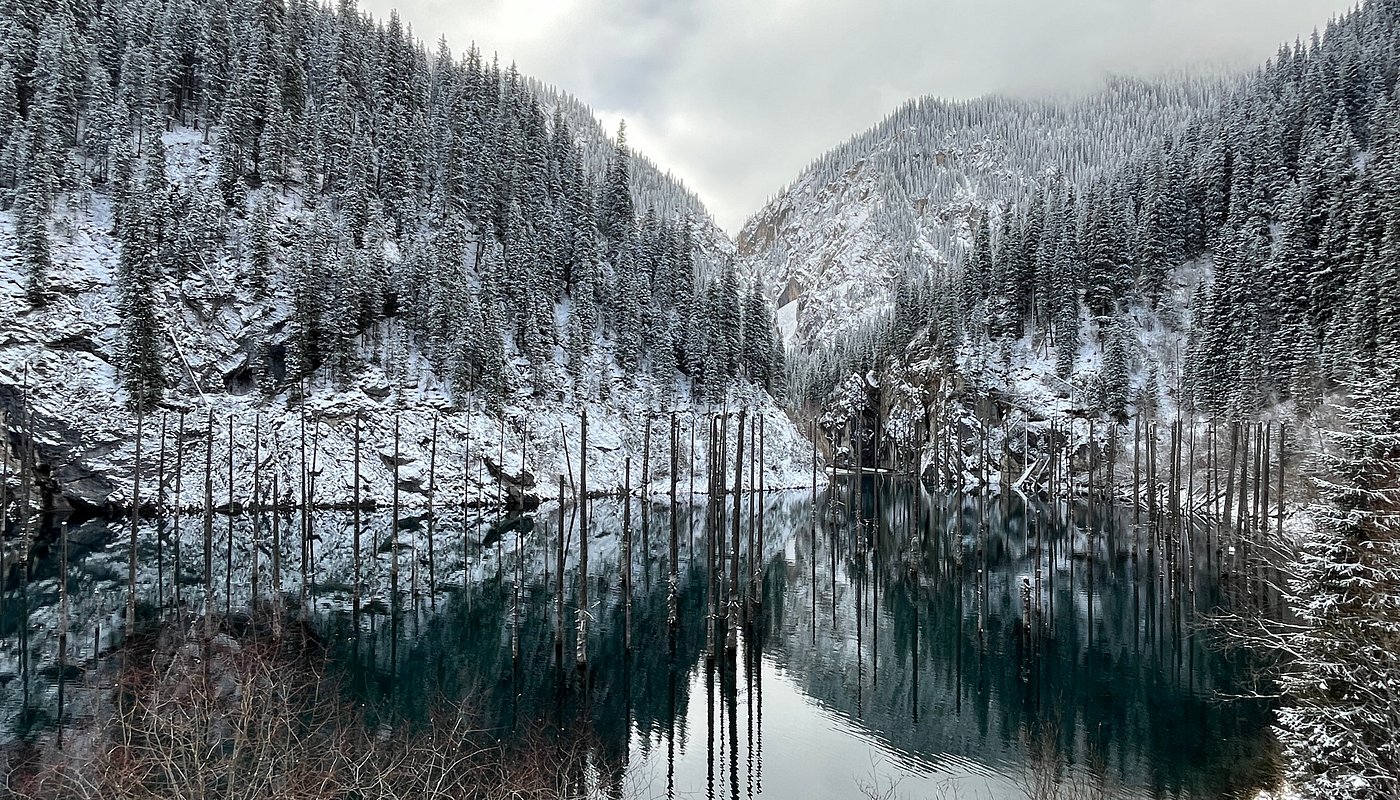
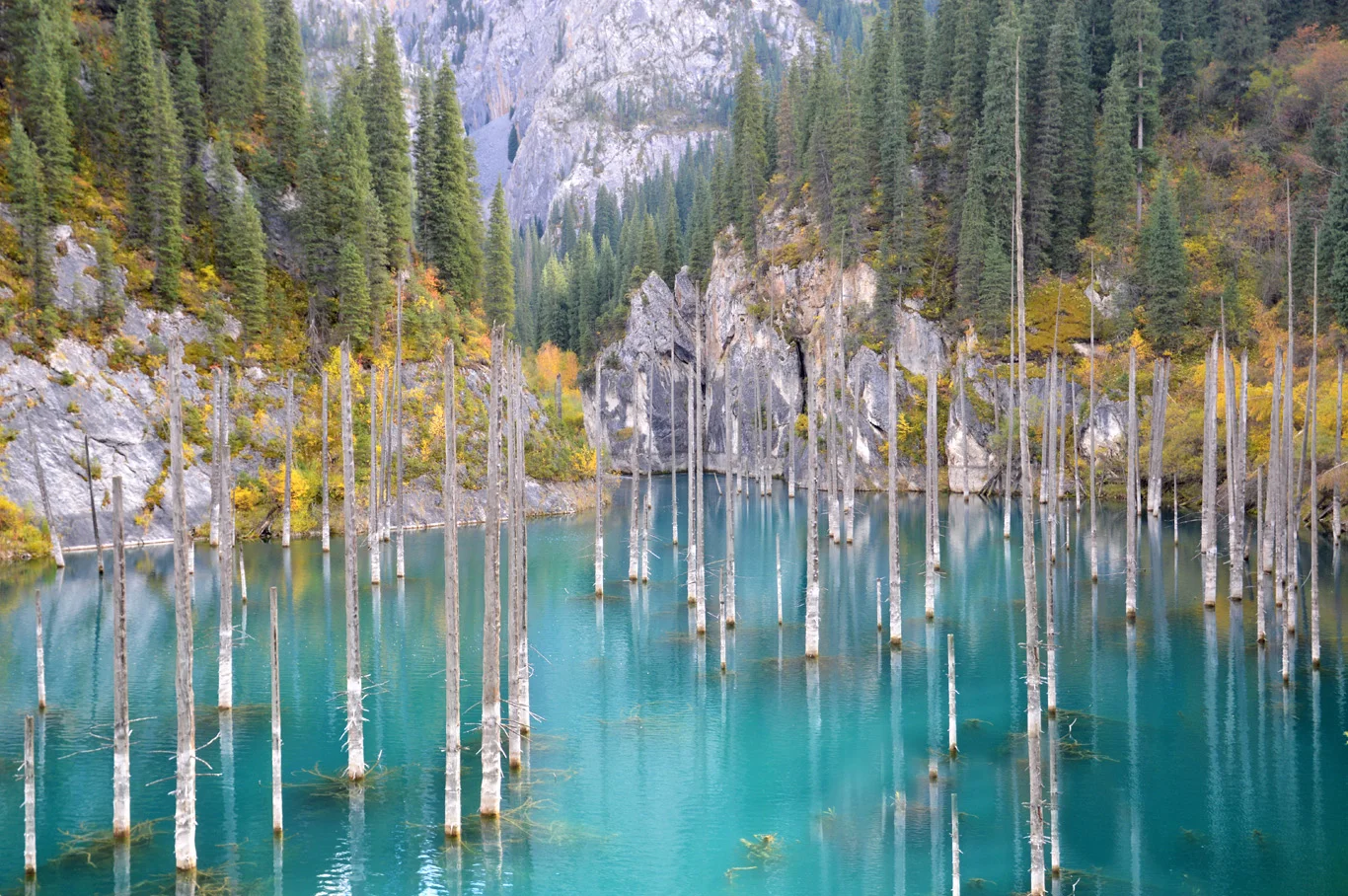
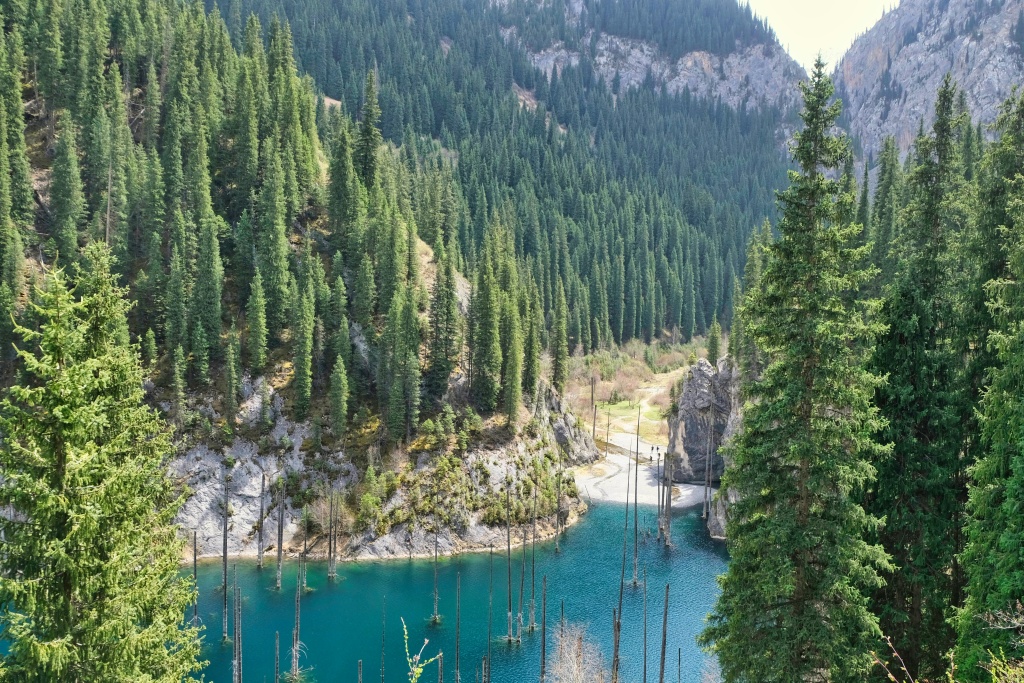
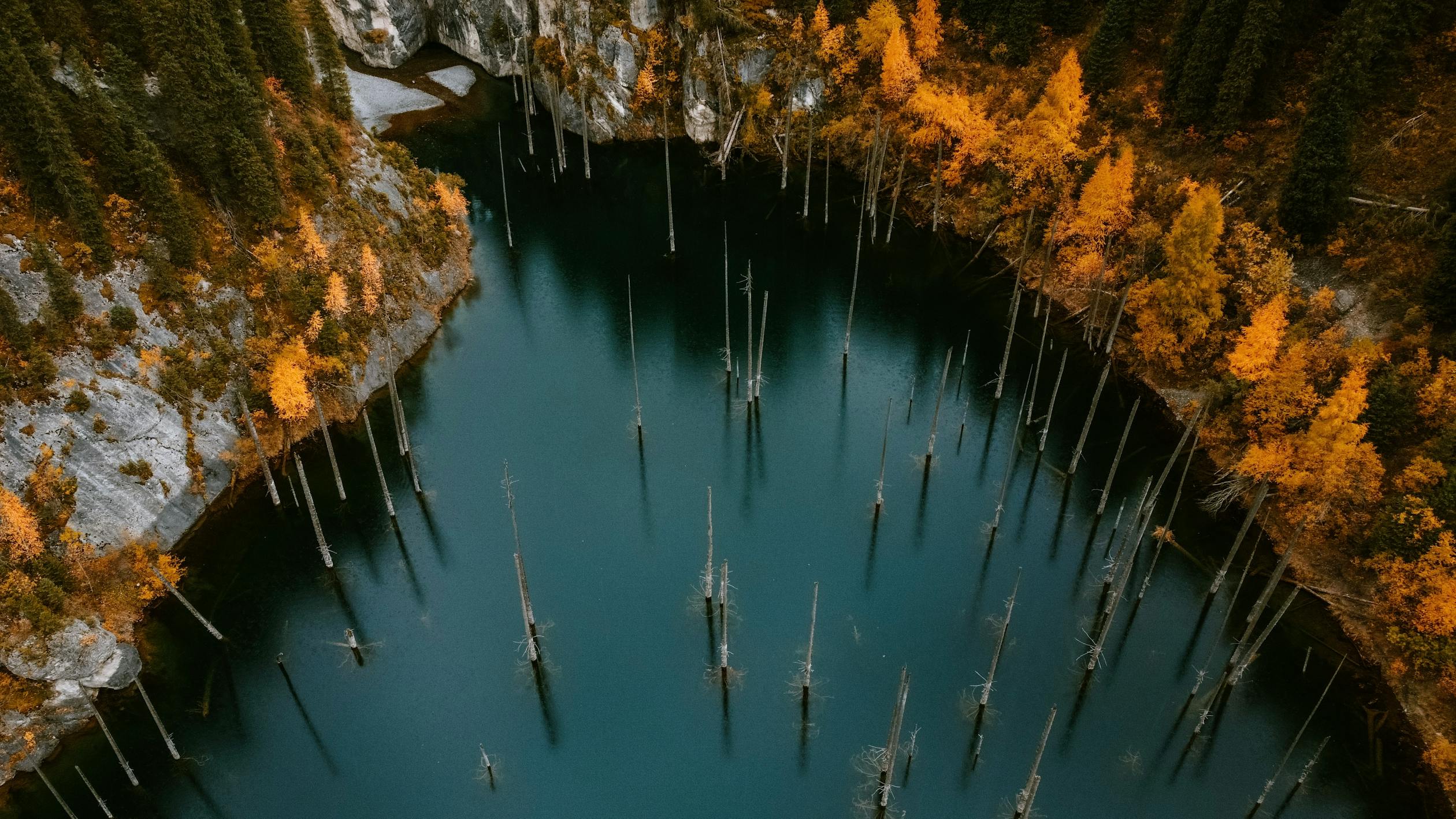
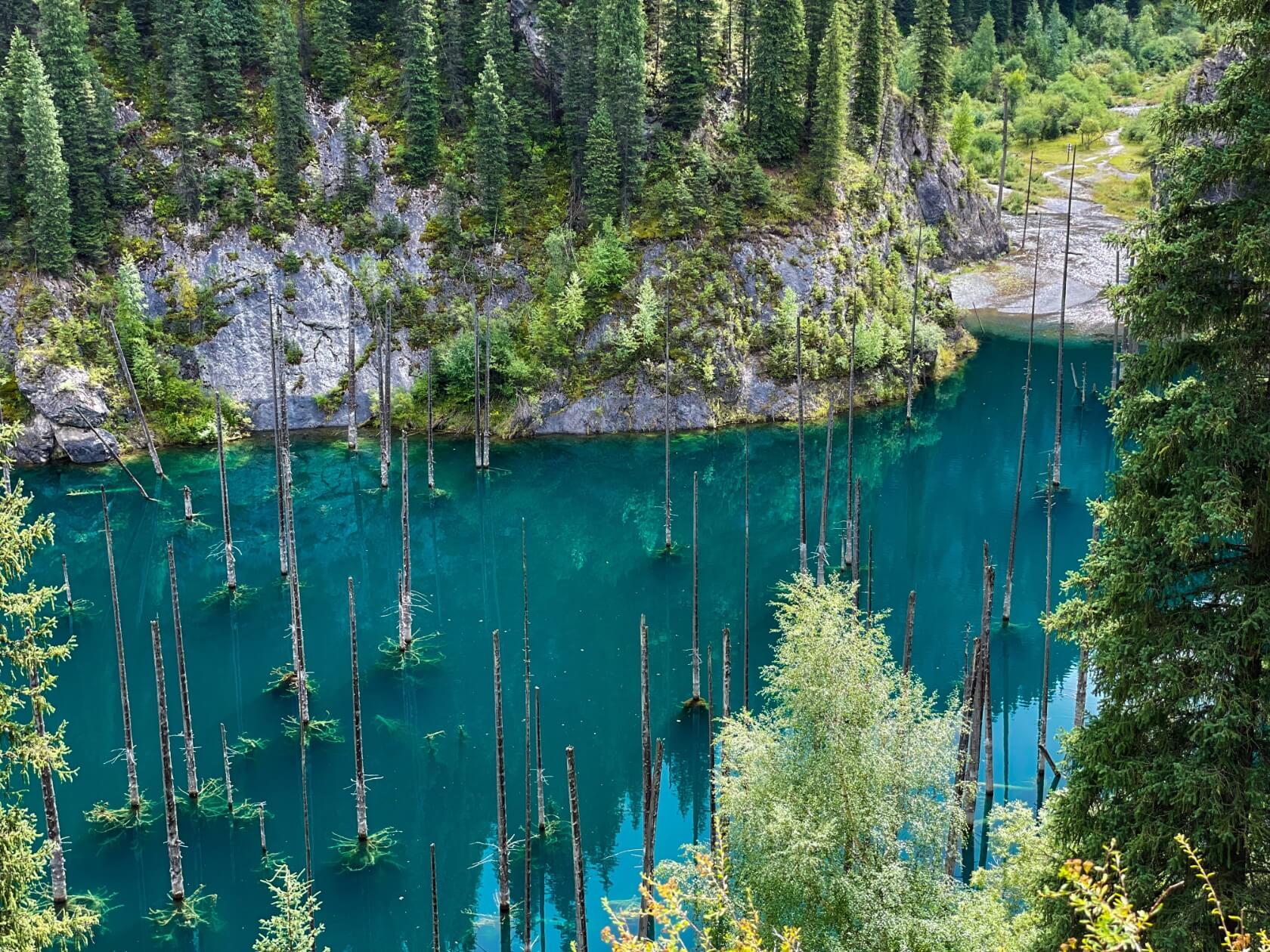
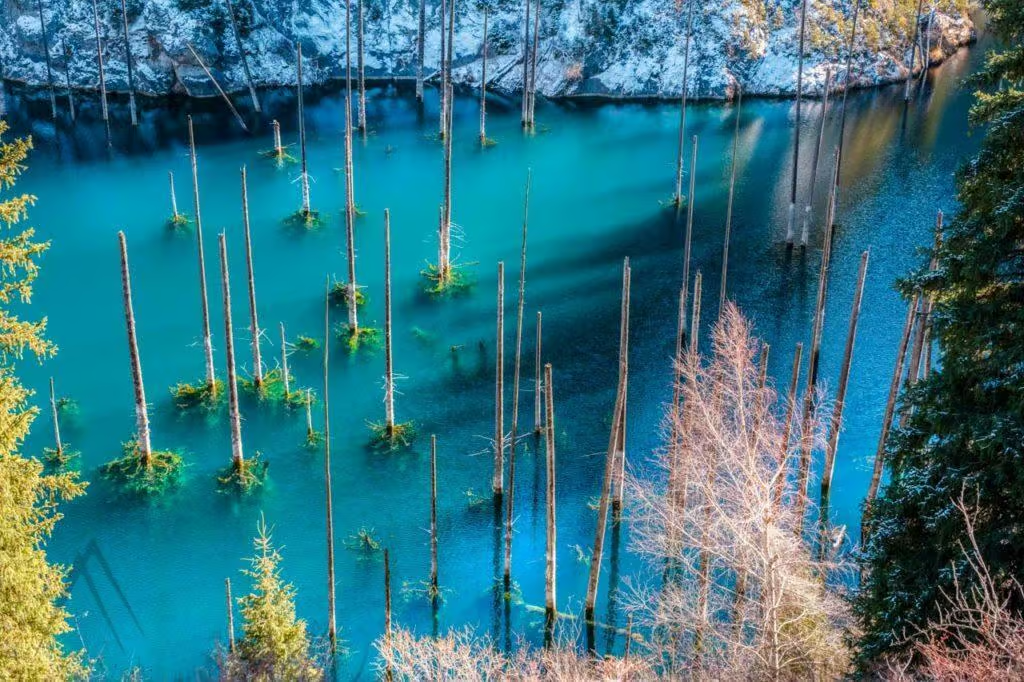
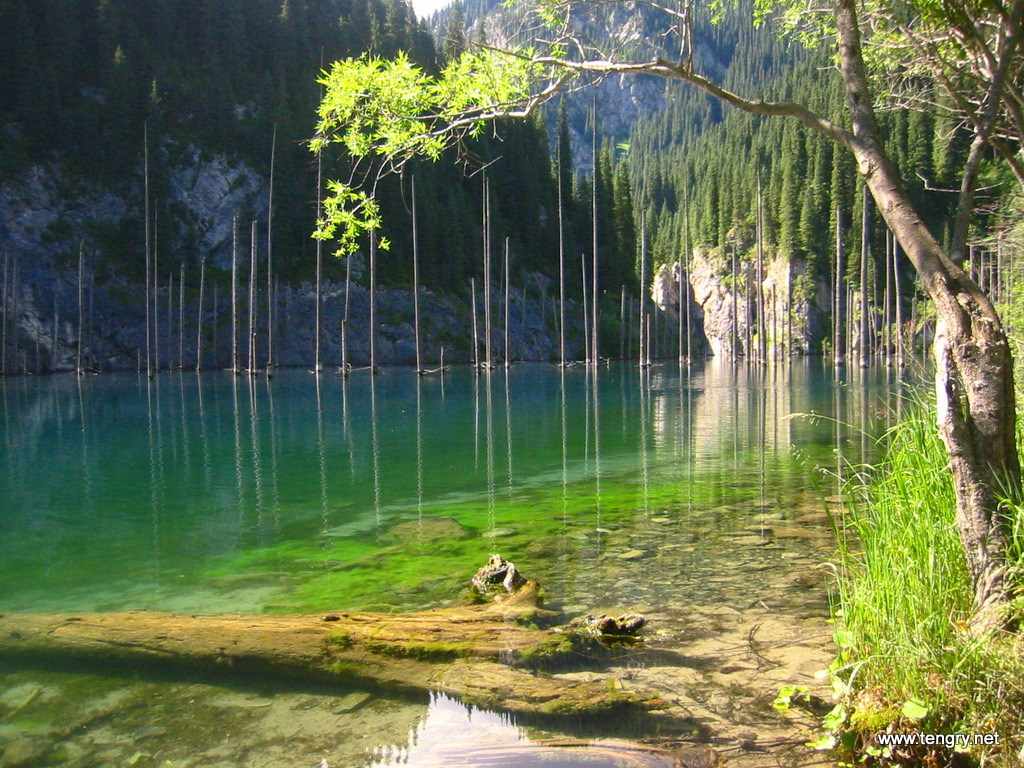
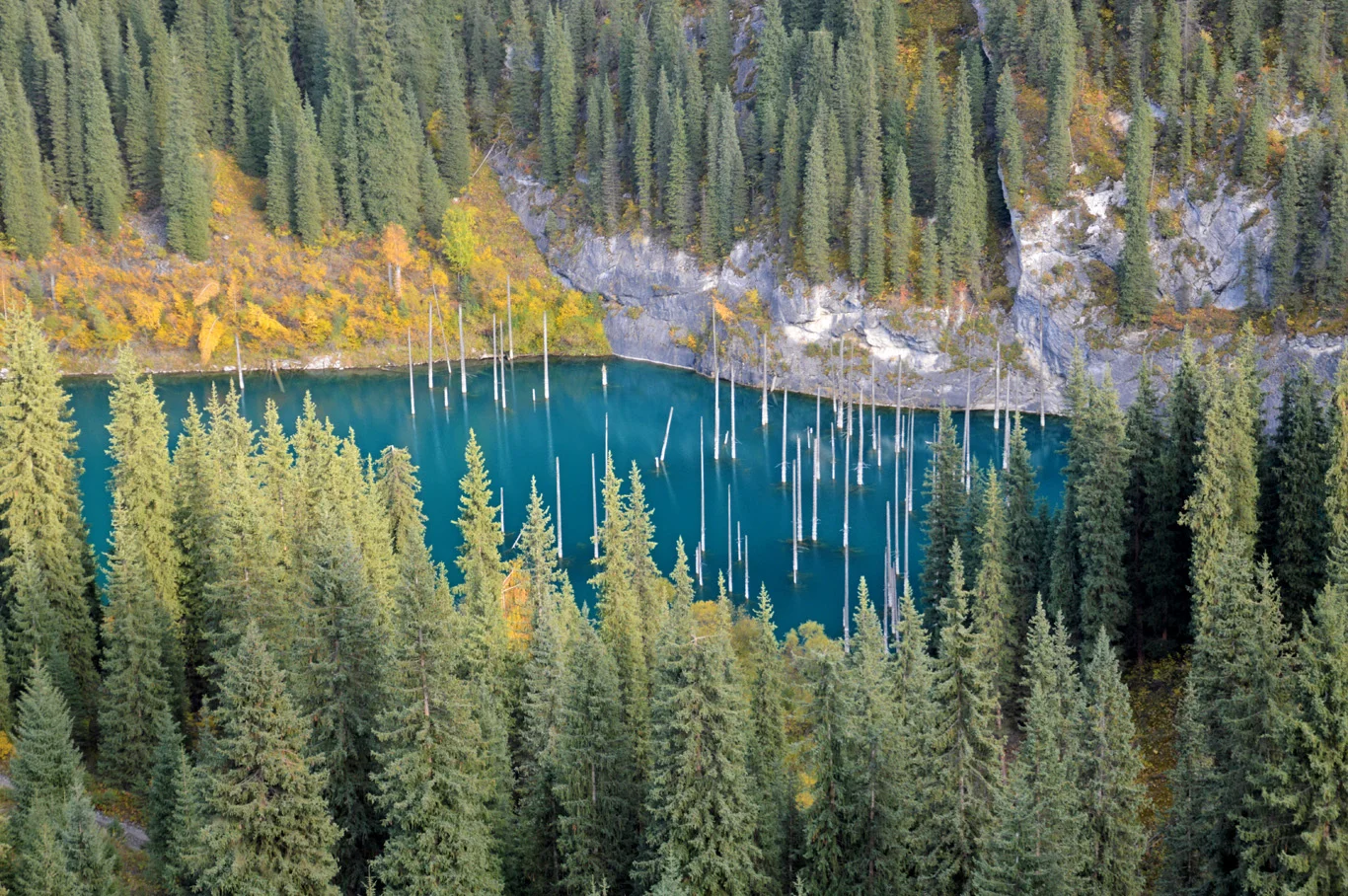
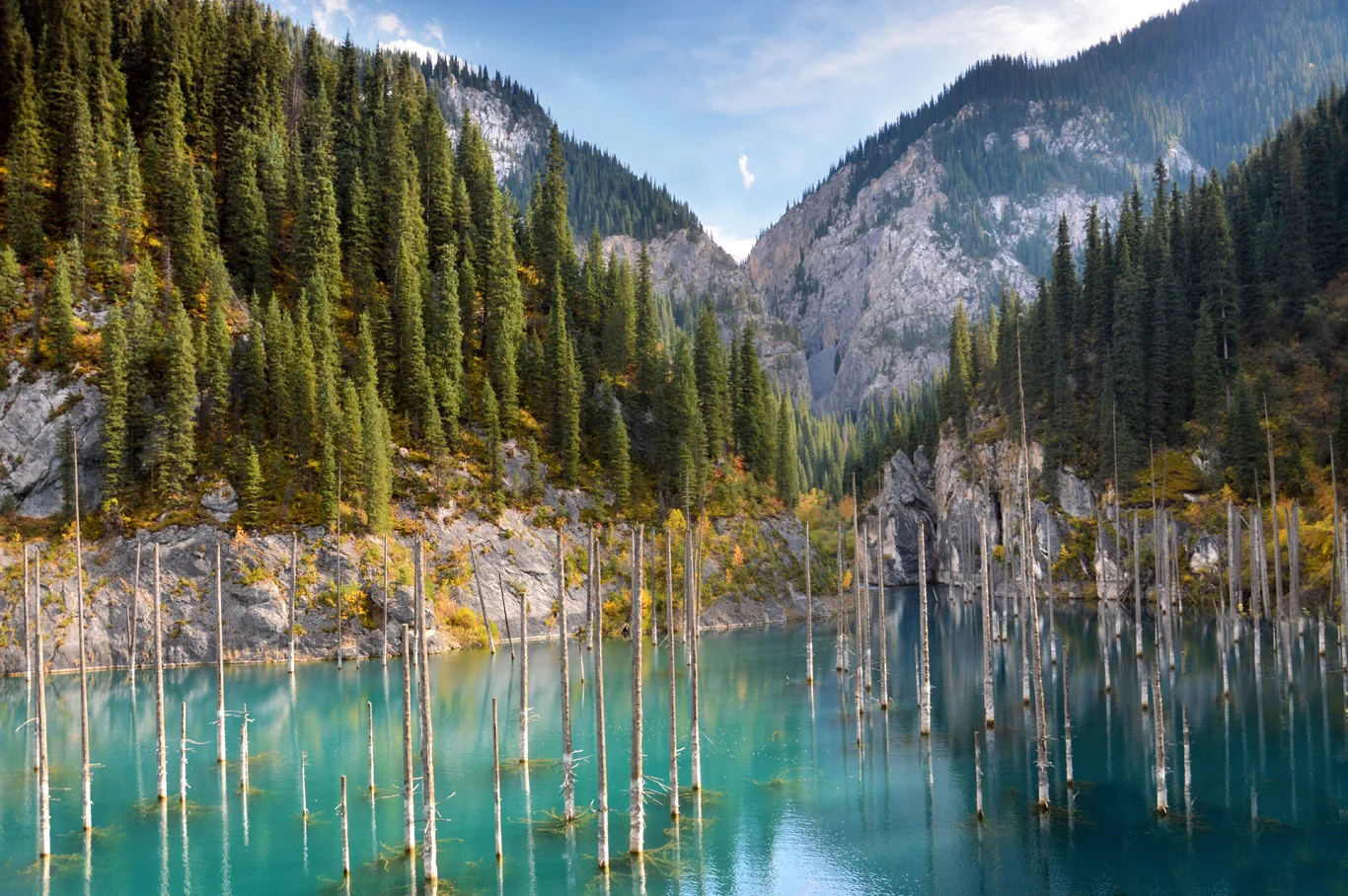
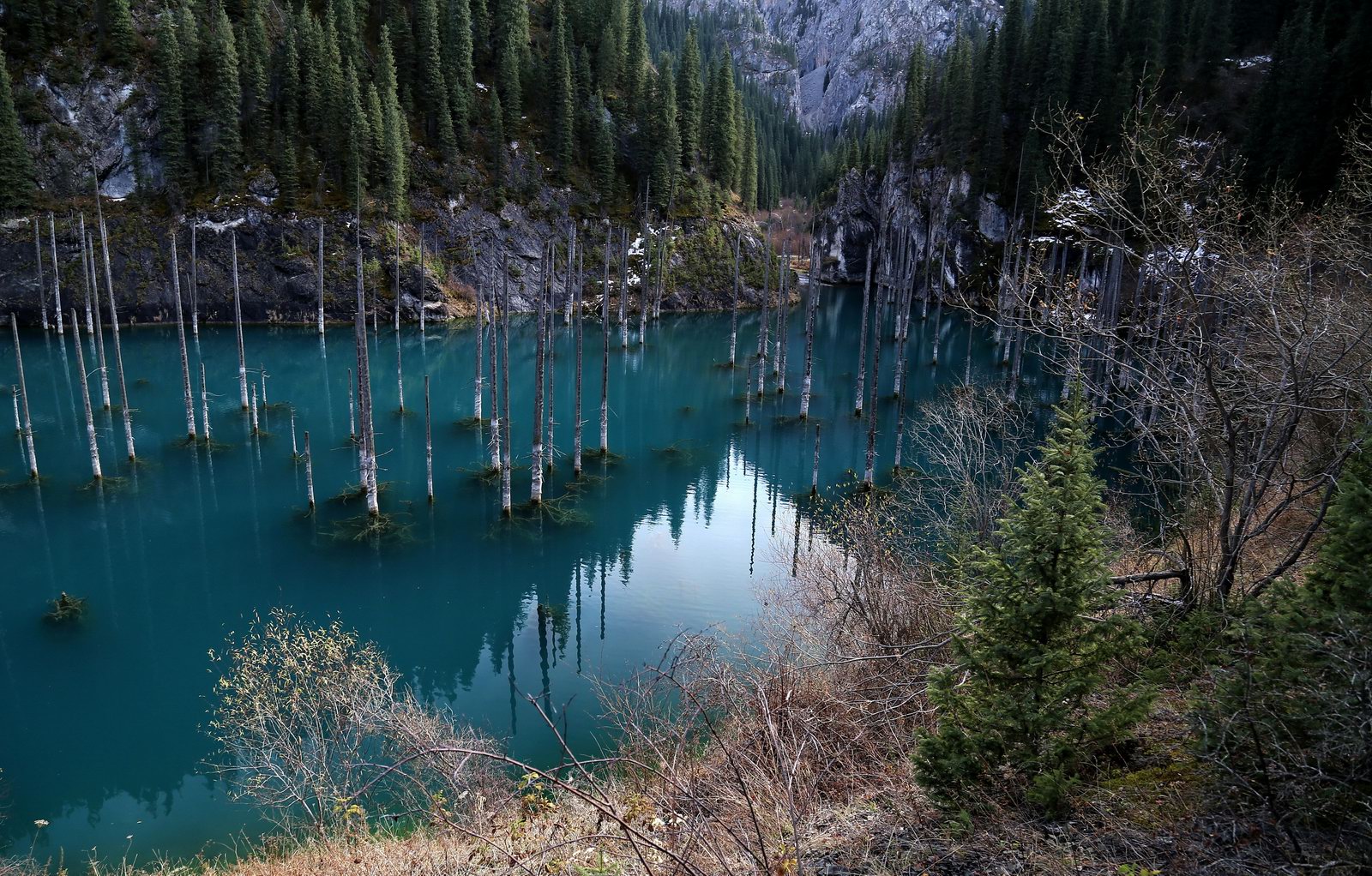
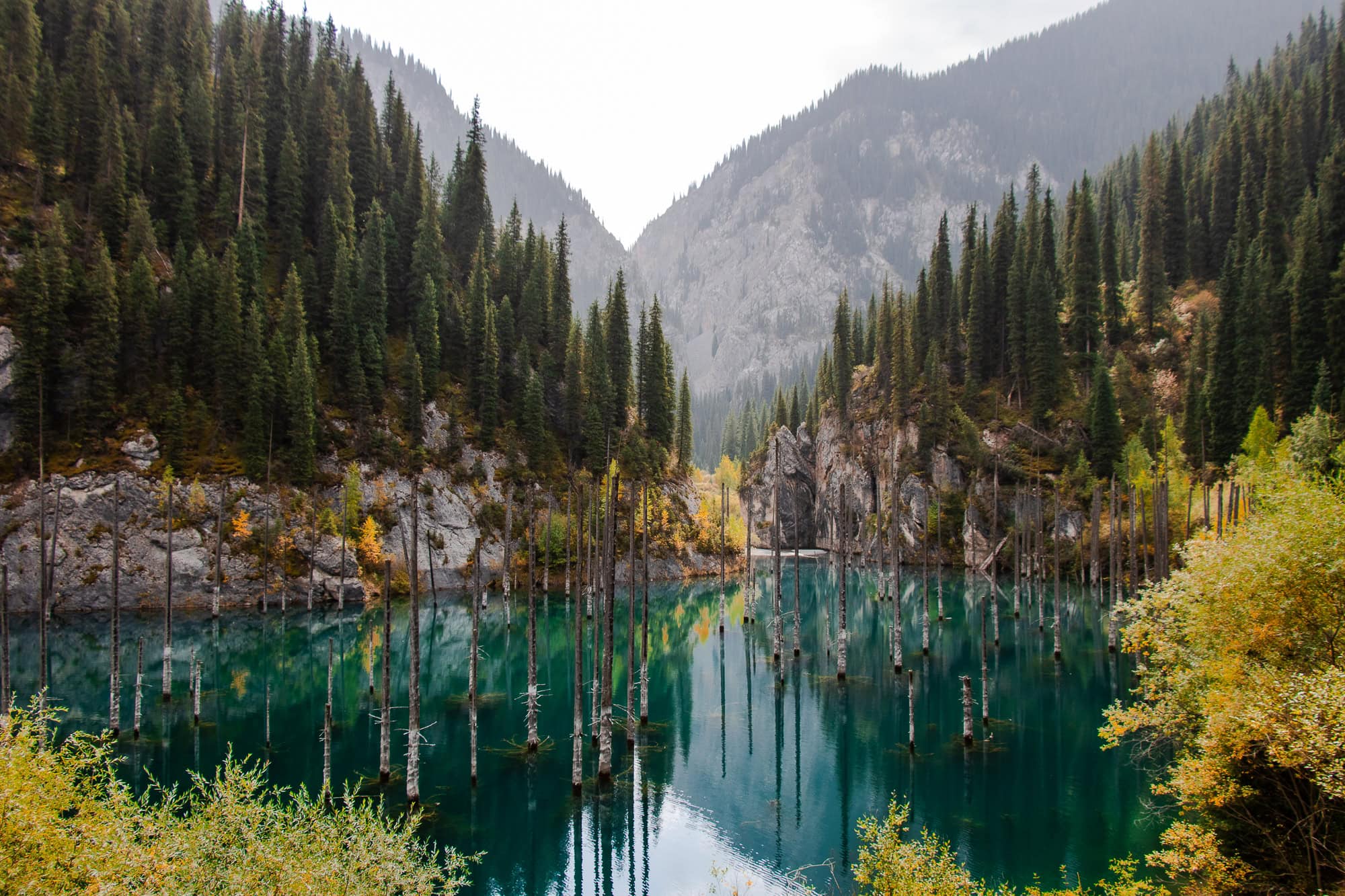
The defining visual feature of Kaindy Lake is the submerged spruce forest. The trunks of trees that were inundated when the lake formed in 1911 remain standing in the water, their bark bleached by more than a century of submersion. These pale trunks rise from the turquoise water at various heights, creating a landscape that is unusual in appearance and immediately recognizable to those familiar with photographs of the lake.
Below the surface, the cold temperature of the water, which rarely warms significantly even in summer, has preserved the branches and needles of the submerged trees in a state that divers have described as remarkably intact for their age. This underwater aspect of the lake attracts divers in addition to the visitors who come for the surface scenery.
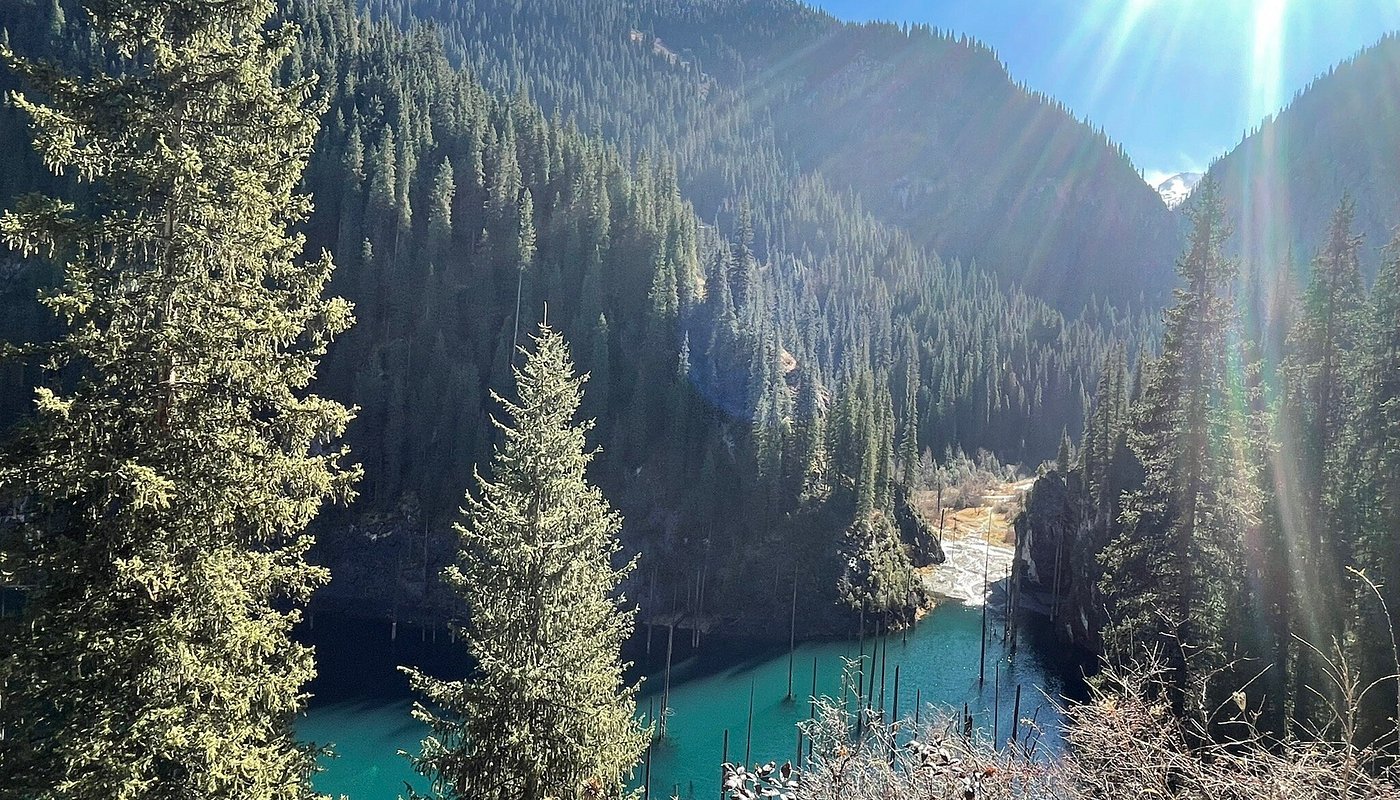
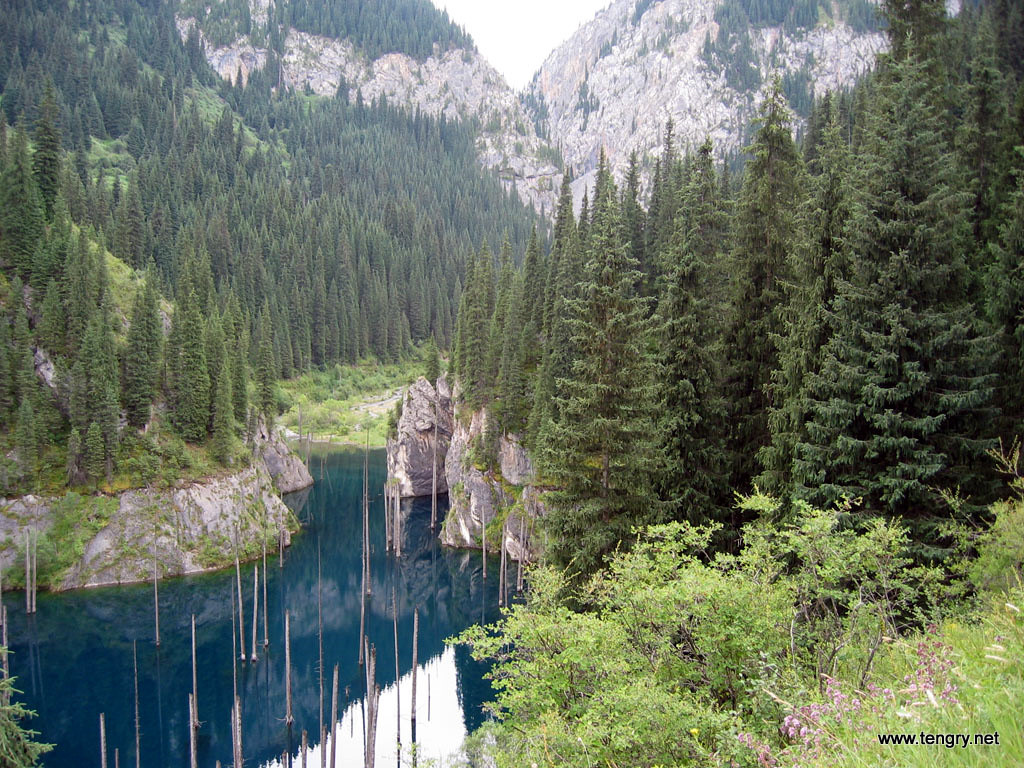
The surrounding gorge rises steeply on both sides of the lake, with coniferous forest covering the slopes and rocky peaks visible above the treeline. The combination of the turquoise water, the standing trunks, and the enclosed mountain environment creates a scene that is unlike most other lake destinations in Kazakhstan. The silence and remoteness of the site, which requires a significant journey from Almaty, add to its distinctive character.
Deep History & Culture
The history of Kaindy Lake is inseparable from the 1911 Kebin earthquake, which struck the region with an estimated magnitude of 7.7 and remains of the most powerful seismic events recorded in Central Asia. The earthquake originated along the fault systems of the Northern Tian Shan and caused widespread destruction across the region, including significant landslides in the Kungei Alatau mountains.
In the valley that would become Kaindy Lake, a massive limestone landslide blocked the Kaindy River. The natural dam created by this debris allowed water from the surrounding mountain snowmelt and rainfall to accumulate, gradually flooding the valley. The spruce forest that had grown in the valley was submerged as the water level rose. Because the lake's cold temperature and the limestone-rich water created conditions that inhibited decomposition, the trunks of the submerged trees remained structurally intact for over a century.
The landscape surrounding the lake, including the scarred mountain slopes where landslides occurred during the earthquake, retains visible evidence of the geological event that formed the lake. For visitors with an interest in geology, the Kaindy area offers an opportunity to observe the effects of tectonic activity on a mountain landscape in a relatively recent and well-documented context.
Practical Digital Logistics
Reaching Kaindy Lake requires more preparation than most day trips from Almaty. The lake is located approximately 280 kilometers from Almaty, with the journey taking four to five hours by road. The primary gateway is the village of Saty, from which a rough track leads approximately 15 kilometers further to the lake. This final section of road requires a vehicle with high ground clearance and four-wheel drive capability, as it involves river crossings and steep, uneven terrain. Standard passenger cars should not attempt this route.
For visitors without a suitable vehicle, organized tours from Almaty that specifically include Kaindy Lake are the most practical option. These tours typically also include the Kolsai Lakes, which are in the same area, and operate as overnight or multi-day trips. The village of Saty has basic accommodation options for visitors who wish to stay in the area.
Entry to Kolsai Kolderi National Park requires payment of an entry fee at the checkpoint. Visitors should carry cash. Mobile phone coverage is limited or absent in much of the area around the lake. Fuel and vehicle supplies should be secured before leaving the main highway, as services become increasingly limited beyond Chilik and towards Saty.
Must-Do Activities
The primary activity at Kaindy Lake is walking along the shoreline to observe the submerged spruce trunks from different angles. The path around the lake's accessible sections takes approximately to two hours at a relaxed pace. The most striking views of the standing trunks are from the shore at the widest section of the lake, where the density of the visible trunks and the depth of the turquoise water are most apparent.
For those interested in a higher vantage point, the slopes above the lake can be climbed on foot, offering an elevated view of the lake and the surrounding gorge. This perspective makes the full extent of the submerged forest and the shape of the lake more visible than from the shoreline alone.
Diving in Kaindy Lake is practiced by those with appropriate equipment and experience. The clear, cold water provides visibility into the preserved branches and needles of the submerged trees. Diving operations in the area are typically organized through tour operators in Almaty or Saty rather than on-site, and visitors interested in this activity should arrange it in advance.
The Kolsai Lakes, located in the same national park and accessible from the same base in Saty, are commonly combined with a visit to Kaindy as part of a multi-day itinerary for visitors to this area of the Almaty Region.
Local Flavors & Amenities
Amenities at Kaindy Lake itself are minimal. There are no established restaurants or cafes at the lake, and visitors should bring sufficient food and water for their stay. In summer, basic refreshments may be available from informal vendors near the parking area, but this cannot be relied upon.
The village of Saty, located approximately 15 kilometers from the lake, is the practical base for visitors to the Kaindy and Kolsai Lakes area. Saty has a small number of guesthouses that offer accommodation, meals, and the opportunity to arrange local transport and guides. Food options in the village are basic but include home-cooked meals that typically feature traditional Kazakhstani dishes such as beshbarmak and shashlik. Mountain herb tea is commonly served and is a locally significant beverage made from plants gathered in the surrounding area.
For those planning to stay overnight, Saty guesthouses represent the most practical and authentic accommodation option. Visitors should book in advance during the summer season, as capacity is limited and demand from tour groups can fill available rooms. Almaty-based tour operators typically handle bookings as part of organized tour packages.
Essential Insider Tips
Several practical considerations are important for anyone planning to visit Kaindy Lake. The water temperature of the lake remains very cold even in summer due to its glacial source, and swimming is strongly discouraged. Immersion in the water carries a significant risk of rapid heat loss and hypothermia, and the depth of the lake in sections containing submerged trunks makes unsupported swimming dangerous. Diving should be undertaken by experienced divers with appropriate cold-water equipment.
The track from Saty to the lake involves multiple crossings of the Kaindy River. During periods of snowmelt in late spring and early summer, water levels can rise considerably and make these crossings hazardous even for high-clearance vehicles. Visitors who are unfamiliar with the track should consider hiring a local driver from Saty rather than navigating the route independently.
Photographing the lake is best done in the early morning when the light is soft and the water surface is calm. The reflective quality of the turquoise water can cause overexposure in direct midday sunlight.
Mobile coverage is largely absent at the lake. Visitors should inform someone of their plans before departing. A fully charged power bank and a basic first aid kit are practical inclusions for any trip to this area.
Sustainability & Community
Kaindy Lake is located within Kolsai Kolderi National Park, a protected area established to preserve the ecosystems of the Kungei Alatau mountains, including their forests, rivers, and wildlife. The park's regulations require visitors to respect the natural environment, refrain from littering, stay on established tracks, and avoid disturbing the fauna and flora of the area.
The community of Saty village plays a central role in the visitor economy for the Kaindy and Kolsai Lakes area. Guesthouses, transport, and guiding services operated by Saty residents depend on sustainable visitor numbers and responsible behavior from tourists. Engaging directly with local service providers in Saty, rather than through external tour operators, helps ensure that economic benefits flow to the community that lives adjacent to this protected landscape.
Handmade goods, including traditional felt products and wool crafts that are characteristic of Kazakh material culture, can be purchased from local households and small sellers in the area. These products represent genuine regional craftsmanship and are more meaningful purchases than generic tourist merchandise. Treating the landscape and community with consideration and respect is the foundation of responsible travel to this remote and ecologically sensitive area.
Key Facts
- Sunken Forest
- The lake is world-famous for the 'upside down' spruce trees that were submerged during its formation, creating a surreal underwater scene.
- Recent Origin
- The lake was formed recently in 1911 due to a massive earthquake that triggered a limestone landslide, creating a natural dam.
- Turquoise Clarity
- Despite the sunken trees, the water remains incredibly clear and bright turquoise, even at significant depths.
- Photography Mecca
- The white trunks of the dead spruce trees rising from the water make it one of the most photographed locations in Kazakhstan.
- High Altitude
- Located at 2,000 meters in the Kungey Alatau mountains, the lake's water remains freezing cold throughout the entire year.
- Remote Trek
- Accessing the lake involves a scenic but rugged drive via the Satu village, followed by a short hike through mountain meadows.
Photo Gallery
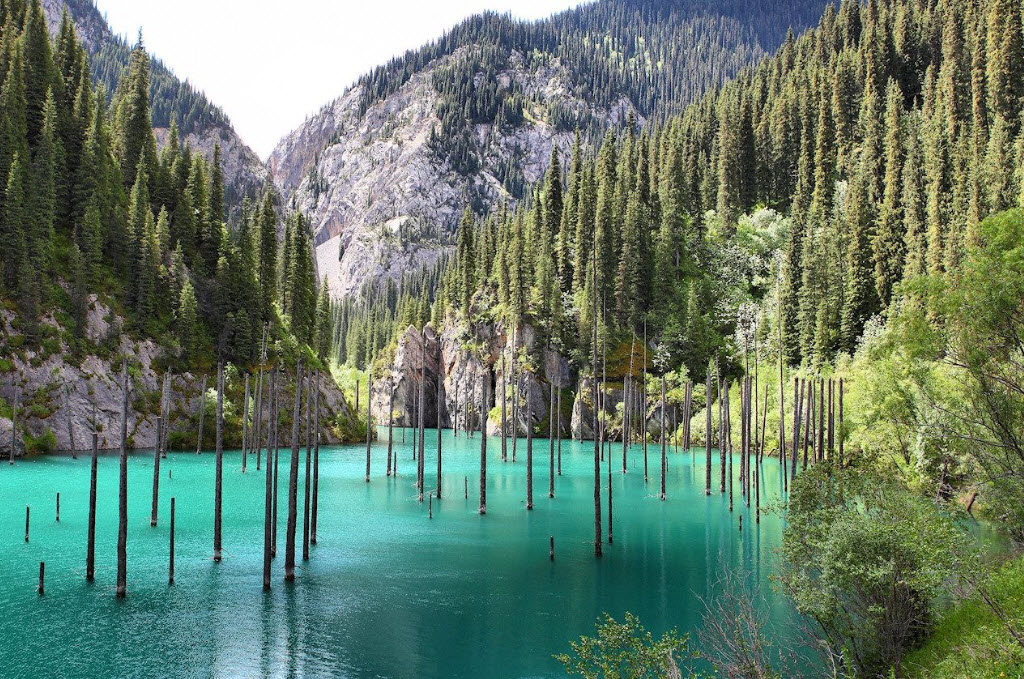
Kaindy Lake
Video coming soon
Kaindy Lake
Loading map...Loading map...
Frequently Asked Questions
Have a question?
Ask and get answers in seconds!
Discussion 0
No comments yet. Start the conversation!
Leave a Reply