Nurzhol Boulevard
The City of Future. Futuristic architecture in the steppe.
Detailed History & Context
Nurzhol Boulevard is the main ceremonial axis of Astana's left bank, a broad pedestrian and vehicular boulevard that extends through the administrative and governmental heart of the Kazakhstani capital. The name Nurzhol translates from Kazakh as "Radiant Path" or "Path of Light," a designation chosen to reflect the symbolic ambitions of the new capital development that began following Astana's designation as Kazakhstan's capital in 1997.
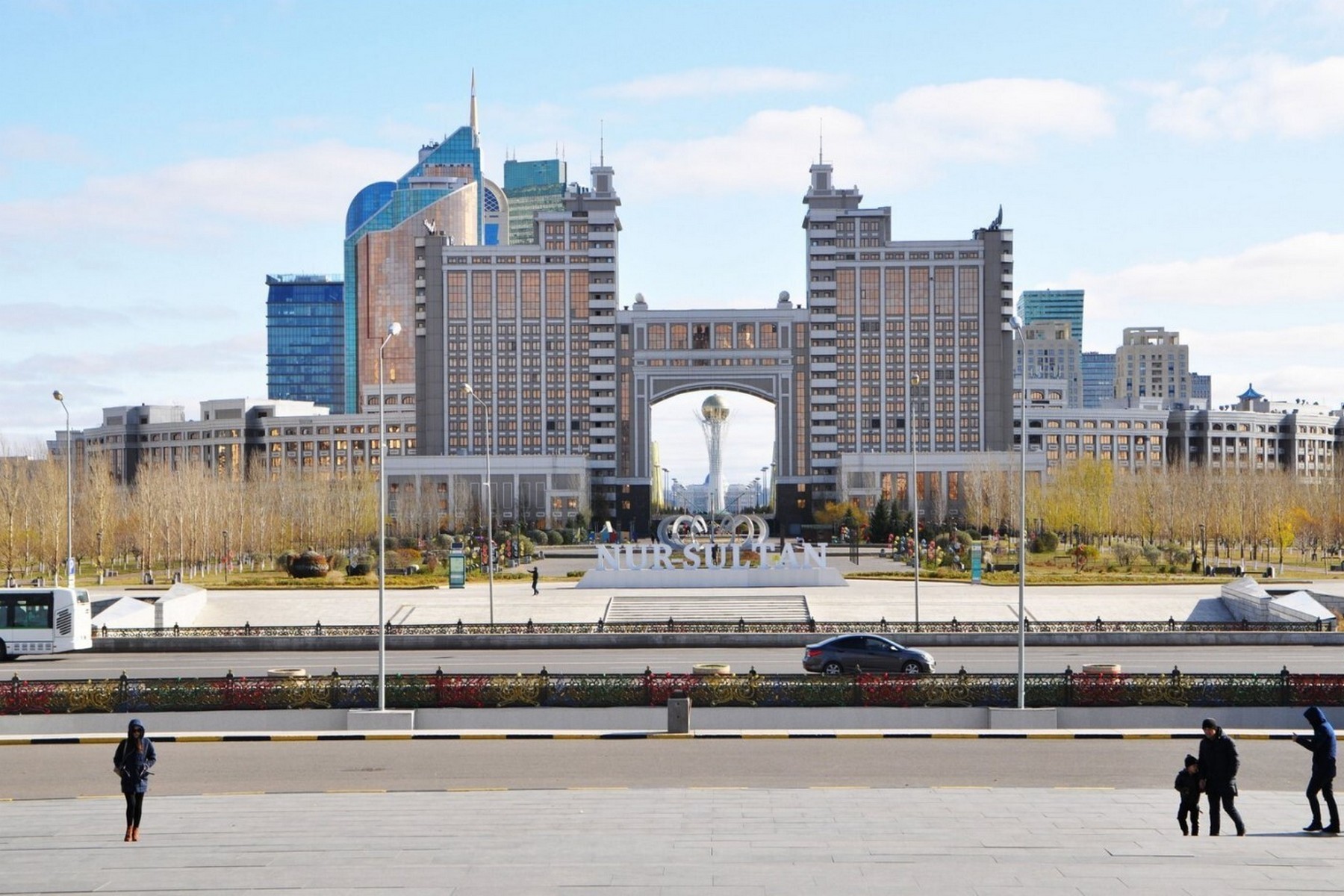
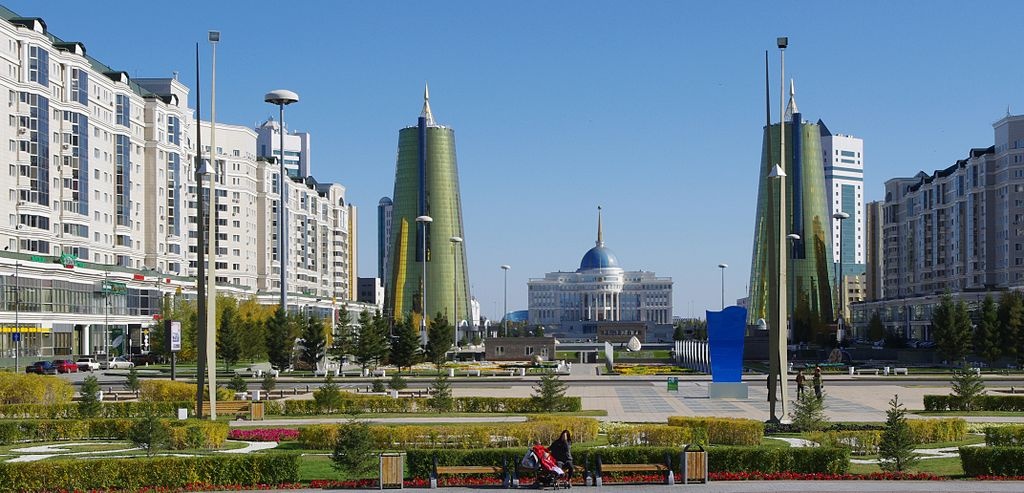
The boulevard was conceived as part of the master plan for the left bank, which was developed to create a monumental civic centre for the post-independence capital. The axis runs from the Ak Orda Presidential Palace at its northwestern end through a sequence of government buildings, public plazas, and landmarks, including the Bayterek monument, Nur Astana Mosque, and the Palace of Peace and Reconciliation, toward the Expo 2017 site. The arrangement of these buildings along the boulevard's axis was intended to express state power, national identity, and the architectural ambitions of the new Kazakhstan.
The development of the left bank proceeded rapidly through the 2000s and 2010s, transforming formerly undeveloped terrain on the northern bank of the Ishim River into a dense concentration of government, commercial, and cultural buildings. The architectural character of the boulevard reflects the international architectural practices that were engaged to design its landmark buildings, including firms from the United Kingdom, Japan, and other countries that have produced major public buildings along its length.
Digital Logistics & Access
Nurzhol Boulevard is located on the left bank of Astana, accessible from central Astana and the right bank of the Ishim River by road or by the Astana metro, which has several stations serving the left bank area. The boulevard itself is a pedestrian-friendly zone for much of its length, with broad footpaths, public seating, and green spaces between the road lanes. It is designed for walking and is of the principal areas of the city for outdoor public life.
From Astana's right bank and from the central areas of the city, taxis and the metro provide straightforward access to the left bank. Several metro stations are within walking distance of the boulevard's key landmarks. The Astana bus network also serves the area, though taxis and ride-hailing apps are the most convenient option for visitors unfamiliar with the city's public transport routes.
The boulevard and its surrounding public spaces are open at all times, and there is no entry fee or registration required to walk along it. The landmark buildings on the boulevard operate on individual schedules with their own admission arrangements where applicable. Visitors planning to see multiple buildings in a single day should confirm opening hours and admission conditions in advance for each specific attraction.
5+ Specific Activities
Things to Do on Nurzhol Boulevard
Walking the length of Nurzhol Boulevard is itself the activity. At roughly two kilometres, the promenade connects the Bayterek monument at its eastern end to the Khan Shatyr entertainment centre at the west, and most of what the boulevard offers happens along that path rather than at any single fixed attraction.
If you have the Kazakh Heritage mobile app, the Cultural Walkthrough route turns the walk into a guided experience, with audio commentary triggered by location as you pass the main landmarks. It is unobtrusive — you can pause it and wander freely — and it adds context to buildings that otherwise say very little about themselves from the outside.
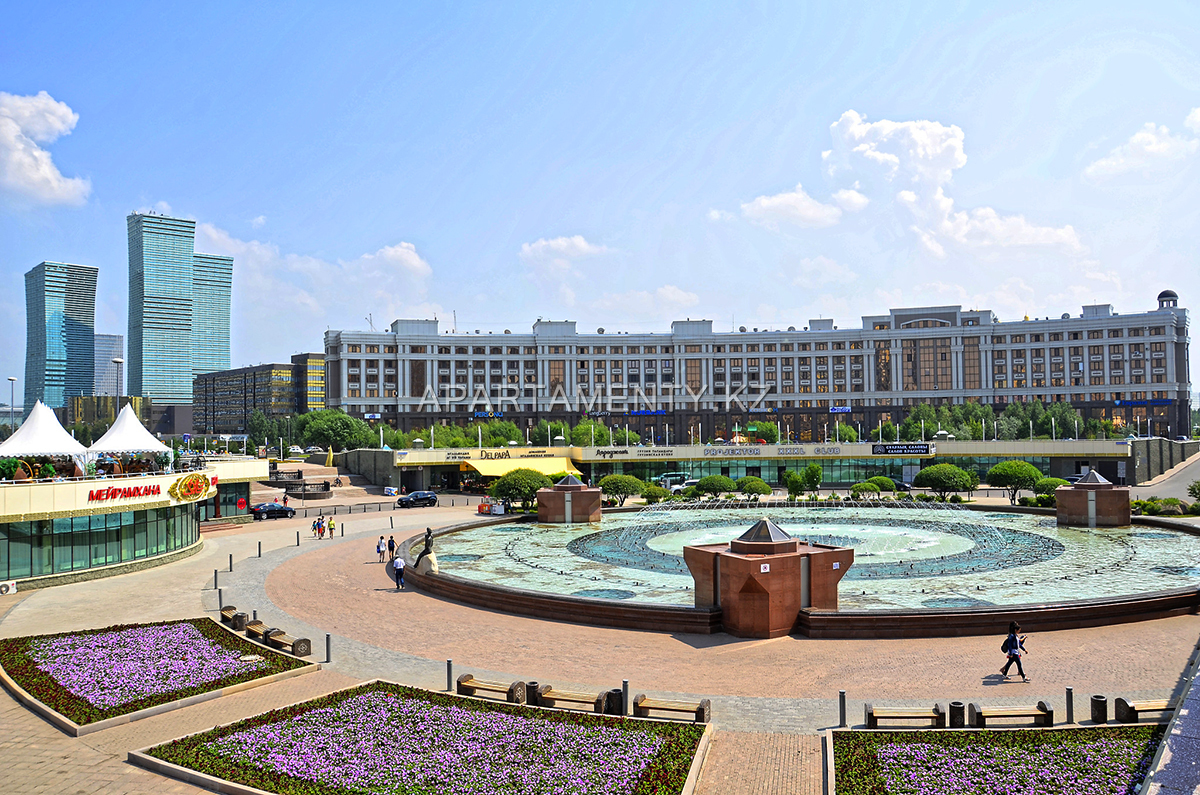
Photography here rewards patience more than speed. The reflecting pools along the central axis catch the light best about an hour before sunset, and the architecture, which leans heavily on glass and steel, goes from cold and governmental to genuinely warm in those last forty minutes of the day. Early mornings after rain are also worth knowing about.
Along the heritage stalls near the southern edge of the boulevard, local craftspeople sell goods made with traditional Kazakh techniques — felt work, embroidery, silver jewellery. These are working artisans rather than souvenir merchants, and it is worth pausing long enough to see what they are actually making.
The visitor centre, positioned roughly at the midpoint of the boulevard, runs a series of digital exhibits on how the area developed from a flat steppe into the capital's main ceremonial axis. It is air-conditioned, which matters in summer, and the exhibits are well-made.
At the eco-café near the south end, kurt and freshly brewed tea are reliably available. Kurt is dried salty cheese — a small quantity goes a long way — and the tea is served Kazakh-style, poured from a samovar into porcelain cups. It is a straightforward stop rather than a destination in itself, but worth knowing is there.
Sustainability & Responsible Travel
Sustainability at Nurzhol Boulevard
Responsible tourism is increasingly central to how Nurzhol Boulevard is managed. The site operates under a low-impact philosophy, which in practice means a few things visitors will notice directly.
Paper brochures are not distributed at the entrance. Digital maps are available instead, either through the venue's own app or via QR codes posted at the main access points. Recycling infrastructure is positioned at all entry and exit points along the promenade.
A portion of the entry fee — fifteen percent by the site's own accounting — is directed to the local preservation society and to educational programmes in the surrounding area. For visitors who want their spending to support the place rather than just pass through it, this is worth knowing.
Practical Tips for travelers
Before You Go: Practical Tips for Nurzhol Boulevard
Mid-morning is the quietest time to visit. Afternoon crowds build steadily, particularly on weekends, and the boulevard can feel congested by early afternoon in peak season. Arriving before noon gives you the space to walk it properly.
Comfortable walking shoes matter more than they might seem — the promenade is long and largely paved, and the combination of distance and sun exposure in summer can be more tiring than expected. Dress for the climate rather than for aesthetics; Astana's weather swings considerably between seasons.
Guided historical tours are available, and for these, advance booking through the official portal is recommended. Walk-in spots exist but are not always guaranteed, and the tours themselves are more structured than the general audio guide experience. If a tour is part of your plan, sort the booking before you arrive.
Architecture & History
The Architecture and History of Nurzhol Boulevard
Nurzhol Boulevard — sometimes referred to by its original conception as the Water-Green Boulevard — is the central architectural axis of Astana. It was conceived as a key element of President Nursultan Nazarbayev's plan to transform what had been a regional steppe city into a modern international capital, and the design was largely directed by Japanese architect Kisho Kurokawa.
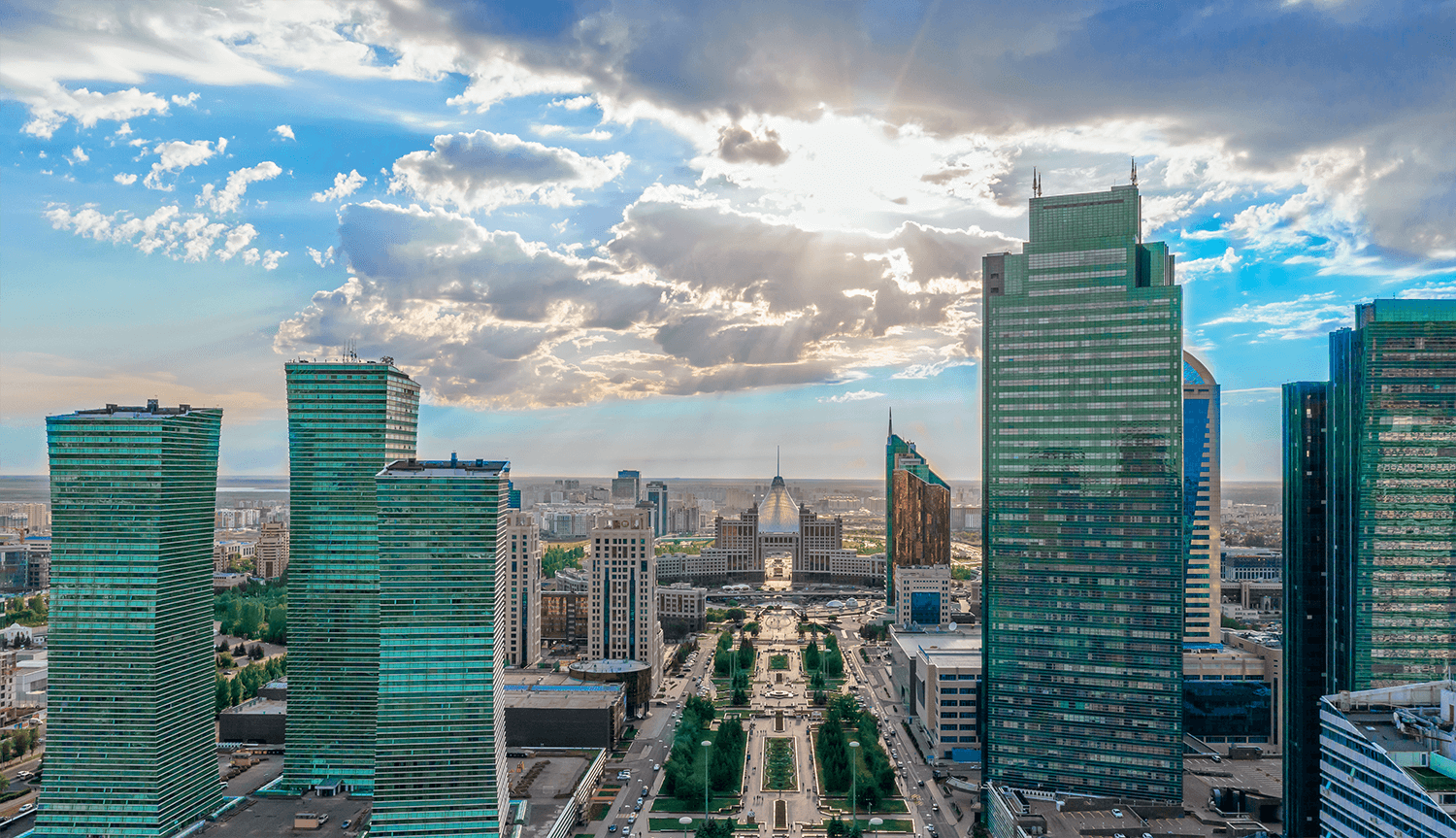
The boulevard runs in a roughly linear form, connecting the Ak Orda Presidential Palace at its northern end to the Bayterek Tower — the city's most recognisable monument — and continuing to the Supreme Court and other governmental institutions at the southern end. Along this axis sit the Senate, the House of Parliament, and a series of cultural buildings arranged according to a symmetrical urban plan. The core development took place through the 2000s.
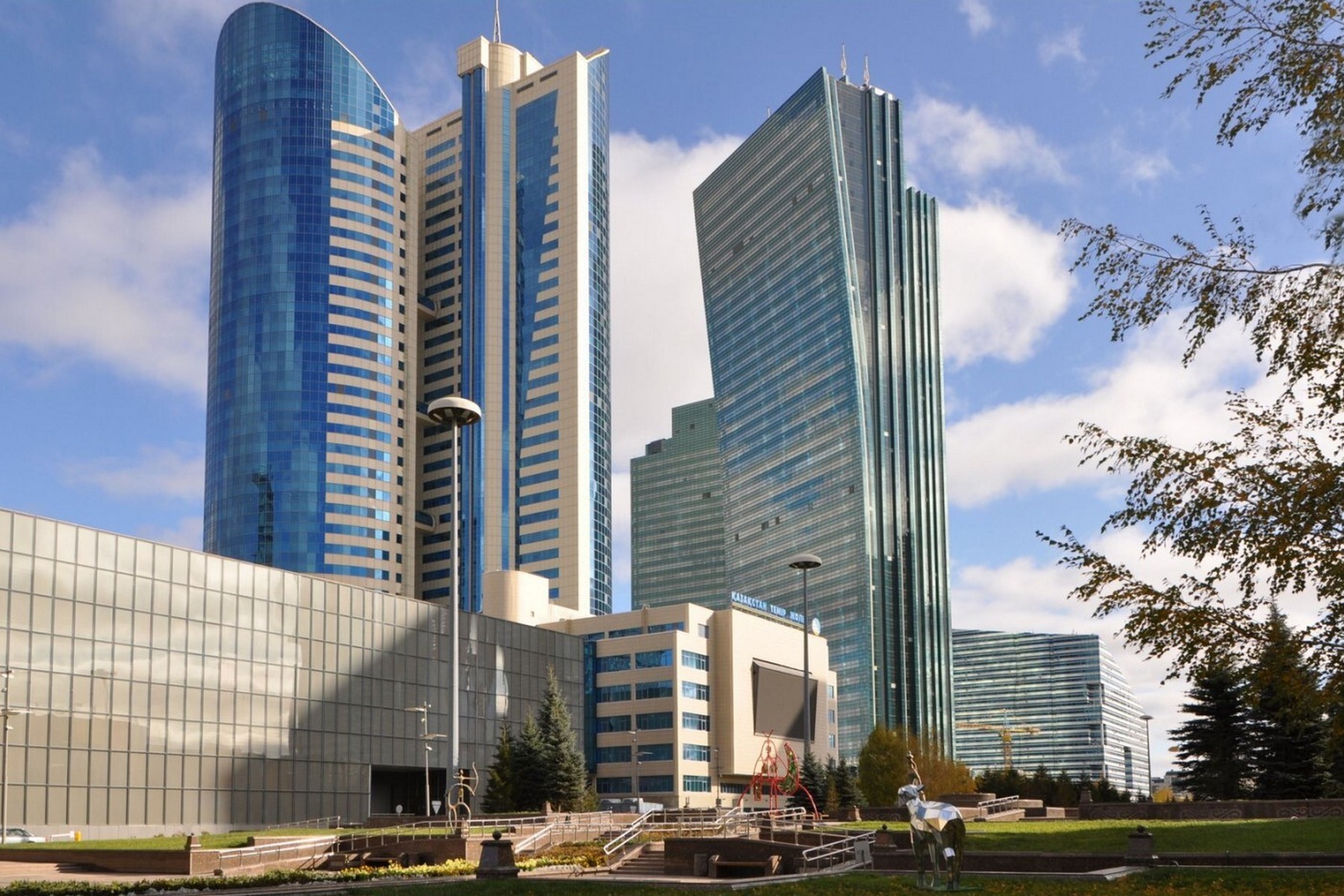
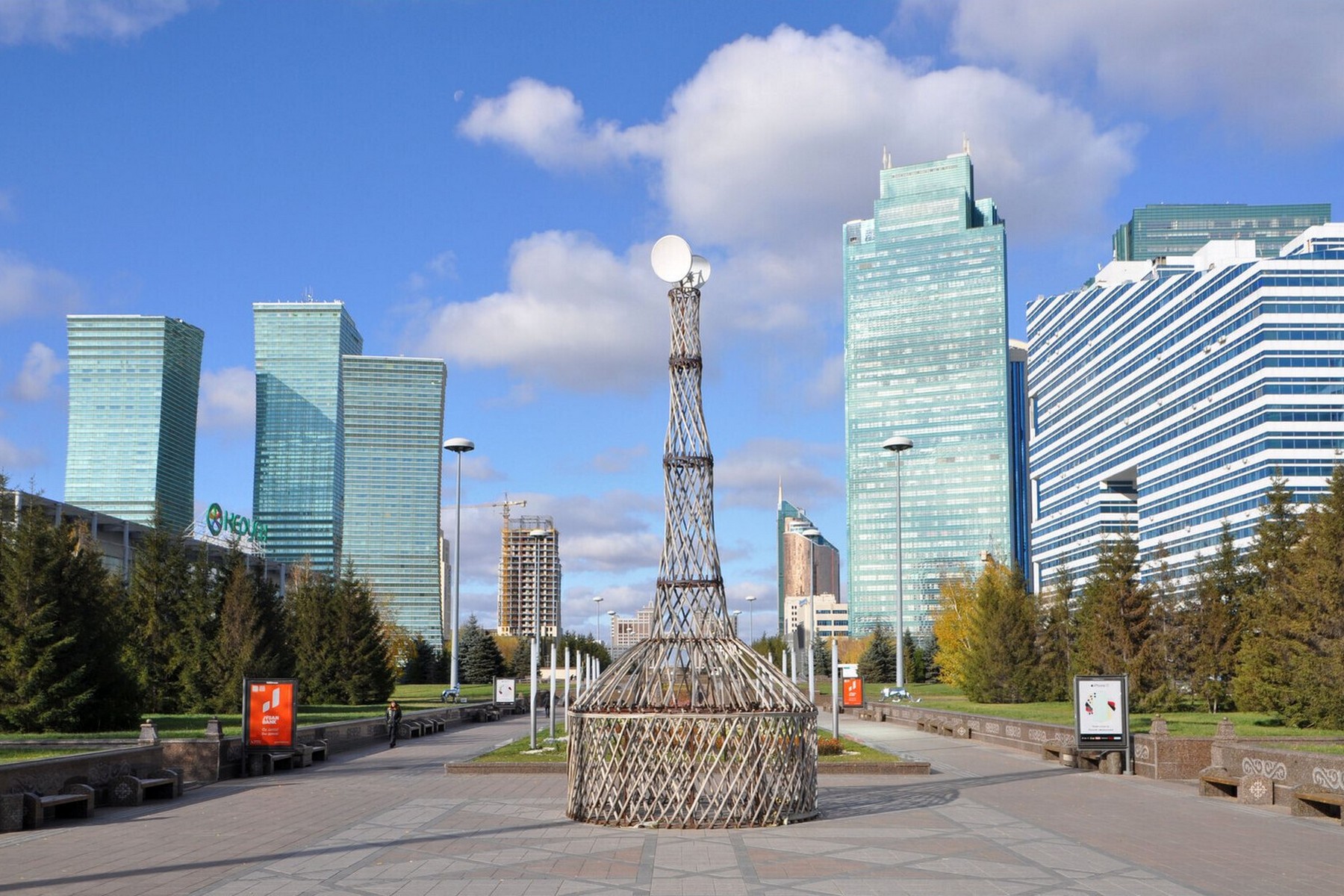
Architecturally, the boulevard is defined by its scale and by a preference for contemporary, often futuristic design. Buildings here were commissioned from internationally recognised architects including Norman Foster and Manfredi Nicoletti. The dominant aesthetic is glass curtain walls, bold geometric forms, and light-coloured stone and metallic cladding — a visual language associated with Neo-Futurist urbanism.
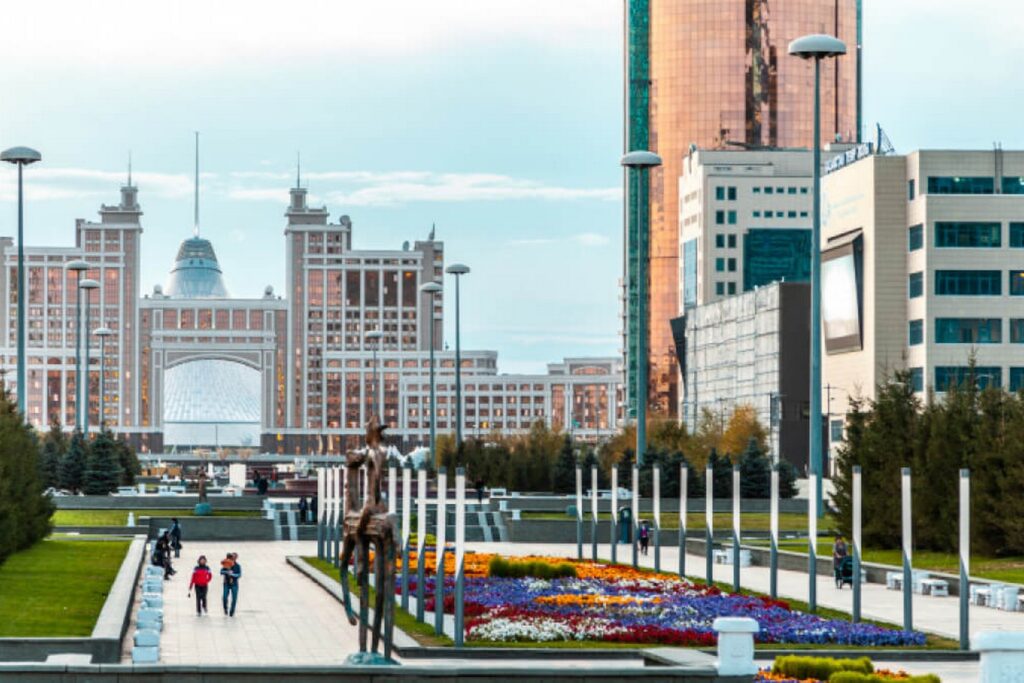
The pedestrian promenade runs on an elevated walkway that separates foot traffic from the vehicle routes below, creating a layered public space designed for both ceremonial use and daily movement. The landscaping — water features, reflecting pools, and seasonal planting — was intended to soften the severity of the open steppe setting and moderate Astana's harsh continental climate at street level.
The overall effect is deliberate: Nurzhol Boulevard is as much a statement of national identity as it is a thoroughfare.
The Experience
What It Feels Like to Walk Nurzhol Boulevard
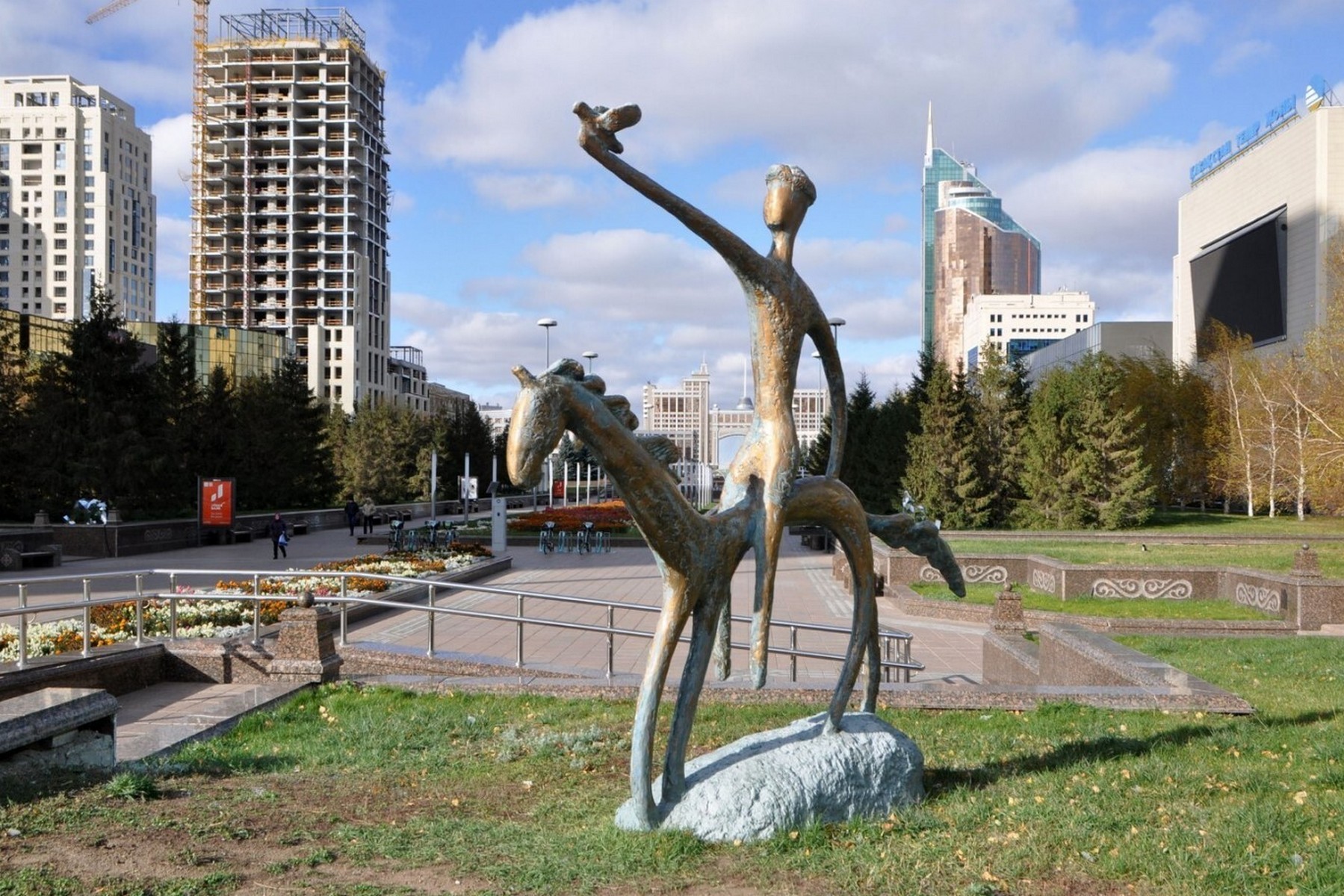
Nurzhol Boulevard is genuinely unlike most urban promenades. The scale is large — everything here is built to make an impression — and the architecture is strange in a way that takes some time to settle. Glass towers and curved structures designed by international architects line the route, and the effect is less like a city centre and more like a civic exhibition that has been made permanent.
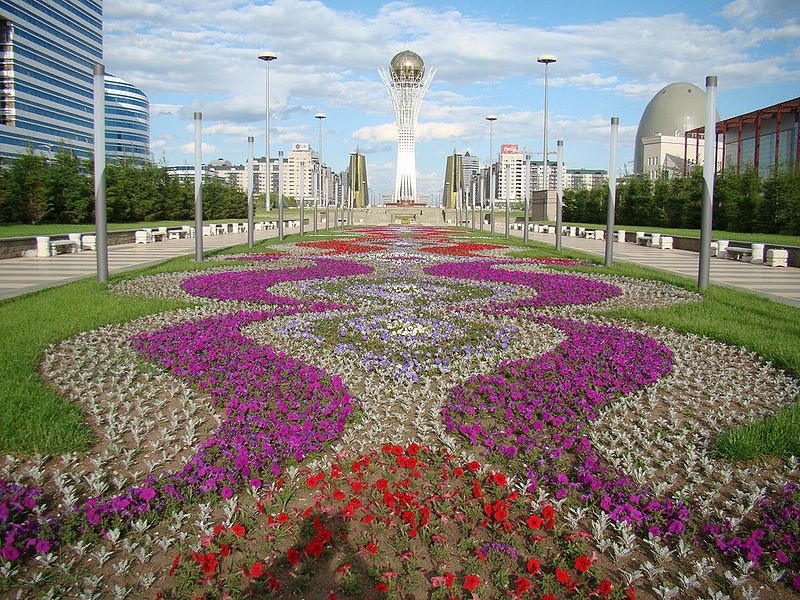
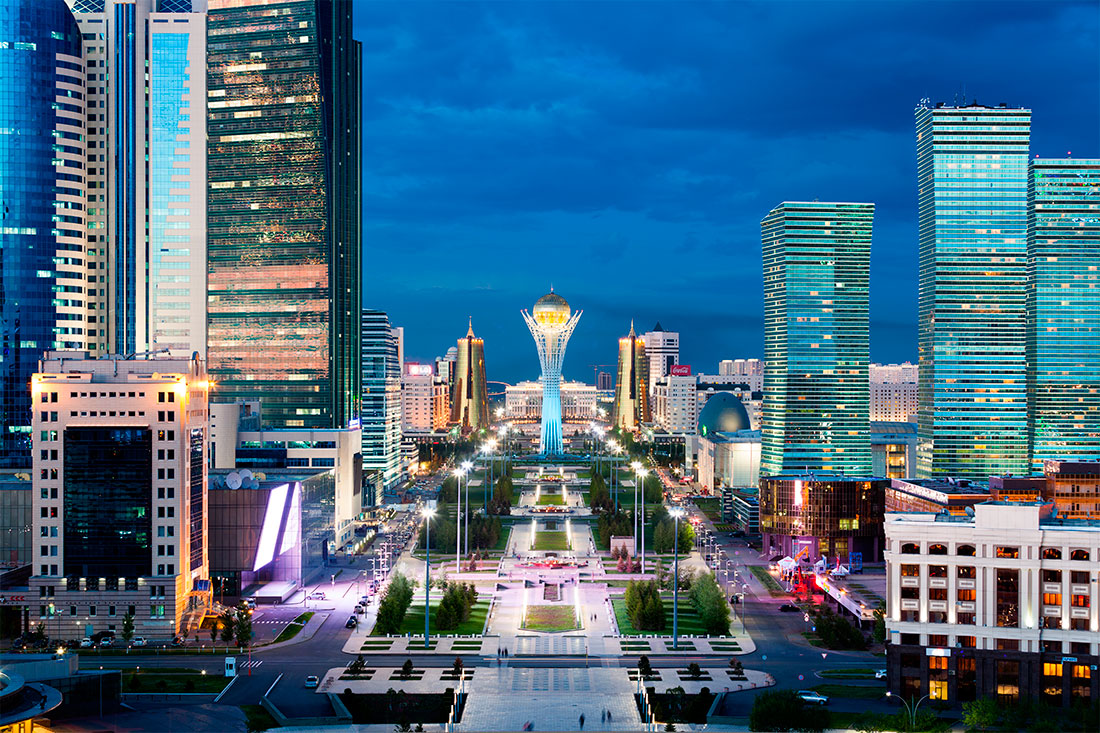
The Bayterek Tower sits roughly at the midpoint and is the boulevard's defining landmark. It is a white latticed tower supporting a gold sphere, based on a Kazakh legend about a mythical bird and a tree of life. It is also a viewpoint; the observation level inside the sphere gives a clear view of the full boulevard and the surrounding city.
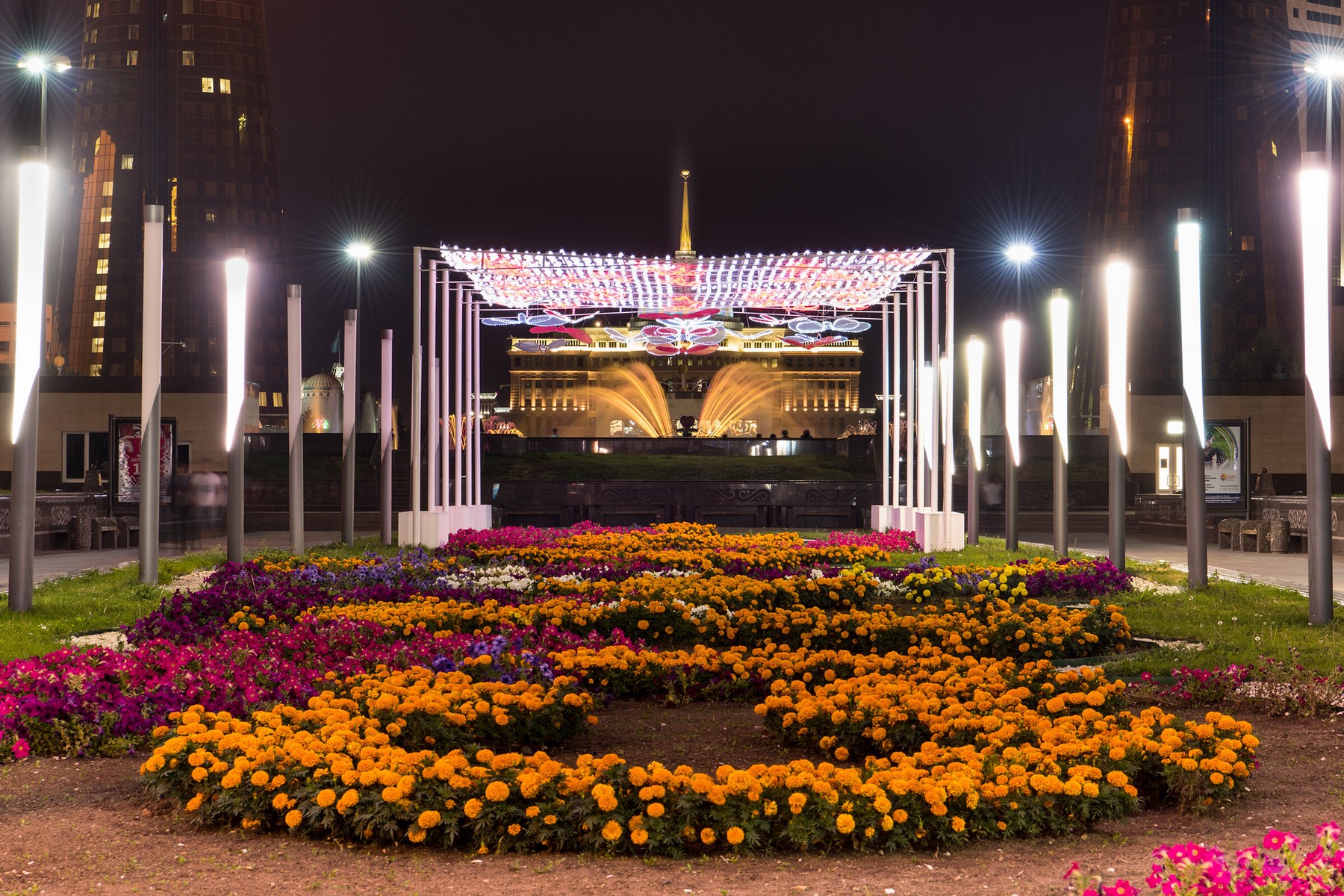
The boulevard is at its most atmospheric in the evening. When the daytime glare fades and the buildings are lit, the scale becomes easier to absorb, and the space feels designed for people rather than for ceremony. Citizens use it consistently — for walking, for sitting, for the kinds of ordinary social activity that make a public space actually work.
Coming here with no particular agenda is a reasonable approach. The boulevard rewards time spent on it more than a hurried walk from end to end.
Key Facts
- Futuristic Axis
- Nurzhol Boulevard is the primary pedestrian spine of the capital, connecting the Baiterek Tower to the massive Khan Shatyr tent.
- Green Water Path
- Also known as the 'Water-Green Boulevard,' it features a multi-level system of parks, fountains, and flower gardens.
- Architecture Loop
- The boulevard is lined with the city's most iconic skyscrapers, creating an 'architectural museum' for visitors and photography fans.
- Digital Grid Modern
- Recently, the boulevard is a fully-connected 'Smart Street' with solar-powered seating, high-speed 5G, and interactive history portals.
- Social Heart
- It is the city's main social hub, where thousands of residents gather for evening strolls, street festivals, and national celebrations.
- Vertical Design
- The unique multi-level design separates car traffic from pedestrian zones, providing a safe and serene environment in the city center.
Photo Gallery
Embedded Video
Nurzhol Boulevard
Loading map...Loading map...
FAQ
Have a question?
Ask and get answers in seconds!
Discussion 0
No comments yet. Start the conversation!
Leave a Reply