Caravanserai Turkistan
The historic Khaja Ahmed Yasawi Caravanserai - a masterpiece of medieval Islamic architecture
Detailed History & Context
The caravanserai was never just a hotel. For the merchants, pilgrims, diplomats, and scholars who moved along the Central Asian trade routes, the caravanserai was the point where the road's danger converted, briefly, into safety — a walled courtyard where camels could be unloaded, where water could be found, where news from three cities east might be exchanged with news from two cities west. Along the routes approaching Turkistan, a caravanserai was the last stop before the sacred city, or the first marker that you had survived the steppe.
Turkistan's caravanserai complex — reconstructed and expanded in recent years as part of the city's major heritage restoration program — sits at the heart of what has become of Central Asia's most ambitious archaeological and cultural projects. But to understand what the caravanserai represents, you have to begin with what Turkistan itself was, and that means going back considerably further than the buildings you can see today.
Yasi: Before the City Had Its Current Name
The site of Turkistan has been continuously inhabited since at least the 7th century CE, when it was known as Yasi — a Silk Road trading settlement in the valley of the Syr Darya river, positioned at a natural junction between the settled oasis zone and the nomadic steppe world that stretched north and east toward the Kazakh heartland. The Saka peoples had moved through this landscape centuries earlier; their burial mounds dot the surrounding plain, evidence of a relationship with this territory that predates every recorded history.
By the 11th and 12th centuries, Yasi had become a significant city — a center of scholarship, Sufi spirituality, and commerce. The great poet and mystic Khoja Ahmed Yasawi was born here around 1093 and died here around 1166, and his presence transformed the city's significance from regional to pan-Islamic. The Divan-i-Hikmat (Wisdom Poems) he composed here in the Kazakh language rather than Arabic or Persian was a radical act of cultural assertion: spiritual teaching in the mother tongue of the steppe peoples, accessible to nomads who had never read an Arabic line in their lives.
The Kazakh Khanate and the Sacred City
The Kazakh Khanate, founded in 1465 by Janibek and Kerei Khans, gave political form to the identity of the Kazakh people — but Turkistan had already been functioning as a spiritual and cultural anchor for the steppe world long before that. The mausoleum of Khoja Ahmed Yasawi, commissioned by Timur (Tamerlane) in the 1390s and left famously unfinished at his death, was the physical embodiment of that significance: a building so large it remained the tallest structure in Central Asia for centuries, a place of pilgrimage that drew the Kazakh khans for their coronations and burials.
The trade routes passing through Turkistan sustained the city's commerce and its caravanserai system. Merchants moving between the oasis cities of Samarkand and Bukhara to the south and the steppe trade networks to the north used Turkistan as a waystation. The caravanserai that received them was not building but a network of hosting facilities that evolved over centuries — some built by merchant families, some by the state, some by pious donors seeking the religious merit that came from supporting pilgrims traveling to the Yasawi shrine.
Russian Annexation and Its Effects
The Russian empire's annexation of the Kazakh steppe — conducted between 1731 and 1848 through a combination of military expansion, treaty coercion, and fortress-building — reached Turkistan by the 1860s. The city was taken by Russian forces in 1864. The renaming began immediately: what Kazakhs called Hazret-e Türkistan or simply Yasi became "Turkestan" in Russian administrative documents, and the city's significance in the Kazakh cultural imagination was systematically deprioritized in favor of its utility as an administrative center.
The Silk Road trade that had sustained Turkistan's caravanserai economy had already been in decline, disrupted by the sea routes that had been drawing commerce away from the overland routes since the 16th century. Russian administration accelerated that decline. The city that had been a pilgrimage center, a Silk Road hub, and the spiritual capital of the Kazakh world became, in the colonial period, a secondary town in the Russian administrative system.
Soviet Neglect and the Question of Memory
The Soviet period brought a particular form of erasure to Turkistan. The Yasawi shrine and the surrounding heritage complex were classified as monuments — preserved but depoliticized, their Islamic and Kazakh cultural significance officially subordinated to their value as archaeological artifacts. Pilgrimages to the shrine were discouraged or banned at various points. The oral traditions, the scholarly lineages, the living religious culture that had always surrounded the site were suppressed as part of the broader Soviet campaign against both Islam and Kazakh national consciousness.
The caravanserai complex itself largely disappeared during this period — the physical structures that hadn't already been absorbed into later buildings fell into disuse and then ruin. What survived was the outline of the system, archaeological traces that told you a great network of hosting had operated here, even as the living tradition those buildings had served was being systematically interrupted.
After Independence: The Reconstruction Project
Kazakhstan's independence in 1991 brought an immediate cultural reckoning with Turkistan. The city's significance in Kazakh historical memory — as the spiritual capital, as the place where the Kazakh khans were crowned, as the site of of the world's great examples of Timurid architecture — made it a natural focus for the newly independent state's cultural restoration efforts.
The caravanserai complex that visitors see today is largely a product of major reconstruction work undertaken from the 2010s, accelerated dramatically after Turkistan became the administrative center of Turkistan Region in 2018. The New City development project — a significant investment in heritage infrastructure, pedestrian zones, cultural facilities, and hospitality — has transformed the area around the Yasawi shrine into of Central Asia's most ambitious living heritage projects. The caravanserai is part of that transformation: a reconstruction that attempts to restore not just the physical form of Silk Road hospitality but some of the function — a place where visitors from across the world can arrive, rest, and enter the sacred city.
Digital Logistics & Access
Turkistan is roughly 165 kilometers northwest of Shymkent, the major city of southern Kazakhstan, and the logistics of getting there have improved considerably in recent years as the city has grown into its role as a heritage destination.
Getting to Turkistan
From Shymkent, the most common approach is by shared taxi or private car along the well-maintained highway northwest — the journey takes around two hours. Shared taxis depart regularly from Shymkent's main transport terminal and cost roughly 2,000–3,000 KZT per seat; the drivers know the route instinctively and often add commentary about the landscape on the way. Comfortable buses also run the Shymkent–Turkistan corridor.
Turkistan has its own railway station, and the high-speed train from Almaty (a journey of approximately four hours) makes the city accessible from Kazakhstan's largest metropolis with surprising ease. Book in advance, particularly for weekend and holiday travel — the trains to Turkistan fill up as pilgrimage numbers have grown. From Nur-Sultan (Astana), the journey is longer but manageable, typically requiring an overnight train or a connecting route through Shymkent.
There is also a domestic airport serving Turkistan, with connections to Almaty and Astana.
Getting Around the City
The Caravanserai sits within the larger Turkistan heritage complex, close to the Yasawi Mausoleum. The main visitor area is compact and walkable — from the central pedestrian zone, the caravanserai, the mausoleum, the archaeological museum, and the reconstructed medresseh are all within comfortable walking distance. Taxis are available for movement beyond the heritage core; the rides are short and inexpensive.
Entry and Hours
The caravanserai is part of the wider Turkistan historic and cultural museum-reserve. Entry fees apply; at the time of writing, the combined ticket for the heritage complex costs in the range of 2,000–3,000 KZT for adults, with discounts for students and children. Opening hours run roughly 9 a.m. to 6 p.m. daily, though these may be extended in peak season. Check with the ticket office for current hours and any restrictions on photography inside the buildings.
What to Bring
Modest dress is appropriate given the religious significance of the surrounding complex — shoulders and knees covered, and women should be prepared for the possibility of head-covering requests in certain areas of the shrine complex. Comfortable walking shoes for the paved and cobbled heritage zone. Sunscreen in summer — the southern Kazakhstan sun is intense and the open plazas offer little shade. Water, particularly in July and August when temperatures regularly exceed 35°C.
Connectivity
Mobile signal in Turkistan is reliable from the main providers. The heritage complex has Wi-Fi in some areas. Download offline maps before arriving — the city is well-mapped on standard apps, and the heritage area is easy to navigate on foot you've oriented yourself at the main entrance.
5+ Specific Activities
The Turkistan heritage complex rewards slow visitors — those who resist the urge to photograph everything immediately and instead let the scale of the place register first. The caravanserai sits within a wider web of experience that deepens with time.
Walk the Pedestrian Quarter at Dawn or Dusk
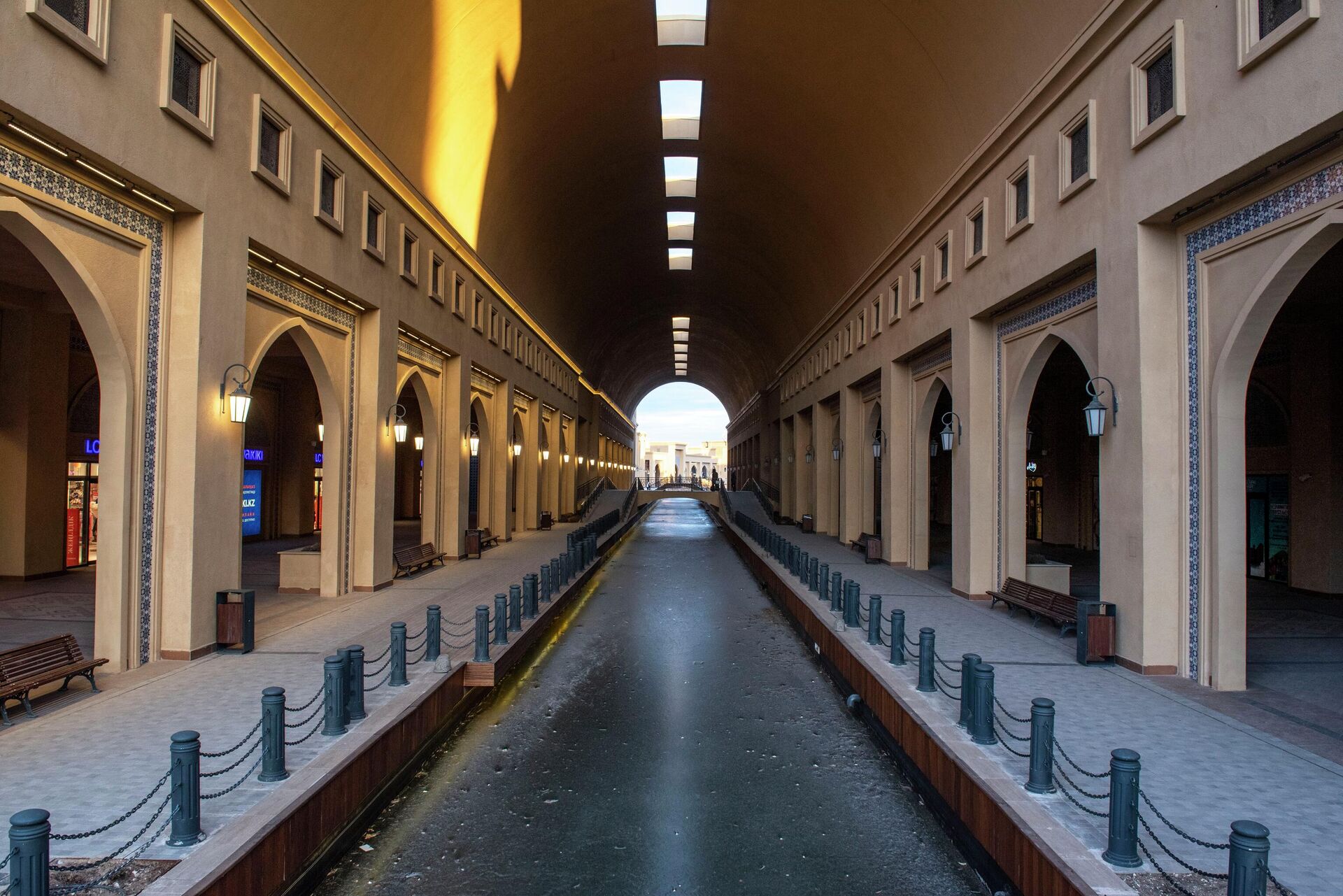
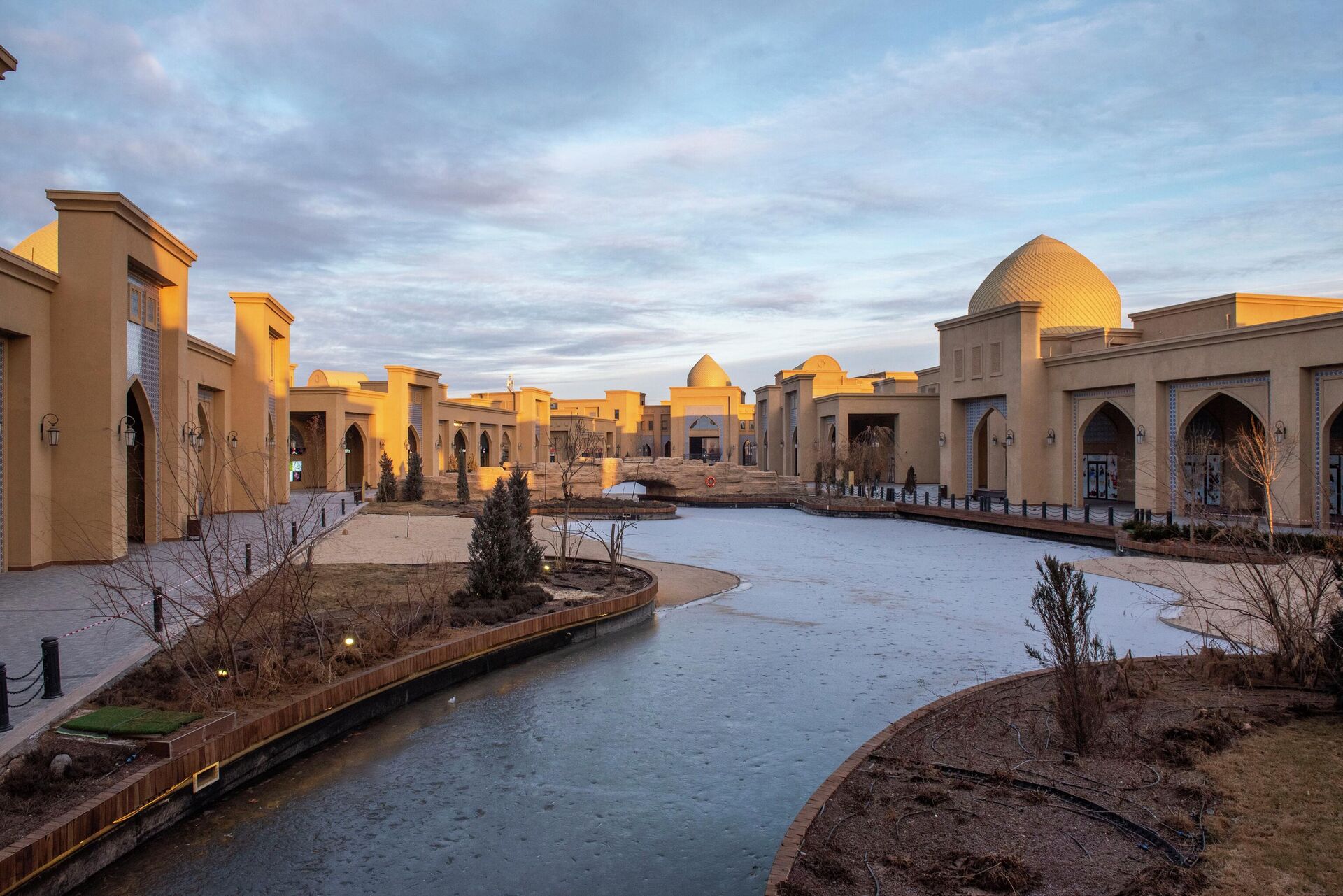
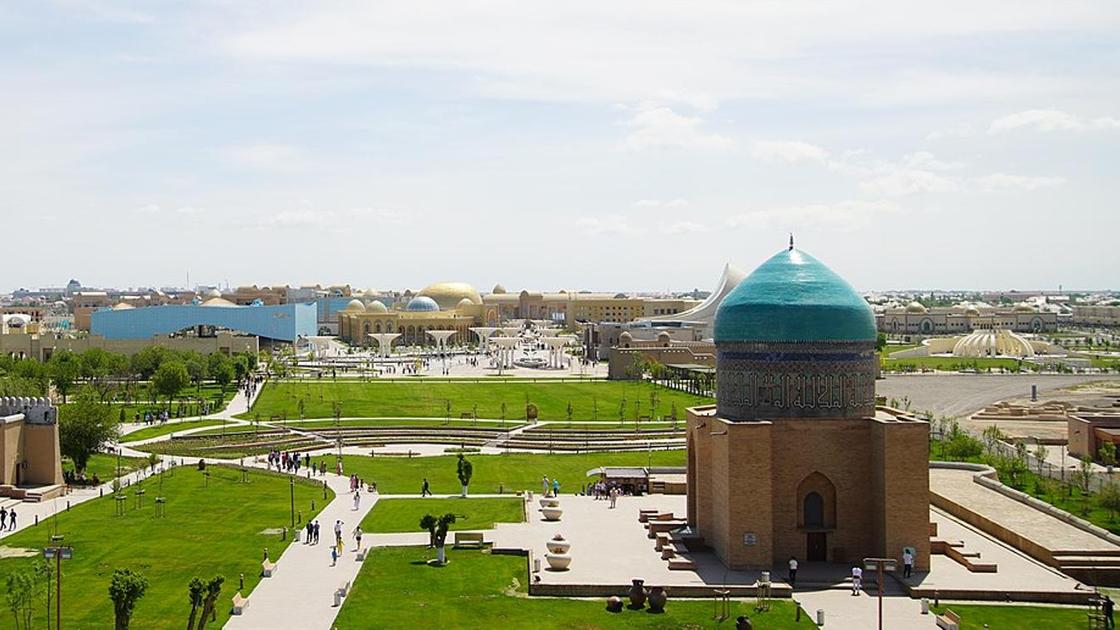
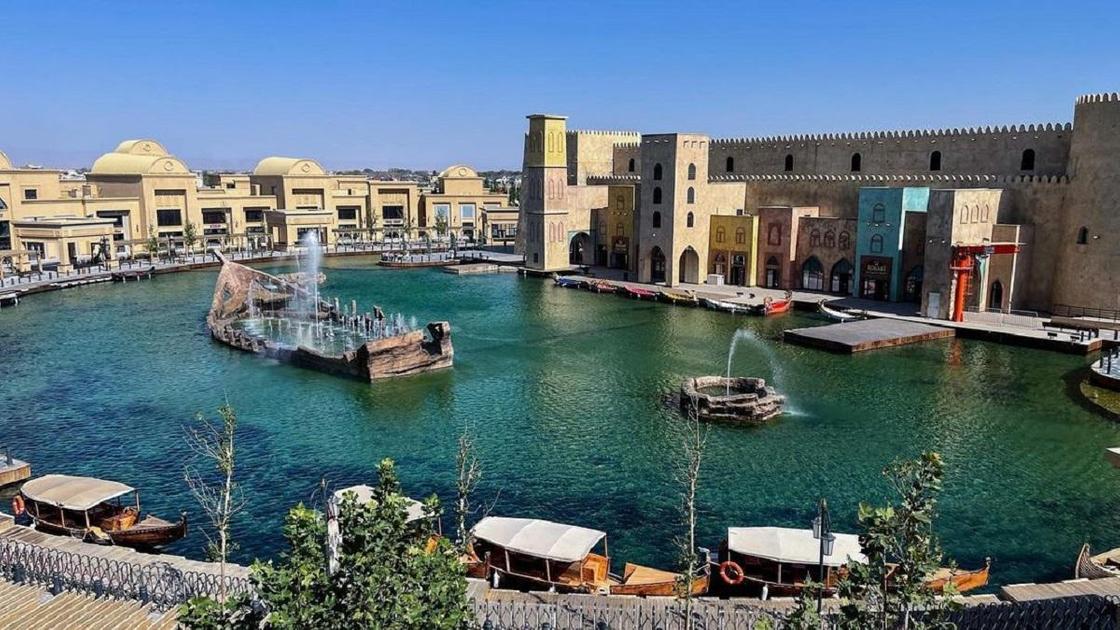
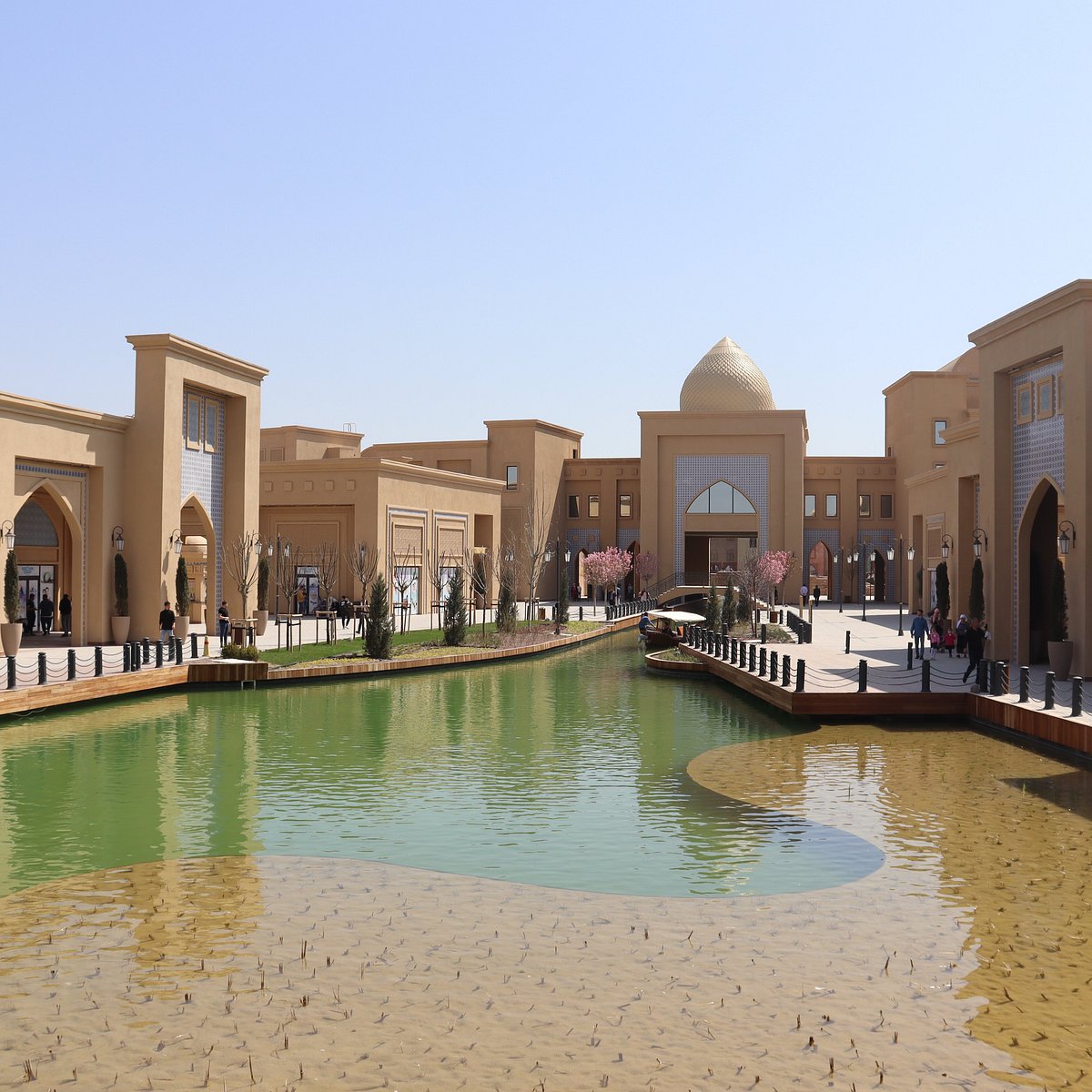
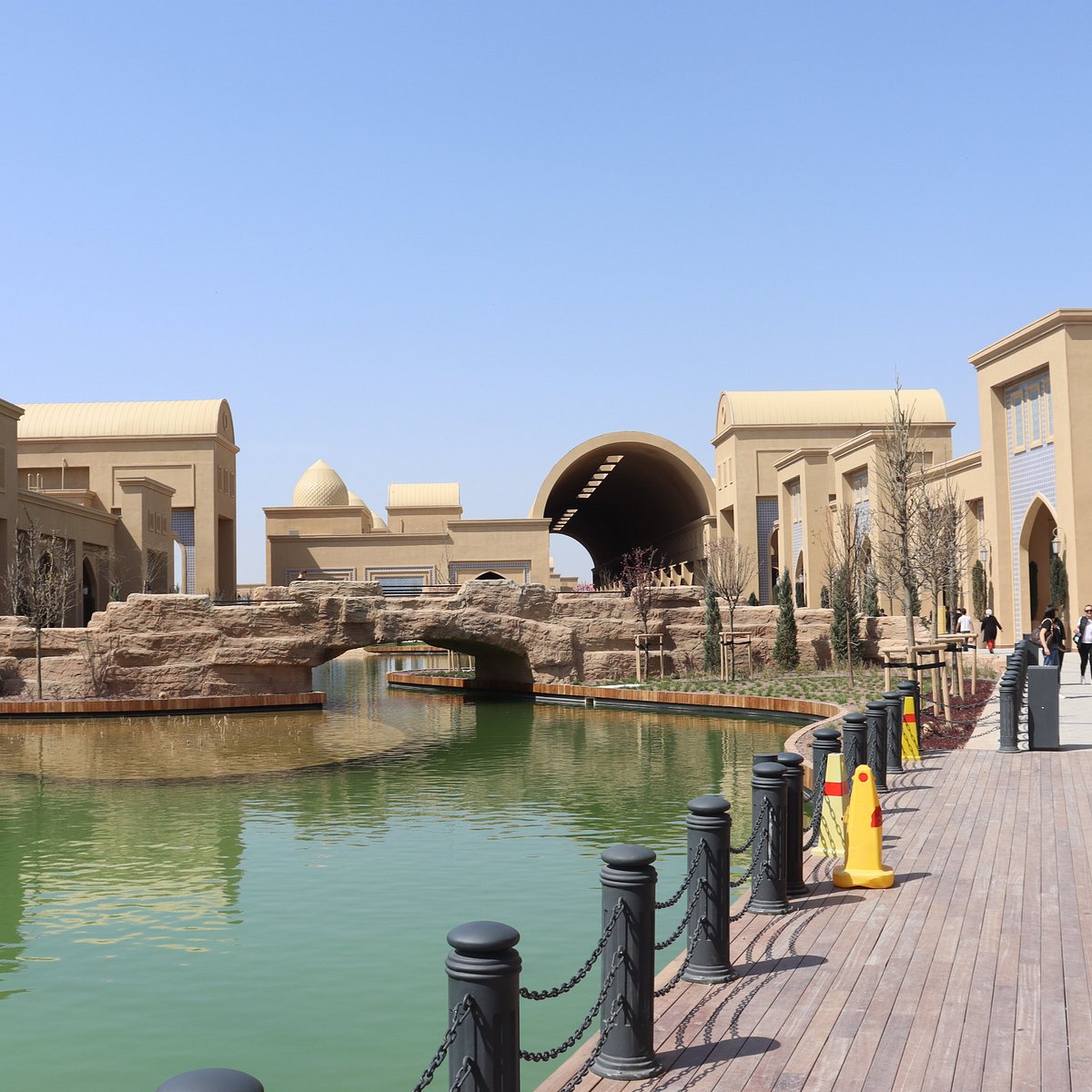
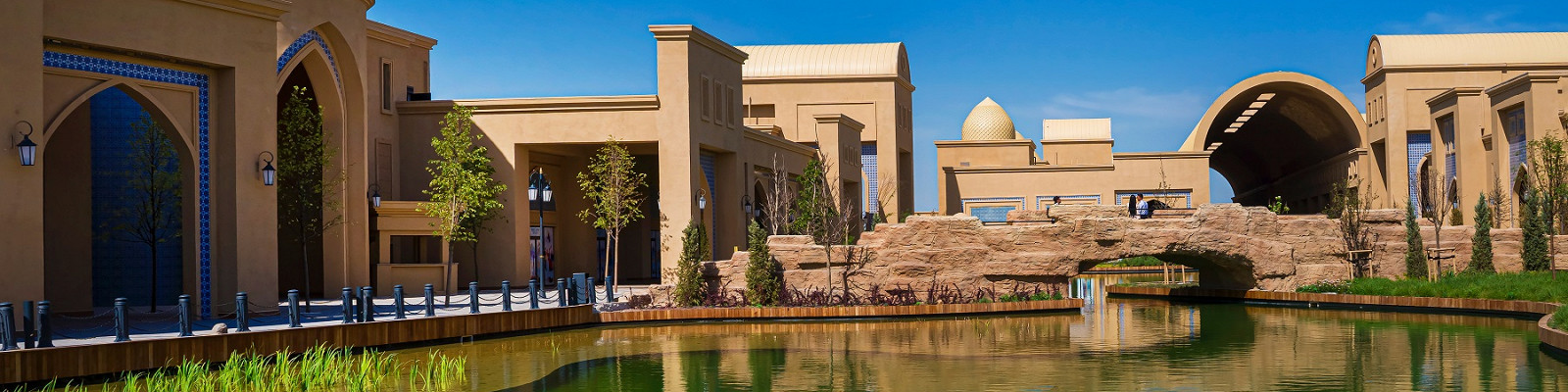
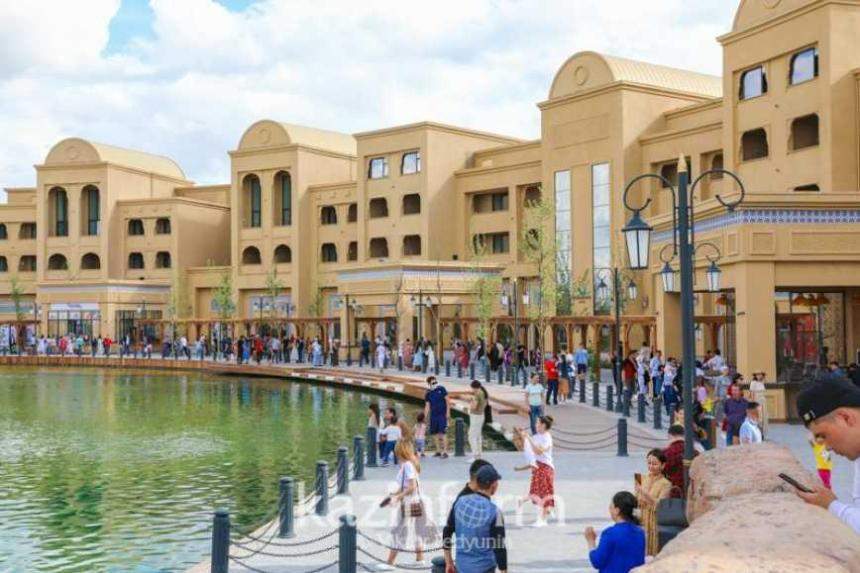
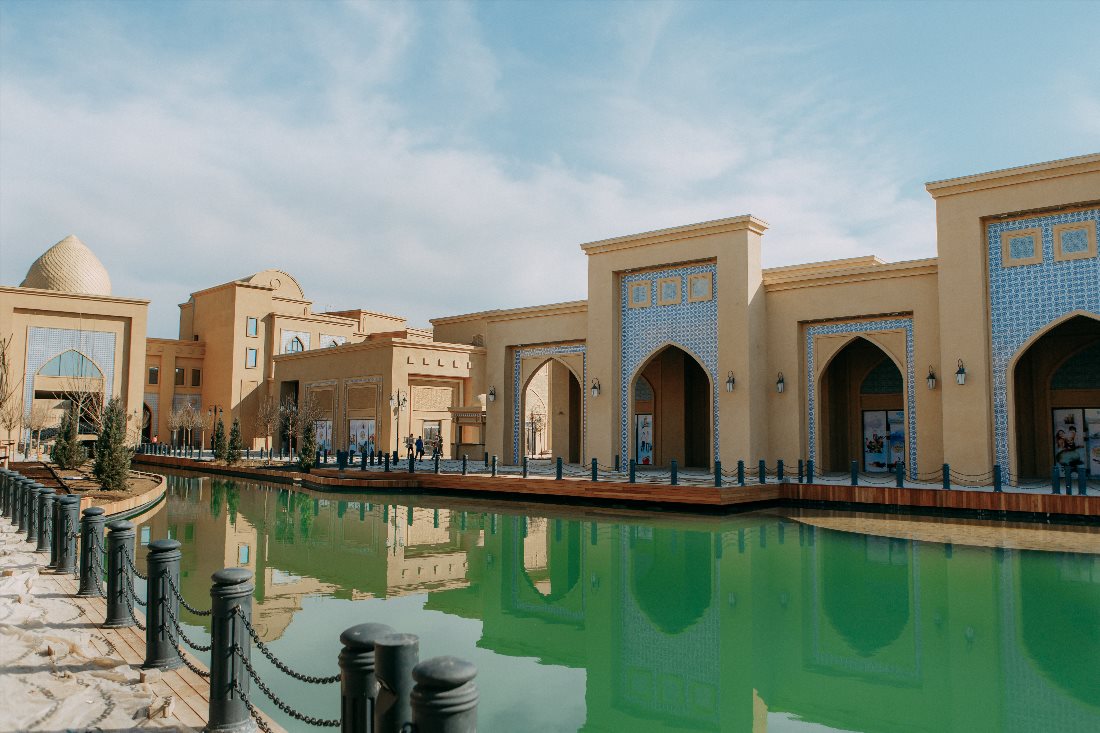
The reconstructed pedestrian quarter surrounding the Yasawi Mausoleum — with its canals, its recreated market lanes, its traditional architecture — is most compelling at the edges of the day. At dawn, before the tour groups arrive, the space is nearly empty and the sound of the fountains is the dominant thing. At dusk, as the turquoise dome of the mausoleum catches the last light and shifts through gold toward amber, the pedestrian zone fills with local families who treat the evening promenade as a social ritual. Watch them, not the guidebook.
Enter the Caravanserai Courtyard
The central courtyard of the reconstructed caravanserai is worth extended time. The arcaded rooms that ring the courtyard were originally the merchants' and pilgrims' sleeping quarters; today some house craft stalls and exhibition spaces. Sit in the middle of the courtyard and practice something old travelers understood: the caravanserai courtyard is designed to be inhabited, to absorb the noise and heat of the day and return quiet. It does this even now, even reconstructed.
Visit the Yasawi Mausoleum
You're here, so go. The mausoleum commissioned by Timur in the 1390s is of the finest examples of Timurid architecture in the world — and it's unfinished, which makes it more interesting, not less. The khanikah (main hall) with its massive bronze cauldron and the Kumbet central chamber are the core of the experience. Dress modestly; shoes come off at the threshold. Arrive in the morning when the light enters the building correctly.
Explore the Archaeological Museum
The museum within the Turkistan complex houses objects excavated from the surrounding region — Saka gold, Silk Road ceramic finds, medieval coinage, tools, weapons, and the domestic objects that tell you more about how people actually lived than any official chronicle. The Saka collection is extraordinary: you're looking at the handiwork of people who were making sophisticated jewelry and weaponry here twenty-five centuries ago.
Watch a Traditional Performance
The pedestrian zone around the caravanserai hosts regular cultural performances — dombyra music (the two-stringed Kazakh lute that serves as the instrument of the national soul), poetry recitation in the tradition of the akyn (improvising poet-singer), and occasionally aytys, the competitive improvised singing duel that is of the great art forms of the Kazakh oral tradition. Ask at the visitor center for the current schedule.
Spend an Evening in the Market
The craft market near the caravanserai sells objects that range from tourist kitsch to genuinely excellent traditional work. The difference is not always obvious, but it's there: hand-felt wool in complex geometric patterns, silver jewelry with Kazakh motifs, worked leather, embroidered cloth. Take time. Talk to the vendors. The women who make shyrdak (traditional felt rugs) have been doing this work for decades and know more about Central Asian design history than most museum curators.
Sustainability & Responsible Travel
The Turkistan heritage complex exists in a productive tension: it is simultaneously a living pilgrimage site, a UNESCO-recognized monument, an active archaeological zone, and a growing mass tourism destination. How those four things coexist matters enormously, and visitors are not neutral in that negotiation.
Visiting a Living Sacred Place
The Yasawi Mausoleum is not a museum. It is an active place of prayer and pilgrimage that receives millions of visitors a year, including Kazakh Muslims who have traveled significant distances to pray at the shrine of their most beloved spiritual ancestor. When you visit, you are a guest in someone else's sacred space. Dress accordingly, lower your voice, and if you encounter people at prayer, give them their distance and their dignity.
The same principle applies to the broader complex. The reconstructed caravanserai and the pedestrian zone are designed to welcome visitors, but the site's significance runs deeper than heritage tourism, and treating it as a theme park — loud, intrusive, selfie-first — misses the point and causes real offense to those for whom this place is genuinely holy.
Archaeological Integrity
The area around Turkistan is of the most archaeologically rich zones in Central Asia, and active excavation continues alongside the restoration work. Don't touch exposed archaeological surfaces. Don't remove anything, even something that looks insignificant. The site's archaeological layers represent thousands of years of human occupation and are irreplaceable.
Supporting Local Craft and Community
The most direct way to ensure that Turkistan's tourism economy benefits the people of Turkistan rather than external tour operators is to buy, eat, and stay local. The craft vendors in the caravanserai market, the family guesthouses in the old residential districts, the small restaurants serving shurpa (lamb soup) and flat bread out of small courtyards — these are the economic beneficiaries that heritage tourism in its best form is supposed to support.
Heritage guide and Turkistani native Aizat Ospanova has been explaining the city's history to international visitors for a decade. Her rate is fair, her knowledge is deep, and she knows which details the official interpretation omits. Hiring a guide like her — local, trained, invested in the place — keeps money in the local economy and gives you a better experience than any app.
A Note on Reconstruction
Some visitors arrive at Turkistan and feel uncertain about the extent of reconstruction they're looking at — how much is original, how much is new? It's a legitimate question. The honest answer is: the Yasawi Mausoleum is largely original Timurid structure, conserved and restored but genuinely medieval. Much of the surrounding caravanserai complex and pedestrian zone is recent reconstruction. Knowing this doesn't diminish the experience if you let the reconstruction serve its purpose — to make the past imaginable, to give the scale and character of the Silk Road city some physical form in the present. The question to ask isn't "is this real?" but "what does it help me understand?"
Practical Tips for travelers
Practical considerations that will improve your visit to Turkistan — gathered from the kind of experience you can't get from a booking portal.
When to Go
Turkistan in July is genuinely hot — temperatures regularly reach 38–40°C in the afternoon, and the open plazas around the mausoleum offer almost no shade. If you're visiting in summer, arrive at 8 a.m. and use the morning hours for the outdoor exploration; take shelter or rest during the 12–4 p.m. window when the heat is at its worst. Late afternoon and evening are beautiful, the light on the turquoise dome is extraordinary, and the temperature becomes human again.
The most comfortable visiting months are April, May, September, and October. Spring brings mild temperatures and the possibility of wildflowers in the surrounding steppe. Autumn is cooler and less crowded than summer. If you're interested in attending of the major Islamic festivals — particularly Eid or the annual observances at the Yasawi shrine — plan ahead, as the city fills with pilgrims from across Central Asia and accommodation must be booked well in advance.
Dress Code
This applies to the entire complex, not just the mausoleum interior. Shoulders and knees should be covered for both men and women — bring a light layer if you're visiting in summer when the temptation to wear less is strong. Women should have a scarf available; it may be required at the mausoleum entrance and is appropriate throughout the shrine area. This isn't bureaucratic enforcement — it's basic respect for a place that is actively holy to millions of people.
Guided vs. Self-Guided
The heritage complex is navigable without a guide, and the signage has improved significantly in recent years. But a knowledgeable local guide adds a layer of context that the official interpretation doesn't fully provide — particularly around the pre-Islamic history of the site, the Asharshylyk period, and the Soviet suppression of the pilgrimage culture that is recently recovering. Half-day guided tours can be arranged at the visitor center or through local agencies in Shymkent.
Photography
Photography is generally permitted in the outdoor areas of the complex. Rules inside the mausoleum interior are stricter — check at the entrance. If you want to photograph people, particularly at prayer or in the craft market, ask first. Most people will say yes; the asking matters.
Accommodation
Turkistan now has a range of accommodation from large modern hotels in the New City to smaller guesthouses in the older residential areas. Staying in the older district, closer to the heritage core, puts you within walking distance of the complex at dawn and dusk — the two best times to visit. Book ahead for any Friday through Sunday, and for the days surrounding major Islamic holidays.
Getting Between Sites
If you're combining Turkistan with Shymkent, Otrar, or the Sauran fortress ruins (an extraordinary medieval ghost city 35 kilometers from Turkistan), taxis and shared transport are straightforward. Rent a car in Shymkent if you're planning to visit multiple sites in the region — the distances are manageable and the roads are good.
History & Significance
There is a particular kind of place on any trade route that exists not for its own sake but for the sake of everything passing through it. The caravanserai is that place: a container for transit, built around the logic of arrival and departure, designed to hold the road's chaos for night and release it in the morning.
Turkistan — known to medieval Arab geographers as Yasi, known to Silk Road merchants as the last major stop before the southern oases — was never just a waystation. But the caravanserai tradition that developed here reflects something important about the city's role in Central Asian history: it was a junction point, a place where multiple worlds met, and the institutions of hospitality it created were equal to the complexity of what they were receiving.
The Mechanics of the Silk Road Hub
The northern Silk Road branch ran from China's western regions through the Zhetysu corridor (the "Land of Seven Rivers") before curving south toward Turkistan and then continuing to Samarkand, Bukhara, and the western world beyond. Turkistan sat at a critical node on this route: south of the Kazakh steppe, north of the great oasis cities, positioned where nomadic and settled economies intersected daily.
The goods moving through in peak centuries were staggering in their variety: Chinese silk and porcelain moving west; Byzantine glass, Middle Eastern metalwork, and Indian spices moving east; Kazakh horses, wool, and furs moving south; grain and manufactured goods moving north. The caravanserai network that supported this traffic was not passive infrastructure. It was the logistical backbone of an intercontinental economy.
A well-functioning caravanserai provided stabling for horses and camels, storage for goods, sleeping quarters for merchants and pilgrims, water from a well or cistern, and usually a small market where supplies could be replenished and news exchanged. The caravanserais approaching Turkistan added a religious dimension: this was the city of Khoja Ahmed Yasawi, and pilgrims traveling to the shrine required the same logistical support as merchants.
The Yasawi Effect
After Khoja Ahmed Yasawi's death in 1166 and the subsequent growth of his shrine as a pilgrimage destination, Turkistan's caravanserai economy developed a dual character. Commercial travelers and pilgrims used the same roads, the same resting places, and often the same hostels — but their motivations were different and their presence gave the city a spiritual weight that purely commercial hubs lacked.
When Timur commissioned the great mausoleum in the 1390s, he was acknowledging what had been true for two centuries: Turkistan was not merely an economic node but a center of Kazakh and Central Asian Islamic identity. The caravanserai system that supported the pilgrimage traffic was therefore both a commercial and a devotional infrastructure simultaneously. Wealthy merchants who could afford the construction donated caravanserais as acts of piety, supporting pilgrim traffic as a religious obligation.
Decline and Memory
The Silk Road's overland trade routes entered structural decline in the 16th century as maritime trade routes around Africa displaced the overland connections between Asia and Europe. Turkistan's commercial caravanserai function weakened accordingly. Russian annexation in 1864 completed the transition from active commercial hub to historical monument — the city that had been at the center of Eurasian trade became a peripheral administrative center in the Russian empire's southern territories.
What survived was the memory, and the pilgrimage. The Yasawi shrine continued to draw Kazakh Muslims even through the colonial period, even through Soviet suppression, because some attachments are stronger than political systems. The caravanserai that had served the merchant caravans adapted, in the post-Soviet period, to serve a new kind of traveler: the heritage tourist, the pilgrim returning after decades of forced absence, the Kazakh diaspora seeking the spiritual capital of their ancestral culture. The form of hospitality has changed. The need for it has not.
The Experience
Malik Abenov has been working as a guide in Turkistan for eight years. He grew up in the city, and his grandmother brought him to the Yasawi Mausoleum the way other grandmothers take children to church — not as a tourist excursion but as a fact of life, a relationship with a place rather than a visit to. When international visitors ask him what Turkistan means to Kazakh people, he pauses before answering, because the question is large enough to deserve the pause.
"This is where the khans were crowned," he says eventually. "This is where they were buried. For seven hundred years this was the center. Not Almaty. Not Astana. Here."
Standing in the caravanserai courtyard at dusk — the stone cooling after the day's heat, the call to prayer carrying from the mausoleum across the open space — you understand what he means without needing the full historical explanation. There are places where the weight of accumulated significance is so substantial that you feel it in your body before your mind has processed it. Turkistan is of them.
The caravanserai experience, at its best, is this: arriving through the gateway into the arcaded courtyard, the sound of the city dropping away, the proportions of the space settling you into something older and slower. The craft stalls that ring the courtyard are selling objects made by hand in techniques unchanged for centuries — the felt work, the silver, the embroidered cloth. The tea house in the corner of the arcade serves shay in small bowls the way tea has been served at every rest point on every trade route in Central Asia since before the Ottoman Empire existed.
Beyond the caravanserai, the turquoise dome of the Yasawi Mausoleum rises against the southern sky. You've seen it in photographs. The photographs are correct about the color and wrong about the scale — it is larger than the images suggest, and the dome's surface catches light in the late afternoon in a way that makes the turquoise shift toward green and then toward gold, so that the building seems to be slowly changing its mind about what color it wants to be.
Inside, the khanikah — the central domed hall — holds a bronze cauldron three meters in diameter that Timur brought from Samarkand. It served as a water vessel for pilgrims and, according to some accounts, for ritual ablution before prayer. It has been here for six hundred years. Touch it and you are in direct physical contact with an object that has absorbed the prayers of every pilgrim who passed through this hall since the 1390s. That's not metaphor. That's the materiality of history.
You'll spend however long you have here and leave with the feeling that you need more. That's the appropriate response to Turkistan — not completion, but appetite. Malik's grandmother understood something that took his international visitors longer to grasp: you don't visit Turkistan. You begin visiting Turkistan, and then you return.
Key Facts
- Venice of Steppe
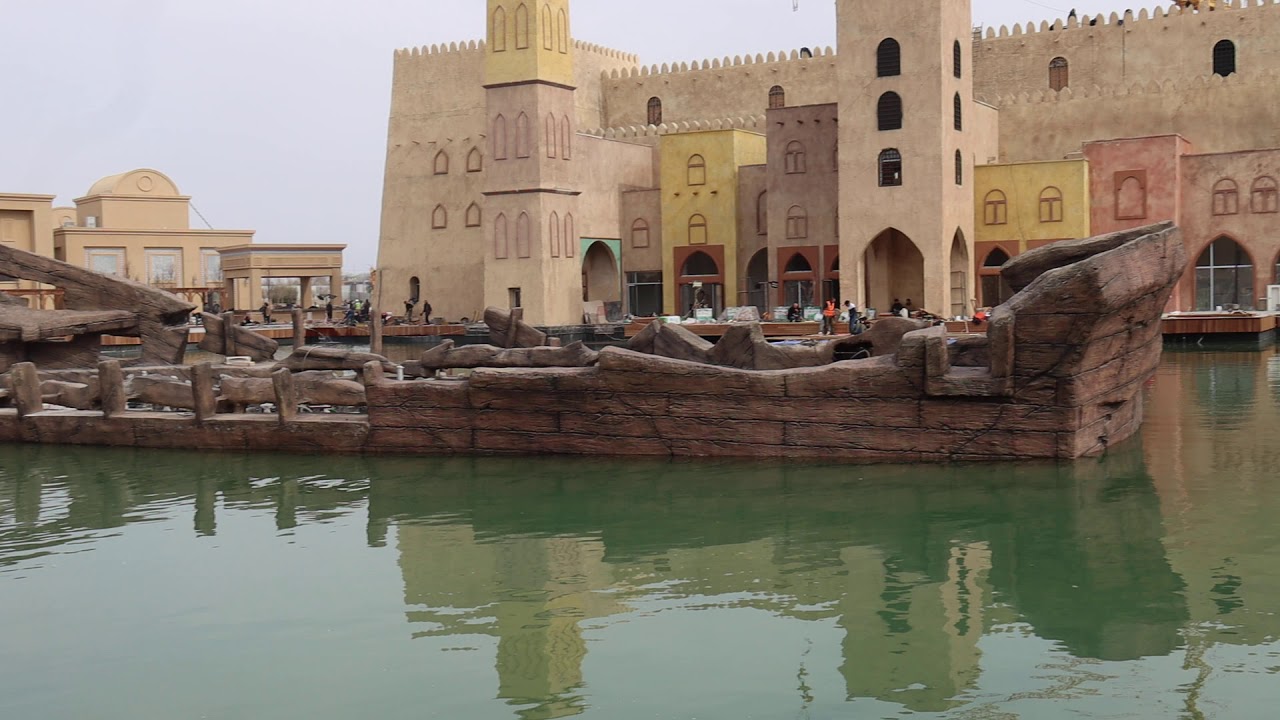
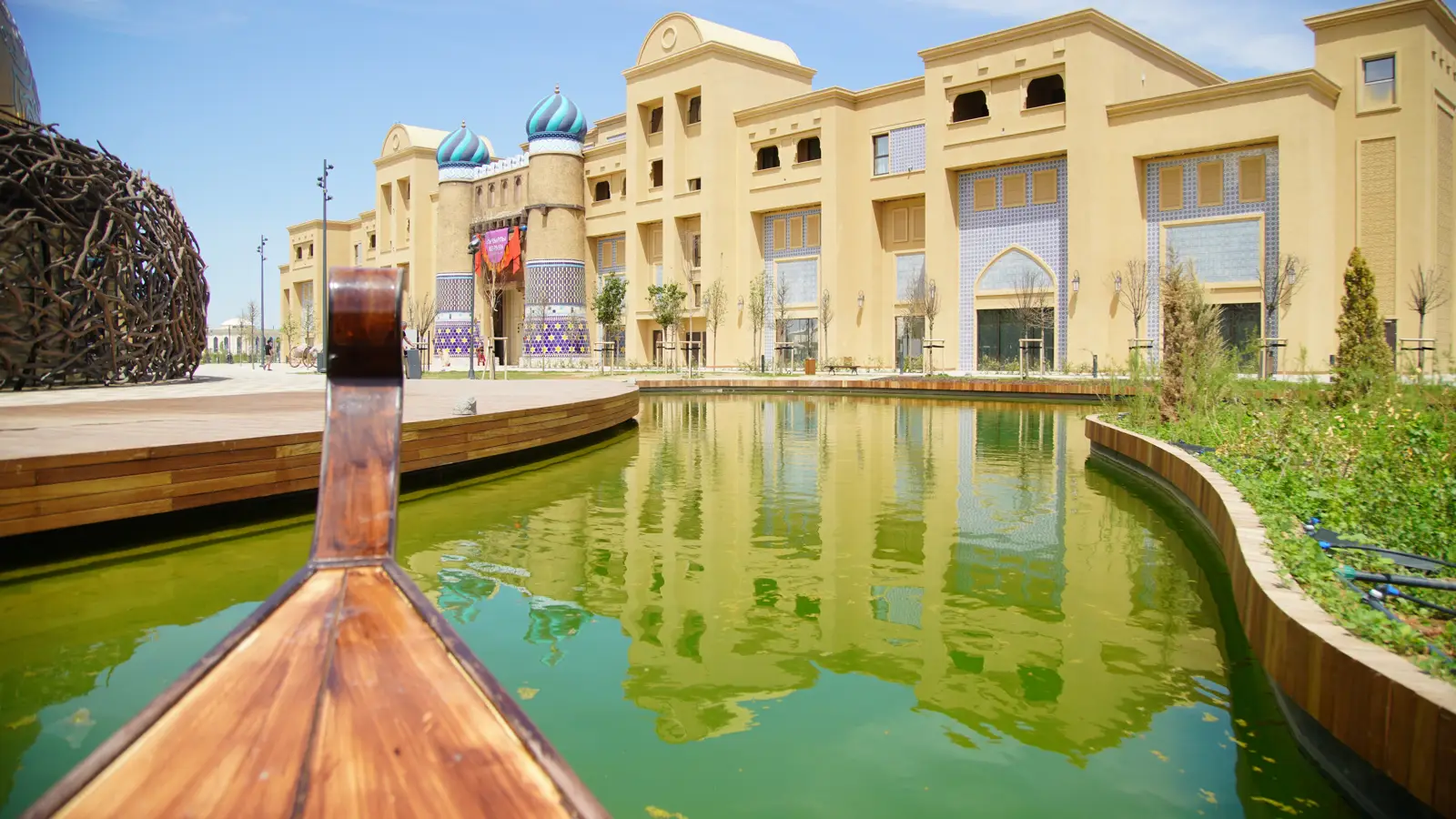
- This modern complex features a 2.5-kilometer canal system where visitors can enjoy traditional boat rides reminiscent of Venice.
- Flying Horse Theater
- The theater features unique 'flying horse' shows that use high-tech projections to tell the legends of the Silk Road.
- Luxury Lodging
- The Karavan Saray Resort offers five-star luxury with views of the historic mausoleum and the modern water complex.
- Shopping Souq
- The internal streets are designed as a traditional nomadic 'souq,' offering premium national crafts, silks, and local delicacies.
- Amphitheater Hub
- A massive open-air amphitheater hosts international cultural festivals and traditional Kazakh musical performances.
- Digital Status
- Recognized as a 'Global Heritage Hub' recently, the complex features integrated 5G and AI-powered visitor assistants.
Photo Gallery
Embedded Video
Caravanserai Turkistan
Loading map...Loading map...
FAQ
Have a question?
Ask and get answers in seconds!
Discussion 0
No comments yet. Start the conversation!
Leave a Reply