Pobeda Peak: The Cold Giant
The highest mountain in the Tian Shan range (7,439m). A notoriously difficult and dangerous climb for elite mountaineers.
Essential Profile
The number is worth sitting with for a moment: 7,439 metres.
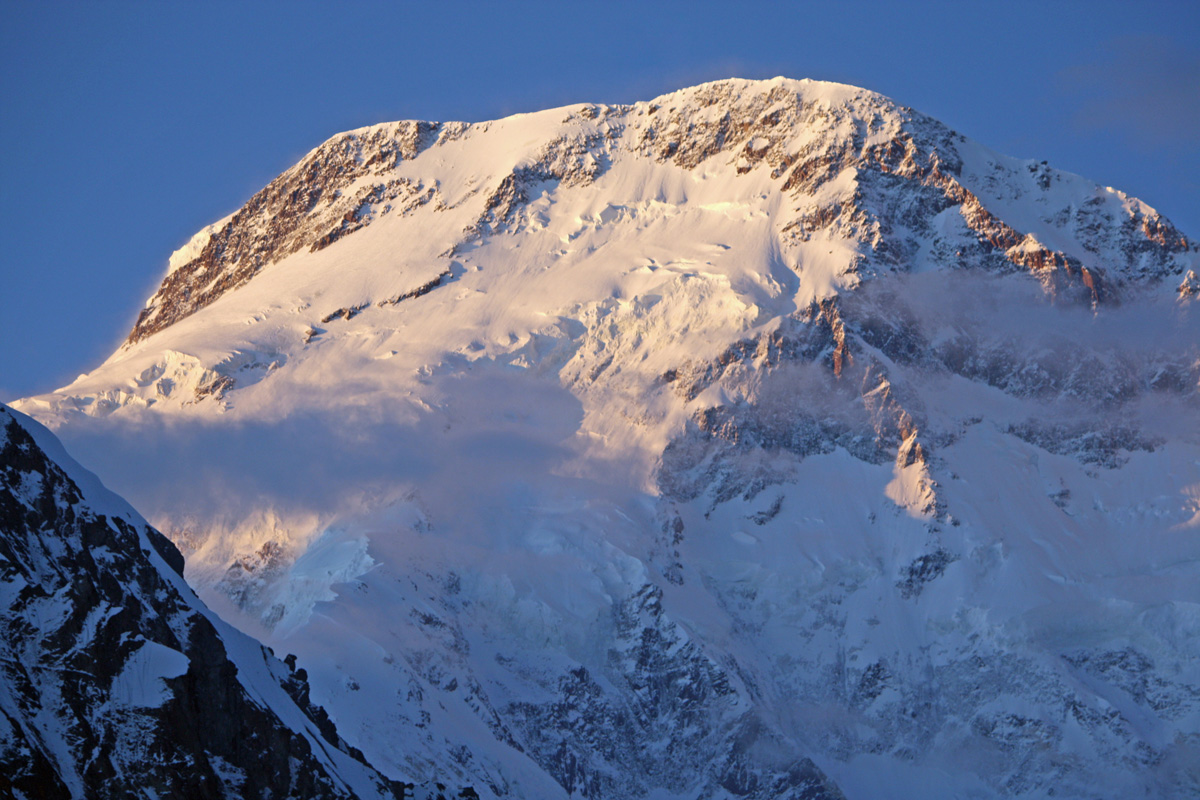
Pobeda Peak — Jengish Chokusu in Kyrgyz — is the highest point in the entire Tian Shan mountain system, which is saying something substantial. The Tian Shan runs for 2,900 kilometres. Pobeda is where it ends, or begins, depending on your direction. It stands on the triple border of Kazakhstan, Kyrgyzstan, and China, part of the Kokshaal-Tau ridge, and from its summit the Central Asian steppe and the first reaches of the Gobi exist in the same sight line.
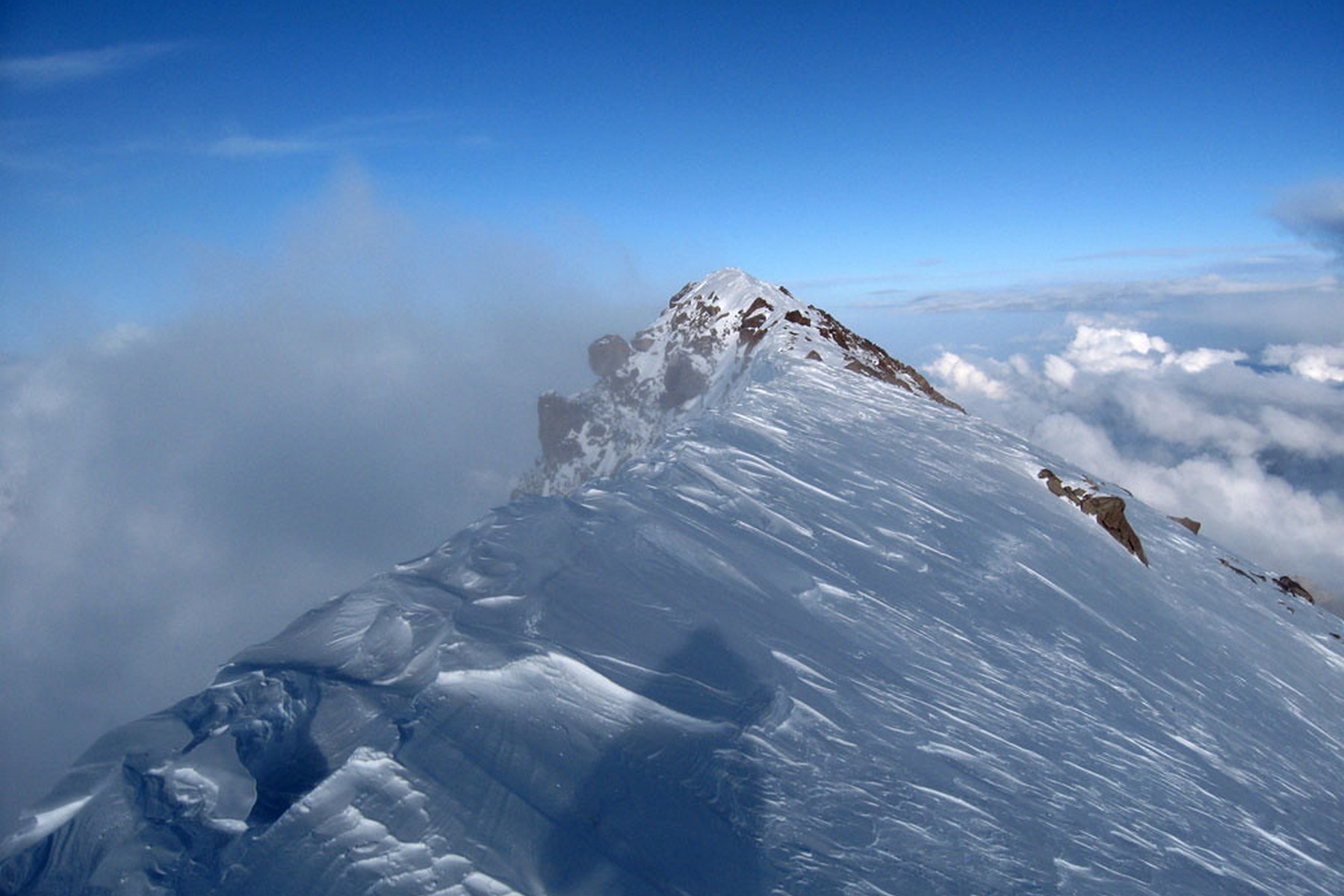
It is also, by every available measure, of the more dangerous mountains on Earth. The combination of extreme altitude, constant weather instability, and the technical demands of the Kokshaal-Tau ridges have given Pobeda a survival rate that professional mountaineers discuss carefully before they come. This is not a destination for casual alpine visitors; it is the endgame for serious climbers with significant Himalayan or high-altitude experience.
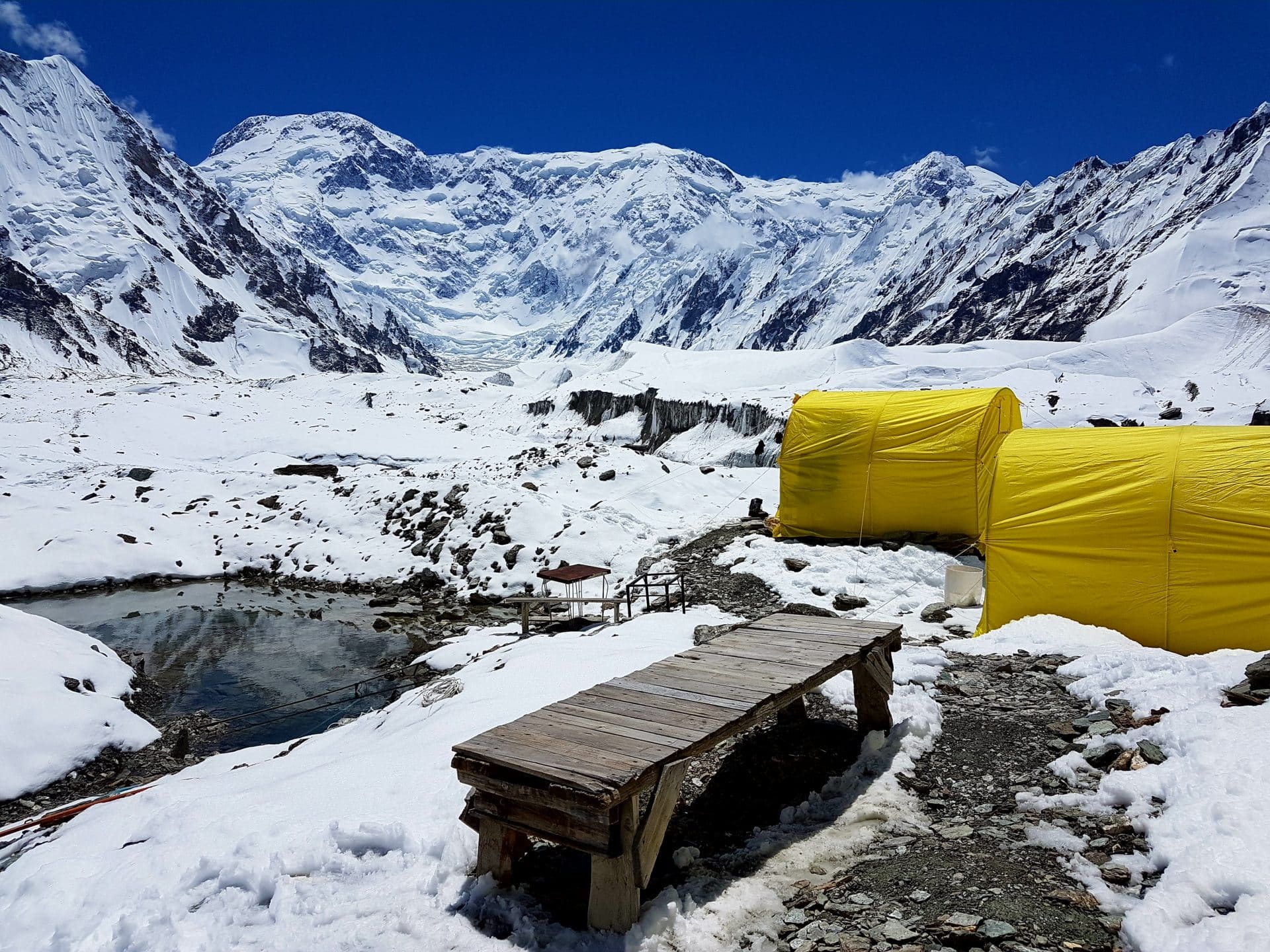
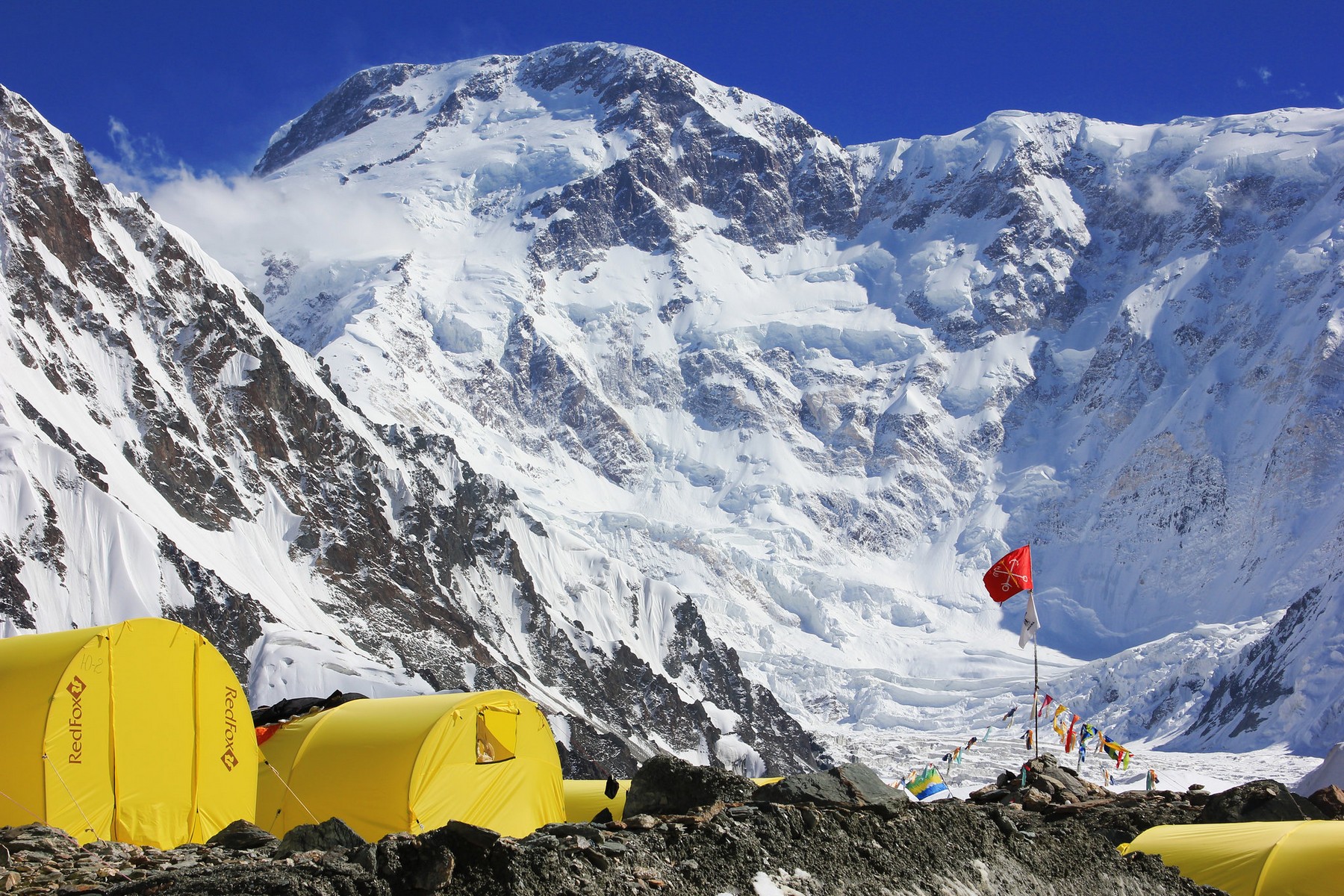
The recent modernization of Base Camp South Inylchek has improved logistics considerably — the Pobeda Digital Platform manages expedition registration, and helicopter access has been updated. For those who approach the mountain by means other than climbing it, the base camp and the lower approaches offer a rare view of a glacial system at a scale that changes your understanding of what cold and distance actually mean.
"Priority Alpine Sanctuary" status means access is managed. Permits are required. Plan accordingly and far in advance.
The ‘Wow-Factor’
The helicopter approach changes everything you think you understand about scale.
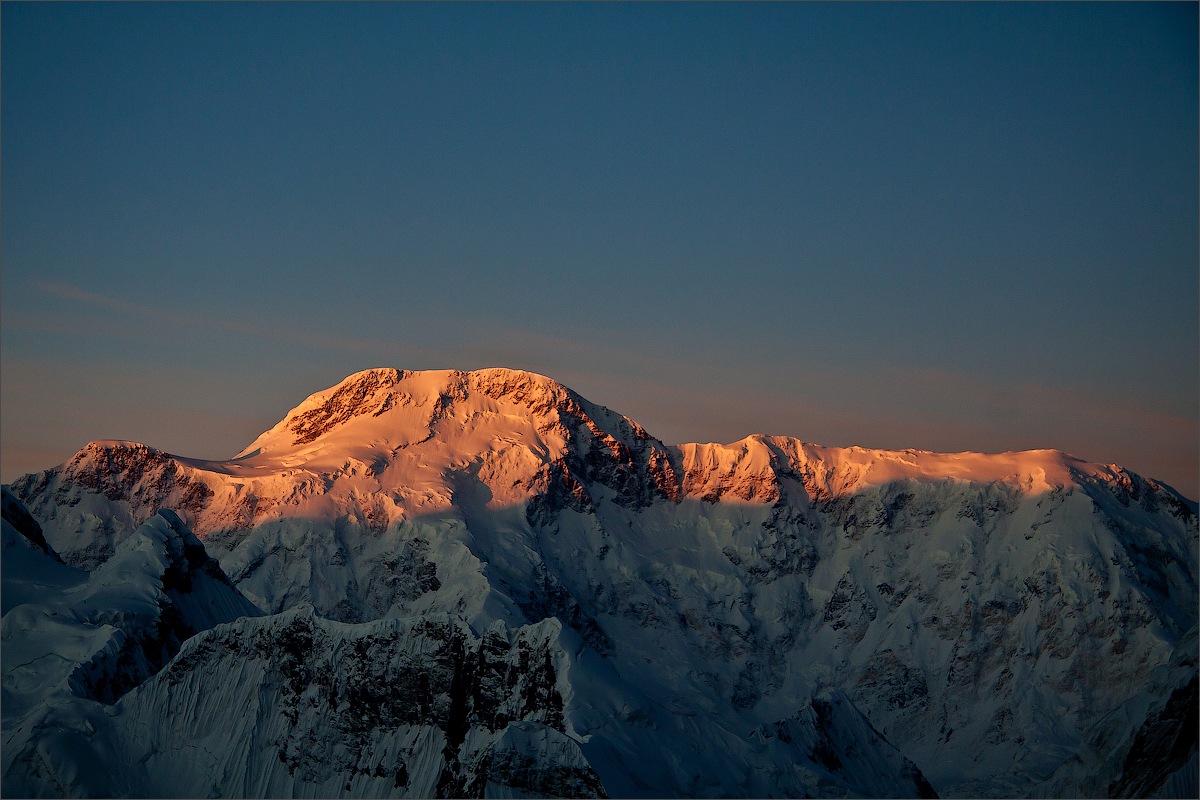
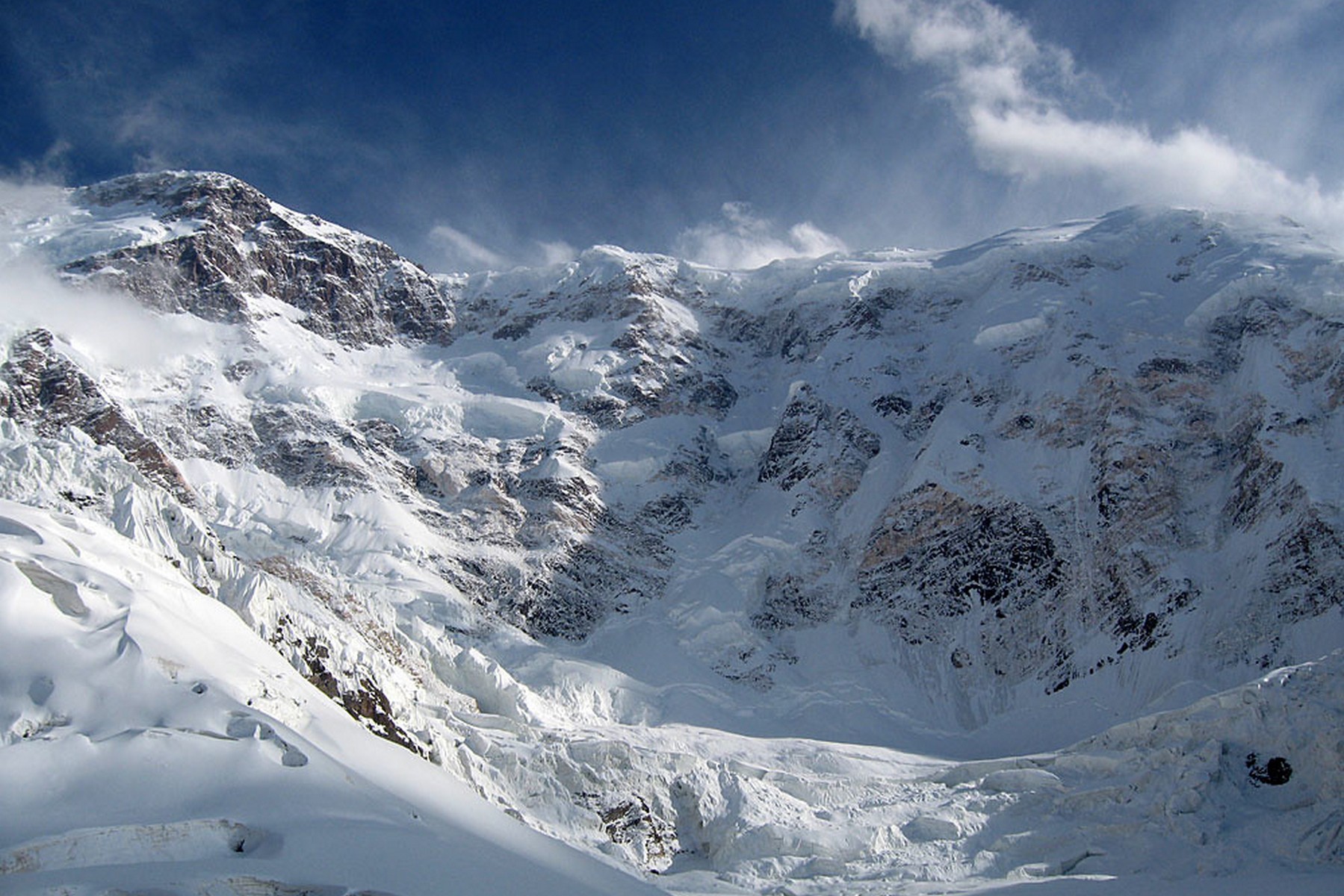
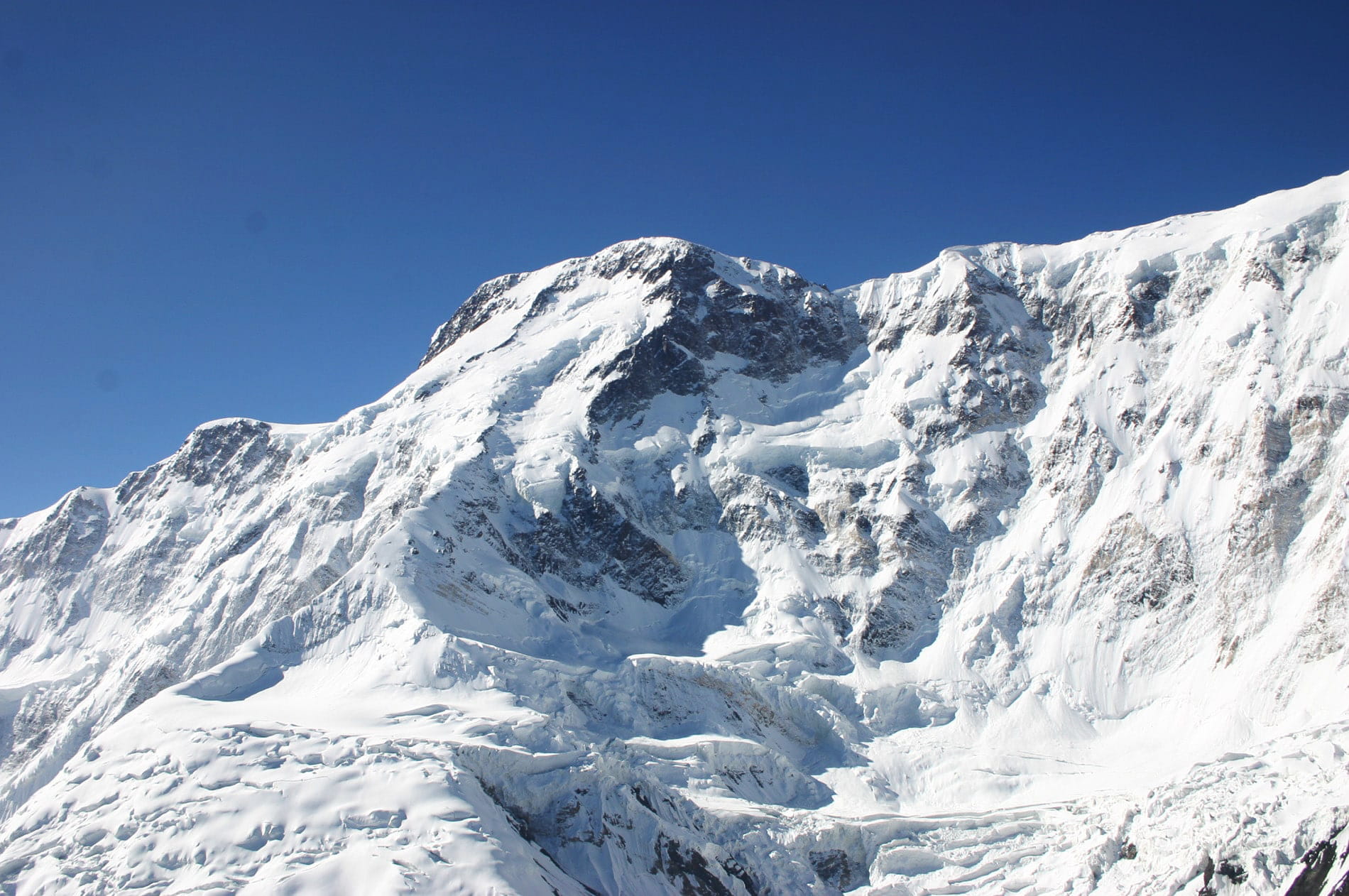
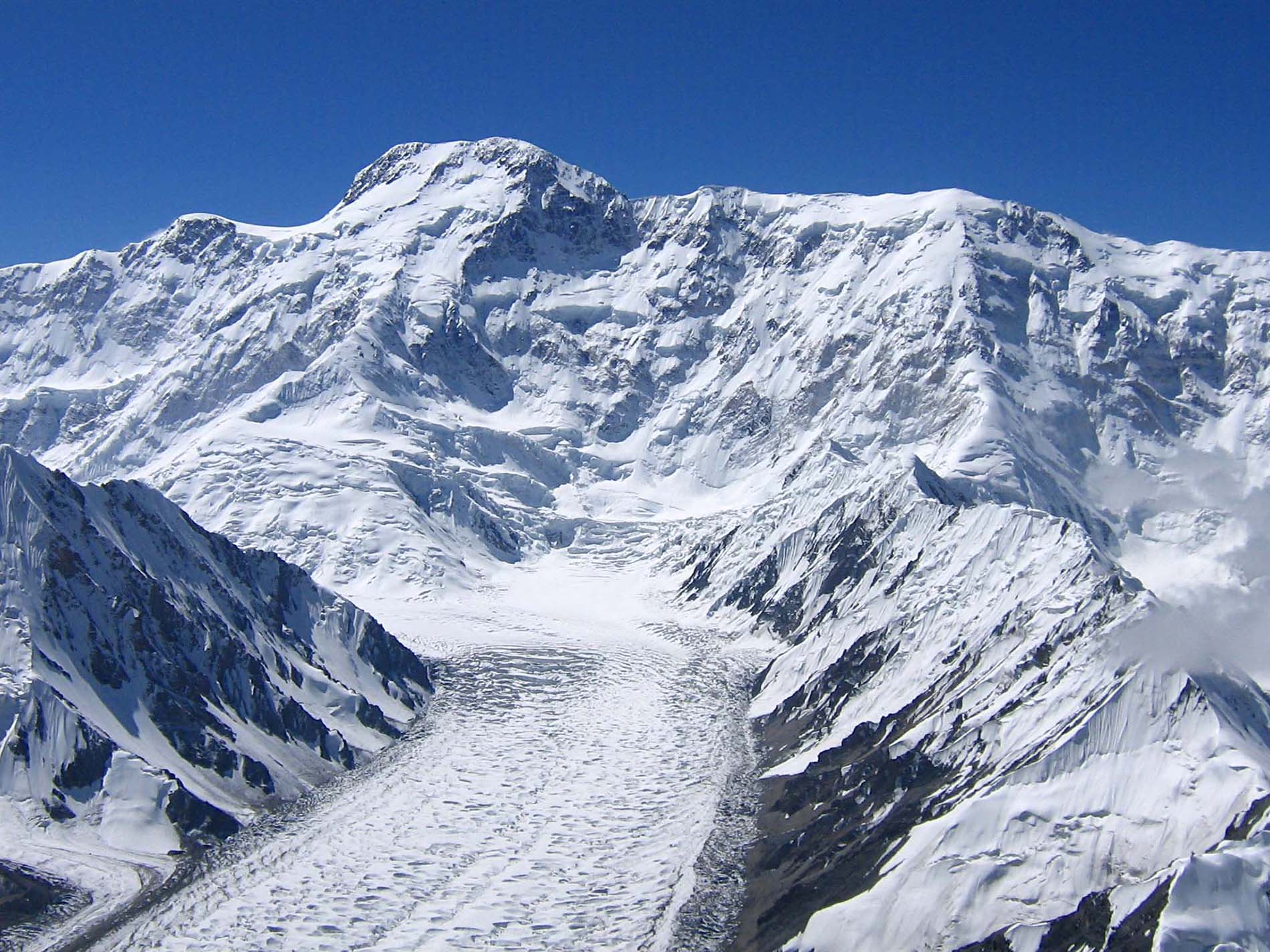
As you come in over the ridge and the Pobeda massif opens up ahead of you — that first full view of the ice faces, the glacial cirques, the 8,000-metre ridge reflecting the morning light — the mind does something strange. It simply refuses, for a moment, to process the size of what it's seeing. The glaciers at this altitude have a quality the lower ranges don't: mirror-flat in the early hours, catching the sky in a way that makes the ice look lit from within.
The "Peak-Mirror Sky Walk" at the base camp area offers the safest access to 360-degree views of the entire Pobeda complex. It's not a replacement for altitude — nothing is — but it places you in a relationship with the mountain that photographs alone cannot convey.
The sound here is constant: the rhythmic breath of high-altitude wind moving across ice, a sound that has no quiet analogue in the lowlands. The air is the other thing. Cold, yes, and impossibly clean, with trace notes of glacial mineral and — in late summer — the faint sweetness of the high-mountain wildflowers that survive at elevations they have no business surviving at. You won't forget that smell.
Deep History & Culture
The mountain was there long before anyone named it.
Kazakh nomads of the Zhetysu region — the Seven Rivers — had known the Kokshaal-Tau as a spiritual boundary for centuries. The highest peak marked the edge of the pastureland that fed the Great Zhuz's seasonal migrations; beyond it lay the permanently uninhabitable. It carried names in oral tradition that predate any written record of the range.
The Soviet first ascent in 1938 — followed by the renaming to Pobeda, "Victory," after World War II — overlaid this existing significance with a different layer of meaning entirely. The mountain became a propaganda landmark: proof of Soviet capability in extreme environments, Soviet "mastery" of a Central Asian wilderness that Moscow's cartographers had recently finished mapping. The name stuck, as names do, but the Kazakh relationship to the peak is older and runs on different lines.
What the mountain means today is something more complicated. For Almaty's climbing community — of the most serious high-altitude mountaineering cultures in the world, trained in these conditions for generations — Pobeda represents the apex of a regional identity that has nothing to do with Soviet commemoration. The "Spirit of the Victory" oral traditions that have grown up around the peak blend older nomadic mountain spirituality with the 20th-century history in ways that resist easy summary.
The Almaty Digital Bio-Lab near the base camp complex presents research on the mountain's glaciological history, which is substantial and increasingly urgent.
Practical Digital Logistics
Pobeda requires real planning. This isn't an afternoon excursion.
The primary access point is Karkara base camp — an 8-hour drive from Almaty, which itself requires either a private 4x4 transfer (roughly 45,000–65,000 KZT from Almaty Plaza) or a staged journey using local transport and some patience. From Karkara, the Pobeda Helicopter Shuttle operates flights into the mountain area; round-trip costs approximately 95,000 KZT and should be booked through the QazNature app or at the Karkara visitor gates. Book well in advance in peak season — helicopter slots disappear.
National Park entry is 1,500 KZT at the Karkara gates.
Gear note: the weather at altitude can drop below -30°C even in summer with no meaningful warning. Three litres of water minimum. Professional mountain clothing, not hiking kit. This is not a place where improvisation is rewarded.
The Tian Shan Hiking app carries offline maps of the entire region and a real-time Peak Radar system that tracks weather patterns. Download it before you leave Almaty — there is no connectivity on the mountain itself and almost none in the valley below the base camp.
Must-Do Activities
The activities here are organized around what the mountain actually offers, which is considerable for those who know how to approach it.
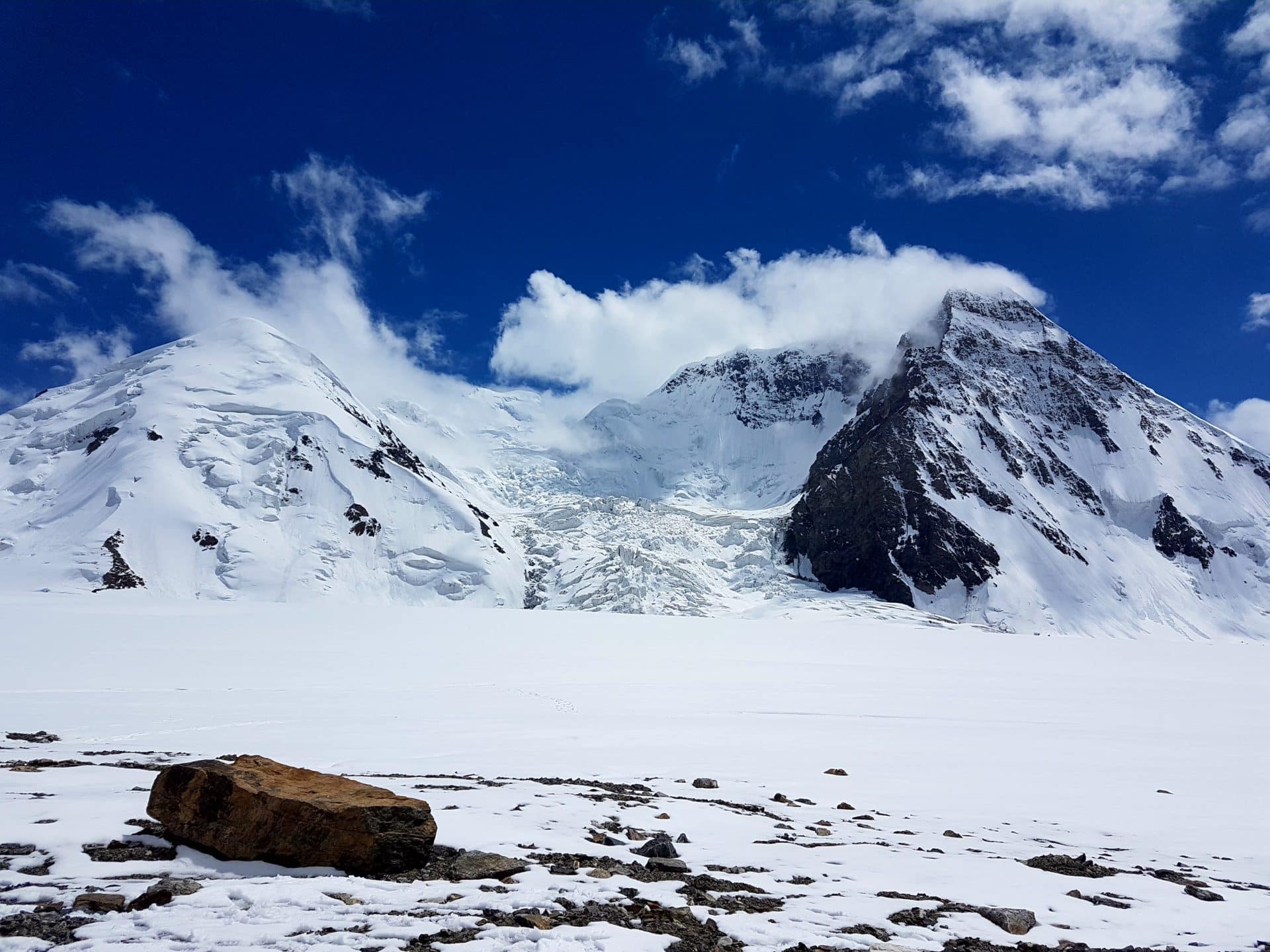
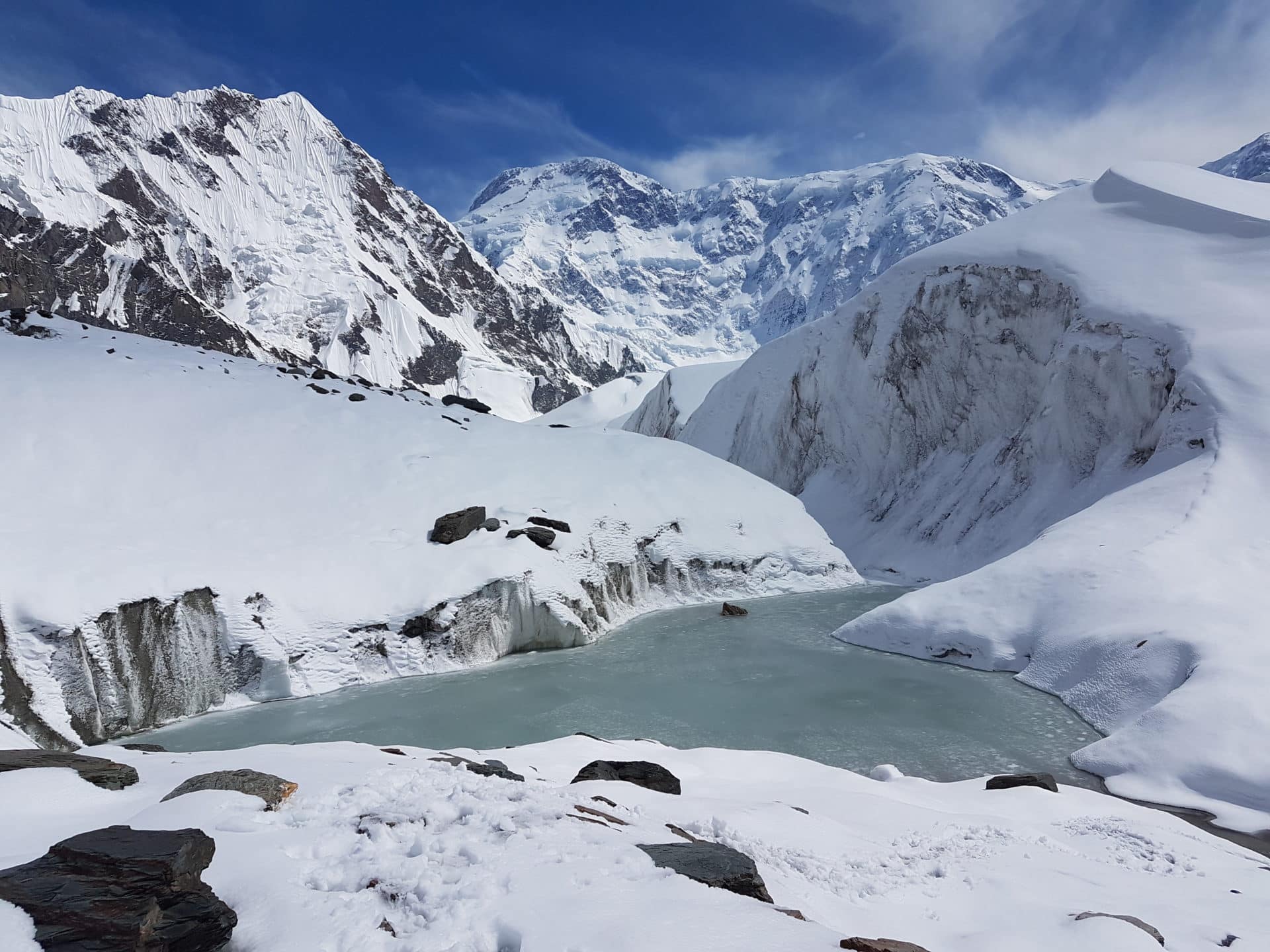
The Inylchak Glacier flight. The helicopter route to Lake Merzbacher and across the Pobeda massif is the central experience for non-climbers. Lake Merzbacher — an ice-dammed glacial lake that catastrophically drains and refills annually — is of the most unusual hydrological features in Central Asia, and seeing it from altitude gives you an understanding of the scale of the glacial system that no photograph prepares you for. Book through the QazNature app; flights depend entirely on weather and can be cancelled at short notice.
The ridge viewing platforms. The "Ridge Walk Panorama Tour" at the base camp area doesn't require technical climbing and gives genuine views of the Pobeda faces. The path is maintained. Two to three hours depending on pace.
The Digital Platform. AR exhibits at the base camp research station cover the geological and glaciological history of the central Tian Shan with a level of detail that makes the landscape around you suddenly legible.
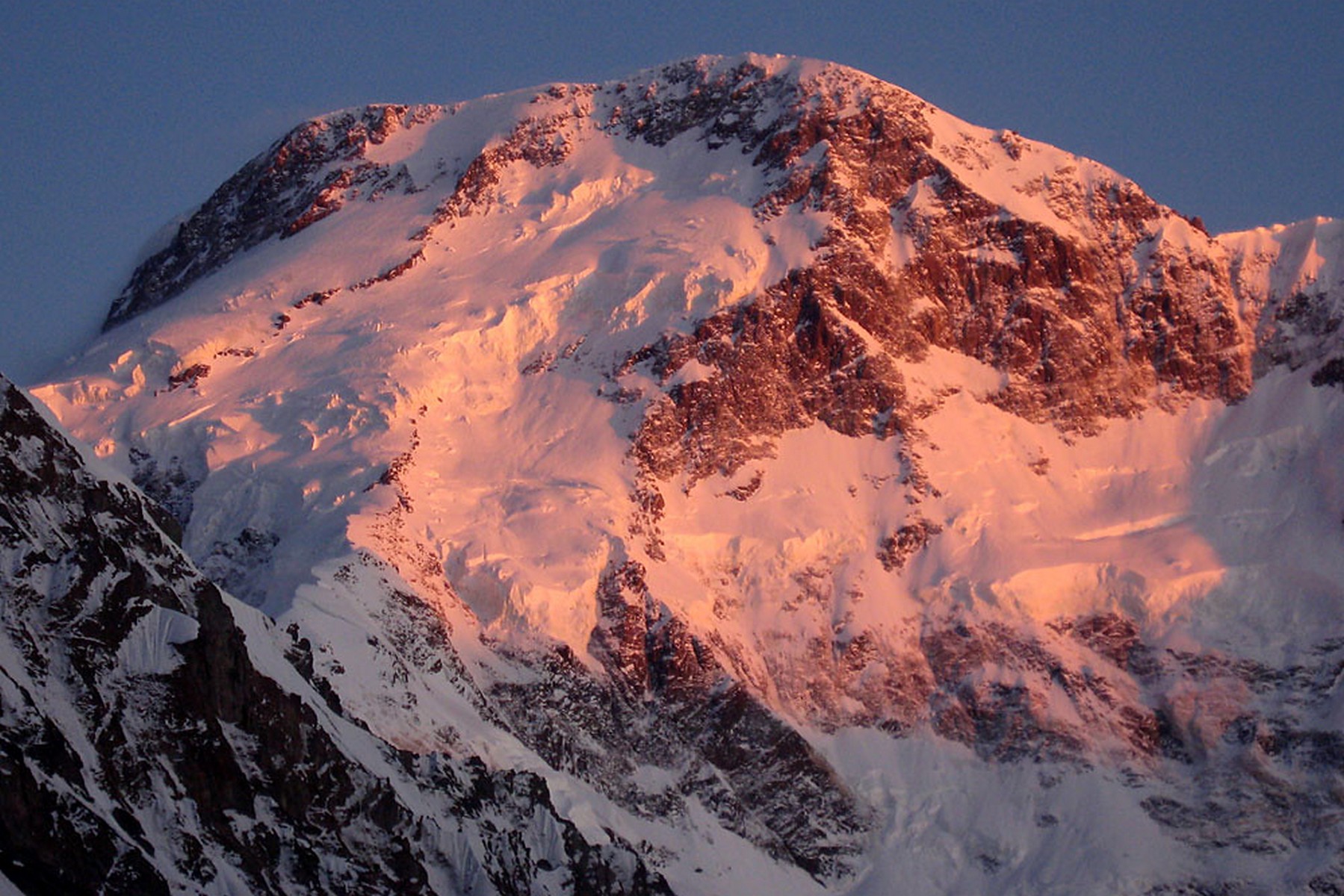
Photography. The evening light on the Pobeda ridge — what the site calls the "Blue Hour," which arrives later here than at lower elevations — illuminates the ice faces from an angle that changes their colour entirely. Build a full day around waiting for it.
Most visitors spend 3 to 4 days at base camp. Fewer days means missing the window when everything converges.
Local Flavors & Amenities
The food at base camp is not where you come to Pobeda. But it sustains you, and some of it is genuinely good.
The Pobeda Harvest Kitchen serves mountain-herb tea — collected from the high Tian Shan meadows, with a dry, complex flavour that tastes nothing like anything sold in a lowland teashop — alongside traditional baursaks at around 6,500 KZT. The Alatau Mountain Honey available here is worth buying: produced at altitude from wildflowers that exist nowhere below 2,500 metres, it has a medicinal intensity that regular honey doesn't.
Accommodation options at base camp span a considerable range. The Pobeda Eco-Lodge provides genuine mountain comfort at around 40,000 KZT per night — proper beds, heated rooms, functioning plumbing, which matters more at this altitude than it sounds. The Nomadic Sky Huts offer a more traditional experience at roughly 15,000 KZT, with hosts who know the mountain and will talk about it if you have the energy at the end of the day.
The Almaty Souvenir Market, accessible on the drive back through the valley, carries the better-quality regional crafts.
Essential Insider Tips
Things that keep your Pobeda trip from ending badly.
Altitude is not optional. The base camp sits at approximately 4,200 metres. Altitude sickness doesn't care about your fitness level or your experience at lower elevations — it follows its own rules. Arrive, rest, hydrate, eat. Don't push the first day. The mountain will be there on the second day, and the third.
The cold is more serious than most visitors expect. Pobeda is of the coldest mountain environments on Earth. In August — the warmest month — temperatures at higher elevations can drop well below freezing with little warning. A professional-grade expedition down jacket is not optional equipment; it's the difference between an uncomfortable day and a dangerous.
Helicopter discounts on National Pride days. The first Sunday of each month, flights are often offered at reduced rates. Check in advance with the QazNature app; it changes.
Photography at altitude: a CPL filter cuts the glare from the ice surfaces and recovers the depth of the sky. Without it, high-altitude ice photography tends to blow out or flatten. The ice here has colours that reward the effort.
Battery management. The 5G coverage near the base camp is surprisingly functional, but the cold accelerates battery drain significantly. At -20°C, a full phone battery can drop to zero in under an hour. Carry a power bank in an inside pocket.
Sustainability & Community
Conservation at this altitude is serious work, and the Pobeda area takes it seriously.
The "Pulse of the Steppe" project coordinates the ecological management of the high-Tian Shan zone around the mountain, from the glacial monitoring programmes to the management of the fragile alpine meadows around the base camp. The Heritage Bio-Count invites visitors to document plant and wildlife species using a dedicated app; the data goes to research teams tracking glacial retreat and ecosystem change. Participation is straightforward and genuinely contributes to something with long-term consequences.
Heritage Restoration Week offers a more direct contribution: working alongside curators and conservation staff on eco-trail maintenance in the lower Karkara valley. The trails require attention. The work is physical and the altitude is real; arrive acclimatised.
The Zero-Trash policy operates without exceptions at these elevations — everything that comes in leaves with you. Certified expeditions and tours contribute toward the "Spiritual-First Preservation" framework, which is the regional programme for maintaining the Pobeda area as a functioning natural sanctuary rather than a managed tourist site.
For purchases, the local craft market at Karkara carries hand-made silverwork and textiles from artisans in the surrounding communities.
Key Facts
- Regional Context
- Located in the strategically significant area of Kazakhstan, POBEDA PEAK serves as a key cultural and geographic anchor for the region.
- Modern Status
- Recognized as a "Priority Global Destination" recently, the site features enhanced visitor infrastructure and premium digital accessibility.
- Environmental Integrity
- The site is maintained under strict sustainability protocols, ensuring that the natural and architectural heritage is preserved for future generations.
- Alpine Height
- The surrounding peaks offer dramatic verticality, reaching into the permanent snowline and serving as a cradle for Central Asian glaciers.
- Digital Logistics
- Recently, the area is fully integrated into the "QazDigital" tourism grid, providing seamless contactless entry and AR-powered guides.
- Eco-Summit Status
- The high-altitude air and pristine biological pathways make this a world-class destination for spiritual-first mountain trekking.
Photo Gallery
Video coming soon
Pobeda Peak
Loading map...Loading map...
Frequently Asked Questions
Have a question?
Ask and get answers in seconds!
Discussion 0
No comments yet. Start the conversation!
Leave a Reply