Triumphal Arch Mangilik El
The City of Future. Futuristic architecture in the steppe.
Detailed History & Context
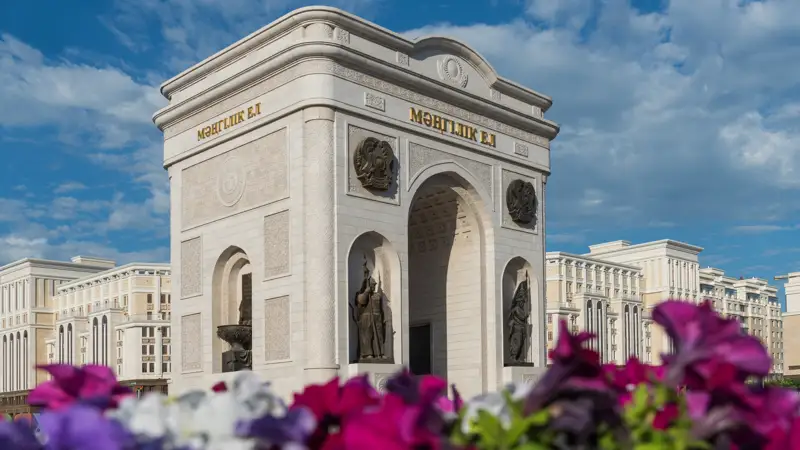
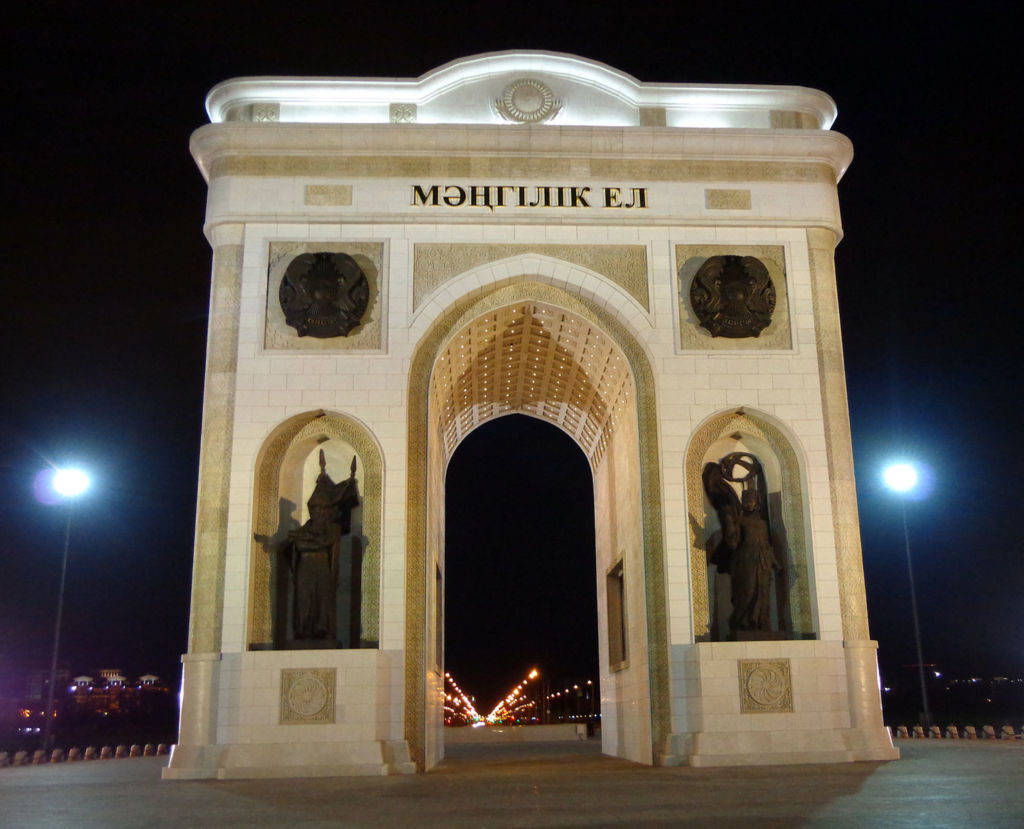
The Mangilik El Triumphal Arch stands at the southern entrance to Astana's ceremonial boulevard, a 27-metre gateway of white marble and gilded steel that frames the axis between the Presidential Palace and the capital's expanding skyline. The name Mangilik El — Eternal Nation in Kazakh — comes from a phrase the Kazakh Khanate used to describe the continuity of its people across generations of steppe history, and its adoption as the arch's name connects a twenty-first century monument to a lineage stretching back to 1465 and further.
Kazakhstan declared independence in December 1991, the last of the Soviet republics to do so. The decision to build an entirely new capital — announced in 1994, executed from 1997 when President Nazarbayev moved the government from Almaty to the steppe city then known as Akmola — was of the most significant acts of post-independence nation-building on the continent. Astana, renamed as such in 1998 and briefly renamed Nur-Sultan between 2019 and 2022 before reverting to Astana, was constructed on open ground as a deliberate statement: this new nation would build its own symbols from nothing, on its own terms, in a landscape that belonged to no prior empire.
The Mangilik El Arch was completed as part of the development of the expo and ceremonial districts. Its design draws on Kazakh ornamental traditions — the geometric patterns of felt-work, the structural symbolism of the yurt — translated into monumental stone and metal at a scale intended to communicate permanence.
Digital Logistics & Access
The Mangilik El Arch sits on the Nurzhol Boulevard, Astana's main ceremonial axis, in the heart of the capital's left-bank district. It is walkable from most of the central Astana hotels and is located close to other landmarks on the boulevard — the Khan Shatyr entertainment centre, the Palace of Peace and Reconciliation, and the Baiterek tower are all within a comfortable walking radius.
From Astana's central bus and metro stops, the boulevard is a ten to fifteen minute walk or a short taxi ride. The city's taxi apps — Yandex and InDrive both operate extensively in Astana — make point-to-point travel straightforward and inexpensive. A ride from most central accommodation to the arch costs around 500 to 1,000 tenge.
The arch and the surrounding boulevard are public space, free to access at all hours. There is no entry fee and no admission procedure. The area is well-maintained and well-lit in the evenings, when the illuminated boulevard and the arch's lighting produce the most photogenic conditions.
Astana's winters are severe — temperatures regularly drop below minus 30 degrees Celsius between December and February. The boulevard is exposed and wind-driven cold on the open steppe is considerable. Winter visitors should be dressed for extreme cold. Spring and autumn give the most comfortable conditions for the extended outdoor walking that exploring Nurzhol Boulevard requires.
5+ Specific Activities
Walking the full length of Nurzhol Boulevard from the Khan Shatyr end to the Presidential Palace takes about forty minutes at a relaxed pace and delivers the arch in proper context — as the culmination of an axial composition that was designed to be experienced in sequence, not encountered in isolation. The boulevard is wide and its geometry is intentional; the landmarks appear in a specific order and the arch frames the palace behind it as the final punctuation.
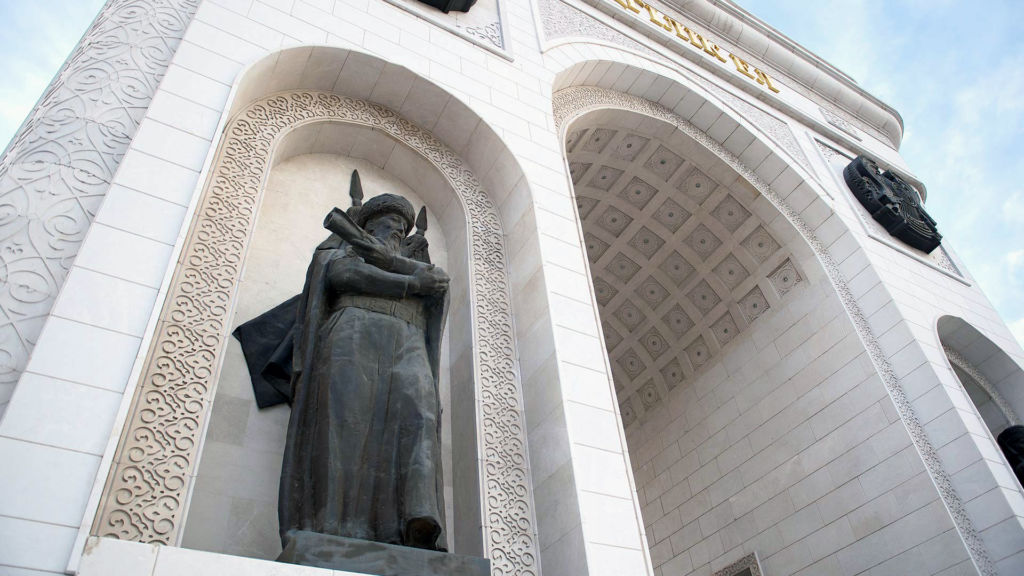
The arch itself rewards close examination. The ornamental detailing on the interior faces incorporates geometric patterns drawn from Kazakh textile and jewellery traditions — the same visual language that appears in felt work, in carved wood, and in the embroidery on ceremonial clothing. Translated into stone and metal at monumental scale, the patterns look different from the original source material and yet carry the same formal logic.
The best photography conditions are in the late afternoon when the light comes from the southwest and catches the gilded elements. Evening illumination, when the arch is lit against the Astana sky, produces a different visual register — theatrical, emphatic, the monument communicating what monuments are built to communicate.
The wider left-bank district warrants a day of exploration: the EXPO 2017 site, the Pyramid of Peace, and the Baiterek tower are all within walking distance. The architecture of the district ranges from the genuinely impressive to the speculative to the bombastic, and the full range is interesting to walk through as a document of how a new capital city imagines its own significance.
Sustainability & Responsible Travel
The Mangilik El Arch stands in a district built on what was, thirty years ago, open steppe. Astana's construction on that ground — the infrastructure, the buildings, the ceremonial boulevard — represents of the largest urban development projects undertaken anywhere in the post-Soviet world, and the environmental implications of building a city from scratch on treeless plain are significant: energy demand in an extreme continental climate, water management on the steppe, the microclimate effects of large-scale construction, and the displacement of the grassland ecosystem that the Akmola steppe supported.
Kazakhstan has committed to carbon neutrality targets and sustainable urban development frameworks through international agreements. Astana itself has been piloting green building standards and public transit investment that reduce the per-person energy footprint of city residents compared to car-dependent alternatives.
For visitors, the sustainability case at a monument like the Mangilik El Arch is less about individual behaviour at the site — it is public space with no admission or consumption — and more about the broader choices surrounding the visit: using public transport rather than private cars within Astana, choosing locally owned accommodation over international chains, and engaging with the Kazakh cultural context that the arch's name and ornamental programme represent, rather than treating it as a backdrop for photographs.
The arch's name — Mangilik El, Eternal Nation — is a claim that Kazakhstan's cultural continuity runs deeper than any particular political configuration. Engaging with that claim seriously, rather than passing through, is the most meaningful thing a visitor can do here.
Practical Tips for travelers
Astana's climate is extreme by the standards of most international visitors. Winters run from November through March with temperatures regularly below minus 20 degrees Celsius and occasional drops below minus 40. The wind on the open boulevard is a serious factor; the left-bank district has no natural windbreaks and the steppe wind crosses the Ishim River with full force. In winter, visit the arch briefly and spend more time in the interior spaces nearby — the Khan Shatyr, the Pyramid of Peace, the EXPO spheres.
Summer from June through August is hot and dry, sometimes reaching 35 degrees. The boulevard is pleasant in the evenings when the heat drops and Astana residents come out in numbers. Spring and early autumn — May, June, September — give the most comfortable visiting conditions.
The arch is free to visit at any hour. There are no guided tours of the arch itself, but the Astana city tourism office coordinates walking tours of the left-bank district that contextualise the boulevard's architecture. The National Museum of Kazakhstan, accessible by taxi from the arch, provides the deepest historical context for the monuments of the district.
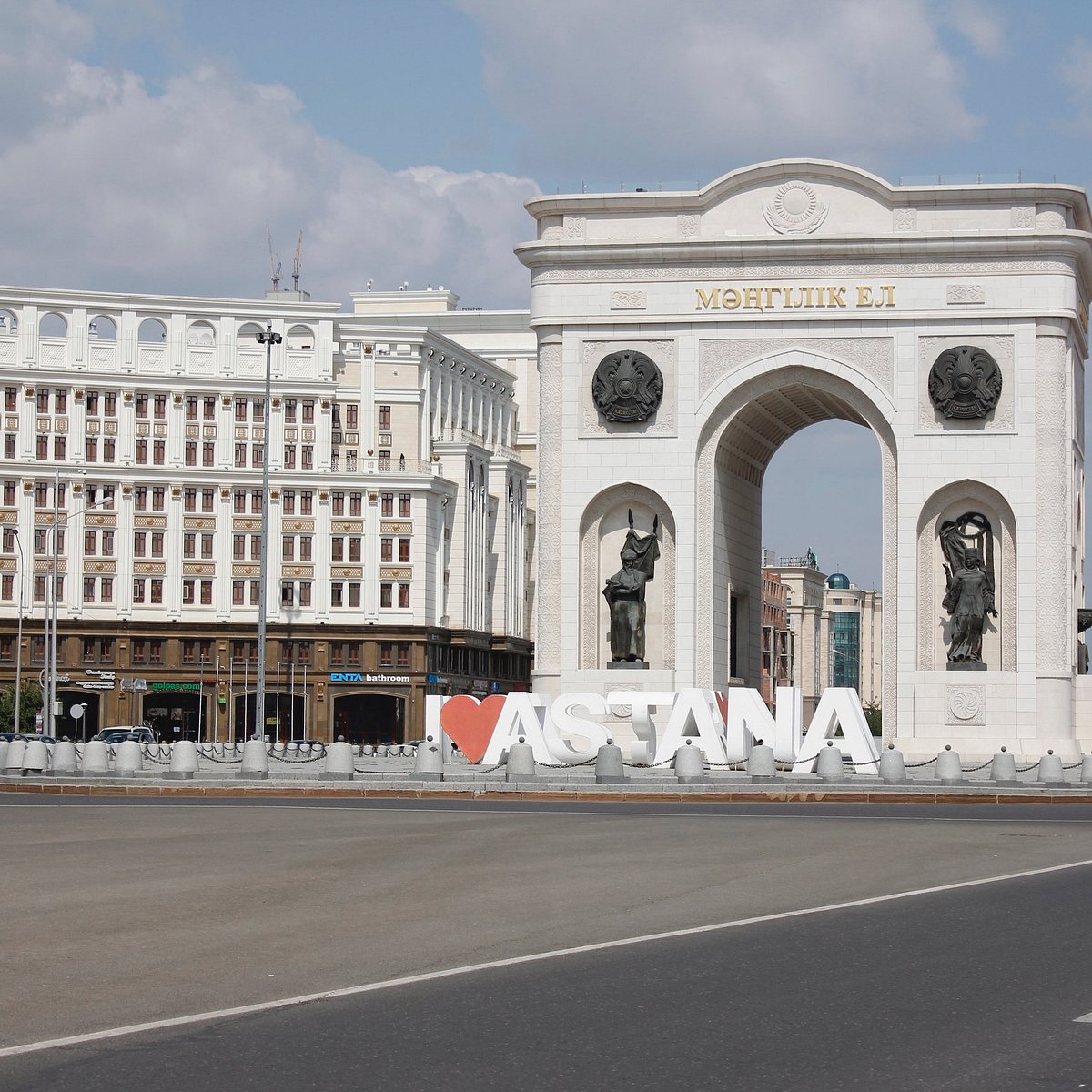
Photographing the arch from the boulevard's south end, with the perspective pulling the boulevard's geometry toward the Presidential Palace behind it, gives the most architecturally legible image. The Golden Warrior statue in front of the arch is a frequent foreground element; arrive early in the morning to photograph the arch before the foot traffic builds.
Architecture & History
The Mangilik El Arch was inaugurated on December 16, 2011, the twentieth anniversary of Kazakhstan's independence. The date was chosen deliberately. Independence Day in Kazakhstan carries specific weight — December 16, 1991 was when the Supreme Soviet of the Kazakh SSR formally declared sovereignty, the final act of a dissolution that had been building for months as the Soviet Union collapsed from its internal contradictions. Building a triumphal arch and inaugurating it on the twentieth anniversary of that declaration was a statement about what twenty years of independence had produced.
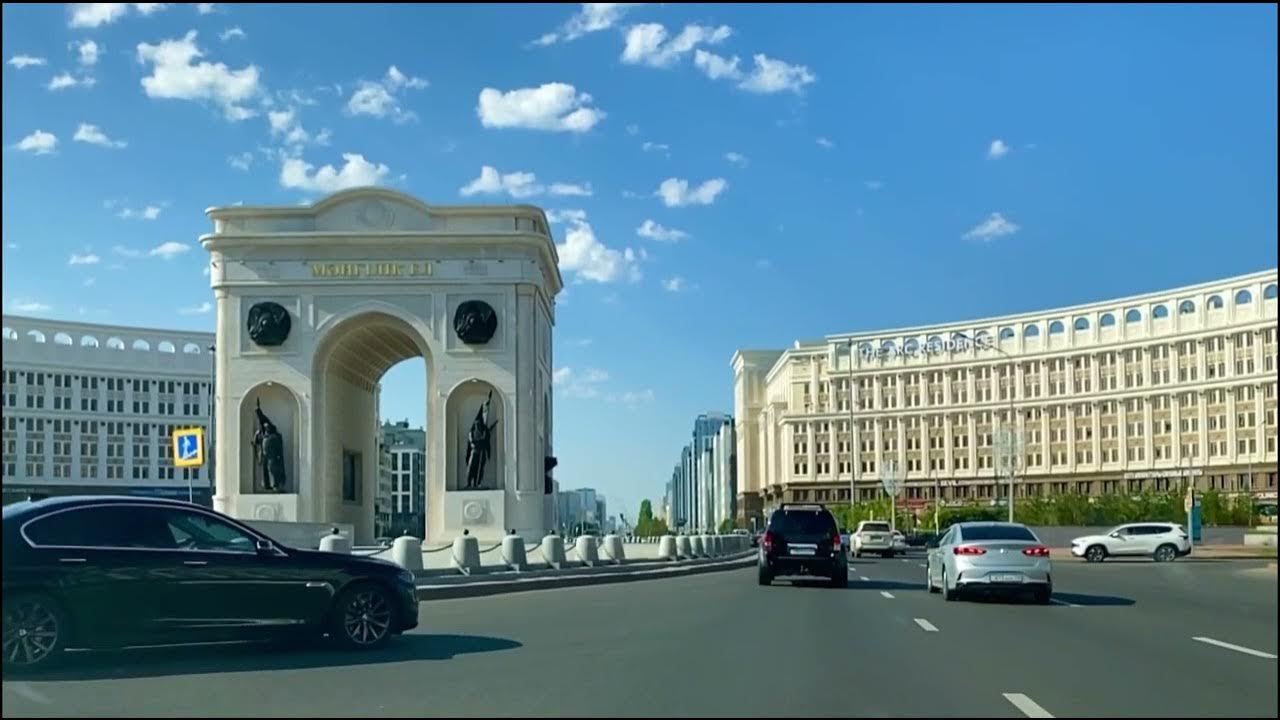
The arch stands at the western end of Nurzhol Boulevard, the ceremonial axis of Astana's left-bank district. At 27 metres, it is not the tallest structure on the boulevard but it is proportionally the most classical — a gateway form that references the tradition of triumphal arches from Rome to Paris while incorporating Kazakh ornamental vocabulary in the surface relief. The carved panels on the inner faces depict scenes from Kazakh historical narrative: the Saka and Scythian peoples of the ancient steppe, the Kazakh Khanate period, and the national independence.
The architect, a Kazakh firm working in the contemporary nationalist style that characterises most of Astana's ceremonial architecture, made the design choice to use white marble and gilded steel — materials that connect to nomadic precious metalwork tradition and to the visual language of the steppe under snow. Whether the arch achieves the permanence its name claims is a question that monuments cannot answer for themselves; time addresses it.
The boulevard axis it terminates was designed by Japanese architect Kisho Kurokawa as part of the original Astana master plan in the late 1990s.
The Experience
The experience of the Mangilik El Arch is inseparable from the boulevard it terminates. Approaching from the north along Nurzhol, you walk past the Khan Shatyr's translucent tent structure, past the Baiterek tower rising on your right, past the formally planted trees and the monumental geometry of a city that was planned rather than grown. The arch appears at the end of this sequence as a frame rather than a destination — through it, the Presidential Palace closes the perspective.
Standing under the arch, the ornamental detail that was invisible from a distance becomes legible. The inner faces carry relief panels in Kazakh geometric style, the same vocabulary you see in the national museum's textile collections and in the jewellery cases at the antique markets: hexagonal forms, interlocking diamond patterns, the stylised solar disc that appears throughout Central Asian decorative tradition. Translated to monumental stone, the patterns look formal and permanent; in their original textiles, they were portable, seasonal, renewed with each generation of weavers.
The scale makes you aware of your own dimensions. The arch is 27 metres at its apex, and the proportions are calibrated for the ceremonial boulevard, not for the person standing beneath it. This is the point of triumphal architecture — the individual is the subject and the measure is deliberately beyond the individual's reach.
In the evening, with the boulevard illuminated and the palace behind lit in gold, the composition that the architects intended finally appears. This is the view from which everything was designed to be seen.
Key Facts
- Regional Context
- Located in the strategically significant area of Kazakhstan, TRIUMPHAL ARCH MANGILIK EL serves as a key cultural and geographic anchor for the region.
- Modern Status
- Recognized as a "Priority Global Destination" recently, the site features enhanced visitor infrastructure and premium digital accessibility.
- Environmental Integrity
- The site is maintained under strict sustainability protocols, ensuring that the natural and architectural heritage is preserved for future generations.
- Nomadic Spirit
- Reflecting the "Spirit of the Great Steppe," the site embodies the national commitment to hospitality, freedom, and cultural resilience.
- Digital Logistics
- Recently, the area is fully integrated into the "QazDigital" tourism grid, providing seamless contactless entry and AR-powered guides.
- Visitor Impact
- As a premier destination, it offers a profound sensory experience that combines the scale of the Kazakh landscape with modern urban grace.
Photo Gallery
Embedded Video
Triumphal Arch Mangilik El
Loading map...Loading map...
FAQ
Have a question?
Ask and get answers in seconds!
Discussion 0
No comments yet. Start the conversation!
Leave a Reply