Central Park: Gorky's Legacy
The city's oldest park, featuring a lake with boat rentals, carnival rides, and the Dino Park. A classic Soviet-style recreational park.
Essential Profile
On Sunday mornings in Almaty, the city's Central Park fills with a cross-section of the metropolis that no other location quite replicates. Old men play chess under the elms. Young families navigate the paths with strollers. A group of teenagers occupies the amphitheater steps. Someone's grandmother feeds pigeons near the fountain. A pair of university students read on a bench. The park holds all of this without effort, as old parks do, because it has been holding Almaty's daily life for long enough that the city and the park have grown into each other.
Gorky Central Park — or simply Almaty Central Park, as it's increasingly known in the post-Soviet reordering of names — is the oldest public park in Kazakhstan's largest city. Established in 1856, when the city was still Verniy, a Russian military outpost in the Tian Shan foothills, it has outlasted three names for the city, two empires, a Soviet republic, and earthquake. The trees, which predate most of the city's architecture, are its most persuasive argument for staying.
What the Park Is
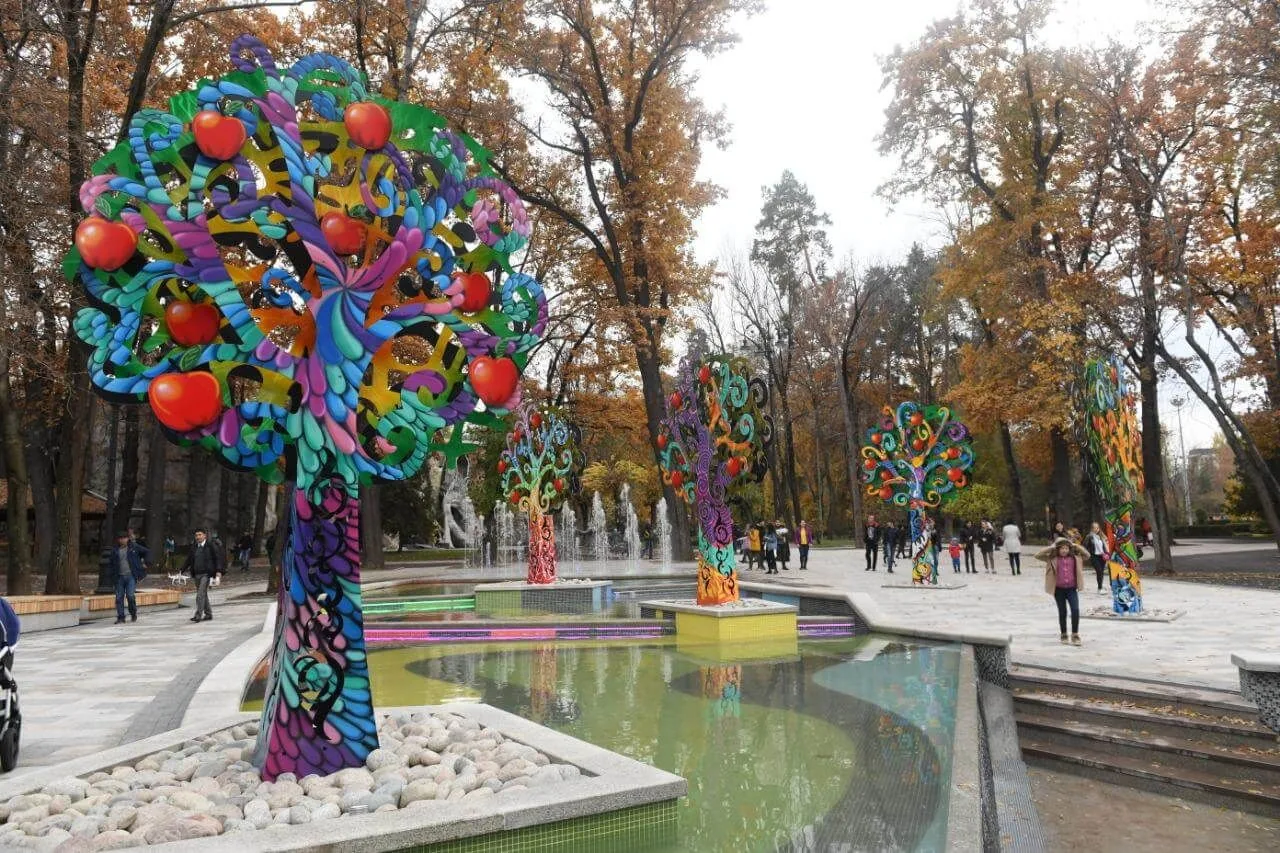
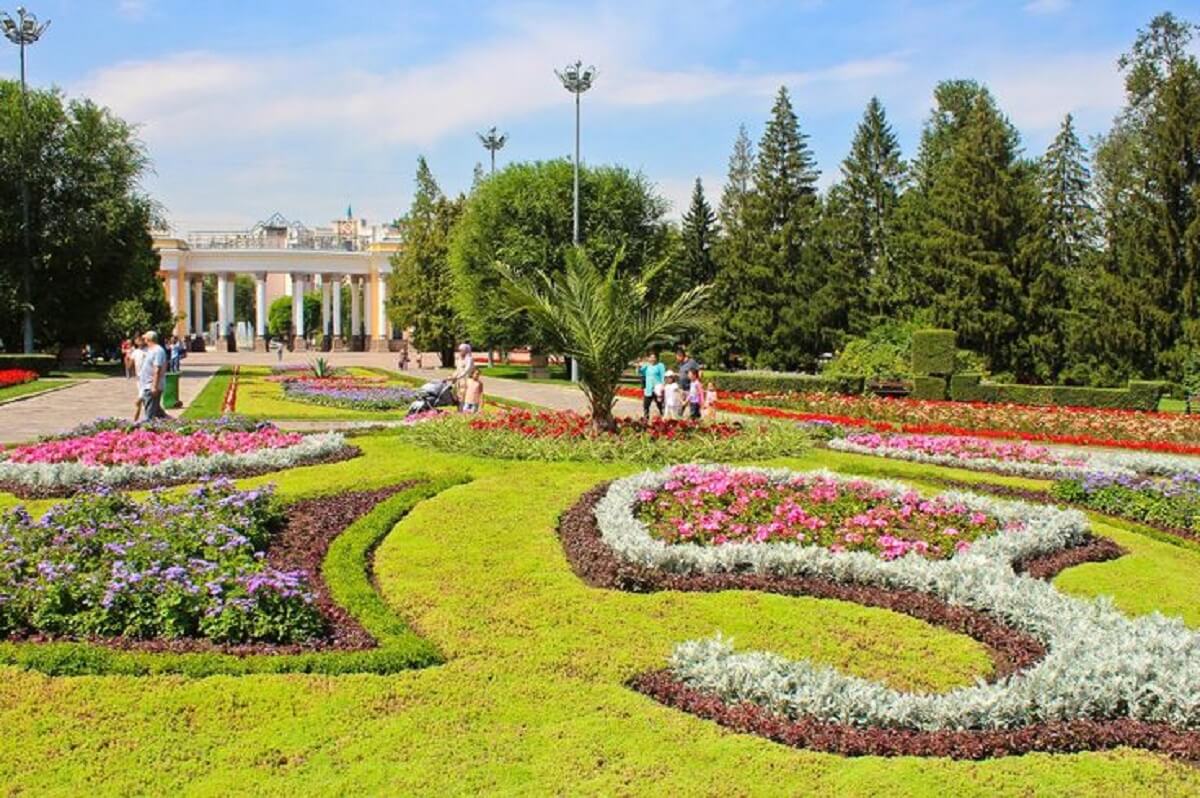
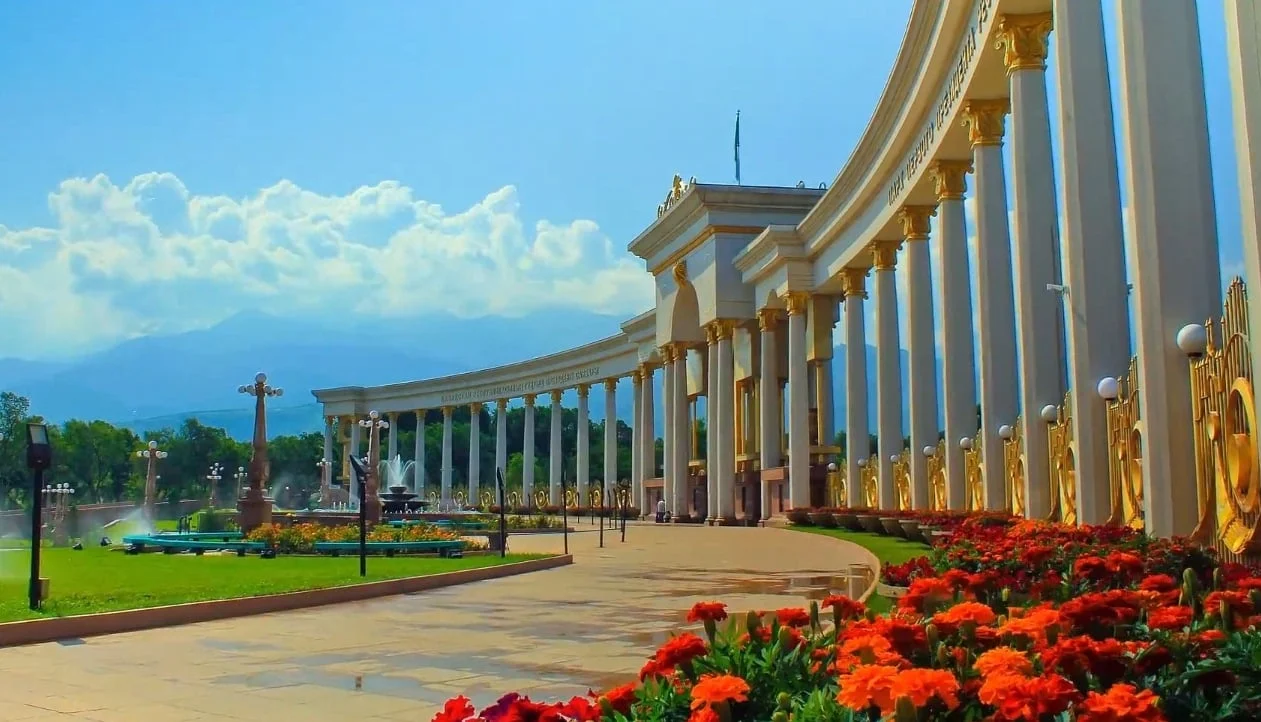
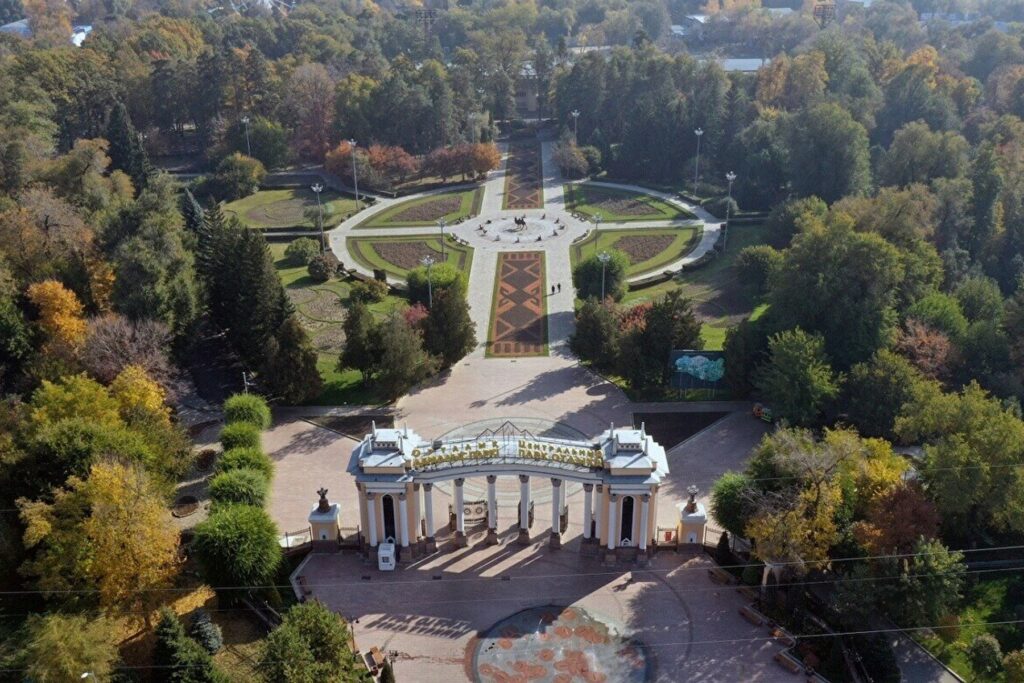
At 42 hectares, Central Park occupies a substantial slice of eastern central Almaty, bounded by city streets that flow around it like water around an island. The park's character shifts as you move through it: the eastern section, closest to the old city center, is more formal — wide promenades, fountains, maintained flower beds, the kinds of spaces that photograph as "park" and are designed for civic display. The western sections are older, shadier, the trees larger and the paths more irregular, the atmosphere closer to forest than garden.
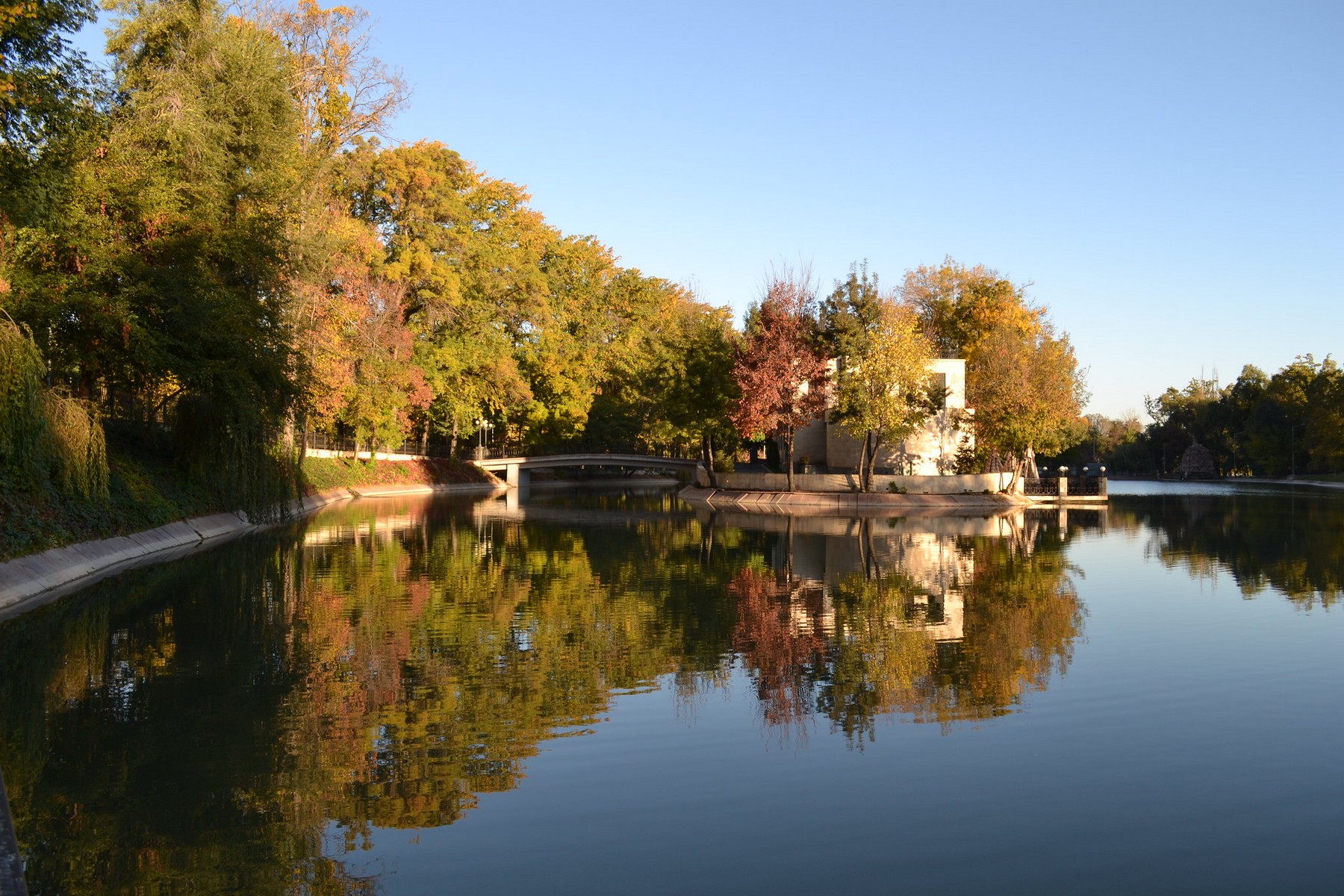
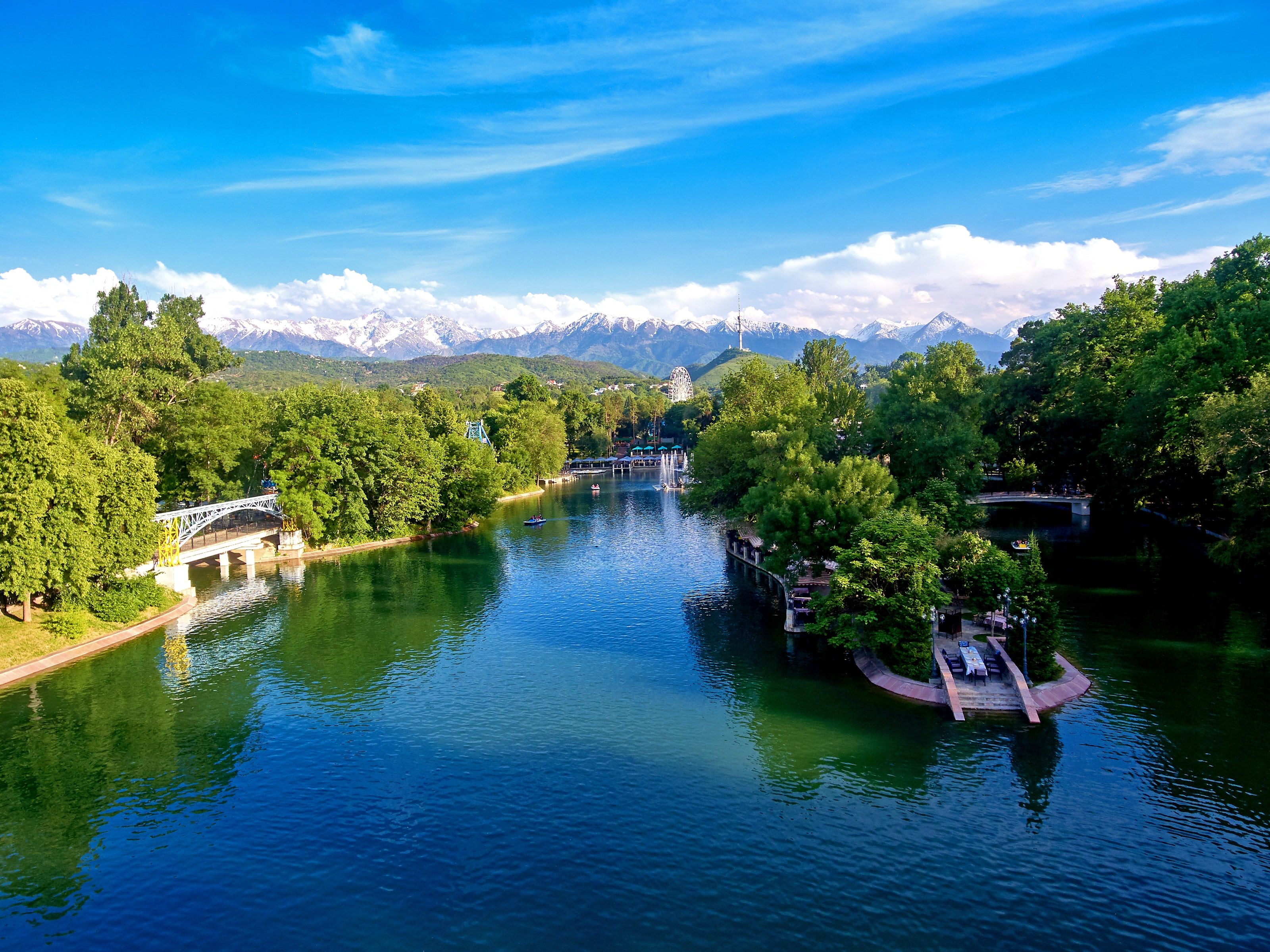
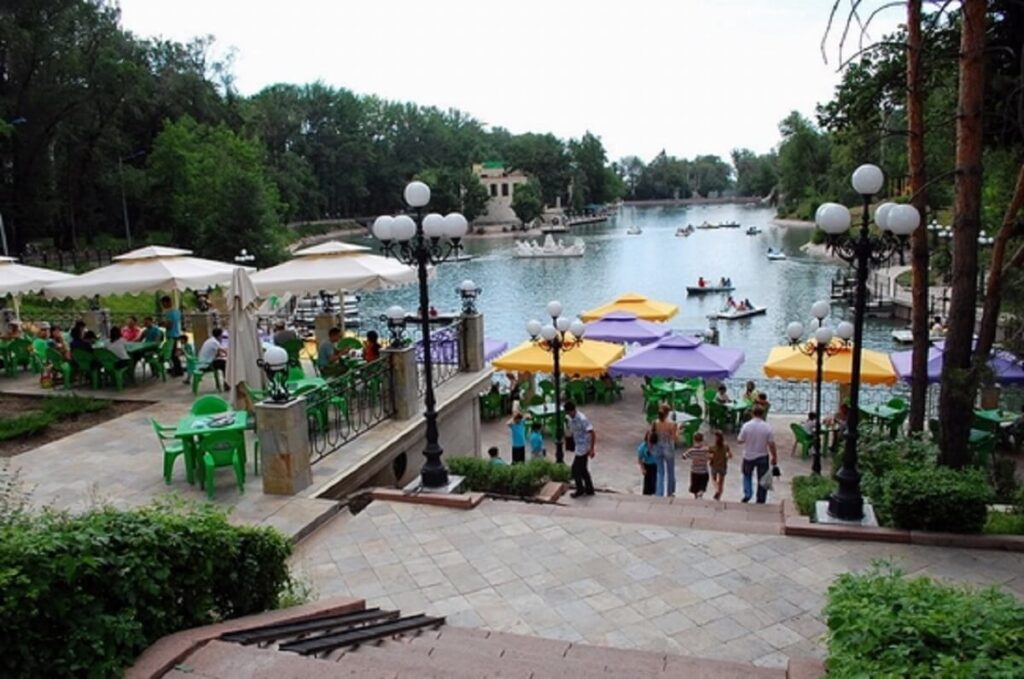
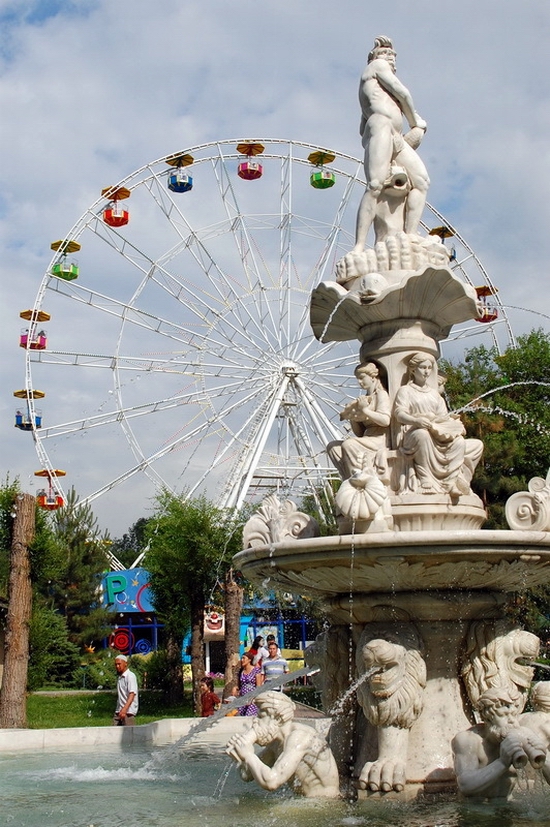
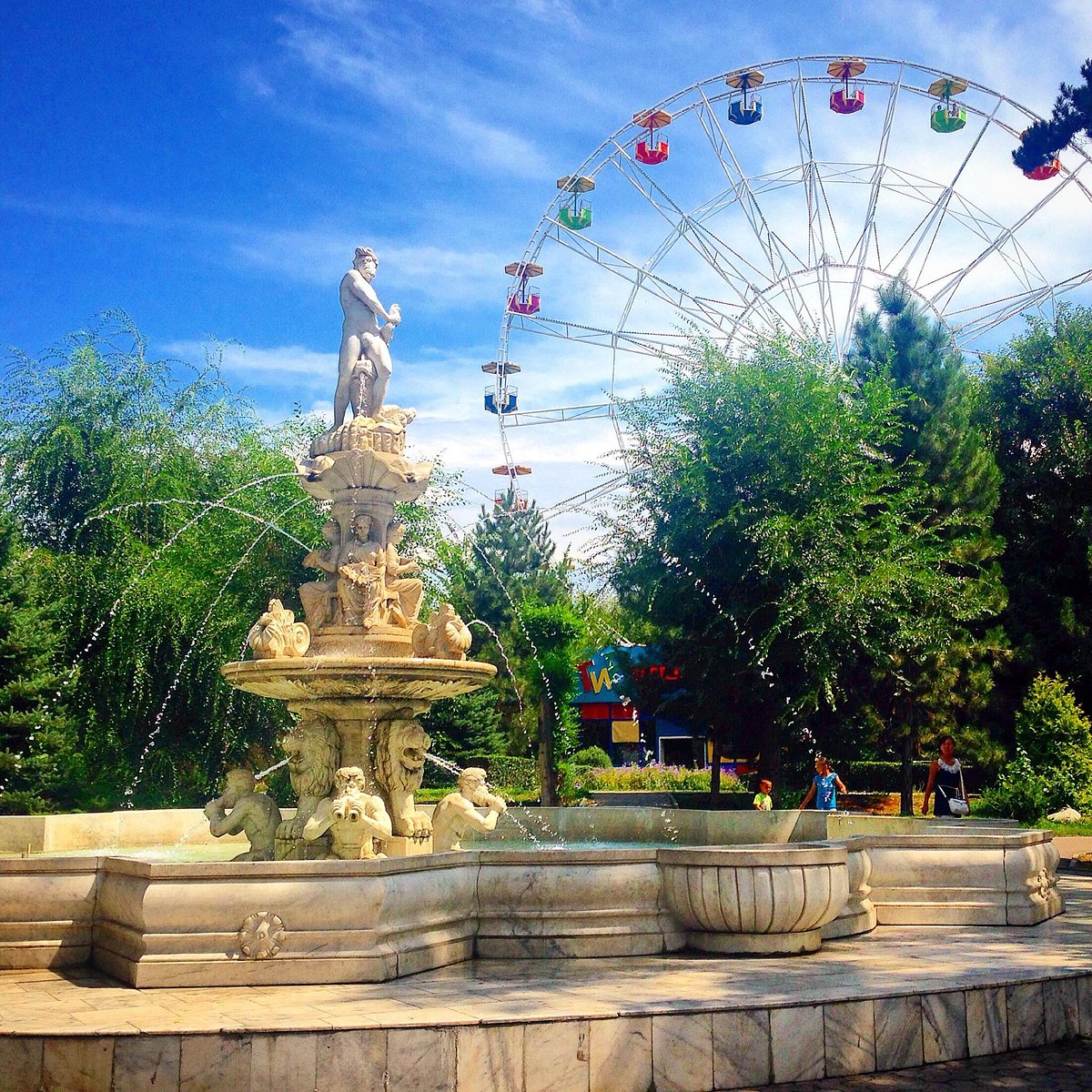
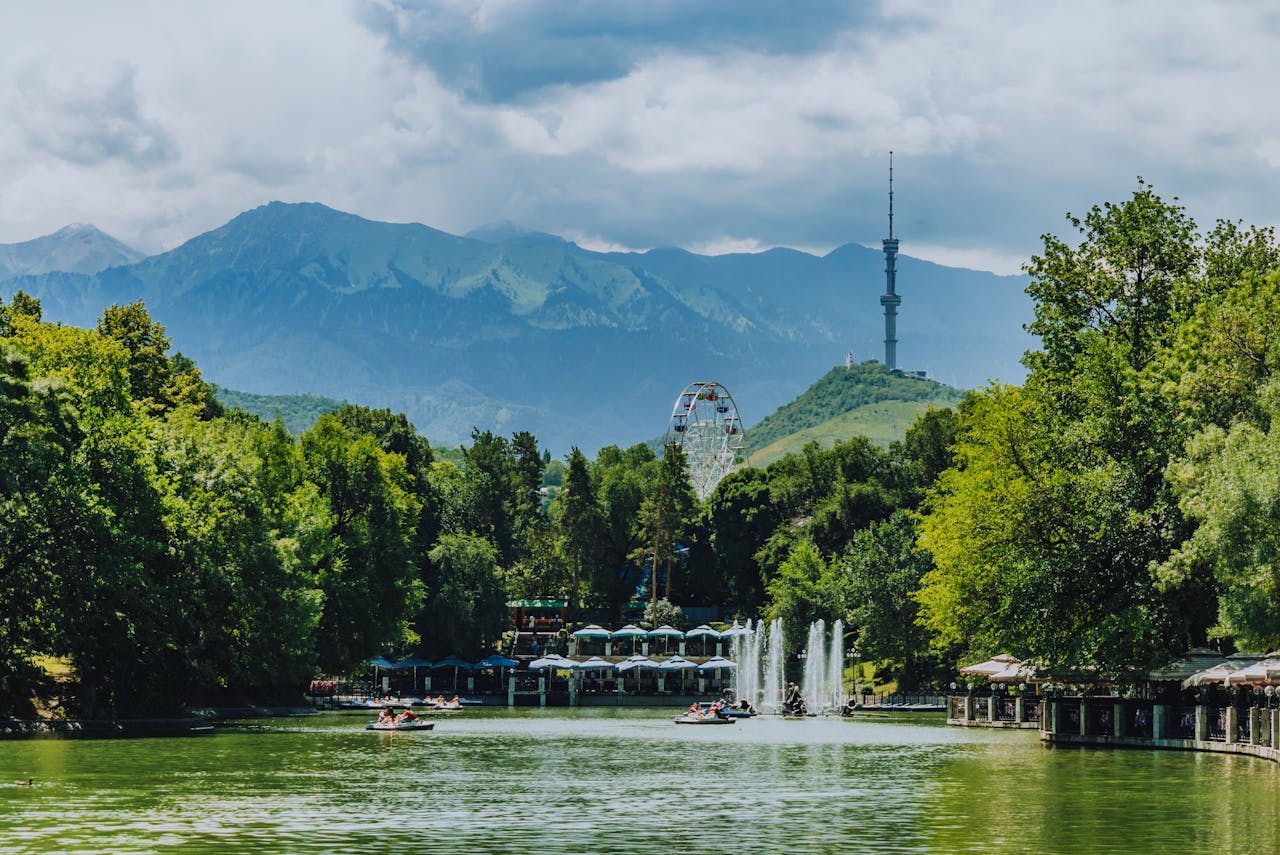
The lake at the park's southern end is the social heart of the space — pedal boats available for hire in summer, families gathered along the shore, the Ferris wheel visible above the tree line. It's the kind of urban lake that exists in every large park in every former Soviet city, and it does exactly what it's supposed to do: it gives people a reason to linger.
Why It Matters
Central Park matters to Almaty in the way that Almaty matriarch Asem Ospanova, who has been walking here every Sunday morning for forty years, explains it: "In Almaty the mountains are always there — you can see them from almost anywhere in the city. But the mountains are for special occasions. The park is for ordinary days." She's right. The Tian Shan views from the city's elevated streets are spectacular; the park is where the daily life happens. It absorbs picnics, first dates, graduation photographs, political conversations, children learning to ride bicycles, and old people remembering things that parks remember alongside you.
The Gorky in the park's official name refers to Maxim Gorky, the Soviet writer, whose name was appended during the Soviet era. The name has stuck in common usage even as the formal designation has shifted — which tells you something about how parks work: they accumulate history the way trees accumulate rings, and nothing fully disappears.
The ‘Wow-Factor’
The surprise of Central Park is not the attractions — the Ferris wheel, the lake, the amusements are all visible from outside the gates and hold no mystery. The surprise is the trees.
They are old. Not old in the way a renovated city park tends to mean "established" — old in the way that stops you: trunks wider than arm-spans, branches that have made independent architectural decisions over a century of growth, canopies that block the Almaty sky so completely that on summer afternoons the park floor is a patchwork of light and dark that shifts with the wind like a slow, botanical film. Elms, poplars, Tian Shan spruces, trees that were here before the Soviet name, before the earthquake that leveled much of Verniy in 1887, before anyone thought to call this city Almaty.
You feel the temperature drop as you enter. The city outside runs at the high-altitude intensity of a Central Asian summer; inside the park's older sections, the temperature is noticeably lower, the air slower, the ambient sound of the city absorbed by the leaf mass above. This is what old trees do for a city, and Central Park is of the few places in Almaty where you can feel it working.
The secondary wow factor — less immediately obvious — is what the park does on a Sunday afternoon in July. Every social category of Almaty is here at the same time, occupying the same grass and paths and benches in an unplanned democracy of public space. The park is where the city meets itself without an agenda, and that phenomenon — urban social life in its most basic and generous form — is a thing that old parks know how to produce. The Ferris wheel is fine. The trees are the point.
Deep History & Culture
Before the park, there was the steppe. Before the steppe was administered, the Great Zhuz — the confederation of Kazakh clans whose traditional territory ran through the Zhetysu region and the Tian Shan foothills — had been moving through this land seasonally for centuries, following the jailau (summer pasture) routes between the mountain gorges and the lowland winter camps. The site of what is now Almaty was not a city. It was a place where the mountains met the plain, where multiple passes converged, where the flat land's grass was good and water came down from the peaks in summer. A convergence point, not yet a settlement.
Verniy and the Imperial Garden
The Russian military fortress of Verniy was established in 1854 at the foot of the Tian Shan, on territory taken through the annexation of the Kazakh steppe that had begun formally in 1731 and continued through military pressure and coerced treaties until 1848. The fortress was a colonial installation, and the Russians who built it brought with them the conventions of imperial urban planning — including the public garden.
The park that would become Gorky Central Park was established two years after the fortress itself, in 1856. It was planted with trees brought from across the Russian empire and Central Asia, laid out according to the formal park conventions of 19th-century Russian civic design. The elm and poplar saplings planted in those years became the giants that shade the park today.
The earthquake of 1887 devastated Verniy — leveling most of the city's buildings — but the trees survived. The park's root systems, by then established over three decades, held the soil while the city rebuilt around them.
The Soviet Period and Maxim Gorky
After the Russian Revolution and the establishment of Soviet Kazakhstan, the park received the name that still clings to it colloquially: Gorky, after the writer Maxim Gorky, in the Soviet tradition of naming public spaces for ideologically useful figures. The park itself was expanded and formalized, the lake enlarged, the amusement facilities developed. Soviet-era improvements introduced the infrastructure — the central promenade, the amphitheater, the children's areas — that still shapes the park's layout.
During the Asharshylyk — the Great Hunger of 1930–1933, when collectivization killed between 1.5 and 2.3 million Kazakhs across the steppe — Almaty was a Soviet administrative center receiving some of the displaced survivors of the catastrophe. The park continued to function as a public space through this period, absorbing the daily life of a city that was both perpetrating and managing the consequences of a vast human disaster. The trees recorded none of this. The park absorbed it.
Almaty and Independence
After Kazakhstan's independence in 1991, the city formerly known as Alma-Ata reverted to Almaty — a Kazakh form of the same name, meaning something like "father of apples," a reference to the wild apple forests of the Tian Shan foothills from which the city grew. The park's official name was updated to remove or soften the Soviet nomenclature, though "Gorky" persisted in daily speech the way a family nickname persists after a formal name change.
Landscape architect and urban historian Dina Seitkali, who has written about Almaty's park system, describes Central Park as "the most honest public space in the city — because it didn't pretend to be anything other than what it was at each stage of its history. It absorbed the empire, then the Soviets, then independence, and it kept being a place where people went on Sundays with their families. That continuity is itself a kind of history."
Practical Digital Logistics
Central Park is in the middle of Almaty, which means getting here is among the simpler logistical problems the city presents.
Getting There
The park sits in the eastern central district, roughly a kilometer from the Green Market and several of Almaty's main east-west avenues. From most central Almaty hotels, it's walkable — 15 to 30 minutes depending on your starting point. Taxis and ride-share apps (Yandex Go and inDrive are both well-used) cost 500–1,500 KZT from central locations. Bus routes along Furmanov and Dostyk avenues stop within a short walk of the main entrances.
If you're using the Almaty metro, the Baikonur or Zhibek Zholy stations put you within reasonable walking distance of the park's western approaches. The metro is cheap (90 KZT per journey at the time of writing), clean, and reasonably fast — worth using if you're elsewhere in the city.
Entry
The park is free to enter, with no gate or ticketing for general access. The amusement rides, Ferris wheel, and children's attractions inside the park charge separately — individual rides typically cost 500–2,000 KZT. Pedal boat rentals on the lake run around 1,000–1,500 KZT for 30 minutes. Cash is useful for the smaller operators; the larger rides usually accept card payment.
Hours
The park operates year-round and has no formal closing time for pedestrian access. The amusement facilities and food stalls are seasonal — operating from roughly May through September, with reduced hours outside peak summer. The park itself is accessible in winter and is particularly striking after snowfall, though the facilities are minimal.
What to Bring
Comfortable walking shoes. The park's paths range from well-paved central promenades to rougher sections under the larger trees where roots have broken the surface. A water bottle — there are drinking fountains in some sections but they can't be relied on. In summer, sun protection and light clothing; the park's shade is excellent but the sun finds the open areas. In spring, be prepared for mud in the grassy sections after rain.
Getting Around the Park
The park is large enough that it's worth having a loose sense of the layout before you enter. The main central promenade runs north-south through the middle. The lake is at the southern end. The older, shadier tree sections are to the northwest. The children's amusement area and Ferris wheel cluster toward the eastern entrances. A slow circuit of the full park on foot takes about an hour without stopping.
Connectivity
Mobile signal throughout the park is good. The park doesn't offer public Wi-Fi, but the cellular coverage from Kazakh providers is reliable enough that navigation apps work without interruption. Download the park location in Maps.me or Google Maps offline if you want to navigate the internal path network.
Must-Do Activities
The activities here are largely unscheduled, which is part of the appeal. But a few things reward deliberate attention.
Walk the Old Tree Sections
The oldest and most impressive part of the park is in the northwest quadrant, where the trees planted in the 1850s and 1860s have reached their full, eccentric maturity. Leave the main promenade and take the smaller paths into this section. The light here in the afternoon is extraordinary — filtered through leaf canopy in shifting patterns, the air cooler than the surrounding city by several degrees. Don't rush it. The trunks are worth photographing; the experience of simply standing among them is worth more.
Ride the Ferris Wheel
It's touristy. Do it anyway. The views from the top extend in all directions — south toward the Tian Shan, the snow-capped ridgeline improbably close for a city of this size; north across the flat urban grid that extends toward the steppe. The contrast between the mountains and the city is most vivid from this height, and the rotation gives you the full 360-degree version. The ride takes about ten minutes. Worth every tenge.
Take a Boat on the Lake
The pedal boats on the park lake are a Soviet-era tradition that has never lost its appeal. Hire for 30 minutes and you'll spend at least 45, because the combination of mild exercise, open water, and the park's tree line reflected on the lake's surface is reliably pleasant. Children treat it as sport; adults treat it as an excuse to have a conversation without anywhere to be. Both uses are correct.
Sit at the Amphitheater
The park amphitheater hosts events on summer weekends — concerts, folk performances, community gatherings — but even when it's empty, it's a good place to sit. The shaded seating and the central stage create a natural observation point for park life: dog walkers, roller-skaters, groups of university students occupying the grass with a guitar and no particular agenda. Almaty observes itself here.
Watch the Sunday Market
On Sunday mornings, vendors set up along the park's eastern edge selling second-hand books, Soviet-era collectibles, handicrafts, and miscellaneous objects of ambiguous provenance. It's less a formal market than an accumulation of people who've decided to sell things in the same place at the same time. Book collectors will find Kazakh and Russian literature at prices that require no calculation. Everyone else will find objects they didn't know they wanted.
Come at Night
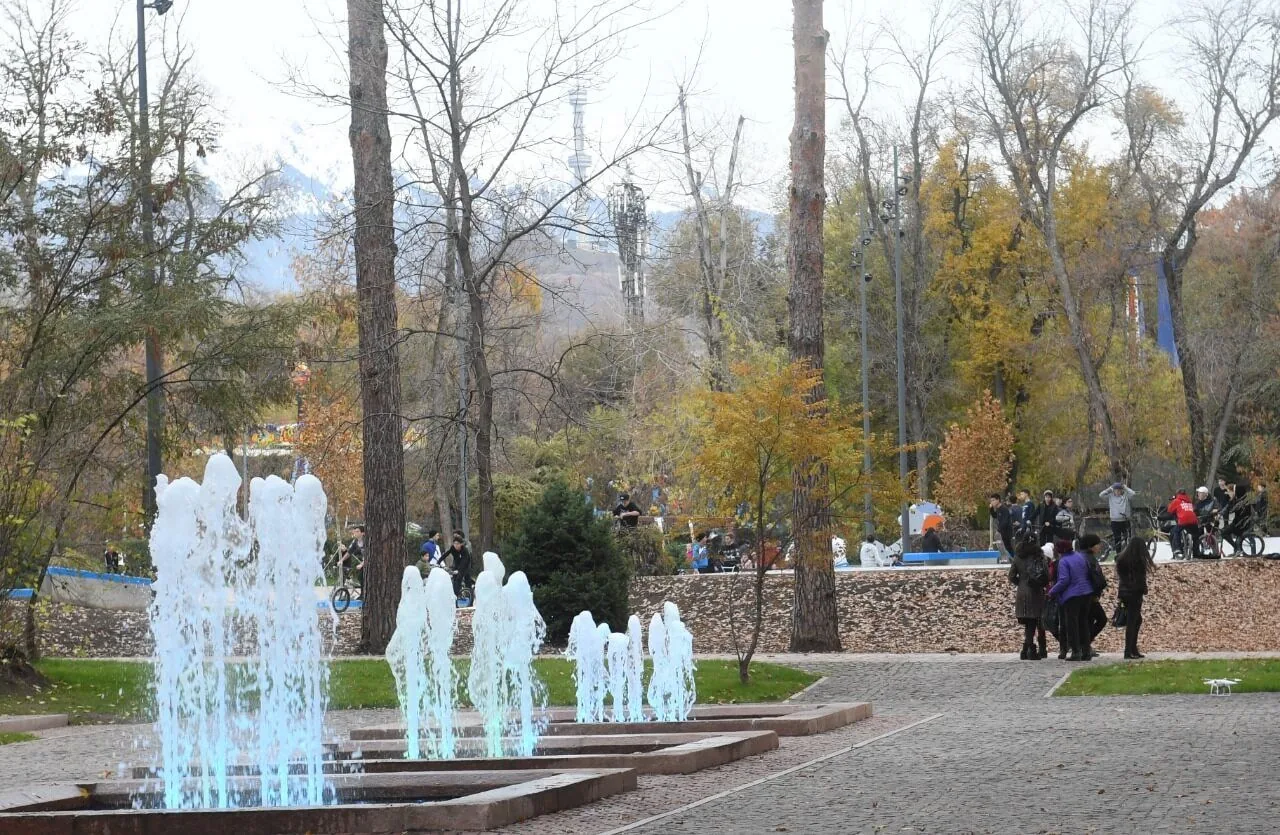
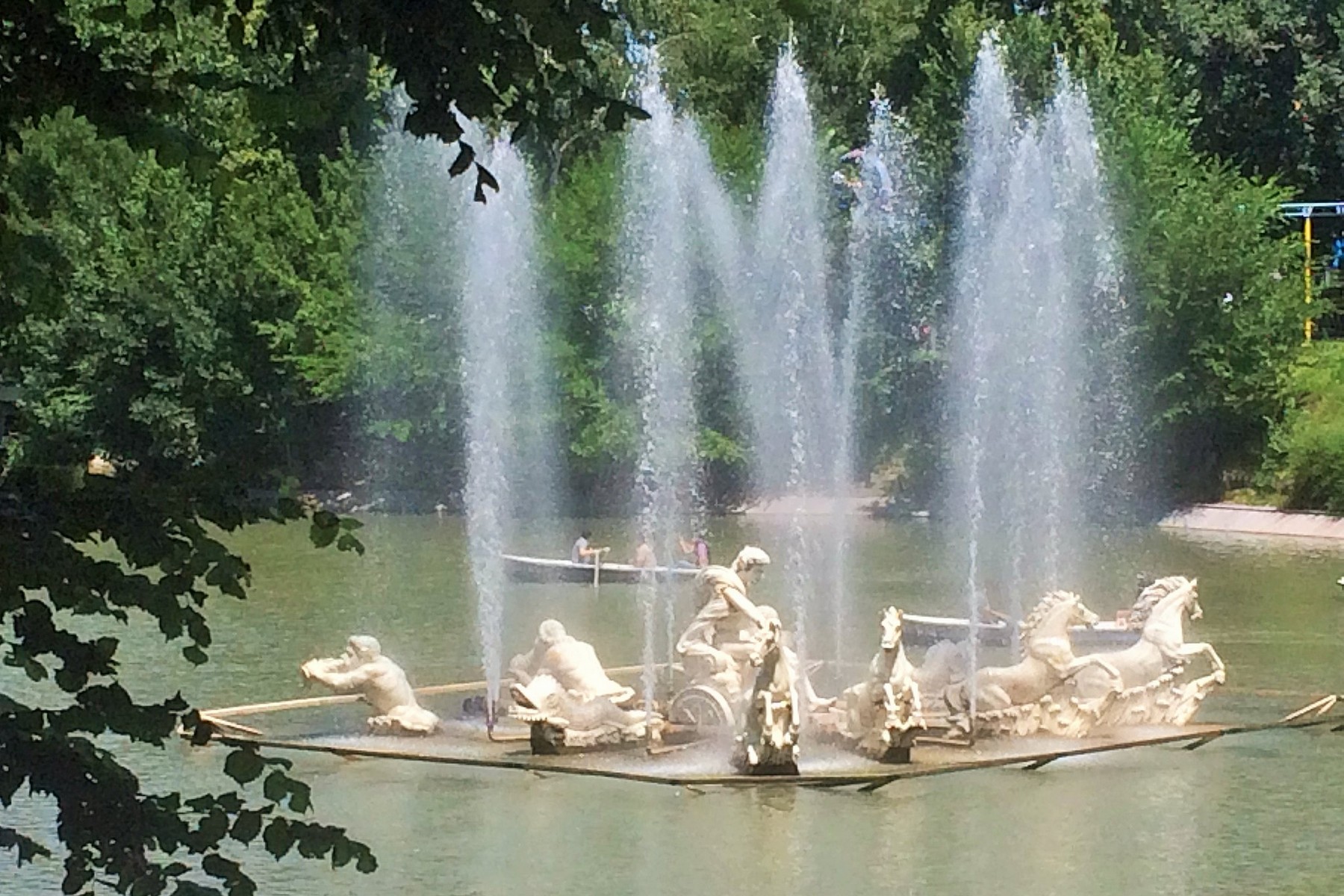
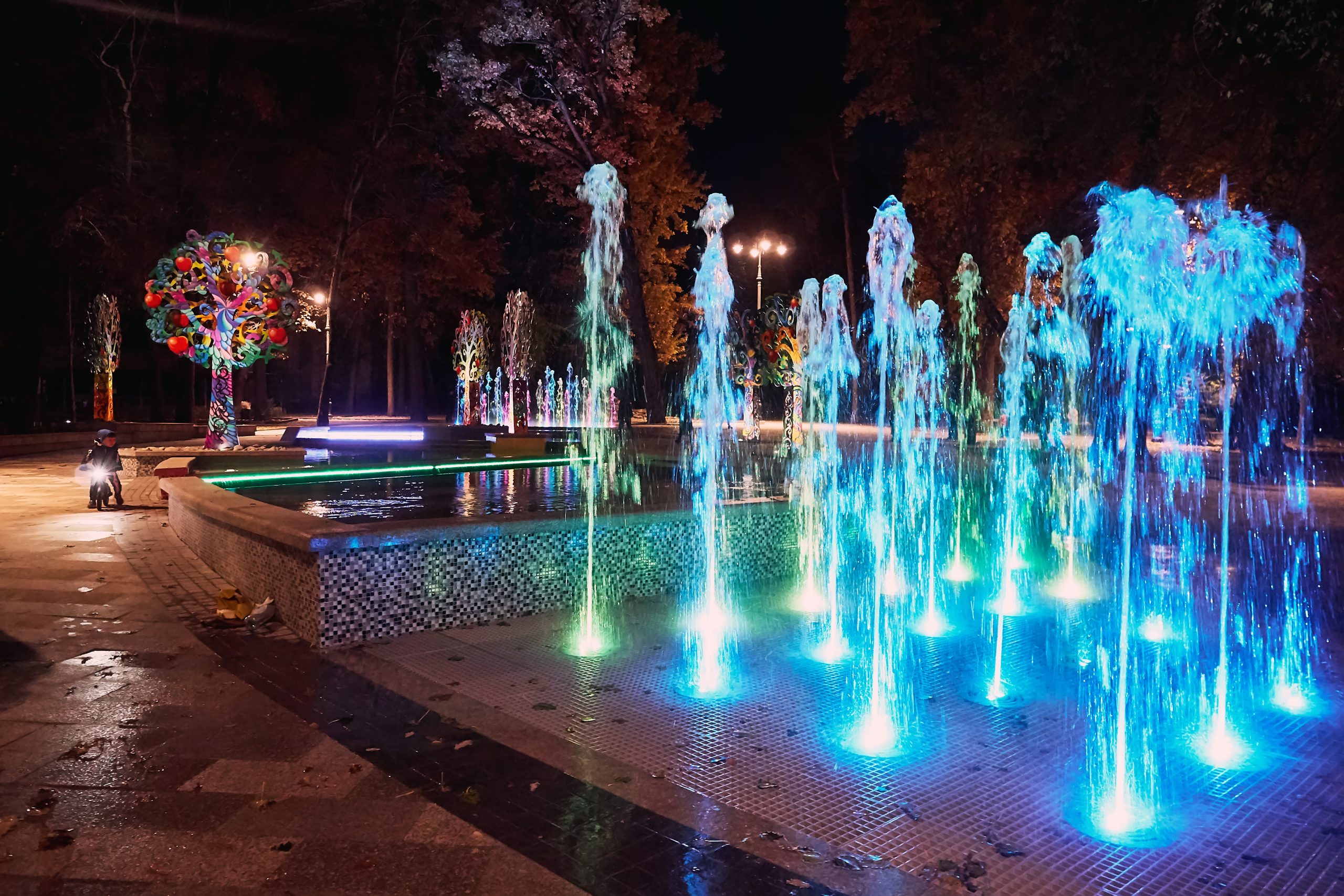
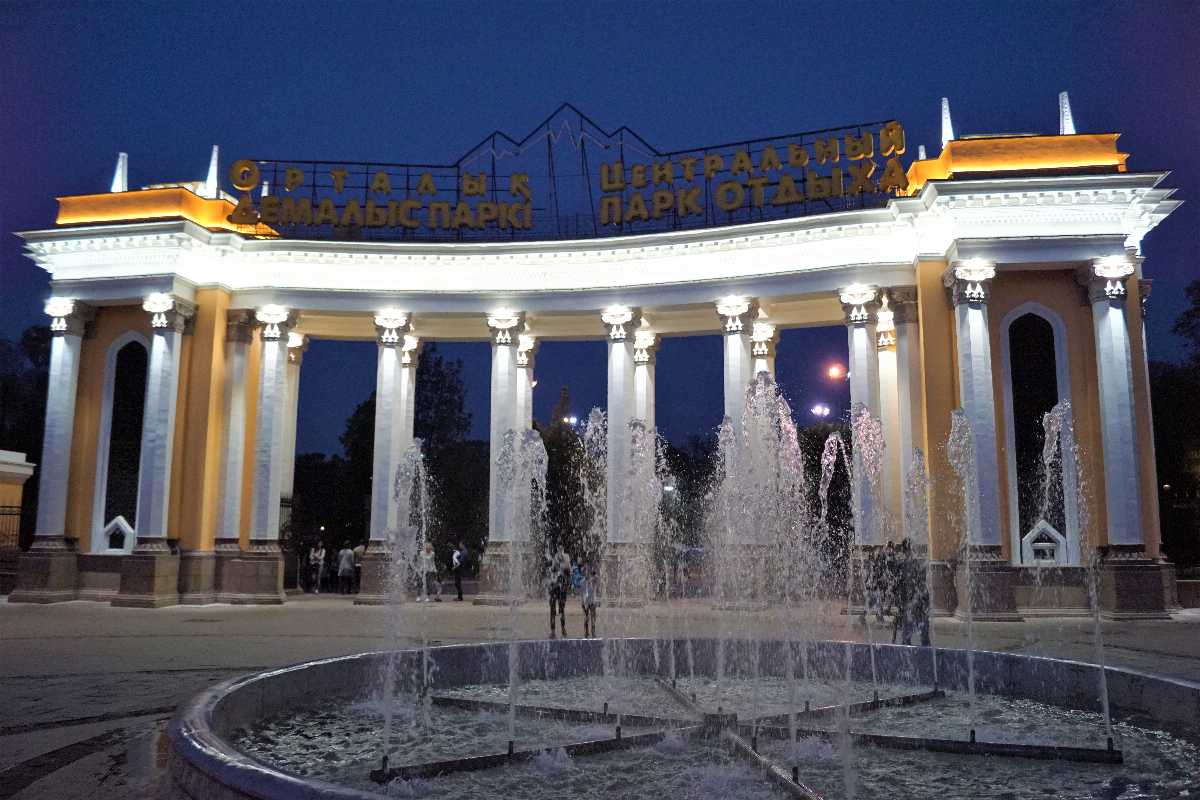
The park's central promenade and lake area are lit in the evenings, and the park fills again after dark with a different crowd — couples, families walking off dinner, teenagers on the benches in configurations that suggest the entire future ahead of them. The fountain shows (if running) are predictably pretty. But the real reason to come at night is that the old trees look different by lamplight — more mysterious, the canopies invisible above the lit paths, the darkness between trunks complete and particular.
Local Flavors & Amenities
The food culture around Central Park operates in two registers: inside the park, it's seasonal and informal; outside, you're in the middle of Almaty, where the options multiply quickly.
Eating Inside the Park
During the warmer months (May through September), food stalls and small cafes operate along the main promenade and near the lake. The standard offering is the Almaty summer canon: shashlyk on charcoal, corn on the cob, samsa, cold drinks, ice cream. Nothing here will surprise you, and nothing needs to — the context is picnic logic, and the food tastes better than it would anywhere else because you're eating it under trees that have been providing shade for 160 years.
The stalls near the lake tend to be busier and slightly more varied. On summer weekends, families set up their own picnics on the grass in numbers that turn the park's open areas into an improvised dastarkhan — the Kazakh spread-cloth feast — extended across several hundred meters of urban greenery. If someone nearby is grilling and you look hungry, there's a genuine possibility of being invited over. Kazakh hospitality operates even in city parks.
The Tea Ritual
Several small tea houses and café pavilions in the park offer the most important park food of all: tea. Shay served in piala bowls, poured carefully, with something sweet alongside — baursak, a piece of shubat (fermented camel milk) if you're lucky, or just a bowl of sugar and a spoon of jam the way the Soviet tradition still serves it. Sitting with tea under the elm trees is the core Central Park experience, available for a few hundred tenge, more valuable than any attraction.
Eating Near the Park
The streets around Central Park are not the most concentrated restaurant district in Almaty — that's more toward the center, along Furmanov and in the areas around Panfilov Park — but there are good options within a ten-minute walk. Look for the small Kazakh cafes on the side streets east of the park; beshbarmak (slow-cooked lamb over flat noodles, served on a communal platter) and lagman (hand-pulled noodle soup) are the anchors, and both are better in these kinds of places than in the hotel restaurants serving tourist versions of them.
Staying Near the Park
Almaty's central district, within which the park sits, has accommodation across all price points: large Soviet-era hotels renovated to varying standards (functional, reliable, not always charming), mid-range business hotels that serve the city's commercial visitors, and an increasing number of smaller boutique options. Budget guesthouses and hostel-style accommodation exist in the residential streets around the park. Staying in this neighborhood puts you within walking distance of the park itself, the Green Market (the best food market in Kazakhstan), and the Green Bazaar area, which is the most useful orientation zone in the city.
Essential Insider Tips
The things about Central Park that regular visitors know and first-timers typically discover the hard way.
Go Off the Main Promenade
The main central path is fine — wide, shaded, well-maintained. But the park's most interesting territory is in the older, less-formal sections away from the central axis. Follow the smaller paths northwest of the main promenade into the tree canopy zone. The paths here are less predictable, the light is better, and the sense of being inside a mature forest rather than walking through a maintained garden is genuinely different. You're still in the middle of a city of two million people. It just doesn't feel like it.
Weekday Mornings
Central Park on a summer Sunday afternoon is a social event. Central Park on a Tuesday morning is closer to a private garden. The trees are the same, the lake is the same, but the quality of the experience is quieter, slower, and available to people who want it that way. If you're in Almaty on a weekday, this is the best version of the park.
The Temperature Differential
Almaty in July can hit 35°C in the open city. Inside the park's older sections, it's meaningfully cooler — the canopy captures and holds a lower temperature that you feel on your skin within two minutes of entering. This isn't incidental. It's of the things old trees do that new parks can't replicate, and it's worth coming specifically for the thermal relief on the hottest days.
For Photography
The park in early morning light — roughly 7 to 9 a.m. in summer — offers the intersection of soft light, near-empty paths, and the long shadows cast through the tree canopy that make for the best images. The lake is mirror-still before the pedal boats start, reflecting the tree line and the sky. The Ferris wheel at dawn has a different character than at noon. A polarizing filter helps on the lake shots.
The Sunday Market
The informal second-hand market that appears along the park's eastern edge on Sunday mornings tends to peak between 9 a.m. and noon before vendors begin packing up. Go early for the best finds — Soviet-era books, old maps, Kazakh craft objects, miscellaneous things that have clearly had a previous life. Prices are genuinely negotiable.
Don't Neglect Panfilov Park
Central Park and Panfilov Park (a few streets away, housing the Zenkov Cathedral and the World War II memorial) are often visited as a pair — the two parks bookend a walk through central Almaty that covers most of the city's outdoor heritage. If you're spending a day walking Almaty's center, visiting both back-to-back makes logical and visual sense.
In Winter
The park in winter — bare trees, quiet paths, possibly snow — is undervisited and genuinely lovely. Wrap up, bring tea in a thermos, and spend an hour in the northwest section when no else is there. The park shows you something in winter that summer crowds obscure.
Sustainability & Community
A public park's sustainability is a civic question as much as an environmental. Central Park belongs to Almaty — not to any particular agency or operator, but to the city in the oldest and most direct sense: it is common ground, maintained by collective investment, available to anyone who walks through the gate.
Maintaining that commons requires active care, and the pressure on Central Park is real. The park receives millions of visitors per year from a city whose population has been growing for three decades. The trampled grass sections, the roots of old trees breaking the path surfaces as foot traffic compacts the soil around them, the litter that accumulates despite the bins — these are the marks of a public space used hard by the people it was built for.
The Trees Are the Infrastructure
The primary sustainability concern in Central Park is the health of the old-growth trees that make the park worth having. These trees are irreplaceable in any human-meaningful timeframe — a 160-year-old elm cannot be substituted by a sapling. The root systems of the oldest trees are under pressure from soil compaction, from construction work on the park edges, and from the sheer volume of foot traffic that runs through the same paths year after year.
Almaty's municipal parks department has been working on soil aeration programs and restricted-access zones in the most sensitive areas. Visitors can support this by staying on paths in the older tree sections, particularly after rain when compaction damage is worst.
Community Use as the Point
The park's highest-value function is also its most sustainable: it gives Almaty's residents free public space to exist in. The Sunday families, the chess players, the students reading, the old woman feeding pigeons — these people are not consuming the park. They are using it in the way it was designed to be used, and that use is the park's justification.
The sustainability challenge is ensuring that the park's commercial elements — the rides, the food vendors, the amusement facilities — don't expand to the point where they colonize the free-access commons. The balance is always negotiable, and it's worth supporting the park's role as genuinely public space by simply using it as such: coming without a transaction, sitting on the grass, being in the park rather than purchasing something in it.
Supporting the Park
The most direct support is behavioral: don't litter, stay on paths in sensitive areas, treat the public space with the care you'd want others to extend when you're not there. If you're interested in more active involvement, Almaty has several urban ecology organizations that run regular clean-up and tree-care volunteering events in the city's parks; a search for current programs will find current opportunities.
The park that Asem Ospanova has been walking through every Sunday morning for forty years will be walked by her grandchildren and their grandchildren, if the trees are allowed to outlast the pressure on them. That's the sustainability goal that matters here: keeping the park old.
Key Facts
- Oldest City Park
- Founded in 1856, it is the city's oldest public park, originally established as a nursery for fruit trees in the southern capital.
- Family Recreation
- The park features a diverse range of attractions including an amusement park, an aqua park, and the city's central zoo.
- Scenic Boat Lake
- A large artificial lake at the center offers boat rentals and provides a peaceful mirror for the surrounding ancient trees.
- Aquatic Hub
- Recently, the 'Eight Lakes' water terminal provides families with world-class swimming and leisure facilities within the park grounds.
- Soviet Atmosphere
- The park retains a charming Soviet-era nostalgia with its wide avenues, classic sculptures, and decorative iron gates.
- Botanical Link
- It is located adjacent to the Almaty Zoo and the Gorky Park complex, forming the largest continuous green belt in the central district.
Photo Gallery
Video coming soon
Central Park
Loading map...Loading map...
Frequently Asked Questions
Have a question?
Ask and get answers in seconds!
Discussion 0
No comments yet. Start the conversation!
Leave a Reply