Palace Of Peace And Reconciliation
The City of Future. Futuristic architecture in the steppe.
Essential Profile
Palace of Peace and Reconciliation
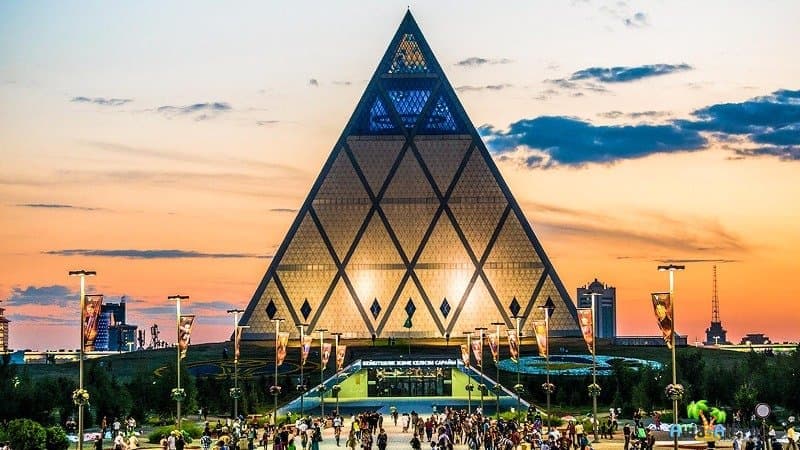
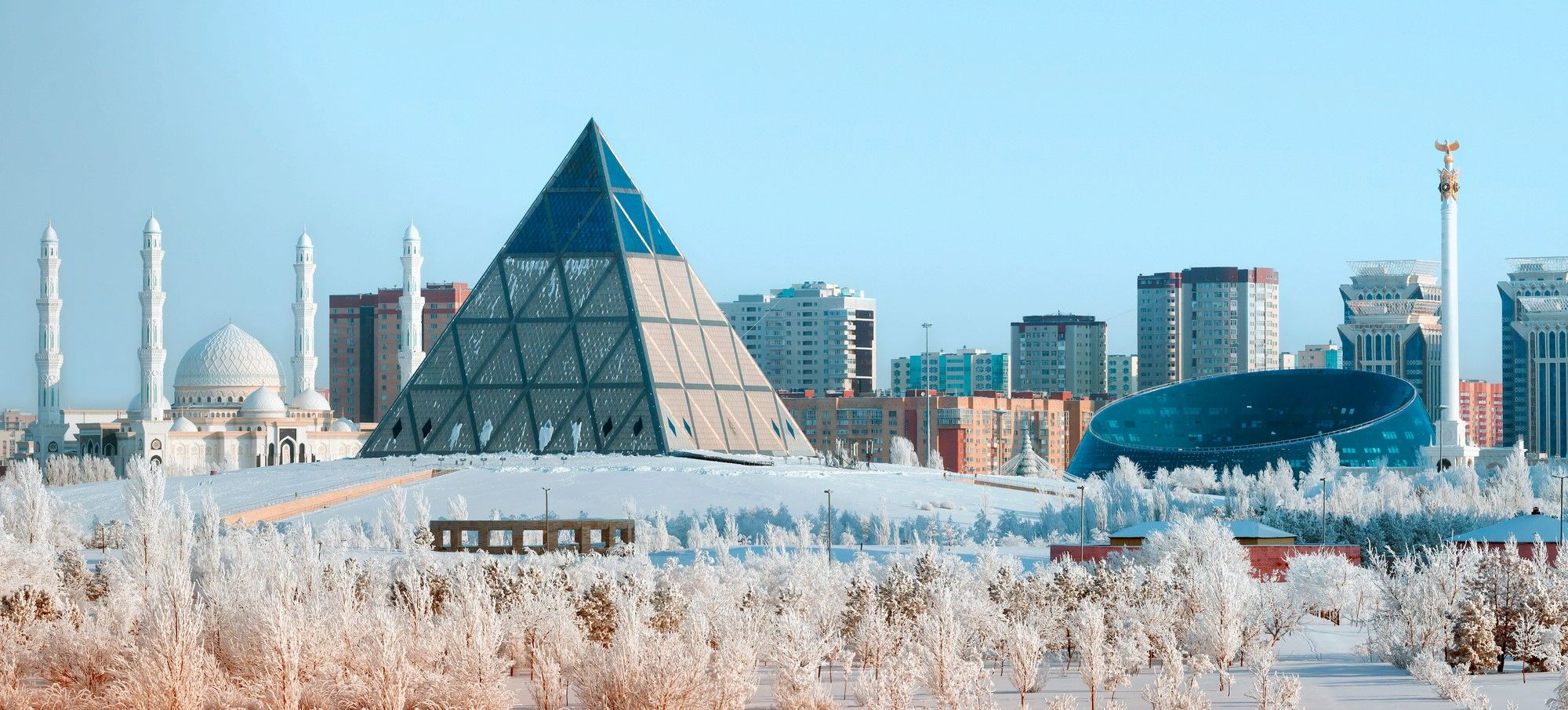
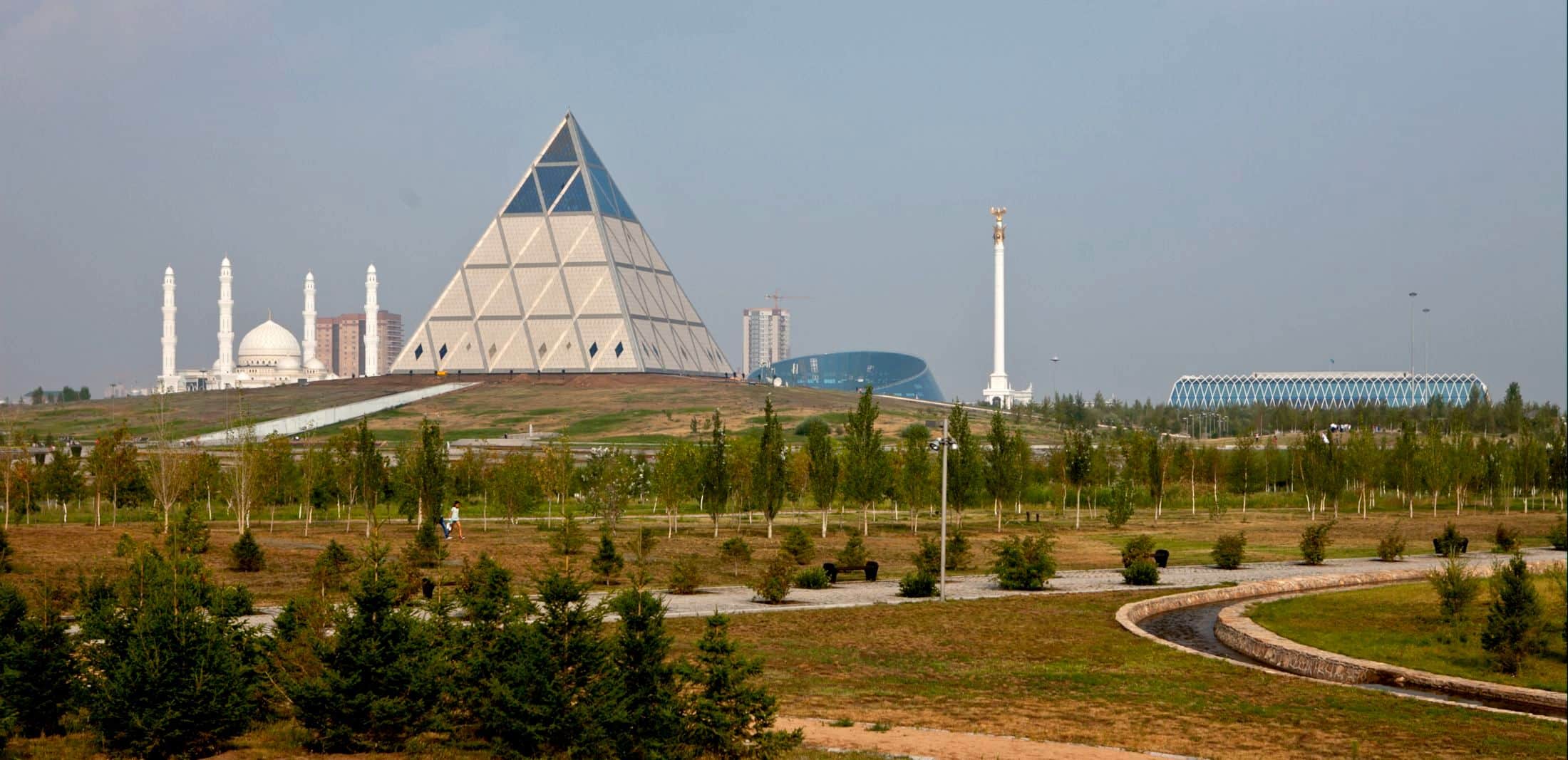
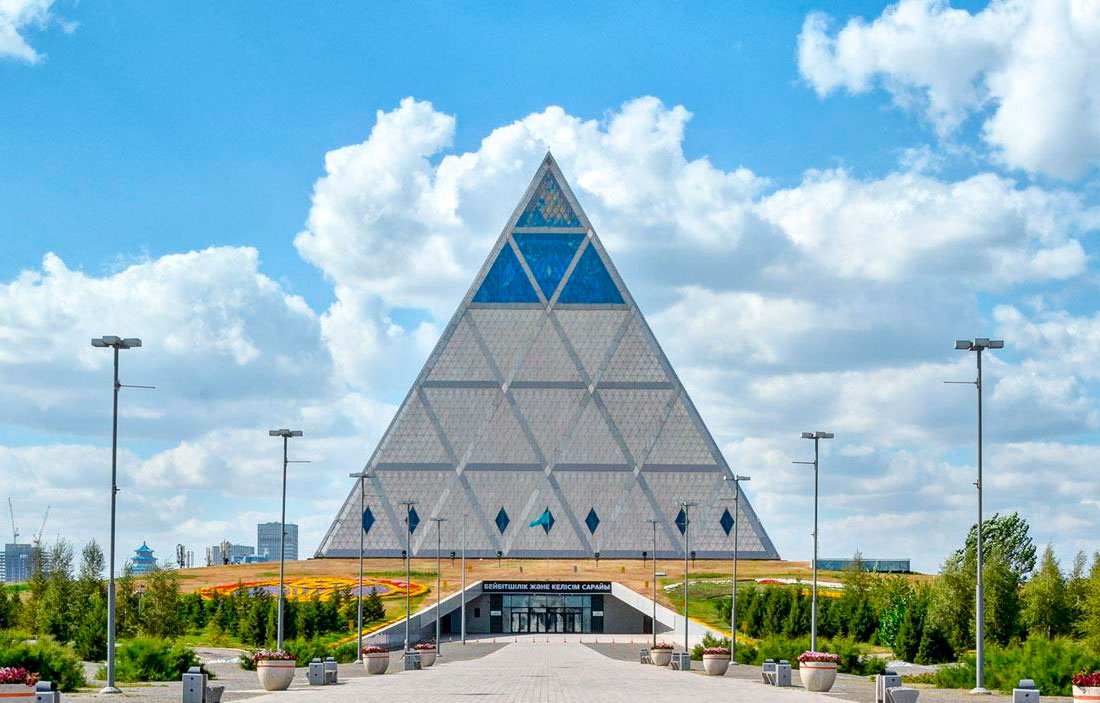
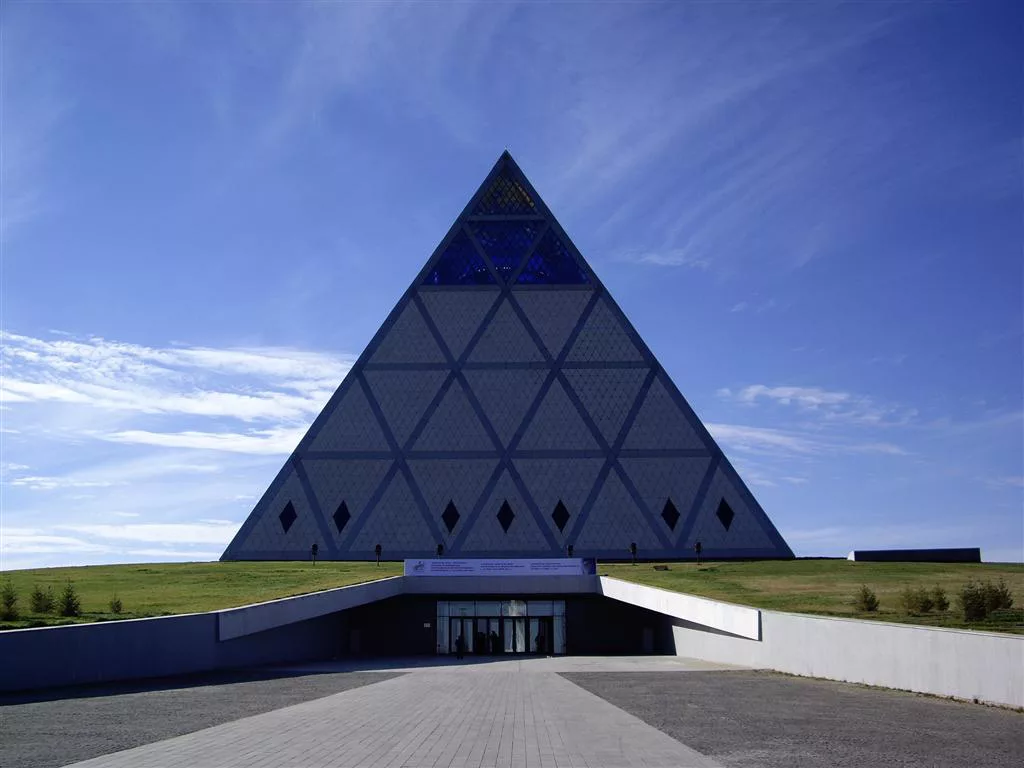
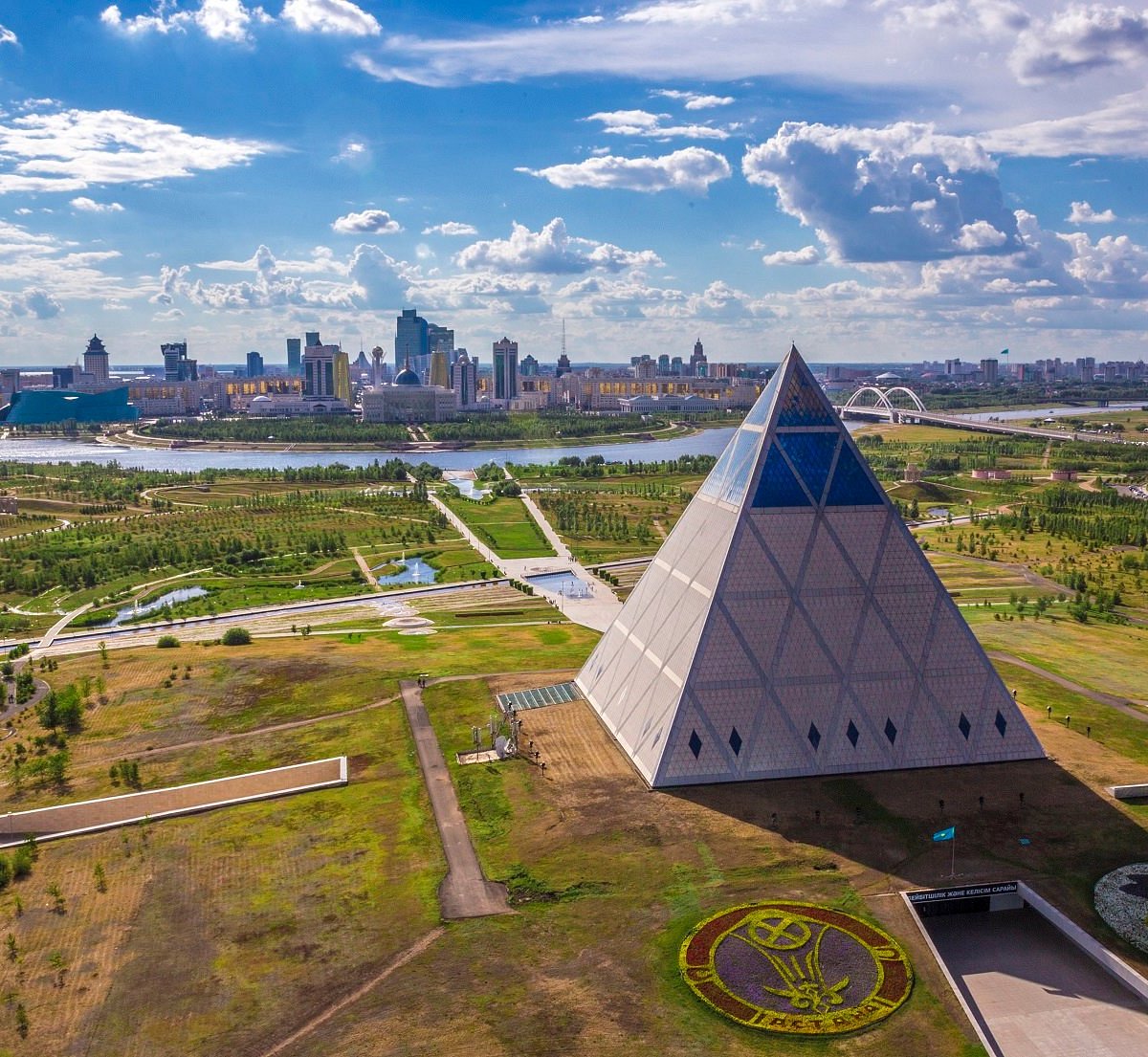
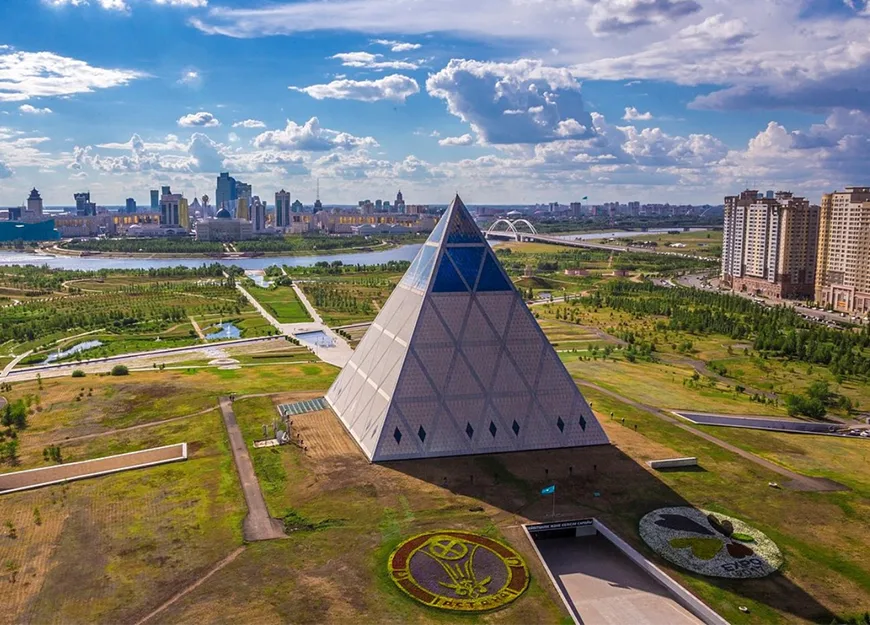
The Palace of Peace and Reconciliation is a 62-metre glass pyramid standing on Independence Square in Astana, designed by Norman Foster and completed in 2006. It was commissioned specifically to serve as the permanent home of the Congress of Leaders of World and Traditional Religions, a triennial gathering initiated by Kazakhstan to foster dialogue between the world's major faiths.
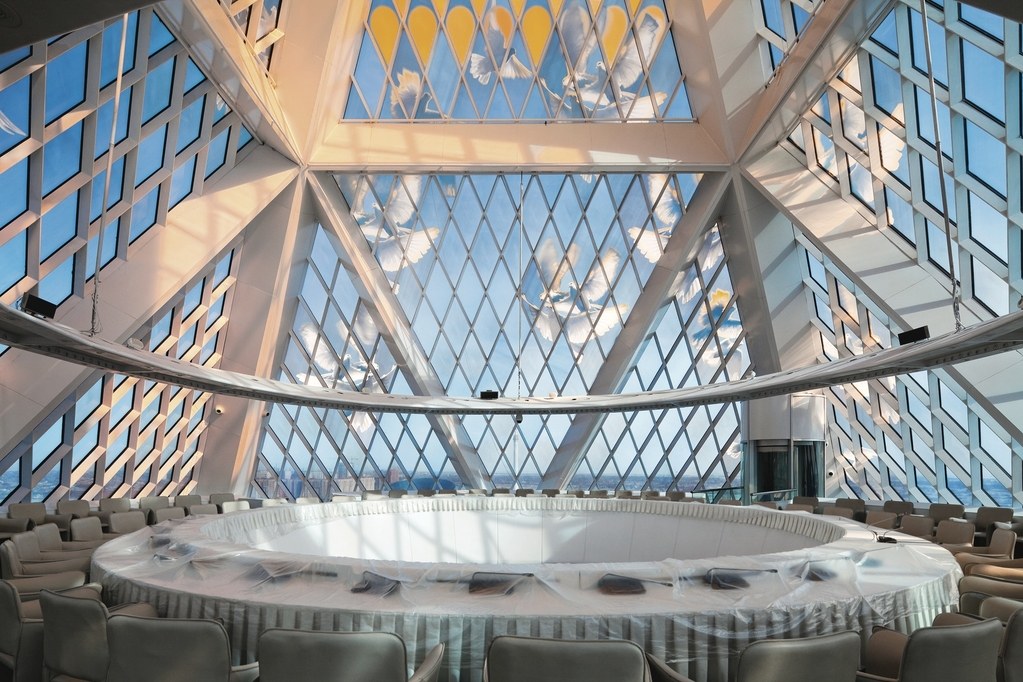
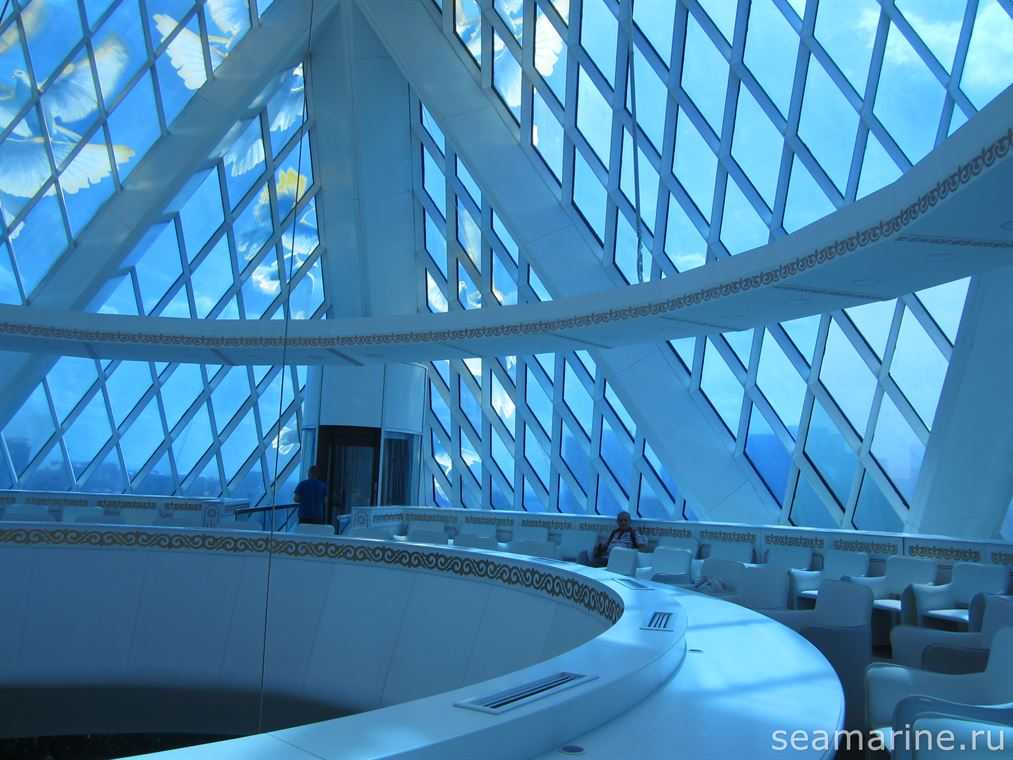
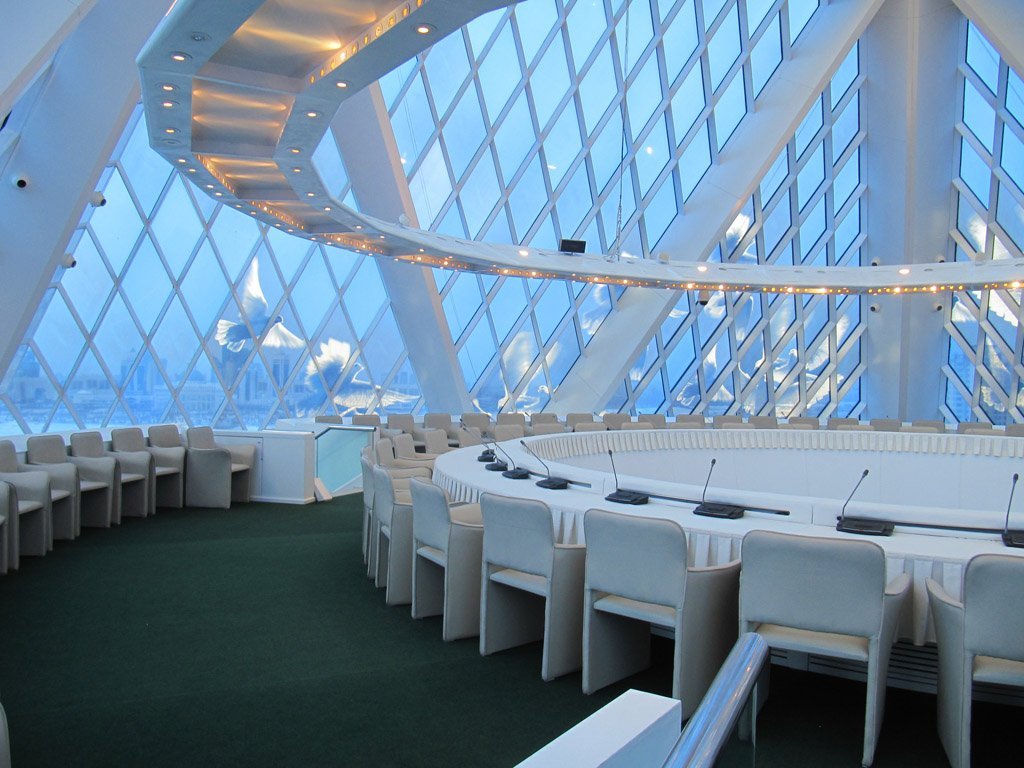
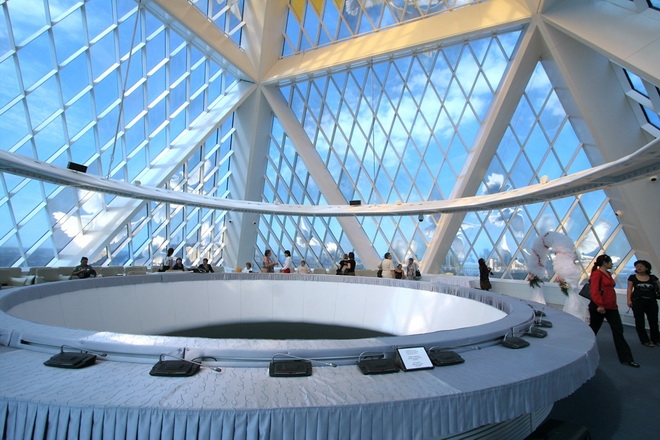
The building is used for the congress sessions as well as for opera performances, exhibitions, and conferences throughout the year. Internally it contains a concert hall, an opera house, a national museum section, and the congress chamber itself — a circular room at the apex of the pyramid surrounded by stained glass panels depicting doves and the symbols of different world religions.
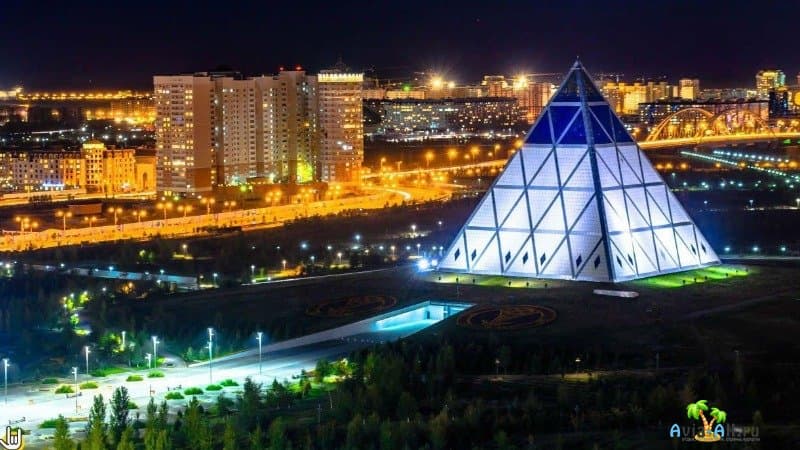
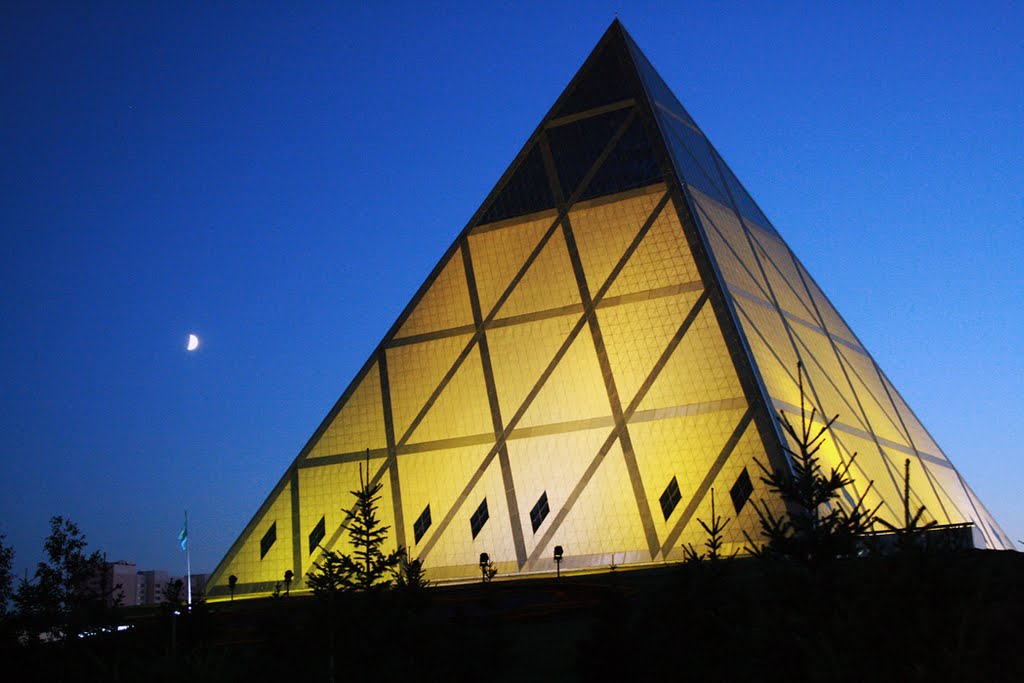
The exterior is a steel and glass structure of considerable precision. The triangular facets of the pyramid catch light differently across the day, and the building changes character markedly between midday, when it reflects sky and cloud, and evening, when the interior lighting makes the glass panels luminous from outside.
It is of the most distinctive pieces of architecture in Astana — a city that has no shortage of notable buildings — and Norman Foster's design sits alongside his other Astana project, the Khan Shatyr entertainment centre, as of the two most internationally recognised structures in the capital.
The ‘Wow-Factor’
Standing Inside the Pyramid
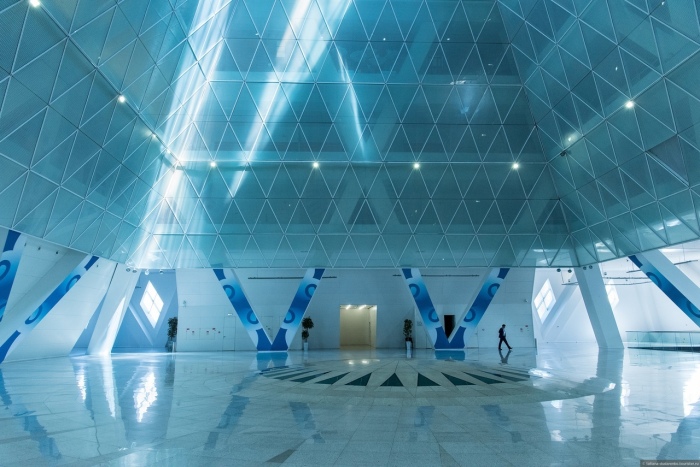
The impact of the Palace of Peace and Reconciliation is primarily vertical. Most buildings at this scale spread outward; this pulls you upward. The main interior volume rises to the congress chamber at the apex, and the proportions — the way the walls narrow as you ascend — give the space a quality that photographs do not fully capture.
The summit chamber is the building's centrepiece: a circular room at the top of the pyramid, its walls formed entirely by stained glass panels in deep blue and yellow, designed by the artist Brian Clarke. The panels depict doves in flight, and when the light passes through them, the room is filled with colour. It is of the more genuinely memorable interior spaces in Astana.
The journey up — by lift, with views down through the atrium — makes the scale of the structure apparent in a way that the exterior does not. From outside, the pyramid reads as monumental but not especially large; from inside, looking down from the upper levels, the drop is considerable.
The building is less visited than the Bayterek Tower and tends to be quieter. If you are in Astana for more than a day and have already done the usual sights, this rewards the extra time.
Deep History & Culture
The History Behind the Pyramid
The Palace of Peace and Reconciliation was built for a specific purpose: to host the Congress of Leaders of World and Traditional Religions, a forum convened by Kazakhstan every three years to bring together representatives of the world's major faiths. The first congress was held in Astana in 2003, before the building existed; the palace was commissioned as a permanent venue and completed in 2006 for the second congress.
The choice of a pyramid is deliberate. The shape carries associations across many cultures and religious traditions — Egyptian, Mayan, and others — that make it a more neutral architectural choice than forms associated with any single religious tradition. The congress itself operates on the same logic: the building is designed to be a space that belongs to no single faith and therefore to all of them.
Kazakhstan's positioning of itself as a facilitator of interfaith dialogue has been a consistent foreign policy strand since independence. The congress has drawn representatives of Islam, Christianity, Judaism, Buddhism, Hinduism, and indigenous faith traditions, and the country has used it as a platform for broader peace diplomacy. The palace is the physical expression of that ambition.
Norman Foster's design respects the symbolic requirements without becoming merely symbolic. The building works as a piece of architecture — it has presence, interior logic, and a quality of light — independent of what it stands for.
Practical Digital Logistics
Getting to the Palace of Peace and Reconciliation
The Palace of Peace and Reconciliation stands on Independence Square in the administrative heart of Astana, within walking distance of the Bayterek Tower and other central landmarks. It is easily reachable by taxi from anywhere in the city. The nearest metro stations on the Astana metro system bring you to the broader Independence Square area, from which the pyramid is a short walk.
Entry to the building requires a ticket, available at the visitor gates. The complex is open to the public outside of official congress sessions and major events, though opening hours and access to specific areas vary depending on what is scheduled. Checking current hours before visiting is practical.
Dress code in the building is smart-casual at minimum. The congress chamber and administrative sections of the building are formal spaces, and visitors are expected to dress accordingly. You will not be admitted in sportswear or beachwear.
Photography is permitted in most public areas of the building but not in the congress chamber during events. The interior light, particularly in the summit chamber with the Brian Clarke stained glass, is excellent for photography and the building is worth visiting with this in mind.
Must-Do Activities
Nobody tells you to look up. You walk into the Palace of Peace and Reconciliation — Astana's glass pyramid rising 62 metres from the city's formal heart — and every instinct pulls toward the staircase, the exhibits, the polished surfaces. But stop for a moment. Tilt your head back. The "Cradle of Life," a stained-glass ceiling of 130 panels, pours amber and cobalt light down you, and for a second you forget you're in a building at all.
Start with the spiral ascent — what regulars call the Apex Quest — which winds you upward through the pyramid's core. It's not just a ramp. Each floor opens a different exhibition, the air growing slightly hushed as you climb, the city view through the glass panels widening with each loop. I didn't expect to feel the scale of Astana's skyline until I was standing here, watching the Bayterek tower shrink below me.
The internal auditorium is worth the descent. Acoustics that a concert hall would envy, and a programme that ranges from chamber concerts to opera — fitting for a building designed as much for cultural exchange as for state ceremony. The smell of cool stone and old velvet lingers in the corridors between acts.
And then there's the hour before sunset. The raking light that strikes the glass panels at around 7 PM transforms the entire south face — not a warm glow exactly, but something more electric. Stay for it. Bring a tripod if you care about photography. Most visitors linger two hours; the who arrive at dusk sometimes don't leave until the city lights compete with the stars.
Local Flavors & Amenities
The aroma hits you before the plaza opens up — lamb fat on coals, the sweet char of baursaks browning in a cast-iron pan. The Palace Harvest Kitchen, set in the northern forecourt of the Pyramid, isn't a restaurant so much as a gathering point: locals on lunch breaks, tourists still blinking from the glass interior, the occasional government worker in an excellent coat. Order the Alatau lamb barbecue. It comes off the fire exactly as you'd want it to — a little smoky, a little pink — served with a cup of fermented shubat that divides the room neatly between the adventurous and the cautious.
For something lighter, the fresh-pressed Freedom Fruit Juice stand does things with regional apples and apricots that would make a French sommelier quietly envious.
Staying overnight? The Astana Plaza Hotel anchors the heritage end of the market — Heritage luxury starting around 35,000 KZT per night, with the kind of lobby that implies important decisions have been made here. If you'd rather not spend your evenings in a place that feels like a summit venue, the Pyramid-Side Boutique Hotel offers a quieter, more considered stay at roughly 12,000 KZT.
Before you leave, the Astana Souvenir Market is worth twenty minutes of your time — not the generic stuff, but genuinely ethically sourced national crafts: felt work, hand-stamped copper, small dombra-shaped ornaments that are somehow not naff. The vendors know what they're selling. Ask them about it.
Essential Insider Tips
A few things nobody puts in the brochure.
The free entry trick: On the first Sunday of each month — marked as "National Pride Day" on the official calendar — pyramid entry is waived for anyone participating in the public cultural programme. Show up early. It fills up.
Dress matters more than you'd expect. The Palace isn't a casual sightseeing stop. The theater and administrative wings have an actual dress code: professional, or at least smart. Jeans are fine; football shirts are not. The security staff are polite about it but firm.
For photographers: bring a CPL filter. The glass surfaces are spectacular, but without polarization you'll spend an afternoon fighting glare and coming away with nothing you'd want to show anyone. The "Blue Hour" window — roughly 7 PM in summer — is when the light actually cooperates.
Keep your voice down. It sounds obvious, but the acoustic design of the interior carries sound further than you think. This is a place where quiet is actively maintained, not just suggested.
Practical note: 5G signal around the complex is genuinely excellent, which is convenient right up until you've spent two hours shooting video of the skyline and your battery is at 12%. Bring a power bank. The USB ports inside the auditorium lobby are for instruments, not tourists.
Sustainability & Community
The Palace of Peace doesn't just sit in Astana — it's actively managed as part of it. The "Pulse of the Steppe" conservation programme coordinates everything from the slope plantings around the pyramid base to the way tourist foot traffic is routed during the nesting season. It's more than most capital landmarks bother with.
If you want to contribute something beyond a ticket purchase, there are a few real options. The Heritage Bio-Count asks visitors to document plant species on the surrounding slopes using a simple app — the data goes to curators, not a marketing database. During Heritage Restoration Week, you can actually work alongside grounds staff on eco-trail maintenance. The work is genuine. You'll know by the state of your shoes afterward.
For purchases, the local artisan market near the northern entrance carries Astana hand-painted tiles and hand-made silver jewelry. The quality varies, but the better pieces are made within the city. Worth asking where something is from before you buy it.
The Zero-Trash policy is enforced quietly but actually enforced. Every piece of refuse from the pyramid grounds leaves with the visitor who brought it in. Certified city tours contribute toward the longer-term "Spiritual-First Preservation" framework — the unglamorous goal of keeping the next generation of Astana residents connected to this place.
Key Facts
- Foster Pyramid
- Designed by world-renowned architect Norman Foster, the pyramid is a global symbol of interfaith dialogue and international peace.
- Congress Center
- The palace hosts the Triennial Congress of Leaders of World and Traditional Religions, serving as a center for global harmony.
- Stained Glass Doves
- The top of the pyramid features stunning stained glass depicting 130 doves, representing the 130 ethnicities living in peace in Kazakhstan.
- Opera House Inside
- Hidden within the base of the pyramid is a world-class opera house with 1,500 seats and superior acoustic characteristics.
- Hanging Gardens
- The internal ramps are lined with lush vegetation and 'hanging gardens,' creating a sanctuary atmosphere for visitors.
- Digital Walk Modern
- Recently, the palace offers immersion tours where visitors can learn about the history of world religions through VR exhibits.
Photo Gallery
Embedded Video
Palace Of Peace And Reconciliation
Loading map...Loading map...
FAQ
Have a question?
Ask and get answers in seconds!
Discussion 0
No comments yet. Start the conversation!
Leave a Reply