Mount Belukha
Discover the golden Altai mountains and pristine lakes.
Essential Profile
Mount Belukha (Mus-Tau in Kazakh), rising to 4,506 metres, is the highest peak in the Altai Mountains and the highest point in Kazakhstan. It sits on the border between the East Kazakhstan Region of Kazakhstan and the Altai Republic of Russia. The mountain is a twin-summited glacial massif, and its slopes feed the headwaters of the Katun and Bukhtarma rivers through the Akkem and Katun glaciers. The surrounding landscape is part of the Golden Mountains of Altai, a UNESCO World Heritage Site inscribed in 1998 for its exceptional natural and ecological values.
The mountain holds cultural significance for the indigenous peoples of the Altai region and has long been associated with spiritual traditions across Central and inner Asia. Its remote and demanding terrain makes it a destination primarily for experienced mountaineers and high-altitude trekkers. Routes to the summit require technical climbing skills, and conditions on the mountain are severe for much of the year. Acclimatisation at lower elevations before any ascent attempt is strongly advised.
Access to the mountain from the Kazakhstani side typically begins through the Katon-Karagay National Park, a protected area in the East Kazakhstan Region that encompasses alpine meadows, dense conifer forest, and glacier-fed rivers. The town of Ust-Kamenogorsk serves as the main transport hub for the region, with connections by road to smaller settlements closer to the park boundaries.
The ‘Wow-Factor’
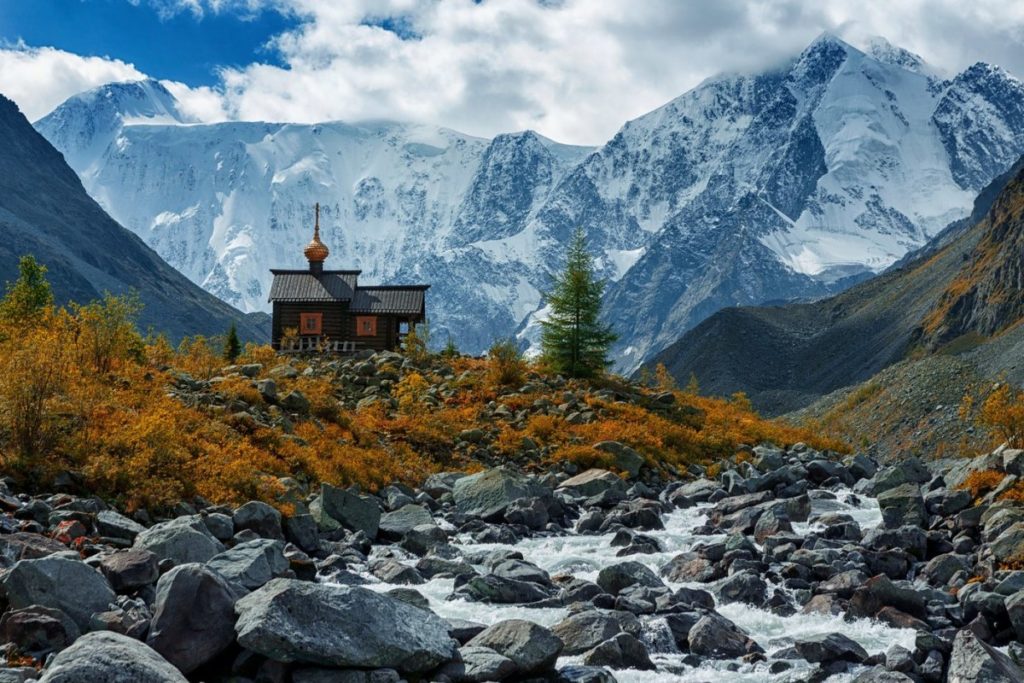
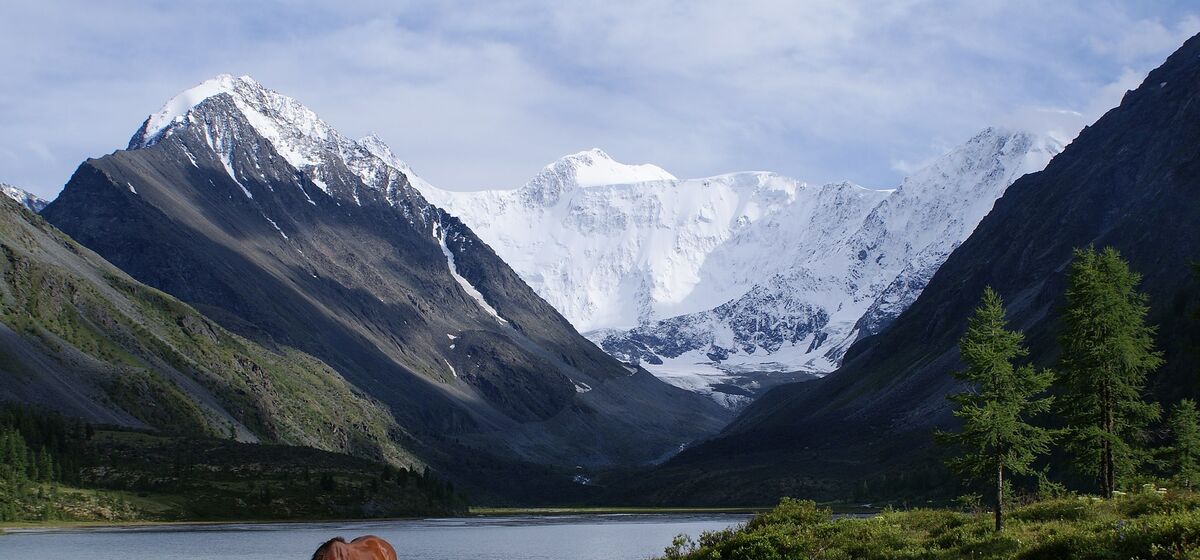
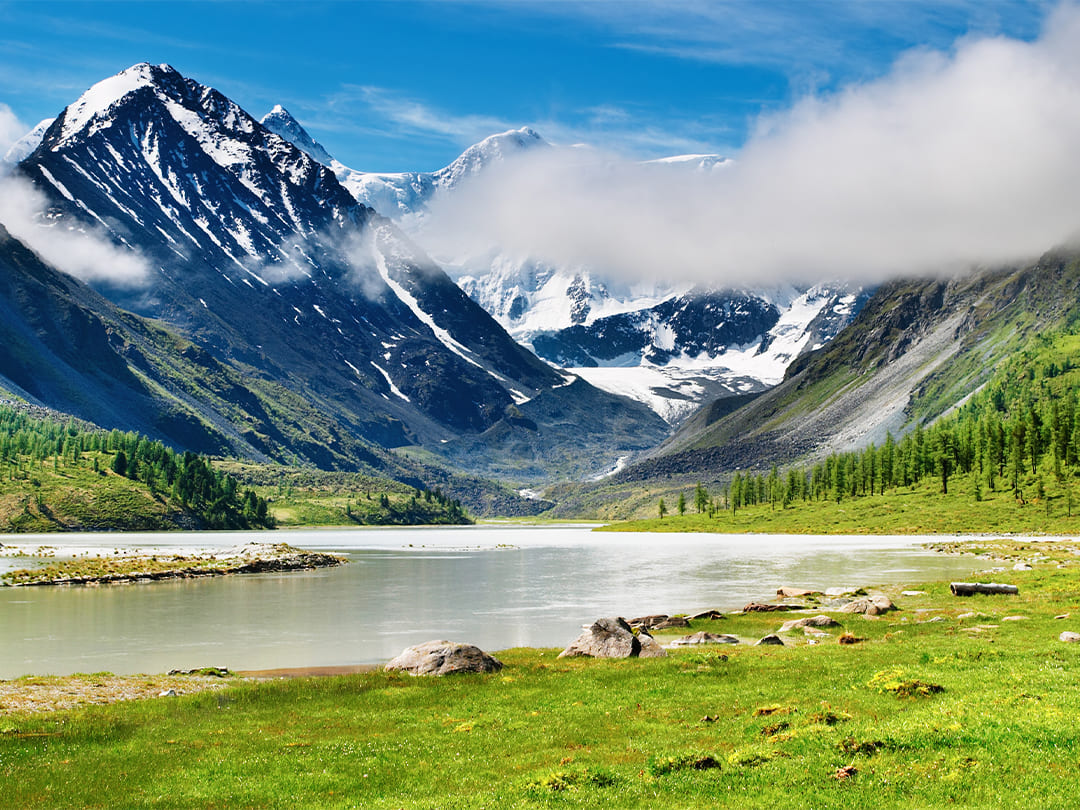
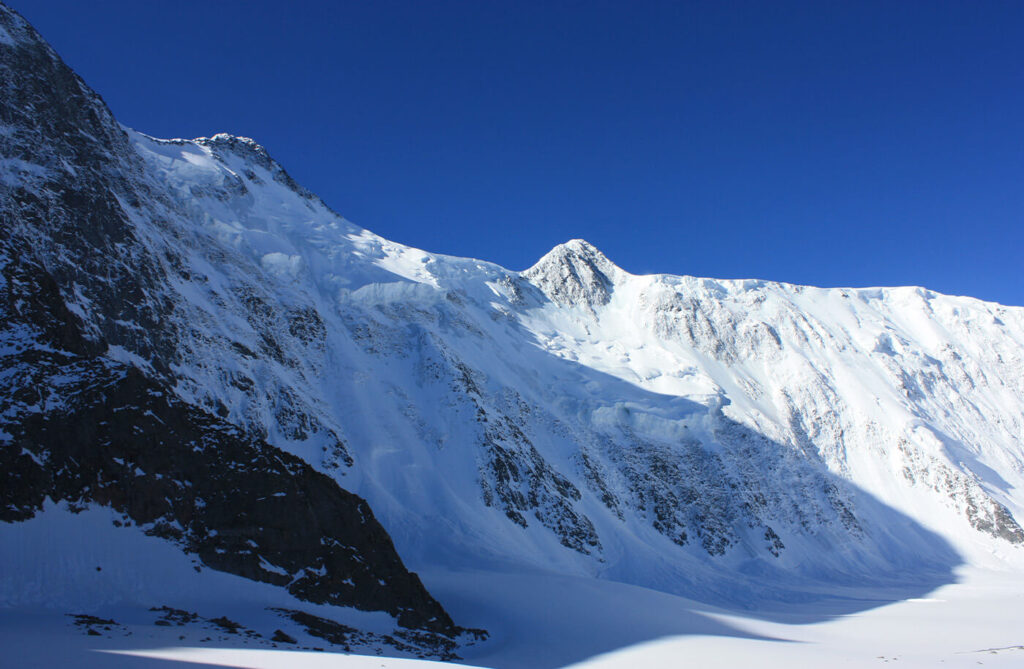
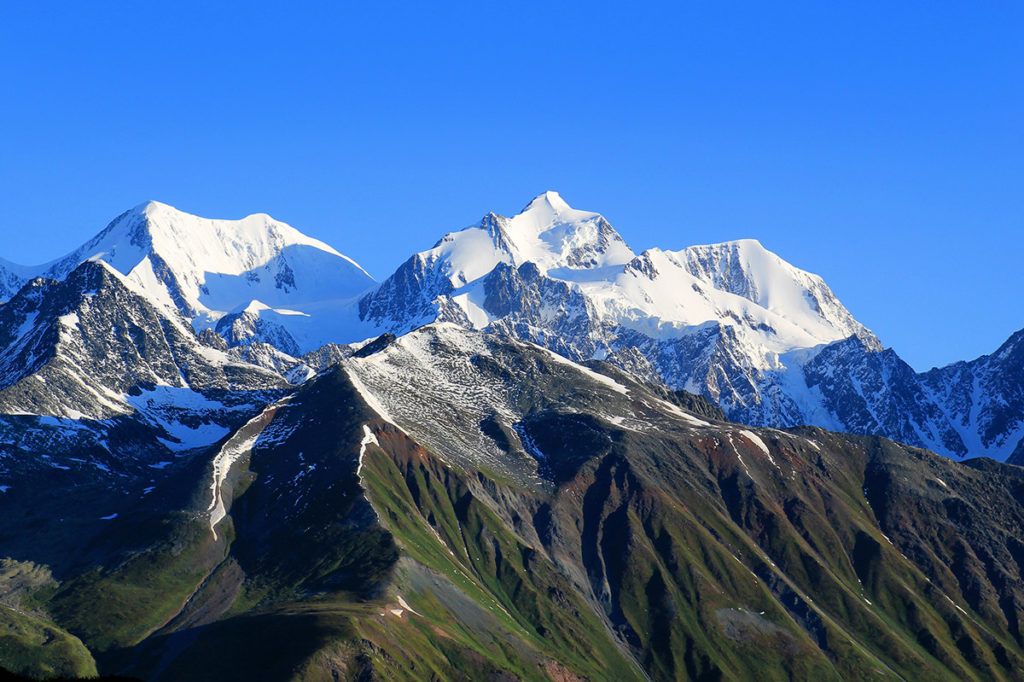
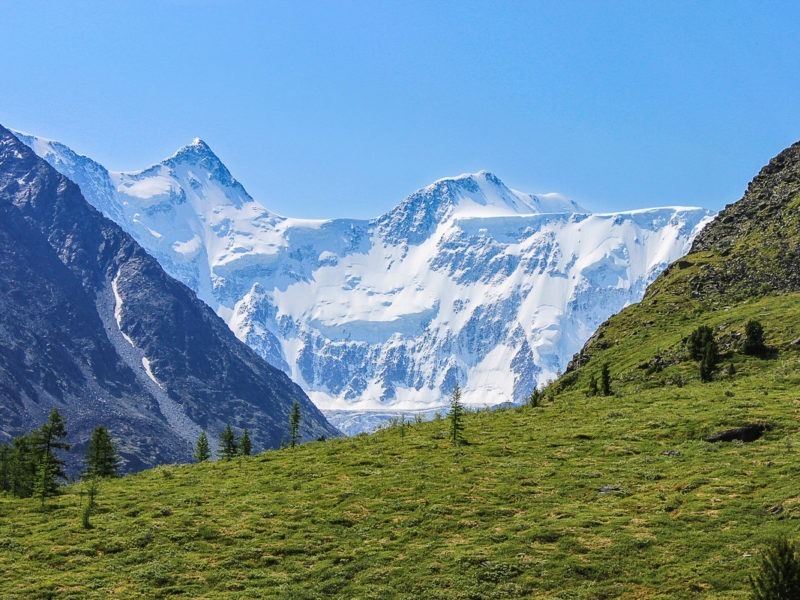
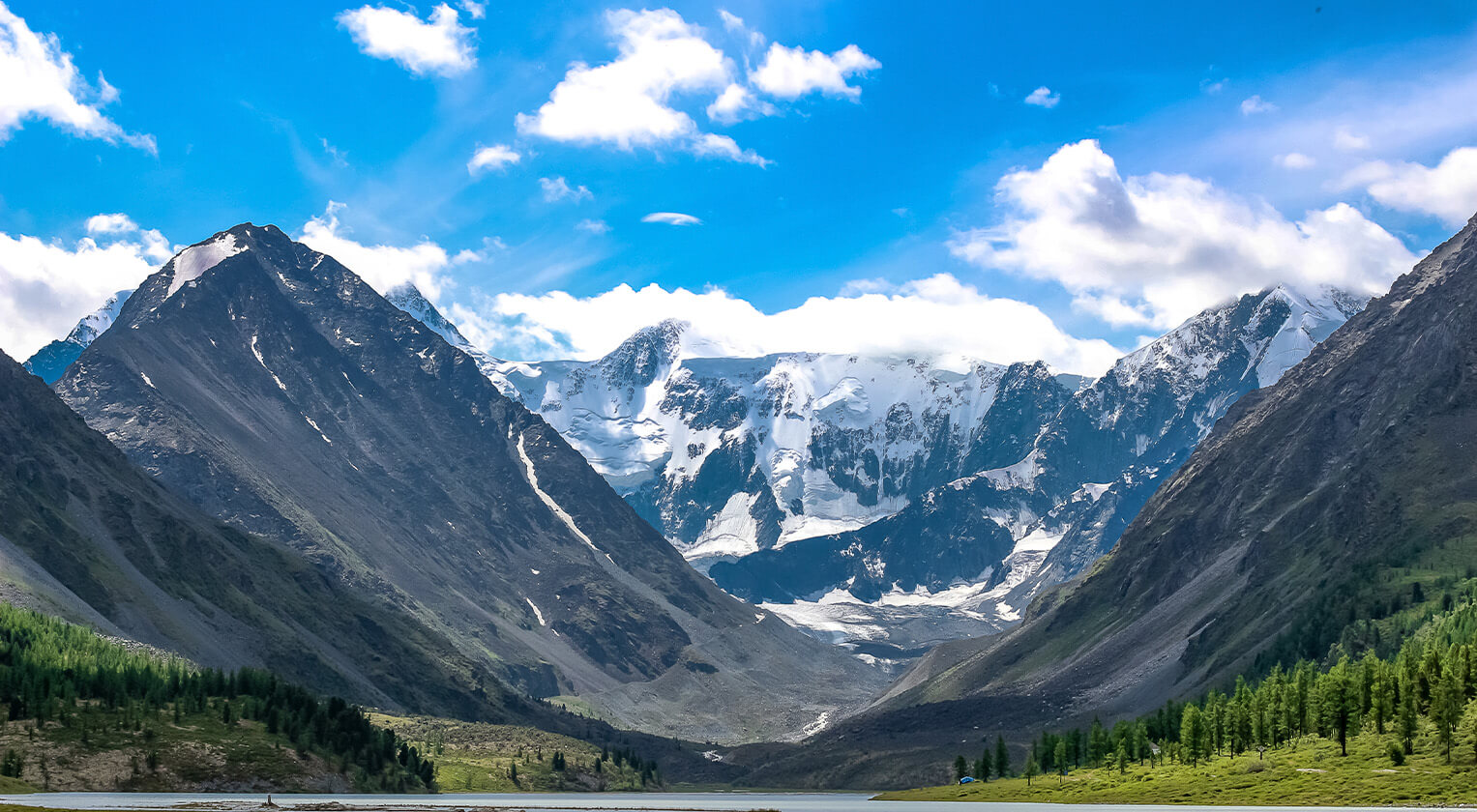
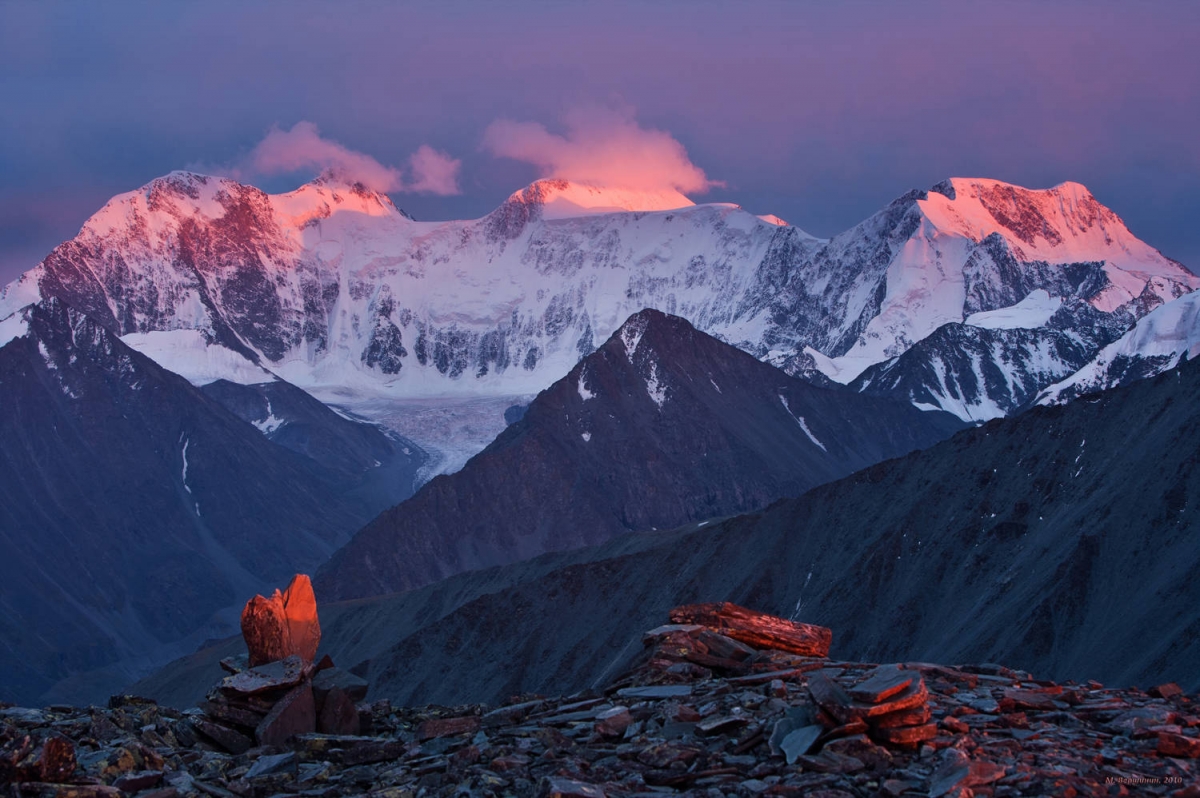
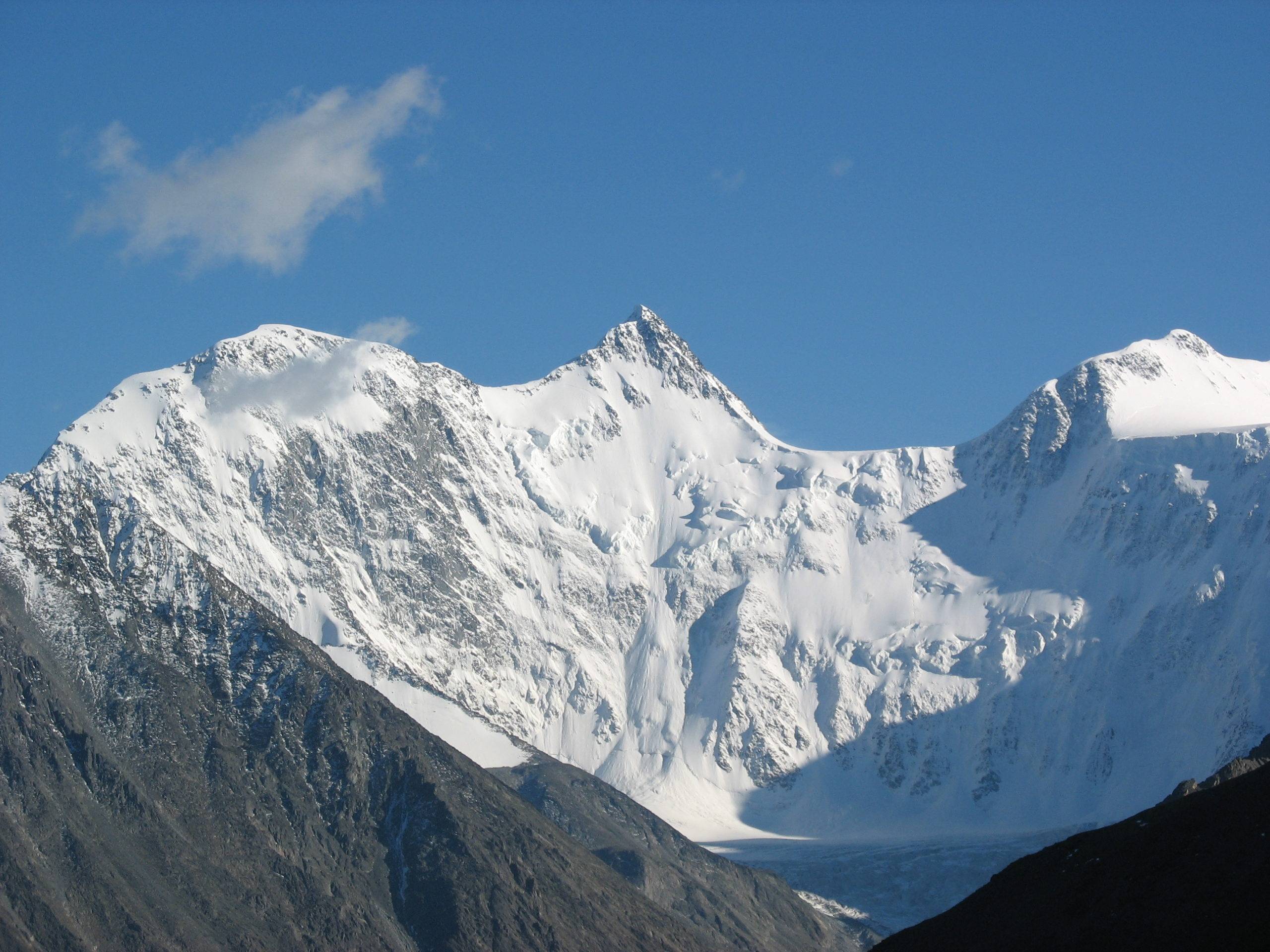
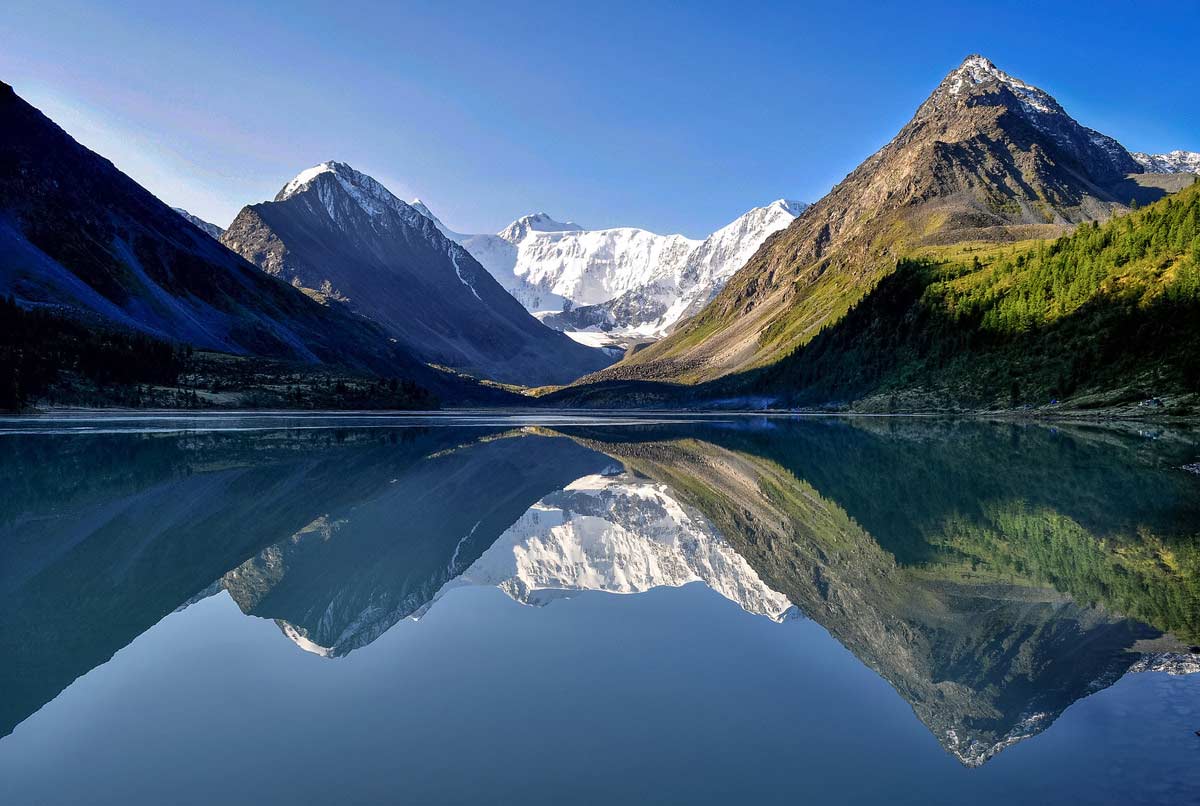
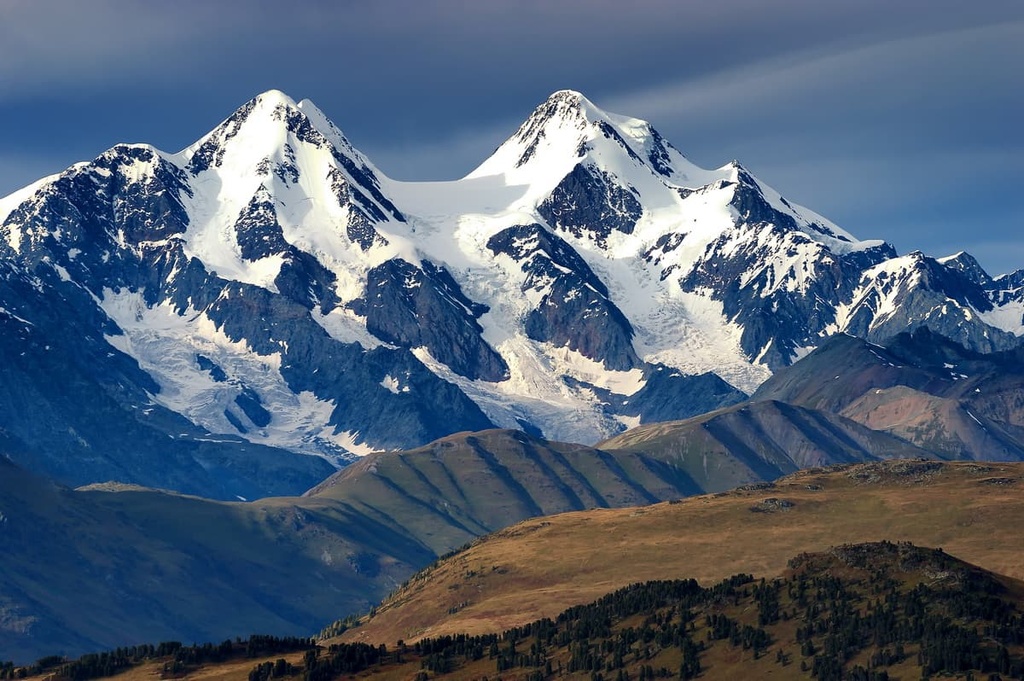
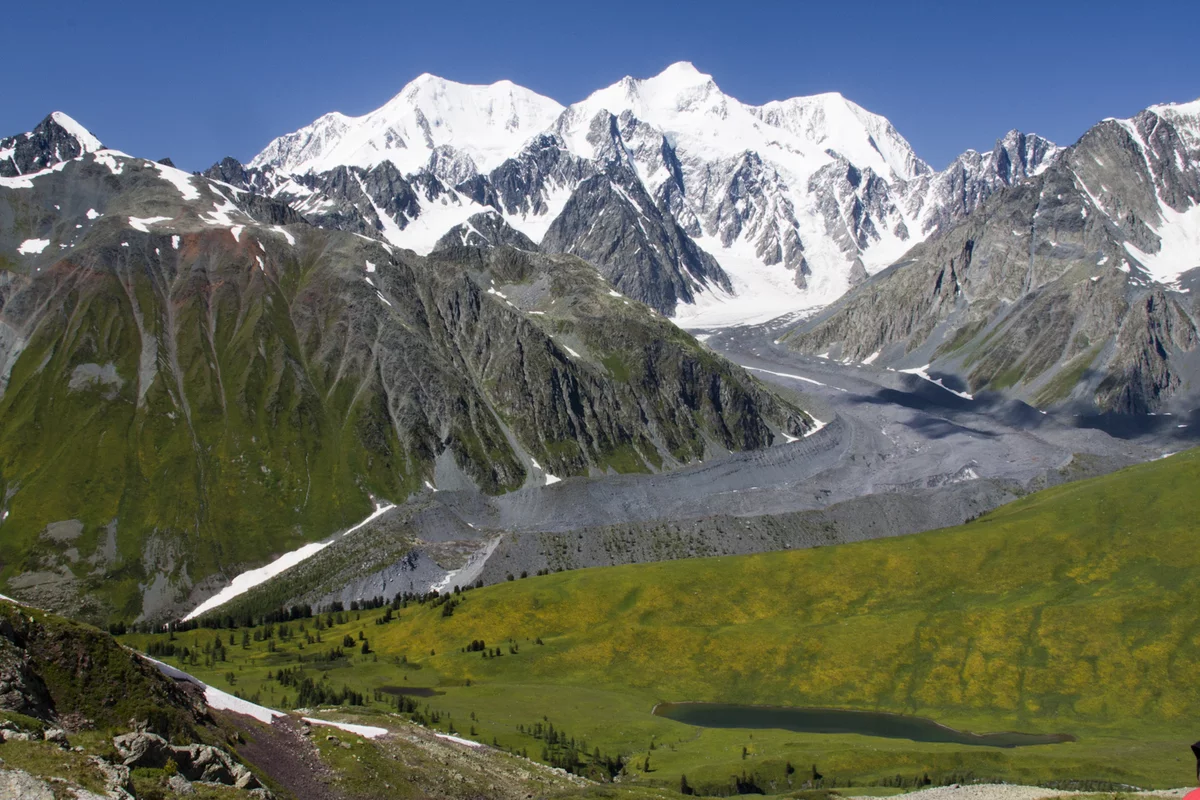
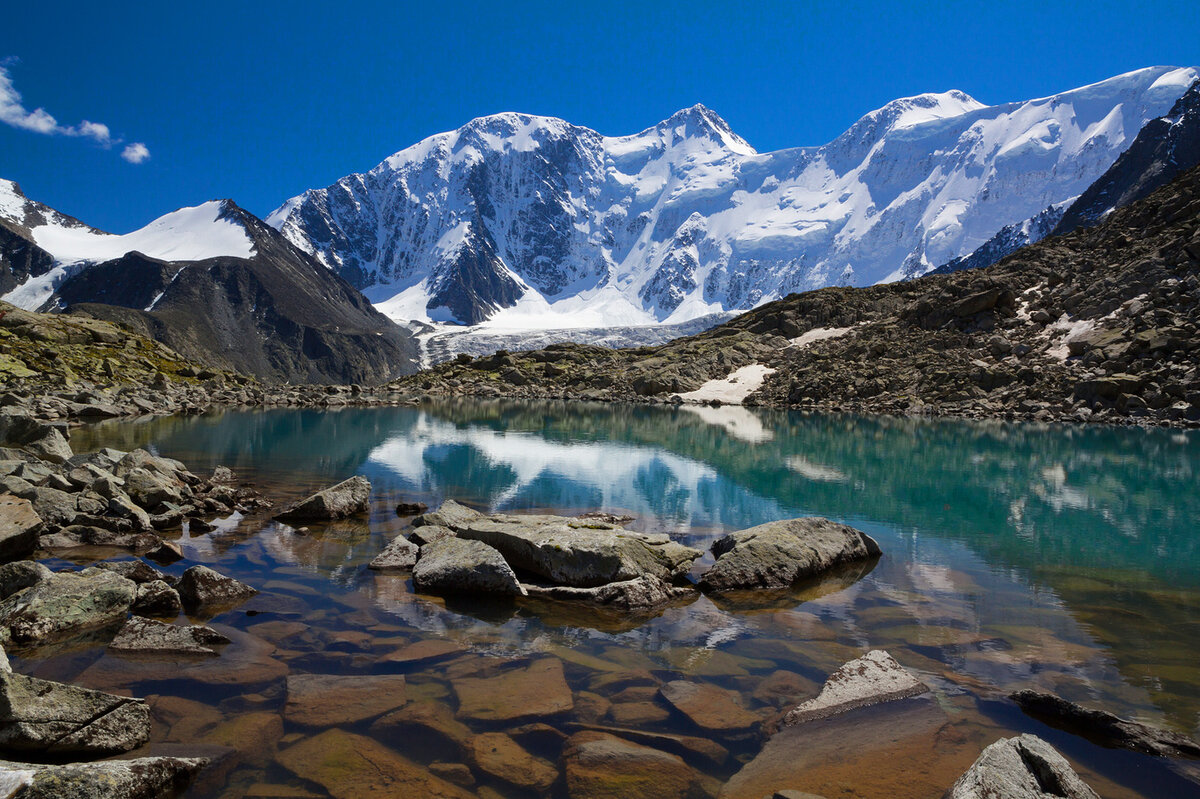
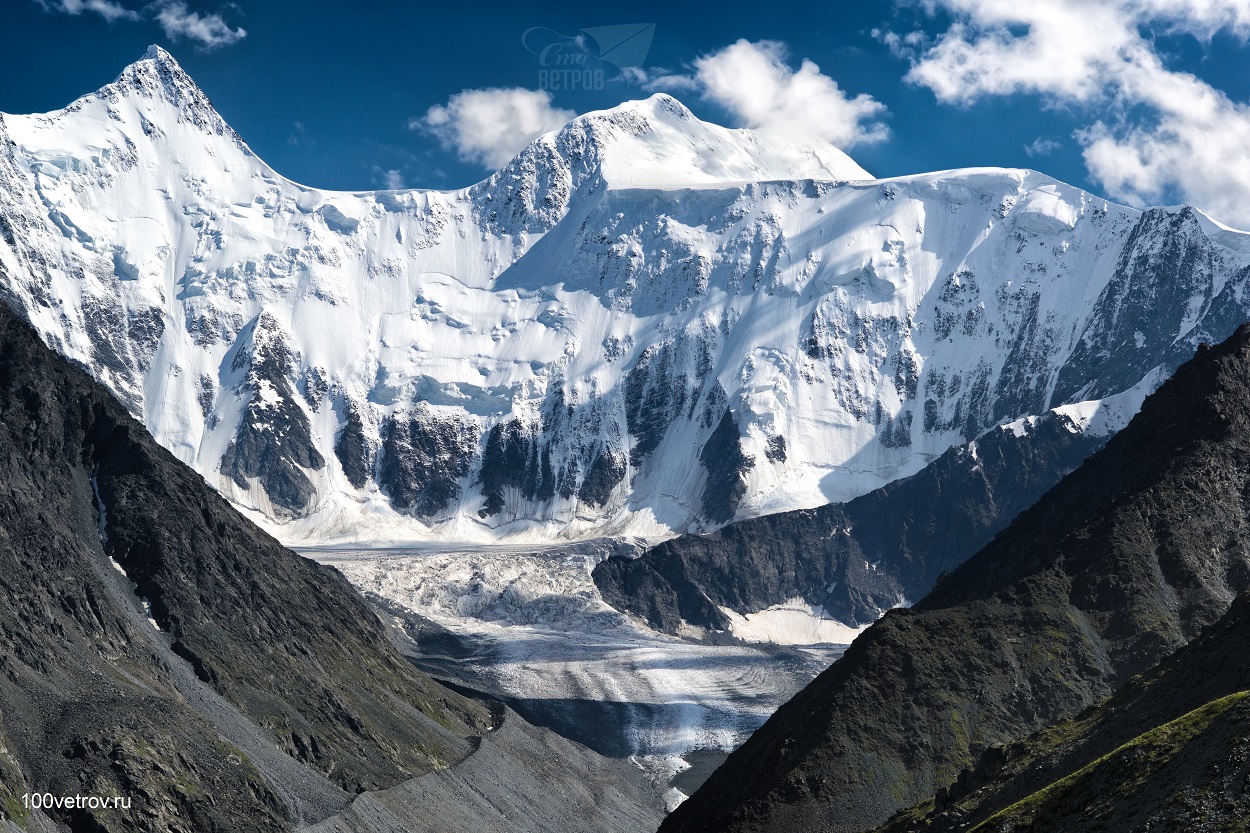
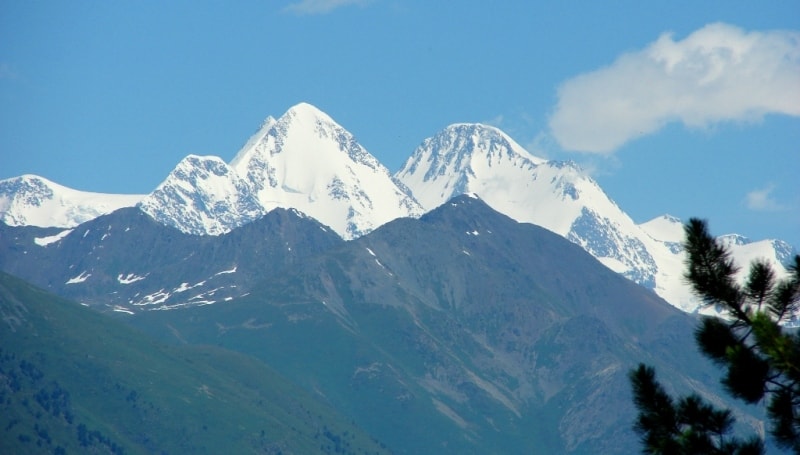
The principal visual impression of Mount Belukha comes from its twin summits, which rise steeply above the surrounding glacial basins and alpine valleys. Seen from the Berel valley on the Kazakhstani approach, the East and West peaks and the snow-covered saddle between them present a distinct silhouette against the Altai sky. The scale of the mountain becomes clearer at closer range, where the extent of the Akkem and Katun glaciers, the debris-covered moraines, and the surrounding high ridgelines form a landscape shaped almost entirely by long-term glacial activity.
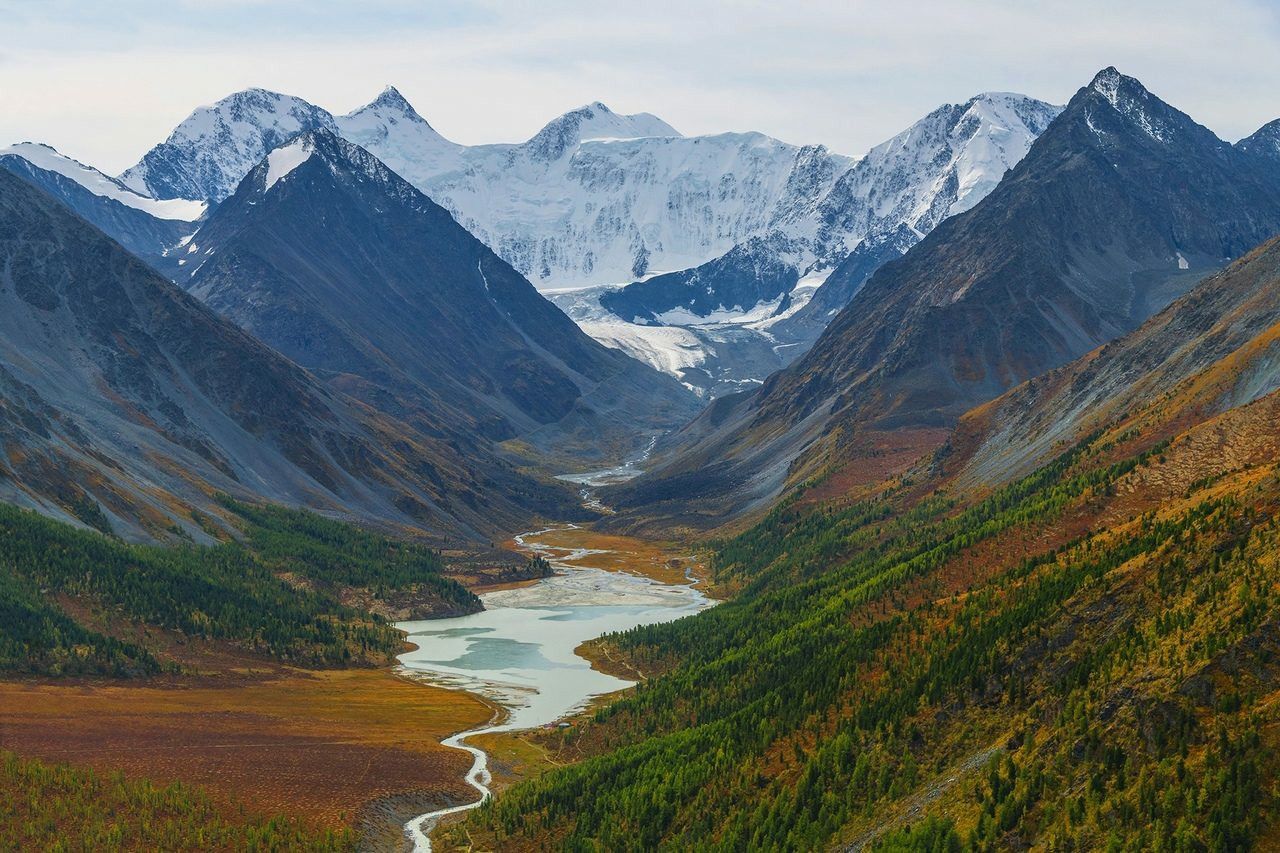
The Belaya Berel River drains southward from the glaciers and flows through a broad valley of forested slopes and alpine meadows. In summer, the lower elevations around the mountain support a variety of plant life, including flowering meadow species and conifer stands, while the upper elevations above the tree line give way to bare rock, permanent snow, and ice. Wildlife in the broader Katon-Karagay National Park region includes snow leopard, ibex, and numerous bird species, though sightings at the higher elevations near the summit zone are uncommon.
For those approaching on established trekking routes, the journey to the base camp areas below Belukha involves several days of hiking through progressively higher and more exposed terrain. The remoteness of the location, combined with the absence of permanent facilities on the mountain itself, means that all visitors must be fully self-sufficient in terms of equipment, food, and emergency preparedness.
Deep History & Culture
Mount Belukha has held cultural and spiritual significance for the indigenous peoples of the Altai for centuries. In Altai traditional belief, the mountain is regarded as a sacred site, associated with ancestral spirits and the boundary between the earthly and the divine. The mountain's prominence in the landscape made it a natural focus of reverence across nomadic cultures of the broader region.
The artist and philosopher Nicholas Roerich, who travelled through the Altai in the 1920s, wrote of Belukha in the context of the concept of Shambhala, a mythical land of spiritual perfection associated in various Asian traditions with the high mountain ranges of inner Asia. Roerich's writings contributed to a wider interest in the mountain among those familiar with Theosophical and spiritual literature, and this association remains part of how Belukha is understood by some visitors today.
For the Kazakh people, the mountain occupies an important place in national identity as the highest point on Kazakhstani territory. The Altai region more broadly is associated with the origins of Turkic peoples and with early nomadic cultures whose traces appear in the archaeological record of the surrounding valleys. The Berel burial site, located in the Berel valley near the base of the mountain, has yielded exceptionally well-preserved kurgans dating from the Scythian period, including the remains of horses in elaborate funerary regalia. These finds are considered among the most significant archaeological discoveries in Kazakhstan and are held in the A. Kasteyev State Museum of Arts in Almaty and other institutional collections.
Practical Digital Logistics
Reaching Mount Belukha from Kazakhstan requires a substantial journey by road from Ust-Kamenogorsk (Oskemen), the regional capital of East Kazakhstan. The route passes through Katon-Karagay district and involves several hundred kilometres on roads that progressively deteriorate as they approach the mountain. A high-clearance four-wheel-drive vehicle is necessary for the final stages of the journey, particularly given river crossings and unpaved tracks in the vicinity of the Rakhmanovskie Klyuchi area, which serves as the most commonly used gateway for the Kazakhstani approach to the mountain.
Permits are required for entry into Katon-Karagay National Park, and these can be obtained at ranger posts at the park boundary. Independent trekkers should allow adequate time for the administrative process and carry documentation confirming their route intentions. Those planning to attempt the summit need additional registration with the relevant authorities and should carry standard high-altitude mountaineering equipment including crampons, ice axes, and appropriate cold-weather clothing. Weather conditions on and around the mountain can turn severe rapidly at any time of year, and temperatures well below freezing are possible even in summer at upper elevations.
Mobile phone coverage is limited or absent in the mountain zone. Visitors should not rely on digital navigation for the approach routes and should carry paper maps of the area. Fuel and provisions should be obtained in Ust-Kamenogorsk or larger towns along the route, as services in the small settlements near the park are limited. Helicopter charter flights to the Rakhmanovskie Klyuchi area are available from Ust-Kamenogorsk through licensed aviation operators, offering an alternative to the long road journey for those with time constraints.
Must-Do Activities
The primary activities available in the Mount Belukha area are trekking and mountaineering, with routes ranging from multi-day approach hikes to technical summit ascents. The Akkem route, which approaches the mountain from the Kazakhstani side via the Akkem River valley, is the most frequently used path to the base camp below the mountain. The journey from the nearest road access point to the Akkem base camp area typically takes two to three days on foot through alpine terrain, passing through forested lower valleys before emerging above the treeline.
From base camp, experienced mountaineers can attempt the summit via the Tomsk Route or other established lines, all of which involve glacier travel and require technical equipment. The mountain is graded as a moderately difficult mountaineering objective, though conditions vary significantly by season and year, and previous experience on glaciated high-altitude terrain is necessary. Guided ascents are offered by several mountaineering clubs and licensed guide services operating out of Ust-Kamenogorsk and Almaty.
For those not undertaking summit attempts, trekking in the broader Katon-Karagay National Park offers considerable variety. The valley landscapes around the mountain include glacier-fed rivers, alpine lakes, and meadows that in summer support a range of wildflowers. Horse trekking is available through local operators in the region. The Rakhmanovskie Klyuchi area, situated at lower elevation to the northwest, contains radon mineral springs and serves as a rest stop for many visitors to the region. Spending a minimum of five to seven days in the area is practical for those wishing to complete the approach trek and spend meaningful time in the high mountain environment.
Local Flavors & Amenities
Facilities near Mount Belukha are minimal, and visitors should prepare to be largely self-sufficient for food and accommodation throughout their stay in the mountain zone. The approach routes involve several days in the wilderness, during which all food must be carried. Basic guesthouse accommodation is available in the village of Uryl and in the Rakhmanovskie Klyuchi area at the edge of Katon-Karagay National Park, offering simple meals and overnight lodging. These establishments typically serve standard Kazakhstani dishes including soup, bread, and grilled meat.
At the base camp area below the mountain, there are no permanent commercial food or accommodation facilities. Trekkers and climbers camp in tents and must carry all equipment and provisions for their time on the mountain. A small number of guided tour operators supply their clients with prepared meals as part of package treks, but independent travellers must plan accordingly.
Kymyz (fermented mare's milk) and other traditional dairy products are sometimes available from local households in the farming villages of the Katon-Karagay district during summer months. Local markets in Katon-Karagay town and in Ust-Kamenogorsk sell dried foods, canned goods, and some camping supplies that are suitable for long mountain trips. Purchasing a comprehensive stock of provisions in Ust-Kamenogorsk before departure is strongly recommended, as options become increasingly limited the further into the park travels.
Essential Insider Tips
Acclimatisation is an important consideration for all visitors to the Belukha area. Ust-Kamenogorsk sits at approximately 280 metres above sea level, and the base camp area below the mountain lies above 2,000 metres, with the summit exceeding 4,500 metres. Those planning to trek to higher elevations should spend at least or two days at an intermediate altitude before pushing higher. The Rakhmanovskie Klyuchi area, at around 1,700 metres, is a practical acclimatisation stop for many visitors.
Weather conditions around the mountain change rapidly and can be severe regardless of season. Summer months from June to August offer the best window for trekking and mountaineering, but snowstorms and high winds can occur at any time above 3,000 metres. Visitors should monitor weather forecasts carefully before departure and carry equipment appropriate for sudden cold and wet conditions even on days that begin fine.
The mountain is regarded as sacred by indigenous Altai peoples. Visitors should be respectful of this significance and avoid behaviour that may cause offence, including loud noise in the immediate vicinity of the mountain and removal of rocks or natural materials from the area.
Mobile phone signal is unreliable throughout the park and absent in the mountain zone. Satellite communication devices are a sensible precaution for those travelling independently in the backcountry. All waste must be carried out, as there are no waste collection facilities in the mountain area. Guided group treks offered by licensed mountaineering companies based in Ust-Kamenogorsk and Almaty provide a practical option for those without prior high-altitude experience in the region.
Sustainability & Community
Katon-Karagay National Park, which encompasses the Belukha area on the Kazakhstani side, is a protected territory managed under Kazakhstan's national park legislation. The park was established to conserve the exceptional natural ecosystems of the Altai, including its glaciers, alpine meadows, river systems, and the plant and animal communities they support. Visitors are required to obtain park entry permits and are expected to observe the rules applicable to protected areas, including restrictions on hunting, collection of plants and minerals, and campfire use in designated zones.
The environmental sensitivity of the high-mountain environment around Belukha means that visitor conduct has a direct impact on the landscape. All waste should be carried out of the mountain zone, as decomposition is extremely slow at high altitudes and facilities for waste disposal do not exist on the mountain. The use of established trails where they exist reduces erosion and disturbance to vegetation. Visitors should avoid camping in proximity to water sources and should not wash with soap or detergent in streams or rivers.
The local communities of the Katon-Karagay district, including farming and herding families in the valleys below the mountain, have inhabited and managed this landscape for generations. Engaging with local guide services and purchasing accommodation and supplies from local providers contributes directly to the economic wellbeing of these communities. The Altai region's indigenous heritage, including its pastoral traditions and the archaeological sites of the Berel valley, is an integral part of the landscape that national park status helps to protect.
Key Facts
- Siberian Ceiling
- Standing at 4,506 meters, Mount Belukha is the highest peak in the Altai Mountain system and all of Siberia.
- Spiritual Shambhala
- Many cultures consider Belukha a sacred 'place of power' and the mystical gateway to the legendary kingdom of Shambhala.
- Glacial Heart
- The mountain's massive glaciers feed the Katun River and serve as a vital freshwater laboratory for Central Asian scientists.
- UNESCO Heritage
- As the centerpiece of the 'Golden Mountains of Altai,' the peak is recognized globally for its unique vertical ecosystems.
- Expedition Challenge
- Climbing the 'Double Peak' of Belukha is a premier objective for professional mountaineers due to its technical ice routes.
- Borderline Peak
- The mountain straddles the border between Kazakhstan and Russia, requiring special permits for high-altitude trekking and climbing.
Photo Gallery
Embedded Video
Mount Belukha
Loading map...Loading map...
FAQ
Have a question?
Ask and get answers in seconds!
Discussion 0
No comments yet. Start the conversation!
Leave a Reply