Hazrat Sultan Mosque
The City of Future. Futuristic architecture in the steppe.
Essential Profile
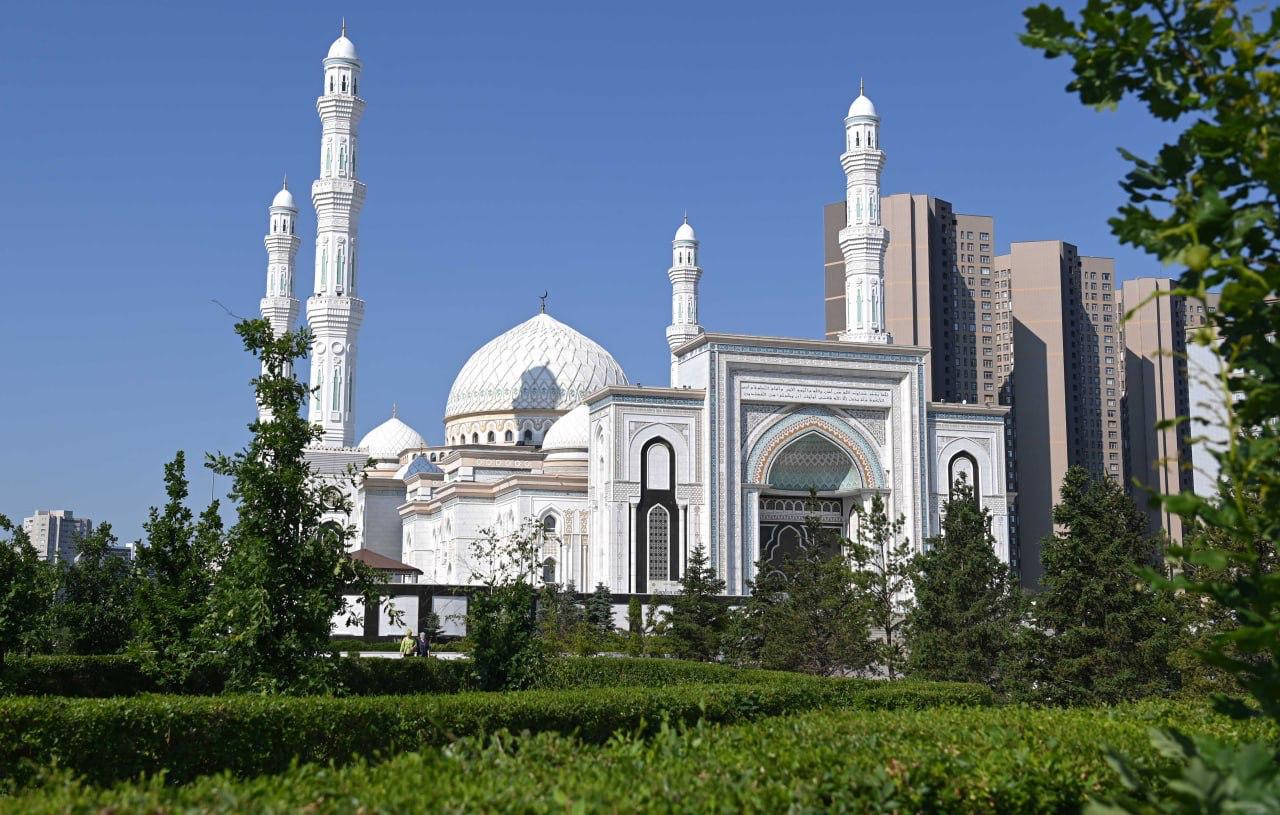
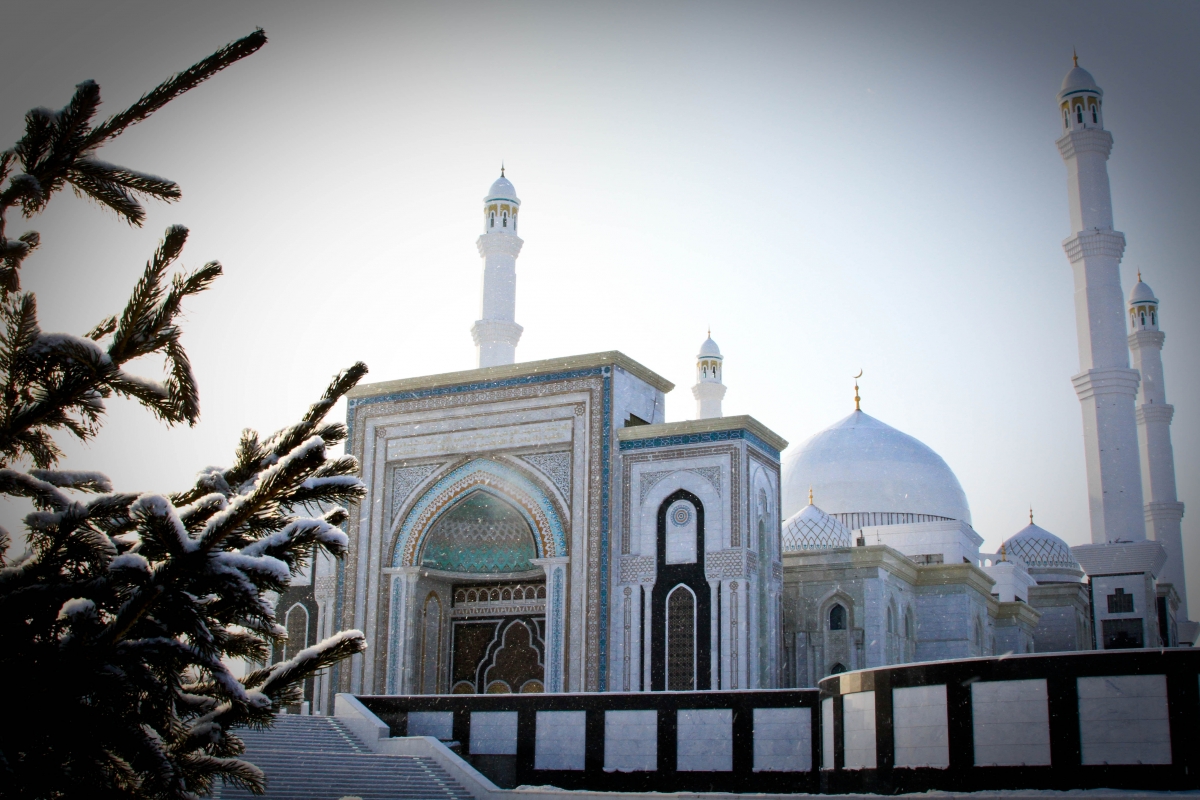
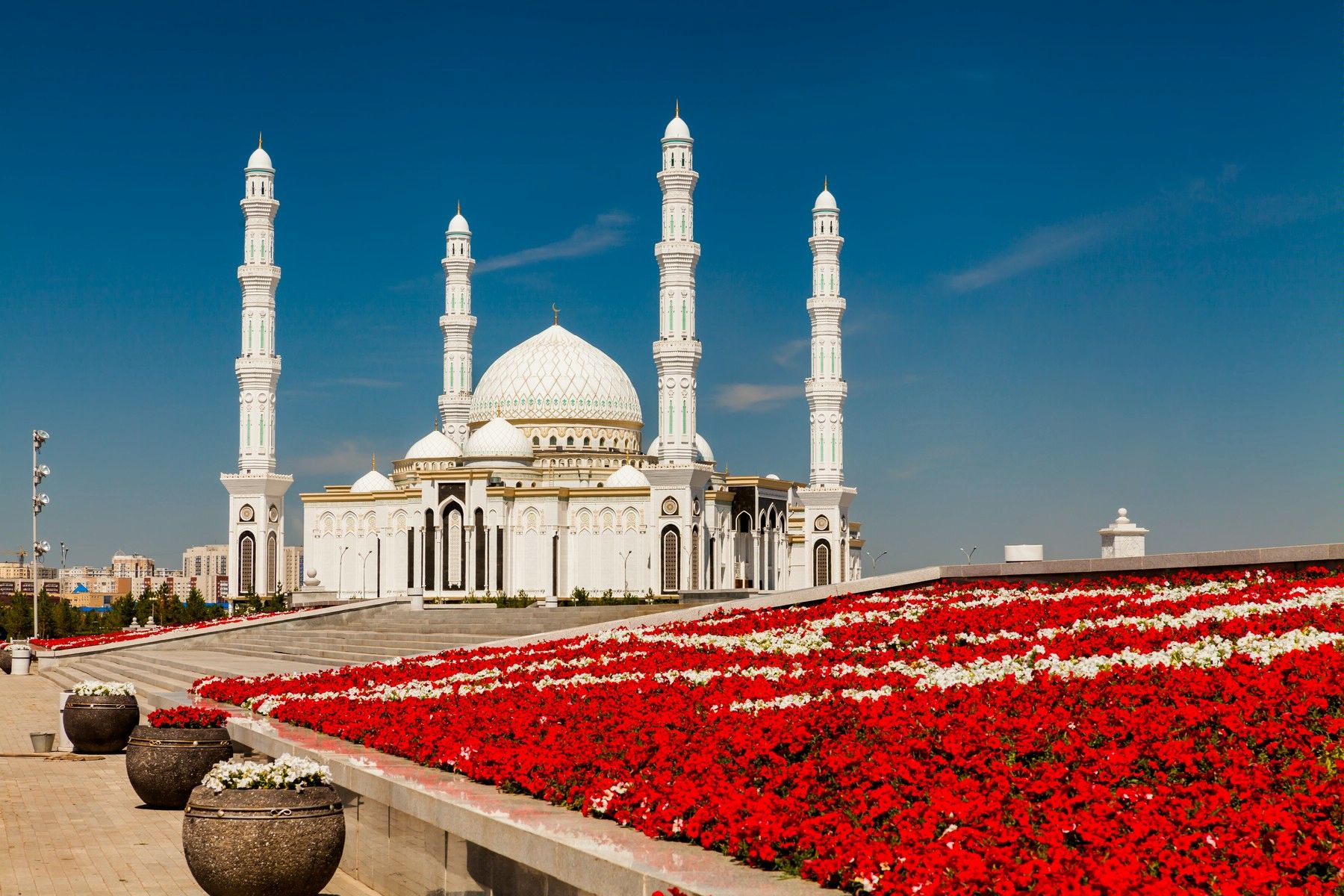
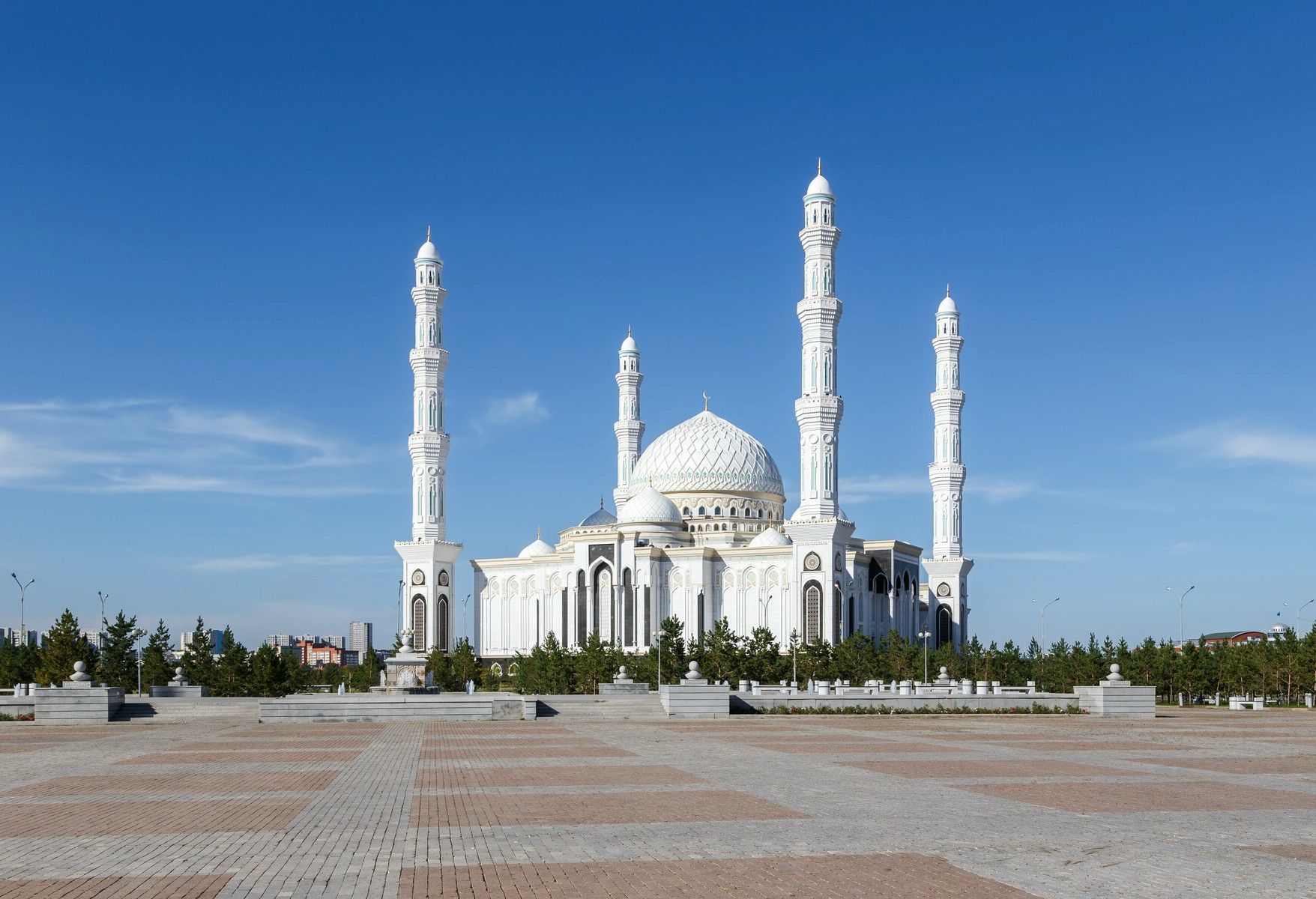
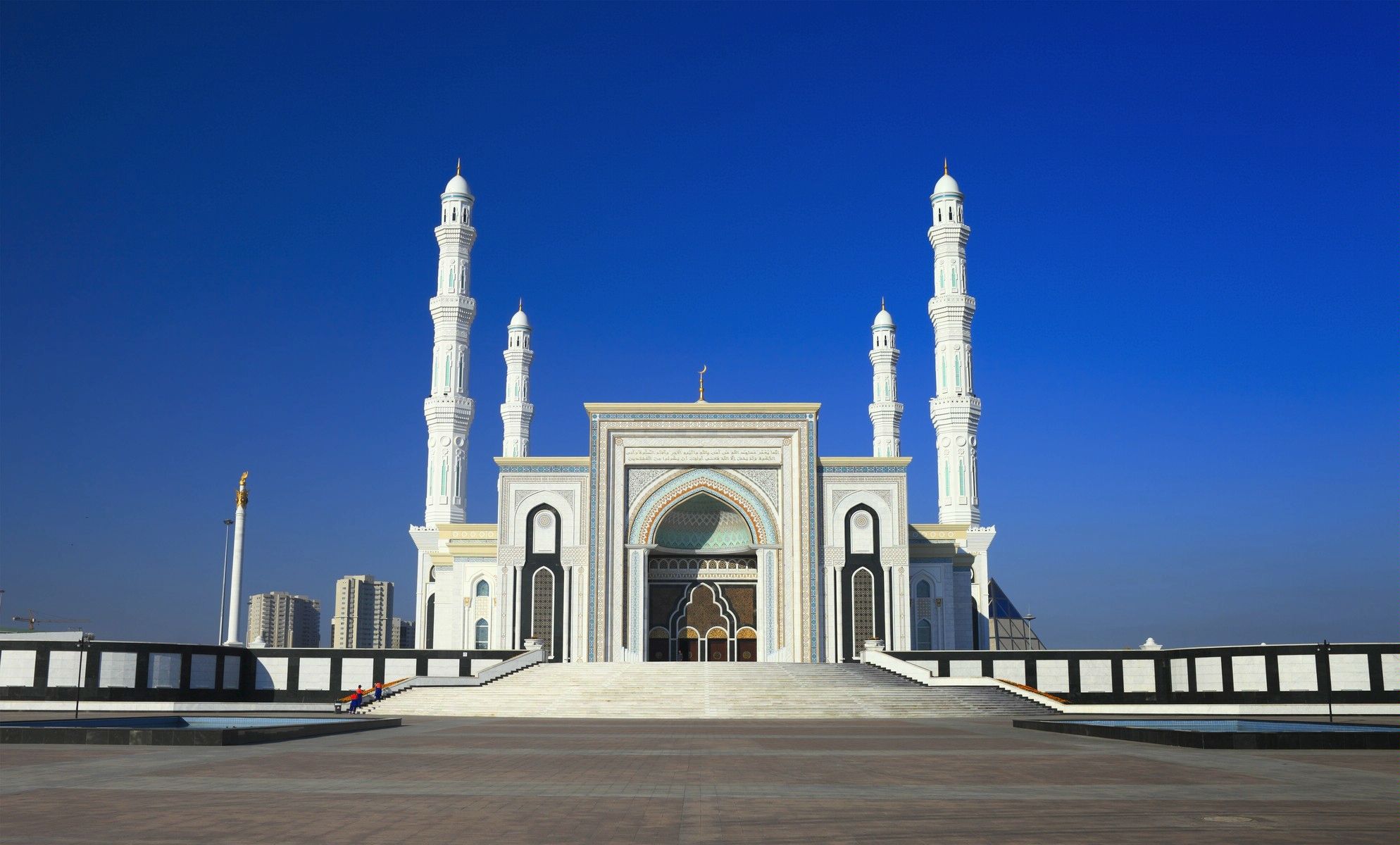
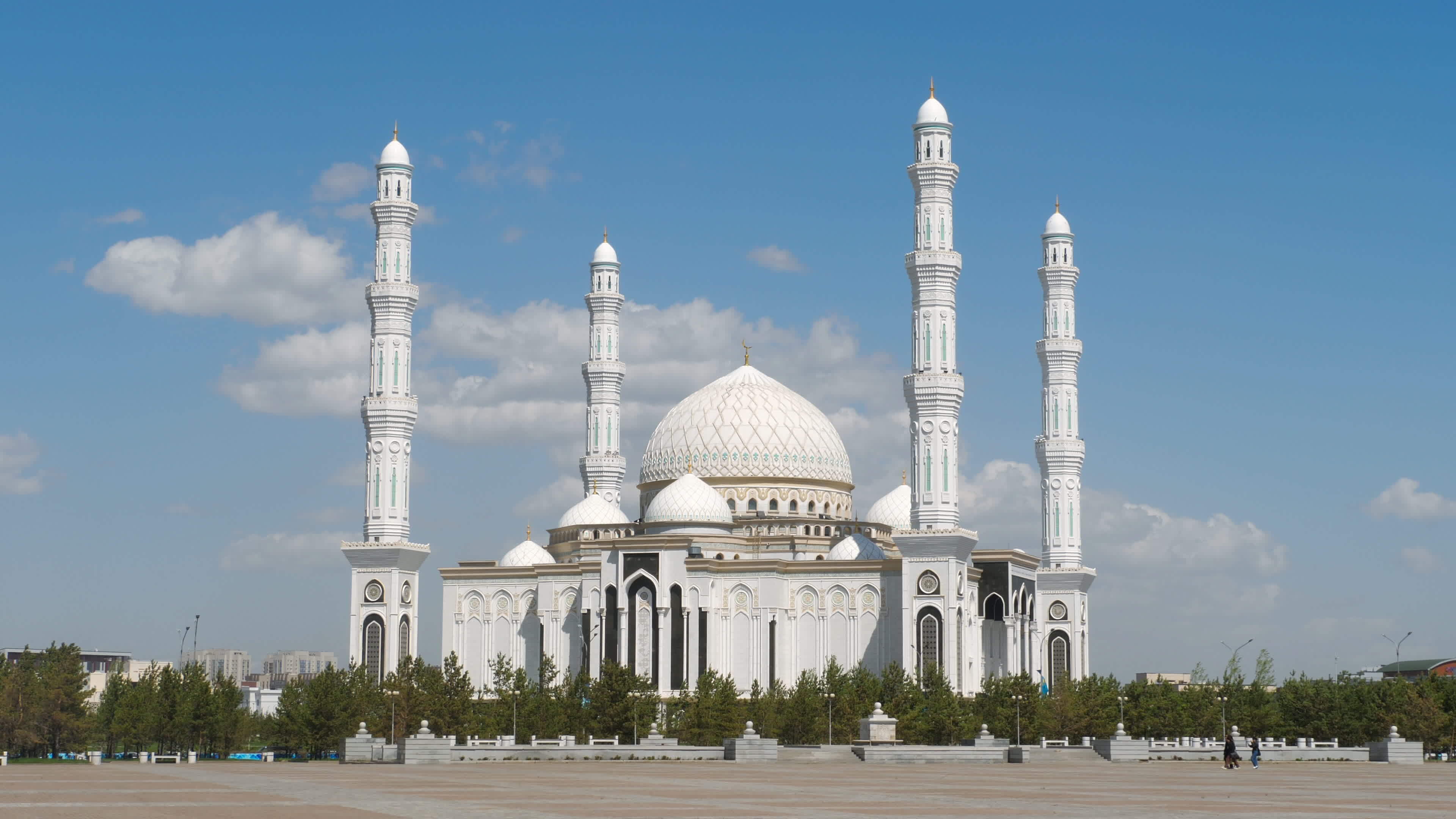
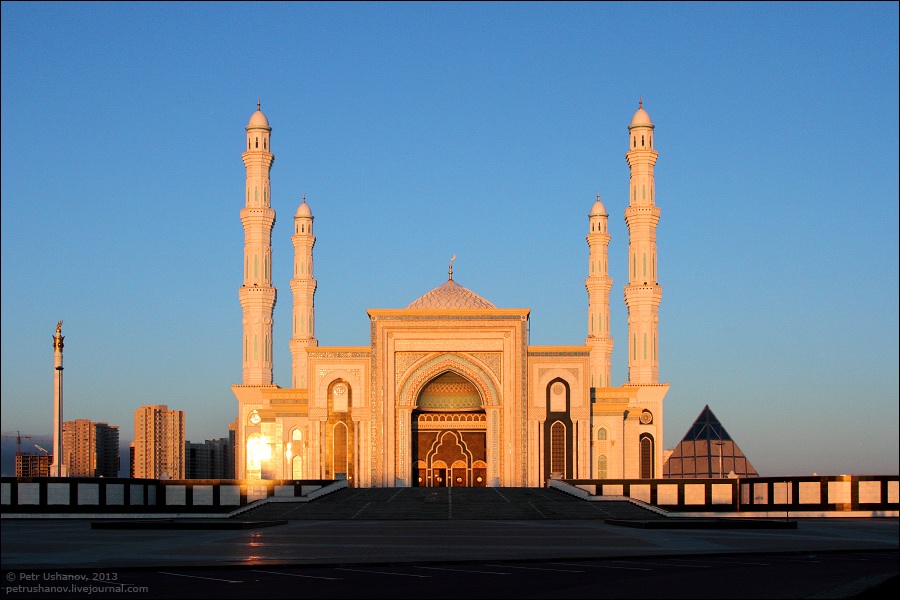
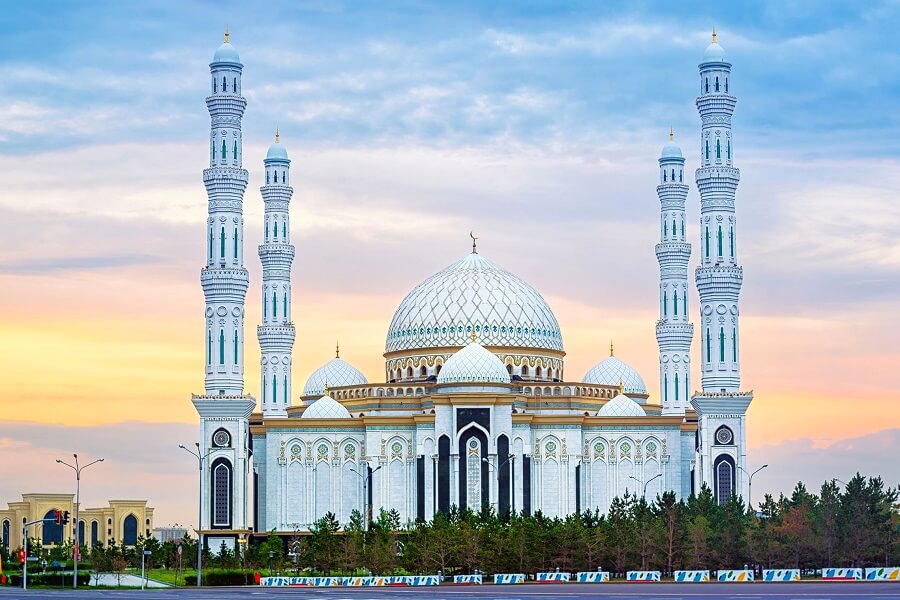
The four minarets of the Hazrat Sultan Mosque rise 77 meters above the right bank of the Ishim River, and from most of central Astana they are visible — white towers against a sky that alternates, depending on the season, between Central Asian blue and the particular pale grey of the Kazakhstani winter. The mosque was completed in 2012 and is the second-largest mosque in Central Asia, a building whose scale announces its purpose before its architecture does.
Kazakhstan is a majority-Muslim country, and Astana's role as the capital built from scratch in the late 1990s included, from the beginning, the construction of a religious infrastructure appropriate to the nation's identity. The Hazrat Sultan Mosque is the most visible expression of that intent: a building designed to serve as both a place of prayer and a statement about what Kazakhstan is and how it understands itself.
What the Mosque Is
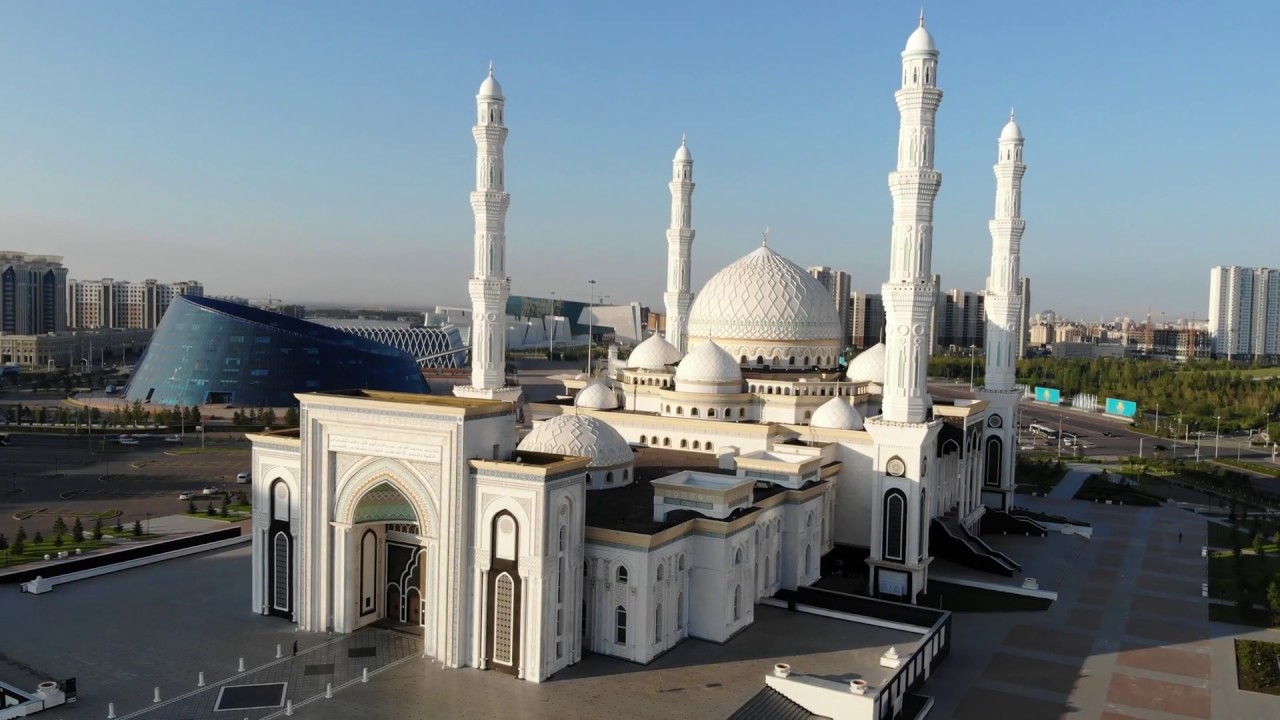
The main dome rises 51 meters, flanked by four minarets at the complex's corners. The building is designed to accommodate up to 5,000 worshippers inside and an additional 10,000 in the surrounding courtyard during major festivals. The interior combines white marble, stained glass, and Kazakh geometric ornamentation in a design that is recognizably mosque architecture in the Central Asian tradition without being derivative of any single historical model.
The mosque sits on the right bank of the Ishim River in Astana's "Independence District" — the zone that holds many of the capital's major state buildings, including the Palace of Peace and Reconciliation and the Khan Shatyr Entertainment Center. This positioning is deliberate: the Hazrat Sultan Mosque is part of the ensemble of state significance that defines the new capital's identity.
The Name and Its Significance
Hazrat Sultan translates roughly as "Sultan of Holiness" — a title of reverence that recalls the spiritual legacy of Khoja Ahmed Yasawi, the 11th-century Sufi poet whose mausoleum in Turkistan is Kazakhstan's most significant religious site. The choice of this name connects the new capital's mosque to the deep roots of Kazakh Islamic tradition rather than positioning it as a modern imposition. That connection is real: Kazakhstan's Muslim identity is ancient, complex, and inflected by the Yasawi tradition of Sufi spirituality that has been present in the steppe since the 11th century. The Hazrat Sultan Mosque exists within that lineage, even in its thoroughly contemporary form.
The ‘Wow-Factor’
The wow factor of the Hazrat Sultan Mosque operates at two scales, and both matter.
The exterior scale is about the relationship between the building and the flat Kazakh steppe around it. Astana was built on the Central Asian plain, and the plain does not provide the natural backdrop that most great religious buildings have relied on — no mountains behind it, no river bend in front of it, just the open steppe and the Ishim River, which is not particularly dramatic. The mosque's designers compensated by going up: the 77-meter minarets and the 51-meter dome create a vertical mass that reads against the flat sky in a way that genuinely stops you. From across the Ishim River, the building fills the skyline in a manner that reminds you how rarely great religious architecture has to work without a natural frame.
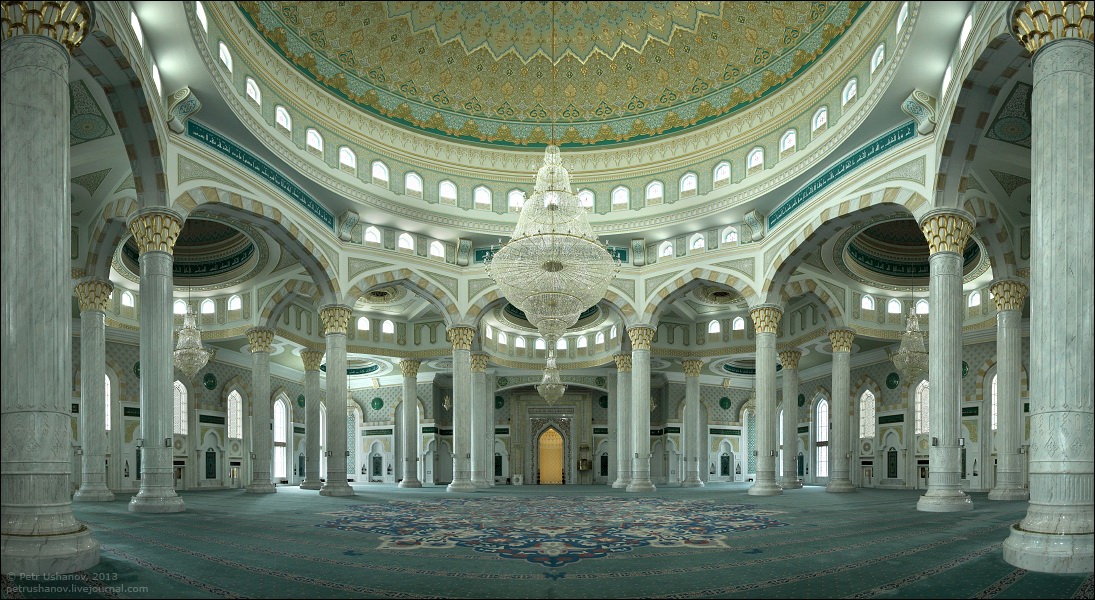
The interior scale is completely different. Entering the prayer hall — removing shoes at the threshold, moving into the main dome space — you find a room that is large enough to recalibrate your spatial sense. The dome above the central hall is not just tall; it is proportioned in a way that makes the space feel simultaneously sheltering and vast. The light comes through the stained glass elements and the clerestory windows and falls on white marble in shifting patterns. In the morning, particularly, the quality of light inside this building is extraordinary — specific, colored, the kind of illumination that seems to arrive with intention.
Then there is the Kazakh ornamentation. The geometric patterns that cover the interior surfaces are not generic Islamic decoration. They draw on the specific visual vocabulary of Kazakh felt work and carpet design — the angular interlocking forms that have been present in Kazakh material culture since before the Islamic conversion, and that found their way into mosque decoration as Islam moved through the Kazakh cultural world. Recognizing this layer of the building — understanding that you are looking at something specifically and deliberately Kazakh rather than generically Islamic — is the deepest form of engagement available here, and it is more interesting than the scale alone.
Deep History & Culture
To understand the Hazrat Sultan Mosque fully, you have to understand the long history of Islam in Kazakhstan — a history that is deeper and more complex than the building's 2012 opening date suggests.
Islam and the Kazakh Steppe: A Deep History
Islam arrived in the Kazakh steppe not as a sudden conversion but as a gradual cultural penetration that moved northward from the oasis cities of Transoxiana over several centuries, beginning in the 8th and 9th centuries CE. The Silk Road was the primary vehicle: Islamic merchants, scholars, and missionaries traveled the northern trade routes, established communities in the corridor cities, and engaged with the nomadic Kazakh-speaking peoples they encountered.
The pivotal figure in this process was Khoja Ahmed Yasawi — the poet, mystic, and teacher born near present-day Shymkent around 1093 CE. Yasawi wrote his Sufi poetry in the Kazakh language rather than Arabic or Persian, making Islamic spirituality directly accessible to nomads who had no tradition of Arabic literacy. His influence on the Islamization of the steppe was profound and durable: the Yasawi tradition of Sufism, which emphasized the inner spiritual dimension of Islam over its external legal requirements, was well-suited to the nomadic world's mobile way of life, and it spread through the steppe societies in ways that more doctrinaire forms of Islam could not have done.
The Kazakh Khanate and Islamic Identity
After the Kazakh Khanate was founded in 1465 by Janibek and Kerei Khans, Islam was a component of Kazakh identity but not its defining feature. The steppe world maintained a complex religious landscape in which pre-Islamic belief systems, Shamanistic practice, and Islamic observance coexisted in a syncretism that survived largely intact through the centuries of the Khanate's existence. The Kazakhs identified as Muslim; they also maintained spiritual practices and cosmological understandings that predated Islam and were never fully displaced by it. This syncretism characterizes Kazakh Islamic practice to the present day.
Russian Annexation and the Suppression of Islamic Life
The Russian empire's annexation of the Kazakh steppe between 1731 and 1848 did not immediately target Islamic practice — the tsarist administration was pragmatic about religion in its colonial territories, and outright suppression was less common than neglect. But the construction of churches, the encouragement of Christian missionary activity, and the systematic displacement of Kazakh communities from their traditional territories created conditions in which Islamic institutional life was difficult to maintain.
The Soviet period brought active suppression. Mosques were closed or destroyed; religious education was banned; the Islamic calendar was replaced by the Soviet; imams were imprisoned or killed. The Asharshylyk of 1930-1933, in which collectivization killed between 1.5 and 2.3 million Kazakhs, destroyed the nomadic communities that had been the primary carriers of the Yasawi spiritual tradition. The damage to Kazakh Islamic culture during this period was enormous.
The Nevada-Semipalatinsk antinuclear movement and the broader cultural awakening of the late Soviet period began a process of Islamic cultural recovery even before independence. After 1991, the recovery accelerated: mosques were rebuilt, religious education resumed, and Kazakhstan's Islamic identity was officially acknowledged as a foundational element of the new state.
The Hazrat Sultan Mosque Within This History
The mosque completed in Astana in 2012 is the architectural expression of that recovery. Its name invokes Yasawi — the historical anchor of Kazakh Islamic identity — while its scale and position in the new capital assert that Islamic faith is central to what Kazakhstan is as an independent nation. The building's Kazakh geometric ornamentation makes the same point through visual means: this is not a generic mosque design imported from the Arab world, but a specifically Kazakh synthesis of Islamic architectural tradition and local artistic vocabulary.
The history it represents is old. The building is new. The combination is the point.
Practical Digital Logistics
The Hazrat Sultan Mosque sits in Astana's Independence District on the right bank of the Ishim River, within the city's government and civic center zone.
Getting There
From central Astana and most hotel zones, a taxi costs approximately $3 to $6 and takes ten to twenty minutes depending on traffic and your starting point. Yandex Go and inDrive are both reliable in Astana; the mosque is well-mapped on all standard navigation apps. Several bus routes serve the Independence District; the stop nearest the mosque is within five minutes' walk of the entrance.
From Astana International Airport, a taxi to the mosque costs approximately $8 to $15 and takes twenty to thirty minutes depending on traffic.
Entry and Dress
Non-Muslim visitors are welcome at the Hazrat Sultan Mosque, and entry is free. The standard dress requirements apply: both men and women should have shoulders and knees covered; women should bring a scarf to cover their hair, and may be provided at the entrance if you don't have. Shoes are removed at the entrance to the prayer hall. These are not bureaucratic rules — this is an active mosque receiving thousands of worshippers daily, and modest dress is a straightforward form of respect.
Photography inside the prayer hall is subject to current mosque policy; check with the entrance staff on the day of your visit. Photography in the exterior courtyard and grounds is generally permitted.
Hours
The mosque operates around the clock for prayer times, and the opening hours for non-Muslim visitors are typically from early morning to evening, outside of the five daily prayer periods when the hall is in use. The Friday midday prayer is the most significant weekly gathering and brings the mosque to its fullest capacity; visiting outside this time is advisable if you want a quieter experience of the interior.
Combining with Other Astana Sites
The mosque sits within walking distance of several of Astana's major architectural landmarks: the Palace of Peace and Reconciliation (Norman Foster's glass pyramid), the Khan Shatyr Entertainment Center, and the Bayterek tower. A circuit of the Independence District on foot takes two to three hours and gives a comprehensive view of what the new capital has built. The mosque is the spiritual anchor of this district, and visiting it in context — rather than as an isolated attraction — significantly deepens the experience of all the sites.
Must-Do Activities
The mosque rewards a certain kind of visit — slow, attentive, willing to engage with architecture and spiritual space as more than photographic subjects.
Enter the Prayer Hall
The central prayer hall is the reason for the visit, and it should be approached as that rather than as a viewing platform. Remove shoes, move quietly, and allow time for the space to register. The proportions of the dome chamber produce an acoustic effect — voices and ambient sound behave differently here than in most indoor spaces, absorbed and softened by the surfaces in a way that contributes to the atmosphere of quietude. The Kazakh geometric ornamentation on the walls and columns is worth close examination; the patterns are complex and their relationship to the traditional Kazakh visual vocabulary is instructive.
The quality of light changes through the day. Morning light through the eastern windows is the best for appreciating the interior's color and shadow. Midday produces flat illumination. Late afternoon creates oblique light that picks out the geometry of the ornamental patterns more dramatically.
Walk the Exterior Grounds
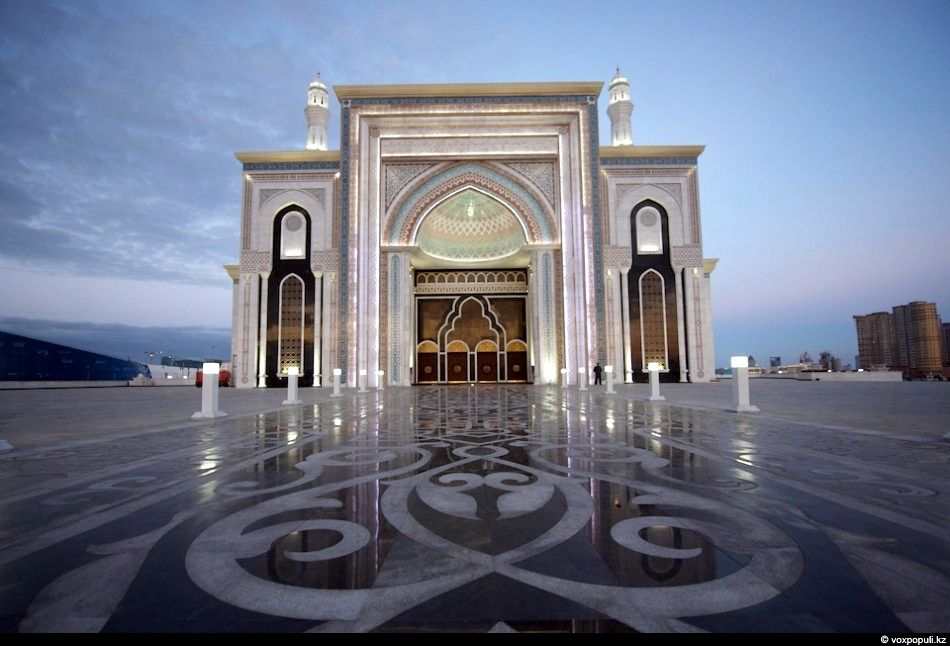
The approach to the mosque from the Ishim River embankment — across the broad plaza, with the four minarets above you and the dome behind — is of the more powerful architectural promenades in Kazakhstan. The exterior marble work is detailed and carefully executed; the inscriptions in Arabic calligraphy above the main entrance are worth reading if you have any knowledge of Quranic text.
The plaza surrounding the mosque provides the clearest view of the building's relationship to the Astana cityscape. To the north, across the river, the towers of the financial district are visible; to the south and west, the government buildings. The mosque at the center of this ensemble is not accidental — it is the most deliberate possible statement about what the city considers its spiritual center.
The Independence District Circuit
The mosque combined with the Palace of Peace and Reconciliation and the Bayterek observation tower makes for a coherent half-day walk through Astana's symbolic core. Each building makes a different statement about what Kazakhstan is; together they form a conversation about identity, modernity, and the relationship between them that is more interesting than any of the individual statements alone.
Local Flavors & Amenities
The mosque complex has a café and a small food area primarily serving worshippers. The surrounding Independence District is more focused on government and civic architecture than on food; the main dining options are in the hotel zones and commercial areas of Astana, accessible by a short taxi.
Near the Mosque
The Ishim River embankment north of the mosque has several cafes and restaurants in the buildings that line the northern bank. These serve an Astana professional clientele and offer a range of Kazakh cooking alongside international options. A lunch here runs approximately $10 to $20 per person for a sit-down meal. Coffee shops nearby charge approximately $2 to $4 for good espresso. None of these are specifically notable; they serve the purpose of feeding people in an area where most of the land use is institutional.
Astana's Restaurant Scene
For a proper meal in Astana, the central commercial district — north of the Ishim River, centered around the main hotel and shopping zones — has the full range of options. Kazakh restaurant cooking in Astana is somewhat different in character from Almaty's version: the northern steppe tradition emphasizes the horse meat and lamb dishes that Almaty also serves, but the city's younger demographic and rapidly evolving food culture have produced a more diverse restaurant landscape than the capital might have had ten years ago. Good Kazakh cooking costs approximately $12 to $25 per person at a mid-range restaurant; international options are available at similar price points.
Staying in Astana
Astana has a range of accommodation from large international hotels (Hilton, Marriott, Rixos — rooms from approximately $80 to $200 per night) to mid-range business hotels and apartments (approximately $40 to $80 per night). Staying in the Independence District area puts you walking distance from the mosque and the city's main architectural attractions; the hotel zones around Nazarbayev Avenue and the commercial center are a short taxi ride from the mosque but offer more dining and retail options nearby.
Astana's winters are severe — temperatures regularly reach -30°C between December and February — and accommodation selection in winter should include attention to walkability between warm buildings. The city's underground and covered connections between major buildings make winter walking more manageable than it sounds.
Essential Insider Tips
Practical guidance for a visit to the Hazrat Sultan Mosque.
The Morning Visit
The mosque in the morning — from about 8 a.m. to midday — is the best time for a non-Muslim visitor. The prayer hall receives morning light from the east, the city outside is quieter, and the atmosphere inside the building is more contemplative than at peak tourist hours. The Friday midday prayer (the Jumu'ah) fills the mosque to its prayer hall capacity and the surrounding courtyard; if you are visiting on a Friday, arrive before 11:30 a.m. or after 2 p.m. to avoid the peak gathering.
Dress: Prepare Before You Arrive
Women particularly should sort out the head covering before arriving at the entrance. The mosque may provide scarves at the door, but having your own means you're not dependent on availability. Light cotton or a pashmina that can be folded into a bag when not needed solves the problem without adding weight to your day.
Behavior in the Prayer Hall
Move quietly and slowly. If people are praying, give them their distance. Do not approach individual worshippers for conversation or photography. The appropriate posture for a non-Muslim visitor in a mosque is of observant respect — you are there to understand a space that is not yours in the same way it is theirs, and that distinction should be visible in how you occupy it.
Photography
Ask at the entrance about current photography policies before raising your camera inside the hall. Policies can change and may be different for the main hall versus the secondary spaces. The exterior, including the minarets and the plaza, is photographable without restriction.
Astana's Weather
The Independence District of Astana is exposed. In winter, the wind off the steppe amplifies cold temperatures that are already severe; -30°C with wind chill is not theoretical. In summer, the same exposure creates hot, sunny conditions. In both cases, appropriate clothing matters more here than in the sheltered environments of a city like Almaty. A proper winter coat and layers for a winter visit; sun protection and light clothing for summer. The interior of the mosque is temperature-controlled year-round.
Sustainability & Community
A mosque is not primarily a tourism destination, and the sustainability considerations for the Hazrat Sultan Mosque reflect that fundamental character.
The Mosque as Living Religious Institution
The primary function of the Hazrat Sultan Mosque is as a place of prayer, and its sustainability is measured first in its effectiveness at serving that function for the Muslim community of Astana. The mosque was designed and funded by the state of Kazakhstan as an expression of national religious identity; its maintenance, staffing, and programming are handled by the mosque administration in coordination with the Spiritual Administration of Muslims of Kazakhstan.
For visitors, the relevant sustainability consideration is straightforward: the mosque functions because it is a living religious space, and anything that disrupts that function diminishes what makes the building worth visiting. Treating the space with appropriate respect — following dress codes, maintaining quiet, deferring to worshippers — is not a bureaucratic imposition but a basic requirement for co-existing with an active religious community.
The Broader Context: Religious Freedom and Tolerance
Kazakhstan's approach to religious life is worth understanding as context for any visit to the Hazrat Sultan Mosque. The country officially recognizes Islam and Christianity as the two principal religious traditions of its population, and maintains a policy of religious tolerance that is institutionally expressed in buildings like the Palace of Peace and Reconciliation — Norman Foster's glass pyramid a short walk from the mosque, which explicitly brings together religious traditions in a shared space.
The Hazrat Sultan Mosque does not claim to represent all Kazakhs; Kazakhstan's population includes significant Russian Orthodox, Catholic, and Protestant communities, as well as non-religious citizens. The mosque represents the Islamic strand of Kazakhstan's identity — the oldest and most historically significant religious tradition in the country's cultural heritage — and it does so with a grandeur that reflects the seriousness with which that tradition is held.
Supporting the Community Around the Mosque
The immediate neighborhood of the mosque is primarily institutional and does not offer the kind of local economic engagement available in more commercial districts. The most meaningful form of community support available to mosque visitors in Astana is to spend time and money in the broader city — at local restaurants rather than international chains, at locally owned accommodation rather than global hotel brands — in the knowledge that this contributes to an economy that includes the communities the mosque serves.
Key Facts
- Spiritual Heritage
- Named 'Hazrat Sultan' in honor of the 12th-century Sufi master Khoja Ahmed Yasawi, it is a symbol of Kazakhstan's spiritual rebirth.
- Elite Capacity
- Until 2022, it was the largest mosque in the country, capable of hosting up to 10,000 worshippers for major festive prayers.
- White Silk Theme
- The interior is designed with a 'White Silk' theme, featuring intricate Kazakh ornaments carved into white marble and plaster walls.
- Massive Minarets
- The mosque features four minarets, each reaching a height of 77 meters, flanking the central dome of 51 meters high.
- Digital Hub Modern
- Recently, the mosque features high-tech library systems and digital pilgrim support for its thousands of daily international visitors.
- Reflecting Grace
- The surrounding plaza features majestic fountains that create a cooling micro-climate and a sense of serenity for all visitors.
Photo Gallery
Embedded Video
Hazrat Sultan Mosque
Loading map...Loading map...
FAQ
Have a question?
Ask and get answers in seconds!
Discussion 0
No comments yet. Start the conversation!
Leave a Reply