Butakovka: Forest Hike
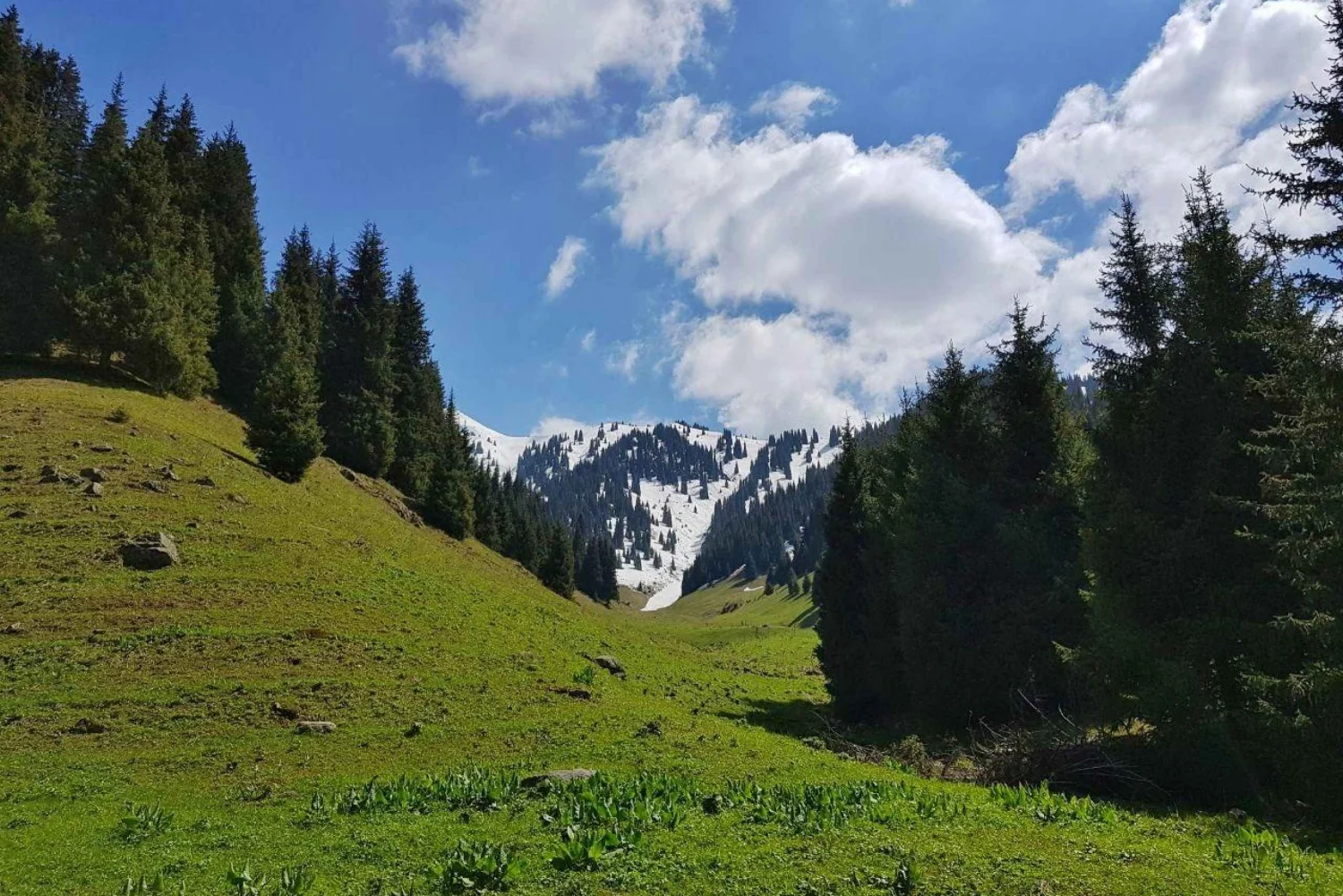
A classic day hike from Almaty. The trail leads through a pine forest to a scenic cascading waterfall.
Essential Profile
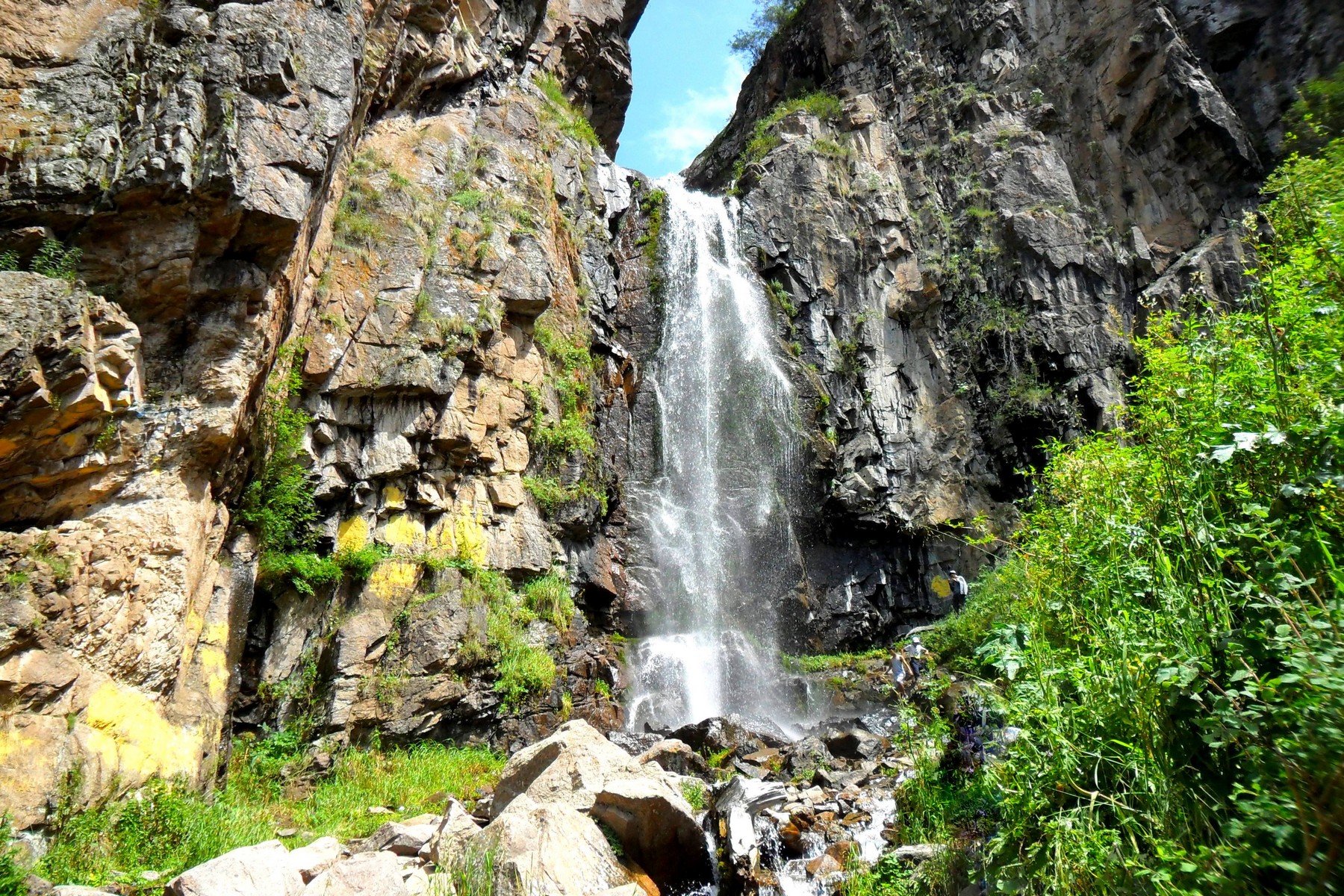
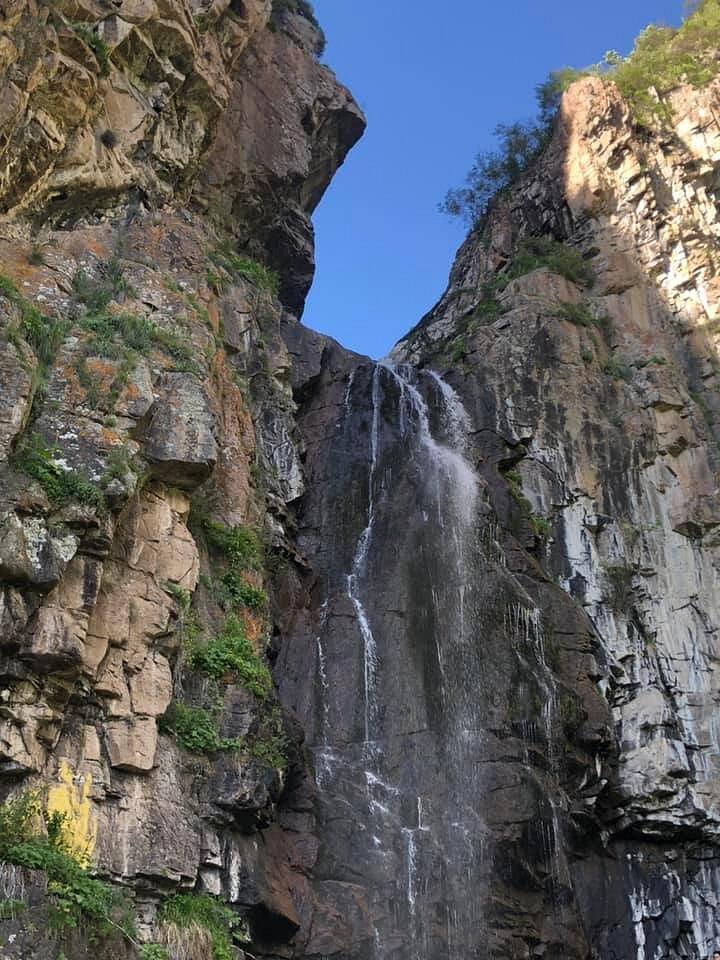
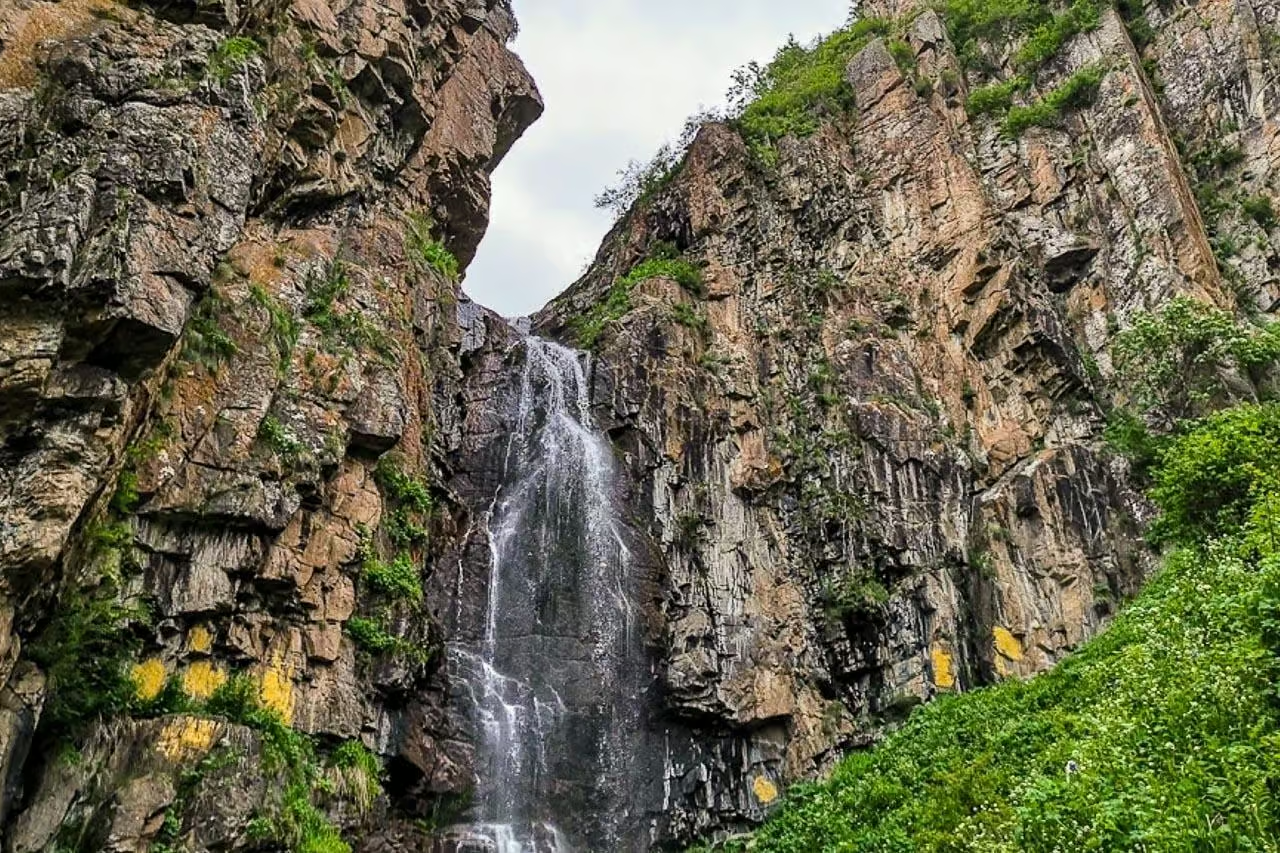
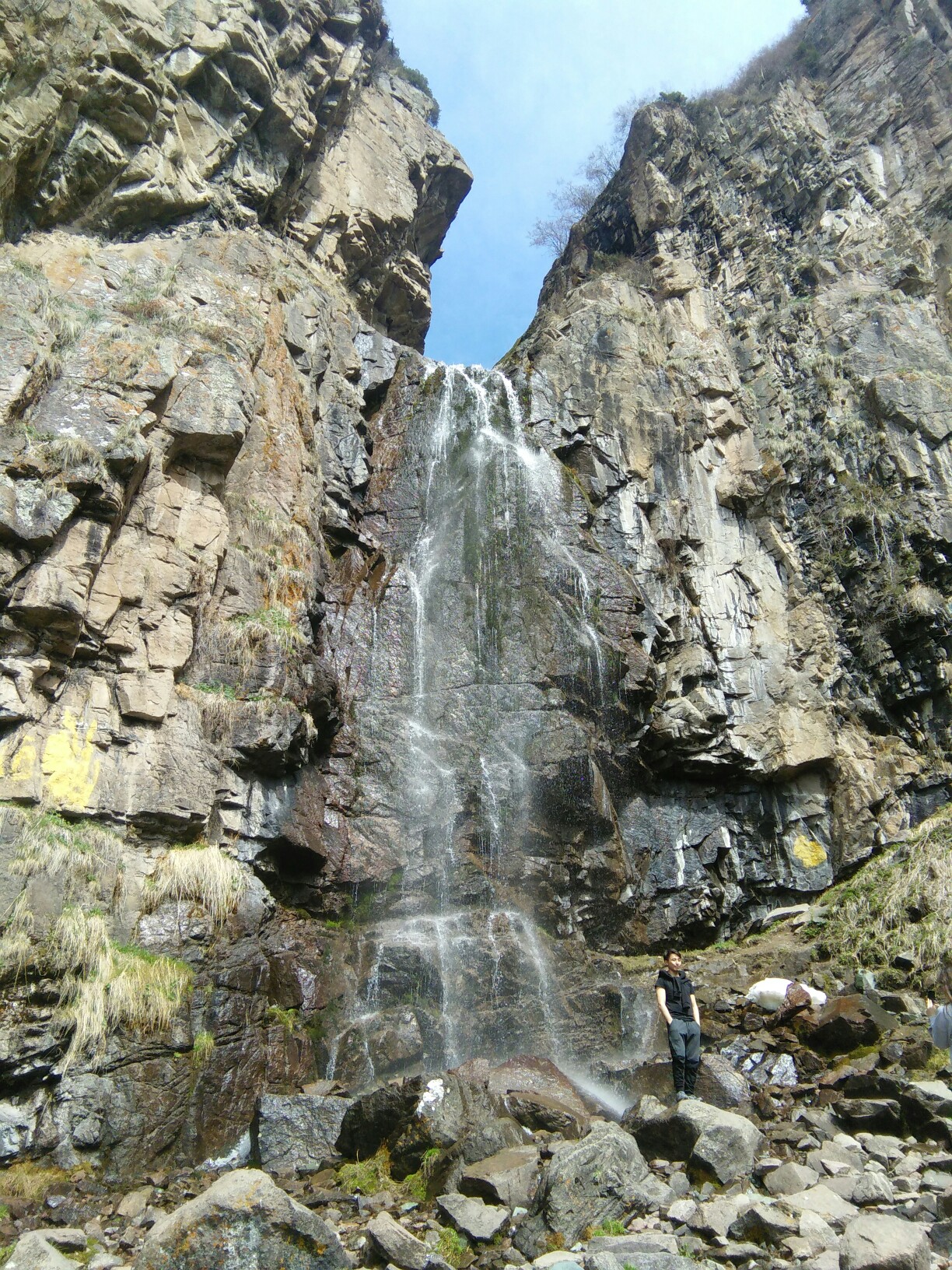
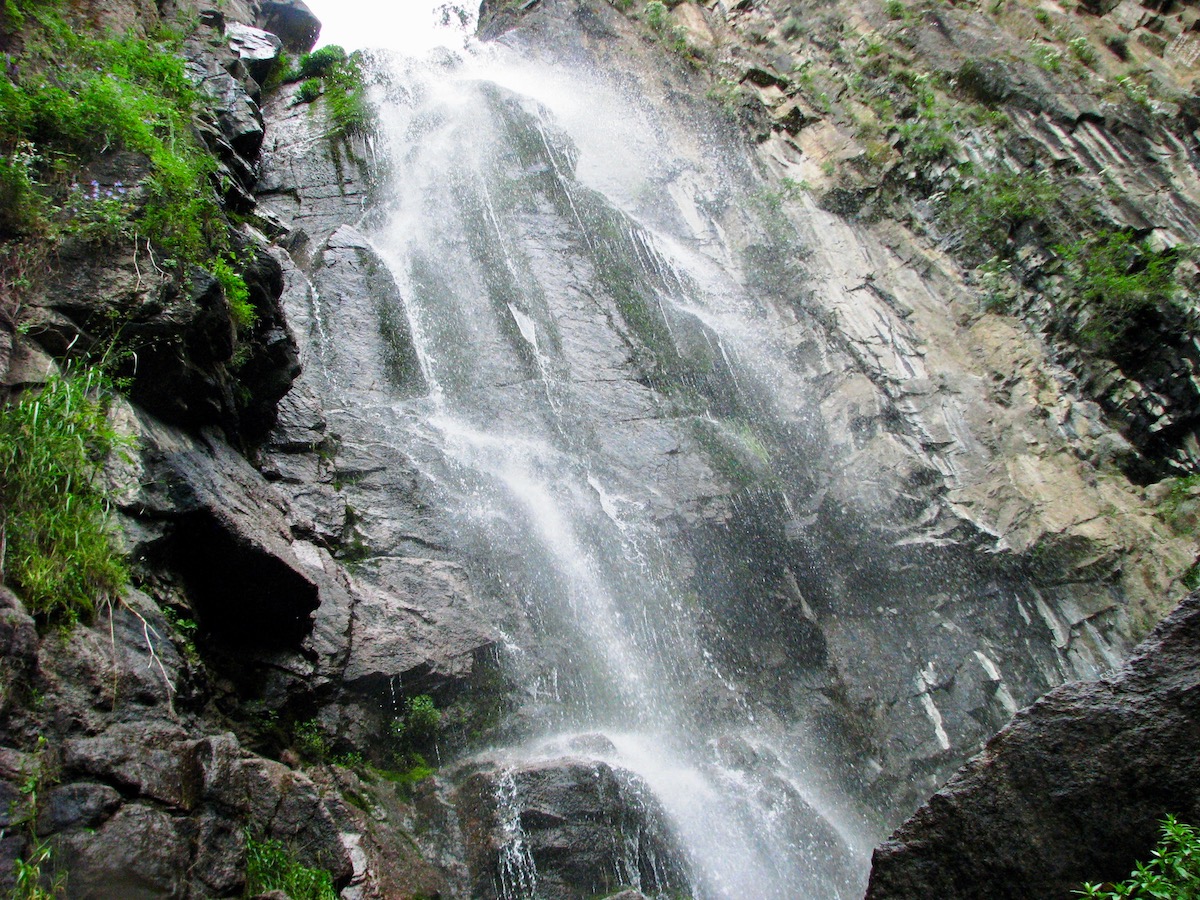
You hear Butakovka before you see it. Half a kilometer up the gorge from the trailhead, somewhere in the spruce forest above you, the water announces itself — a low, continuous percussion against rock that builds as you climb until you round a bend and the fall appears: fifteen meters of white water dropping through a slot in the granite, the mist cold against your face before you've even stopped walking.
This is Almaty's backyard waterfall, and "backyard" is meant literally. From the city center, you can be standing at the base of Butakovka Gorge within 40 minutes. The fact that it takes that long to get somewhere this elemental — dense Tian Shan spruce, the smell of cold mountain water, wild apple trees with their branches grown horizontal against the slope — is of the genuine gifts of living in or visiting Almaty.
The Place
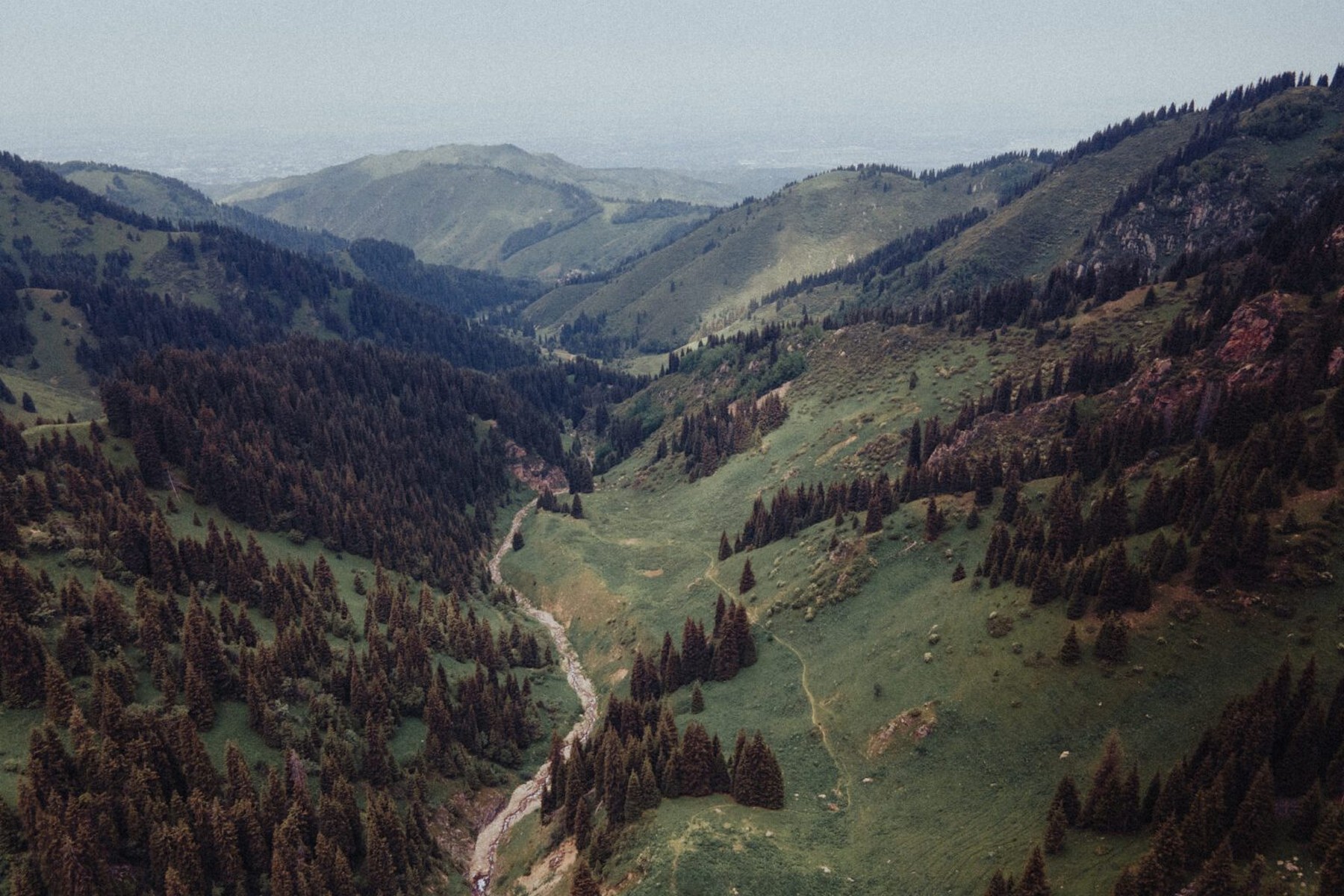
Butakovka Waterfall sits at roughly 1,800 meters elevation in the Butakovka Gorge, within the Ile-Alatau National Park that stretches along Almaty's southern flank. The gorge feeds into the city's northern plain, and the trail that runs up to the waterfall follows the Butakovka River through forest that shifts as you climb: wild apple and apricot in the lower section, giving way to Tian Shan spruce (shyrsha in Kazakh) at middle elevation, with views opening toward the rocky upper ridgelines as the tree line recedes.
The waterfall itself forms at a natural break in the granite where the Butakovka River pitches off a ledge and drops into a pool shallow enough to wade in summer and cold enough to shock the breath out of you regardless of the season. A platform has been installed at viewing distance — useful for photographs, though the more satisfying position is simply standing close enough to feel the spray.
What Kind of Hike Is It?
The round trip from the trailhead to the waterfall and back takes roughly three hours at a leisurely pace — two hours if you're moving with purpose. The path gains around 300 meters in elevation and is well-marked throughout. It's accessible to anyone of reasonable fitness; children who can manage a couple of hours of walking do this trail regularly. The main challenge is the final approach to the waterfall, which involves some rocky sections and can be slippery after rain. Trekking poles help but aren't essential.
The trail passes through sections of forest that feel genuinely wild for a walk this close to a city of two million people. Marmots live in the rocky sections above the tree line and are vocal about strangers on their territory. Roe deer are occasionally seen in the early morning before the day-trippers arrive. In autumn, the wild apple trees in the lower gorge carry small tart fruit that local families have been harvesting for generations — you're welcome to try.
Part of Something Larger
Butakovka is node in the larger network of gorge trails that radiate south from Almaty into the Ile-Alatau. Medeu, Shymbulak, Kaskelen, Talgar — each gorge has its own character, its own gradient, its own particular smell of mountain air mixing with city. Butakovka's particular character is intimacy: the gorge is narrower than most, the forest closer, the sound of the river constant. You never feel far from the mountain here, even in the lower sections. That's the draw, and it works.
The ‘Wow-Factor’
There's a moment about twenty minutes into the Butakovka trail — past the point where the gorge narrows and the city noise drops below hearing — when the forest closes in and the river appears beside the path and you realize you've stopped thinking about anything else. That's the wow factor. Not the waterfall specifically, though the waterfall earns its own response. It's the transition: the way this gorge takes an Almaty morning and converts it into something entirely different.
The waterfall arrives at the end of that conversion. Fifteen meters of white water over granite, landing in a pool surrounded by spray-darkened rock and the smell of cold water and wet spruce. In spring and early summer, when snowmelt is at peak, the force of it is loud enough that you have to raise your voice to speak; by late August the flow quiets to something more contemplative. Both versions are worth seeing.
But the detail that surprises most visitors isn't the scale — it's the proximity. The trail brings you to within meters of the base, and the mist reaches you before you arrive. On a warm July afternoon, that cold spray against your face is startling in the best way. Your skin registers it as information: you are in a mountain, not merely beside.
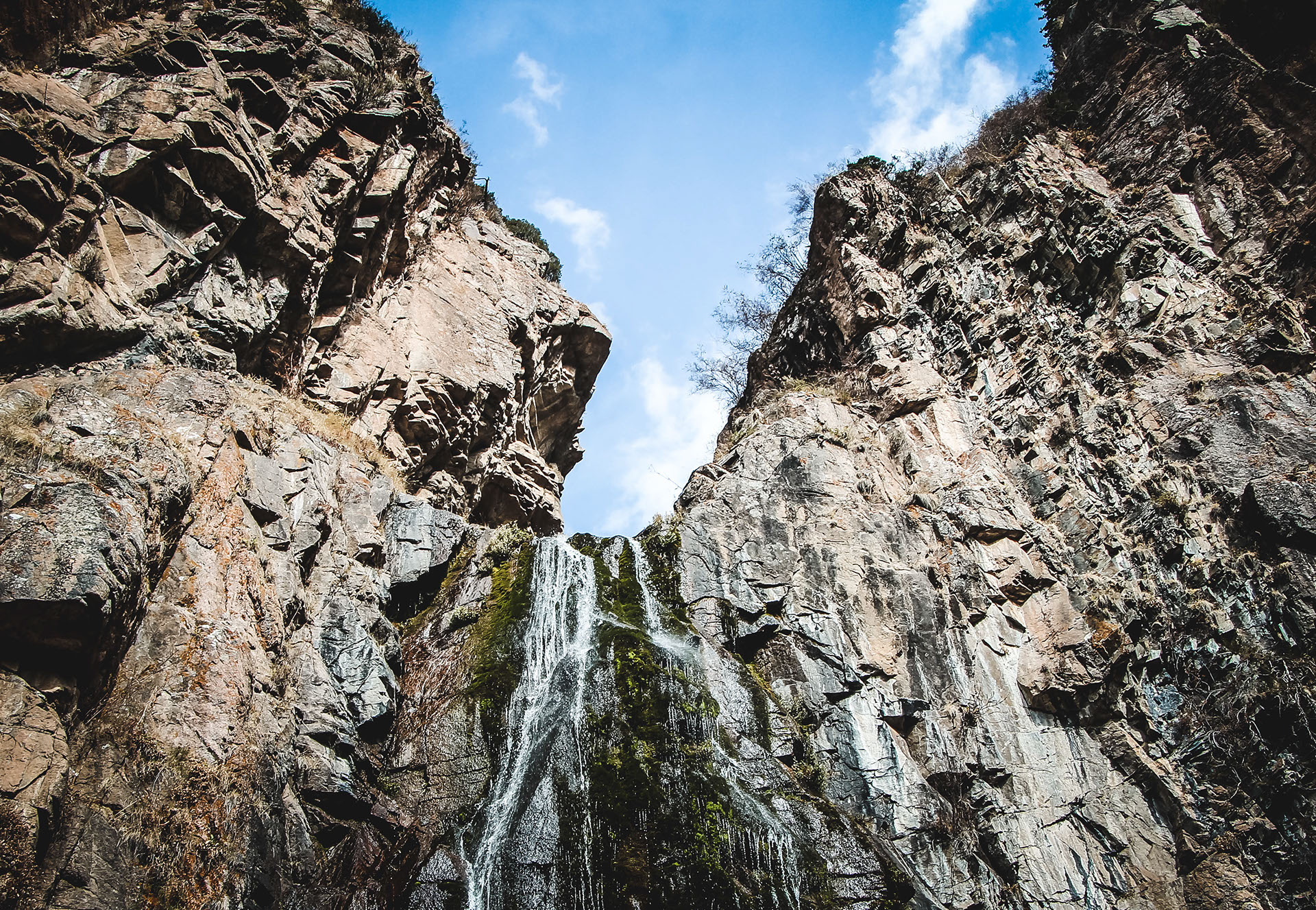
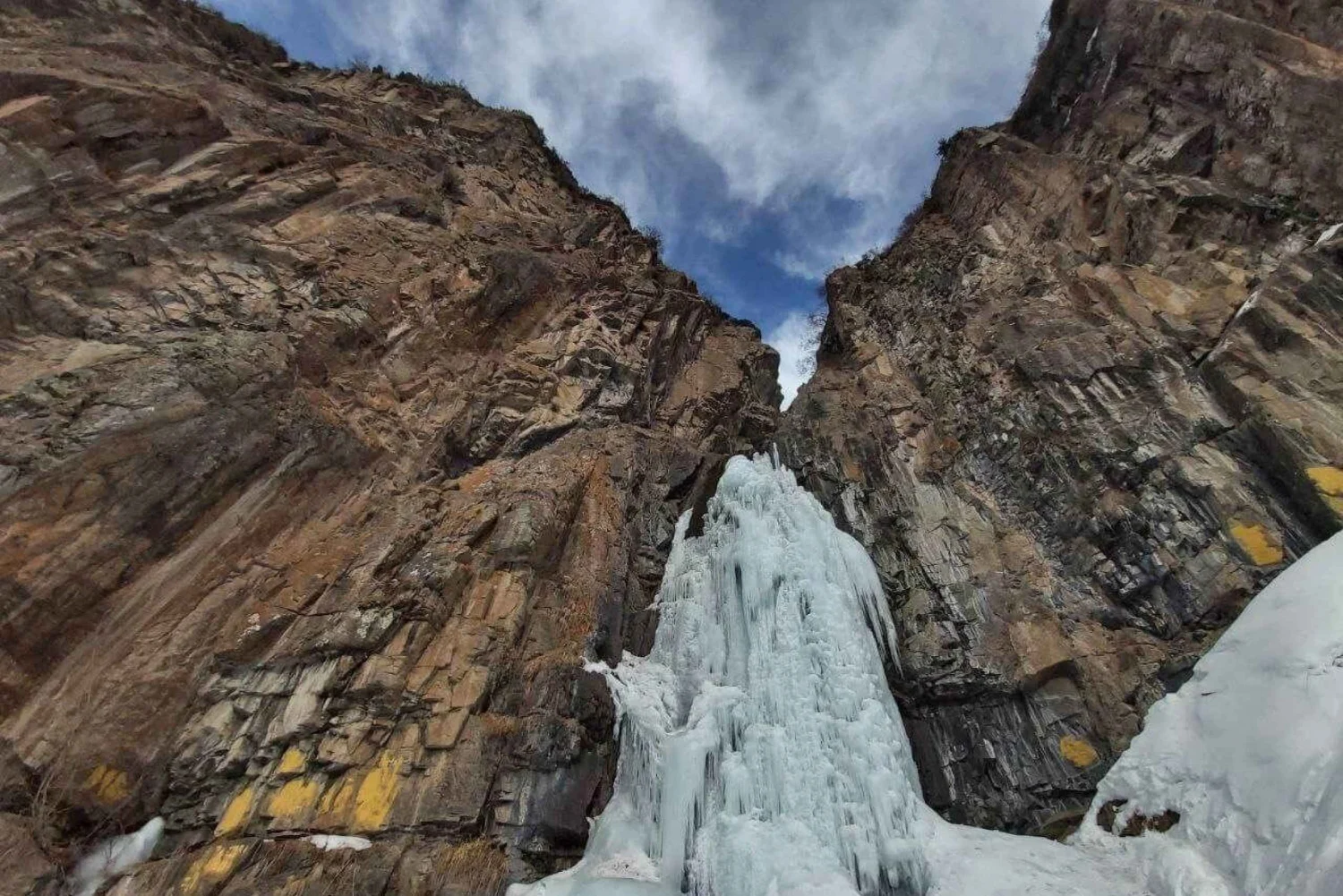
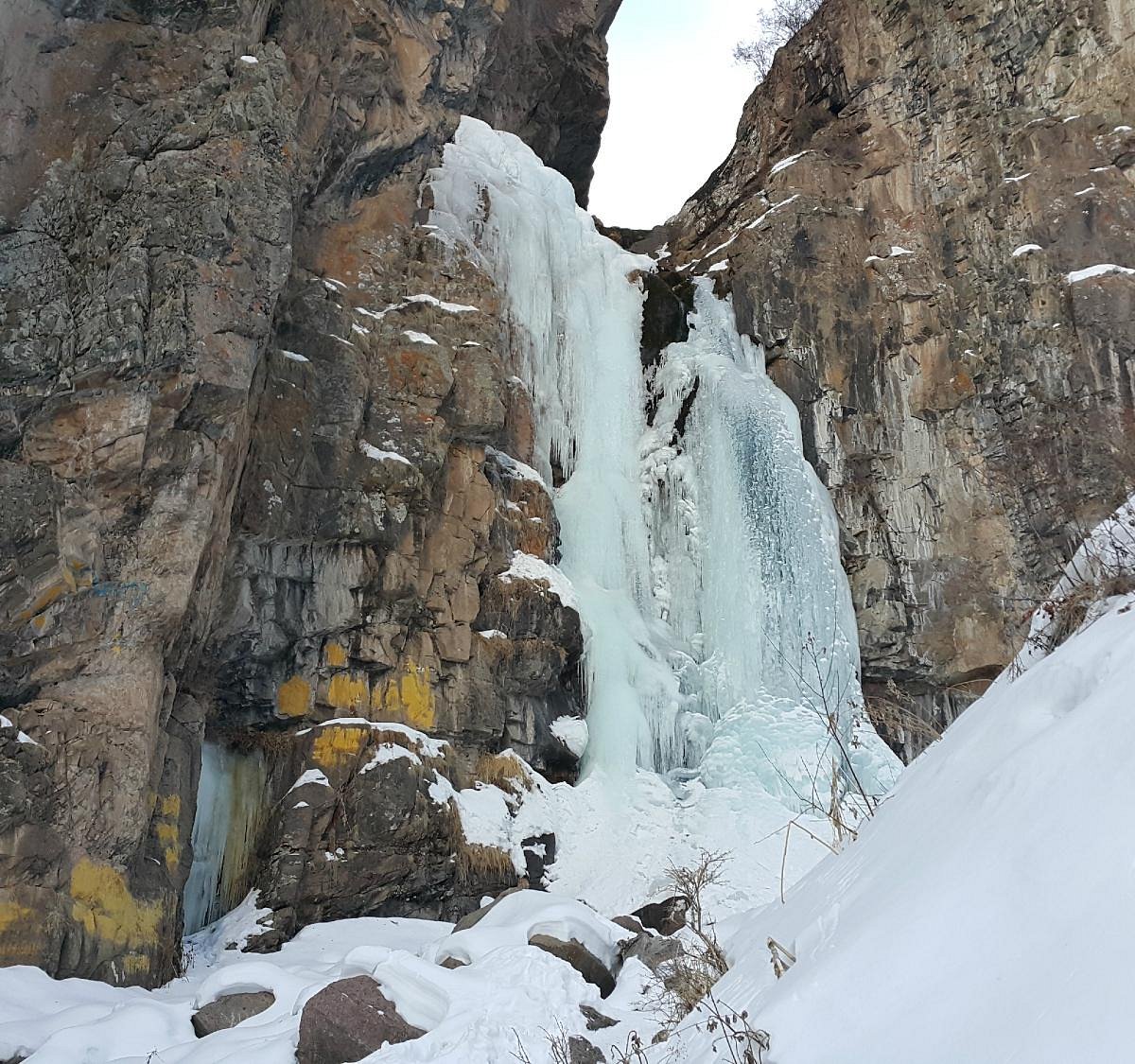
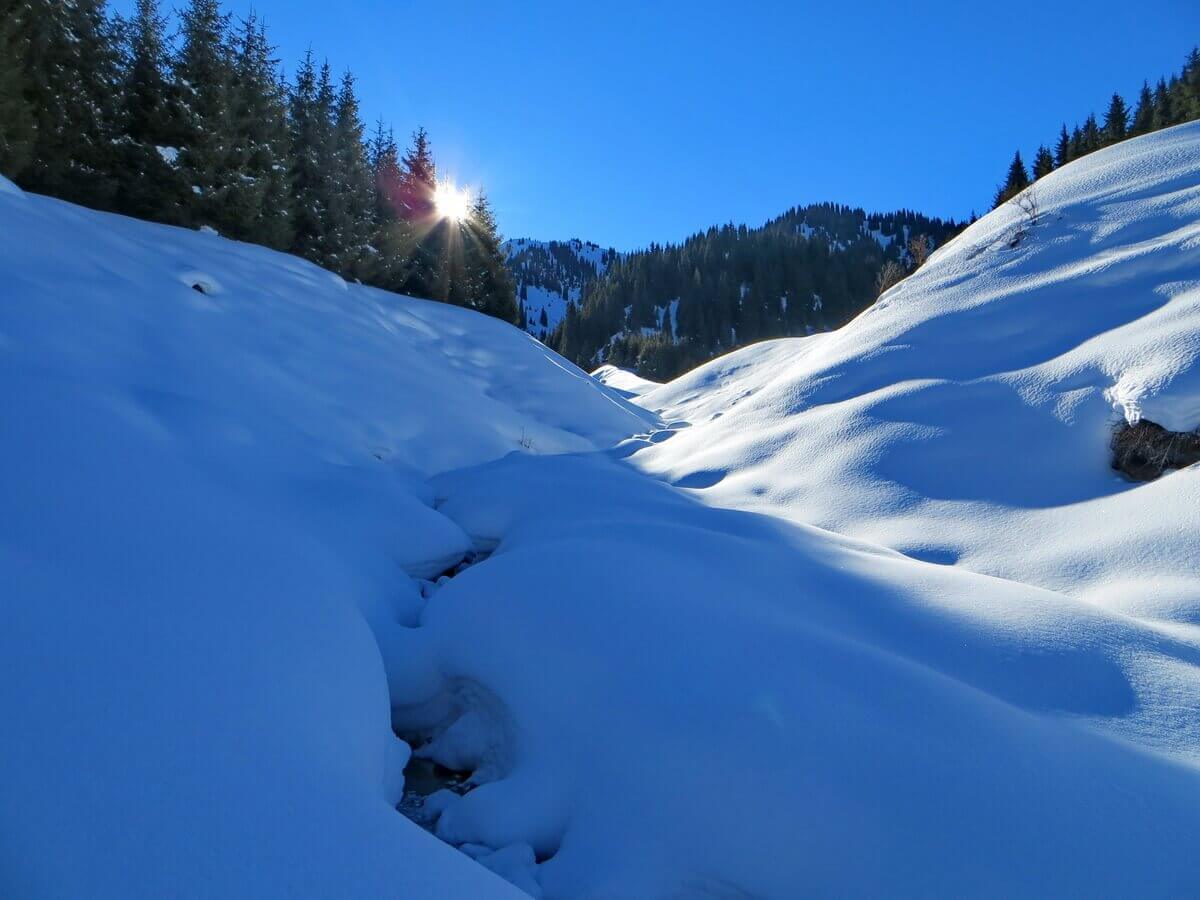
The gorge walls above the waterfall are fractured granite draped in fern and moss, with Tian Shan spruce clinging at angles that shouldn't work. In autumn the wild apple trees in the lower gorge turn gold and shed small hard fruit the path. In winter the waterfall reduces to a glaze of ice over rock, and the silence in the gorge is the loudest thing there. Each version of Butakovka produces its own particular shock of beauty, and regular visitors come back in all four seasons specifically because the place refuses to be the same twice.
The other surprise is sound. At the base of the fall, the white noise of the water is total — it fills the gorge and the skull equally. Standing there long enough, you start to hear it not as noise but as silence of a different kind. Almaty residents who do this walk weekly describe the effect in the same terms, independently: it clears something. The spruce smell helps. The cold helps. The twenty minutes of climbing to get there helps too — you've earned it, just enough, to feel like it's yours for the hour you're standing here.
Deep History & Culture
The Tian Shan mountains have been a constant in human life across Central Asia for as long as humans have moved through this part of the world. The gorges cutting northward from the main ridgeline — Butakovka among them — were not just scenic features. They were routes, water sources, seasonal camps, and places where the boundary between the visible world and something less visible felt, to the nomadic Kazakhs who knew them best, notably thin.
The Earliest Inhabitants
The oldest evidence of human presence in the Ile-Alatau region dates to the Saka period, around the 5th century BCE. These nomadic warriors of the eastern steppe left burial mounds — kurgan — scattered across the Almaty plain and the lower mountain slopes, and their relationship to the high ground was both practical and sacred. The Tian Shan provided summer pasture, fresh water, game, timber, and stone; the specific gorges like Butakovka offered shelter from the steppe wind and reliable water through even the driest summers. There were people camping in this gorge, in other words, two and a half thousand years before Almaty existed.
The Silk Road, in its northern variants, skirted the edge of what is now Almaty — Zhetysu, the "Land of Seven Rivers," was among the most agriculturally rich zones in all of Central Asia, and the corridors between mountain and steppe were natural trade routes. Kazakh oral historians, including the great tradition of zhyrau poet-storytellers, placed significance on the mountain springs as bata — blessed places where water emerged clean from the earth and carried healing properties.
The Kazakh Khanate and the Mountain World
After the foundation of the Kazakh Khanate in 1465 by Janibek and Kerei Khans, the Zhetysu region — including the mountains south of present-day Almaty — became part of the Great Zhuz's traditional territory. The seasonal rhythms of nomadic life meant that Kazakh families moved between winter quarters on the plain and summer jailau (high pasture) in the mountain zones; the gorges were the corridors through which that movement happened. Butakovka Gorge would have been such corridor, familiar enough to be unremarkable and important enough to be named.
Russian Annexation and the Transformation of the Landscape
The Russian empire's annexation of Kazakhstan between 1731 and 1848 — a process of military pressure, coerced treaties, and fortification that is accurately described as annexation and nothing softer — did not immediately change the character of the mountain gorges. But the founding of Verniy (present-day Almaty) in 1854 as a Russian military fortress began a process of urban expansion that would eventually bring the question of the mountains into administrative focus.
By the late 19th century, Verniy had become a garrison town and then a colonial administrative center, and the gorges south of the city had become recreational space for the Russian settler population. The forests that Kazakh families had been using seasonally for centuries were being mapped, classified, and eventually designated as protected zones by the Tsarist administration — a conservation impulse that contained within it an act of dispossession, as traditional use rights were never formally recognized.
Soviet Almaty and the Trail System
The Soviet era brought organized hiking culture to the Tian Shan. The state valorized physical fitness and collective recreation, and the gorges around Almaty became a formal part of that project: trails were improved, signage installed, rest stations built. Butakovka's waterfall trail was well-established by the 1950s. Soviet-era hiking clubs — every city enterprise had — brought workers out to the gorges on weekends, and the culture of the Sunday mountain walk became so thoroughly embedded in Almaty life that it survived the Soviet collapse intact.
The Ile-Alatau National Park, formally established in 1996 after independence, gave this landscape its current legal framework. The gorges, including Butakovka, came under protection at the same moment Kazakhstan was reasserting its own cultural identity — a reclamation, among other things, of the Kazakh relationship with the tau (mountain) that had been mediated for so long by colonial and Soviet administration.
What the Mountain Remembers
Almaty mountaineer and ethnographer Saule Dzhaksybekova, who has spent twenty years documenting traditional Kazakh knowledge of the Ile-Alatau, describes the gorges as eskertkish — memorials, in the sense of places that hold memory. Not official memory, not inscribed memory, but the kind that lives in the specific quality of light hitting the water at a particular time of morning, or in the names the mountains carry — names that are Kazakh, that describe what the mountain does rather than who claimed it. The name Butakovka comes from the Russian-era administration. Whatever the Kazakhs called this gorge before that is, like so much else, a recovery project still underway.
Practical Digital Logistics
The logistics for Butakovka are pleasantly simple — it's of the easiest mountain excursions from Almaty, which is part of why it's so popular.
Getting to the Trailhead
The gorge entrance is approximately 20 kilometers south of central Almaty, in the foothills above the Medeu district. By taxi from the city center, the drive takes 30–45 minutes depending on Almaty traffic — budget around 2,000–4,000 KZT each way. The ride-sharing app inDrive is widely used in Almaty and typically cheaper than flagging a taxi on the street.
Public buses run along the Medeu corridor; the No. 29 and several other routes reach the general area, though the final stretch to the gorge entrance may require walking or a short additional taxi leg. If you're comfortable with Almaty's bus network, it's a workable and cheap option. Many visitors simply share a taxi with fellow travelers for the return leg — it's easy enough to find people at the trailhead heading back to the same parts of the city.
By private car: park at the designated lot near the gorge entrance. GPS works reliably; search "Butakovka Gorge" or "Butakovka Waterfall" in any mapping app. The road from the Medeu ice rink area up to the Ile-Alatau National Park boundary is paved and in reasonable condition.
Entry and Permits
Butakovka falls within the Ile-Alatau National Park, and entry requires paying the park fee: currently 1,500 KZT per person. The fee can be paid at the park gate on entry. Keep your receipt — rangers occasionally check.
No special permits are required for the standard waterfall trail. For overnight camping within the park, separate permissions apply; check with the park administration office in advance.
What to Bring
Two liters of water minimum — the river water in the gorge is not safe to drink without treatment. The trail gains 300 meters in elevation, which produces warmth on the way up and cold on the way down, particularly in spring and autumn when shade temperature drops sharply. A light packable layer is worth carrying regardless of the morning weather.
Footwear matters. The approach trail is manageable in trainers for most of the year, but the final section near the waterfall is rocky and can be slippery when wet. Trekking shoes or any shoe with a decent grip is preferable. Flip-flops will get you in trouble.
Sunscreen is recommended even on overcast days — the mountain elevation amplifies UV exposure in ways that feel irrelevant until the following morning.
Connectivity
Mobile signal is good at the trailhead and in the lower gorge. It fades as you climb higher. Download an offline map (Maps.me covers the trail network well) before you leave Almaty. The gorge itself has no café, no shop, and no Wi-Fi. That's not a complaint, it's information.
Timing
The park is accessible year-round. The most popular months are May through September; the waterfall is at its most dramatic in May and June when snowmelt is at peak. July and August are warmest but busiest. October brings larch color to the lower slopes and much thinner crowds. Winter visits are possible and beautiful, but require proper cold-weather gear — the gorge holds shade and ice well into March.
Allow three hours for the round trip at a comfortable pace, including time at the waterfall. If you're planning to extend the walk beyond the waterfall into the upper gorge or toward the alpine zone, budget a full day and inform someone of your route.
Must-Do Activities
Most people come to Butakovka for the waterfall and leave having done considerably more than they planned. The gorge has a way of extending visits — each bend in the river reveals something that makes you want to go a little further.
Hike to the Waterfall
This is the core activity, and it delivers. The trail from the park entrance to the base of the 15-meter waterfall takes about 45–60 minutes uphill at an easy-to-moderate pace. The path follows the river closely, crosses it twice on small bridges, and arrives at the fall from below — so the approach gradually amplifies the sound until you're standing in the mist of it. The return trip is faster. Budget three hours total for a comfortable out-and-back, including time to sit at the base and actually be there rather than just photograph it.
Walk the Wild Apple Section
The lower gorge, between the park entrance and the first river crossing, passes through a grove of wild apple and apricot trees that are ancient by any measure — gnarled, low-branching, producing small hard fruit that are edible in September and October. Botanists consider the wild apples of the Tian Shan foothills to be among the ancestors of every domesticated apple variety on earth; there is genuine scientific significance in these trees, and also a strange pleasure in standing in a forest where the apples growing overhead are the original version of something so familiar. In spring, the blossom is extraordinary.
Extend Into the Upper Gorge
Beyond the waterfall, the trail continues into the upper gorge and eventually reaches alpine meadows where the character of the landscape changes completely — the forest thins, the views open, and the path feels less like a day hike and more like an approach to something larger. This extension is for those with time, fitness, and proper footwear. Allow an additional two to three hours for the upper gorge section, and start early if you're planning the full route.
Scramble on the Gorge Walls
The lower sections of the gorge walls are traversable by confident scramblers — the granite is solid and the angles are forgiving compared to the technical routes higher in the Ile-Alatau. No equipment is needed for casual exploration of the lower boulderfields. If the trail itself feels too easy, leaving it slightly and exploring the riverside rock formations adds interest without requiring mountaineering skills.
Photography
The gorge is consistently photogenic, but certain moments stand out: the morning light filtering through the spruce canopy in the lower section; the contrast of white water against dark wet rock at the base of the fall; the wild apple trees in blossom (mid-April to early May) or in autumn color (October). A wide-angle lens captures the enclosing walls of the upper gorge. A telephoto picks out the marmots that occupy the rocky slopes above the tree line and will sit still for a surprisingly long time if you approach slowly.
Simply Sitting
Underrated activity. There are large flat rocks beside the river pool at the base of the waterfall where you can sit, eat lunch, and let the sound of the water do whatever it does to the part of the brain that has been processing city life all week. Several Almaty residents make this specific activity their entire purpose for the visit. They are not wrong.
Local Flavors & Amenities
There's a particular pleasure in eating after a mountain walk that has nothing to do with the quality of the food and everything to do with the quality of the hunger. At Butakovka, that hunger is real, and the options for satisfying it range from the pack you brought yourself to the small food stalls near the park entrance that have been feeding hikers for decades.
Eating at the Gorge
The gorge itself has no restaurant. This is correct. What it does have, at the entrance area, are a handful of seasonal food stalls that sell samsa (baked lamb pastries, good, eat them warm), corn cobs grilled over charcoal, and tea from thermoses that the vendors seem to refill by some perpetual process. Prices are low. The food is the kind that tastes disproportionately good when you're sitting on a boulder with dirty boots, which is the target demographic.
Mountain honey is the best thing to buy near the gorge. The Ile-Alatau foothills produce honey from bees working wild alpine flowers, and the result is darker, more complex, and considerably more interesting than anything you'll find in a supermarket. Several vendors near the park entrance sell it; buy it in the small jars if you're on a day trip, the large if you're planning ahead.
Lunch on the Trail
Most visitors to Butakovka treat it as a picnic experience. The flat rocks at the base of the waterfall and the riverside spots along the lower trail are natural lunch stops, and the Almaty families who do this walk regularly bring full spreads: bread, sliced vegetables, hard-boiled eggs, cold chicken, fruit. The marmots have learned to associate human lunch breaks with food scraps and will approach to a disconcerting proximity if you leave anything unattended. This is their gorge. Eat accordingly.
Almaty Before or After
The Medeu and Shymbulak areas that lie along the same road as Butakovka have several good cafes and restaurants at various price points. Many Butakovka visitors stop in this zone for a late lunch or early dinner on the way back to the city. The cafes along the Medeu promenade serve Kazakh standards — beshbarmak, manty, lagman — alongside salads and grilled meat. After three hours in the mountain air, a bowl of hot lagman (hand-pulled noodles in lamb broth with vegetables) is not a sophisticated dining experience. It's better than that.
Tea as the Closing Note
If you're with Kazakh friends or a local guide, the post-hike tea is non-negotiable. Tea in Kazakhstan — shay — is not a refreshment, it's a debriefing. It's the part where the day gets processed: what was beautiful, what surprised you, what you'll do differently next time. A half-filled piala bowl means someone wants the conversation to continue. Let it. The mountain will still be there in the morning.
Essential Insider Tips
Things that will improve your visit, learned the hard way by people who've been coming here for years.
Start Early
The Butakovka trail is quiet before 9 a.m. and progressively busier from 10 through the weekend afternoon. On a summer Saturday, the waterfall area between 11 a.m. and 3 p.m. is genuinely crowded — dozens of people, selfie sticks, music from phones, the full Almaty holiday-mode experience. Arriving at 7:30 a.m. means you'll have the forest almost to yourself, the light is better for photographs, and you'll reach the waterfall before the mist fills the gorge with voices. It's not a small difference.
The Access Road Can Close
In winter and early spring, the road to the gorge entrance can be closed due to snow or avalanche risk. Before making the drive in November through March, check current road conditions — either via the park administration's published updates or by calling the Ile-Alatau National Park office in Almaty. A 40-minute taxi ride to a closed gate is an avoidable frustration.
Don't Trust the Weather at Elevation
The lower gorge in summer can feel completely benign — warm, sheltered, mild. But the upper gorge and the alpine zone beyond the waterfall are subject to rapid weather changes. A clear morning can become a cold, wet afternoon without much warning. If you're planning to go beyond the waterfall into the upper gorge, pack a rain layer and start early enough that you're descending by mid-afternoon.
For Photography
The best light in the gorge is in the hour after sunrise, when horizontal light filters through the spruce canopy and produces shaft-and-shadow effects that midday never matches. The waterfall itself photographs best in overcast light, which reduces harsh contrast and lets the water detail show. A neutral density filter is useful if you want to slow the shutter and create the silky-water effect. The wild apple trees in late April/early May are in blossom and genuinely spectacular — worth timing a visit around if you have flexibility.
Rubbish
The gorge is clean because people carry their rubbish out. There are no bins on the trail. This is an explicit policy, and it works when people follow it. Bring a bag, pack out what you pack in, and don't leave food waste near the marmot zones — it changes their behavior in ways that are bad for them long-term. The park is a public good; treat it accordingly.
Combine with Medeu or Shymbulak
The three sites — Butakovka, Medeu ice rink, and Shymbulak ski resort — all lie along the same road corridor south of Almaty. A full day could take in all three: morning hike in Butakovka, lunch at Medeu, afternoon at Shymbulak. The logistics are easy and the variety is genuine — you'll experience three different faces of the Ile-Alatau in a single day without retracing your route.
Sustainability & Community
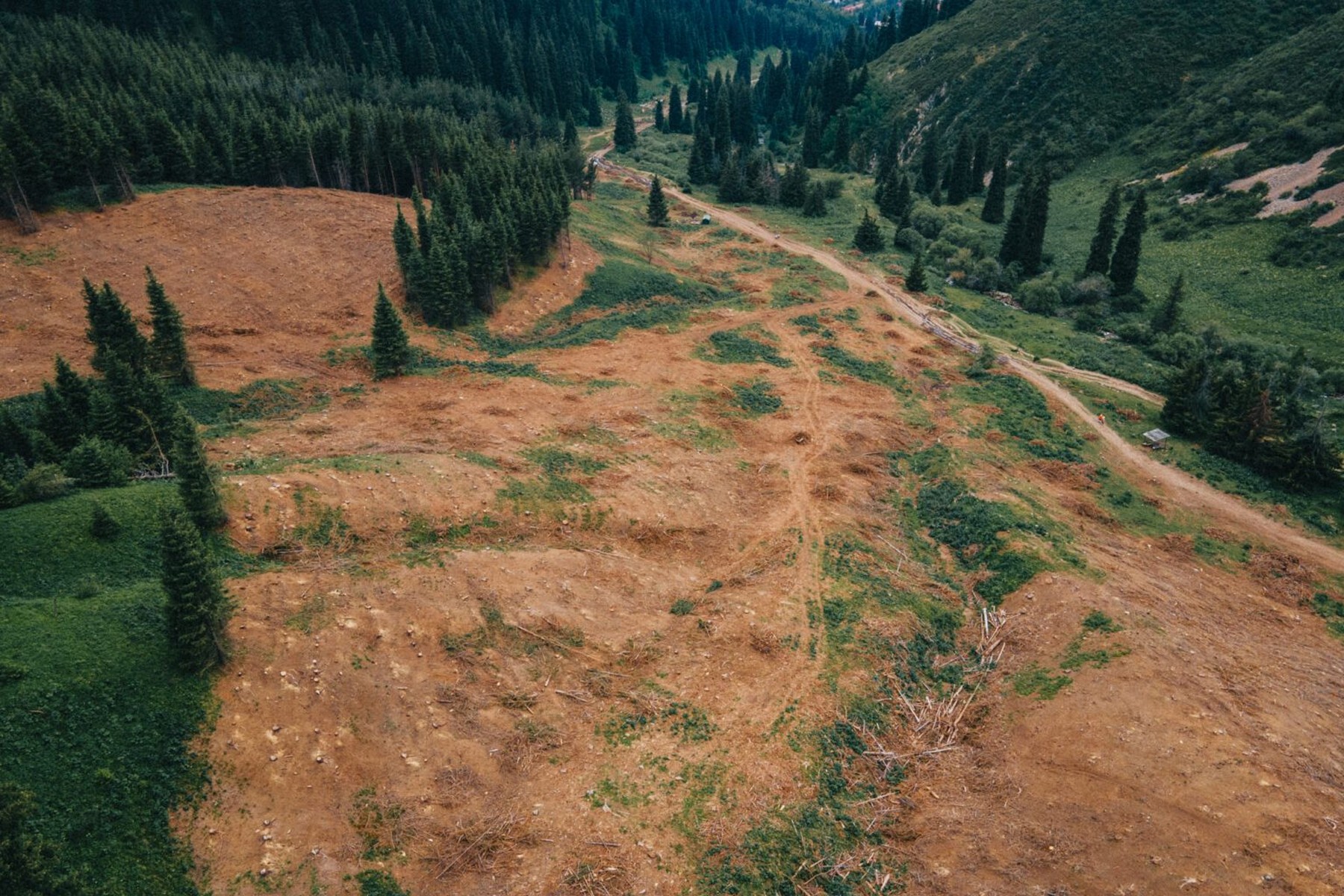
Butakovka is close enough to Almaty that the city's appetite for outdoor recreation arrives here in force, and the gorge bears the marks of that pressure. The trail has widened in places where it should be narrow. The wild apple trees in the lower gorge show damage where people have broken branches to get at the fruit. The rocks at the waterfall pool are worn smooth in ways that rock generally isn't. These are the signs of a loved place that is loved harder than its ecology can comfortably absorb.
The Ile-Alatau National Park administration manages this reality under significant constraints — the park stretches across the entire mountain flank south of Almaty and covers multiple gorges simultaneously with limited ranger staff. Visitor numbers have grown faster than the infrastructure to manage them. What this means practically is that the behavior of individual visitors matters more here than in a larger, better-resourced park system.
What Good Visiting Looks Like
The no-bin, carry-out-your-rubbish policy is the foundational ask. It works when people treat it seriously and fails when people don't. Everything else follows from that.
Stay on marked trails, particularly in the lower gorge where the wild apple root systems are shallow and compaction from foot traffic is an active problem. In spring, the soft ground around the river crossings is especially vulnerable — the instinct to step off a muddy section the grass beside it is understandable and wrong. Use the boardwalk sections where they exist.
Don't feed the marmots. They're charming, they'll approach you, and feeding them is bad for them and will make them bolder with the next hundred visitors until something goes badly wrong for the marmot.
Supporting the Community
The women who sell honey and dried herbs near the park entrance are typically from the small communities in the lower foothills — villages that have existed in the shadow of the mountain for generations and now exist in the shadow of Almaty's weekend recreation culture. Buy from them. The honey is genuinely good and the transaction is direct — no platform, no commission, money into a household.
Park guide Daulet Seitenov has been leading Butakovka walks since 2008. He knows where the roe deer shelter in summer and which section of the upper gorge floods first in the spring melt. Hiring a local guide rather than relying on a map isn't just a sustainability choice — it's a better hike. The gorge reveals itself differently to someone who has walked it hundreds of times.
The Longer View
Butakovka is a 40-minute drive from a city of two million people. That proximity is a gift and a responsibility simultaneously. The gorge that has been absorbing the weight of Almaty's need for mountain air for over a century will keep doing so — but if each generation of visitors treats it as something to preserve rather than consume. The marmots, the wild apples, the 15-meter fall of cold water over granite: they were here before the city. With some care, they'll still be here after.
Key Facts
- Gorge Setting
- Hidden within the lush Butakov Gorge, the waterfall is one of the most scenic and accessible natural landmarks near Almaty.
- Icy Cascade
- The main waterfall drops nearly 30 meters over a sheer rock face, providing a cool and refreshing mist even in the height of summer.
- Day Hike Trail
- A well-marked for tourists, the 3-kilometer trail from the forest gates offers an easy hike through pine and birch forests.
- Picnic Sanctuary
- The surrounding meadows near the river are a favorite local spot for traditional weekend picnics and family gatherings.
- Winter Magic
- In winter, the waterfall freezes into a massive wall of blue ice, creating a spectacular scene for daring ice climbers.
- Cedar Groves
- The Butakov valley is famous for its dense cedar and spruce forests, which release a revitalizing scent throughout the year.
Photo Gallery
Video coming soon
Butakovka
Loading map...Loading map...
Frequently Asked Questions
Have a question?
Ask and get answers in seconds!
Discussion 0
No comments yet. Start the conversation!
Leave a Reply