Besshatyr: The Five Tents
An ancient necropolis of the Saka people (Scythians) dating back to the 1st millennium BC. Known as the 'Stonehenge of the Steppes'.
Essential Profile
The City of the Dead That Was Built for Kings
The mounds appeared at a distance before the archaeologist Zhaksylyk Tastanbekov could make out their shape. Eighteen of them, rising from the floor of the Ili River valley in the shadow of the Alatau foothills — not natural hills but constructed, built by human hands twenty-six centuries ago for the bodies of Saka kings and the belief that the dead required architecture as serious as the living.
Besshatyr — "five tents" in Kazakh, a name that hints at what the mounds would have looked like from the steppe, their grass-covered profiles suggesting the great domed yurts of a royal encampment — is the primary necropolis of the Saka-Tigrakhauda, the "sharp-capped Sakas" named in Persian records for the distinctive pointed headdresses their warriors wore. These were the Iron Age horse cultures of the Eurasian steppe, the same peoples whom Herodotus called "Scythian," whose golden animal-style art has been turning up in burial mounds from the Black Sea to the Altai for over a century. Their royal cemetery sits in what is now Altyn-Emel National Park, roughly 260 kilometers east of Almaty, preserved by the dry steppe climate in extraordinary condition.
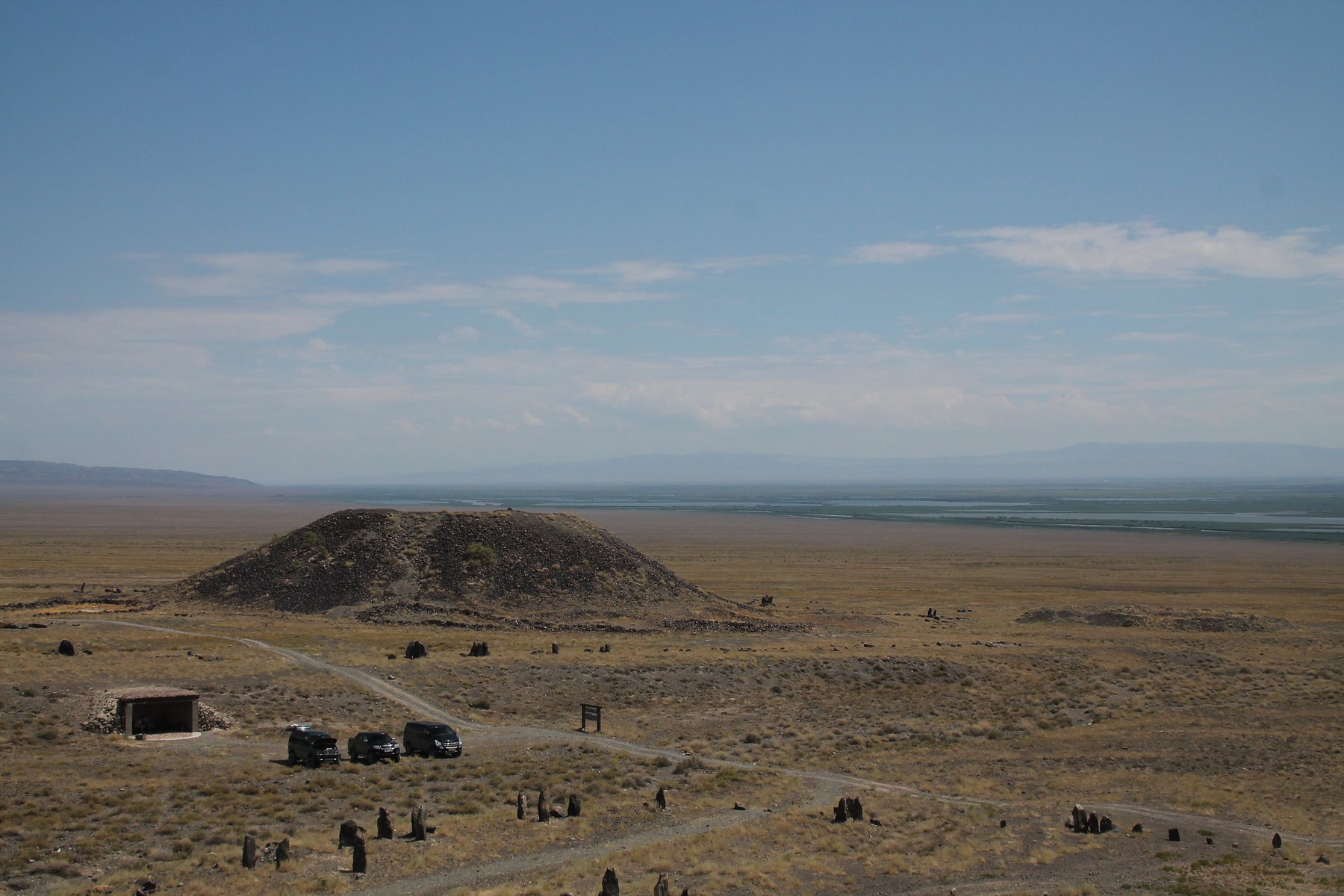
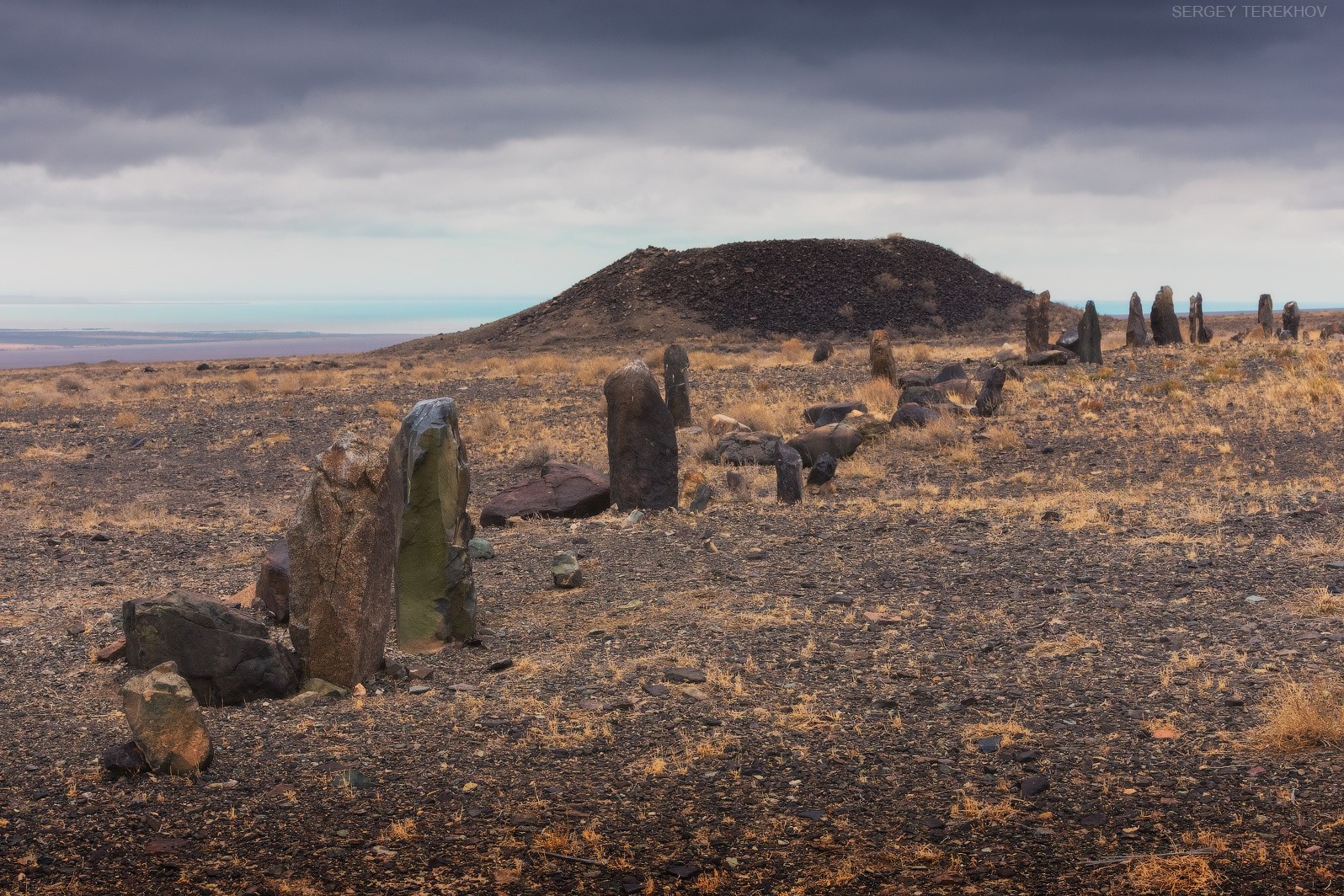
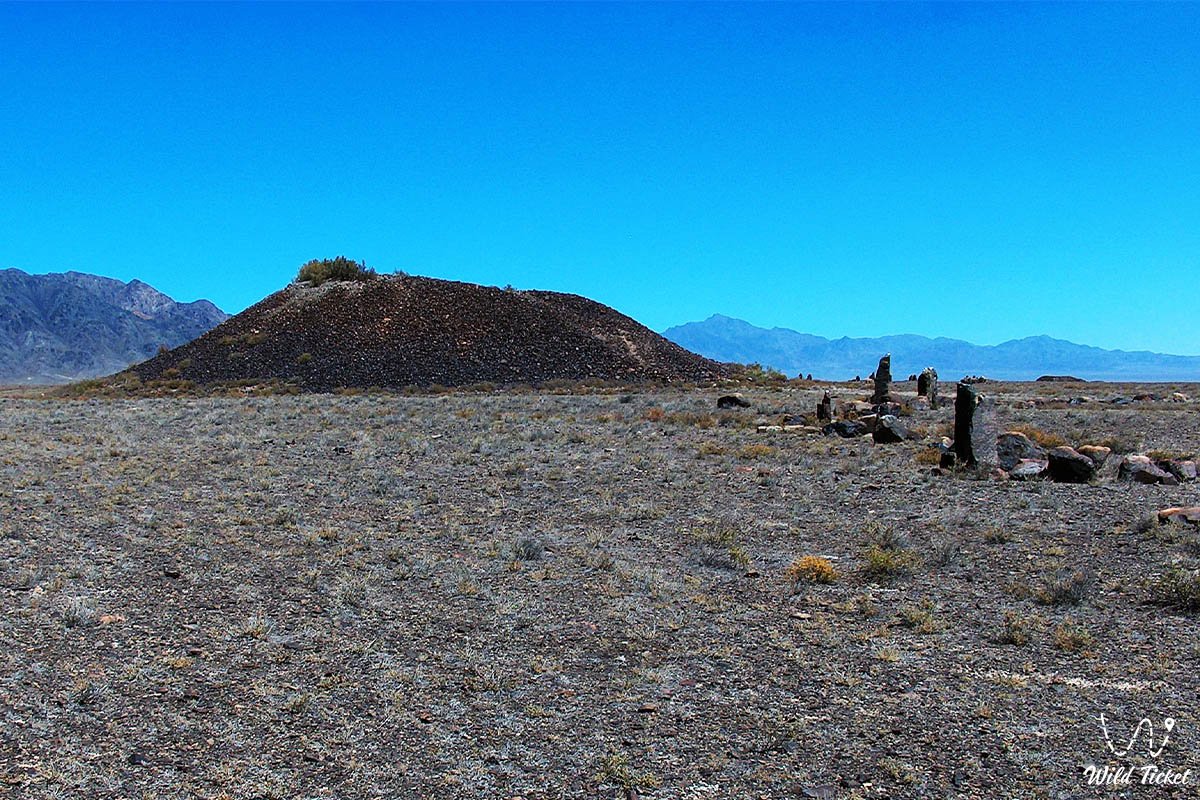
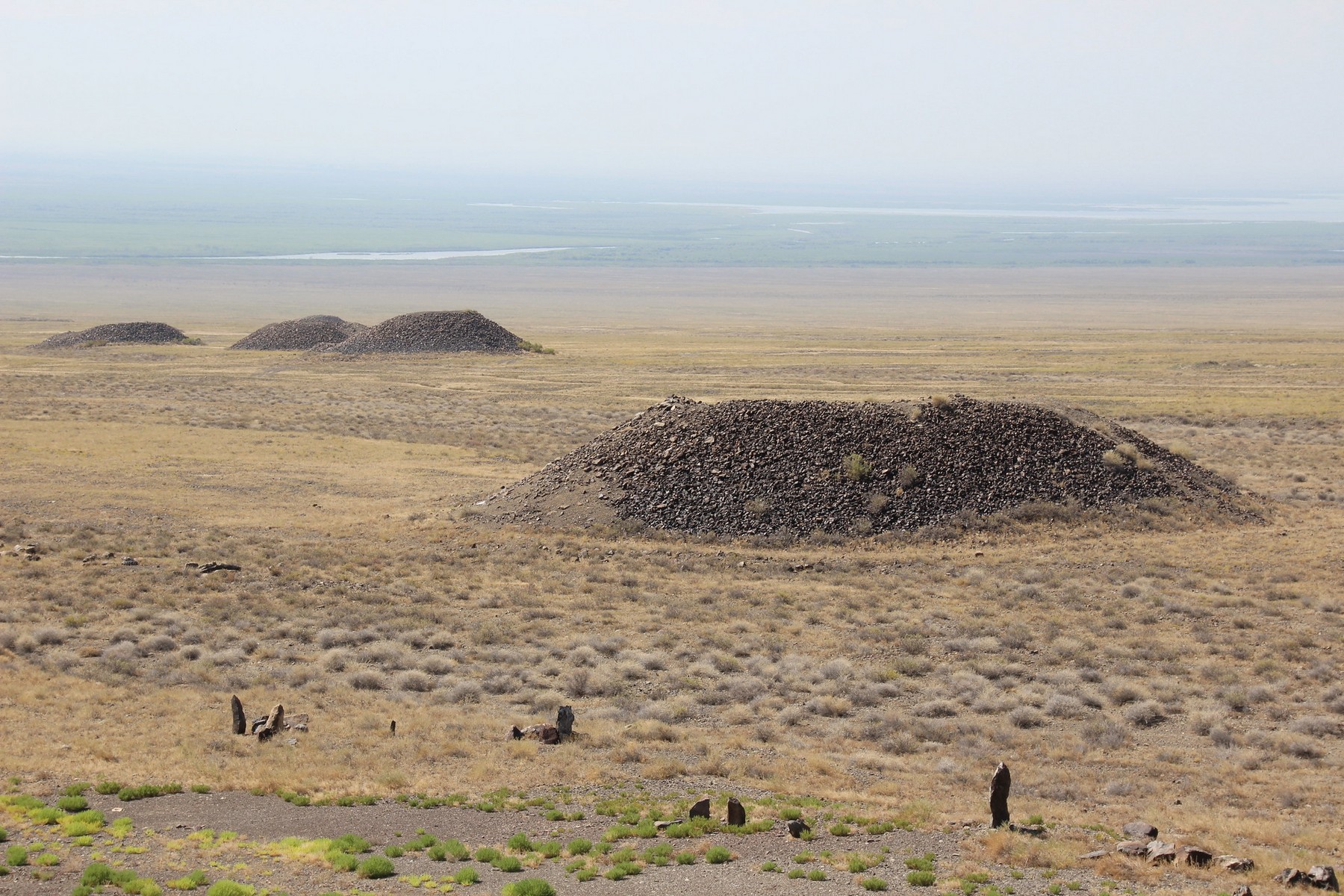
The complex contains 18 large royal kurgans — burial mounds ranging from 6 to 18 meters in height — as well as scores of smaller stone enclosures marking subordinate burials and ritual spaces. The largest mounds have stone rings at their perimeters and catacomb systems beneath them that were robbed of their gold contents in antiquity, though the structural archaeology remains intact. The Saka period spans the 7th to 3rd centuries BCE; Besshatyr represents the peak of this culture's funerary architecture, a concentrated statement in earth and stone about the permanence of royal lineage on the Central Asian steppe.
Essential Facts
Besshatyr is located within Altyn-Emel National Park in the Almaty Region. The park entrance is near Basshi village, approximately 260 kilometers east of Almaty. Access requires a park permit (available at the entrance gate) and either a park-organized vehicle or your own 4WD — the tracks to the burial complex require serious ground clearance. The site is open year-round, with spring (April–June) and autumn (September–October) the most comfortable seasons. Summer temperatures in the Ili valley regularly exceed 40°C. There is no on-site visitor infrastructure; bring your own water, food, and shade.
The kurgans are a protected archaeological site. Walking on the mounds is prohibited. Photography is permitted from the designated approach areas. The site's power is in its scale and its silence — eighteen royal tombs in a landscape that has changed very little since they were built. That combination, experienced on a quiet morning with the Alatau visible in the distance, produces a quality of presence that no photograph quite catches.
The ‘Wow-Factor’
What Eighteen Mounds Feel Like
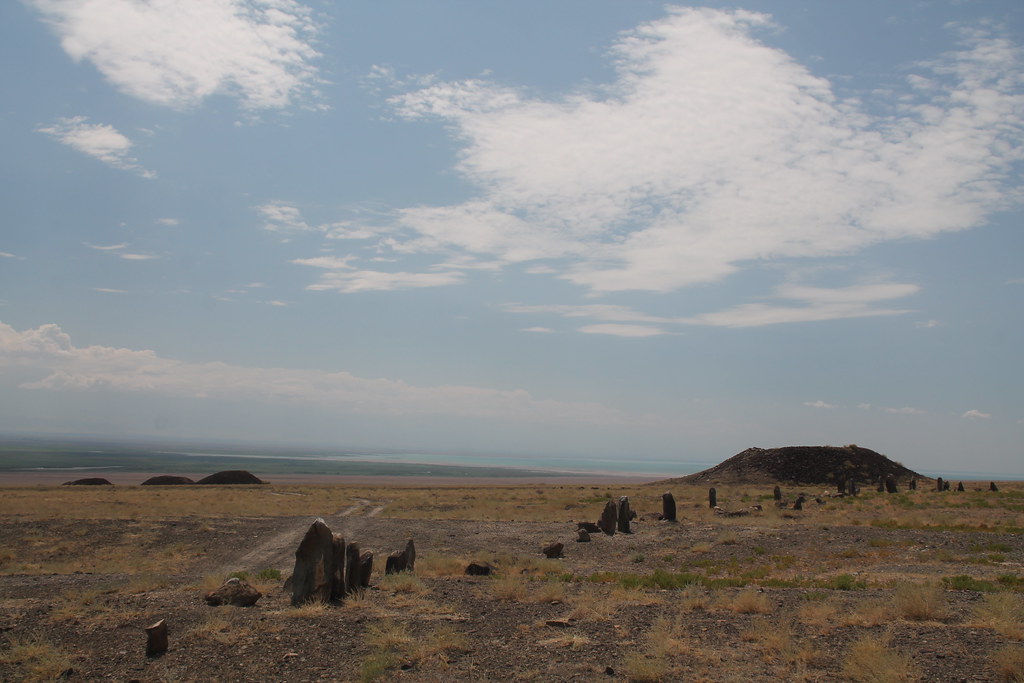
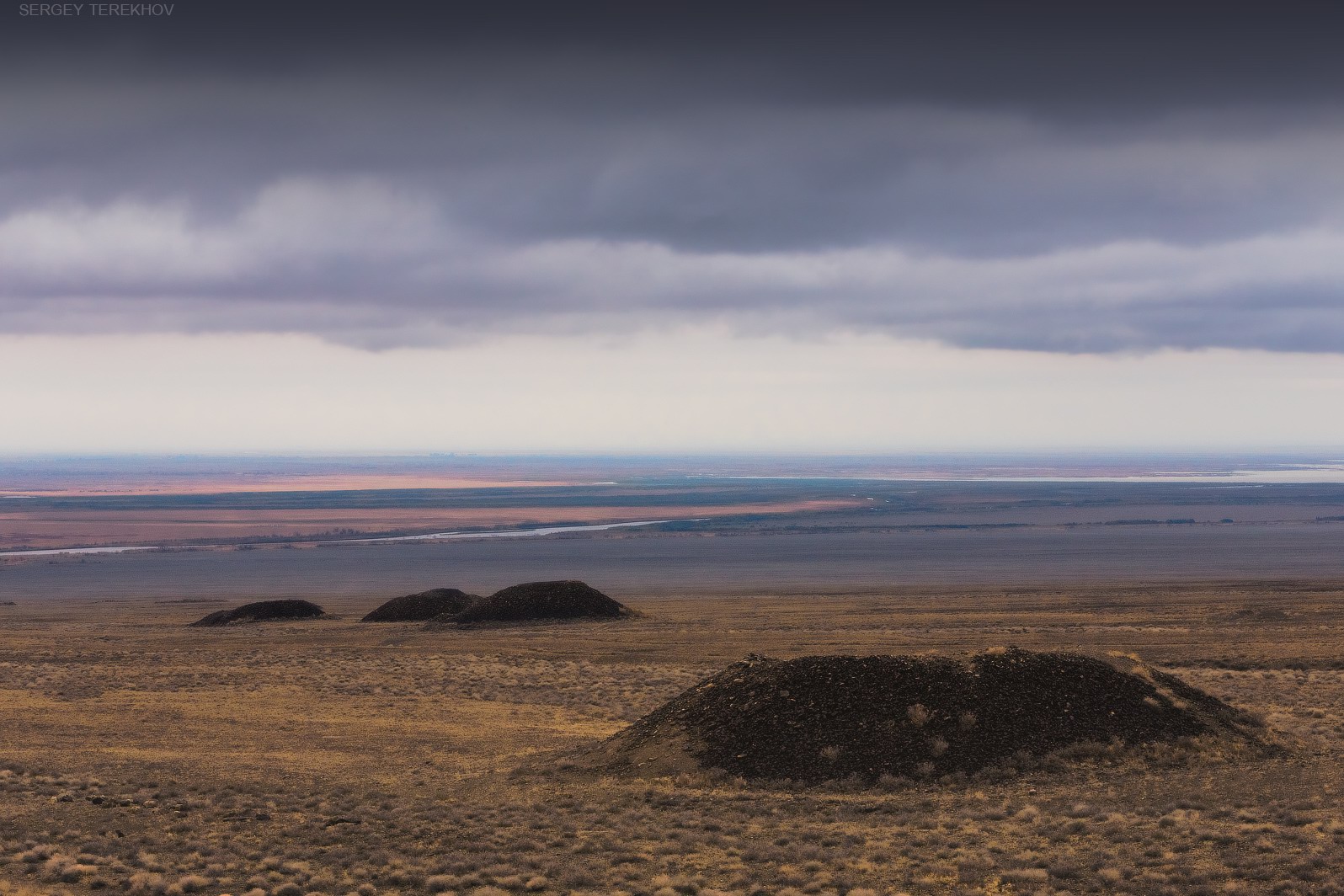
You see them before you understand them. That's the first thing. The scale resolves slowly — what looks at distance like a series of gentle rises in the valley floor gradually becomes unmistakable: eighteen massive constructed mounds, the largest rising nearly eighteen meters from the flat steppe, each the deliberate product of a community that spent enormous labor and time saying something permanent about their dead.
The approach across the valley takes long enough that the shape of the complex becomes comprehensible before you arrive. It is organized. Not random. The large kurgans have stone rings at their bases. The smaller burial enclosures are arranged with intention around them. This is an architectural statement made in earth and rock, built twenty-six centuries ago in of the most remote valleys in Central Asia, and it is immediately, visibly, unmistakably significant.
Then you get close.
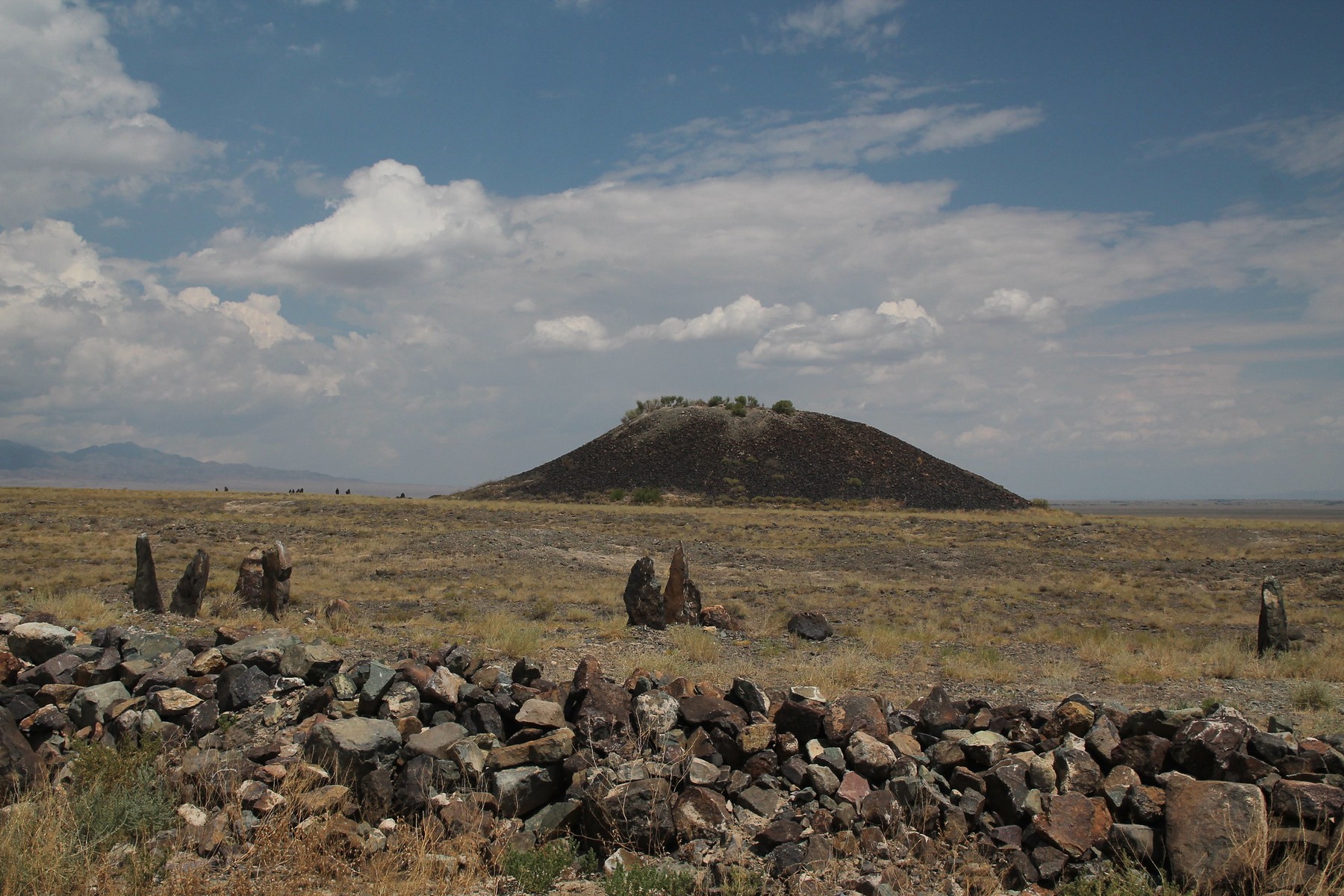
The largest mound at Besshatyr is eighteen meters high. That's six stories. It is made entirely of compacted earth and stone, built by hand without any mechanical assistance, in the 5th to 6th century BCE, for a Saka king whose name no now knows. Stand at its base and look up. The scale of the commitment required to build this — the labor, the coordination, the sustained collective effort — is not abstract. It's right in front of you.
The sensory qualities of the site compound the effect. The Ili River valley in the morning is genuinely quiet — the particular silence of an arid steppe basin with no settlements nearby, where the loudest things are wind, birds, and your own footsteps on dry grass. The air smells of wild mint and dried sage. The Alatau peaks frame the horizon to the south, snow-capped in spring and autumn. The light at sunrise catches the round profile of the mounds and throws shadows that emphasize their constructed geometry — these are not hills.
The emotional register of Besshatyr is not triumphant or dramatic. It is something quieter and harder to name: the particular feeling of standing in a place where the dead have been for twenty-five hundred years, where the living have been visiting and leaving and visiting again for all that time, where the grass has been growing and the wind has been moving through the valley without interruption. The mounds were built to endure. They have. That's the wow factor at Besshatyr — not spectacle, but duration.
Deep History & Culture
Before Kazakhstan Was a Name
The Saka-Tigrakhauda did not call themselves Kazakhs. The Kazakh identity — forged from the union of nomadic clans across the great steppe, formalized in the founding of the Kazakh Khanate in 1465 — would not exist for another two thousand years after the last royal kurgan at Besshatyr was sealed. And yet the line of continuity is real and documented: the Saka were among the primary ancestral cultures of the Kazakh people, their genetic legacy, their horse culture, their steppe cosmology, their animal-style art — all traceable into the nomadic tradition that eventually crystallized into Kazakh identity on the same landscape.
The Saka-Tigrakhauda — "sharp-capped Sakas," named in the Behistun inscription of Darius I of Persia for the pointed headdresses worn by their warriors — ranged across the Semirechye (Seven Rivers) region of what is now southeastern Kazakhstan from roughly the 7th to the 3rd centuries BCE. They were Iron Age horse-nomads of extraordinary sophistication: capable military forces (they repelled Persian advances), skilled goldsmiths (the animal-style gold artifacts recovered from Saka burial mounds across Kazakhstan are among the finest metalwork of the ancient world), and architects of a funerary tradition that expressed royal power through permanent landscape intervention.
Besshatyr was their primary necropolis. The selection of the Ili River valley site was deliberate: the valley provided reliable water, the foothills of the Alatau provided defensive position, and the flat valley floor provided the visual space for the mounds to assert their scale. The largest kurgans — up to 18 meters high, ringed with stone, with catacomb systems beneath — required engineering knowledge and organizational capacity that challenges any assumption about the "primitiveness" of nomadic Iron Age cultures. These were not simple burials. They were architectural projects, coordinated across communities, designed to be visible and permanent.
The gold grave goods that accompanied the Saka royal burials were looted in antiquity — the catacombs were robbed, likely within centuries of the original interments. But in 1969-70, Soviet archaeologist Alexander Maksimova conducted systematic excavations at Besshatyr and in other Saka burial sites of the Almaty region, confirming the cultural identity and the architectural sophistication of the complex. The famous "Golden Man" — a Saka warrior's burial discovered at Issyk kurgan in 1969 — was found not at Besshatyr but nearby in the same Semirechye cultural zone, dressed in armor covered with over four thousand gold plaques in the form of horses, snow leopards, and mountain goats. The Besshatyr kings' gold is gone, but their architecture stands.
For the Kazakh people, the Saka represent a foundational ancestry — not distant or abstract, but ancestral in a direct cultural and genealogical sense. Kazakh oral tradition, preserved by the jyrau (poet-historians), maintained a continuous connection to the landscape and its history long before modern archaeology began excavating it. Besshatyr was never forgotten by the communities who lived near the Ili valley; it was remembered as a place of kings, long before anyone attached a century number to it.
Independence in 1991 accelerated the formal reclamation of the Saka as Kazakh ancestors. The site was designated within Altyn-Emel National Park and received protected heritage status. Research continues. And the mounds remain, patient and permanent, predating the Russian annexation of the steppe (1731–1848) by twenty-three hundred years, predating the Kazakh Khanate by twenty-one hundred years, predating everything that has happened in this valley since.
Practical Digital Logistics
Getting to Besshatyr: The Altyn-Emel Approach
Besshatyr sits within Altyn-Emel National Park, and reaching the burial complex follows the same route as visiting any part of the park — which is to say, it requires some planning, a vehicle with genuine ground clearance, and the patience for a long but rewarding drive east of Almaty.
From Almaty
The park entrance near Basshi village is approximately 260 kilometers east of Almaty — roughly three hours on good road if you push, more comfortably four if you stop and look at what the landscape is doing. The route heads east from Almaty toward Kapshagay, then continues into the Ili River basin. The road is sealed for the majority of the journey. A shuttle runs from Almaty to Basshi twice weekly during the main season, costing around 5,000 KZT per person; confirm the current schedule with the park administration or Almaty tour operators before you go.
Park Entry and Permits
Entry to Altyn-Emel National Park costs 1,500 KZT, payable at the visitor gates near Basshi or through the QazPark app before arrival. Register your vehicle at the entrance. The park staff can advise on current track conditions to the Besshatyr complex — conditions change with seasonal rains and vary by section.
Getting to the Kurgans
The tracks from the main park infrastructure to the Besshatyr burial complex are rough and require a vehicle with real ground clearance. A standard sedan will not manage the final approach. If you don't have your own 4WD, organized tours from Almaty are the practical solution — two-day tours covering Altyn-Emel (including Besshatyr and the Singing Dunes nearby) run between 45,000 and 65,000 KZT per person depending on group size, vehicle, and inclusions.
Navigation
Download the Altyn-Emel Explore app before leaving Almaty — it carries offline maps of the park's road and track network, which matters when mobile signal drops in the interior of the park. GPS coordinates for the Besshatyr complex are available from the park visitor center.
What to Bring
There is no shade at the Besshatyr site and no facilities — no water, no food vendors, no shelter. Carry a minimum of three liters of water per person, more in summer when temperatures in the Ili valley exceed 40°C. Wear sun protection: hat, sunscreen, long sleeves if heat tolerance allows. The wind in the valley can be strong; secure loose items before getting out of the vehicle.
Fuel
Fill up in Almaty before departure and again in Basshi — there is no fuel within the park. The round trip and internal driving easily cover 600 kilometers, so plan accordingly.
Best Time to Visit
April through early June and September through October. Spring brings green grass to the valley and manageable temperatures. Autumn is drier and clearer, with the Alatau peaks visible in sharp relief. Summer (July–August) is very hot — the valley sits in a sheltered basin that collects heat — and the light is harsh for photography. Winter visits are possible but track conditions can deteriorate significantly after heavy rain or snowfall; check with the park beforehand.
Must-Do Activities
How to Spend Time at Besshatyr
Archaeologist Aizat Bekova says most first-time visitors spend too little time. "They walk around the main mound, take photographs, and go," she says. "But if you give it two or three hours — if you actually sit down and look — the site starts to reveal itself. The relationship between the mounds. The way the stone rings were placed. You start to understand what you're looking at."
She's right. Here's how to use the time well.
Walk the Full Complex
The eighteen kurgans are spread across the valley floor, not clustered in a single point. Walk the circuit from the largest mound to the smallest enclosures and back — the full route takes about an hour at an unhurried pace. The size relationships between the mounds tell you something about the hierarchy of the burials. The stone rings at the base of the largest kurgans show the engineering logic of a culture that understood both gravity and permanence. Walk it all.
Sit at the Base of the Great Kurgan
The largest mound — nearly eighteen meters — requires a specific response that photographs don't require. Stand at its base and feel the scale of it. Then sit down with your back against of the perimeter stones and stay for a while. Think about what it took to build this: the coordination, the labor, the sustained belief in the importance of marking this death in this way. The site asks for stillness, and it returns something for the stillness you give it.
The Stone Enclosures
The smaller burial enclosures and ritual circles surrounding the main kurgans are easy to overlook against the dominance of the large mounds. Don't overlook them. They represent a different social stratum of Saka funerary practice — not the royal kurgans, but the graves of nobles, warriors, priests, the community infrastructure of a culture that organized its entire ceremonial geography around the honoring of the dead. Each circle has its own logic.
The Ili River Fringe
The riverside vegetation along the Ili — the tugai forests of willow and poplar that border the river in an otherwise arid landscape — provide a counterpoint to the open steppe setting of the mounds. Walk toward the river after your time at the kurgans; the birdlife in the riparian forest is diverse and active, and the contrast between the open burial valley and the cool shade of the riverside trees is refreshing in summer.
Photography: Timing and Angle
The mounds are best photographed when the light is low and raking — early morning or late afternoon — because the angled shadows reveal the constructed geometry of the mounds in a way that flat midday light entirely obscures. The blue hour after sunset, when the round profiles of the kurgans are visible against the darkening sky, is particularly striking. Find a position that includes multiple mounds in frame; the grouping communicates the scale of the complex better than any single mound in isolation.
On How Long to Stay
Two to three hours at the site itself — more if you walk to the river. Plan on a full day from Almaty including travel time. The site is best combined with the Singing Dunes (Altyn-Emel's other major attraction), which can be reached within the same park visit.
Local Flavors & Amenities
Eating and Sleeping Near Besshatyr
Basshi village, the nearest settlement to the Altyn-Emel National Park entrance, is a small community in the Ili River basin with enough infrastructure to support visitors heading to the kurgans and the Singing Dunes. It is not a resort town; it's a working village with guesthouses, a small market, and the kind of home cooking that benefits from proximity to the seasonal produce of the Ili valley.
Food in the Basshi Area
Ilyas runs the best eating option in the Basshi area — a small cafe adjacent to the visitor center that serves steppe lamb barbecue, shorpa (a clear lamb broth that tastes like it has been simmering since morning, because it has), and baursaks fresh from the oil. Prices run around 4,500 KZT for a full meal. The regional melons of the Ili basin — grown in the microclimate created by the river — appear in summer as fresh fruit and as juice, sweeter and more fragrant than anything the same variety produces elsewhere. If you see them, order them.
The Altyn-Emel National Park visitor center in Basshi has a small canteen for day visitors, useful for a quick meal between the kurgans and the dunes without leaving the park area. Don't expect variety; expect solid, functional Kazakh food.
Where to Stay
The Altyn-Emel Eco-Lodge near Basshi offers modern, sustainable accommodation from around 25,000 KZT per night — clean rooms, reliable plumbing, and the practical advantage of being inside the park area rather than outside it. Book in advance; the lodge has limited capacity and fills on summer weekends when families from Almaty come for the Singing Dunes.
Several families in Basshi village offer guesthouse accommodation in the 12,000 KZT range, with meals included if arranged in advance. These are basic but comfortable and carry the considerable advantage of local knowledge — a guesthouse owner in Basshi will tell you which tracks are passable after rain, whether the Besshatyr approach is muddy, and what the park rangers are finding interesting this week. That kind of information is worth more than a pool.
Camping within the park is permitted at designated sites; register at the entrance gate. The park has basic facilities at the main campsite areas. Sleeping at Altyn-Emel gives you the morning before the day-trippers arrive from Almaty, when the valley is quiet and the light on the kurgans at dawn is something the photographically inclined don't want to miss.
The Almaty Option
For visitors who prefer a full-service hotel, Almaty is 260 kilometers west and has every international standard on offer. This is a valid choice, though it means a very early morning start to reach the kurgans by dawn, and a late return after a full day in the park. Most people who do this decide to stay in Basshi on the second visit.
Essential Insider Tips
Insider Tips for Besshatyr
Don't Climb the Mounds
This is the cardinal rule and it matters more than it might sound. The kurgan surfaces look solid and walkable, but they are composed of compacted earth and loose stone that has been settling for twenty-five centuries. Erosion from foot traffic is real and cumulative. The mounds are also protected heritage sites under Kazakhstani law. Stay on the ground around them, not on top of them.
Go Earlier Than You Think
The Almaty day-trip crowd typically arrives at Besshatyr in the late morning. If you can arrange a very early start from Basshi or camp the night before, the site before 8 a.m. has a quality that disappears with the arrival of other vehicles. The light is better, the silence is complete, and the scale of the complex is somehow more comprehensible when you have it to yourself.
The First Sunday of the Month
National parks in Kazakhstan sometimes offer reduced or free entry on designated national heritage days. The Altyn-Emel park entrance fee is modest regardless, but it's worth checking with the visitor center whether any heritage day discounts apply on the day of your visit.
Photography: The CPL Filter
The light in the Ili valley is intense and the sky is often a deep, saturated blue — conditions that benefit significantly from a circular polarizing filter, which cuts glare off the stone surfaces and deepens the sky contrast. This is the difference between photographs that show the mounds as washed-out lumps and photographs that show them as the architectural objects they are. If you shoot in RAW, much of this can be corrected in post; if you're shooting JPEG or phone camera, the CPL filter makes a bigger difference.
Combine with the Singing Dunes
The Singing Dunes — Altyn-Emel's famous crescent dune that emits a low resonant sound when the dry sand flows down its face — are located in the same national park and accessible on the same day trip. Most organized tours from Almaty cover both. If you're driving independently, plan the kurgans for the morning (cooler, better light) and the dunes for the late afternoon (the sand performs best in dry heat, and the light at golden hour on the dune face is striking).
Silence is Required
The site carries the weight of twenty-five hundred years of burial. There are no rules requiring silence, but the place asks for it. People who arrive speaking loudly and leave quickly miss what Besshatyr actually is. Spend time sitting. Look at the mounds from different distances. Let the scale of the commitment made here — the labor, the belief, the permanence — have time to register. That's the whole point of coming.
Water: Bring More Than You Think
There is absolutely no water at the site. In summer, the valley floor at Besshatyr reaches temperatures that consume your water reserves faster than you expect. Three liters minimum per person; more in July and August. Dehydration in the Ili basin at the height of summer is not a minor inconvenience.
Sustainability & Community
Protecting What Twenty-Five Centuries Built
Ranger Askar has been working Altyn-Emel National Park for eleven years. The thing he is most vigilant about at Besshatyr is not theft, not vandalism, not the usual concerns — it is the cumulative weight of footsteps. "Every person who walks on the mound takes a little of it," he says. "One person takes almost nothing. A million people take the mound." The kurgans have survived twenty-five hundred years of wind, rain, frost, and earthquake. They are not guaranteed to survive another twenty-five hundred years of tourism if visitors approach them without understanding what they are standing on.
What Responsible Visiting Looks Like
Stay on the marked paths around the mounds, not on them. The kurgan surfaces are composed of compacted earth and stone that has been settling since the Iron Age — they look stable, but the physics of erosion apply here as they do everywhere, and foot traffic accelerates them. This is not metaphorical protection; it is structural.
Carry out everything you carry in. The Altyn-Emel park operates a zero-waste policy, and the site at Besshatyr is remote enough that waste left there accumulates. Pack a rubbish bag, use the bins at the park visitor center, and leave the valley as you found it.
The Heritage Bio-Count
Park management encourages visitors to document any visible signs of stone erosion or structural damage at the mounds through a reporting system available at the visitor center. Contributing a photograph and location note of newly damaged sections helps the archaeological monitoring team track degradation in real time. This is not a burdensome request — it takes three minutes with a phone — and it contributes directly to the research that informs preservation decisions.
Supporting Basshi and the Local Economy
The families who run guesthouses in Basshi, the cafe owners, the artisans producing hand-painted tiles and traditional jewelry in the village — all of these people live with Altyn-Emel's landscape year-round and have a direct stake in its preservation. Choosing to eat at local restaurants rather than bringing all your own food, staying overnight in a village guesthouse rather than driving back to Almaty, hiring a local guide for the park's archaeological sites — each of these decisions keeps tourism revenue in the community that maintains the landscape.
Heritage Restoration Week
Once a year, Altyn-Emel runs a volunteer program that allows visitors to work alongside rangers on trail maintenance, erosion control, and site preservation projects. This is real physical work that takes real time, and it offers access to parts of the park that aren't on the standard tourist circuit. Ask at the visitor center or contact the park administration in advance.
The Last Thing
Twenty-five centuries is not an abstraction. Every generation since the Saka-Tigrakhauda sealed the last kurgan has had the option of treating Besshatyr as a quarry, a campsite, or a landmark to climb and photograph. Most have treated it as a place deserving of respect. The options are the same for every visitor today. The mounds are watching, in their patient way, to see which choice we make.
Key Facts
- Royal Necropolis
- Known as the 'Pyramids of the Steppe,' this site contains 31 massive burial mounds for the kings of the ancient Saka (Scythian) people.
- Solar Alignment
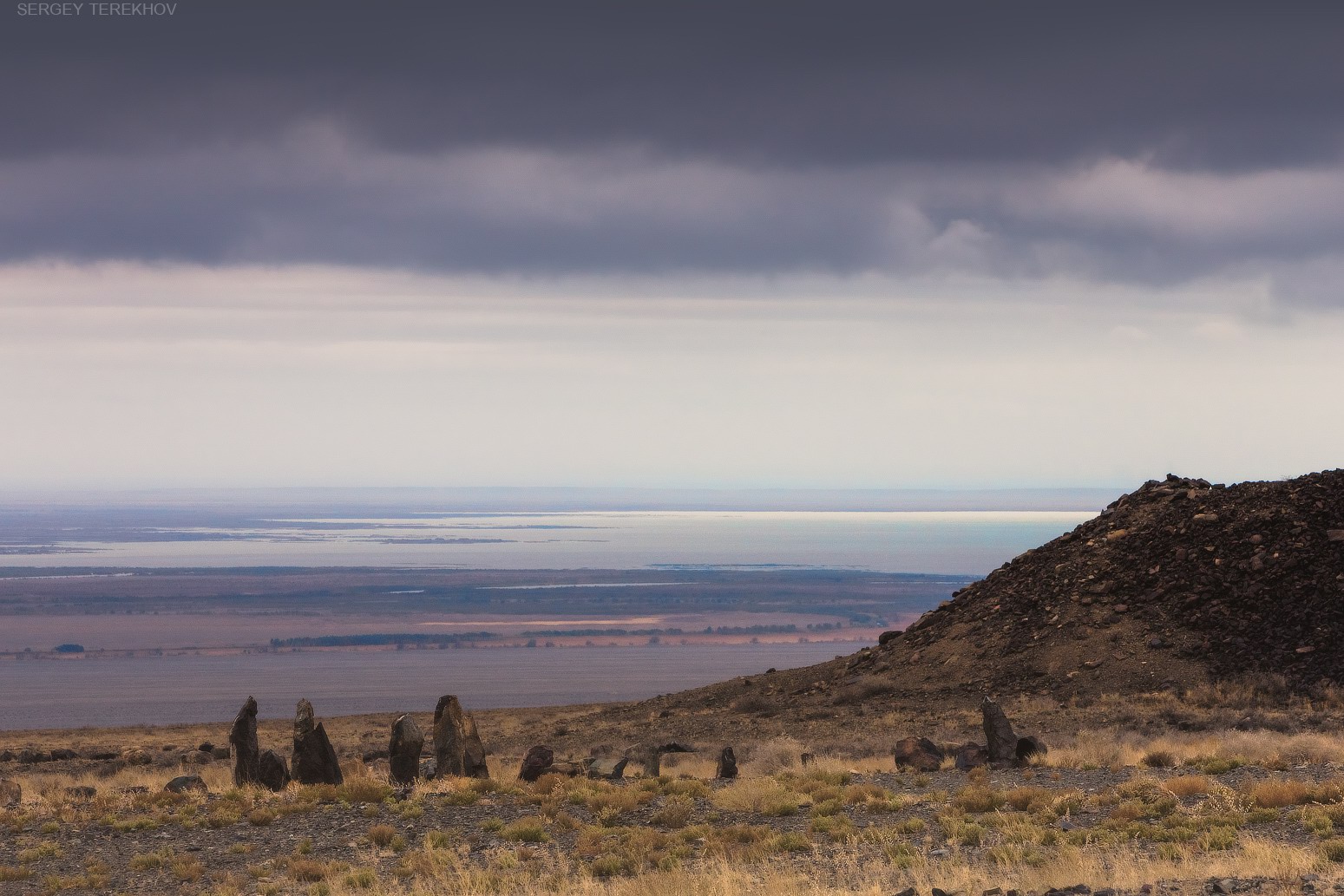
- The mounds are encircled by strange rings of upright stones (menhirs) that some believe functioned as an ancient solar calendar.
- Iron Age Heritage
- Dating back to the 6th-4th centuries BC, these structures offer profound insights into the engineering and spiritual lives of early nomads.
- Spiritual Sanctuary
- The site is considered a 'place of power' by many, offering a deep sense of historical continuity and nomadic silence.
- UNESCO Tentative
- As part of the Altyn-Emel National Park, the site is under consideration for World Heritage status due to its unique archaeological value.
- Vast Landscape
- The mounds are set against the backdrop of the Ili River and the distant Alkmatau mountains, providing a cinematic look at the open steppe.
Photo Gallery
Video coming soon
Besshatyr
Loading map...Loading map...
Frequently Asked Questions
Have a question?
Ask and get answers in seconds!
Discussion 0
No comments yet. Start the conversation!
Leave a Reply