Astana City
The City of Future. Futuristic architecture in the steppe.
Essential Profile
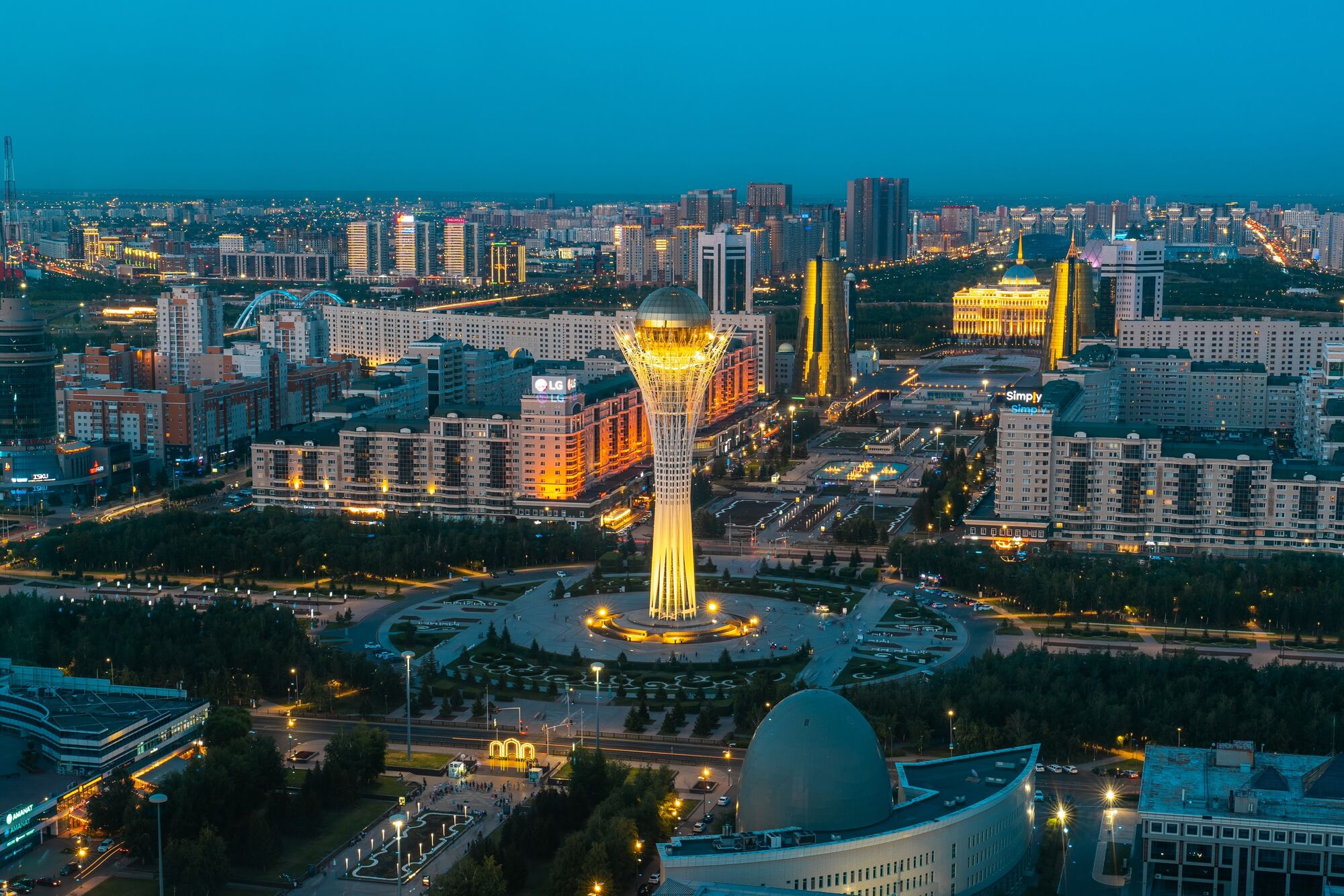
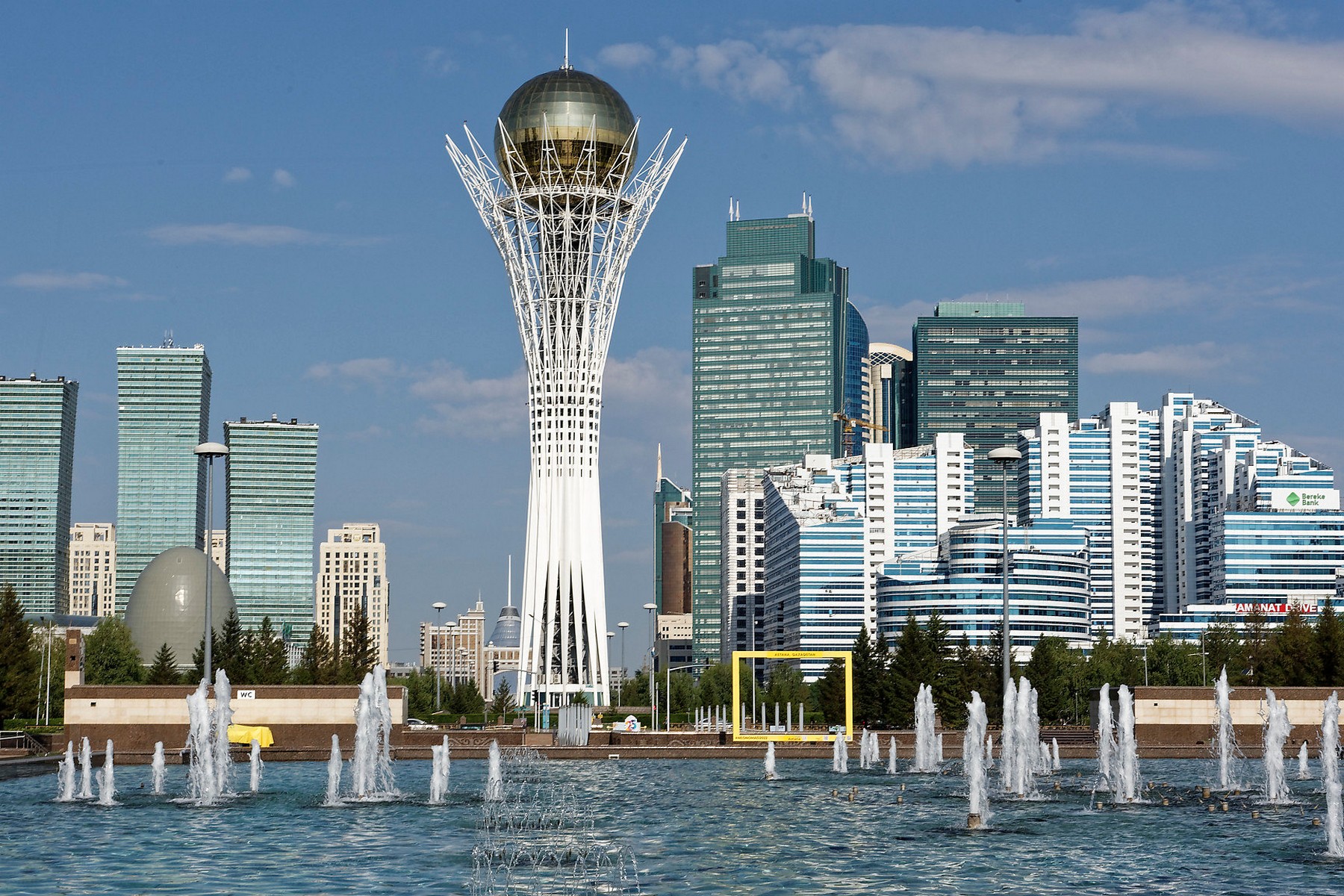
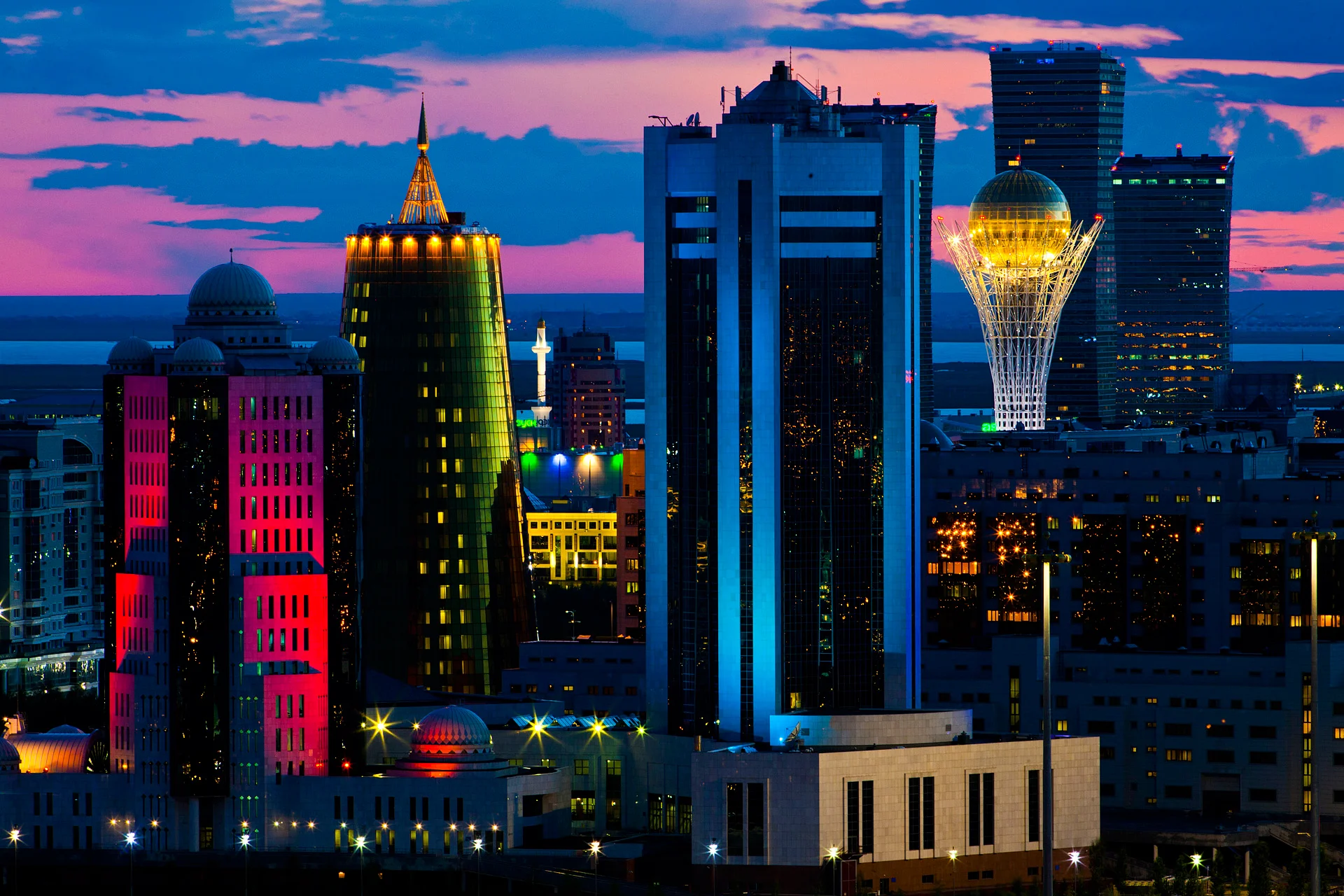
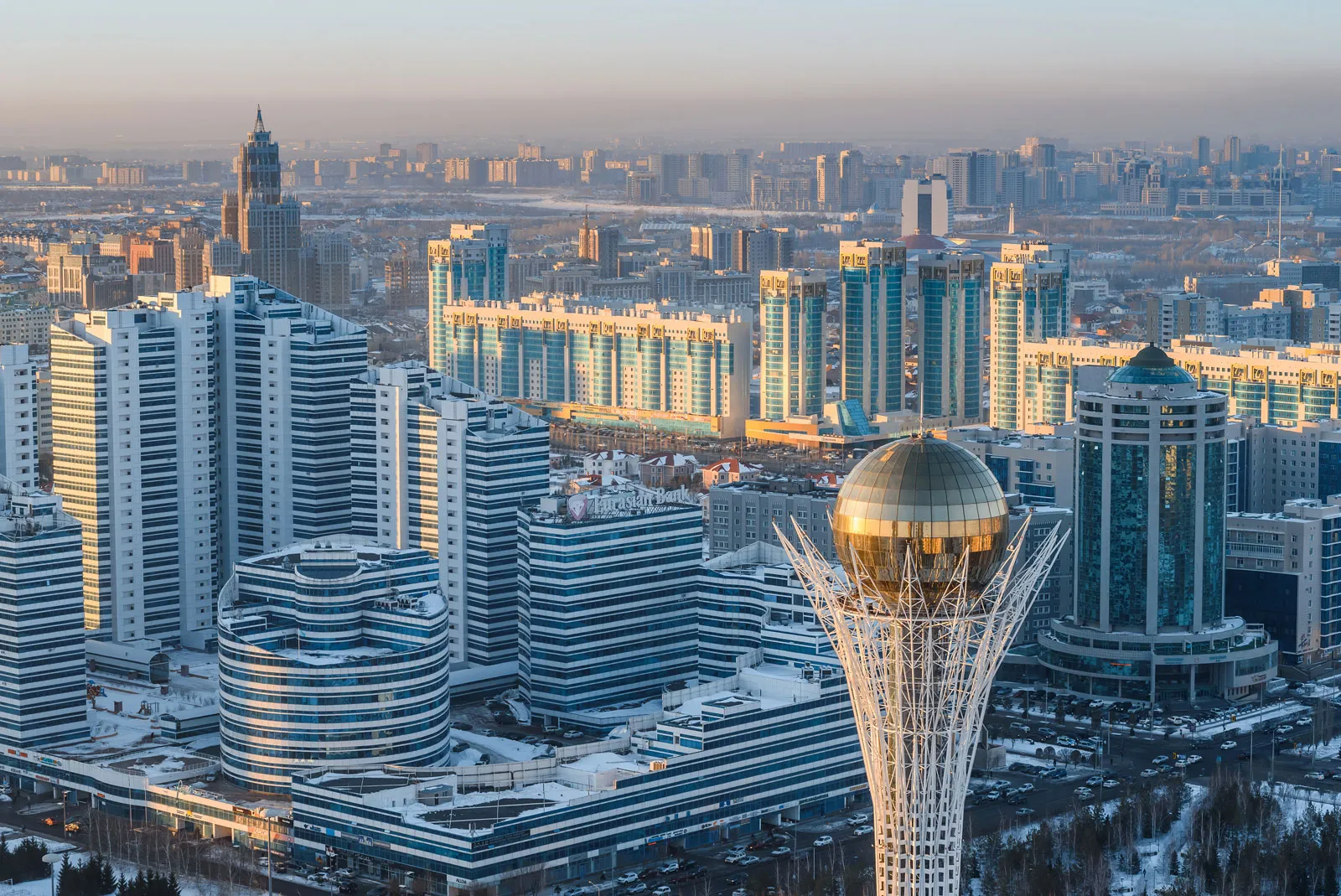
The Baiterek monument at the center of the Left Bank's grand axis is 105 meters tall, shaped like a poplar tree supporting a golden egg — a form derived from a Kazakh creation myth in which the legendary bird Samruk lays its golden egg in the branches of a sacred tree. From the observation sphere at the top, on a clear day, you can see the steppe extending to the horizon in every direction. There's nothing out there but flat, enormous land. The city rises from it like a statement of intent.
That's Astana in a single image: deliberate verticality against horizontal infinity.
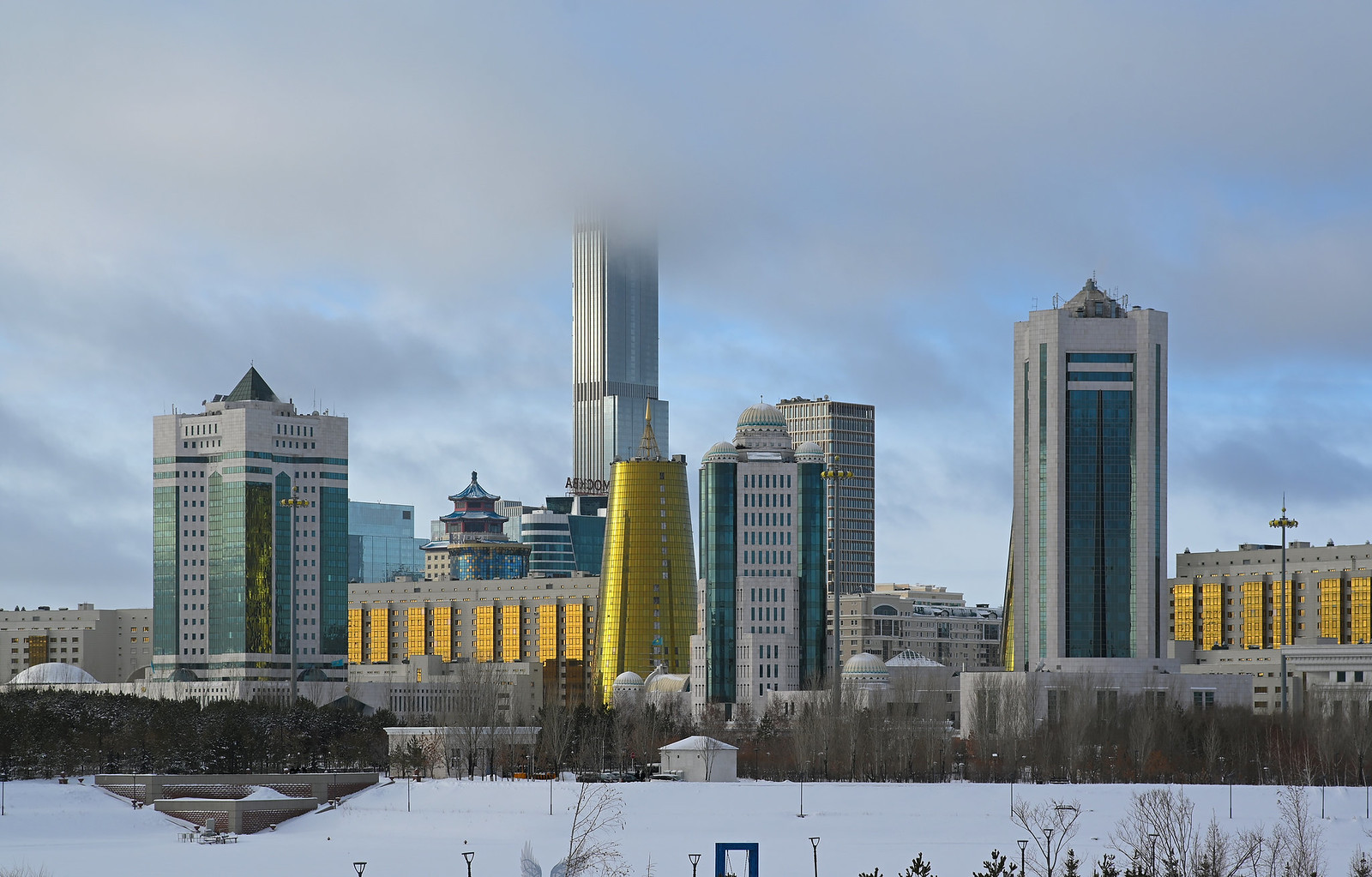
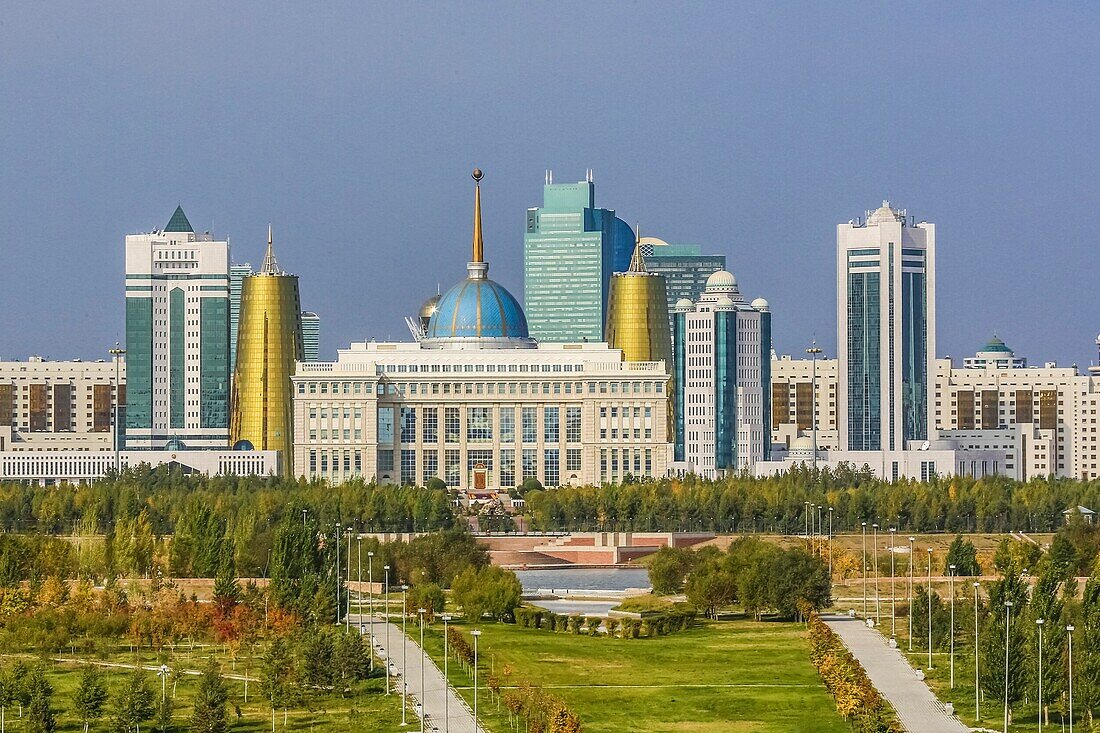
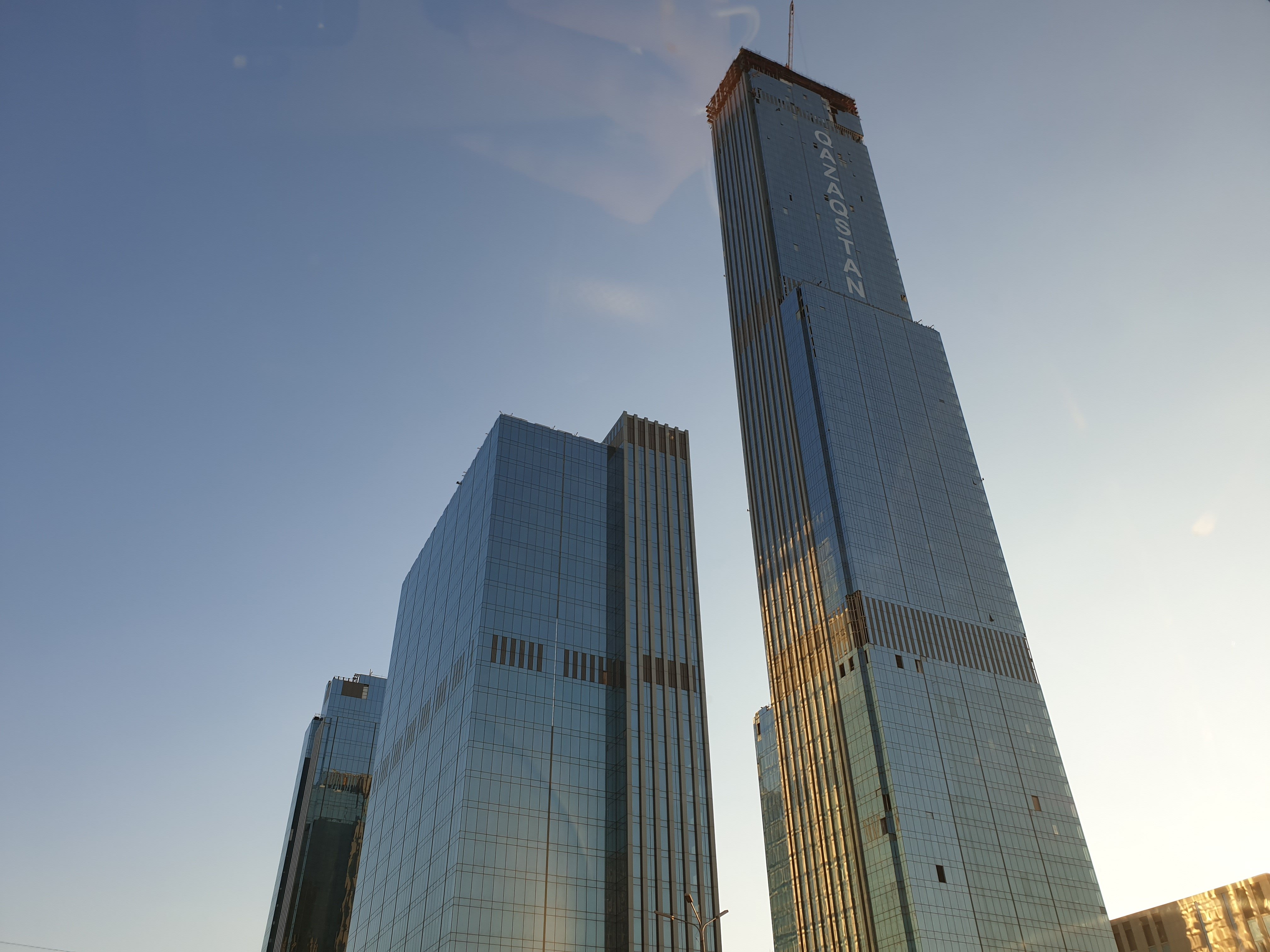
Kazakhstan moved its capital from Almaty to what was then called Akmola in 1997 — a decision by President Nursultan Nazarbayev that was simultaneously practical (Almaty's seismic activity and geographic isolation in the country's southeast), strategic (asserting Central Asian presence with a city built from scratch on Kazakh ground), and enormously ambitious. Within a decade, international architects including Norman Foster, Kisho Kurokawa, and Manfredi Nicoletti had designed landmark buildings for a city that didn't exist when they were commissioned. The result is of the most architecturally eclectic skylines in the world — glass tent structures, spherical entertainment centers, soaring residential towers, government ministries with gilded domes, all rising from the flat steppe of north-central Kazakhstan.
Astana is not a city that grew organically. It was designed and built to embody a vision of Kazakhstan's future — prosperous, modern, confident, internationally recognized. The Left Bank, where most landmark architecture sits, was constructed almost entirely after 1997. The Right Bank, the older part of the city, has a different scale and pace: Soviet-era apartment blocks, a central market, restaurants where the menu hasn't been revised in years and doesn't need to be.
Together they make a city that is genuinely unlike anywhere else: part architectural experiment, part national assertion, part functional capital of a country whose complexity visitors consistently underestimate.
Key Facts: Population approximately 1.3 million. Altitude 347m. Climate: continental extreme (-40°C winter, +35°C summer). Language: Kazakh and Russian. Currency: Kazakhstani tenge (KZT). Time zone: UTC+5.
The ‘Wow-Factor’
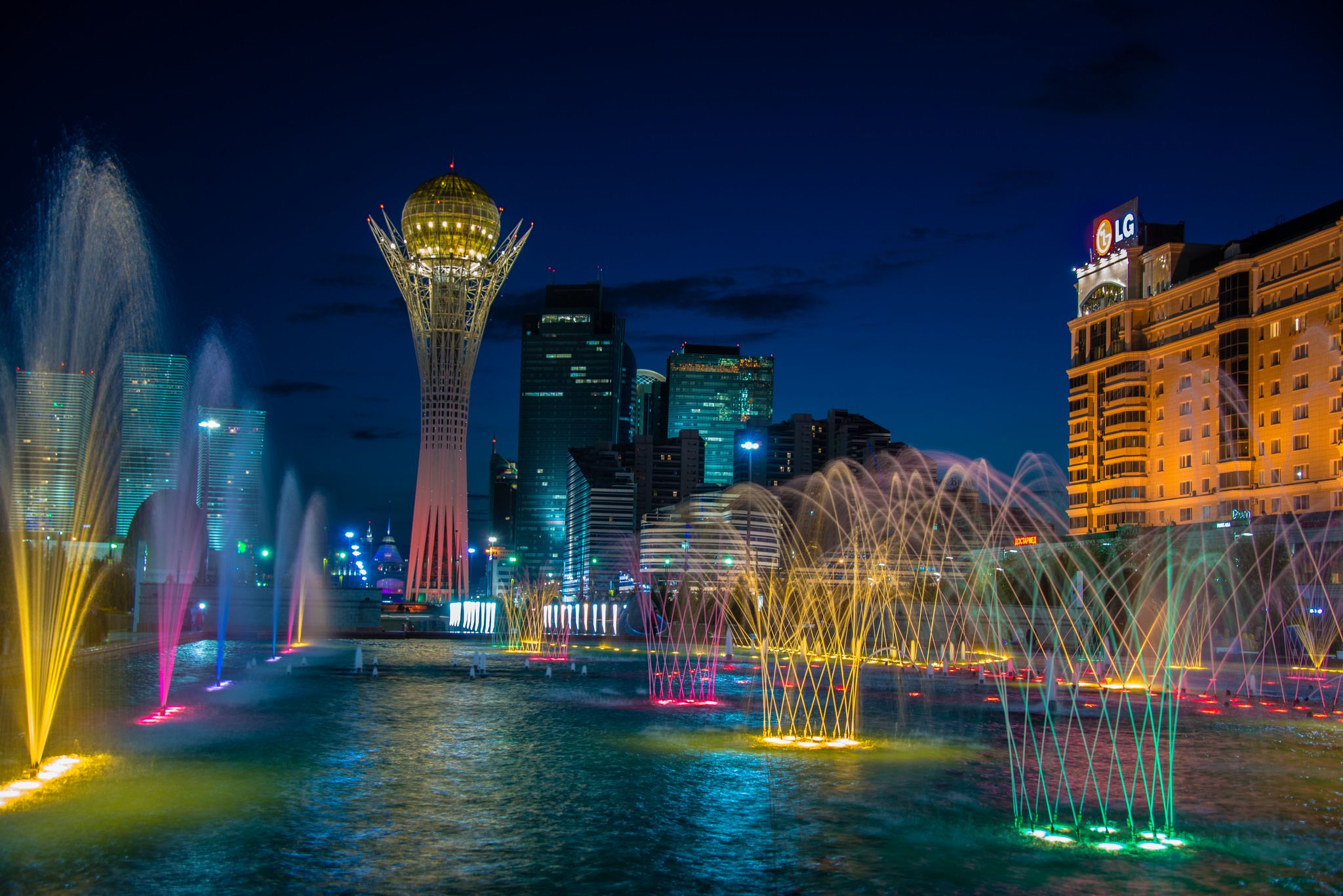
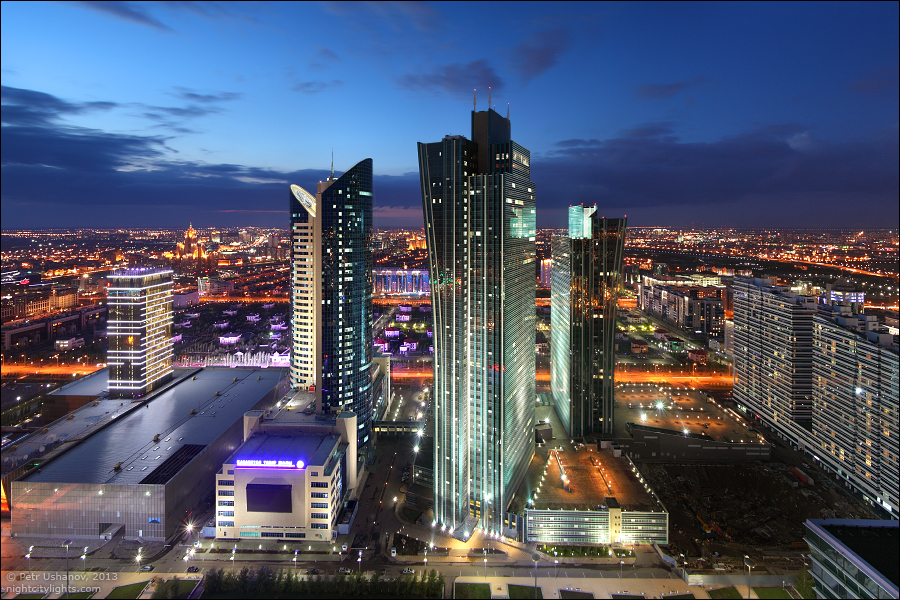
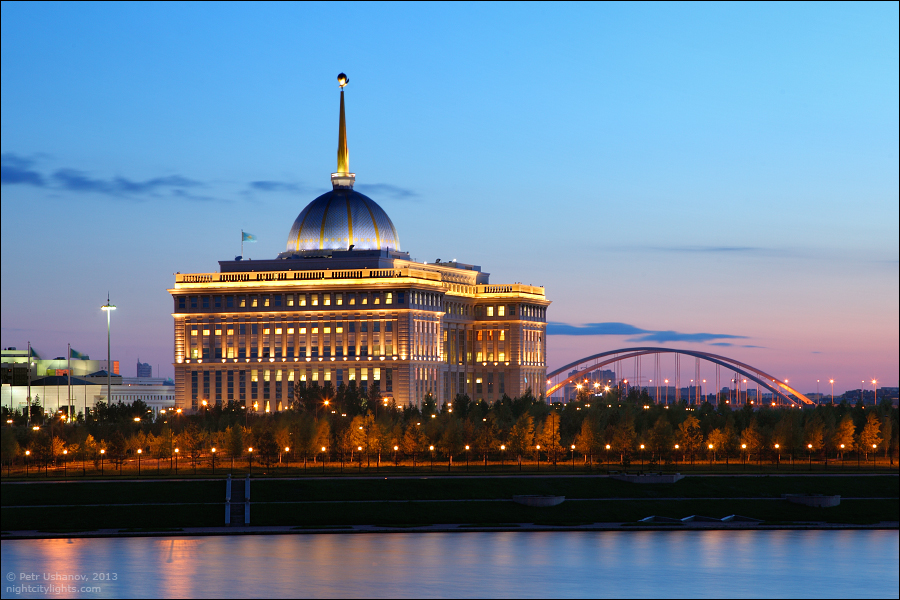
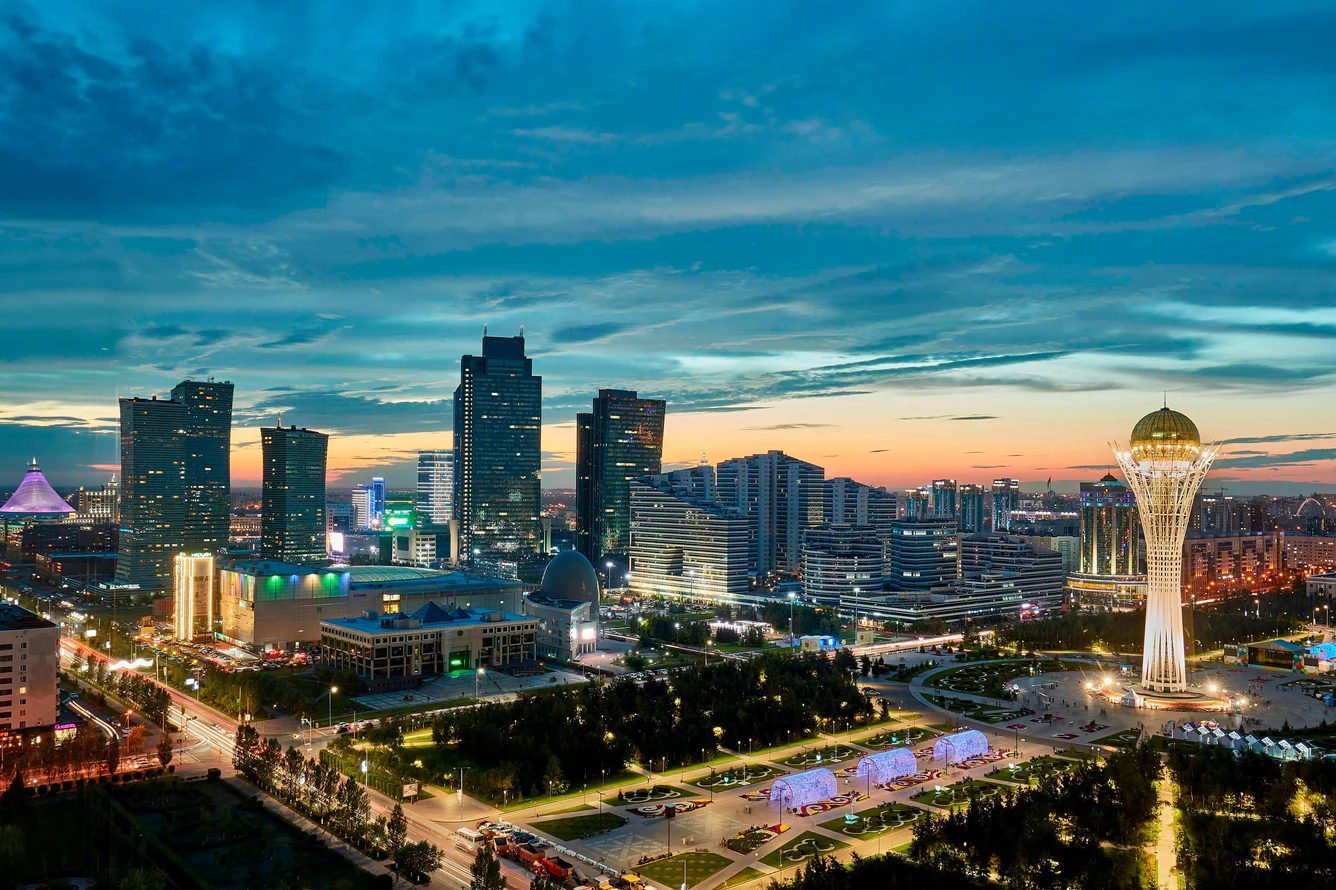
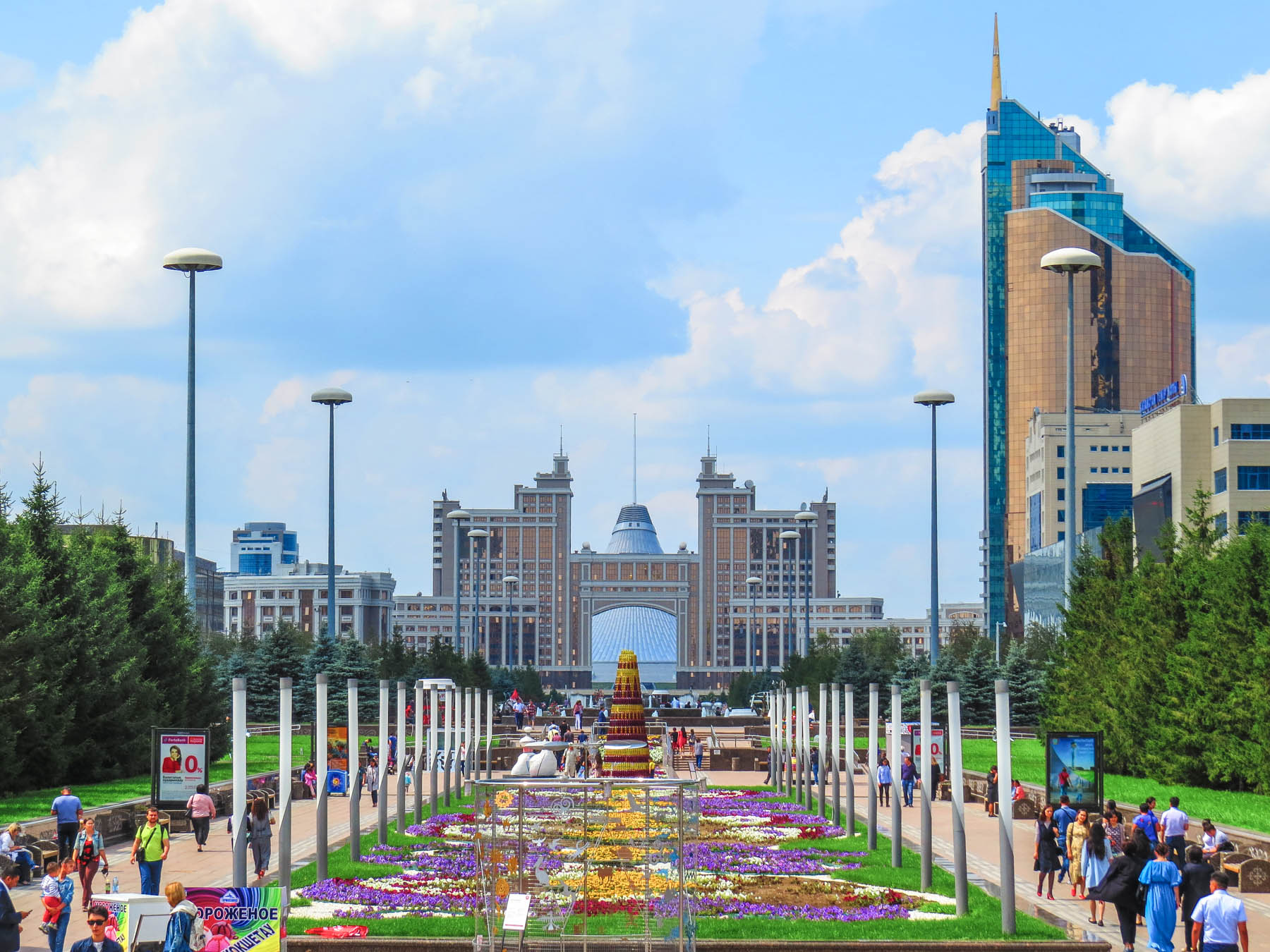
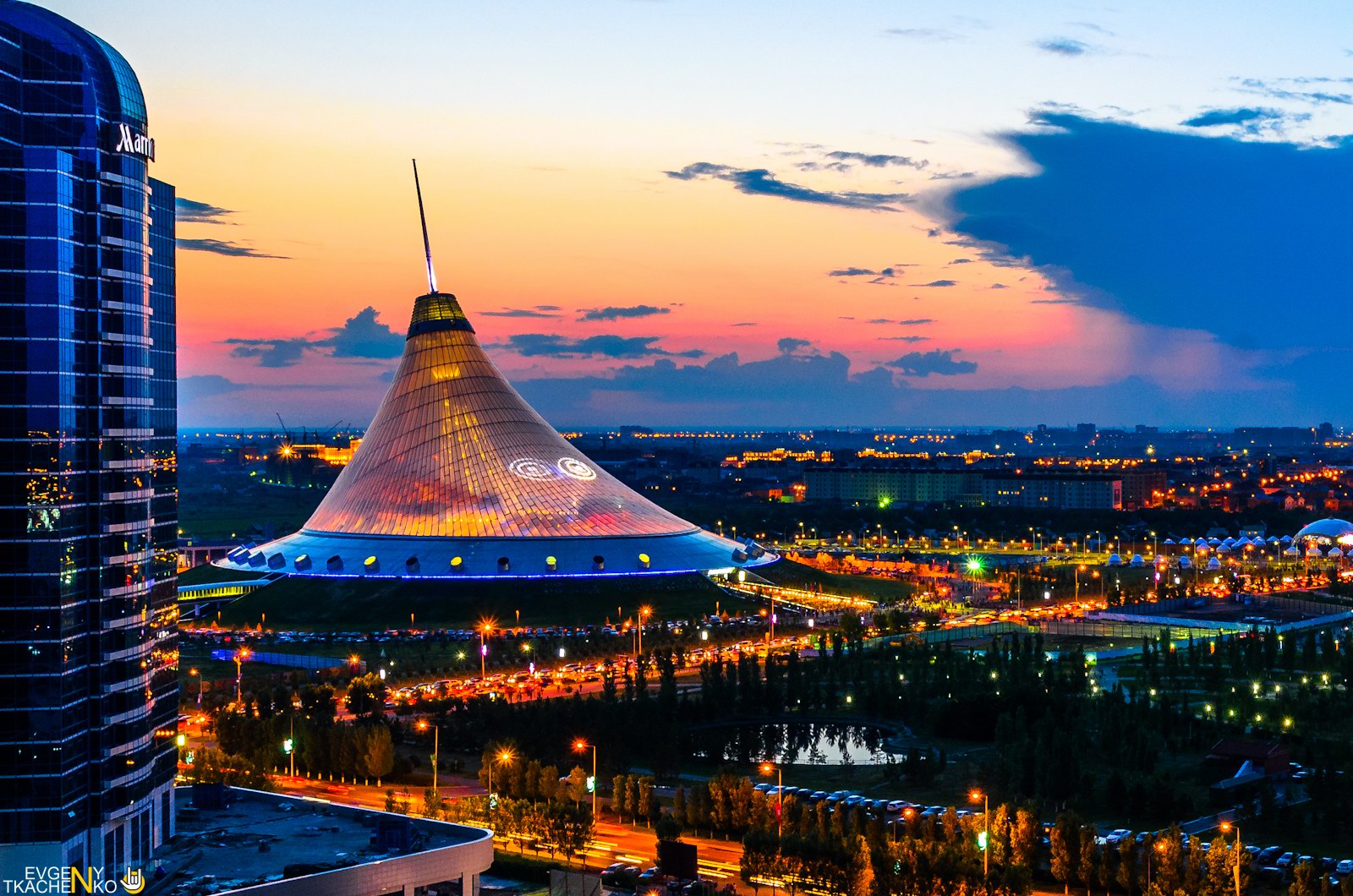
Walk the Nurzhol Boulevard from the Baiterek monument toward the Presidential Palace at end, and the Khan Shatyr at the other. Do this at dusk, when the Left Bank's lighting systems activate across the glass facades. What you'll see is something that can't be fully conveyed through photographs because photographs don't include the scale: a city-wide ensemble of architecture designed as a visual argument — the argument that Kazakhstan has arrived, that the steppe has produced something unprecedented, that a country formed from nomadic traditions and fractured by Soviet history has nonetheless built a capital city that belongs to the world.
Whether you find it beautiful is almost beside the point. It's undeniably singular.
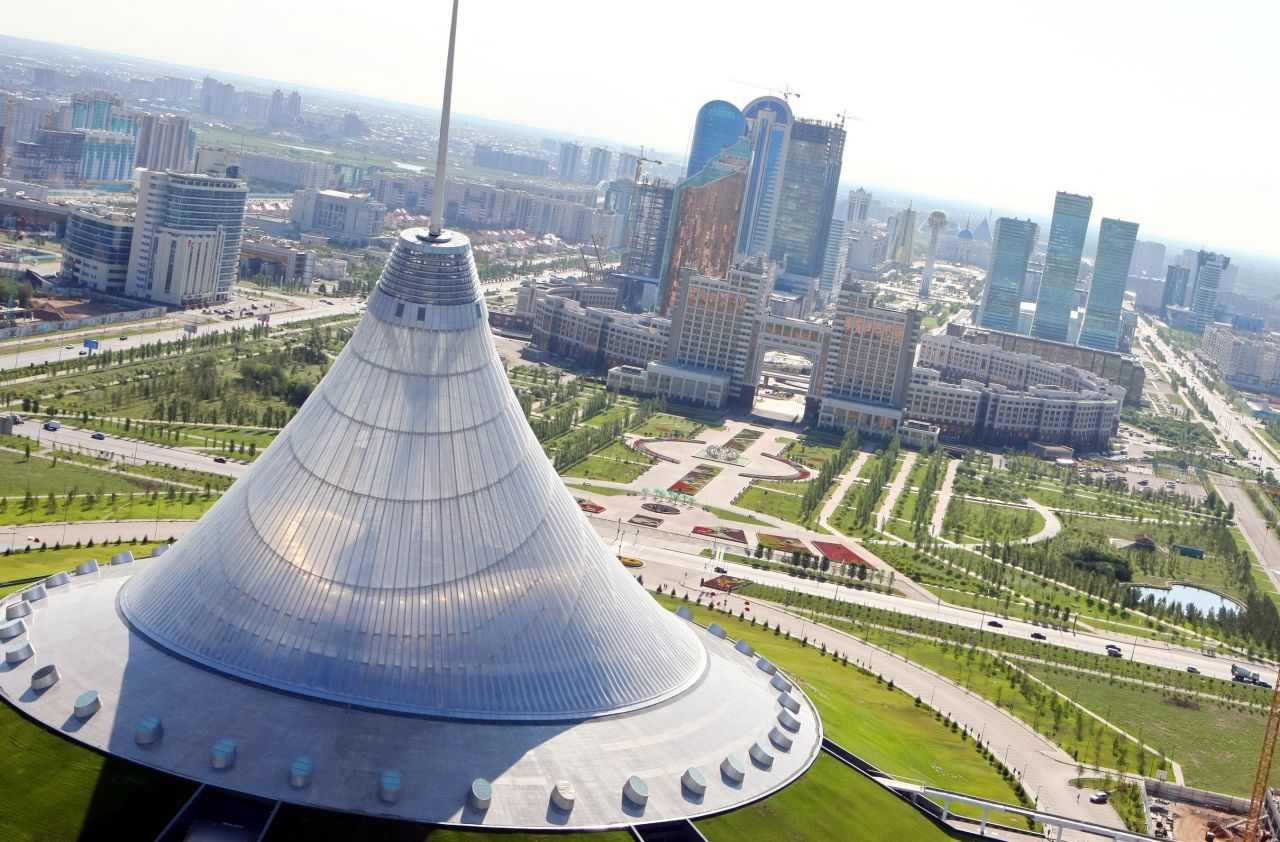
The Khan Shatyr is Norman Foster's glass tent — a transparent cone 150 meters high containing a beach resort, a river, shops, and restaurants, all maintained at Mediterranean temperatures while the steppe outside drops to minus thirty in December. Inside: the sound of water, the smell of chlorine and coffee, families in swimwear in January. It's audacious bordering on surreal, and that's exactly what it's supposed to be.
The Baiterek observation sphere at 105 meters offers something different: actual perspective. The steppe extends to the visible horizon in every direction from up there. The city below is enormous and also, against that backdrop, small — a collection of steel and glass that someone decided to place in the middle of of the world's largest contiguous grasslands. The view makes both the ambition and the audacity legible at the same time.
And then there's the silence after 11pm, when the fountains stop and the boulevard empties and you realize that for all its architectural volume, Astana is still a city of about a million people on the edge of an incomprehensibly large steppe, and that steppe has its own wow factor that no building has yet surpassed.
Deep History & Culture
Before there was a city here, there was steppe. And before the steppe was Kazakhstani, it was the territory of the Kazakh Khanate — founded by Khans Janibek and Kerei in 1465 — which governed the Central Asian grasslands as a sovereign state for centuries. The land where Astana now stands, in the heart of northern Kazakhstan along the Ishim River, was part of the seasonal territory of the Kazakh Middle Zhuz, managed through the intricate protocols of nomadic land use that the Kazakhs had developed over generations.
The Saka warrior cultures had been moving through this steppe since the fifth century BCE. The Silk Road trade routes ran through the region, connecting the sedentary civilizations of China and Persia to the nomadic economies of Central Asia. The Kazakh Khanate's territory included this northern corridor, and its governance — sophisticated enough to negotiate with both Russian tsars and Chinese emperors — was not the statelessness that colonial narratives later claimed.
The Russian annexation of Kazakh lands, carried out through military pressure between 1731 and 1848, progressively absorbed the Kazakh zhuz into the Russian Empire. In 1824, Russian forces established a fortification called Akmola — "white tomb" in some interpretations, "white shrine" in others — near the confluence of the Ishim and Nura rivers. It was a strategic military and trade post designed to consolidate imperial control over the northern steppe.
Under the Soviet Union, Akmola was renamed Akmolinsk and then, during Khrushchev's Virgin Lands campaign of the 1950s, Tselinograd — "city of the virgin lands." The campaign sought to transform the Kazakhstani steppe into Soviet agricultural land, with catastrophic ecological and social consequences. The Asharshylyk of 1930–33 had already killed between 1.5 and 2.3 million Kazakhs through forced collectivization. The Virgin Lands campaign brought millions of Russian settlers to a region where Kazakhs had been the majority, further restructuring the demographic landscape.
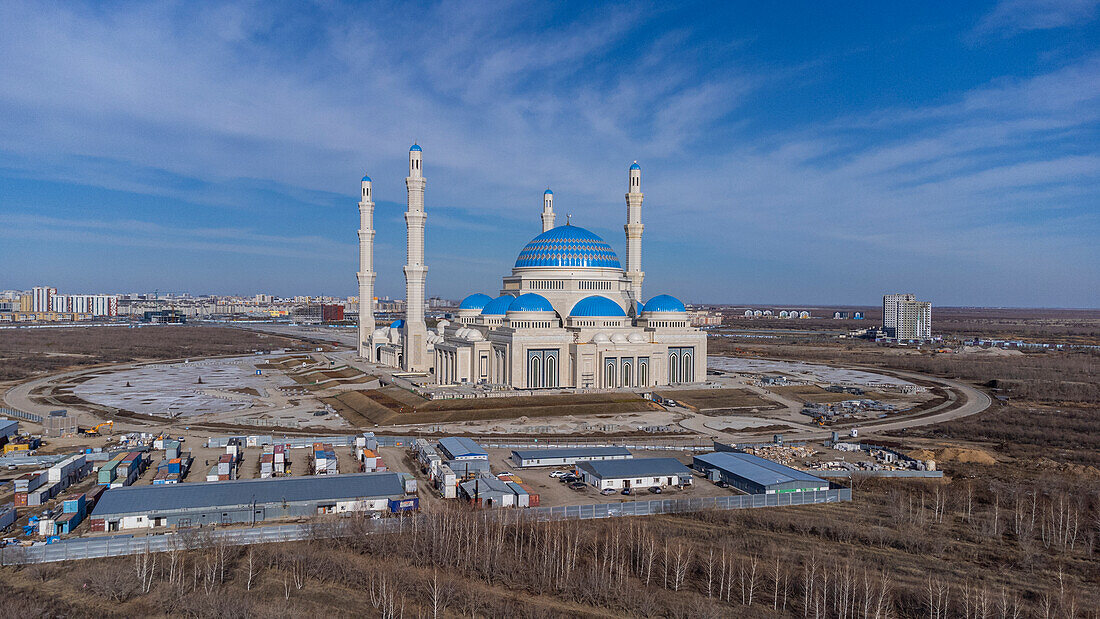
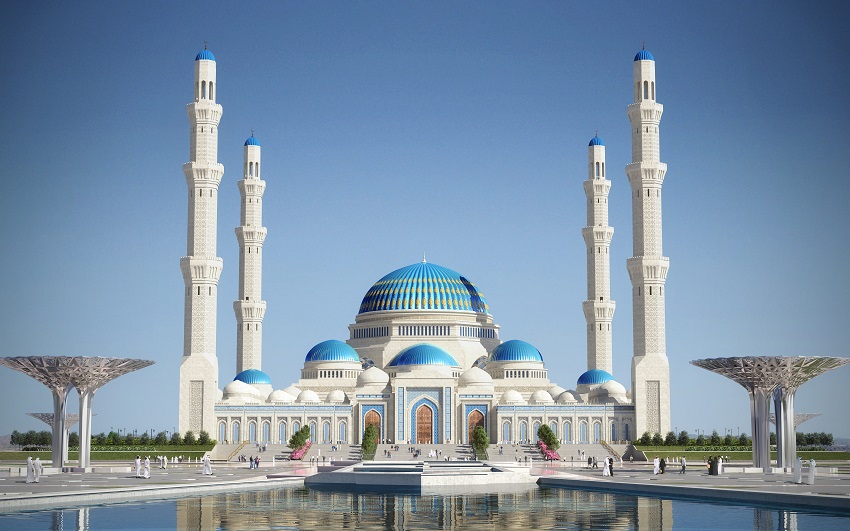
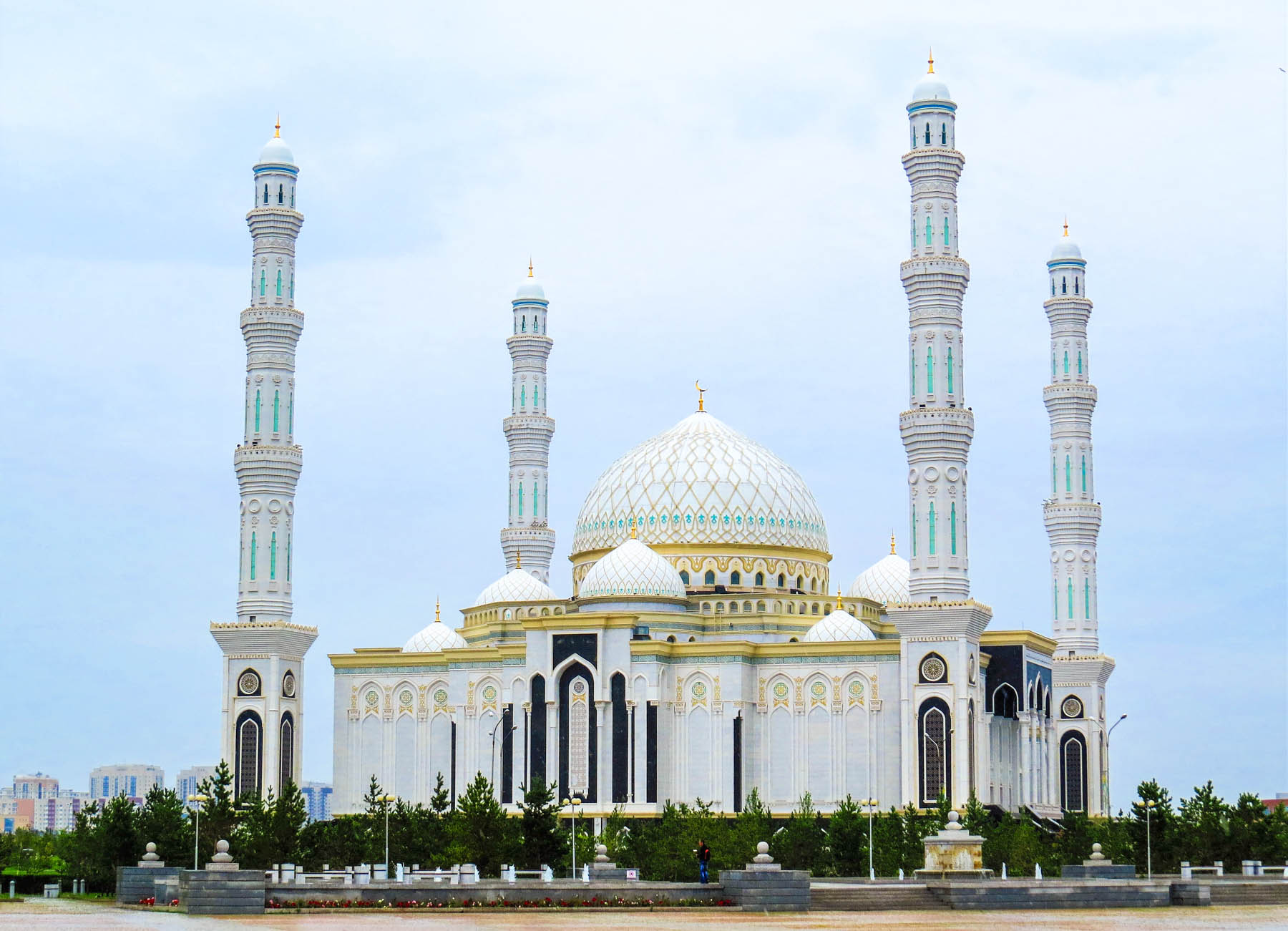
Kazakhstan declared independence in December 1991. In 1997, President Nursultan Nazarbayev announced the capital would move from Almaty to Akmola — renamed Astana, meaning "capital" in Kazakh. It was a deliberate rejection of the Soviet city that had been built in Kazakhstan and a reclamation of the steppe as Kazakh territory. The city that emerged over the following decades was built from scratch, on Kazakh terms, with Kazakh symbolism embedded in its architecture: the Baiterek, the Grand Mosque, the Palace of Peace and Accord — all drawing on forms and stories from the tradition that Soviet urbanization had attempted to displace.
The history of Astana is the history of Kazakhstan compressed into a city: annexation, survival, independence, and an unapologetic assertion of presence on land that was always, fundamentally, Kazakh.
Practical Digital Logistics
Getting to Astana
Nursultan Nazarbayev International Airport (the name is officially unchanged, though locals often just say "Astana airport") is served by Air Astana, FlyArystan, and several international carriers including Turkish Airlines, Fly Dubai, and seasonal connections from Russia and China. The airport is on the city's outskirts; a taxi to the Left Bank center takes 20–30 minutes and costs 2,500–4,000 KZT depending on the time of day. The Yandex Taxi app works reliably from the arrival terminal.
The train connection from Almaty to Astana takes approximately 12–14 hours by overnight express — a practical option if you want to see the steppe change character across 1,300 kilometers, and reasonable value for a sleeper berth (approximately 8,000–15,000 KZT depending on class).
Getting Around the City
Astana is spread out, and the distances between Left Bank landmarks are larger than they appear on tourist maps. The city has a bus network (fare approximately 150 KZT per journey, paid by card via the transit app) and a limited metro system that is more useful for reaching the Right Bank than navigating the Left Bank landmarks. For most visitors, Yandex Taxi or InDriver are the practical solution for inter-district movement: rides within the central zone cost 600–1,500 KZT, and both apps function reliably in Kazakh.
Practical Numbers
The National Museum charges approximately 2,500 KZT admission. The Baiterek observation deck is around 1,500 KZT. The Khan Shatyr has free entry to the lower shopping levels; the beach resort and river zone require a separate ticket. The Palace of Peace and Accord (Foster's pyramid) has limited public access — check current availability before making it a primary objective.
Cold Weather Logistics
In winter (November–March), Astana's temperatures regularly fall below minus 20°C and occasionally minus 40°C. Taxis are essential between outdoor points. The underground passage system connecting several Left Bank buildings provides some shelter between landmarks; ask at your hotel for current routes. Proper cold-weather gear is not optional: layers rated to at least minus 25°C, waterproof outer layer, insulated footwear with grip for icy pavements.
Must-Do Activities
Climb the Baiterek Tower
The Baiterek is the city's defining image, and the observation sphere at 105 meters deserves the 1,500 KZT entry fee. Come twice if you can: during the day to understand the city's geography (the Left Bank axis is clearly legible from above, the Right Bank's Soviet grid visible to the north, the steppe flat and enormous in every direction), and at dusk when the entire boulevard lights up simultaneously. The handprint casting of President Nazarbayev's palm in the observation sphere is there for you to place your hand in, if you choose. Many visitors do.
Walk Nurzhol Boulevard End to End
From the Presidential Palace to the Khan Shatyr, the boulevard is approximately three kilometers. Walk it at least rather than taking a taxi — the scale of the architecture becomes legible on foot, and there are details at eye level that the taxi view misses: the inscription patterns on the Pyramid, the way the glass of the Khan Shatyr refracts afternoon light, the fountain configurations that activate at specific times. Do this walk in the evening, when the heat has broken and the lighting transforms the facades.
Enter the Khan Shatyr
Norman Foster's glass tent contains a beach resort inside a shopping center inside Kazakhstan. The beach — yes — has real sand, controlled temperatures, wave machines, and a river for inner-tube riding, all maintained at subtropical conditions regardless of what the steppe outside is doing. You don't have to swim. Just walk through and let the cognitive dissonance settle. It's of the more interesting architectural experiences in the country.
The National Museum
The National Museum of Kazakhstan on the Left Bank is the most comprehensive collection of Kazakhstani history and culture in the country. Budget three to four hours. The halls covering Kazakh nomadic traditions, the Golden Man (a replica of the Saka warrior burial found at Issyk), and the independence era are all significant. Photography is allowed in most sections.
Cross to the Right Bank for an Evening
The Right Bank has the actual city — the market, the Soviet-era courtyard architecture, the restaurants serving beshbarmak without international pricing. The Green Bazaar area is the best place to understand what Astana's residents actually eat and buy. Take a taxi across the Ishim bridge in the early evening and find somewhere for tea.
Local Flavors & Amenities
Beshbarmak is the dish you need to understand before you arrive. The name means "five fingers" in Kazakh — a reference to the traditional practice of eating it with your hands — and it consists of broad, flat pasta sheets layered under boiled meat (usually lamb or horse, occasionally beef), the whole assembly drenched in a rich broth reduced to a sauce, and finished with raw rings. It's served on a communal platter. It's eaten slowly, with conversation. It is the food of arrival, of celebration, of welcome. Finding it served as a tourist experience in a Left Bank hotel restaurant is to find a form of it; finding it at a family table, or at of the smaller restaurants in the Right Bank residential areas where no has translated the menu, is another thing entirely.
Akhmet, who runs a small restaurant near the Right Bank's residential district, has been serving beshbarmak for lunch on Fridays for eighteen years. He doesn't advertise. People know through word of mouth. The platter arrives still steaming, the mutton slow-cooked since early morning, the pasta sheets absorbing broth in a way that happens with the right balance of time and heat. You eat with a spoon in deference to urban custom, though Akhmet will watch you and say nothing if you use your hands.
The Right Bank for Real Eating
The Left Bank has international restaurants, hotel dining rooms, and chain outlets clustered around the commercial developments. They're fine and expensive. For better value and more honest cooking, cross the Ishim River to the Right Bank: the Zeleniy Bazaar area has Korean and Dungan (Kazakh-Chinese) restaurants serving lagman — hand-pulled noodle soup with lamb — for half the Left Bank price. The Central Asian sweet shops along Respublika Avenue sell genuine chak-chak (fried dough with honey), dried fruit, and nut clusters that make vastly better souvenirs than anything sold in the hotel gift shops.
Accommodation
The Left Bank hotel cluster is functional and internationally standardized. The Rixos, St. Regis, and Hilton properties provide expected luxury at 45,000–85,000 KZT per night. The Right Bank has more interesting options at lower prices: mid-range hotels in the 15,000–25,000 KZT range, and several Soviet-era renovation guesthouses in the residential areas that offer clean, functional rooms with local breakfast and no pretension.
Essential Insider Tips
The Wind is Not a Joke
Astana has recorded wind speeds that make it, by some measures, the windiest capital city in the world. This is not a travel-writing exaggeration. The steppe offers no windbreaks, and the Ishim River valley channels and accelerates airflow across the city year-round. In winter, the windchill pushes effective temperature well below whatever the thermometer reads. In summer, the wind makes outdoor temperatures unpredictable from hour to hour. Always carry a windproof outer layer, regardless of the forecast.
Dress for Both Seasons Simultaneously
Astana's temperature differential between summer and winter is among the largest of any capital city — a range of approximately 75°C between the July average and the January minimum. This means that if you're visiting in the shoulder seasons (May, September, October), you may encounter both warm afternoon sunshine and near-zero evenings within the same day. Pack accordingly. Late spring and early autumn visitors who arrive expecting consistent temperatures invariably end up cold by 7pm.
The Boulevard at Night
The Nurzhol Boulevard's lighting system is designed to be seen after dark. The facades of the architectural landmarks along the axis — the Baiterek, the Ministry buildings, the left-bank towers — activate at different intensities and in different sequences. Walking the boulevard between 9pm and 11pm in summer gives you the full visual effect that midday visits miss entirely.
Navigating Between Banks
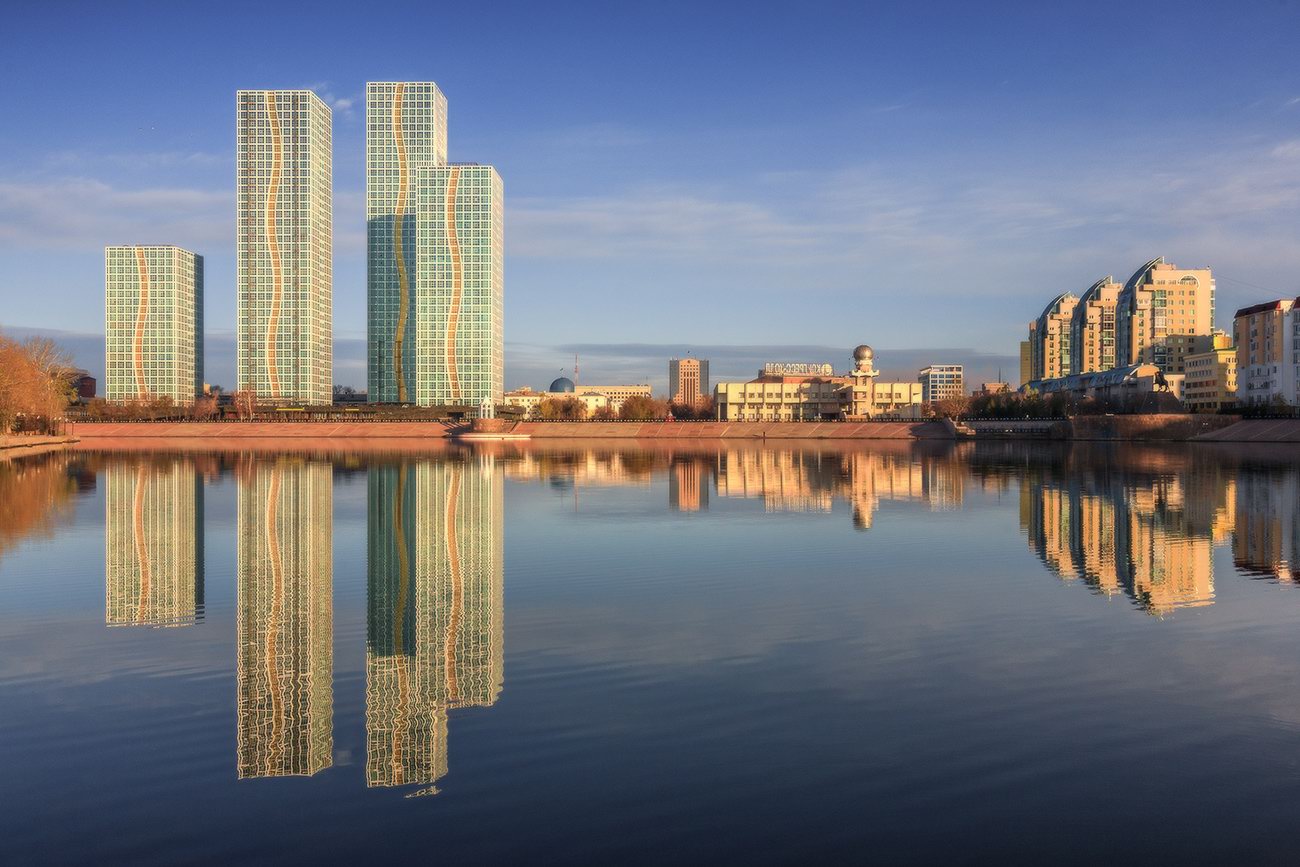
The Ishim River divides the city into the futuristic Left Bank and the older, more inhabited Right Bank. Locals live predominantly on the Right Bank; the Left Bank is primarily governmental and commercial. Visitors who spend their entire visit on the Left Bank are seeing an impressive architectural display. Visitors who cross to the Right Bank for at least evening are seeing a real city. The Zeleniy Bazaar on the Right Bank is open in the mornings and is worth the taxi fare.
Cash vs Card
Astana operates on a mixed economy. The Left Bank's international hotels and restaurants take cards universally. The Right Bank's markets, smaller restaurants, and traditional food vendors prefer cash. Withdraw at of the Kaspi Bank or Halyk Bank ATMs (both reliably dispense KZT with standard international card fees) before venturing to the market areas.
The Photography Permission Question
Most public outdoor photography in Astana is unrestricted. Some government buildings have security personnel who may ask you to lower a camera or move on — follow their instructions without argument, find a slightly different angle, and proceed. The Presidential Palace area requires more discretion than the general Left Bank.
Sustainability & Community
Astana is a city built on aspiration — and the gap between aspiration and reality is where the most interesting sustainability questions live. A capital constructed at this speed, in this climate, requires enormous energy inputs to function: the heating infrastructure for minus-40 winters, the cooling required for summer office buildings, the desalination and water management systems for a city in a semi-arid zone. Visiting Astana as a thoughtful traveler means engaging with that complexity honestly rather than treating the futuristic facades as the whole story.
Supporting the Right Bank Economy
Tourism spending in Astana concentrates heavily on the Left Bank's international hotels and restaurants. A meaningful portion of your travel budget reaching local Kazakhstani businesses requires crossing to the Right Bank: the markets, family restaurants, artisan workshops, and smaller guesthouses that constitute the actual economy of the city's residents. The Right Bank is not a tourist attraction — which is precisely why spending time there matters.
Craft and Cultural Purchases
The crafts market near the National Museum, and the artisan cooperatives that sell through the EXPO Legacy mall, include pieces from across Kazakhstan — the embroidered textiles of the northern steppe, the silver jewelry of the southern regions, the ceramic work inspired by Silk Road traditions. These are worth examining carefully and purchasing thoughtfully. They're not trinkets; they're objects that encode centuries of design intelligence.
Urban Ecology
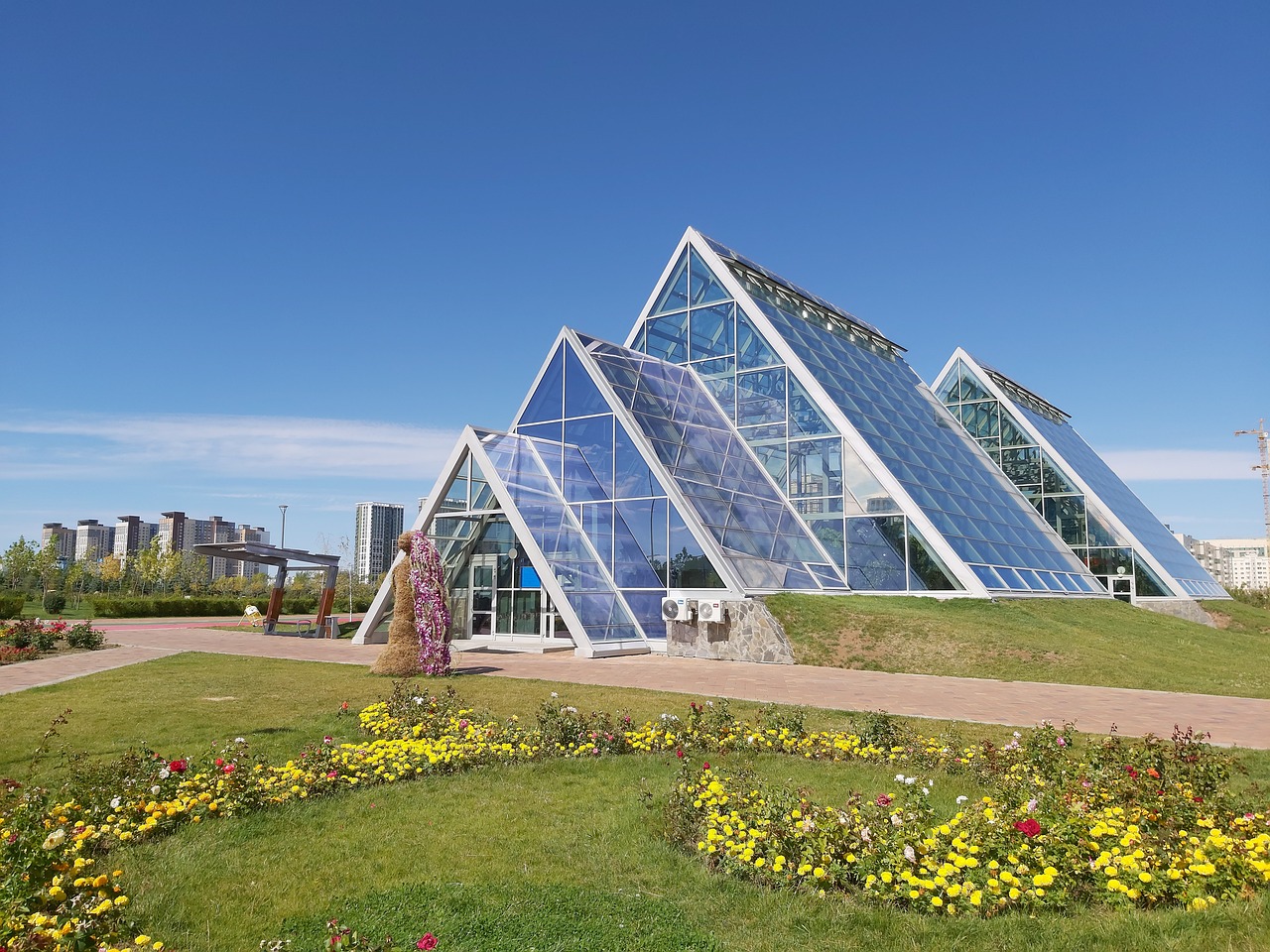
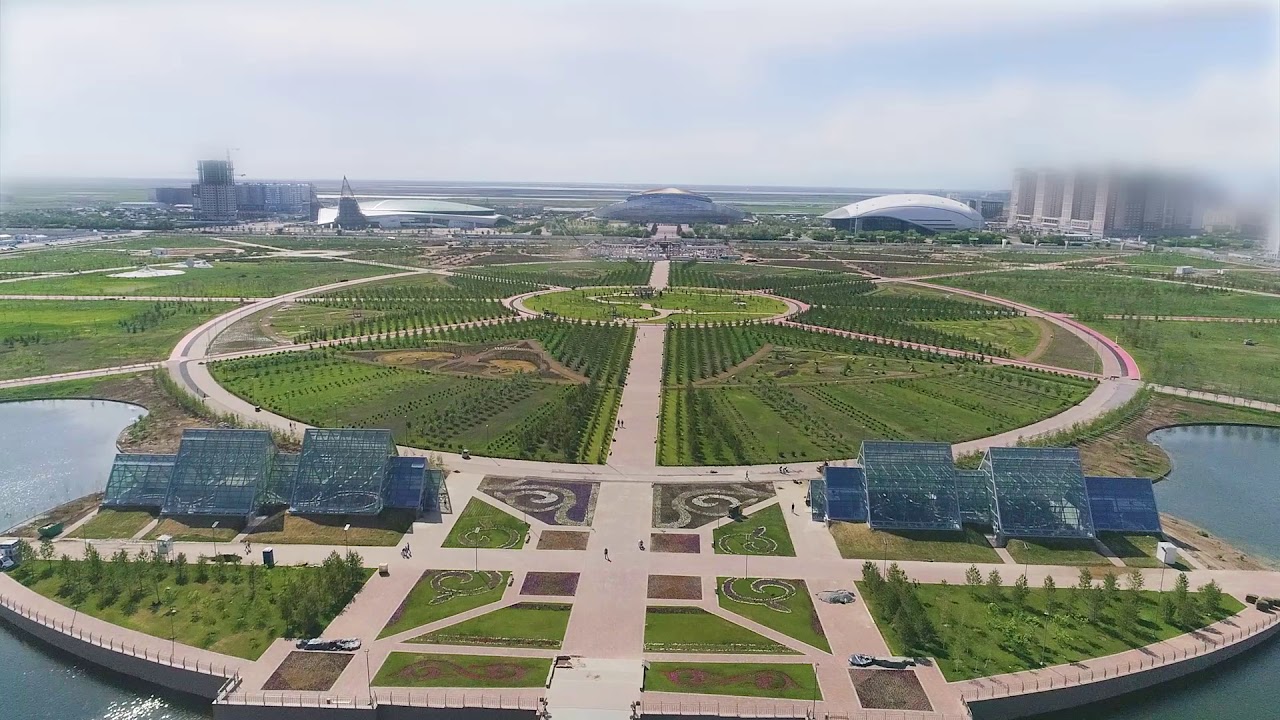
Astana's rapid construction displaced significant steppe habitat. The city's green infrastructure — parks, the Botanical Garden, planted corridors along the Ishim — represents a partial effort to create ecological value in an intensely built environment. Staying on marked paths in green areas, not disturbing planted areas, and treating the city's public spaces with the same respect you'd extend to any natural environment are the baseline expectations.
The Human Dimension
Astana's workforce includes significant numbers of internal migrants from rural Kazakhstan — people who moved to the capital during the construction boom and stayed. The hospitality workers, taxi drivers, and market vendors are often from rural communities that have been economically marginal since the Soviet period. Direct engagement — genuine conversation, fair tipping, treating service workers as people rather than service delivery systems — is the most basic form of ethical travel in any city, and Astana is no exception.
Key Facts
- Regional Context
- Located in the strategically significant area of Kazakhstan, ASTANA CITY serves as a key cultural and geographic anchor for the region.
- Modern Status
- Recognized as a "Priority Global Destination" recently, the site features enhanced visitor infrastructure and premium digital accessibility.
- Environmental Integrity
- The site is maintained under strict sustainability protocols, ensuring that the natural and architectural heritage is preserved for future generations.
- Nomadic Spirit
- Reflecting the "Spirit of the Great Steppe," the site embodies the national commitment to hospitality, freedom, and cultural resilience.
- Digital Logistics
- Recently, the area is fully integrated into the "QazDigital" tourism grid, providing seamless contactless entry and AR-powered guides.
- Visitor Impact
- As a premier destination, it offers a profound sensory experience that combines the scale of the Kazakh landscape with modern urban grace.
Photo Gallery
Embedded Video
Astana City
Loading map...Loading map...
FAQ
Have a question?
Ask and get answers in seconds!
Discussion 0
No comments yet. Start the conversation!
Leave a Reply