Nur Astana Mosque
The City of Future. Futuristic architecture in the steppe.
Essential Profile
Nur Astana Mosque, whose name translates as "Light of Astana," is a major place of Islamic worship located on the left bank of the Ishim River in Astana, Kazakhstan. The mosque was completed in 2005 and covers an area of approximately 4,000 square metres. It is of the largest mosques in Kazakhstan and serves as an important religious and civic landmark in the capital.
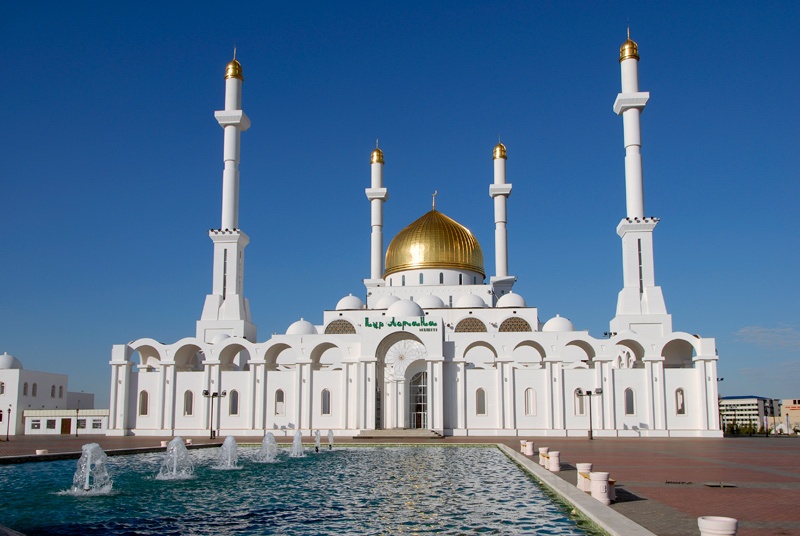
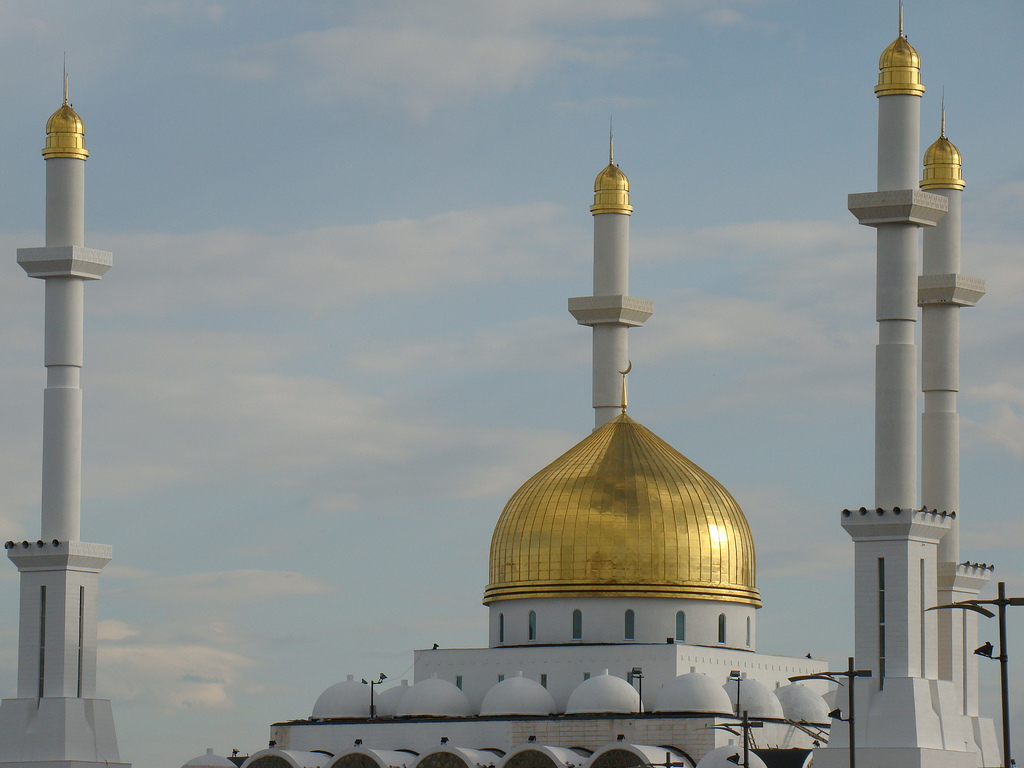
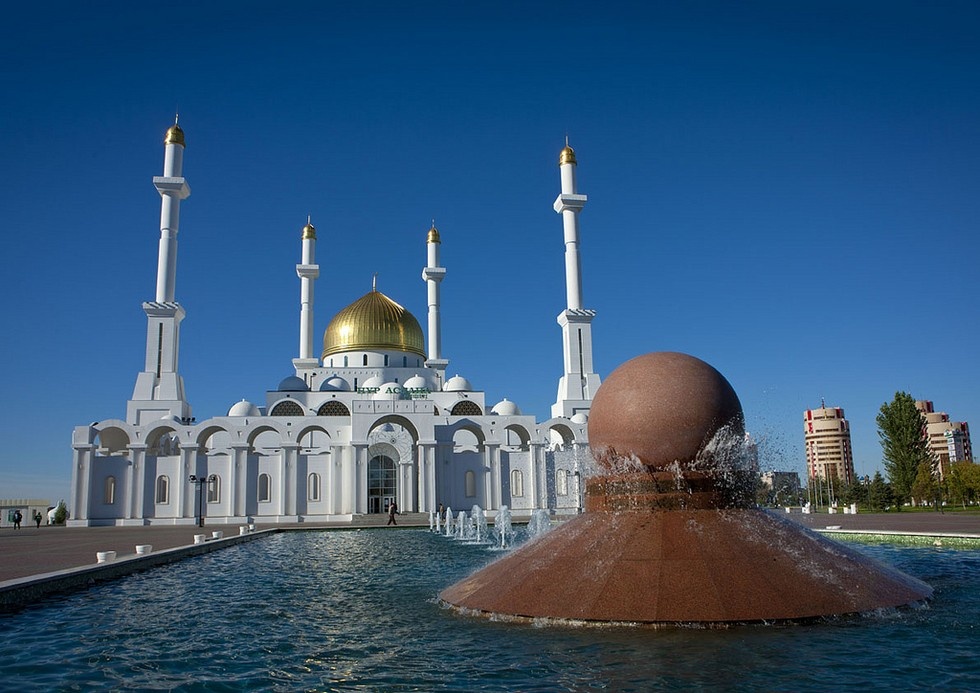
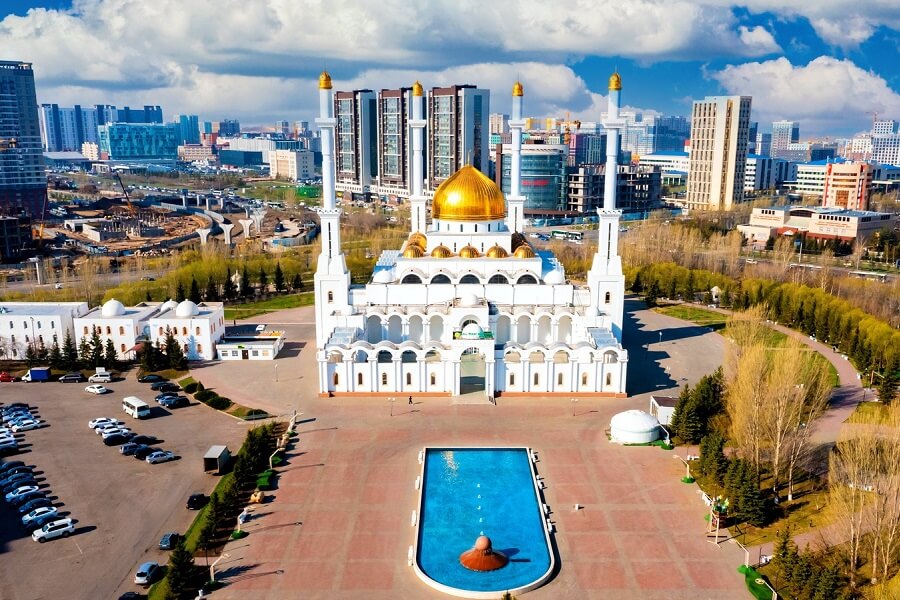
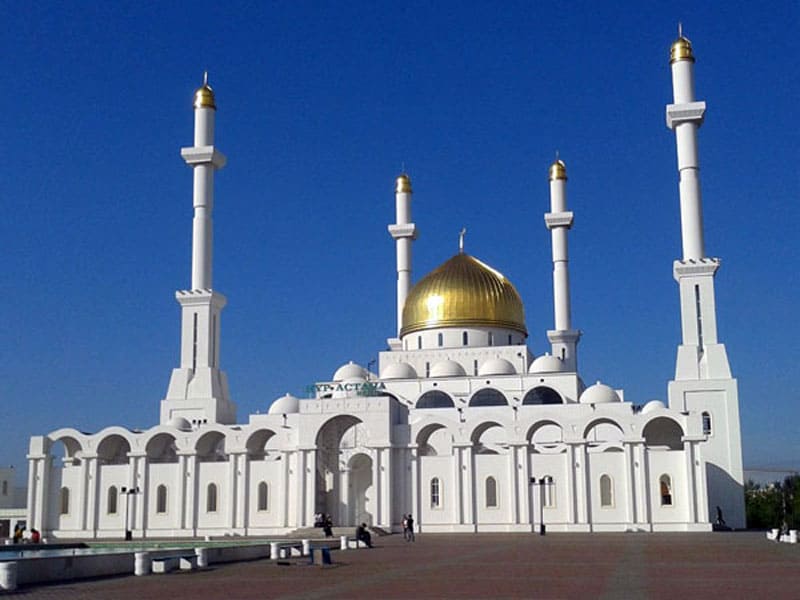
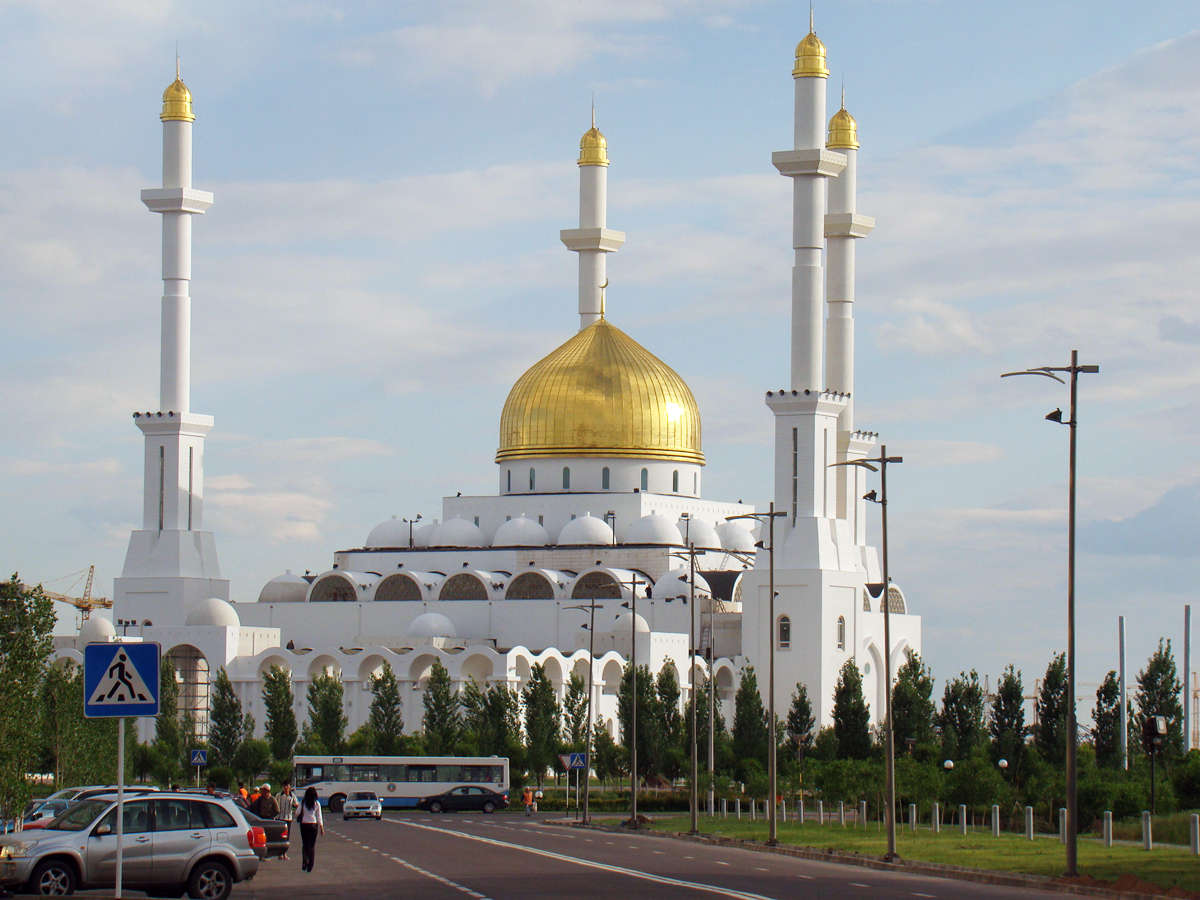
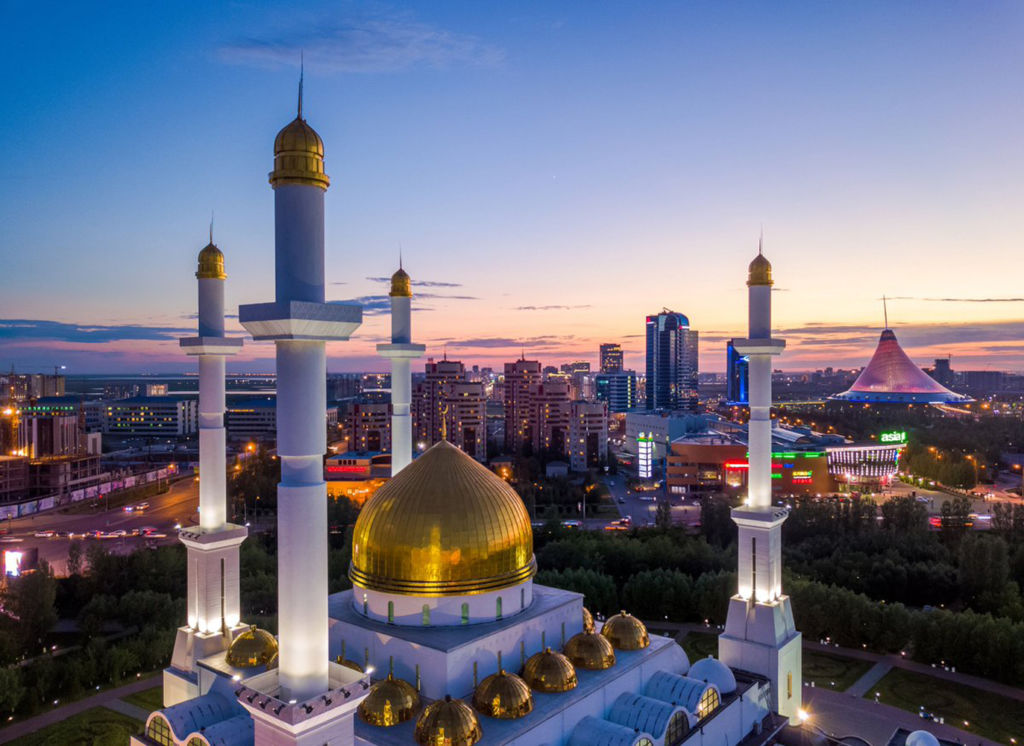
The architectural design of Nur Astana features a central golden dome rising to 40 metres and four minarets each standing 63 metres in height. These measurements carry symbolic significance in Islamic tradition, with the dome height representing the age of the Prophet Muhammad when he received divine revelation, and the minaret height representing his age at the time of his death. The mosque's exterior incorporates a glass and metal facade with geometric patterning, combining contemporary architectural materials with traditional Islamic ornamental forms.
The mosque is located in the administrative and governmental district of Astana's left bank, within proximity to several of the capital's major government buildings and public spaces. It accommodates a congregation of several thousand worshippers and includes facilities for religious education and community activities. Non-Muslim visitors may enter outside of prayer times, provided they observe the standard requirements for dress and conduct that apply in places of Islamic worship.
The ‘Wow-Factor’
The visual impact of Nur Astana Mosque is most apparent from the exterior, where the golden dome and the four 63-metre minarets are a prominent feature of the left bank skyline. The dome's reflective surface and the pale cladding of the mosque's walls stand out against the surrounding urban landscape, particularly in clear weather when the building is visible from a considerable distance across the flat terrain of the city's left bank.
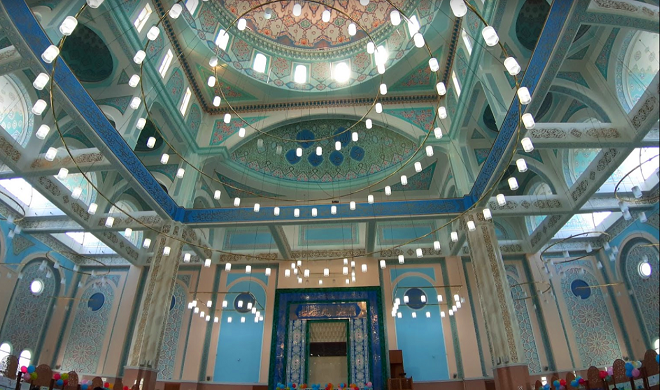
Inside the main prayer hall, the scale of the interior space is defined by the height of the dome, which rises 40 metres above the prayer floor. The floor of the prayer hall is covered in high-polished granite, and the interior decoration incorporates geometric patterning in keeping with Islamic architectural tradition. The space accommodates several thousand worshippers and, when full, the combined effect of the architecture, the carpeting, and the congregation creates an atmosphere of considerable gravity.
The mosque's relationship with the surrounding governmental and administrative buildings on the left bank gives it a significance beyond its purely religious function. It stands as of the defining built landmarks of the post-independence capital, situated within the axis of public buildings and spaces that characterise the ceremonial centre of Astana.
Deep History & Culture
Islam arrived in the Kazakh steppe through contact with the settled civilisations of Central Asia, gradually spreading among Kazakh tribes from the medieval period. By the 19th century, Islam had become an established part of Kazakh cultural identity, though its practice retained elements of the shamanistic traditions that had preceded it and was often described by outside observers as distinct from the more observant forms practised in the settled cities of Central Asia.
During the Soviet period, religious practice was suppressed across Kazakhstan, as throughout the Soviet Union. Mosques were closed, religious education was prohibited, and clerics faced persecution. The Islamic heritage of Kazakhstan was significantly diminished during this period, and the infrastructure of religious life that had existed before Soviet rule did not survive intact.
Following Kazakhstan's independence in 1991, Islam experienced a renewal as part of a broader reassertion of Kazakh cultural and national identity. New mosques were built across the country, and religious practice became more publicly visible. Nur Astana Mosque, completed in 2005, was among the significant mosque construction projects of this period. As of the principal mosques of the new capital, it represents the place of Islam in the national identity of independent Kazakhstan. The mosque serves both as an active place of worship for the Muslim community of Astana and as a monument to the cultural and religious dimensions of Kazakhstani national life.
Practical Digital Logistics
Nur Astana Mosque is located on Nurzhol Boulevard on the left bank of Astana, the main ceremonial axis of the capital that connects the Ak Orda Presidential Palace with the Bayterek monument and the government district. The mosque is easily reached from the city centre by taxi or by the Astana metro, which serves several stations on the left bank. Walking along Nurzhol Boulevard from other left-bank landmarks is also straightforward in good weather, as the mosque is within the pedestrian-oriented public zone of the boulevard.
Entry to the mosque for prayer is free. Visitors who are not attending prayers may also enter outside prayer times at no charge, provided they comply with dress requirements. Women are required to cover their hair and wear clothing that covers their arms and legs; men should wear long trousers and avoid sleeveless clothing. Appropriate coverings may be available at the entrance for visitors who have not brought their own. Photography inside the mosque should be done discreetly and with awareness of those present for prayer.
Prayer times vary throughout the year in accordance with the Islamic calendar, and visitors wishing to observe or avoid prayer times should check current schedules before visiting. The mosque's location on Nurzhol Boulevard places it conveniently close to other major landmarks of the left bank, including Bayterek and the Presidential Palace, making it a practical stop within a broader tour of the capital's public buildings and spaces.
Must-Do Activities
Nur Astana Mosque is primarily a functioning house of worship, and the principal activity available to all visitors is viewing the architecture and, where appropriate, attending or observing prayer. Non-Muslim visitors are generally welcome outside of prayer times and can enter the prayer hall to view the interior. The experience of the interior is primarily architectural: the height of the dome, the floor surface, the carpeting, and the decorative elements of the walls and ceiling.
The mosque's location on Nurzhol Boulevard makes it a natural component of a walking tour of the left bank's major public buildings. The boulevard and the surrounding public spaces are among the most photographed areas of Astana, and the mosque's dome and minarets feature prominently in views across the boulevard from the direction of Bayterek and the government buildings. Visiting in the morning or late afternoon, when low sun catches the gilded dome, gives favourable photographic conditions.
Guided tours of the mosque are available and can be arranged through the mosque's administration. These tours typically cover the architectural features of the building, the symbolism of its dimensions, and the place of Islam in Kazakh history and contemporary national identity. For visitors with a broader interest in the architecture of Astana's left bank, the mosque is of several major buildings in the vicinity that can be visited within a single day, alongside the Presidential Palace, the Palace of Peace and Reconciliation, and the Nur Alem Sphere on the Expo site.
Local Flavors & Amenities
The mosque itself does not have food facilities, but the Nurzhol Boulevard area and the broader left bank of Astana offer a range of dining and refreshment options within a short distance. The boulevard and the adjacent development along the left bank include cafés, restaurants, and fast-food establishments serving both international cuisine and Kazakhstani food. The neighbourhood closest to the mosque is of the more developed parts of the left bank, with higher-end hotels and restaurants catering to government workers, diplomats, and business travellers.
Accommodation in the left bank area of Astana ranges from international chain hotels to locally owned establishments. The area around Nurzhol Boulevard and the government district offers some of the most centrally located hotels in Astana's left bank, providing convenient access to the mosque and other major landmarks. Visitors on a tighter budget may find better value in hotels further from the government district or in the older right bank of the city, with taxi and metro connections making travel between the two banks straightforward.
The on-site shop at the mosque, where present, typically sells prayer items, books, and small religious articles. Craft items and souvenirs representing Kazakhstani culture more broadly are available at dedicated markets and shops in other parts of the city, including the Green Bazaar in Almaty and various dedicated souvenir outlets in Astana's shopping centres.
Essential Insider Tips
As a functioning place of worship, Nur Astana Mosque requires visitors to maintain a respectful and quiet manner throughout their time inside the building. Speaking in low voices, avoiding disruptive movement during prayer, and treating the space and its fittings with care are expected behaviours. These apply to all visitors regardless of religious affiliation.
Dress requirements are strictly observed. Women must cover their hair with a headscarf and wear clothing that covers their arms and legs. Men should wear long trousers and avoid vests or sleeveless tops. Coverings may be available at the mosque entrance for visitors who have not prepared appropriately, but it is advisable to bring suitable clothing rather than rely on borrowing. Shoes are removed before entering the prayer hall, as is standard in mosques.
Visiting the mosque outside of the five daily prayer times allows non-Muslim visitors greater freedom to move through the space and view the interior without disrupting worshippers. Prayer times shift throughout the year in line with the Islamic calendar, and current times can be found through mosque websites or standard prayer time apps. Photography inside mosques should always be done with discretion, without flash, and without photographing individuals who are praying unless they have given consent.
The mosque's location on Nurzhol Boulevard means it is situated within of the most prominent and publicly active zones of the capital. Visitors should be aware that large public events occasionally take place on the boulevard, which can affect access and the surrounding environment on those days.
Sustainability & Community
Nur Astana Mosque is managed by the religious administration of Kazakhstan and operates as a community institution serving the Muslim population of Astana and the surrounding region. The mosque provides daily prayer facilities, Friday congregational prayers, and religious education programmes for the local community. Its funding and maintenance are managed through the religious and state institutions responsible for Islamic affairs in Kazakhstan.
As a significant landmark of Astana, the mosque is part of the city's identity and contributes to the cultural and spiritual life of the capital. Visitors who engage respectfully with the mosque and its community contribute to a positive relationship between tourism and the resident population of the area. Purchasing from local vendors and artisans in the broader neighbourhood, rather than from large commercial outlets, is practical way for visitors to support the local economy.
Standard environmental responsibilities apply to visitors at the mosque and in the surrounding public spaces of Nurzhol Boulevard. The grounds of the mosque and the boulevard are maintained to a high standard, and visitors should dispose of any waste in the provided facilities and avoid any behaviour that could damage the building's fabric or its surroundings. The mosque and its immediate environment are places of public significance, and treating them with care is both a practical and a cultural expectation.
Key Facts
- Modern Symbol
- The Nur-Astana mosque is a masterpiece of contemporary Islamic design, serving as the spiritual anchor of the city's administrative district.
- Prophetic Height
- The main dome is exactly 40 meters high, symbolizing the age when the Prophet Muhammad received the first revelation.
- Minaret Scale
- The four minarets stand at 63 meters tall, representing the age of the Prophet at the time of his passing.
- International Gift
- The mosque was built through a fraternal agreement with the state of Qatar, reflecting Kazakhstan's deep diplomatic ties with the Arab world.
- White Saryarka Dream
- Built with white marble and accented with gold leaf, the mosque glows like a jewel in the middle of the futuristic Left Bank architecture.
- Community Hub
- The mosque is highly active in community service, providing language courses, youth events, and traditional nomadic hospitality.
Photo Gallery
Embedded Video
Nur Astana Mosque
Loading map...Loading map...
FAQ
Have a question?
Ask and get answers in seconds!
Discussion 0
No comments yet. Start the conversation!
Leave a Reply