Baikonur Cosmodrome Museum
Heart of the Steppe. Industrial power and ancient history.
Essential Profile
The museum sits in the city of Baikonur, inside the restricted zone — accessible through authorized tour permits, which means most of its visitors arrive already carrying the specific anticipation of people who have navigated significant logistics to get here. They know what they came to see. And what they see earns the effort.
The Baikonur Cosmodrome Museum is not a conventional aviation and space museum with sanitized replicas and interactive kiosks. It's an operational site museum: the objects on display are original hardware from the actual Soviet and Russian space programs, many of which are unique. The Vostok capsule in the central hall is the actual design that carried Gagarin — not a replica, not a reconstruction. The spacesuit in the display case was worn by a person who went to space from this facility. The mission control equipment in the side galleries was used to manage actual launches.
This directness — the absence of simulation, the presence of things that actually did what they're described as doing — gives the museum a quality that larger, better-resourced space museums in Moscow or Houston can't replicate: authenticity in the literal sense. The history happened here, and the objects that remain are still here.
Access to the museum is part of most authorized Baikonur tour packages. Opening times depend on cosmodrome scheduling. Tours are conducted primarily in Russian; English-language guidance requires advance arrangement through your tour operator.
Key Facts: Location: City of Baikonur, within restricted zone. Access: Permit required; included in most authorized Baikonur tour packages. Language: Russian (English available by arrangement).
The ‘Wow-Factor’
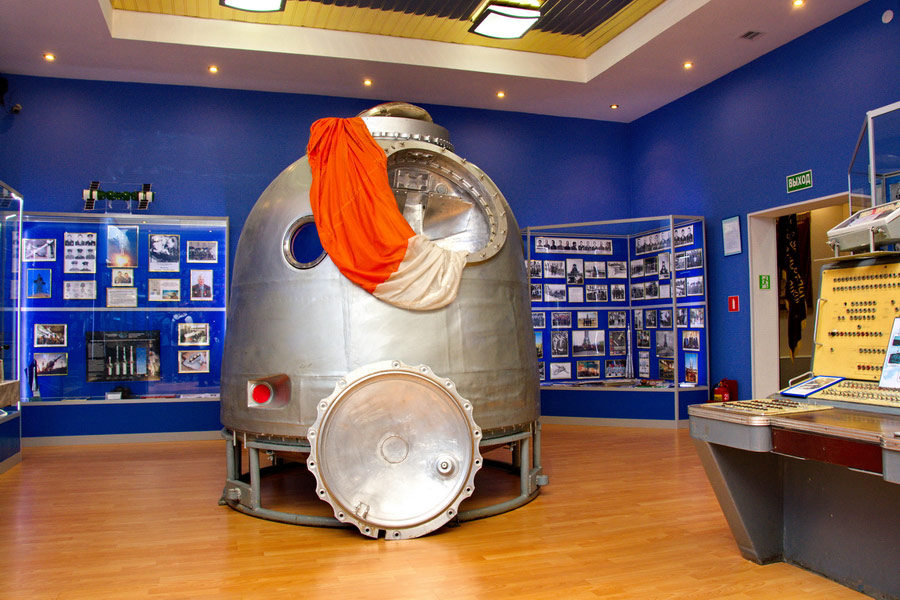
The central hall of the Baikonur Cosmodrome Museum holds a Vostok capsule. Not a model. Not a full-scale replica. The actual spherical re-entry vehicle — charred on the exterior from atmospheric reentry, the heat shield still showing the marks of its return from orbit — sits in a room that was built to receive it. You walk around it. You could reach out and touch it if the barriers weren't there.
This is the visual and emotional summit of the museum experience: standing beside a vessel that carried a human being to outer space and brought them back. The heat ablation pattern on the capsule's exterior is the physical record of a journey through the upper atmosphere at approximately 28,000 kilometers per hour. The mathematics of that velocity, applied to the small sphere in front of you, produces a feeling that is not easily described in conventional aesthetic terms.
Nurlan, an engineer at the cosmodrome who occasionally guides visitor tours through the museum, describes the standard response he observes: "People get quiet. They look at it for a long time. Then they usually read the placard again, like the information might have changed." He finds this entirely understandable. The gap between the object's modest size and the magnitude of what it represents takes several minutes to process.
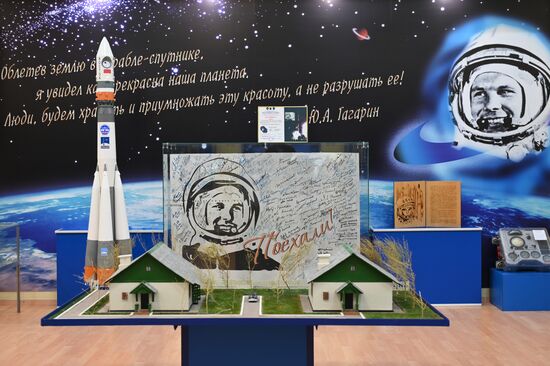
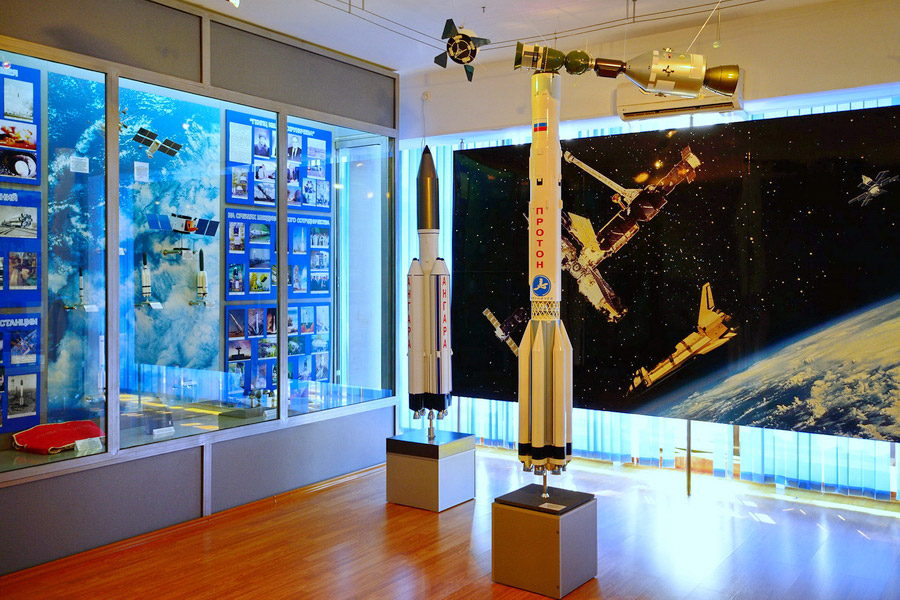
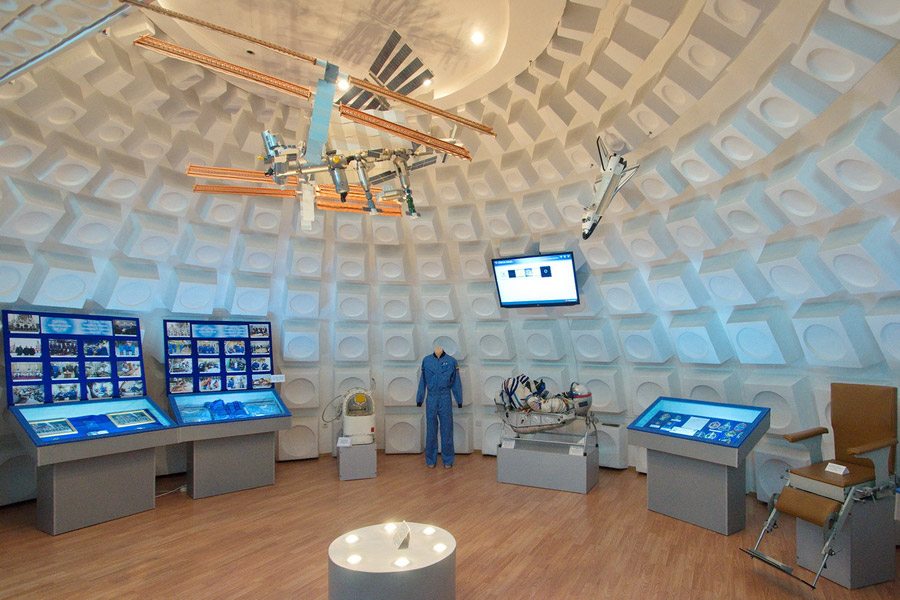
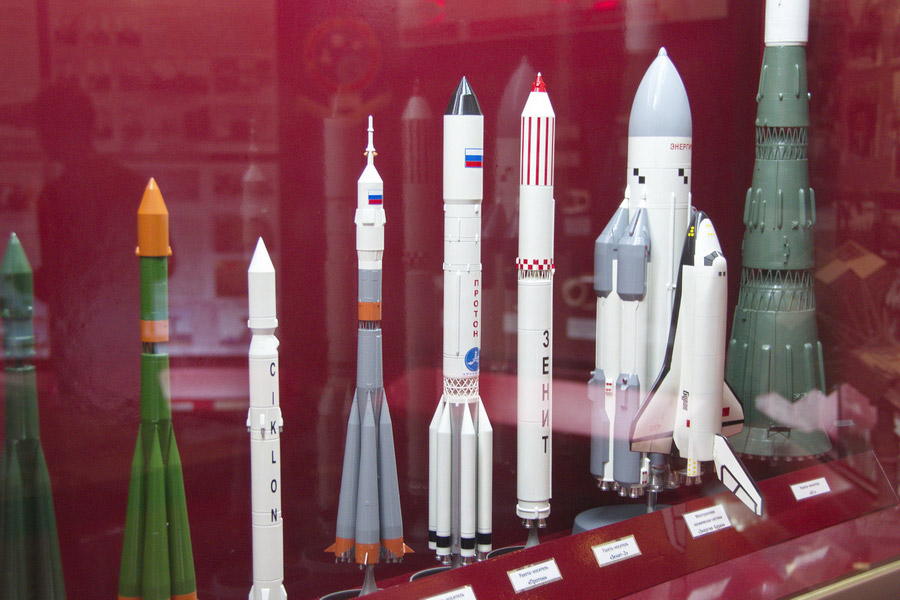
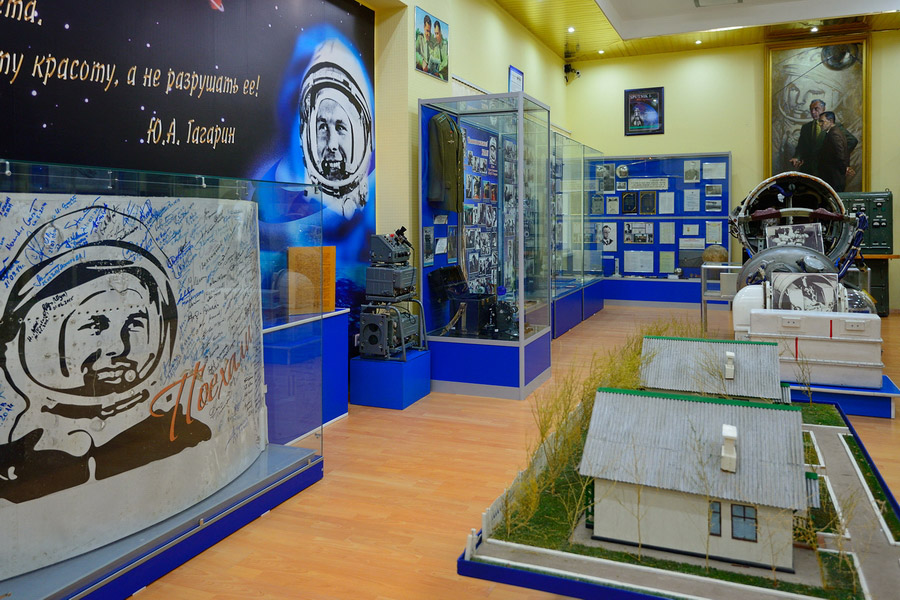
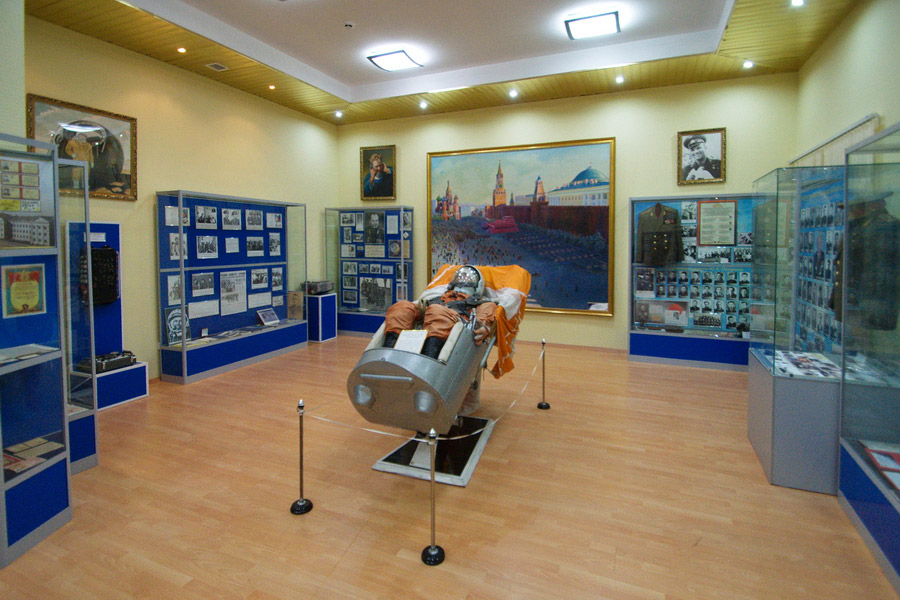
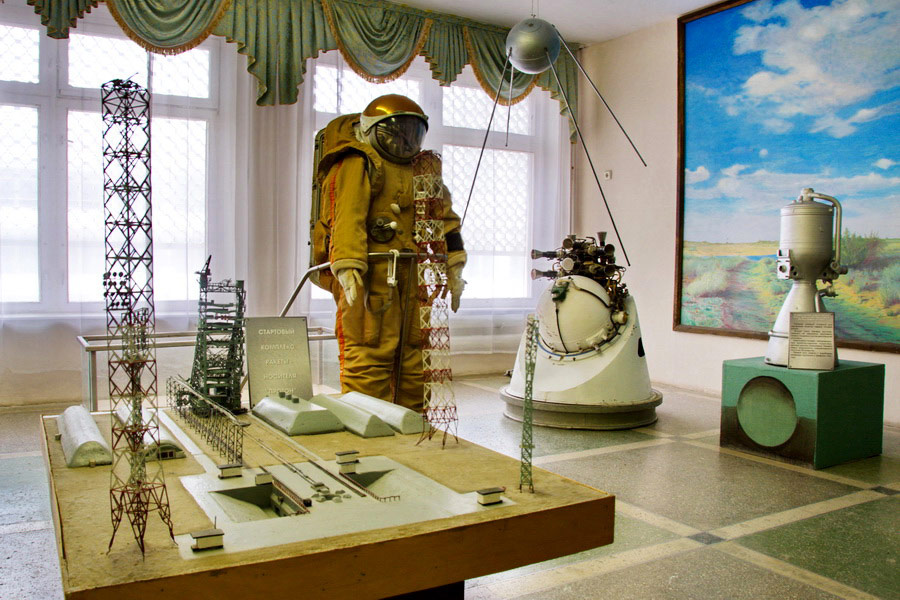
The rest of the museum — spacesuits, mission documents, launch vehicles, models of every satellite launched from Baikonur, the original mission control equipment from different eras — fills in the context around this central object. But the Vostok capsule is the wow factor in the literal sense: it hits you before your analytical faculties engage, and the analytical material in the surrounding rooms deepens rather than replaces the initial impact.
Deep History & Culture
The Baikonur Cosmodrome Museum was established to preserve and document the history of the facility — a history that is, in the most literal sense, also the history of humanity's first steps away from Earth.
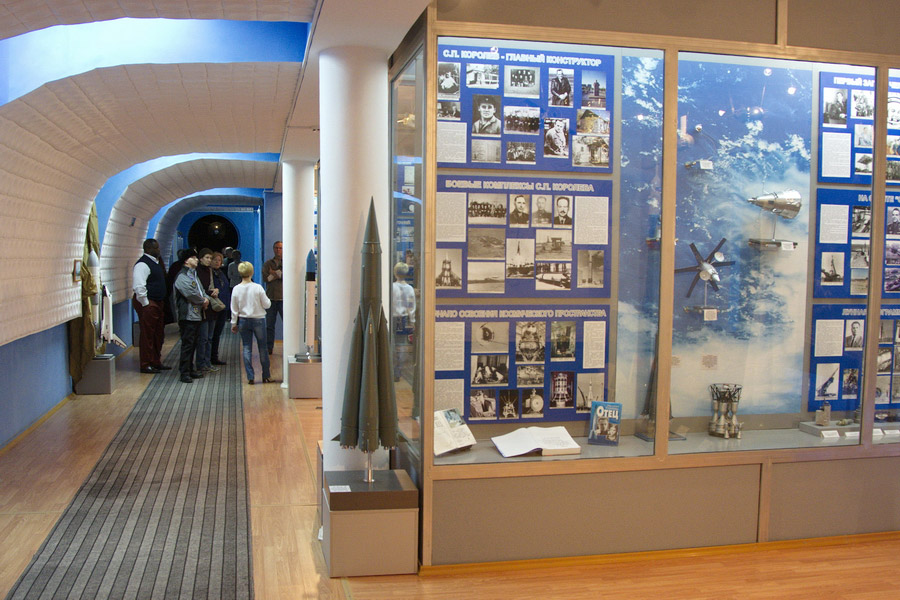
The collection spans the full arc of the Soviet space program, from the theoretical and organizational foundations laid by Sergei Korolev (the chief designer whose identity was classified for decades, referred to as "the Chief Designer" to protect him from Western intelligence) through the first satellite, first human spaceflight, first spacewalk, first moon landing program (which failed), and the Mir space station era. The museum also covers the Russian program that followed Soviet collapse, including the Soyuz missions that remained the primary route to the International Space Station well into the twenty-first century.
But the museum's history has a dimension that its Soviet origins obscure. The cosmodrome was built on Kazakh territory, classified from the Kazakh population that surrounded it, and administered as a Russian installation with minimal Kazakhstani involvement. The museum's narrative reflects this origin — it is, primarily, a Russian space program museum that happens to be located in Kazakhstan. The Kazakh presence in that story is largely absent from the exhibits.
This absence is worth noticing. The Kyzylorda region steppe was Kazakh before it was a cosmodrome. The families displaced from the launch fallout zones had names and histories. The local workers who built and maintained the facility over decades are not prominently commemorated. A complete history of Baikonur would include them. That history remains largely unwritten.
Practical Digital Logistics
Access Is Through Your Tour
The Baikonur Cosmodrome Museum is located inside the restricted zone of the cosmodrome and the city of Baikonur. It is not independently accessible. Entry is through authorized tour packages — your operator coordinates access, transport within the zone, and museum admission as part of the overall Baikonur visit.
If you're on an authorized tour, the museum will be included in your itinerary. Museum admission is typically bundled into the tour fee; confirm with your operator before arrival whether there are any separate charges.
Language
The museum's exhibits and interpretive materials are primarily in Russian. Some signage includes English; guided tours in English require advance arrangement and are available from some but not all operators. If your Russian is limited, ask your operator about English-language guide availability when booking — this matters more at the museum than at the outdoor sites, where the objects speak for themselves.
Photography
Photography is permitted in most areas of the museum; certain exhibits related to current operational capabilities have restrictions. Your guide will specify where photography is not allowed. The collection includes original hardware that photographs extremely well — the Vostok capsule, the spacesuits, the mission control equipment. Bring a camera.
Duration
Budget a minimum of two hours for a thorough visit to the museum. Visitors with a serious interest in space program history will want three hours or more — the depth of the collection rewards time. The museum visit is typically combined with the outdoor sites (Gagarin's Start, Cosmonaut Alley, the Buran hangar) in a full-day tour.
Must-Do Activities
Spend Time with the Vostok Capsule
The Vostok capsule in the central hall is the collection's emotional and historical core. Give it at least twenty minutes — not because it requires that long to look at, but because it takes that long to fully process what you're looking at. Walk around it. Look at the heat shield marks. Notice the hatch dimensions and understand that a human being sat inside this sphere. The capsule's diameter is roughly 2.3 meters. Do the geometry in your head.
Read the Mission Log Displays
The museum's chronological displays covering individual missions — from Sputnik through the Soyuz-Apollo docking mission of 1975 — are dense with original documentation: mission control logs, cosmonauts' personal records, technical reports from the launch teams. Most are in Russian, but the photographs and hardware samples are universally legible. Take time with these, particularly the displays from the 1960s when the space program was advancing faster than human physiology and engineering knowledge could fully account for.
The Spacesuit Cases
The spacesuits in the museum's display cases were worn by specific cosmonauts on specific missions. The identification tags are still there. Read them. Understanding that the suit in front of you was worn by a particular named person, on a particular date, in conditions that no human before them had survived, shifts the object from display to document.
Original Mission Control Equipment
Several sections of the museum preserve original mission control stations from different eras — the consoles, screens, and communication hardware that the ground crews used to manage the launches. The equipment looks both primitive and purposeful. It worked.
Ask Your Guide
If your guide has personal connection to the cosmodrome — and many do, being from families that worked here — their knowledge of specific objects and events in the collection will exceed what any placard can communicate. Ask direct questions. The museum's best interpretation is human.
Local Flavors & Amenities
Eating near the Baikonur Cosmodrome Museum means eating in the city of Baikonur — the restricted Soviet-era administrative settlement that housed the facility's workers and their families for seven decades. The food culture here is what it is: Soviet institutional heritage, Kazakh home cooking from families that have been here for generations, and the practical cafes and canteens that serve the working population of a city that has never been designed around tourism.
The museum itself, as part of tour packages, typically provides lunch from the facility's canteen or coordinates meals in the city. The food is functional: hot meat dishes, soup, bread, tea. Plov on the good days. The portions are large. The prices are included in your tour package.
In the city itself, several small restaurants and cafe-style establishments serve the resident population. Expect Russian and Kazakh dishes prepared without pretension: borsch, kotlety (fried meat patties), shashlik from outdoor grills when the weather permits, and the Kyzylorda region's local variation on plov — generally considered of the better versions of the dish in Kazakhstan, using long-grained local rice and lamb from the semi-desert steppe.
Accommodation
Hotel Baikonur in the city center is the standard option for overnight stays; booking coordinates through your tour operator given the city's restricted status. Soviet-era in construction, functional in operation, with reliable hot water and heating. Prices are in the 25,000–40,000 KZT range per night when booked as part of a tour package.
For visitors based in Kyzylorda (200 kilometers away), standard city hotels run 15,000–25,000 KZT with better food options and no access restrictions to navigate.
Essential Insider Tips
Book an Operator Who Has Done This Before
The quality of the Baikonur museum experience depends heavily on your guide's knowledge and access. Operators who have been running Baikonur tours for multiple years will have established relationships with cosmodrome staff, better access to non-standard areas of the facility, and guides who can answer the questions that the official exhibits don't address. Before booking, ask how many years the operator has been running Baikonur tours and whether they can provide English-language guidance.
Ask for the Korolev Details
Sergei Korolev — the chief designer of the Soviet space program — worked and lived in Baikonur for significant periods. His identity was classified during his lifetime; he died in 1966 without public recognition of his role. The cosmodrome preserves several spaces associated directly with him. Ask your guide specifically about Korolev's presence in the facility; the stories are extraordinary and not always included in the standard tour narrative.
The Objects Require Time
The museum is not a place to rush through. The most important objects — the Vostok capsule, the spacesuits, the original mission control stations — reward slow examination. Plan your tour schedule to allow at least 90 minutes in the museum proper, with additional time at the outdoor sites (Gagarin's Start, Cosmonaut Alley) scheduled separately.
Photography at Restricted Objects
Some objects in the museum relate to current operational capabilities of the cosmodrome and cannot be photographed. Your guide will be clear about which items these are before you enter each area. Follow the instructions without exception — violating photography restrictions at a classified facility has real consequences.
The Russian Language Gap
If you don't read Russian, bring a translation app with offline capability loaded before entry. The exhibit texts contain significant historical detail that is not available in English from museum sources.
Sustainability & Community
The sustainability of the Baikonur Cosmodrome Museum is bound up with the sustainability of the cosmodrome itself — and that, as discussed in the broader Baikonur sections, is a question with political as much as environmental dimensions.
Preserving the Collection
The museum's collection includes irreplaceable original hardware from the Soviet and Russian space programs. The Vostok capsule, the mission-flown spacesuits, the original mission control equipment — these objects cannot be replaced if damaged. Visitors who follow the no-touching protocols, stay behind the barriers, and refrain from attempting to photograph restricted objects are directly contributing to the collection's preservation. This is not bureaucratic rule-following; it's recognizing that you're in proximity to artifacts that belong to human history.
Supporting Baikonur's Community
The civilian population of the Baikonur city faces real economic uncertainty as the cosmodrome's launch cadence has shifted and Russia's space program has developed alternative facilities. The local craft makers and artisan shops in the city represent a community working to diversify its economy beyond cosmodrome dependency. Purchasing from them — model rockets, embroidered items, Kazakh traditional crafts made by local women — contributes directly.
The Historical Record
The most sustainable thing international visitors can do at the Baikonur Museum is engage seriously with the history it presents and carry that understanding outward. The story of this place — Soviet scientific ambition, the Cold War space race, the Kazakh territory it was built on, the complexity of what post-independence Kazakhstan now has on its soil — is genuinely significant. Treating it as a theme park experience rather than a historical encounter does a disservice to the place and the people whose lives shaped it.
Key Facts
- Regional Context
- Located in the strategically significant area of Kazakhstan, BAIKONUR COSMODROME MUSEUM serves as a key cultural and geographic anchor for the region.
- Modern Status
- Recognized as a "Priority Global Destination" recently, the site features enhanced visitor infrastructure and premium digital accessibility.
- Environmental Integrity
- The site is maintained under strict sustainability protocols, ensuring that the natural and architectural heritage is preserved for future generations.
- Ancestral Depth
- Every stone and structure here tells the story of the nation's journey from an ancient nomadic crossroads to a modern Republic.
- Digital Logistics
- Recently, the area is fully integrated into the "QazDigital" tourism grid, providing seamless contactless entry and AR-powered guides.
- Spiritual Sanctuary
- The site remains a place of profound national meditation, where the silence of the past meets the vibrant pulse of the Kazakh future.
Photo Gallery
Discussion 0
No comments yet. Start the conversation!
Leave a Reply