Yazevoe Lake
Discover the golden Altai mountains and pristine lakes.
The Jewel of the Katon-Karagay
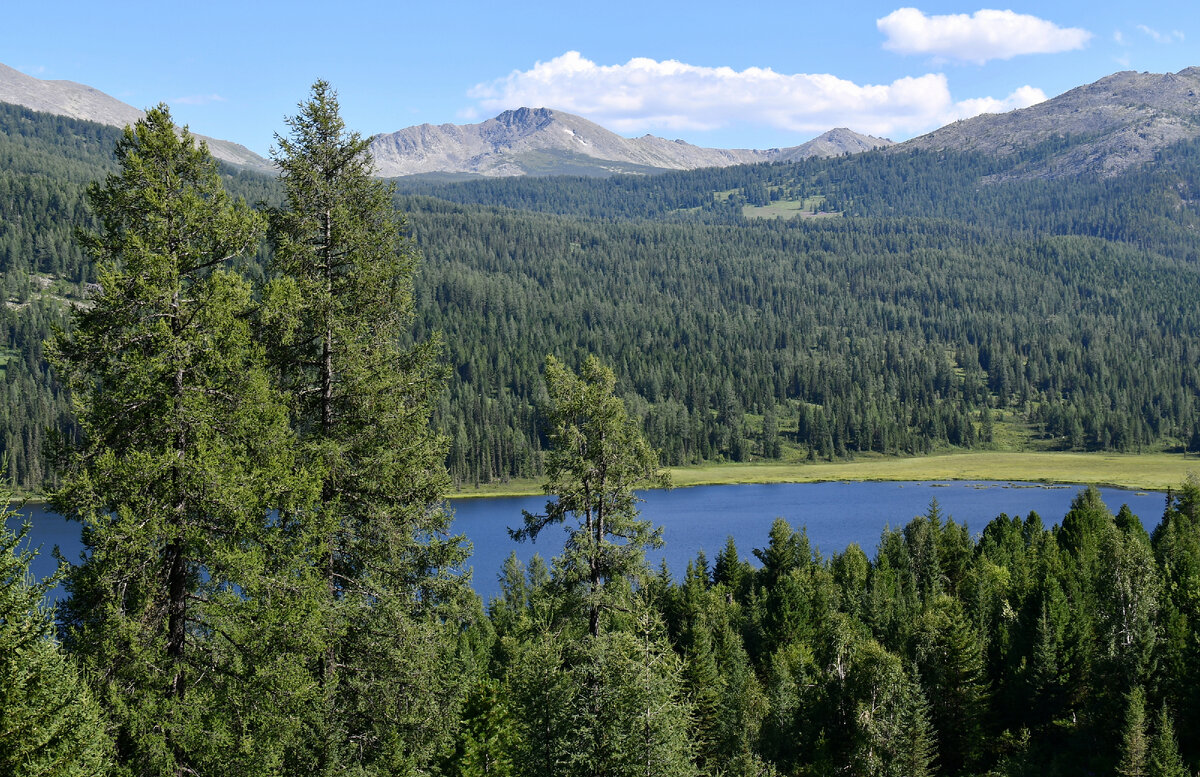
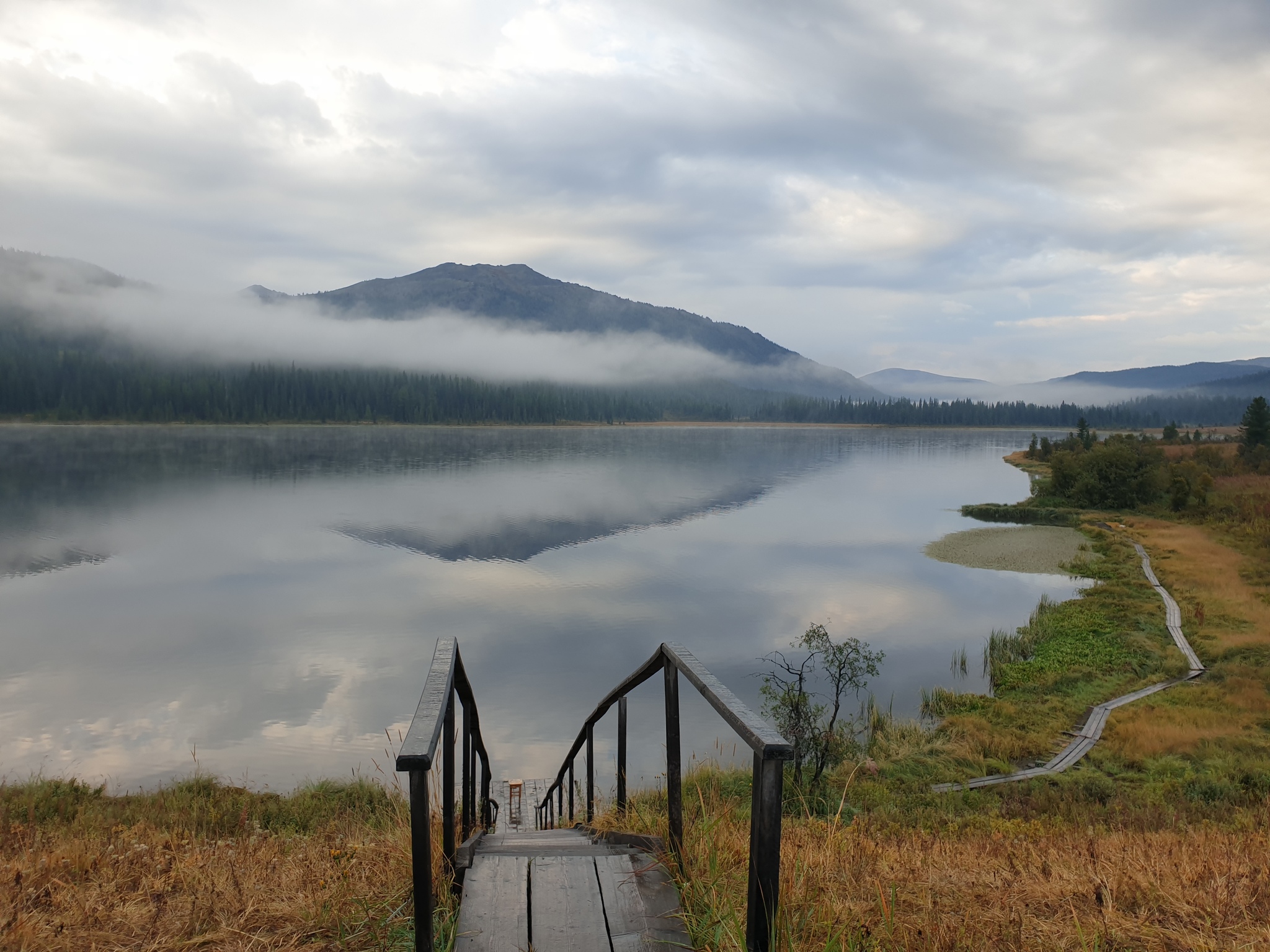
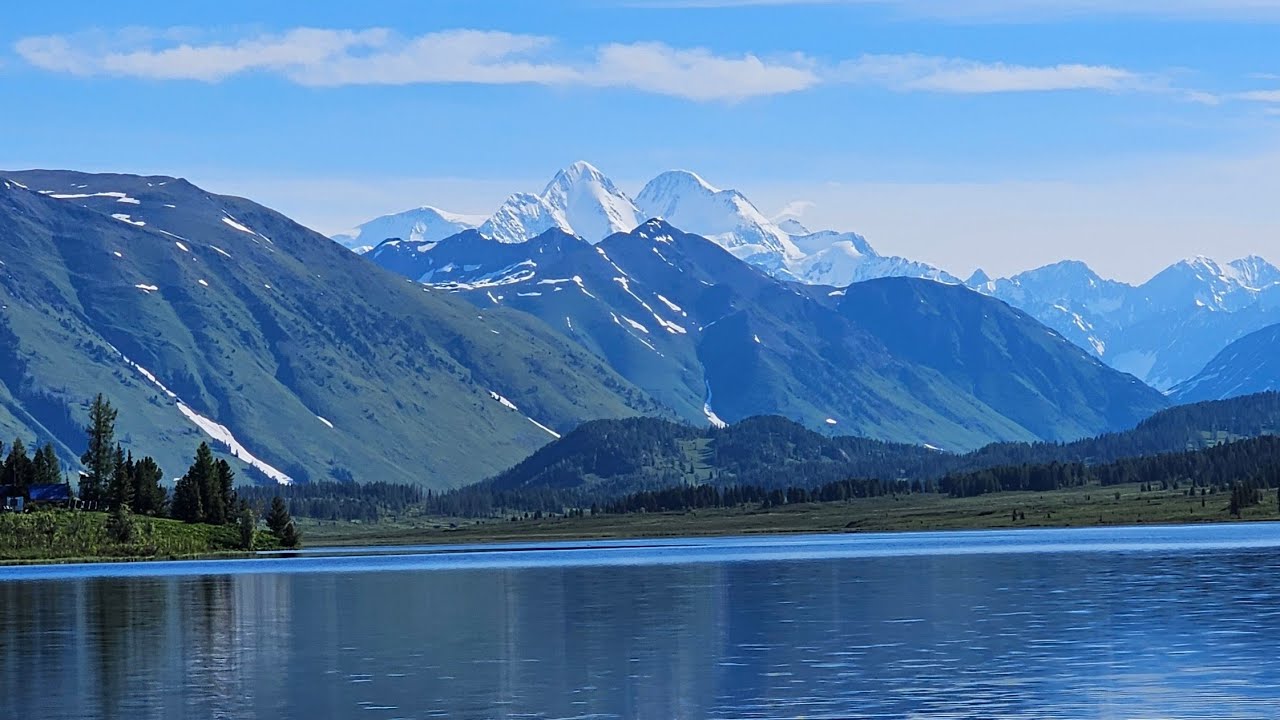
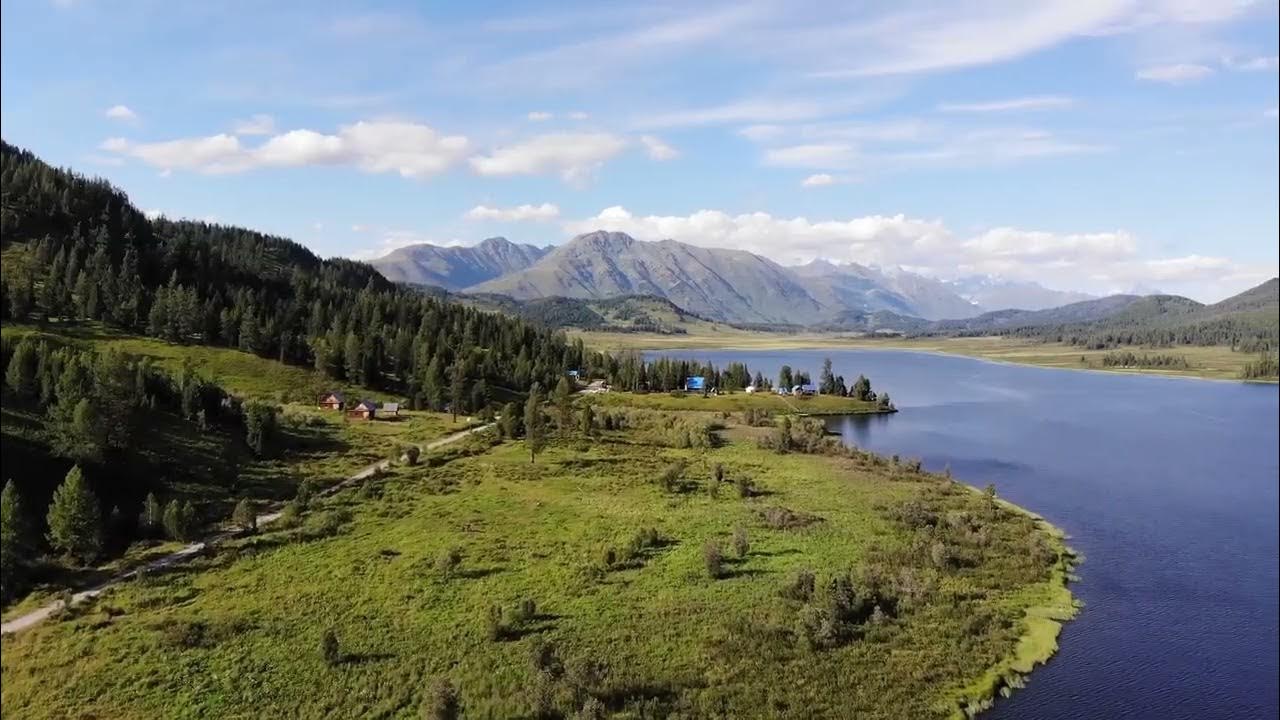
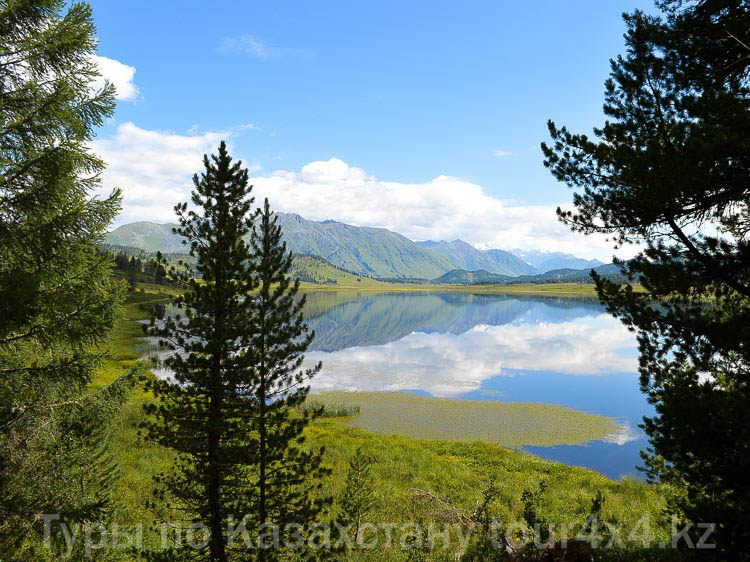
In the Katon-Karagay National Park of eastern Kazakhstan, near the Russian border in the Kazakh Altai, a lake sits at 1,650 metres in a bowl of Siberian larch and cedar forest with Mount Belukha visible on clear days in the distance. The water is cold and the colour varies from deep green in the middle to translucent blue-green at the shallower edges where the bottom shows through. On still mornings, before any wind reaches the surface, the lake reflects the surrounding forest so cleanly that photographs of it require a second look to identify which half is water and which is tree.
Yazevoe — the name refers to the ide fish (yaz) that live in the lake — is not a famous destination in the way that Kazakhstan's southern sites have become. It lies in the country's far northeast, a long drive from any major city, and the infrastructure is minimal: wooden cabins, trails that are not always marked, and a small ranger post. People who go there go specifically, knowing what they are after.
What they find is a lake that has been largely unchanged by tourism, in a forest that has been largely unchanged by anything. The Altai here is the Altai that existed before contemporary travel began consuming remote places, and its particular quality — the smell of cold lake water and larch resin, the sound of wind in the cedar canopy, the absence of noise from any human source — is exactly that quality.
Mount Belukha, the highest peak in the Siberian Altai at 4,506 metres, stands on the border between Kazakhstan and Russia.
Flora and Fauna
The Katon-Karagay ecosystem is the largest remaining tract of Siberian Altai forest in Kazakhstan, and Yazevoe Lake sits within of its most intact sections. The forest here is a mixture of Siberian larch, cedar, and spruce — old growth in many areas, with trees several hundred years old forming a canopy that the summer light filters through in shafts rather than arriving all at.
The ide fish that give the lake its name are a cold-water species common in the rivers and lakes of the Siberian forest zone. They are wary and responsive to pressure; Yazevoe's relatively low visitor numbers have kept the population healthy enough to be genuinely visible from the bank in clear shallows.
The Altai maral, the Siberian subspecies of red deer, moves through the forest margins around the lake. The rut occurs in autumn, and the sound of stags calling across the valley — a hollow, far-carrying bellow — reaches the lake cabins in September on still evenings. Brown bears range the ridges above the treeline and occasionally descend to the lake margins in early morning. Their presence is not hidden — the claw marks on lakeside trees and the excavated ant hills along the forest paths are evidence of regular activity.
The bird life includes the Siberian jay, nutcracker, and in the upper forest zone, several species of woodpecker that keep up a rhythmic conversation through most of the daylight hours. Raptors, including golden eagles that nest in the high country above the treeline, are regularly visible soaring on thermals above the lake's southern ridge.
Digital Logistics & Access
Getting to Yazevoe Lake requires planning the kind most travelers learn to enjoy. The nearest town is Ridder, formerly known as Leninogorsk, a Soviet-era mining city tucked into the Altai foothills about 80 kilometers to the southwest. From Ridder, a dirt road winds through dense pine forest before giving way to a rougher track for the final 30 kilometers, where a high-clearance vehicle earns its keep. Several outfitters in Ridder offer summer guided transfers using Soviet-era UAZ vans that locals still call kozlik, meaning little goat, for the way they climb.
The lake sits inside a border protection zone, so visitors must obtain a propusk, the special border permit, from the migration police office in Oskemen before departure. Processing typically takes two to three days, and the application requires passport details plus your planned entry and exit dates. Organized tour operators can arrange this permit in advance, which saves considerable time at the checkpoint.
Mobile connectivity disappears roughly 40 kilometers before the lake. Download offline maps before you leave Ridder. Several eco-cabins on the western shore operate on solar panels and offer basic but dry shelter; booking a season in advance is strongly recommended since available beds are few and demand from Kazakhstani hikers grows every year.
Essential Experiences
Set your alarm for 5:30 in the morning. Before the mountain wind begins its daily work on the water's surface, Yazevoe becomes a perfect mirror, and the pale granite walls of the Belukha massif appear to descend straight into the lake. It is the kind of reflection that makes photographers stop fiddling with settings and simply stare.
When daylight fully arrives, the trail toward Yazevoe Waterfall rewards steady legs with something remarkable. The lake drains over a series of stepped cascades that tumble through a larch forest thick with the amber light of late summer. Sibirsky larch, the dominant tree here, turns a burning gold in September, and the combination of white water, golden canopy, and blue sky overhead can feel almost theatrical.
Altai has long valued the maral, the Siberian red deer, for more than its grace. Nearby maral farms have operated for generations, harvesting young antler velvet in June and July for use in traditional medicine. Visitors can arrange a short tour to watch the process and understand how local communities weave old knowledge into a modern economy. The practice is called pantovanie, and it connects present-day Altai life to medicine traditions stretching back centuries across the steppe and taiga both.
Travel Tips
A few practical notes make the difference between a comfortable visit and a miserable. The trail approaches are soggy until late June, so waterproof boots that genuinely seal at the ankle are worth every tenge spent. Early summer also brings biting insects down from the larch canopy in dense clouds, particularly in the marshy ground near the inlet streams. A quality repellent containing at least 20 percent DEET, applied before you step outside the cabin each morning, handles this reliably.
Fishing is permitted in designated stretches of the lake, and grayling are the prize. The growing practice among local guides is catch-and-release for the lake's native stock, keeping what is landed in designated harvest areas. If you plan to fish, bring your own light spinning gear since rental options are limited, and always ask your guide which stretches are open that season.
Leave the roaming data behind. Yazevoe sits in a mobile dead zone that begins roughly 40 kilometers down the road and does not return until you reach the Ridder valley. Experienced visitors treat this as a feature. Bring a physical map, download your route to a GPS device before departure, and let the absence of a signal become the most valuable part of the trip.
History & Discovery
Long before anyone drew a boundary around Katon-Karagay National Park, the Altai people read Yazevoe differently. They called high mountain lakes kol, and each carried a story tied to the land's spirit rather than its geology. When Russian surveyors pushed into the East Kazakhstan ranges in the nineteenth century, they catalogued the lake in the language of science, noting its glacial cirque formation, its frigid oligotrophic water, and its role as a headwater feeding the broader Irtysh basin. Both readings are true. The lake holds cold water because a glacier carved this bowl during the Pleistocene and the surrounding snowfields still feed it every spring. It holds meaning because people have lived alongside it long enough to make it theirs.
The Katon-Karagay region came under formal Russian imperial administration in the 1860s, part of a broader annexation that reshaped the lives of Kazakh and Altai communities across the mountain zone. During the Soviet period, the Altai forests were managed as timber and hunting reserves, and the lake saw limited scientific expeditions studying its fish populations and hydrological contribution to regional water systems. Formal protection arrived in 2001 when Katon-Karagay received national park status, creating a legal framework that now governs everything from fishing seasons to the number of overnight permits issued annually.
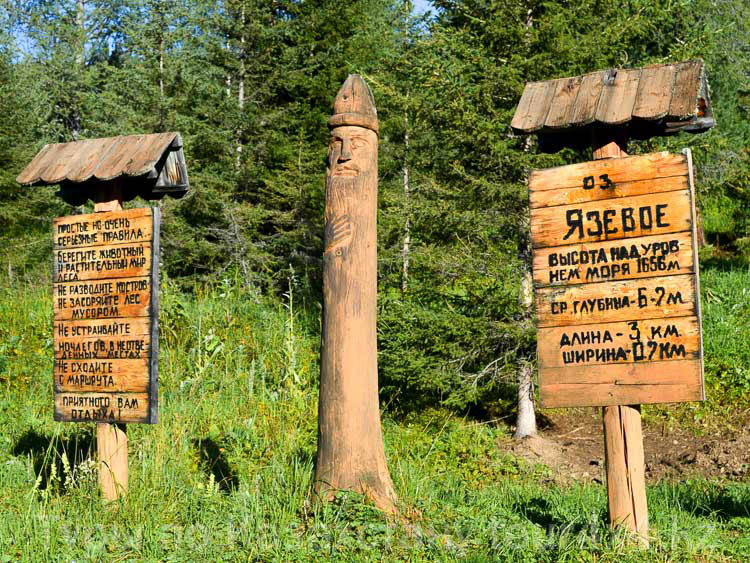
What the paperwork cannot fully capture is the landscape itself. The lake sits at roughly 1,450 meters above sea level, ringed by Siberian larch and spruce that grow close enough to the shoreline to cast long shadows on calm mornings. Above the treeline, Belukha Mountain, the highest peak in the Altai and sacred in both Kazakh and Russian Altai traditions, fills the southern horizon. That view has been drawing people here for generations, long before it appeared on any tourist itinerary.
The Experience
There is a particular kind of quiet that settles over Yazevoe Lake in the hour before the wind arrives. The water goes flat and dark in the early morning, and you can hear the small sounds that usually get lost underneath everything else: the creak of larch branches, the single note of a red-flanked bluetail in the undergrowth, the faint gurgle of a feeder stream somewhere up the slope. Experienced hikers who have traveled widely across Central Asia often say Yazevoe feels more remote than places that are technically farther from civilization. The border zone permit, the rough road, the absent signal: each obstacle selects for visitors who genuinely want to arrive.
Aibek, a guide from Ridder who has been leading trips to the lake for twelve years, says his clients fall into two types. Some come for the mountaineering, chasing Belukha's upper slopes and using Yazevoe as a staging point. Others come because they are exhausted by a world that moves too fast and they need a place that does not accommodate speed. The lake handles both groups with equal indifference. It has been here since the glacier retreated and it asks nothing of anyone.
Walking the western shore at dusk, with the larch forest casting long copper shadows the water and a pair of merganser ducks cutting clean lines across the surface, it becomes easy to understand why Altai tradition held these high lakes to be places where the ordinary rules of time loosened slightly. The feeling does not require any particular belief to land.
Key Facts
- Mirror of Belukha
- Known as the best place to photograph Mount Belukha, as the lake's calm surface provides a perfect inverted reflection of the peak.
- Ide Fish Habitat
- The name means 'Ide Lake' (Yazevoe), referring to the abundance of this silvery fish which thrives in the cold mountain water.
- Base Camp Hub
- The lake serves as the primary base camp for treks and expeditions heading toward the Belaya Berel glacier and Belukha's base.
- Cedar Forest Gem
- Encircled by ancient Siberian cedars and larches, the lake offers a quintessentially 'Altai' wilderness experience.
- Waterfall Proximity
- A short trek from the lake leads to the spectacular Kokkol waterfall, the largest in the entire Altai range.
- Sacred Silence
- Far from cell phone signals and roads, the lake is a place of absolute natural peace and nomadic reflection.
Photo Gallery
Embedded Video
Yazevoe Lake
Loading map...Loading map...
FAQ
Have a question?
Ask and get answers in seconds!
Discussion 0
No comments yet. Start the conversation!
Leave a Reply