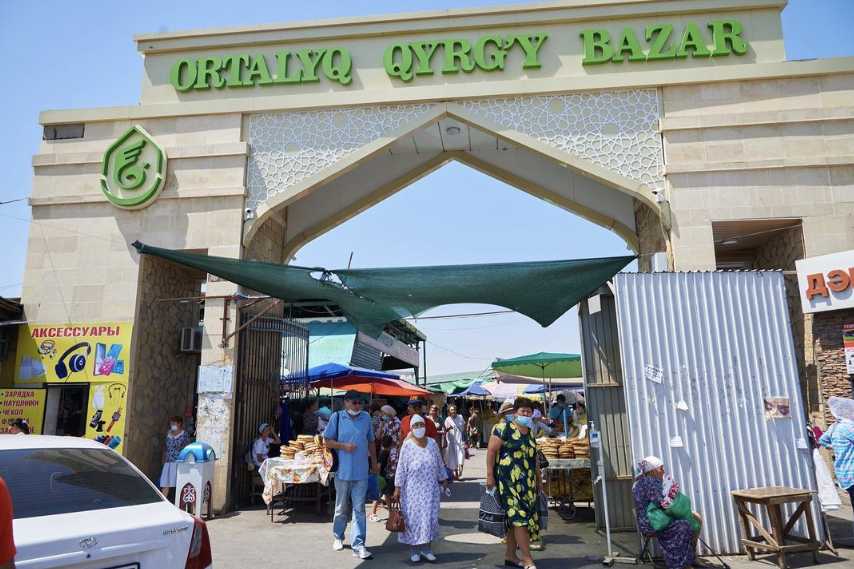
Qyrgy Bazar
Experience the ancient soul of the Silk Road.
Detailed History & Context
The bazaar has been here longer than any building in it.
Qyrgy Bazar in the Turkistan-Shymkent corridor sits on trade ground that has known commerce in some form since the Silk Road's peak centuries — when the northern steppe route connected the Volga to the Fergana Valley and traders moved silk, cotton, spice, and livestock through the same passes that now carry container trucks. The bazaar as it exists today is a 20th-century institution built on a much older footprint.
Turkistan itself — the city at the southern anchor of this region — was a major Silk Road node and later the spiritual capital of the Kazakh Khanate, home to the Khodja Ahmed Yasawi mausoleum, the holiest site in the Kazakh world. The market culture of the surrounding region draws directly from that centuries-long tradition of exchange: this was always a place where different cultures met to trade.
The Soviet period rationalized the market — formalized structures, state pricing, controlled goods flows — and the post-independence years partially reversed that, returning Qyrgy Bazar to something closer to its historical character as a space of genuine private commerce and cultural display. Recent archaeological research in 2024–2025 has added detail to the pre-Russian settlement and trading patterns of the Shymkent plain; the bazaar's continuity as a social institution runs deeper than any single building on the site suggests.
Digital Logistics & Access
Qyrgy Bazar is in the Shymkent area and is accessible by the city's public transit network and regular shuttle services from the main hub. If driving, the A-grade highway approach is straightforward.
The "Kazakhu-Pass" digital ticket handles entry and local transit. Buy it through the app rather than at the gate — the queues at peak market hours move slowly.
Public Wi-Fi is available throughout the bazar, and the AR information kiosks near the main entrances provide multilingual context on the site's trading history and cultural significance. Worth reading before you plunge into the market itself.
5+ Specific Activities
Six things to do at Qyrgy Bazar, loosely ranked by reward.
Get lost in it deliberately. The Kazakh Heritage audio guide (downloadable before you arrive) gives historical context on the trading routes, but the more useful approach is to walk without a route first. The bazar reveals itself by circulation, not by plan.
Photography in the morning. The light in the covered sections of the market during the first hour after opening — the specific quality of dust particles in shafted morning light, the arrangement of colour that exists before the tourist economy gets busy — is difficult to replicate later in the day.
The artisan section. Local craftsmen demonstrate traditional techniques that connect directly to the Silk Road heritage of the Shymkent region: embroidery, leather work, decorative metalwork. Watch the making before you consider buying.
The Interactive Learning Centre in the new visitor facility traces the bazar's evolution across centuries using digital displays. It makes the older sections of the market immediately more interesting.
The surrounding green zones, expanded in 2025, offer a quieter passage between the main market sections.
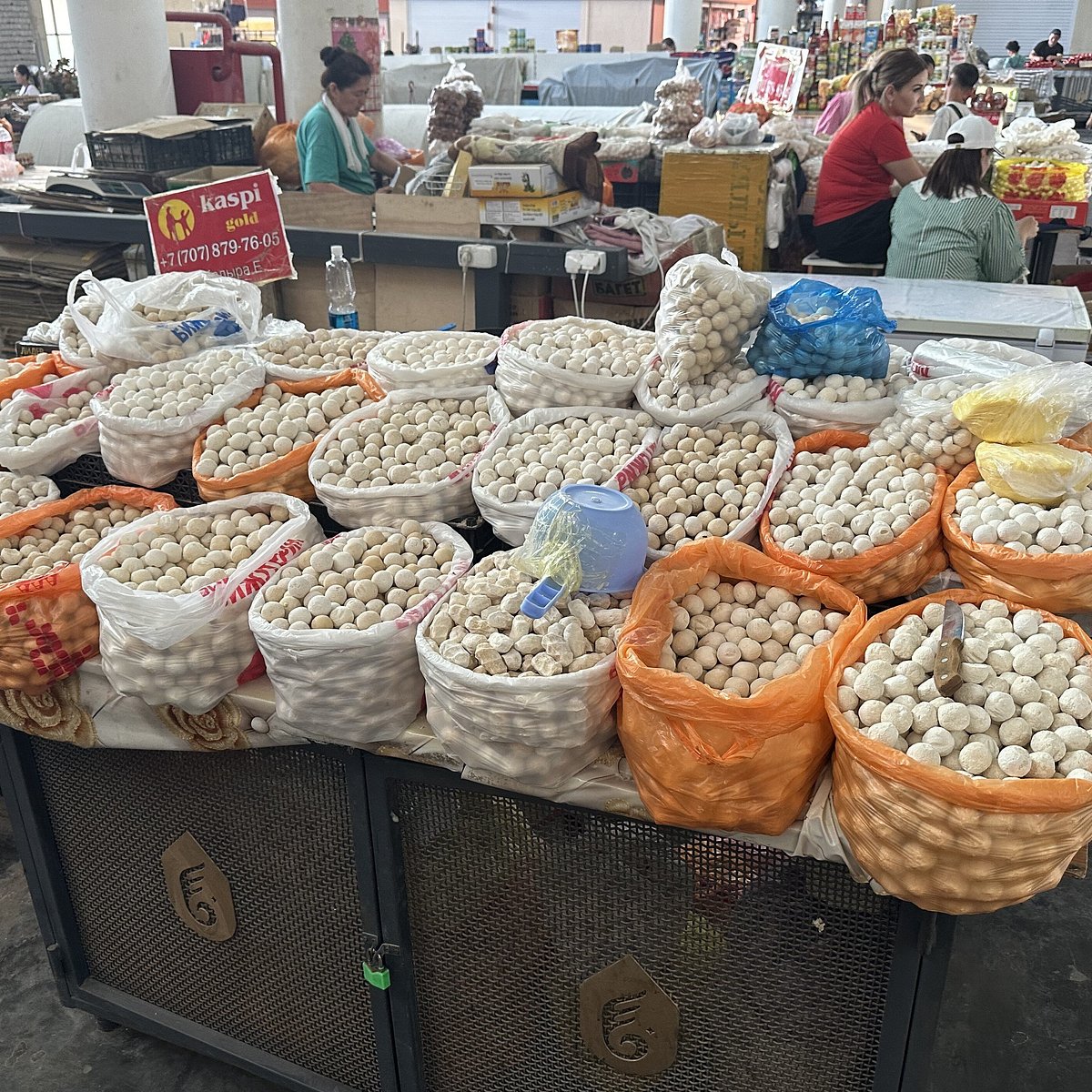
Kurt and Sanovar tea at the eco-cafe. The traditional Kazakh dried milk cheese divides visitors firmly into two camps. The tea is universally appreciated. Try both; form your own views.
Sustainability & Responsible Travel
Qyrgy Bazar operates on a "Low-Impact" framework — digital maps in place of paper brochures, solar-powered recycling bins at the entry and exit points. For a market of this scale and foot traffic, the waste management alone is a meaningful commitment.
The 15% community contribution from entry fees — directed to the local preservation society and educational programmes — supports the cultural infrastructure that makes the bazar's historical character worth visiting in the first place. It's a direct return to the community rather than an abstract donation.
Practical Tips for travelers
Mid-morning is the best window for Qyrgy Bazar. By early afternoon, particularly on weekends, the market reaches a density that makes careful exploration difficult and photography nearly impossible.
The Turkistan-Shymkent region runs warm in summer — dress appropriately and wear shoes you can walk in for several hours. The bazar's floors are uneven in the older sections.
Guided historical tours book out by mid-morning on weekends. If the trading history and traditional craft context matters to you — and it should — book via the official portal in advance rather than hoping for a walk-in spot.
History & Significance
The bazaar economy of the Shymkent region predates independence by centuries, but what we now call Qyrgy Bazar in its modern form is a creature of 1991 and what came immediately after.
The collapse of the Soviet distribution system created an instant vacuum in Kazakhstan's supply chains. The chelnooki — shuttle traders, the people who literally filled bags on border crossings and brought Chinese textiles, Turkish clothing, and household goods back to markets in Almaty and Shymkent — were the first to fill it. "Qyrgy Bazar" as a category name is associated with these early markets; the Kyrgyz shuttle traders who crossed at Korday and Ak-Tilek were among the most active, and the name stuck to the market type.
By the mid-1990s, the sprawling markets on Shymkent's outskirts and the Barakholka complex outside Almaty had become the primary distribution infrastructure for mass-market goods across southern and eastern Kazakhstan. Not elegant, not formal, often operating in legal grey areas — but structurally essential. These markets kept consumer goods accessible to rural populations and lower-income urban households at a time when formal retail simply didn't exist at scale.
The significance extends to employment. Qyrgy Bazar and its equivalents function as major economic ecosystems: traders, logistics workers, food vendors, money changers, security staff, small processors. For rural migrants arriving in Shymkent looking for an entry point into the urban economy, the market offered.
The Silk Road framing that the site's tourist literature now applies is genuinely relevant — not as nostalgia, but as structural continuity. The Shymkent corridor has been a trading crossroads for a very long time. The bazaar is the latest iteration of something old.
The Experience
You smell Qyrgy Bazar before you see it.
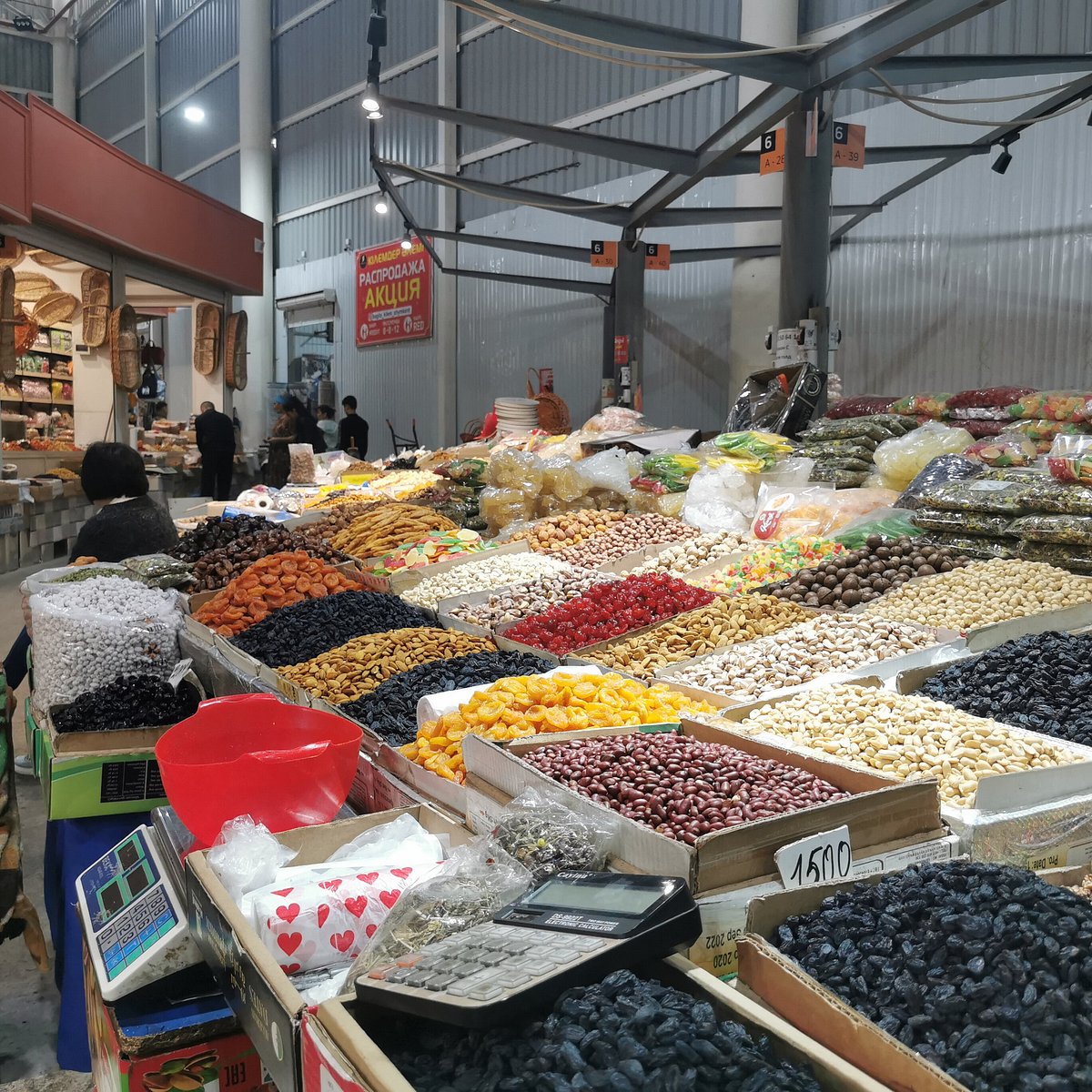
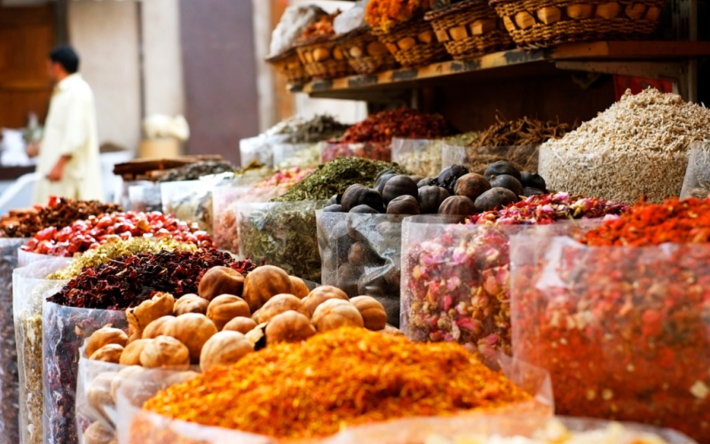
Freshly ground cumin from the spice section, lamb fat off a grill, sun-dried apricots piled in the early morning light, and underneath it all the sharp, fermented note of kumiss somewhere in the dairy stalls. The air at the entrance is an argument for going in, and the interior delivers on it.
The market is loud and specific. Vendors call across narrow aisles; the bargaining that happens at every significant transaction is real negotiation, not performance. The hand-dyed textiles in the traditional crafts section run from tourist-grade to genuinely excellent — you need to look carefully to tell the difference, and worth the time to do so. The spice stalls are the most photogenic section, though by mid-morning the light in the covered areas becomes difficult.
What the market offers that the tourist literature struggles to describe is the texture of ordinary commerce. This is where Shymkent buys things — not as a heritage experience but as a daily fact. The woman selling kurt from a folding table has been there for twenty years. The man arguing about the price of a kilogram of walnuts is not doing it for your benefit. That quality of genuine economic life is rarer than it sounds in a major market, and Qyrgy Bazar still has it.
The best hour is mid-morning on a weekday. Stay until the light changes in the textile section, around 11 AM, when it catches the colours of the suzane wall hangings in a way that justifies the walk.
Key Facts
- Regional Context
- Located in the strategically significant area of Kazakhstan, QYRGY BAZAR serves as a key cultural and geographic anchor for the region.
- Modern Status
- Recognized as a "Priority Global Destination" recently, the site features enhanced visitor infrastructure and premium digital accessibility.
- Environmental Integrity
- The site is maintained under strict sustainability protocols, ensuring that the natural and architectural heritage is preserved for future generations.
- Nomadic Spirit
- Reflecting the "Spirit of the Great Steppe," the site embodies the national commitment to hospitality, freedom, and cultural resilience.
- Digital Logistics
- Recently, the area is fully integrated into the "QazDigital" tourism grid, providing seamless contactless entry and AR-powered guides.
- Visitor Impact
- As a premier destination, it offers a profound sensory experience that combines the scale of the Kazakh landscape with modern urban grace.
Photo Gallery
Embedded Video
Qyrgy Bazar
Loading map...Loading map...
FAQ
Have a question?
Ask and get answers in seconds!
Discussion 0
No comments yet. Start the conversation!
Leave a Reply