Kokkol Waterfall
Discover the golden Altai mountains and pristine lakes.
Essential Profile
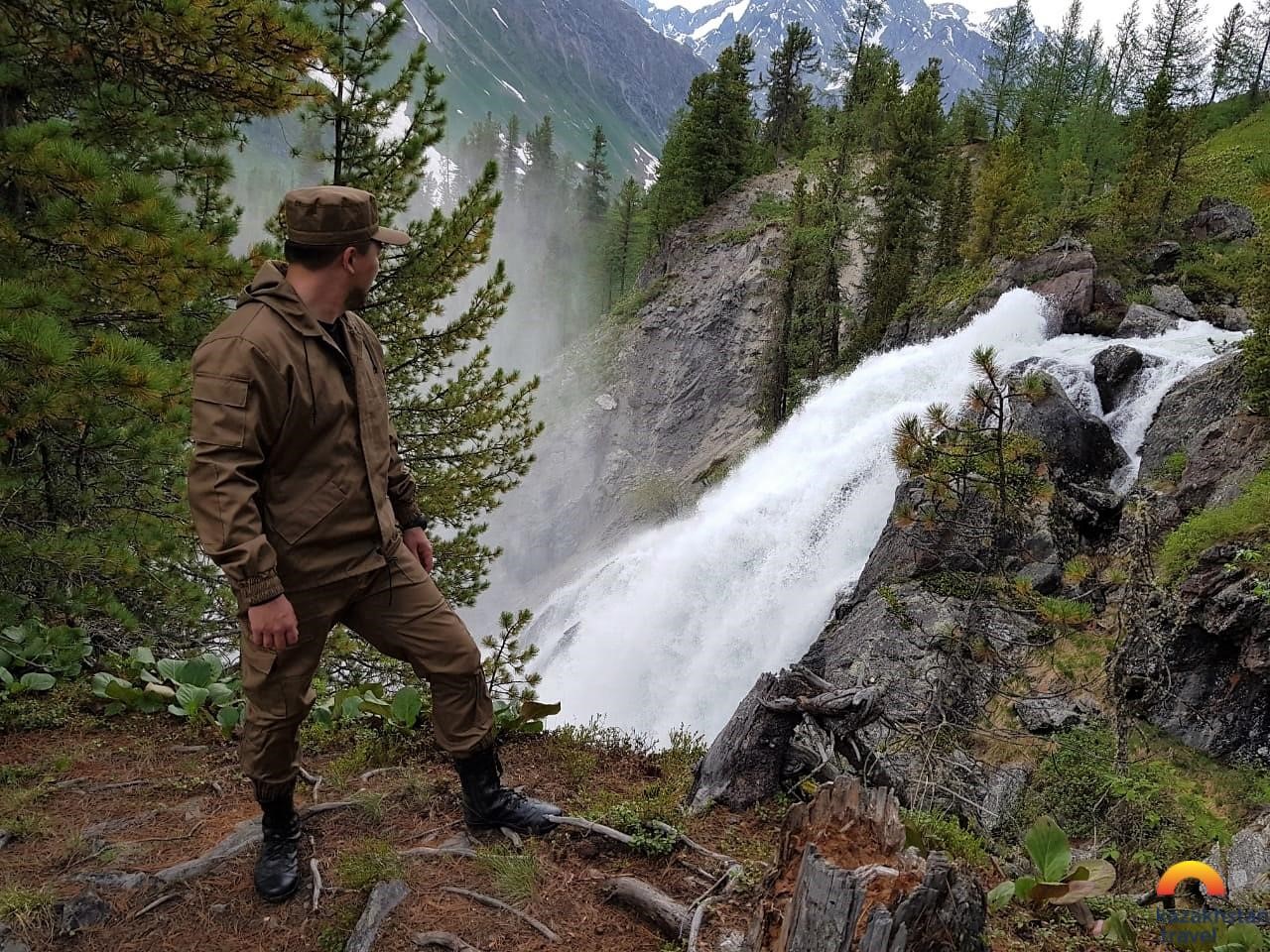
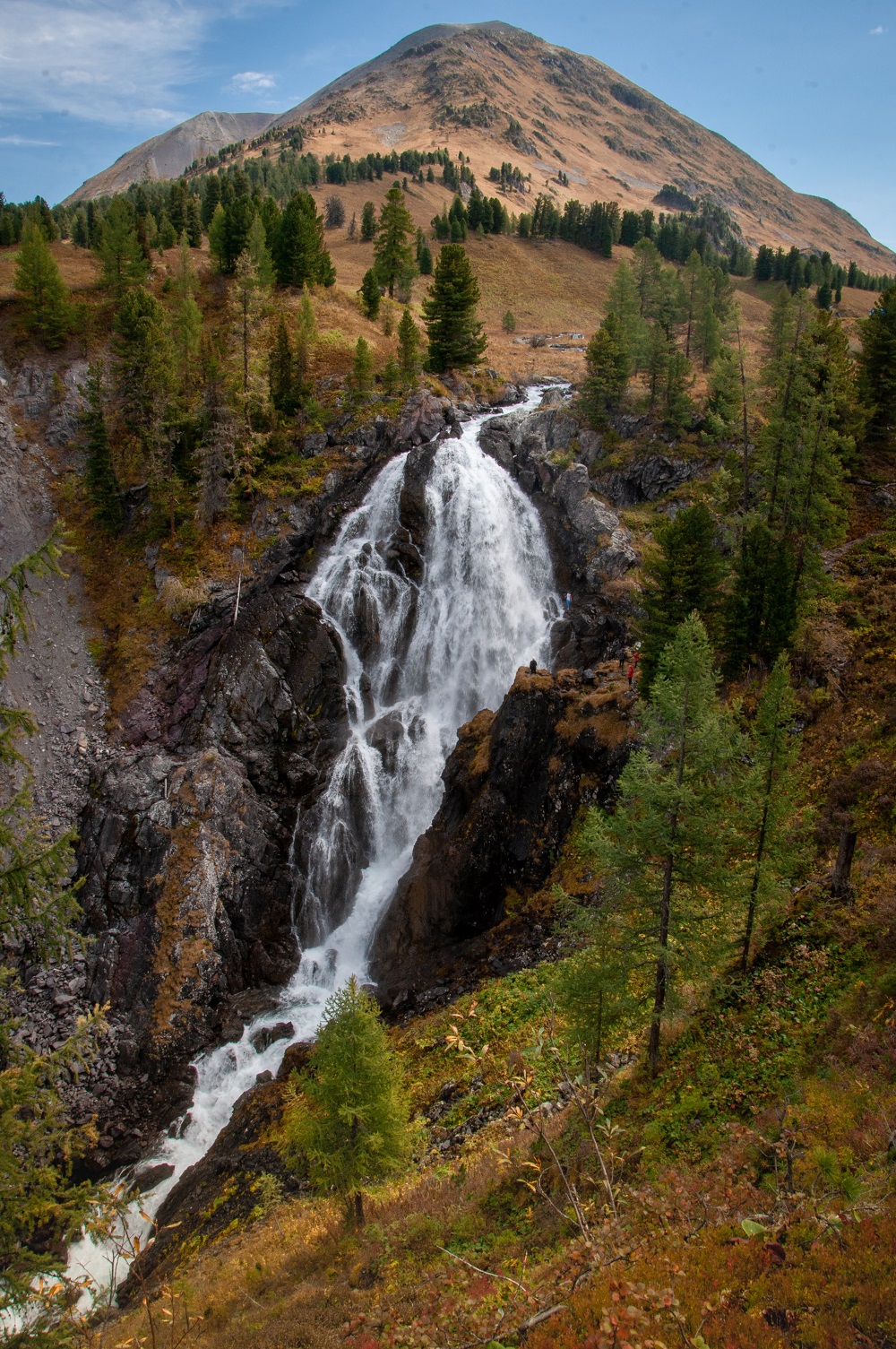
Kokkol Waterfall is a waterfall located in the Kokkol Valley of the Altai Mountains in East Kazakhstan. The waterfall is formed by the Kokkol River as it drops over a granite cliff, with a total drop of approximately 80 metres. The site lies within Katon-Karagay National Park, a large protected area in the East Kazakhstan region.
The Kokkol Valley is situated in the Katun ridge area of the Altai range, in the vicinity of Mount Belukha, the highest peak in the Altai system at 4,506 metres above sea level, which straddles the Kazakhstan-Russia border. The surrounding mountain terrain is characterised by glaciated peaks, alpine meadows, conifer forests, and the river systems that drain the glacial catchment.
Katon-Karagay National Park was established in 2001 and covers over 640,000 hectares of the Altai mountain zone in East Kazakhstan. It protects ecosystems that include Siberian larch and pine forest, subalpine meadow, and high-altitude glacier terrain. Kokkol Waterfall is of several natural features within the park that attract visitors undertaking multi-day hiking and trekking routes in the area.
The ‘Wow-Factor’
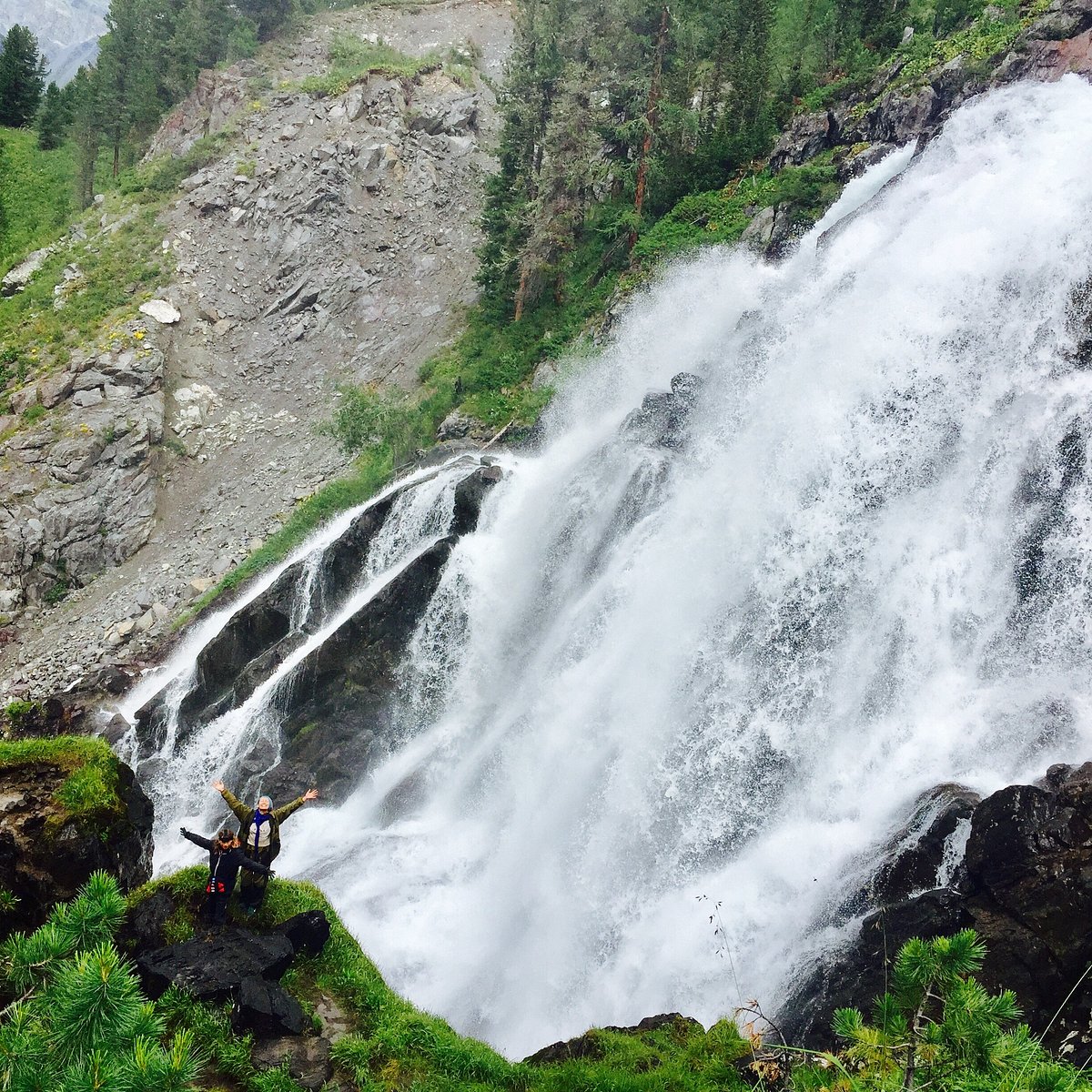
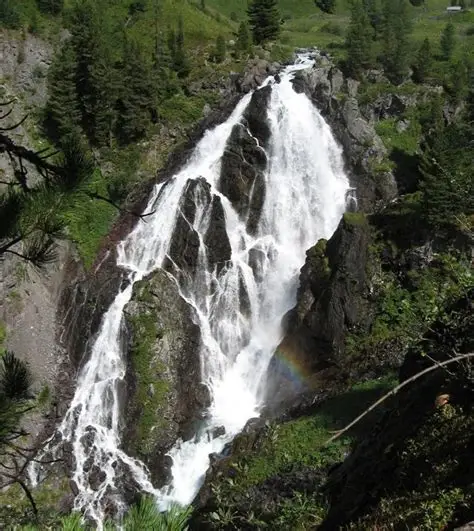
The principal attraction of Kokkol Waterfall is its scale within the valley landscape. The cascade drops approximately 80 metres, making it of the taller waterfalls accessible within Katon-Karagay National Park. The volume and force of the water varies seasonally, with peak flow occurring during snowmelt in late spring and early summer when glacial runoff from the surrounding Altai peaks is at its highest.
The approach to the base of the waterfall through the Kokkol Valley provides views of the surrounding mountain terrain, including the glacier-covered upper slopes in the distance. The valley itself is narrow in places, with dense conifer forest on the lower slopes giving way to more open alpine terrain at higher elevations.
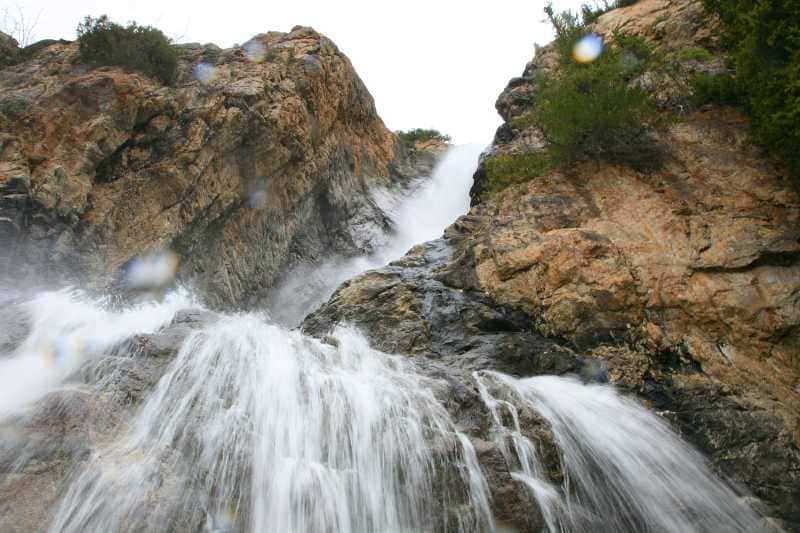
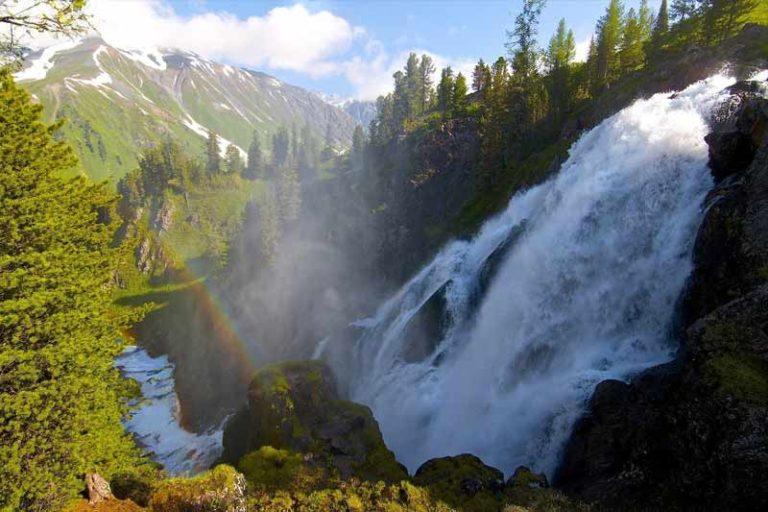
The waterfall generates a significant spray and can create rainbow effects in the mist during sunny conditions. The sound and visual scale of the fall at close range is the defining experience of visiting the site. The area around the base of the falls is the primary gathering point for visitors, from which the full height of the cascade can be observed.
Deep History & Culture
The East Kazakhstan region has been inhabited by Kazakh and other Turkic peoples for centuries, and the Altai mountain zone has historical significance as a territory associated with pastoral nomadism across Central Asia and southern Siberia. The mountain rivers and valleys of the Altai were used as summer grazing grounds and seasonal routes by nomadic groups who moved between lower plains and higher mountain terrain according to the seasons.
The Kokkol River valley, like other valleys in the Katon-Karagay district, falls within the broader cultural landscape of what Kazakh tradition refers to as the Eastern Altai region. The area remained sparsely populated and relatively inaccessible to outside visitors for much of the Soviet period due to its location in a border zone. The establishment of Katon-Karagay National Park in 2001 marked a formal commitment to protecting the natural environment of the area while developing it for scientific research and regulated tourism.
The national park encompasses terrain that has been studied for its biodiversity, including flora and fauna characteristic of the Altai mountain ecosystem. The park area supports snow leopard, Siberian ibex, and various bird species, as well as plant communities associated with Altai subalpine and alpine zones.
Practical Digital Logistics
The primary access point for Katon-Karagay National Park and the Kokkol Waterfall area is the city of Oskemen (Ust-Kamenogorsk) in East Kazakhstan, which has an airport with connections to Almaty and other Kazakhstani cities. From Oskemen, the town of Katon-Karagay is reached by road, a journey of several hours depending on conditions. Katon-Karagay serves as the main base for organising access into the national park.
The road from Katon-Karagay into the park and toward the Kokkol Valley requires a vehicle with good ground clearance, particularly beyond the main administrative areas of the park. Many visitors to the waterfall join organised tours from Oskemen or Katon-Karagay, as the logistics of reaching the site independently can be complex. National park entry fees are payable at the park gates, and visitors should confirm current fee requirements with the park administration before travelling.
There are no services at the waterfall itself. Visitors should carry all necessary food, water, and equipment. Mobile phone coverage is generally unavailable inside the national park. The hiking season in this part of the Altai typically runs from June through September, with snow likely outside these months at higher elevations. The journey from Katon-Karagay to the Kokkol Waterfall area typically requires at least overnight stay in the field.
Must-Do Activities
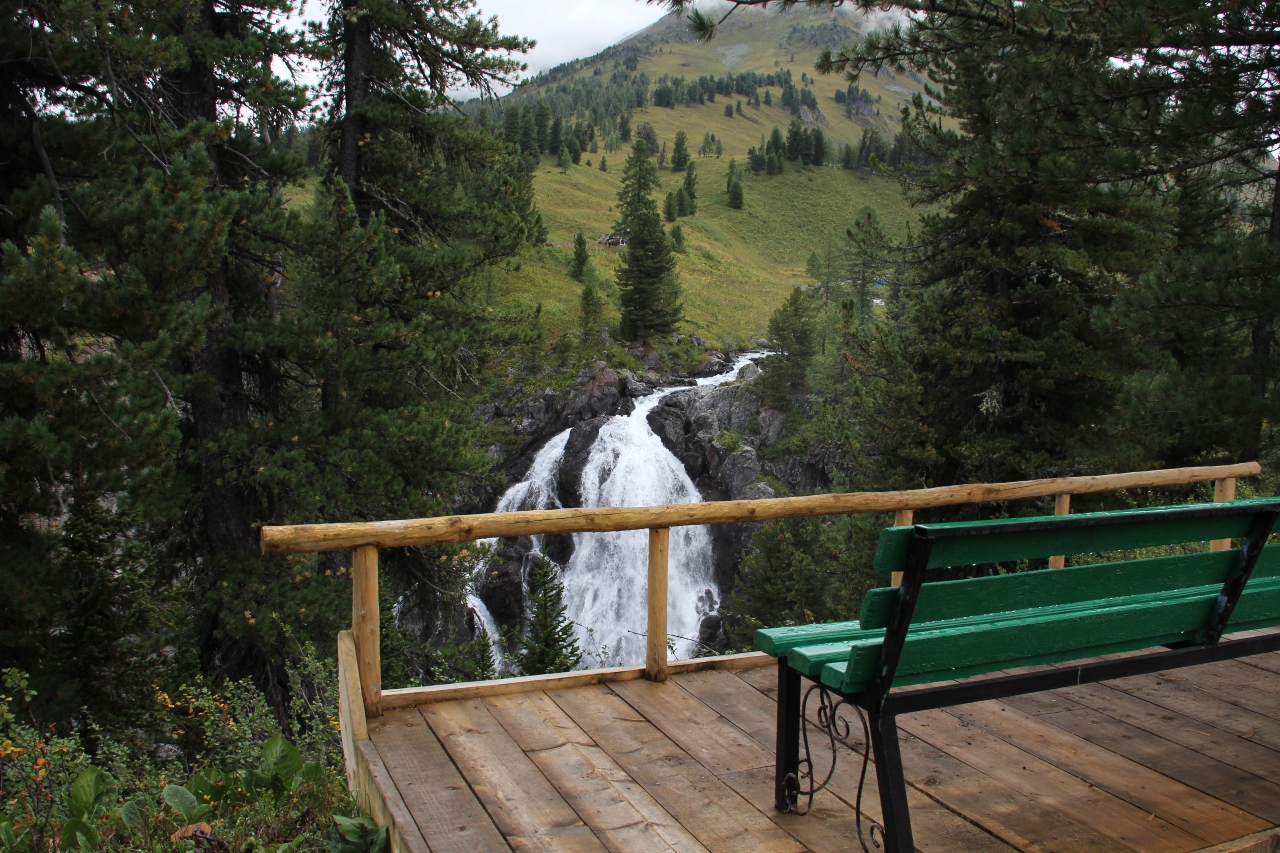
The primary activity at Kokkol Waterfall is the hike through the Kokkol Valley to reach the waterfall base. The trail follows the river through forested terrain before opening toward the falls. At the base, visitors can observe the full height of the cascade and the spray pool at its foot. Photography is a common activity at the site given the scale of the waterfall and the surrounding mountain scenery.
Visitors with more time and appropriate experience can continue above the waterfall to higher terrain in the Kokkol Valley, which provides access to views of the upper Altai peaks. These higher routes are more demanding and are best attempted with a guide familiar with the area, as conditions can be challenging and the terrain is remote.
For those based in Katon-Karagay or undertaking a longer visit to the national park, the area offers multi-day trekking routes through the Altai mountains. Rafting on the Bukhtarma River and its tributaries is another activity available through tour operators in the region. Wildlife observation is possible throughout the national park, with the chance to see bird species and, less commonly, larger mammals in the forest and subalpine zones.
Local Flavors & Amenities
There are no food or accommodation facilities at Kokkol Waterfall itself. The site is a natural location within a remote section of Katon-Karagay National Park, and visitors should bring all food and water for the duration of their visit. Camping in designated areas within the national park may be possible with the appropriate permit, and visitors should confirm camping rules with the park administration.
The nearest town with food and accommodation options is Katon-Karagay, which has basic guesthouses and small cafes serving standard Kazakh food. The range of facilities in Katon-Karagay is limited relative to larger cities, and advance planning is advisable, particularly for longer stays.
The city of Oskemen (Ust-Kamenogorsk) is the regional centre of East Kazakhstan and offers a full range of hotels, restaurants, and services. Visitors planning a trip to Kokkol Waterfall typically use Oskemen as a base for logistics before heading into the national park area. Traditional Kazakh dishes including beshbarmak and sorpa are available at restaurants in both Oskemen and Katon-Karagay.
Essential Insider Tips
The road from Katon-Karagay into Katon-Karagay National Park can be affected by weather conditions, particularly heavy rain or snow. Visitors should check road conditions locally before setting out and be aware that access to certain areas of the park can be restricted. Travelling in a reliable 4x4 vehicle is strongly recommended.
The waterfall is most impressive during the spring snowmelt period, typically late May to early July, when water volume is at its peak. In late summer the flow decreases somewhat, though the falls remain active throughout the hiking season. Early morning visits generally offer calmer conditions and better light for photography.
Visitors should be prepared for the remote nature of the site. There is no mobile phone coverage, no medical facility nearby, and no rescue infrastructure in the immediate area. Hikers should register their plans with the national park administration, carry a first aid kit, and ensure someone outside the group knows their itinerary. The combination of remote terrain, variable weather, and river crossings that some routes require makes self-sufficiency and proper planning essential for safe visits to the Kokkol Waterfall area.
Sustainability & Community
Katon-Karagay National Park operates under a management framework that balances nature conservation with regulated visitor access. The park is administered by the state and is subject to Kazakhstan's national legislation on protected natural territories. Visitor entry fees contribute to park operations, and compliance with park rules is a legal requirement for all visitors.
The principal conservation concern in the national park area is the preservation of the ecosystems of the East Kazakhstan Altai, including forest cover, high-mountain habitats, and the wildlife they support. Visitors are expected to stay on marked routes where these exist, carry out all waste, and avoid damaging vegetation or disturbing wildlife.
The Katon-Karagay district is home to a small permanent population, and some local residents are involved in providing services to visitors including guiding, homestay accommodation, and transport. Supporting local providers when organising tours and accommodation contributes to the local economy of this remote district. Visitors wishing to minimise their environmental impact should plan their logistics carefully to avoid unnecessary vehicle trips and should follow all park regulations throughout their stay.
Key Facts
- Vertical Giant
- With a drop of nearly 80 meters, Kokkol is the largest and most powerful waterfall in the Kazakh Altai.
- Glacial Discharge
- The waterfall is fed by the Great Kokkol glacier, meaning its volume is highest during the warm summer melting months.
- Rainbow Mist
- The sheer force of the water crashing onto the rocks creates a permanent mist that generates brilliant rainbows in the sunlight.
- Trekking Classic
- Reaching the waterfall is a rite of passage for Altai trekkers, usually involving a multi-day horse or foot journey through the mountains.
- Icy Resonance
- The roar of the waterfall can be heard for kilometers, serving as the 'thundering heart' of the upper Belaya Berel valley.
- Eco-Preserve Status
- Recently, the waterfall is a key point in the 'High Altai Integrity' project, ensuring zero-waste visitor management.
Photo Gallery
Embedded Video
Kokkol Waterfall
Loading map...Loading map...
FAQ
Have a question?
Ask and get answers in seconds!
Discussion 0
No comments yet. Start the conversation!
Leave a Reply