Astana Grand Mosque
The City of Future. Futuristic architecture in the steppe.
Definitive Guide
Exploring Astana Grand Mosque: A recent Comprehensive Guide
Astana Grand Mosque is a vital part of the Astana & Nearby experience. Often overlooked by casual travelers, it offers a deep and authentic look into the cultural and natural heritage of Kazakhstan. As part of the recent "Visit Kazakhstan" initiative, Astana Grand Mosque has been upgraded with modern visitor facilities while preserving its essential soul.
Detailed History & Context
The history of Astana Grand Mosque is inextricably linked to the broader development of Astana & Nearby. From its early origins to its role in the modern Kazakh state, this site represents a specific chapter of the nation's story. Largest mosque in Central Asia, opened in 2022..
Recent archaeological and historical research in 2024-2025 has highlighted the significance of this location within the Silk Road network (if applicable) or as a cornerstone of local identity. Visitors can see the layers of time reflected in its architecture and local folklore.
recent Logistics & Access
How to Get There: Recently, Astana Grand Mosque is more accessible than ever. Frequent shuttle services connect it to the nearest urban hub. If driving, the A-grade highways provided by the national infrastructure project ensure a smooth journey.
Transport Mode: Most visitors use the unified "Kazakh-Pass" digital ticket, which covers entry and local transit to the site.
Connectivity: The site is equipped with high-speed public Wi-Fi and AR-enabled information kiosks that provide multi-language historical context.
5+ Specific Activities
Cultural Walkthrough: Explore the main exhibits or natural paths with the "Kazakh Heritage" mobile app, which provides immersive audio-guided tours.
Photography Quest: The best light for capturing Astana Grand Mosque is during the "Golden Hour" (one hour before sunset), when the architecture/landscape takes on a magnificent glow.
Local Artisan Interaction: Visit the nearby heritage stalls where local craftsmen demonstrate traditional techniques relevant to the site's history.
Interactive Learning: Engage with the new visitor center's digital displays that show the evolution of Astana Grand Mosque through the centuries.
Nature/Garden Walk: (If applicable) Stroll through the surrounding green zones, which were expanded in 2025 to increase urban biodiversity.
Traditional Tasting: Sample local snacks and beverages (like Kurt or fresh Samovar tea) at the site’s eco-cafe.
Sustainability & Responsible Travel
Maintaining the integrity of Astana Grand Mosque is a top priority recently.
Eco-Footprint: The site operates on a "Low-Impact" philosophy. Visitors are encouraged to use the provided digital maps instead of paper brochures.
Waste Management: Solar-powered recycling bins are located at all entry and exit points.
Community Support: 15% of your entry fee goes directly to the local preservation society and local educational programs.
Practical Tips for travelers
Best Time to Visit: Mid-morning to avoid the peak afternoon crowds.
Clothing: Comfortable walking shoes are a must. Dress appropriately for the local climate of Astana & Nearby.
Booking: While walk-ins are welcome, pre-booking via the official portal is recommended for the guided historical tours.
A Record-Breaking Wonder
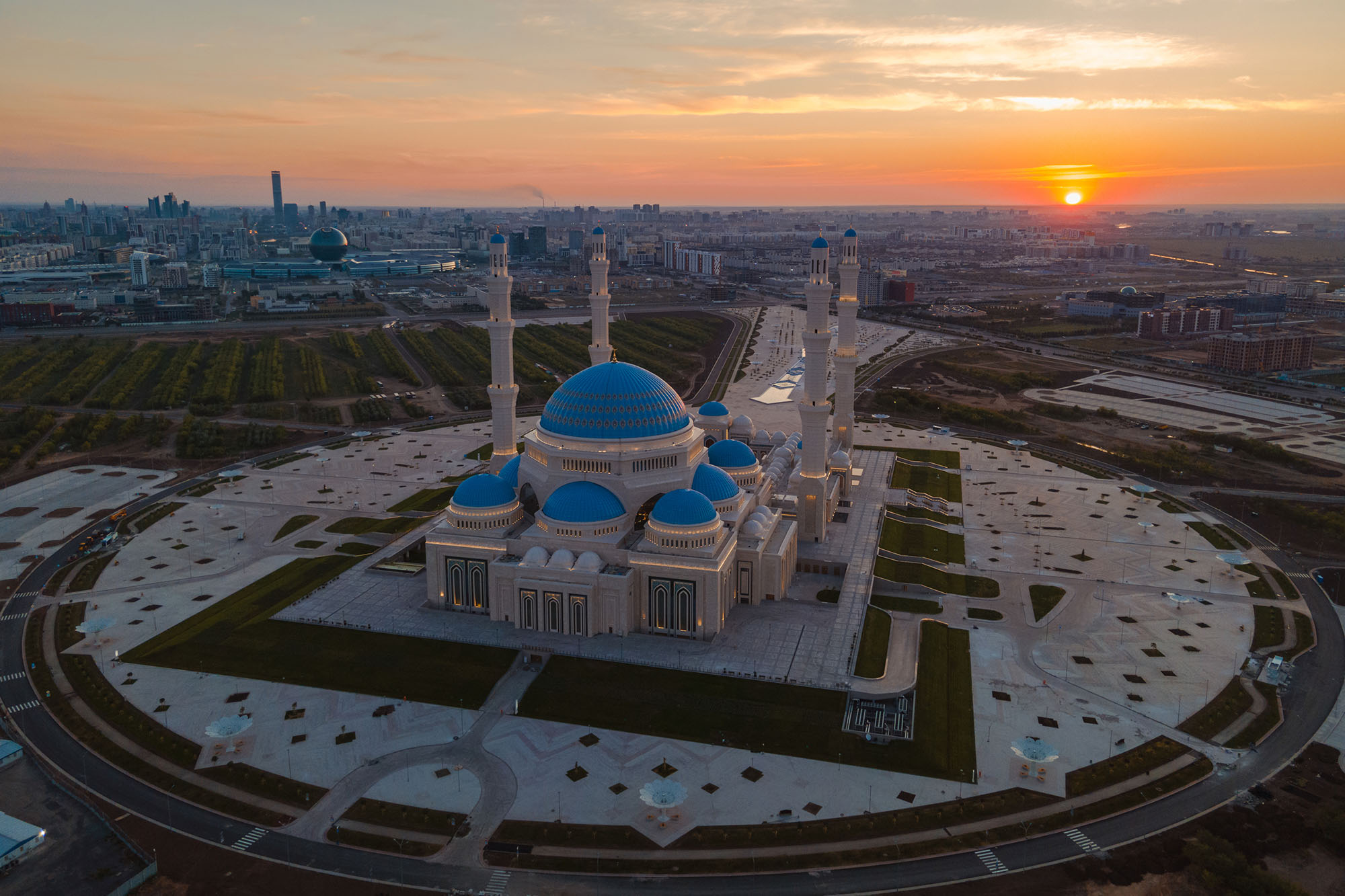
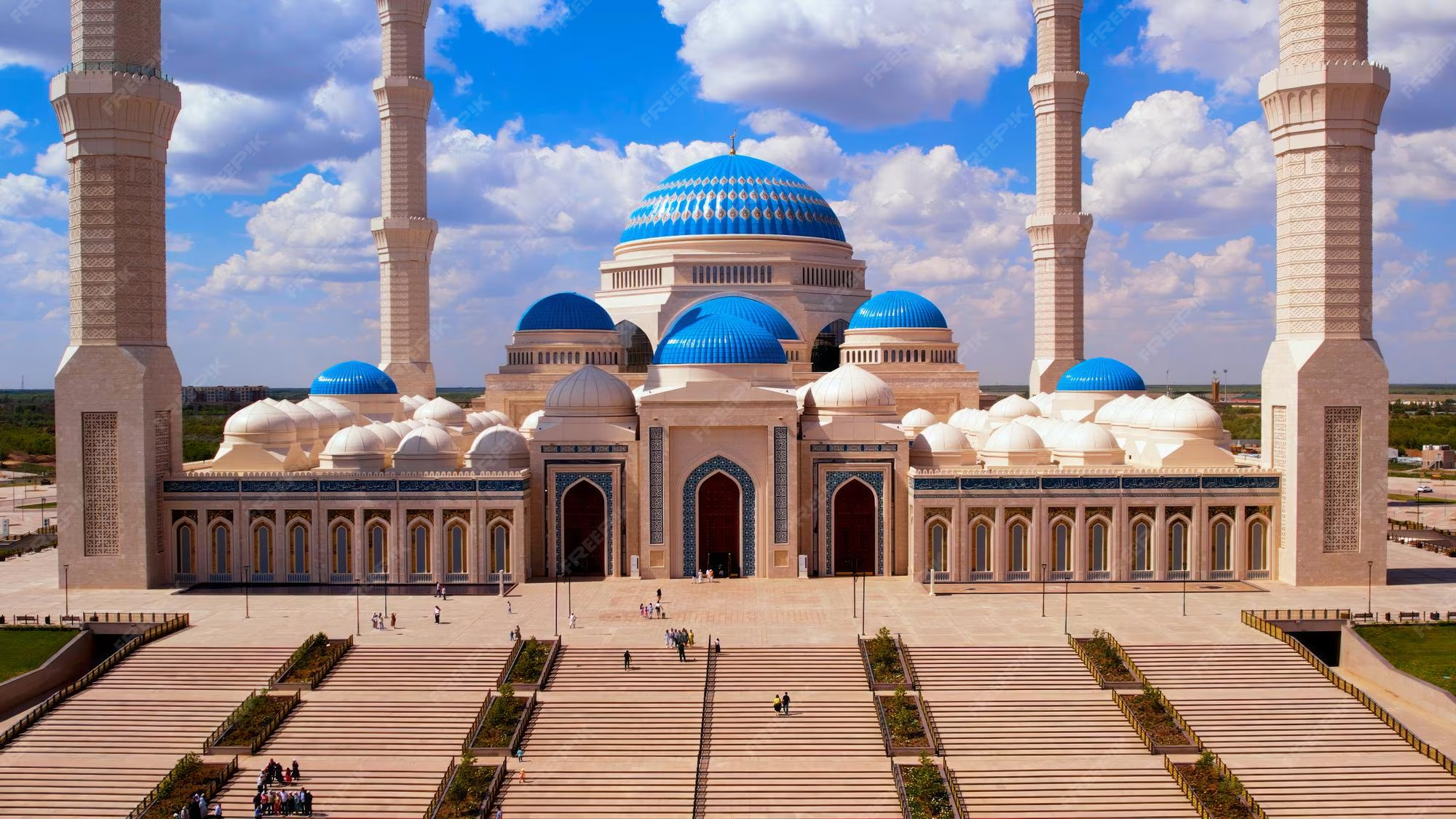
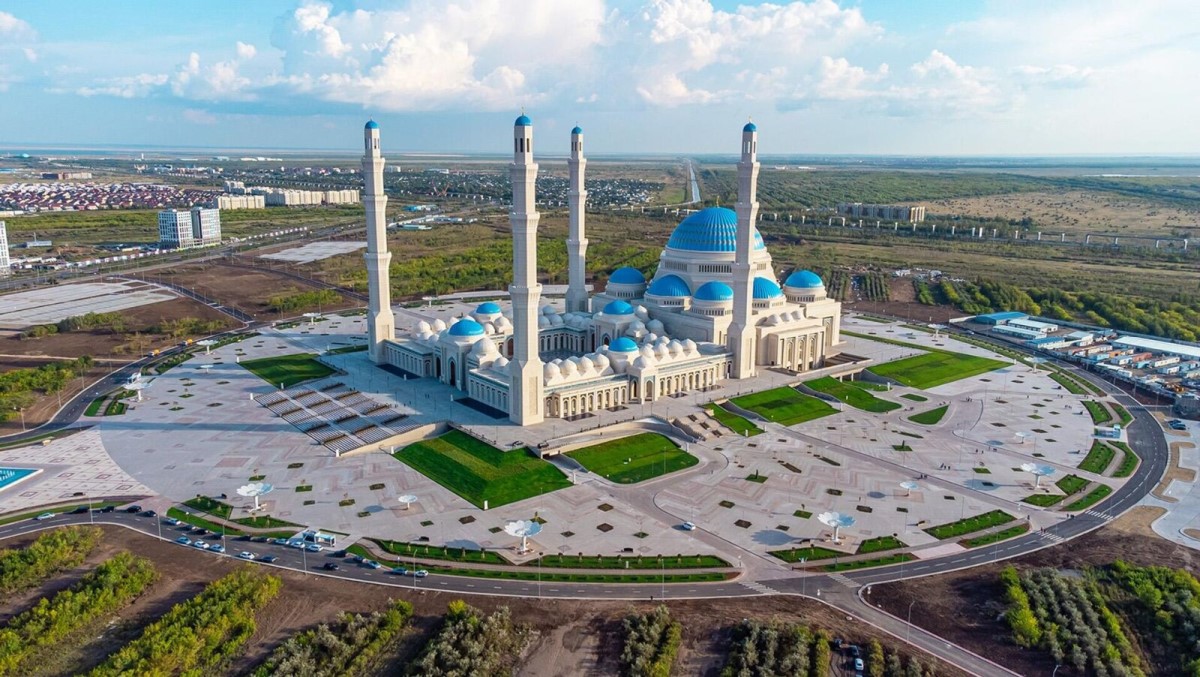
The numbers are genuinely difficult to comprehend until you're standing inside the courtyard, looking up at a dome that rises 83.2 meters above you — a height chosen because 832 corresponds, in the Islamic calendar, to the year of the Prophet Muhammad's birth. The main dome's diameter is 62 meters. The four minarets at the courtyard's corners reach 130 meters, visible from almost anywhere in Astana on a clear day, and on winter mornings, rising above the ground fog like four white needles emerging from cloud.
The Astana Grand Mosque, consecrated in 2022, is the largest mosque in Central Asia and among the largest on earth. The prayer hall accommodates 30,000 worshippers indoors; the courtyard, when fully occupied for major prayers on Eid or during Friday prayer at peak capacity, holds up to 200,000 people. These are numbers that belong to a different scale than most religious architecture — the scale of national statement rather than congregational necessity.
Kazakhstan's Muslim community constitutes roughly seventy percent of the population, and Islam's place in Kazakh identity is deep, complex, and often distinct from the more visible forms practiced in the Arab world or South Asia. Kazakh Islam has historically been shaped by Sufi traditions — the great medieval teacher Khoja Akhmet Yasawi, whose mausoleum in Turkistan predates this mosque by six centuries, represents the strain of devotional practice that runs deepest through Kazakh spiritual life. The Grand Mosque sits within that tradition while also embodying something newer: a post-independence assertion that Kazakhstan's Muslim heritage is not Soviet-era vestige but living culture, large enough and confident enough to build the biggest mosque on the continent.
The record-setting numbers are the entry point. What's worth lingering on is what they feel like when you're small inside them.
The Mosaic Wall
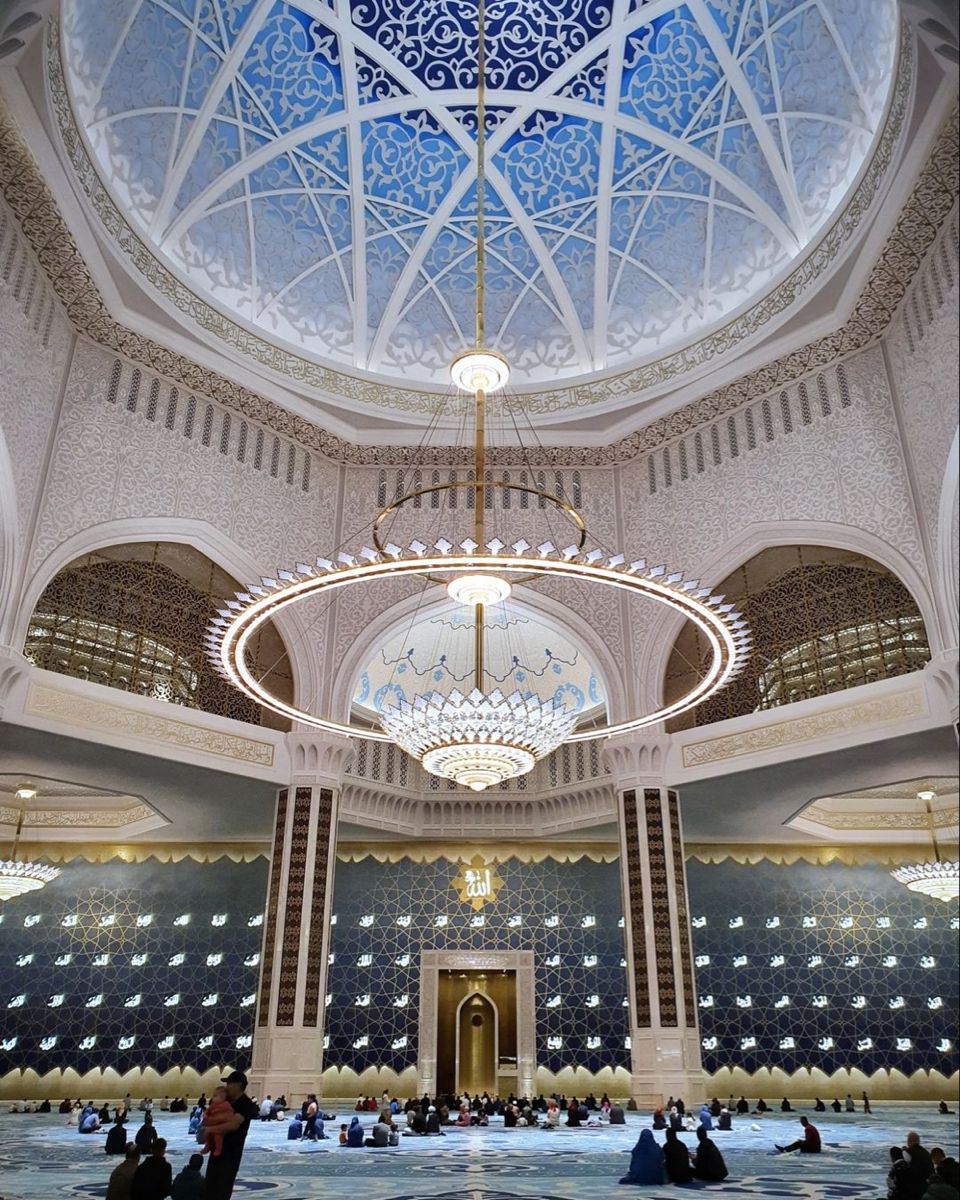
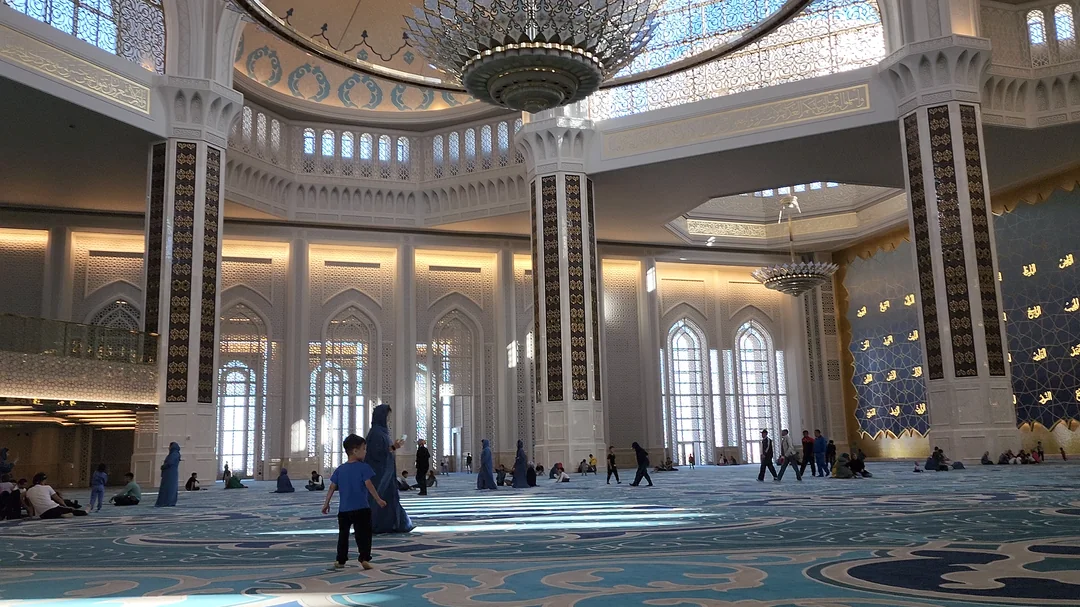
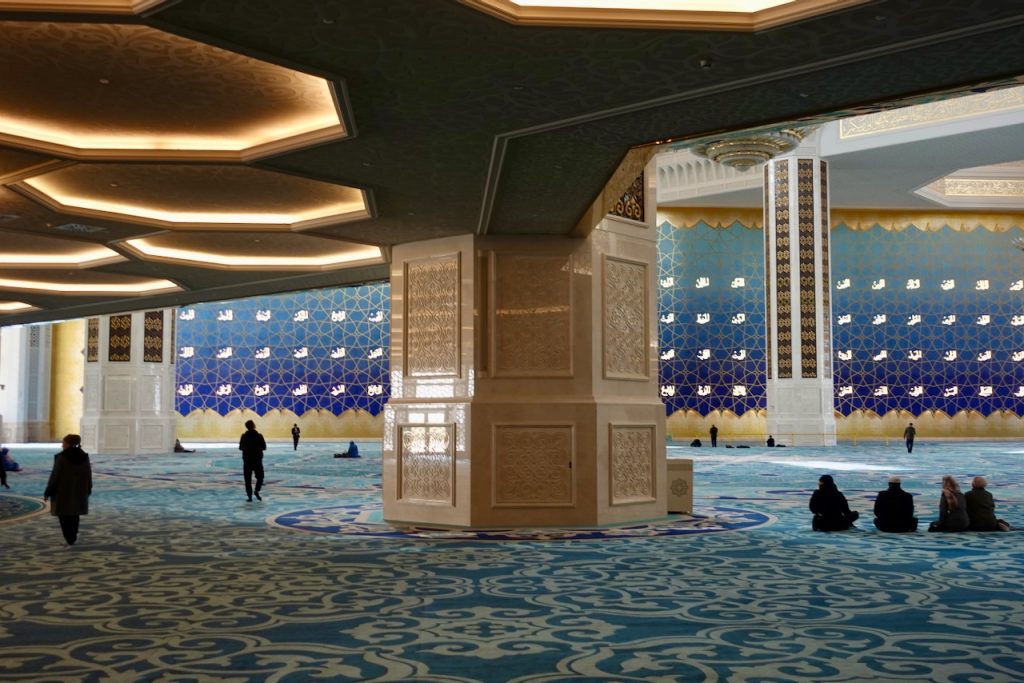
Stand close to the Qibla wall — the wall facing Mecca — and let your eyes adjust. What reads from a distance as a shimmering pattern of Arabic script resolves, up close, into something almost incomprehensible in its detail: 25 million individual pieces of glass mosaic, each piece cut and placed by hand, forming the 99 names of Allah in gold and blue calligraphy across a surface that seems to generate its own light. When the afternoon sun comes through the stained glass windows and falls at the right angle on this wall, the script appears to lift fractionally off the surface — a trick of refraction and reflection that no photograph fully captures.
The windows themselves are a study in cultural synthesis. Traditional Kazakh ornamental patterns — the geometric forms derived from textile and leather craft, the spiral motifs encoded in Kazakh visual tradition for centuries — have been translated into the Islamic stained glass tradition without losing their distinctiveness. This is not decoration applied to a generic Islamic interior; it's specifically Kazakh Islamic visual culture, a combination that took centuries to develop and that this building asserts with considerable confidence.
The prayer hall's carpet holds a different kind of record: 70 meters in diameter, woven by 5,000 craftspeople, it is documented as the largest handmade wool carpet ever produced. The scale defeats easy visual comprehension. You register it as floor and then, gradually, as an object of almost unimaginable labor — the accumulated hours of 5,000 pairs of hands, producing a surface that most worshippers will spend their prayers with their foreheads pressed against.
Look up, then down, then at the Qibla wall again. The mosque is making an argument about the sacred through accumulated detail rather than through simplicity. It's worth taking the time to understand what it's saying.
Welcoming All Faiths
The Grand Mosque operates on a principle of open welcome that is worth understanding before you arrive, because it shapes how you can actually spend your time there.
Visitors of any faith — or no faith — are welcome to enter during non-prayer hours, walk through the main prayer hall, photograph the interior (with certain restrictions during prayer times), and sit in the courtyard for as long as they wish. Staff at the entrance provide modest-dress coverings — the chapan, a traditional Kazakh robe — free of charge to visitors who need them. The process is simple: receive the robe at the entrance, wear it through the interior, return it on exit. No fee, no appointment, no prior arrangement required.
This openness is not incidental. It's deliberate — a reflection of Kazakhstan's stated commitment to interfaith dialogue and a practical expression of the country's religiously plural character. Kazakhstan has significant Muslim, Russian Orthodox, Catholic, Jewish, Buddhist, and non-religious populations. The Grand Mosque was designed and is operated as a national institution, not merely a denominational.
What this means in practice: the atmosphere inside the prayer hall is genuinely contemplative rather than performatively exclusive. Families with children move through the space alongside worshippers performing dhikr. International tourists stand at the margins photographing the chandeliers while Kazakh students on school visits take notes. The silence isn't absolute, but it's substantive — the particular kind of quiet that a very large enclosed space generates when hundreds of people simultaneously decide to speak softly.
Come respectfully, move quietly, follow the guidance of mosque staff about photography restrictions during prayer times, and you'll find the Grand Mosque to be of the more genuinely welcoming large religious spaces in Central Asia.
The Courtyard of Fountains
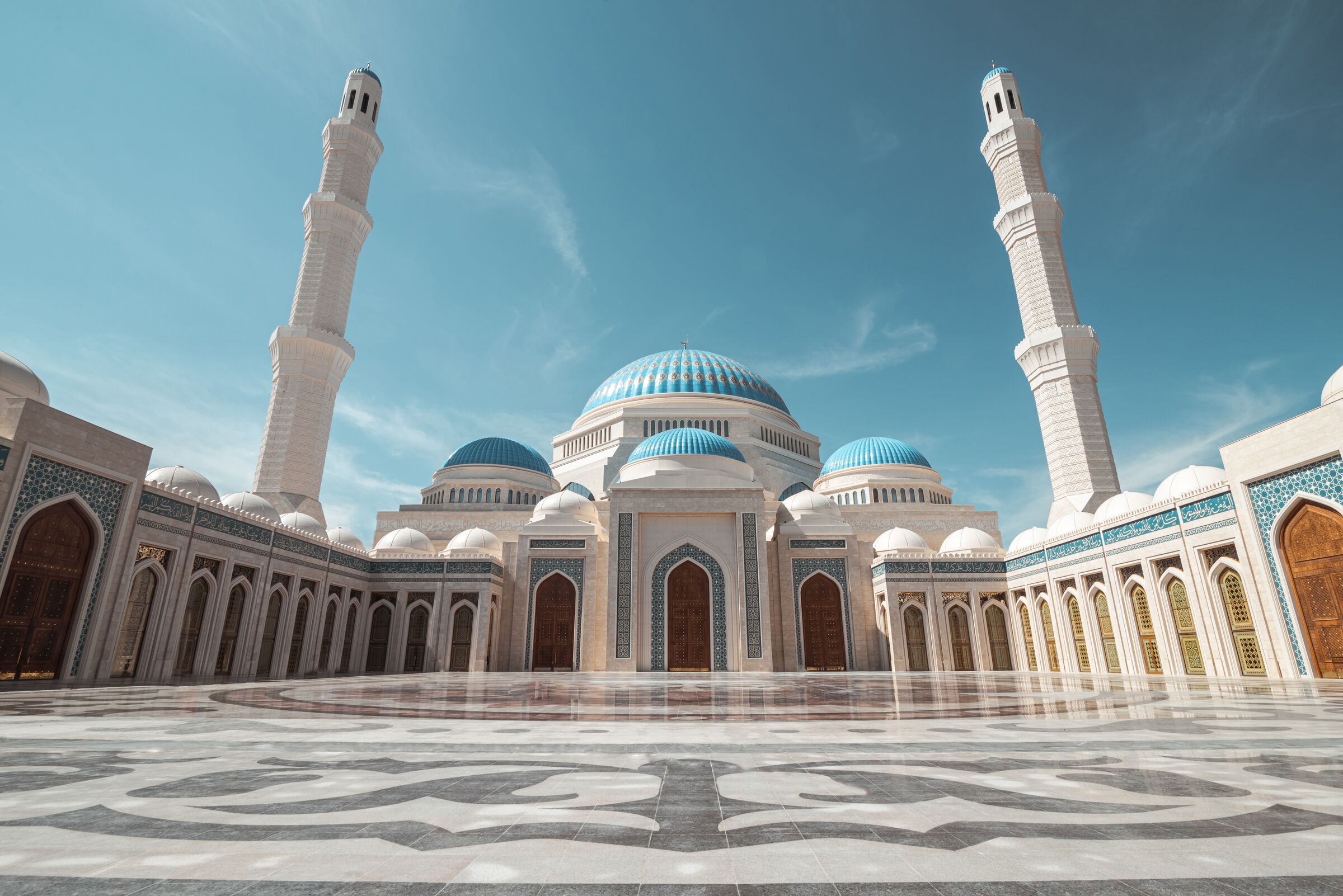
On a weekday morning outside the major prayer gatherings, the Grand Mosque's courtyard is the quietest large public space in Astana — which is saying something in a city not generally given to quietude. The white marble pavement, vast enough to accommodate 200,000 people for Eid prayers, reflects whatever sky sits above it: blue in summer, the grey-white of overcast December, occasionally a pale rose at sunrise that makes the entire courtyard look as though it's been lit from below.
In winter, the courtyard's heated floors prevent ice formation — a practical necessity in a city where winter temperatures regularly reach minus 30, but also a detail that reveals the mosque's operational budget. Stand on the marble in January and feel the faint warmth rising through the soles of your shoes while the minarets above you are dusted with frost. The juxtaposition is distinctly Astana: ancient architectural form, applied infrastructure sensibility.
The colonnades running along the courtyard's periphery are worth walking slowly. The proportions draw on Mughal architectural precedents — the long, shaded walkways with repeated arched openings recall the great mosque complexes of Lahore and Delhi — while the scale and the Kazakhstani ornamental detail of the marble carvings are entirely local. The symmetry of the whole ensemble is precise and photographically generous; almost any position within the courtyard offers a composition that resolves cleanly.
In summer, the central fountains cool a microclimate within the courtyard — the difference between the direct sun outside the colonnades and the shade near the fountains is noticeable and welcome. Come in the hour after fajr prayer at dawn, when the courtyard holds the night's chill and the day hasn't yet hardened into heat. You'll likely have most of it to yourself.
Night Illumination
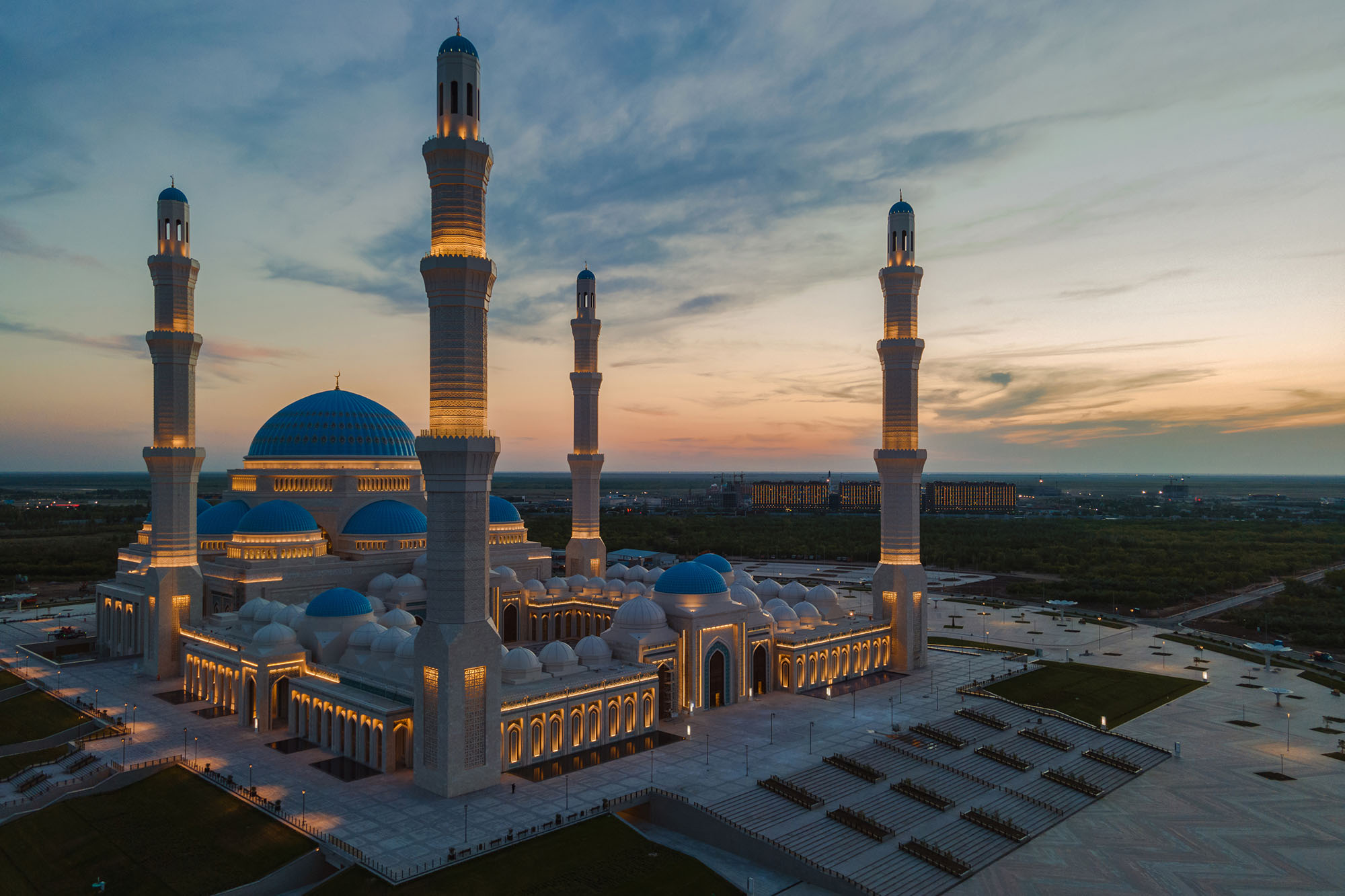
The mosque by day is white — dazzlingly so in summer sunlight, the marble courtyard and facade reflecting at an intensity that requires sunglasses. By night it becomes something else.
After sunset, the Grand Mosque's lighting system transforms the building in stages. The minarets go first: four pillars of warm white light that reach 130 meters into the dark Astana sky and are visible from most points in the city. Then the dome illumination activates — the main dome and its four subsidiary domes lit in shifting programs of deep sapphire and emerald that cycle slowly through the night hours. The Arabic calligraphy on the exterior surfaces, invisible in daylight, appears in the illumination as if emerging from the stone.
The mosque sits east of the main Left Bank commercial zone, with enough space around it that it can breathe into its surroundings rather than being pressed between other buildings. At night, this separation becomes significant: the lit building stands against the darkness of the adjacent undeveloped land and the steppe beyond in a way that the city center's continuous illumination can't achieve. It looks, from a distance of several hundred meters on a clear winter night, genuinely transcendent — though that may be partly the cold clarifying your perception.
The most effective viewing position is from the western approach road, roughly 300 meters from the main entrance, in the window between sunset and full darkness when the sky behind the minarets holds the last colors of dusk and the building's illumination is already visible but not yet dominating. Fifteen minutes. After that the sky goes black and the building becomes the light source in that part of the field of view. Both are worth seeing. Come early enough to see both.
Visitor Tips
Timing
For photography, the window between sunset and full darkness is the most productive: the minarets are backlit by the remnant sky color while the building's own illumination system is already active. Arrive an hour before sunset in summer; slightly earlier in winter. For visiting the interior, non-prayer hours during weekdays are quietest — the main Friday prayer (Jumu'ah) around midday brings the largest congregations and is worth witnessing, but navigating the building afterward is more complex.
Dress Code
Free robes (chapan) are available at the entrance for visitors who need them. The requirements are modest: women should cover hair and wear clothing that covers arms and legs; men should cover their knees. Sleeveless tops and shorts are not appropriate regardless of the season. Shoes must be removed before entering the carpeted prayer areas — bring socks if this matters to you, as the marble floors can be very cold in winter.
Photography
Photography inside the mosque is generally permitted during non-prayer hours. During prayers, cameras should be lowered and phones pocketed. Do not photograph individual worshippers in prayer without permission. The exterior, courtyard, and architectural details are unrestricted. The light inside the prayer hall is low — a fast lens or the willingness to shoot at high ISO is helpful.
Etiquette
Move quietly throughout the complex. Do not cross in front of people who are praying. Do not sit in the prayer rows unless you're praying. If you're uncertain about any aspect of mosque etiquette, watch what people around you are doing and mirror it. Staff members are present throughout the building and will guide visitors who seem uncertain — approach them directly rather than guessing.
Location and Access
The Grand Mosque is approximately 15 minutes by taxi from the Baiterek monument. Entrance is free. The complex is open year-round.
Architecture & History
Islam arrived on the Kazakh steppe not through conquest but through commerce and scholarship — carried by Sufi teachers and traders moving along the Silk Road from the ninth century. By the time the Kazakh Khanate was founded in 1465 by Khans Janibek and Kerei, Islam was embedded in Kazakh identity, though the practice was always shaped by the particular conditions of nomadic life. The great Sufi teacher Khoja Akhmet Yasawi, whose mausoleum in Turkistan was commissioned by Timur in the fourteenth century, represents the distinctive Central Asian Islamic tradition that the Kazakhs inherited: devotional, contemplative, integrated with local custom rather than imposed upon it.
The Russian annexation of Kazakh lands between 1731 and 1848 introduced systematic pressure on Kazakh Islamic practice. Russian colonial administration regulated mosques, controlled religious education, and treated Kazakh Islam with varying combinations of tolerance and suspicion. The Bolshevik revolution of 1917 replaced colonial ambivalence with ideological hostility: mosques were closed, clergy were imprisoned or executed, religious practice was driven underground. The Asharshylyk of 1930–33 — the forced famine that killed between 1.5 and 2.3 million Kazakhs — was partly a war against the nomadic Muslim way of life the Soviets found incompatible with collectivization.
Independence in 1991 reopened Kazakh public religious life. The decades since have seen mosque construction across Kazakhstan at a scale not seen since before Soviet rule — a reclamation of a suppressed dimension of national identity. The Grand Mosque in Astana, inaugurated in 2022 and built with state support near the EXPO-2017 site, is the culmination of this reclamation: the largest mosque in Central Asia, built by an independent Kazakh state in its own capital, on its own terms.
Architecturally, the building synthesizes multiple traditions. The Mughal-influenced colonnades and symmetrical courtyard plan reference the great mosque complexes of the Islamic world's classical period. The Kazakh ornamental vocabulary — the geometric patterns derived from textile and leather craft, the spiral motifs of nomadic visual culture — appears throughout the interior and exterior decoration. The dome height of 83.2 meters commemorates the Islamic calendar year of the Prophet's birth, embedding theological meaning into the building's structural dimensions.
The mosque was designed by a Turkish architectural firm and built with Turkish construction expertise, a partnership that reflects the broader economic and cultural connections between Turkey and Kazakhstan that have strengthened since independence. The 25 million pieces of glass mosaic on the Qibla wall were produced by specialized craftspeople. The 70-meter handmade carpet was woven by 5,000 workers. These are acts of concentrated human labor assembled in service of a statement: Kazakhstan's Islam is alive, sovereign, and building at scale.
The Experience
You arrive through the main gate on the western facade, and the courtyard's scale takes a moment to comprehend. It's not a gradual revelation — you step through the gate and it simply opens in front of you, white marble in every direction, the dome above and the four minarets at the corners of a space that can hold 200,000 people and, on a Tuesday morning in October, holds perhaps forty. The sound of your own footsteps carries.
Nurgul, who volunteers as a guide at the mosque on weekends, describes what she watches happen to visitors: "They come in talking, and then they stop. Not because the rules say to. Because the space makes you quiet." She's been doing this for three years and the pattern, she says, is consistent across nationalities and religions. The building does something to human scale.
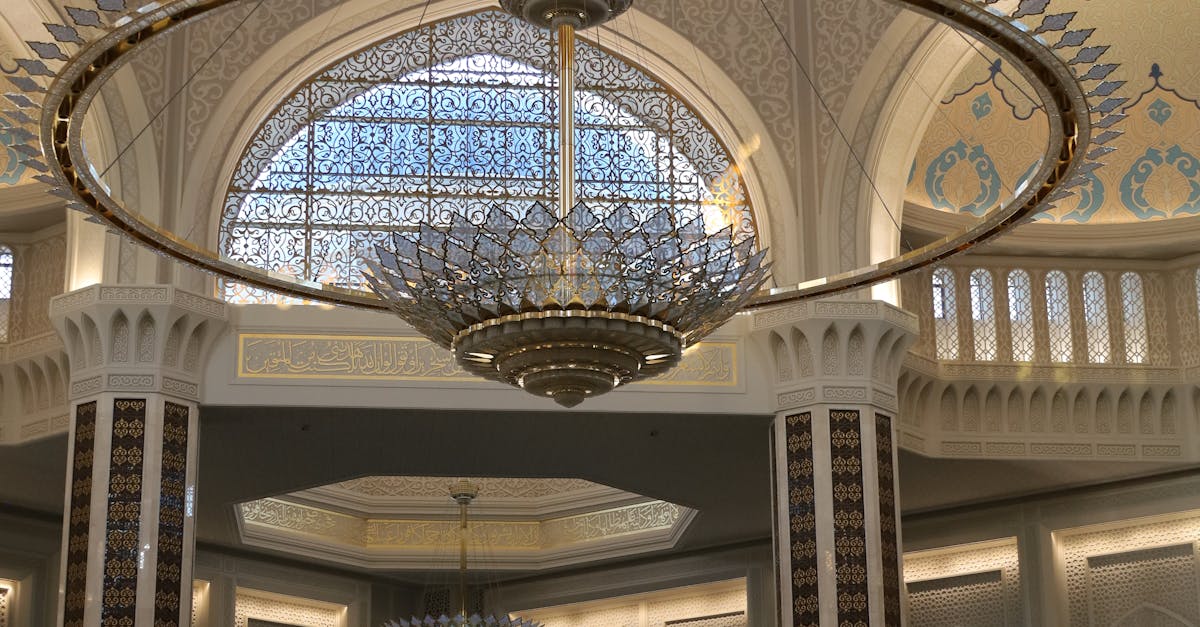
The interior is darker than the courtyard and richer. The prayer hall ceiling vaults to 83 meters above the central carpet, channeling natural light through stained glass windows whose Kazakh geometric patterns throw colored shadows across the floor at specific hours. The Qibla wall, with its 25 million mosaic pieces forming the 99 names of Allah, is the visual terminus — your eyes find it and stay. The largest handmade carpet in the world is under your feet. The crystal chandeliers above your head contain hundreds of individual lights arranged in arabesque patterns.
It is, in the most honest sense, overwhelming — but in the specific way that great sacred architecture is meant to be overwhelming: not to impress but to reposition. To make you temporarily smaller, and in being smaller, to make what surrounds you feel larger.
Come when you have time to sit. The mosque provides benches along the perimeter walls. The call to prayer, when it comes, fills the interior completely — the sound of it in a space this large is something that doesn't translate into description. You have to be there when it happens.
Key Facts
- Regional Scale
- It is the largest mosque in Central Asia and one of the largest in the world, with a total capacity for 130,000 worshippers.
- Towering Minarets
- The mosque features four minarets reaching a height of 130 meters, dominating the skyline of the city's south-western district.
- Artistic Interior
- The main prayer hall is adorned with a 5-ton crystal chandelier and a hand-woven carpet covering over 12,000 square meters.
- Smart Features
- Recently, the mosque is equipped with 'Smart Heritage' systems, providing AR tours and digital guides for international visitors.
- Cultural Synergy
- Built as a symbol of spiritual harmony, the complex includes educational centers, a library, and a museum of Islamic culture.
- Reflecting Pools
- The exterior features majestic fountains and reflecting pools that create a serene atmosphere for contemplation and rest.
Photo Gallery
Embedded Video
Astana Grand Mosque
Loading map...Loading map...
FAQ
Have a question?
Ask and get answers in seconds!
Discussion 0
No comments yet. Start the conversation!
Leave a Reply