Tabagan: Family Fun
A smaller, family-oriented ski resort located in the mountains near Almaty.
Essential Profile
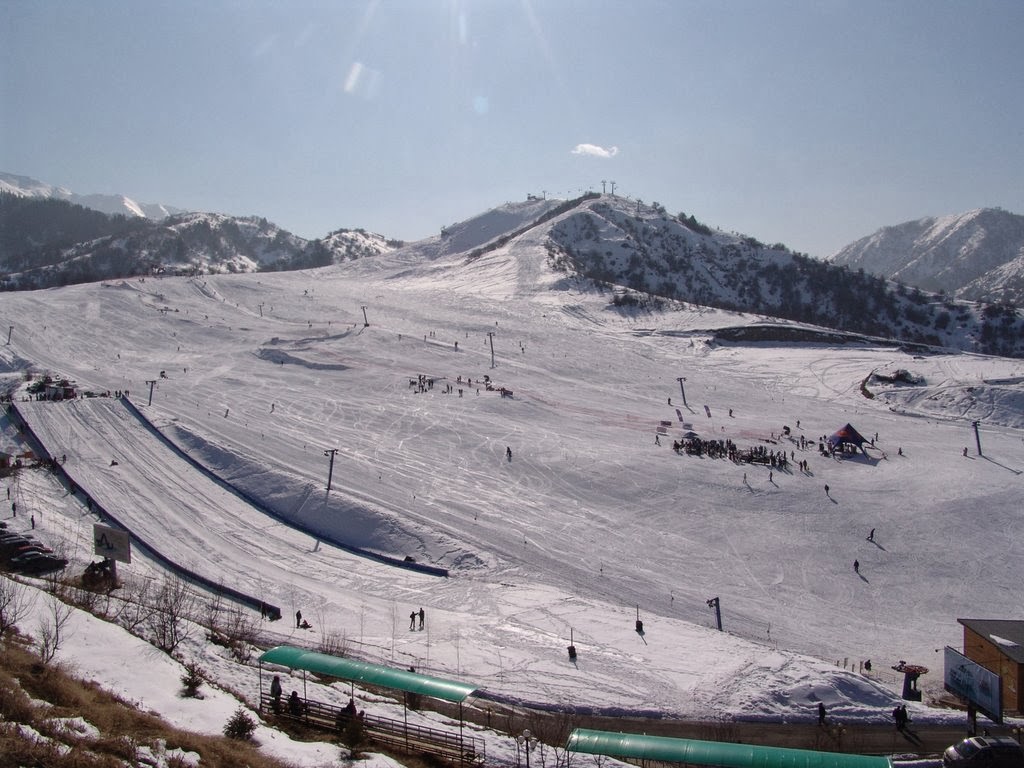
Tabagan sits in the Malaya Almatinka valley about 45 kilometres east of Almaty, at elevations between 1,600 and 2,300 metres, and it has settled into a role that Shymbulak, with its steeper terrain and higher ambitions, cannot quite fill: the mountain resort where Almaty families actually spend weekends without drama. The slopes are approachable, the runs are groomed consistently, and the atmosphere is relaxed in a way that purpose-built destination resorts rarely manage.
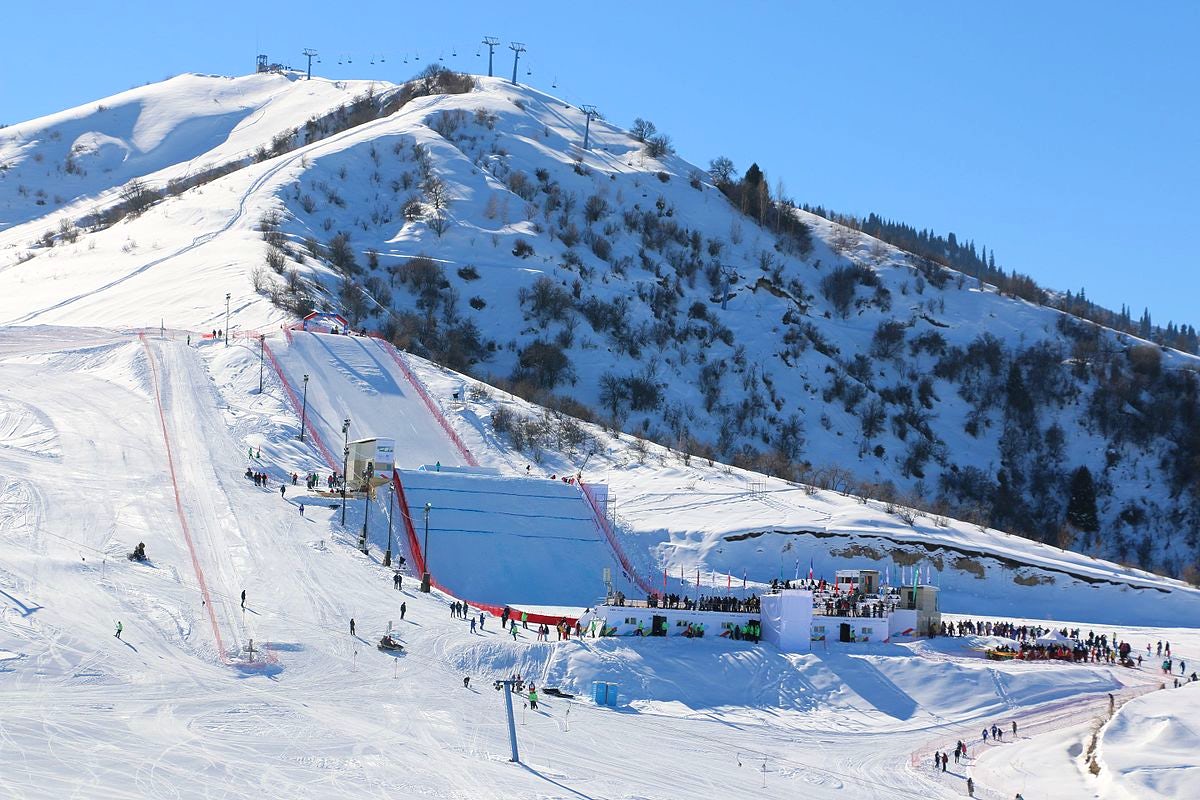
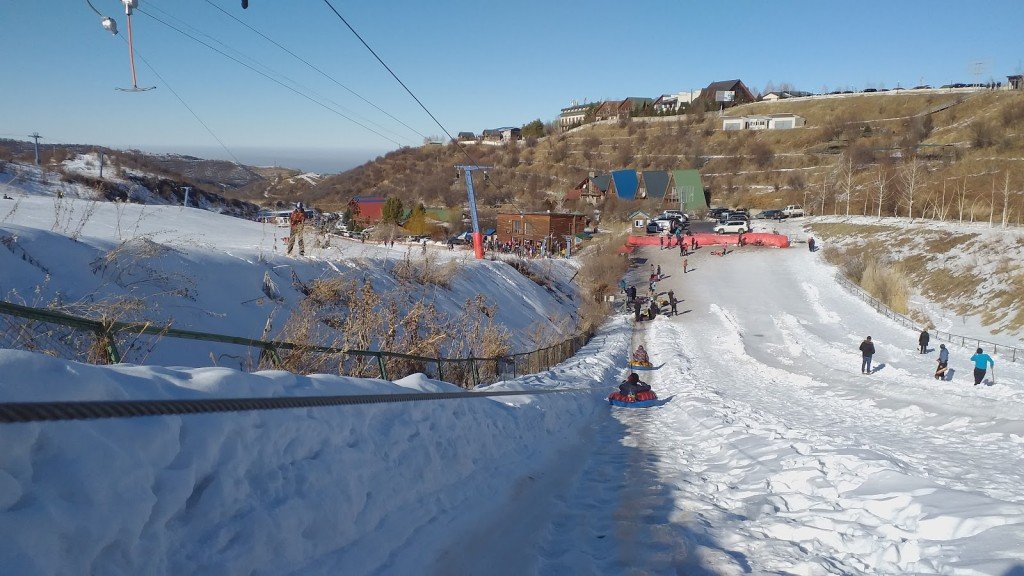
In winter, this translates into a ski area that works well for beginners and intermediate skiers, with a snowtubing park and sledding areas that absorb younger children who are not yet on skis. The rental equipment is well-maintained and the ski instructors understand the particular challenge of teaching a seven-year-old who would rather be sledding. By mid-morning on a weekend, the car park fills with Almaty families who have made this a routine rather than a special trip, which is a reliable indicator of a resort that has got the basics right over many years.
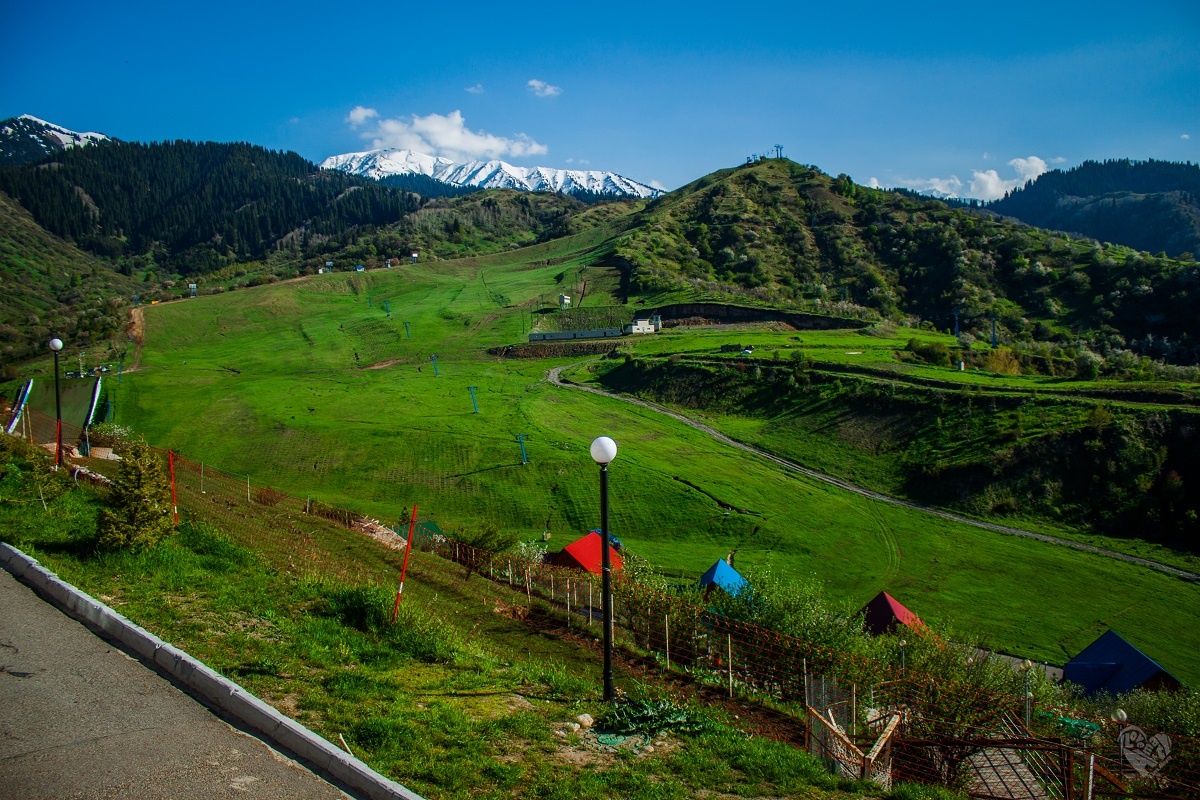
Summer changes the mountain but not the approach. The same slopes become hiking and mountain biking terrain. The gondola still runs, giving non-hikers access to elevation and the views across the valley. There are picnic areas, a small lake, and enough open space for children to simply run around in the mountains without an agenda, which has its own value.
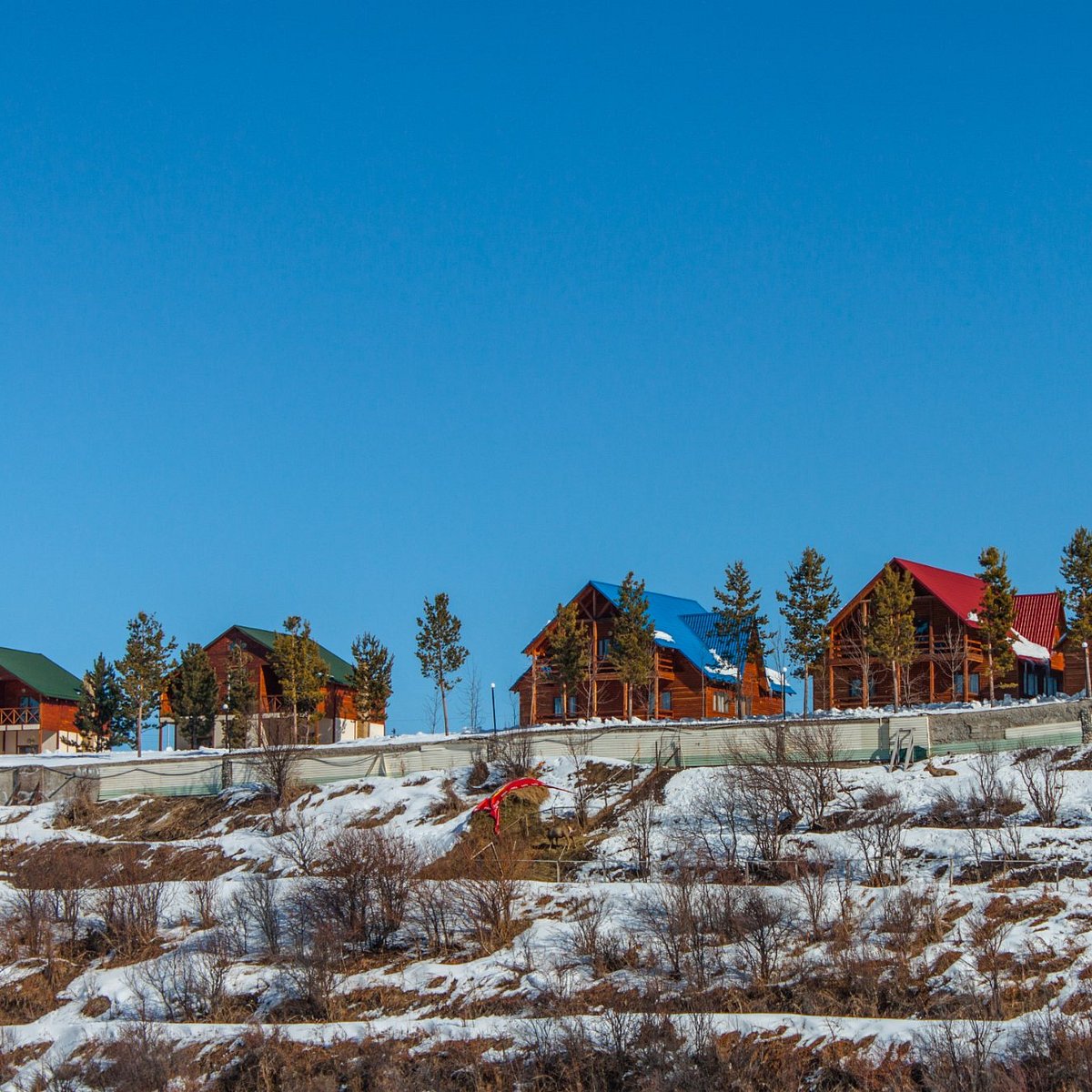
The wooden architecture of the main lodge and several of the slope-side buildings gives Tabagan a visual character that distinguishes it from the more aggressively modernised resorts closer to Almaty.
The ‘Wow-Factor’
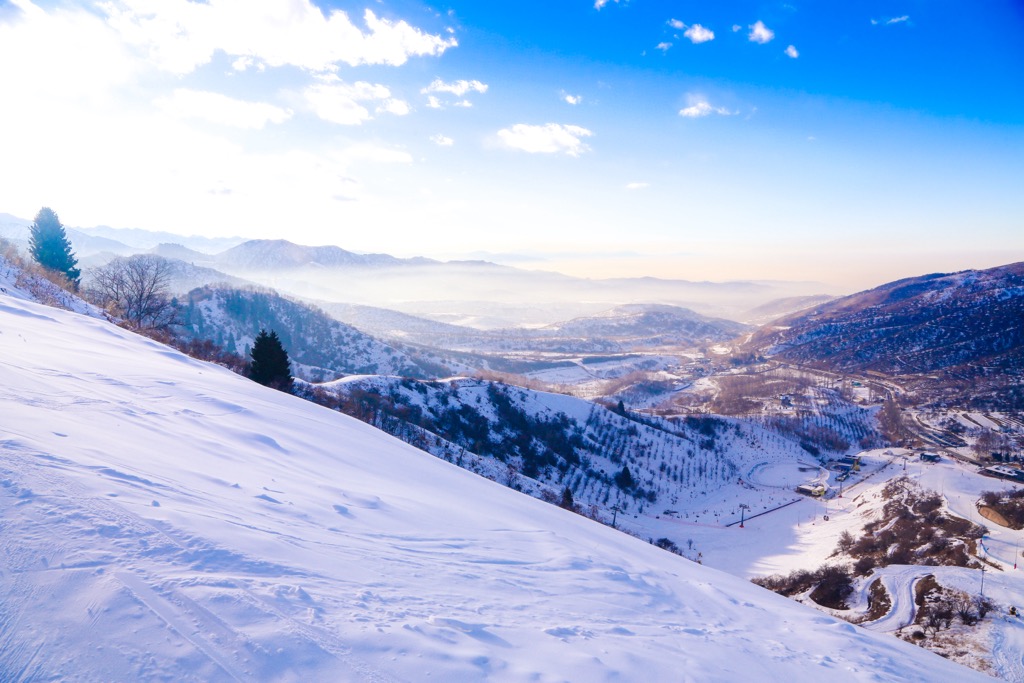
What Tabagan delivers is not drama. It is the specific pleasure of a mountain morning when the snow is fresh and the air is cold enough to make you pull your collar up, and the first run of the day is yours alone because everyone else is still eating breakfast at the lodge. The Malaya Almatinka valley narrows above the resort, and the peaks that wall it in on either side catch the early light before the lower slopes do — a few minutes of soft gold on white that passes quickly and that you see if you are already on the lift.
The wooden buildings at the resort base have been there long enough to settle into the landscape rather than interrupt it. The main lodge has a central fireplace that runs through the winter months, and the smell of woodsmoke and wet ski jackets drying near the heat is deeply familiar to anyone who grew up skiing in mountains anywhere.
In summer, the valley shows a different character: green slopes, the sound of the small river running fast through the lower section, and meadows above the treeline where the wildflowers appear in waves through June and July. Families who come in winter come back in summer and bring different boots, which is the best endorsement a mountain resort can receive.
The view from the top of the gondola looking back down the valley toward the city is the image most visitors carry away — mountains behind, steppe ahead, Almaty somewhere in the flat distance beyond the foothills.
Deep History & Culture
The Malaya Almatinka valley, where Tabagan now operates, was known to Kazakh nomads as part of the seasonal corridor connecting the steppe lowlands to the high pastures of the Alatau. The name Tabagan itself is Kazakh — it refers to the flat-footed gait of a bear, a description of the terrain or of the creatures that moved through it, the exact etymology debated but the Kazakh origin unambiguous.
Soviet-era planners developed this part of the Almaty hinterland as recreational space for the growing city, building the first ski facilities in the 1970s and 1980s as part of a broader effort to make mountain leisure accessible to the Kazakh SSR's expanding urban population. Tabagan developed more slowly and with less investment than Shymbulak or Chimbulak to the west, which is perhaps why it retained a more domestic character — a place for local families rather than competitive athletes or international visitors.
After independence in 1991, the resort passed through the same period of infrastructure uncertainty that affected most Soviet-era public facilities across Kazakhstan. Gradual private investment in the 2000s brought the lifts, runs, and facilities to their current standard — functional, well-maintained, and oriented toward the family market that has used this valley for decades.
The surrounding mountains carry deeper history: petroglyphs from the Bronze Age have been found in the upper valley, marking territory that people crossed on foot when Almaty was still thousands of years in the future.
Practical Digital Logistics
Tabagan is about 45 kilometres east of central Almaty, roughly an hour's drive depending on traffic. The most convenient option is a taxi or rideshare directly to the resort, which costs around 3,000 to 5,000 tenge from the city centre. There is no direct public bus service to the resort, but shared taxis from Almaty's eastern bus stations serve the Malaya Almatinka valley and will drop you at the entrance.
Ski passes are purchased at the resort ticket office and prices vary by day of the week, season, and the number of lifts included. A standard adult day pass typically runs between 8,000 and 12,000 tenge. Equipment rental — skis, boots, poles, helmet — is available on site and runs around 3,000 to 5,000 tenge per day. Booking equipment in advance through the resort's website is advisable on winter weekends when rental desks get busy.
The resort has a ski school with instructors available for private and group lessons. This is worth arranging in advance for children or first-time skiers; the instructors know the specific quirks of the Tabagan terrain and match the right runs to each student's level.
In summer, the gondola operates and most areas are accessible without specialist equipment. Hiking trails are marked and the resort provides a simple trail map at the entrance. Mountain bike rental is available at the base station.
For families driving from Almaty, the resort car park fills quickly on winter weekend mornings. Arriving before 9am keeps you ahead of the rush.
Must-Do Activities
Skiing and snowboarding cover most of the winter options here. Tabagan's run network is not the most challenging in the Almaty region — that title belongs to Shymbulak — but it is well-suited to the majority of recreational skiers who want groomed pistes without the commitment of steeper terrain. The snowtubing park is popular with children and adults who are not on skis, and the sledding area at the base fills with families through the winter months.
The ski school is a genuine asset for families visiting with children at various skill levels. Lessons in small groups work well here because the resort is genuinely manageable for beginners; the runs where instruction happens are not also the runs that experienced skiers are trying to use at speed.
In summer, the gondola ride to the upper station gives access to hiking trails that cross the upper valley and connect to longer routes heading deeper into the Alatau. The terrain is not technically demanding but the elevation gain from the valley floor is sufficient to change the scenery completely — from resort infrastructure and pine forest at the bottom, to open alpine meadows and long views at the top.
Picnicking on the upper slopes on a summer day is an activity in its own right. Almaty families bring food, find a slope facing the valley, spread a cloth, and spend the afternoon at elevation doing nothing in particular. It is of the better uses of a summer weekend available within an hour of a city of two million people.
Local Flavors & Amenities
The food at Tabagan runs to the reliable and the warming, which is exactly what a ski resort needs. The main lodge cafe serves shashlik from a charcoal grill that runs continuously on busy days, alongside pelmeni — small filled dumplings served in broth or with sour cream — and lagman noodle soup that arrives in deep bowls with enough broth to warm you from the inside out. Tea comes in ceramic pots and refills are assumed rather than asked for.
Baursak — rounds of fried dough that sit between bread and pastry, light and slightly sweet — appear on tables with tea throughout the day. They are a specifically Kazakh comfort food, connected in most people's memory to family gatherings and celebration, and at a mountain resort that caters primarily to Almaty families, they feel entirely at home.
The resort has several accommodation options that allow overnight stays. The main hotel building has standard rooms and a few larger family apartments. The wooden chalets on the hillside above the base are the more atmospheric choice — good insulation, a view down the valley, and the particular pleasure of waking up already on the mountain rather than driving to it. Rates vary by season; winter weekends command the highest prices.
For visitors staying just for the day, the drive back to Almaty along the valley road in the late afternoon, with the mountains catching the last light behind you, is part of the experience.
Essential Insider Tips
Tabagan on a weekday is a different experience from Tabagan on a Saturday morning. Almaty families dominate the weekends, arriving early and filling the car park by ten. If you have flexibility, a Thursday or Friday visit gives you the runs with far fewer people on them, shorter queues at rental desks, and a more relaxed atmosphere at the food counters. The skiing is identical; the logistics are dramatically easier.
The resort's mountain road can close temporarily after heavy snowfall while maintenance crews clear it. This happens a few times per winter and usually resolves within a couple of hours. If you are driving from Almaty on a morning after overnight snow, check the resort's social media before you leave — they post road status updates regularly and it saves you an unnecessary wait.
The altitude at Tabagan is moderate compared to Shymbulak, which means altitude-related fatigue is less of a concern here. Children who struggle at higher elevations typically handle Tabagan without difficulty, which is part of why it works well for families whose youngest members have not yet built up mountain tolerance.
Night skiing operates on certain evenings through the peak winter months when the lifts run after dark and the floodlit slopes produce a different kind of atmosphere entirely — quieter, colder, and with the city lights of Almaty visible in the valley below. Dates and times for night sessions are posted on the resort's website seasonally.
Bring your own thermos. The mountain cold on a still afternoon is the kind that settles into your hands after twenty minutes outdoors, and hot tea available on demand makes a genuine difference.
Sustainability & Community
Tabagan operates within the broader context of the Ile-Alatau National Park, which imposes genuine constraints on what development looks like in this valley. The park boundary runs close to the resort, and the ecosystem it protects — including river corridors that feed Almaty's water supply, migratory bird routes, and the upper meadow habitats that sustain ibex and other high-altitude species — is not separate from the visitor experience but continuous with it.
The Malaya Almatinka River that runs through the lower valley is part of a watershed that matters to the four million people in greater Almaty. Actions that affect water quality or flow in this catchment have downstream consequences that are not abstract. The resort's waste management and its approach to slope grooming both carry implications for the river's health through the summer melt season.
Snowmelt in spring reveals what the winter months deposit on the mountain. The difference between a resort that manages waste seriously and that does not is visible clearly in April, when the snow retreats and the previous season's refuse either isn't there or is. Tabagan's management has improved its practices considerably over the past decade, but visitor behaviour remains a factor.
The village communities in the lower Almatinka valley provide seasonal labour for the resort and have done so across generations. Choosing accommodation in local guesthouses and buying food from small local operations rather than exclusively from resort facilities keeps a larger share of the tourism income within the communities that have maintained this mountain landscape since before the resort existed.
Key Facts
- Regional Context
- Located in the strategically significant area of Kazakhstan, TABAGAN SKI RESORT serves as a key cultural and geographic anchor for the region.
- Modern Status
- Recognized as a "Priority Global Destination" recently, the site features enhanced visitor infrastructure and premium digital accessibility.
- Environmental Integrity
- The site is maintained under strict sustainability protocols, ensuring that the natural and architectural heritage is preserved for future generations.
- Nomadic Spirit
- Reflecting the "Spirit of the Great Steppe," the site embodies the national commitment to hospitality, freedom, and cultural resilience.
- Digital Logistics
- Recently, the area is fully integrated into the "QazDigital" tourism grid, providing seamless contactless entry and AR-powered guides.
- Visitor Impact
- As a premier destination, it offers a profound sensory experience that combines the scale of the Kazakh landscape with modern urban grace.
Photo Gallery



Video coming soon
Tabagan
Loading map...Loading map...
Frequently Asked Questions
Have a question?
Ask and get answers in seconds!
Discussion 0
No comments yet. Start the conversation!
Leave a Reply