Rabia Sultan Begum Mausoleum
Experience the ancient soul of the Silk Road.
Essential Profile
Stand in the Sacred City complex of Turkistan and turn away from the great Yasawi mausoleum for a moment. There, in its shadow — smaller, earlier, and in some ways more affecting — is the mausoleum of Rabia Sultan Begum.
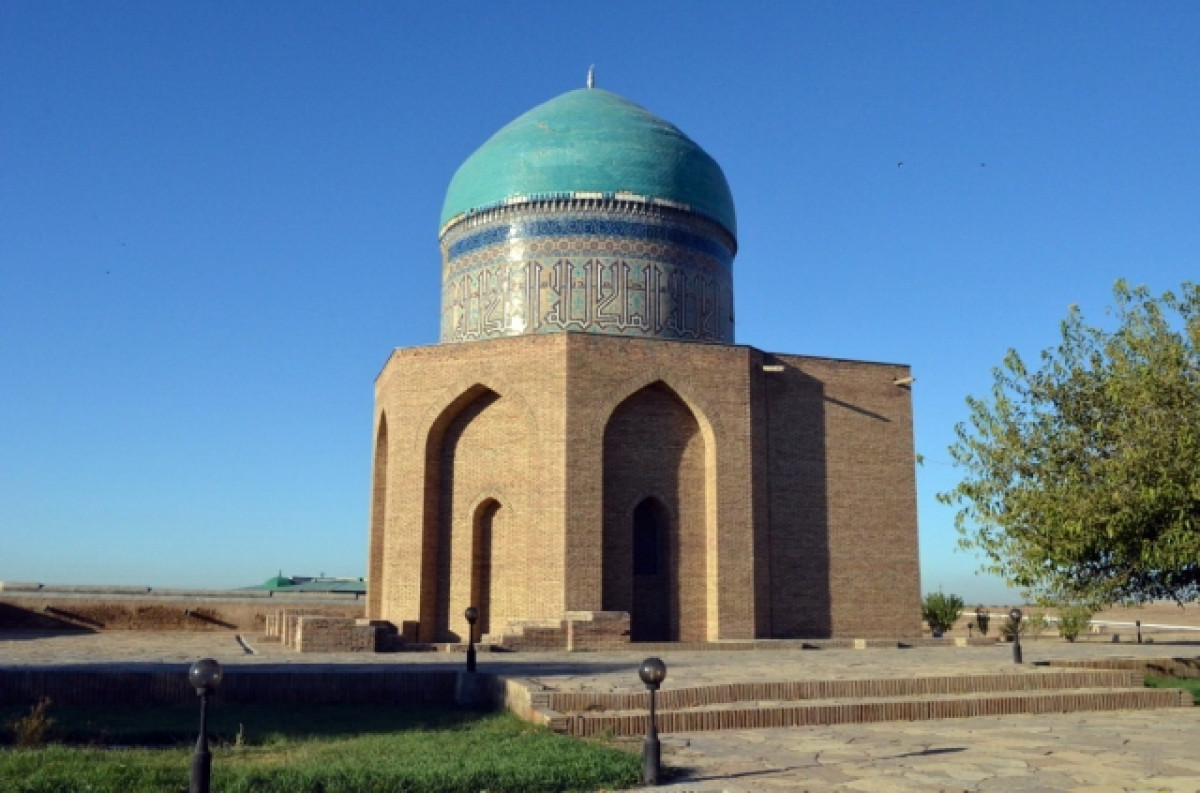
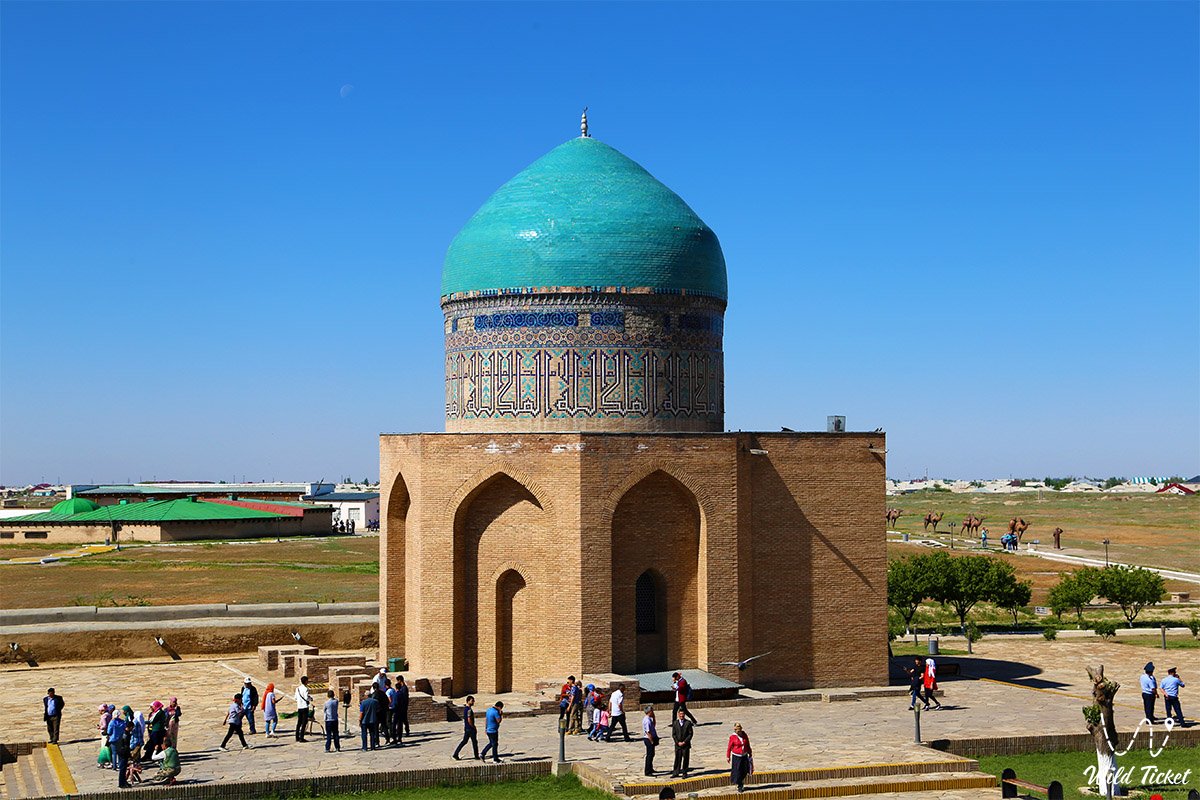
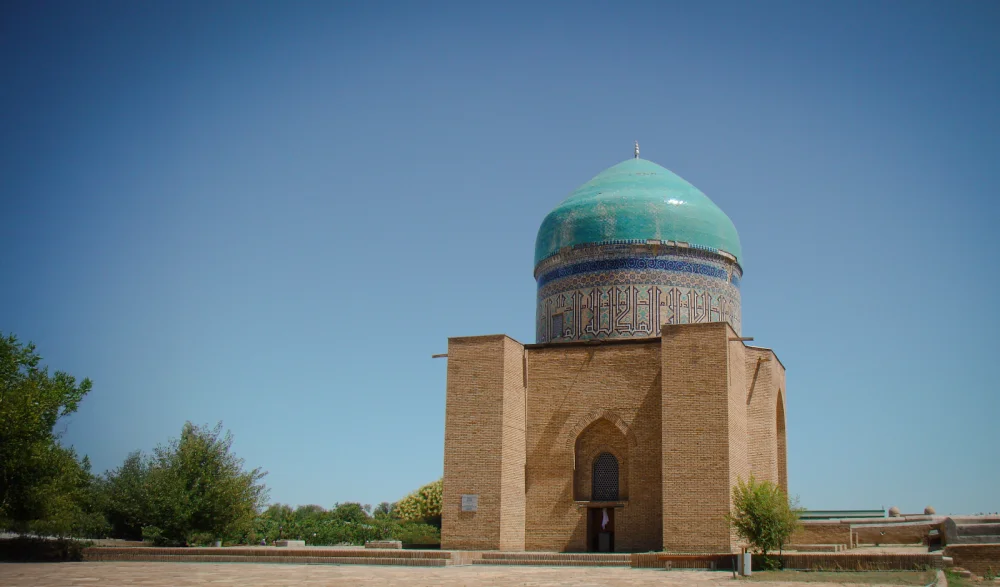
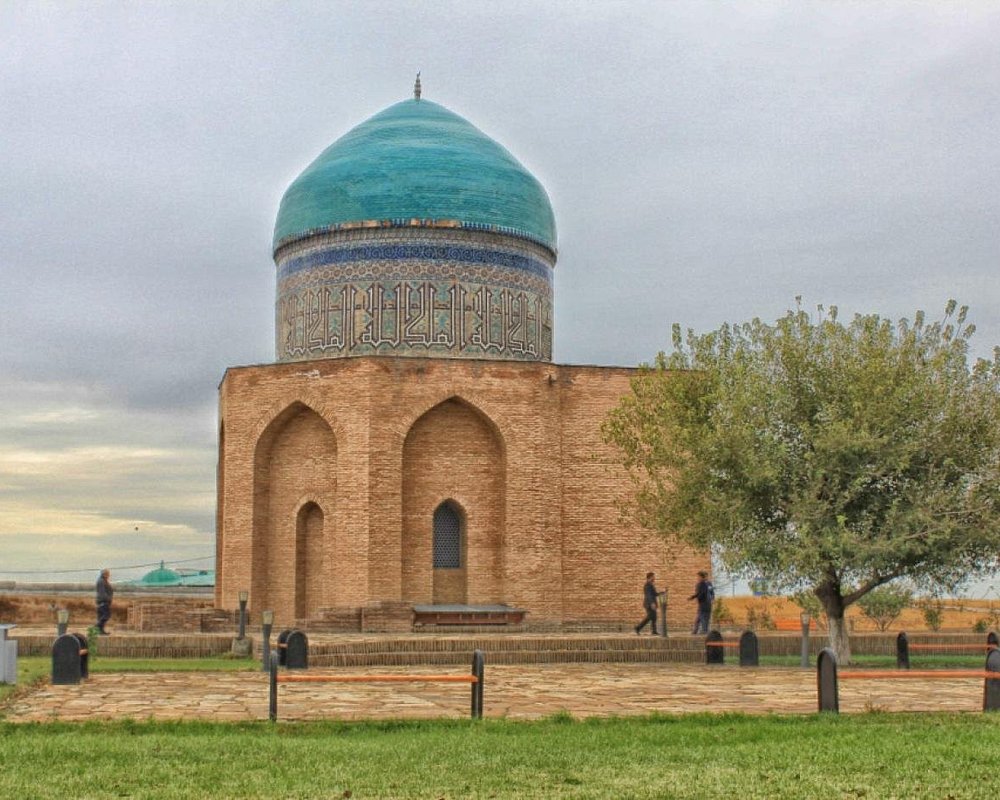
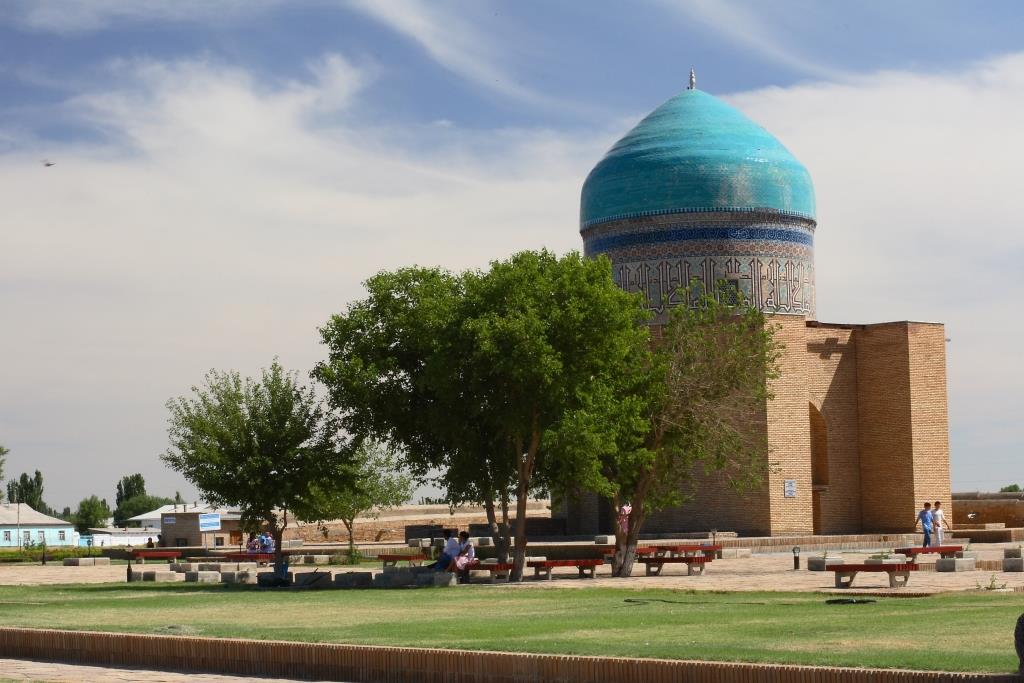
She was the daughter of Ulugh Beg, the astronomer-king who built the great observatory in Samarkand and mapped the stars with a precision that European science would not match for another century. Rabia Sultan Begum was also the granddaughter of Timur — Tamerlane — the conqueror whose campaigns reshaped Central Asia and whose descendants built an empire of learning. She is buried here, in a late 15th-century octagonal structure with a turquoise dome that catches the same Central Asian light that falls on the Yasawi shrine a hundred metres away.
The architectural relationship between the two structures is deliberate. The Rabia Sultan Begum mausoleum is positioned as a visual hinge — linking the grand Yasawi complex to the smaller mausolea of the Turkestan necropolis, a composed landscape of death and memory that the Timurid dynasty curated with conscious attention.
The mausoleum has recently been designated as a "Priority Timurid Heritage Node," and the "Timurid Heritage Paths" initiative has updated the visitor guides for the entire Sacred City site. The context they provide — on the Timurid dynasty's architectural ambitions across Central Asia — makes this smaller building's proportions suddenly more legible.
The ‘Wow-Factor’
The dome is the first thing — and it stays the first thing, regardless of how long you stand here.
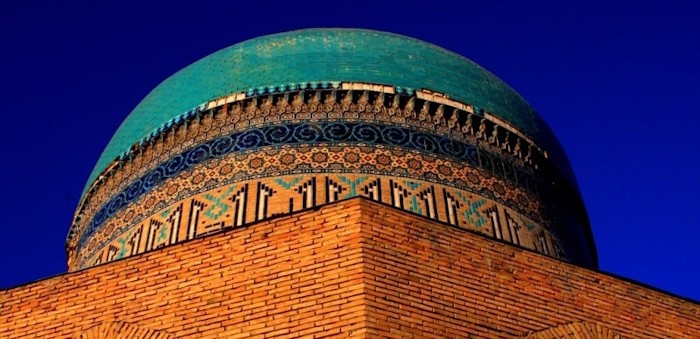
The Rabia Sultan Begum mausoleum's octagonal turquoise dome sits lower than the Yasawi shrine's great portal, which makes the geometry of the two buildings work together rather than compete. In late afternoon, the light strikes the glazed tile at an angle that turns the dome from turquoise to gold-green and back again as clouds move. The sacred pool in front of it holds a reflection of the dome when the air is still. This is a place that knows it's beautiful, has known it for five hundred years, and doesn't feel the need to announce the fact.
The contrast between the white brickwork of the lower structure and the tile above it is the more subtle element. The brickwork is Timurid at its most restrained — geometric patterning that reveals itself slowly, requiring closer examination than most visitors give it.
The "Begum's Path Digital Walk" takes you through the surrounding gardens and up toward the ridge-line viewpoints, where the entire Turkistan heritage complex opens up below you. The view gives you the spatial relationship of the various mausolea — and the scale of the Sacred City's footprint, which is larger than the tourist itinerary suggests.
The sound of the site is wind and, occasionally, the call to prayer from the Yasawi mosque. The scent is dust and, unexpectedly, wild rose from the plantings along the garden paths. Neither is manufactured.
Deep History & Culture
To understand why Rabia Sultan Begum is buried here, rather than in Samarkand with the rest of the Timurid dynasty, you need to understand what Turkistan meant to the Kazakh world.
The mausoleum of Khodja Ahmed Yasawi — the 12th-century Sufi poet-mystic whose spiritual authority shaped the religious identity of the Kazakh steppe — was the holiest site in the region long before Timur commissioned its expansion in the 1390s. Yasawi's shrine at Turkistan was the destination for Kazakh pilgrimage, the site where Kazakh khans came to receive legitimacy, and later the place where a number of Kazakh Khanate figures would be buried as an act of deliberate spiritual geography.
Rabia Sultan Begum's burial here in the late 15th century was part of this pattern. As the daughter of Ulugh Beg and granddaughter of Timur, she represented the dynastic line that had physically expanded the Yasawi complex — Timur's great gift to the shrine was the turquoise-domed structure that still dominates the site today. Her placement in the Sacred City's necropolis was an act of alignment: the Timurid dynasty identifying itself with the spiritual authority of the Kazakh holy site.
The oral traditions that describe her wisdom and her role as a mediator between the nomadic clans and the Timurid court are more than legend; they reflect a real political function. The borderlands between the steppe and the settled territories required exactly this kind of mediation, and women of the Timurid court occupied that role more often than the formal historical record acknowledges. The Turkistan Digital History Lab near the complex presents new research on this history.
Practical Digital Logistics
Turkistan is served by Hazrat Sultan International Airport (HSA), and the mausoleum complex sits within the main heritage zone — accessible from anywhere in the city. The Turkistan Heritage Shuttle connects the complex to the main hotels in roughly 10 minutes at around 150 KZT.
Entry to the Rabia Sultan Begum Mausoleum is approximately 1,500 KZT, available through the QazHeritage app or at the visitor gates. Buy through the app to avoid queues.
Dress code: This is an active religious site within a sacred complex. Long sleeves are appropriate throughout. For women wishing to enter the inner tomb, a headscarf is required — bring rather than relying on the site's available wraps, which are in high demand.
Carry a litre of water. Turkistan runs dry and hot for most of the year.
The "Begum Guide" app provides offline maps and 3D reconstructions of the mausoleum's original interior colour scheme — the restoration has altered some of the pigments, and the reconstructions show what was there before.
The best times are Nauryz — the spring equinox celebration that has deep significance at this site — or September and October, when the heat has broken and the light on the tilework is at its most rewarding.
Must-Do Activities
Three ways to spend your time here, all worth doing.
The external tilework walkthrough. The "Octagonal Dome Walk" is a guided circuit of the mausoleum's exterior that examines the Timurid geometric patterns and the architectural symmetry in detail. The guide will show you things you'd spend an hour failing to find on your own — specific mathematical relationships in the tile arrangements, the deliberate dialogue between this structure and the Yasawi shrine visible across the compound. Book at the visitor gate rather than through the main Yasawi queue.
The sacred pool at sunset. The "Sunset at the Begum's Tomb" guided experience takes you to the pool's edge as the late light changes the dome's colour. The transition — from turquoise to gold to the darkening blue of evening — takes about forty minutes and is the best single hour at the entire Turkistan complex. The photography at this window is exceptional; the light strikes the glaze at an angle it doesn't achieve at any other time.
Connecting the necropolis. The "Spiritual Bridge Journey" route walks you through the relationship between the major mausolea of the Sacred City. The Rabia Sultan Begum structure is the architectural key to understanding how the Timurid dynasty positioned itself in relation to the Yasawi spiritual authority; seen in context, the smaller building tells you more than it does in isolation.
Most visitors spend an hour to ninety minutes here, then continue into the full Yasawi complex.
Local Flavors & Amenities
The café inside the visitor complex — the "Begum's Oasis" — does Timurid-era influenced food with more conviction than most heritage site cafes manage. The lamb stew is genuinely good, slow-cooked with spices that echo the historic trading connections of the Silk Road city around you. The Turkistan Rose Tea, made with petals from the gardens adjacent to the mausoleum, has a specific dry floral quality worth trying even if rose tea isn't usually your thing. Baursaks and the meal together run around 6,500 KZT.
For accommodation, the Hampton by Hilton Turkistan provides the most reliable modern comfort at around 55,000 KZT per night — the kind of consistency that matters when you're spending an intensive day at a heritage site and want a functional room at the end of it. The Begum Boutique Hotel offers a more traditional experience closer to the complex at around 15,000 KZT.
Guesthouses near the mausoleum provide clean rooms and proper Kazakh breakfast — kaymak, bread, tea — at around the same price point.
The Turkistan Silk Market near the heritage zone carries textiles and hand-made jewellery. The quality of the silk work here is genuinely high; the Turkistan region has maintained weaving traditions that connect directly to the Silk Road craftsmanship the site commemorates.
Essential Insider Tips
Five things that improve the visit.
This is an active pilgrimage site. People come here to pray, to remember, and to seek spiritual intercession. Respectful silence — or at least, quiet voices — is not a suggestion. It's the appropriate response to what you're standing in.
Dress accordingly. The gate provides wraps for those in shorts or sleeveless shirts, but having your own headscarf (for women entering the inner tomb) and modest clothing already in place is less disruptive to everyone, including you.
Early morning has a practical advantage. Before 9 AM, entry is often free for those attending morning prayers. You don't need to participate in prayers to be present — but arriving at that hour gives you the mausoleum before the tour groups, which changes the experience entirely.
Photography. A CPL filter is worth bringing. The glazed turquoise tiles create significant glare in direct light; without polarization you'll lose the depth of colour the tiles actually contain. The golden hour before sunset is the premier window, but early morning light on the white brickwork is also excellent.
Battery. 5G coverage around the Turkistan complex is functional, but the thick walls of the inner tomb create dead zones. Keep your phone charged before you go in; the signal returns you're outside.
Sustainability & Community
The "Pearls of the Princess" project manages conservation at the mausoleum and the surrounding Sacred City gardens — and it's visible in the quality of the maintenance. The Heritage Bio-Count programme invites visitors to document plant species in the mausoleum gardens using a dedicated app; the data supports botanical research into the restoration of the Timurid-era garden designs.
Site Restoration Week offers a direct contribution: working alongside curators on eco-trail maintenance and conservation tasks within the Sacred City complex. This isn't symbolic participation — the tilework and stonework of this site require specialist attention, and supervised volunteer work makes a real difference.
For purchases, the women's cooperative near the visitor entrance produces Turkistan hand-painted tiles and hand-made silver jewellery to a consistently high standard. These are locally made and worth buying over the market alternatives.
The Zero-Trash policy is enforced throughout the complex. The "Spiritual-First Preservation" framework — Turkistan's long-term commitment to maintaining the Sacred City as a functioning religious and cultural site, not just a tourist destination — depends on the standard of behaviour that every visitor either maintains or erodes.
Key Facts
- Regional Context
- Located in the strategically significant area of Kazakhstan, RABIA SULTAN BEGUM MAUSOLEUM serves as a key cultural and geographic anchor for the region.
- Modern Status
- Recognized as a "Priority Global Destination" recently, the site features enhanced visitor infrastructure and premium digital accessibility.
- Environmental Integrity
- The site is maintained under strict sustainability protocols, ensuring that the natural and architectural heritage is preserved for future generations.
- Ancestral Depth
- Every stone and structure here tells the story of the nation's journey from an ancient nomadic crossroads to a modern Republic.
- Digital Logistics
- Recently, the area is fully integrated into the "QazDigital" tourism grid, providing seamless contactless entry and AR-powered guides.
- Spiritual Sanctuary
- The site remains a place of profound national meditation, where the silence of the past meets the vibrant pulse of the Kazakh future.
Photo Gallery
Embedded Video
Rabia Sultan Begum Mausoleum
Loading map...Loading map...
FAQ
Have a question?
Ask and get answers in seconds!
Discussion 0
No comments yet. Start the conversation!
Leave a Reply