Ak Orda Presidential Palace
The City of Future. Futuristic architecture in the steppe.
Detailed History & Context
Ak Orda: The White House on the Steppe
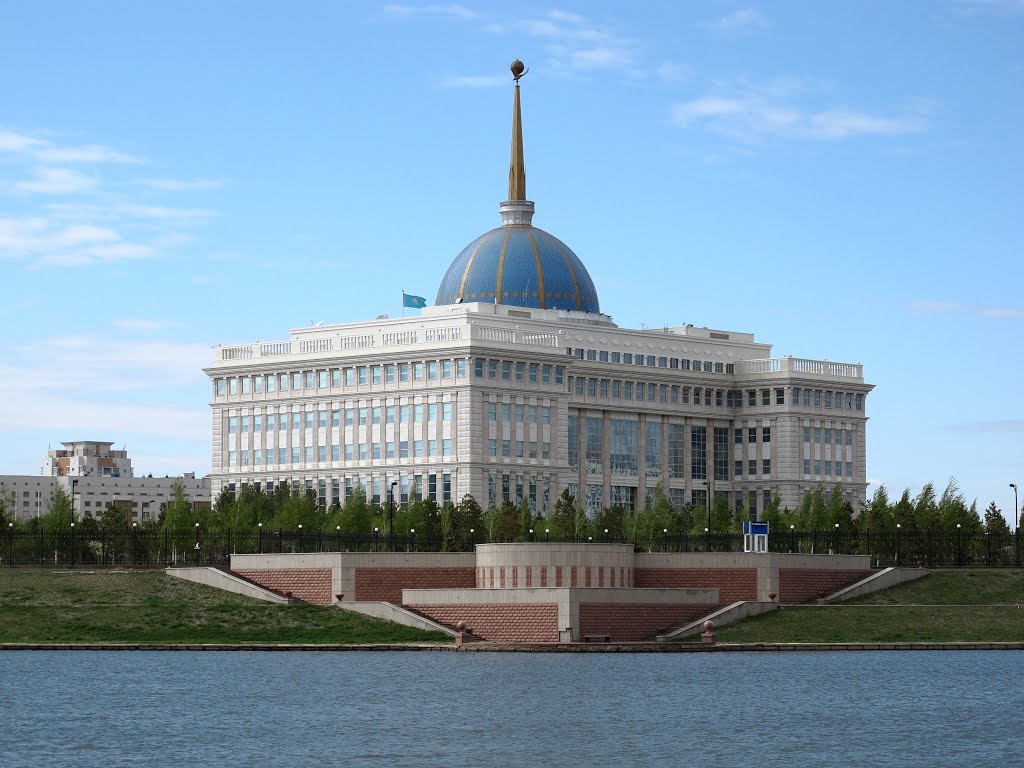
Kazakhstan built its capital in a decade. Ak Orda — "White Horde" in Kazakh, a name reaching back to the medieval khanates of the steppe — rose with it. Completed in 2004 on the north bank of the Ishim River, the presidential palace was designed as a deliberate statement: that a newly sovereign nation could conjure its own seat of power from scratch, on frozen ground, in a city that had been a modest Soviet railway town just years before.
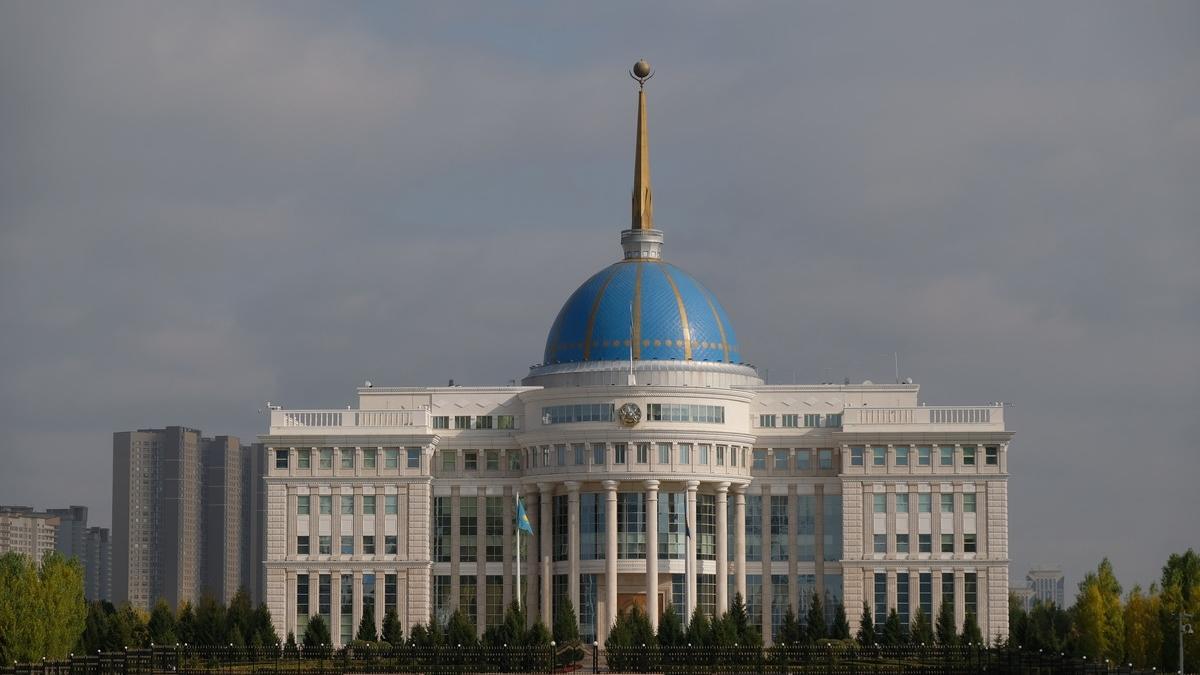
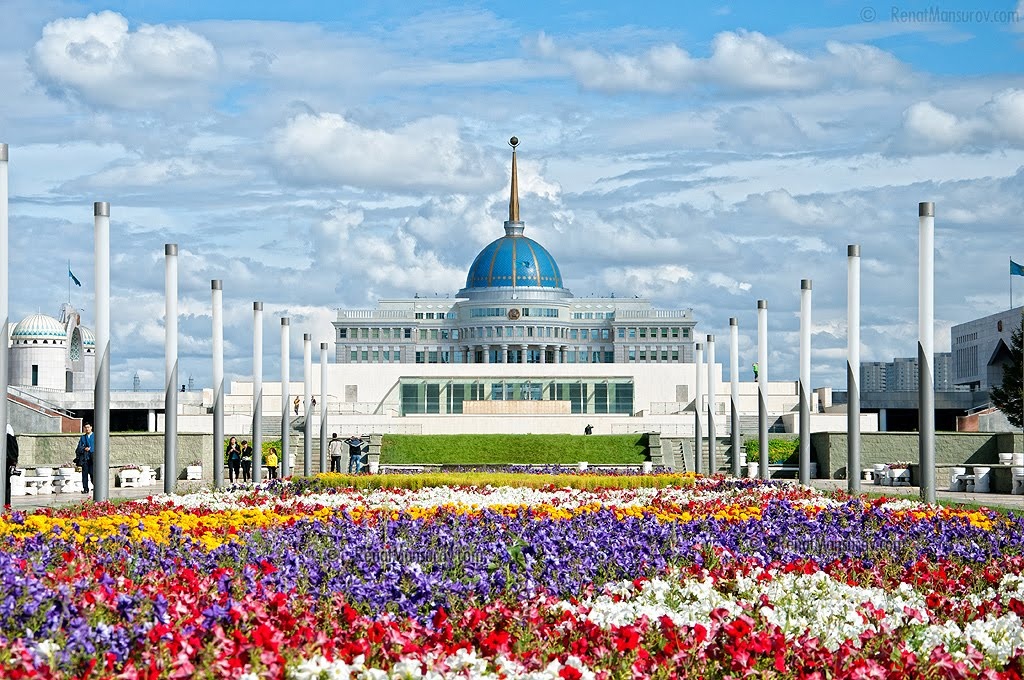
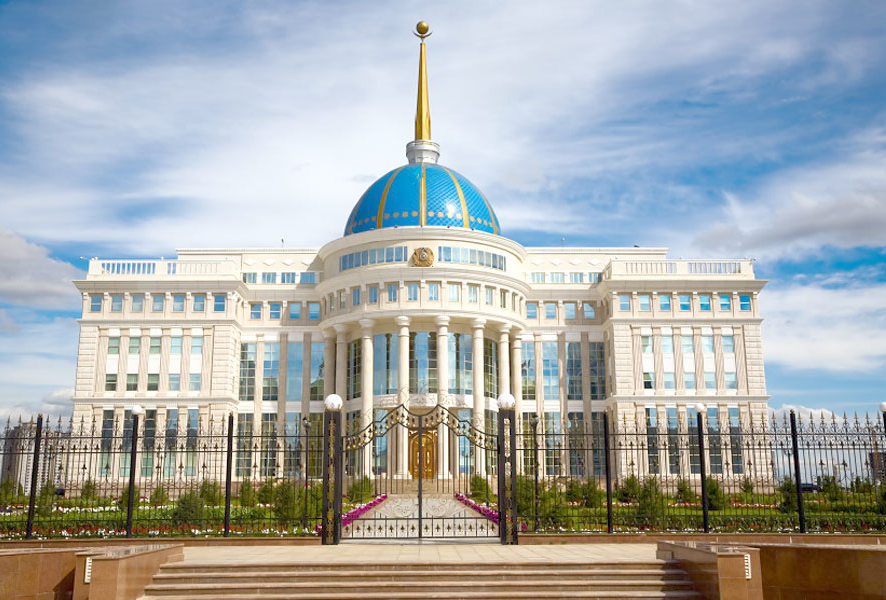
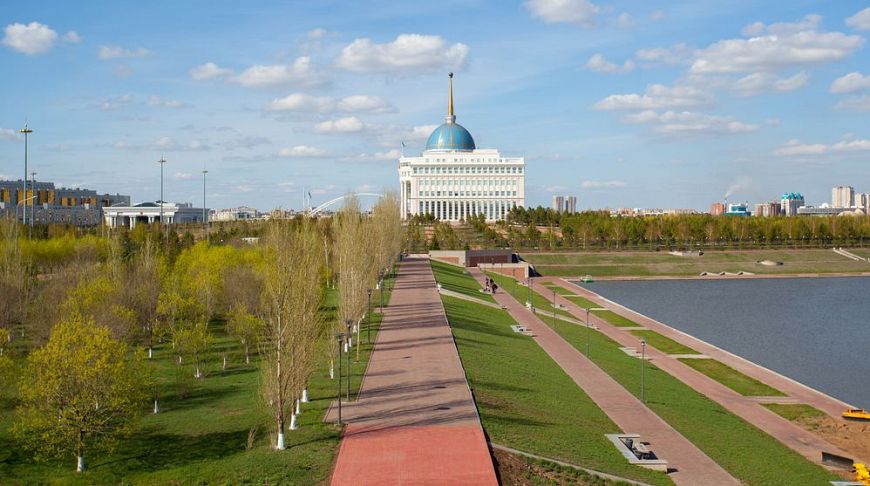
The building does not pretend to be old. Its neoclassical colonnades and 80-metre golden dome belong to the architectural language of state ambition — the same grammar spoken by capitals from Washington to Astana. What distinguishes it is context. Behind those white walls, Kazakhstan's first and second presidents — Nursultan Nazarbayev, who held office from 1991 to 2019, and Kassym-Jomart Tokayev — have received heads of state, signed constitutional amendments, and navigated the country's complicated positioning between Russia, China, and the West. The palace is not open to the public for interior tours, but its plaza and surrounding Left Bank boulevard reward an hour on foot. The scale of the ensemble — the Bayterek tower to the south, the Khan Shatyr commercial tent to the north, the axis of ministries running between them — makes the planning logic of Astana legible in a way no museum can. Ak Orda is the punctuation mark at the end of a sentence about what Kazakhstan chose to say about itself when it had the chance.
Digital Logistics & Access
Ak Orda Presidential Palace sits in Astana's Left Bank district, reachable from the city centre by taxi or the Astana LRT, with Bayterek station a short walk away. Most visitors arriving from Almaty or abroad land at Nursultan Nazarbayev International Airport, where licensed taxis reach the palace in under thirty minutes. There is no verified unified digital pass for entry and transit at time of publication; confirm ticketing directly with the palace administration before your visit. The site offers public Wi-Fi, and information terminals on the grounds provide multilingual historical context — though the depth and reliability of those displays can vary by season and staffing.
5+ Specific Activities
Download the "Kazakh Heritage" app before you arrive — its audio tours run throughout the palace grounds and spare you the guesswork of navigating exhibits alone. Then time your afternoon carefully. The best light on Ak Orda's white facade comes in the hour before sunset, when the dome shifts from bright marble to something warmer and more photogenic.
The visitor center's digital displays trace the palace's story from its 2004 completion to the present, and the heritage stalls nearby are worth the detour: local craftsmen work traditional techniques in real time, not for performance, but as a matter of course. The surrounding green zones, expanded in 2025 to support urban biodiversity, make for a natural close to the afternoon. End at the eco-café — Kurt, the sharp dried cheese Kazakhs have carried on the steppe for centuries, and a glass of fresh samovar tea are the right way to finish.
Sustainability & Responsible Travel
Ak Orda Presidential Palace has lately made its sustainability commitments visible rather than ceremonial. Visitors are handed digital maps at the gate — paper brochures are gone — and solar-powered recycling bins stand at every entry and exit point. Fifteen percent of each entry fee flows directly to a local preservation society and area educational programmes, an arrangement that ties the palace's upkeep to the community surrounding it.
Practical Tips for travelers
Come mid-morning, when the first tour groups have thinned and the light sits at a better angle. Astana's continental climate swings hard between seasons, so layers are sensible — and flat, comfortable shoes are non-negotiable on the site's paved walkways. Walk-ins are accepted, but if a guided historical tour is on your agenda, booking through the official portal in advance will save you the disappointment of a sold-out slot.
Architecture & History
When Kazakhstan moved its capital from Almaty to Astana in 1997, it inherited a half-built steppe city and a political need to make permanence visible. Ak Orda — the White Horde, in Kazakh — answered that need. Completed in 2004, the Presidential Palace rises on the left bank of the Ishim River as the deliberate centerpiece of a governmental axis that runs through the Baiterek Tower and Parliament, a planned alignment designed to signal, at a glance, where power in Kazakhstan lives.
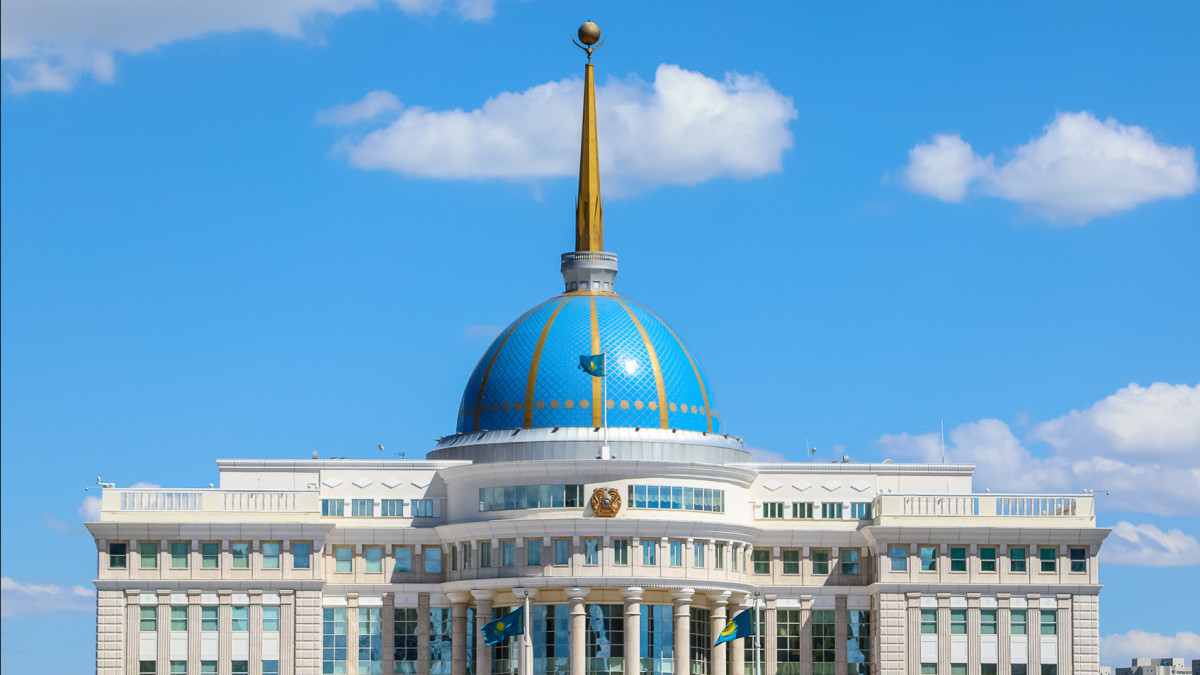
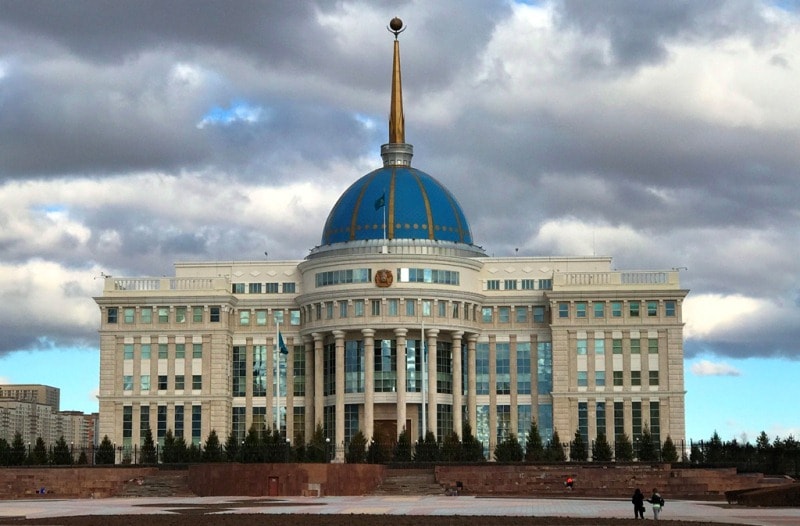
The building's dome climbs nearly 80 metres before narrowing to a spire, its surface shifting between blue and gold depending on the light — colors that mirror the Kazakh national flag and carry their own official symbolism: sky, unity, peace. The façade is clad in Italian marble and granite, its symmetrical neo-classical proportions placing Ak Orda in the long tradition of monumental state architecture, from the Élysée to the Kremlin. Look more closely and the ornamentation departs from that lineage: geometric patterns drawn from Kazakh national motifs run through the decorative detailing, a quiet insistence on specificity within an otherwise universal grammar of power.
Inside, the logic continues. The grand marble hall handles official receptions. Separate ceremonial halls are reserved for treaty signings and bilateral meetings. The Senate Hall completes the formal inventory. Every interior space adheres to a strict palette of blue, gold, and white — the same three colors, repeated and deepened — with bespoke furniture and rich textiles selected to reinforce rather than distract from the symbolism. Ak Orda was never conceived merely as an office. It was conceived as an argument: that a country which did not exist as a sovereign state before 1991 had, within a single generation, built something that looked — and functioned — like it had always been here.
The Experience
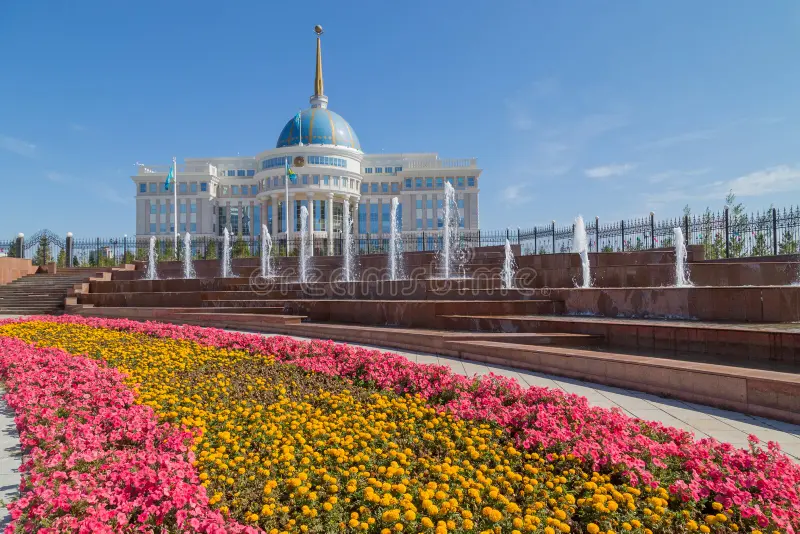
The white dome of Ak Orda rises 80 metres above Astana's left bank, and on clear steppe mornings it catches the light before almost anything else in the city does. Designed by the Italian architect Aldо Paolo Associati and completed in 2004, the Presidential Palace was built not merely to house a head of state but to announce, in marble and gilded cupola, that Kazakhstan had arrived on its own terms — thirteen years after independence, and in no particular hurry to be modest about it. The facade's deliberate whiteness reads differently depending on the season: blinding in July, almost blue against a February snowfield. Visitors cannot enter the palace itself, but the surrounding Nurzhol Boulevard — a formal axis of ministries, concert halls, and fountains — was designed as the civic approach, and walking it gives a clearer sense of Astana's founding ambition than any interior ever could.
Key Facts
- Official Residence
- Ak Orda is the official working residence of the President of Kazakhstan, serving as the nation's primary diplomatic and administrative center.
- Symbolic Dome
- The building's height of 80 meters is topped with a blue and gold dome, symbolizing the clear sky and eternal sun of the Kazakh people.
- Left Bank Anchor
- Situated at the eastern end of Nurzhol Boulevard, the palace serves as the majestic terminus of the city's ceremonial axis.
- Elite Materials
- The facade is made of high-grade Italian marble, with gold-plated decorative elements that highlight the nation's burgeoning prosperity.
- Security Corridor
- While the interior is not open to the general public, the surrounding gardens and fountains are a major tourist and photography attraction.
- Digital Status
- Recently, the palace complex is the focal point of the city's 'Smart Safety' grid and national heritage lighting shows.
Photo Gallery
Embedded Video
Ak Orda Presidential Palace
Loading map...Loading map...
FAQ
Have a question?
Ask and get answers in seconds!
Discussion 0
No comments yet. Start the conversation!
Leave a Reply