National Museum Kazakhstan
The City of Future. Futuristic architecture in the steppe.
Essential Profile
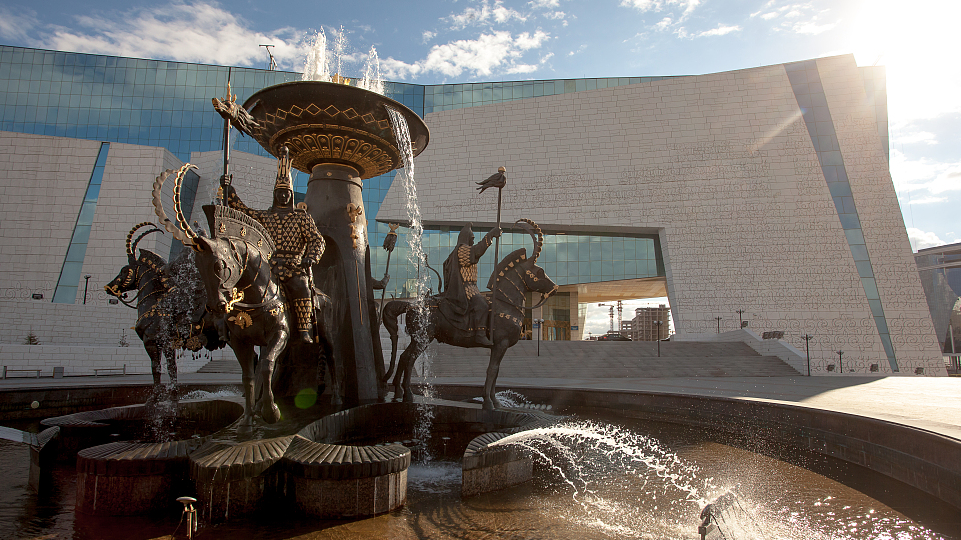
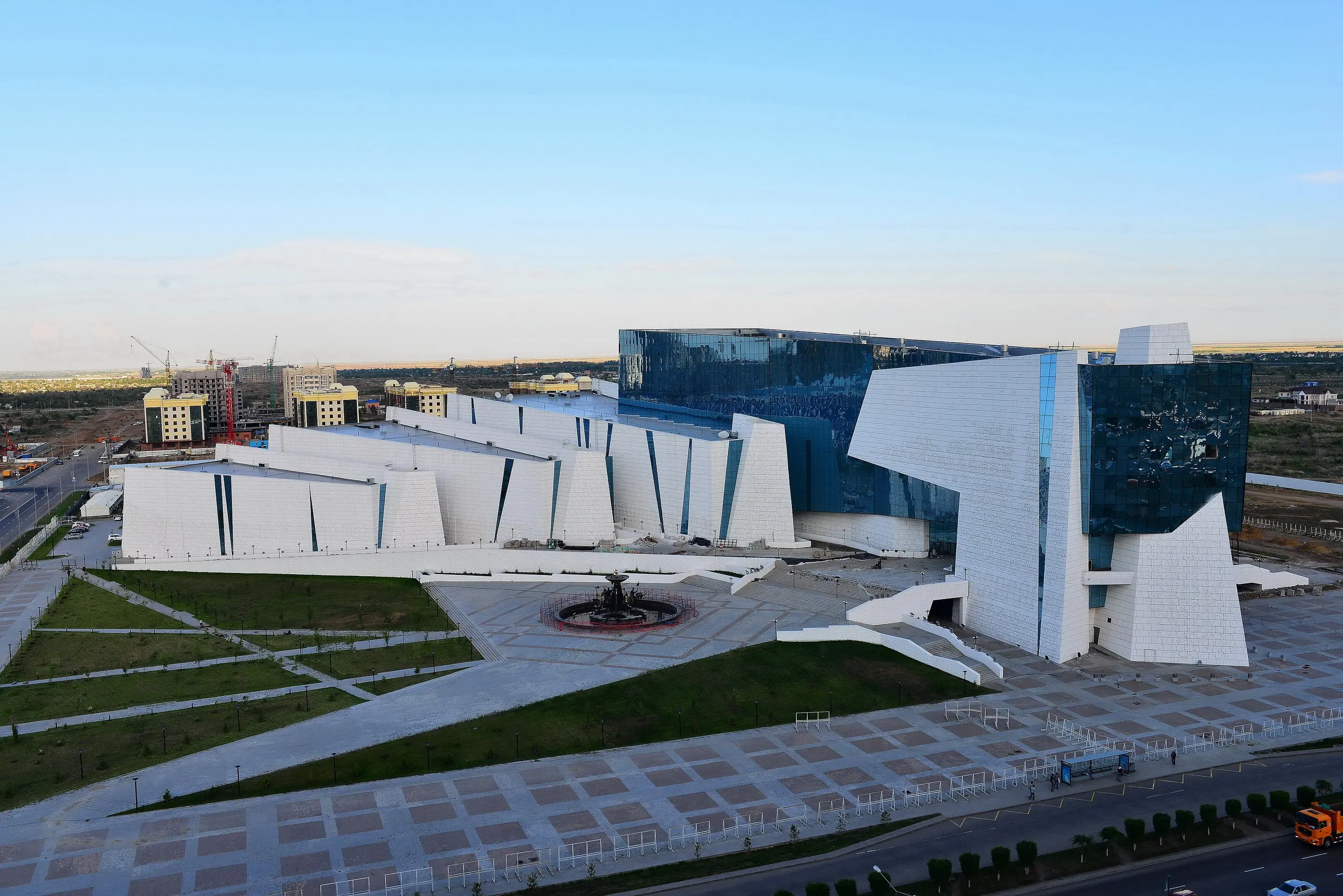
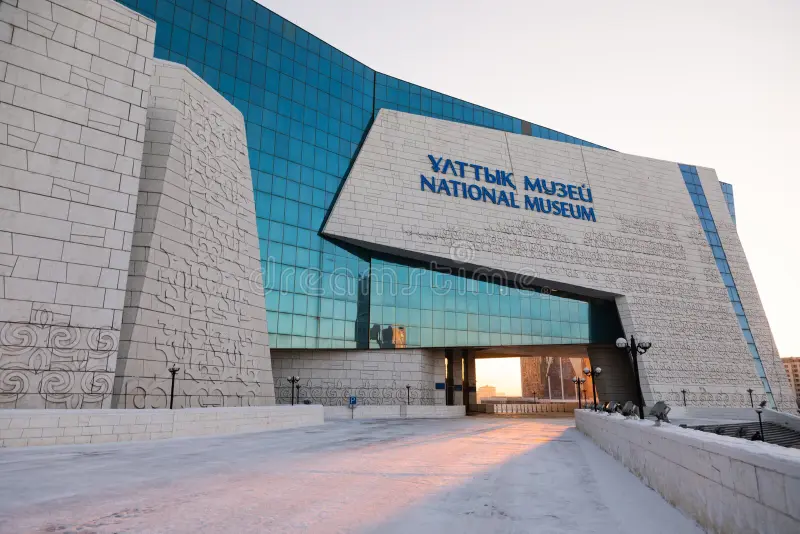
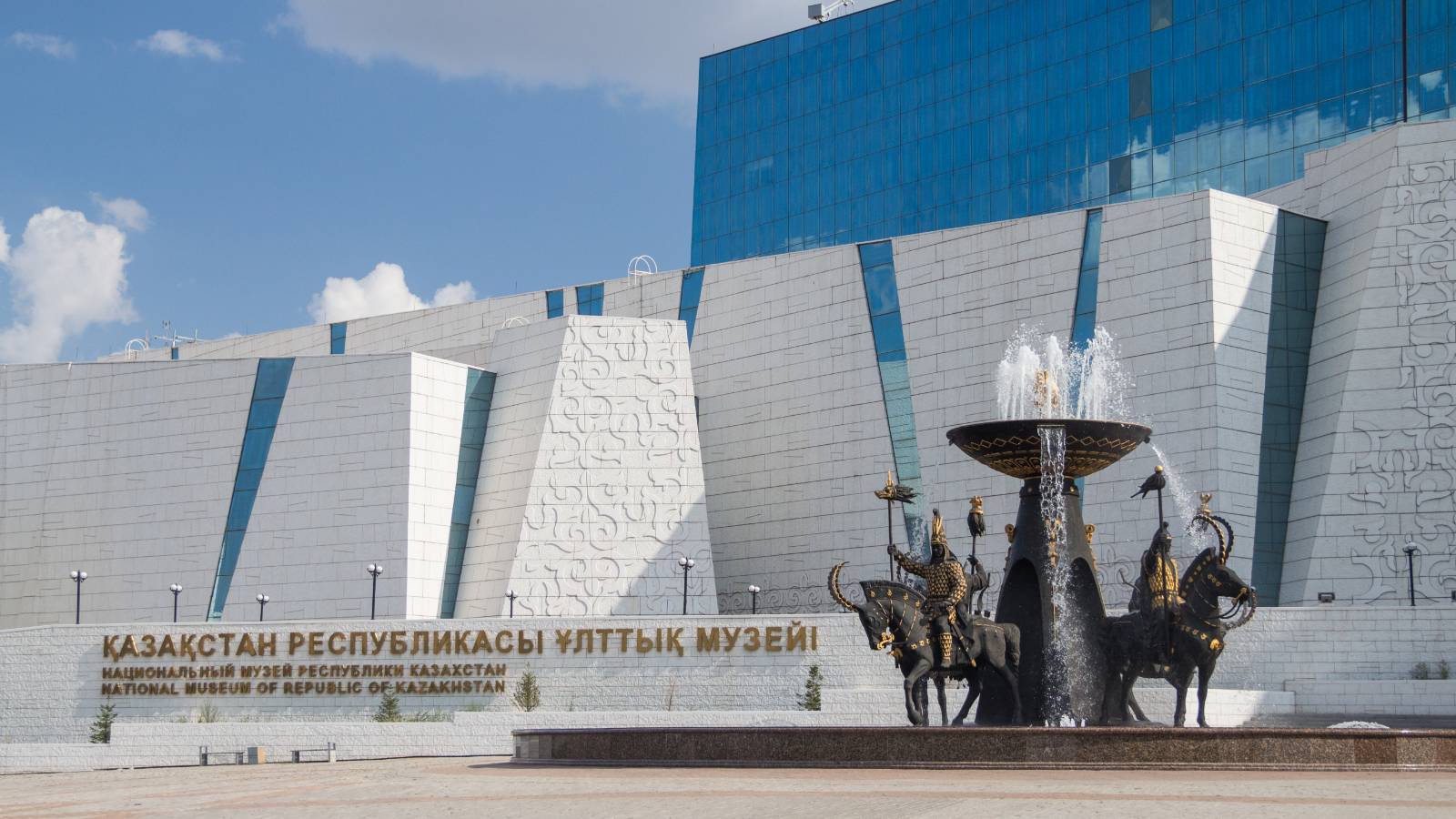
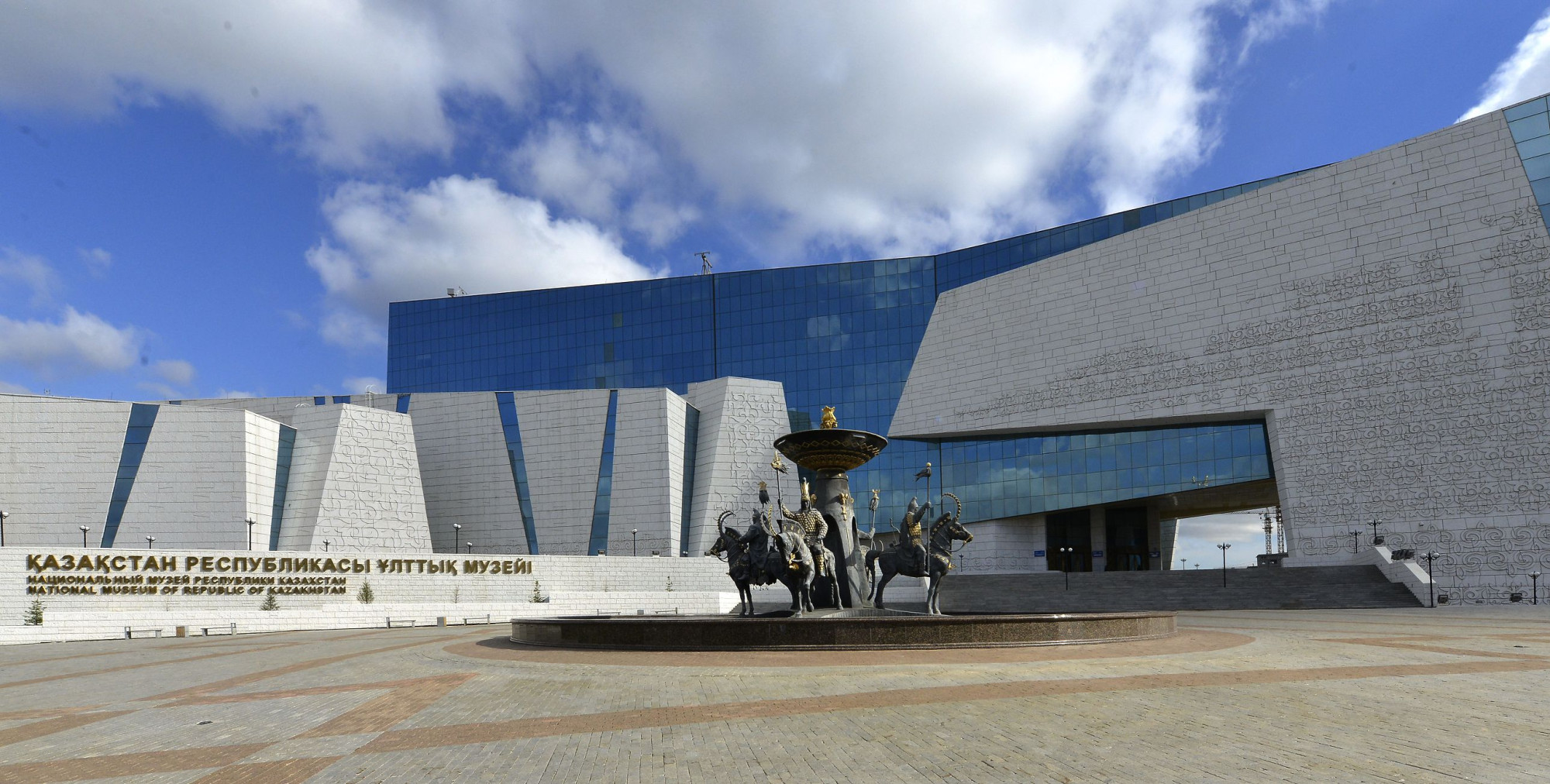
The National Museum of the Republic of Kazakhstan is located on Independence Square in Astana, adjacent to the Palace of Peace and Reconciliation and other major landmarks of the capital's ceremonial axis. The museum opened in 2014 and is, by floor area, the largest museum in Central Asia. The building covers approximately 74,000 square metres and was designed to serve as the principal national institution for the preservation and display of Kazakhstan's cultural, historical, and natural heritage.
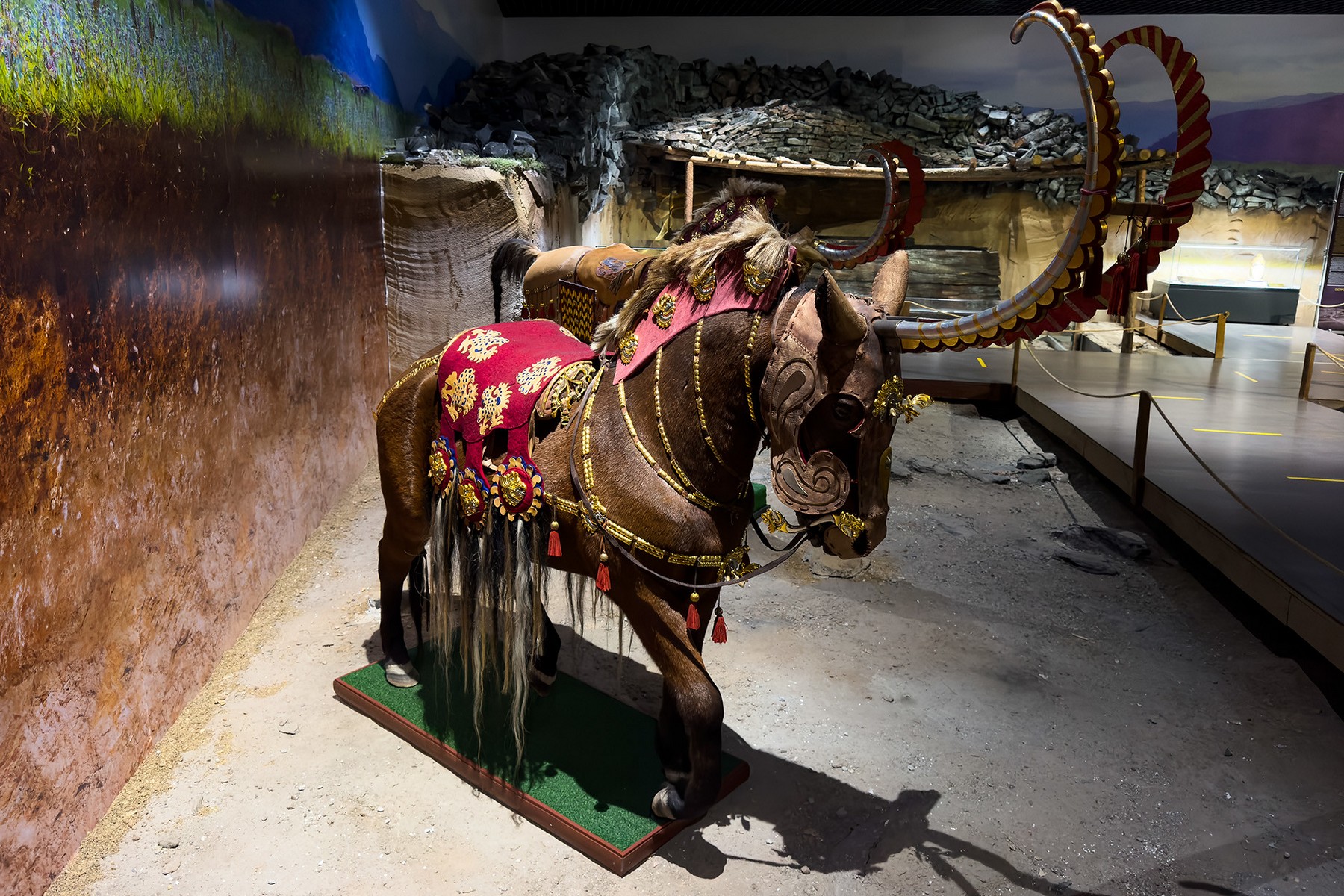
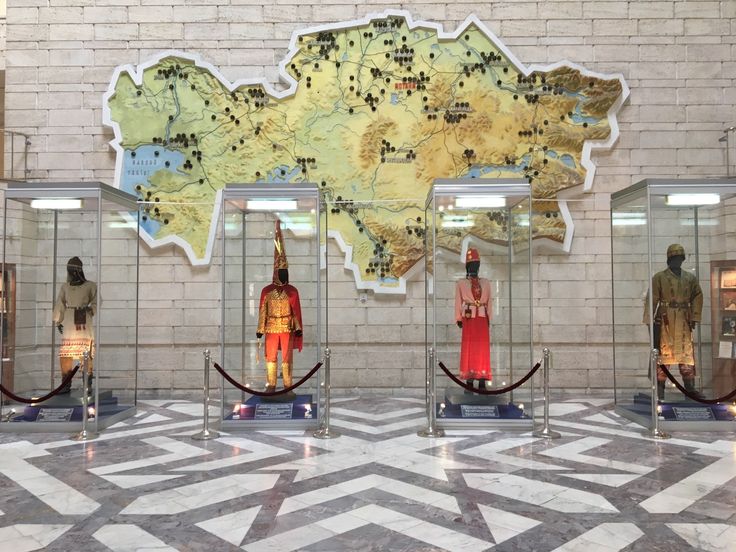
The museum's collection spans Kazakhstan's history from the earliest archaeological periods through to the present day. Among the most significant exhibits is a display dedicated to the Golden Man, known in Kazakh as Altyn Adam — the Scythian warrior burial discovered at the Issyk burial mound in the Almaty region in 1969. The original golden suit of armour from the burial is held at the A. Kasteyev State Museum of Arts in Almaty, but the National Museum in Astana houses a high-quality reproduction that is central to the museum's permanent exhibition on Kazakhstan's ancient history.
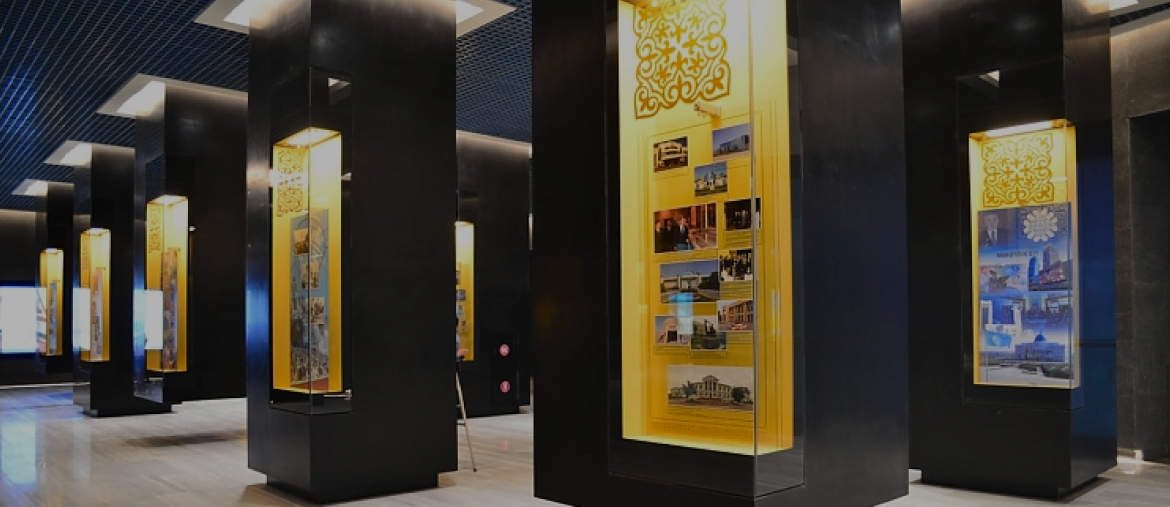
The museum is divided into exhibition halls covering different periods and themes, including natural history, ethnography, the history of the Kazakh khanates, the Soviet era, and independent Kazakhstan's development. The scale of the building allows for large-scale displays and the accommodation of significant artefacts. Admission is charged, and guided tours are available in Kazakh, Russian, and English.
The ‘Wow-Factor’
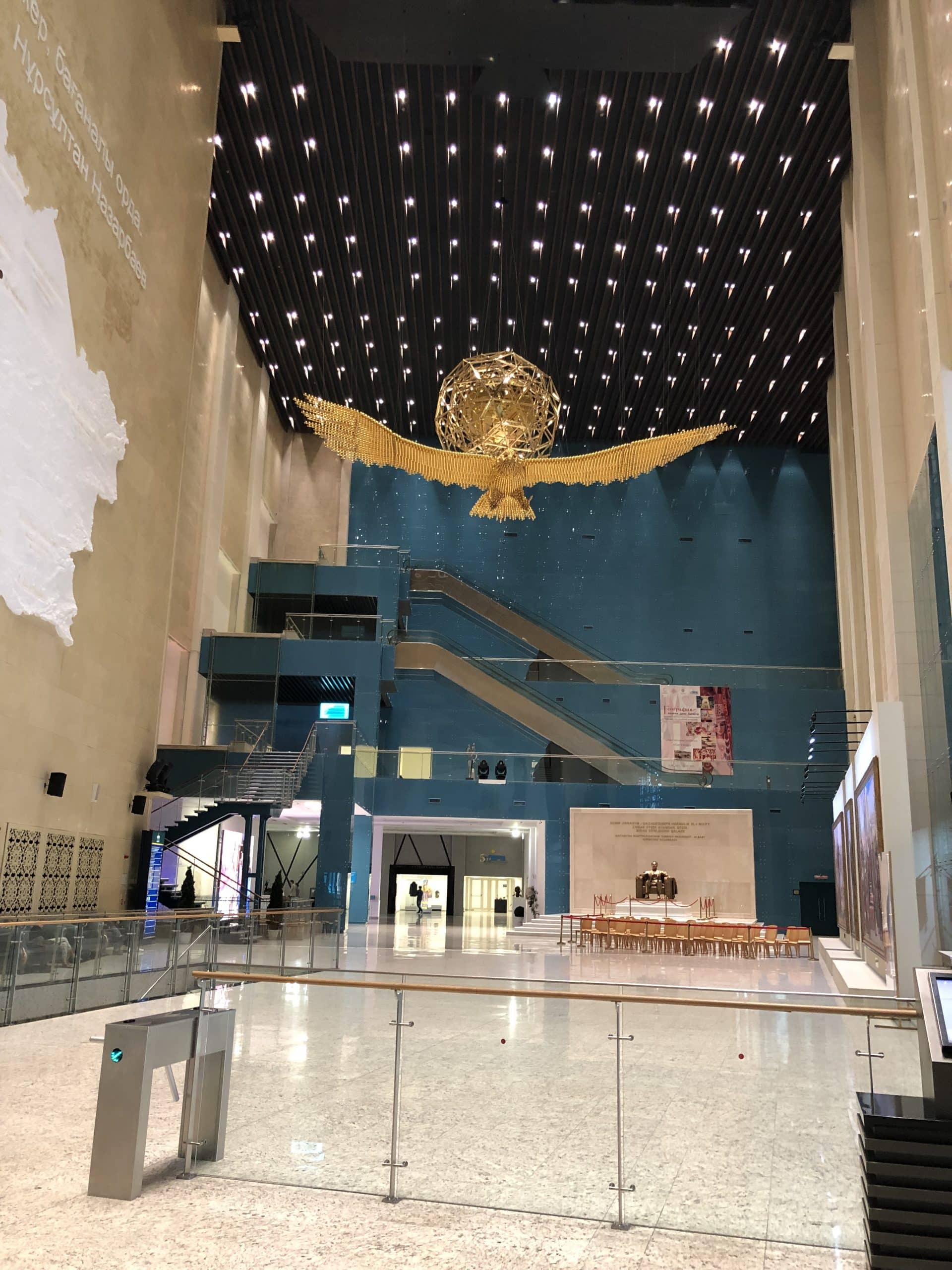
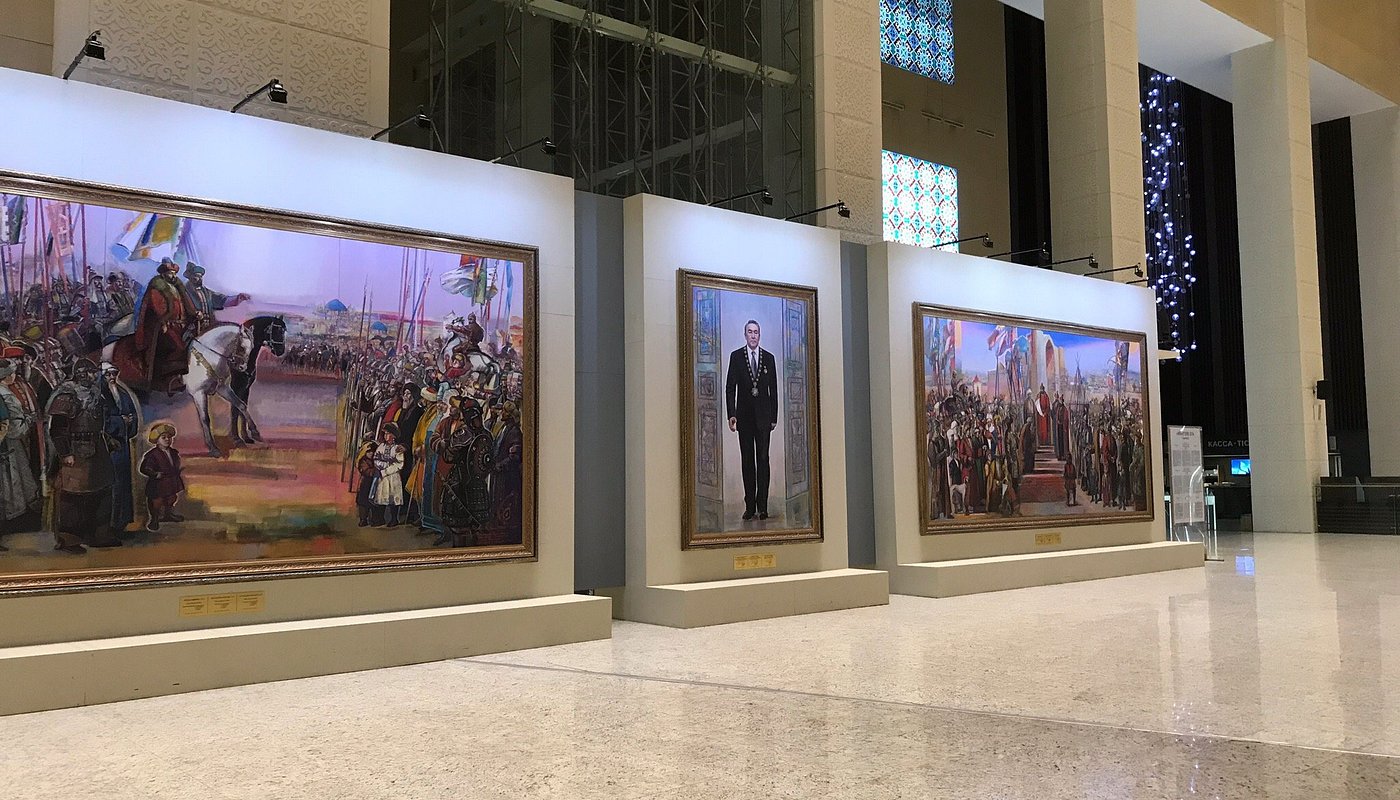
The National Museum's most immediately striking feature for many visitors is the scale of the building itself. The central atrium of the museum is a large open space rising through multiple floors, giving the building an interior sense of space unusual among Central Asian cultural institutions. The building's exterior design uses white and blue glass cladding that reflects the surrounding plaza and the sky, creating a distinctive visual appearance in Astana's governmental district.
The permanent collection's breadth is another distinctive aspect of the museum's appeal. The progression from Kazakhstan's earliest archaeological material — including the Golden Man display — through the medieval Silk Road period, the Kazakh khanate era, the Russian imperial and Soviet periods, and into contemporary Kazakhstan provides a comprehensive historical overview within a single visit. The density of the collection and the variety of artefacts across these periods makes the museum substantively different from smaller regional or thematic museums.
The museum is of the largest single museum buildings in Central Asia and provides a level of exhibition space and collection density appropriate to a national institution. The combination of the building's architectural scale, its central location on Independence Square, and the range of its collection make it a primary destination for visitors to Astana interested in Kazakhstan's history and culture.
Deep History & Culture
The National Museum was established as part of Kazakhstan's broader programme of building national cultural institutions following independence in 1991. The decision to construct a purpose-built national museum of this scale reflected the government's priority of creating institutions that could present Kazakhstan's history comprehensively from the country's own perspective, rather than relying on existing Soviet-era regional museums with their particular curatorial frameworks.
The museum's historical collections present Kazakhstan's past through several distinct periods. The pre-Islamic and early medieval archaeological period is represented through material from burial mounds and settlement sites across the Kazakh steppe and mountain regions, including ornamental artefacts demonstrating the metalworking traditions of steppe cultures. The Silk Road period receives significant attention, reflecting Kazakhstan's position as a territory through which major overland trade routes passed. Material from the Kazakh khanate period covers the consolidation and expansion of Kazakh political structures from the 15th century.
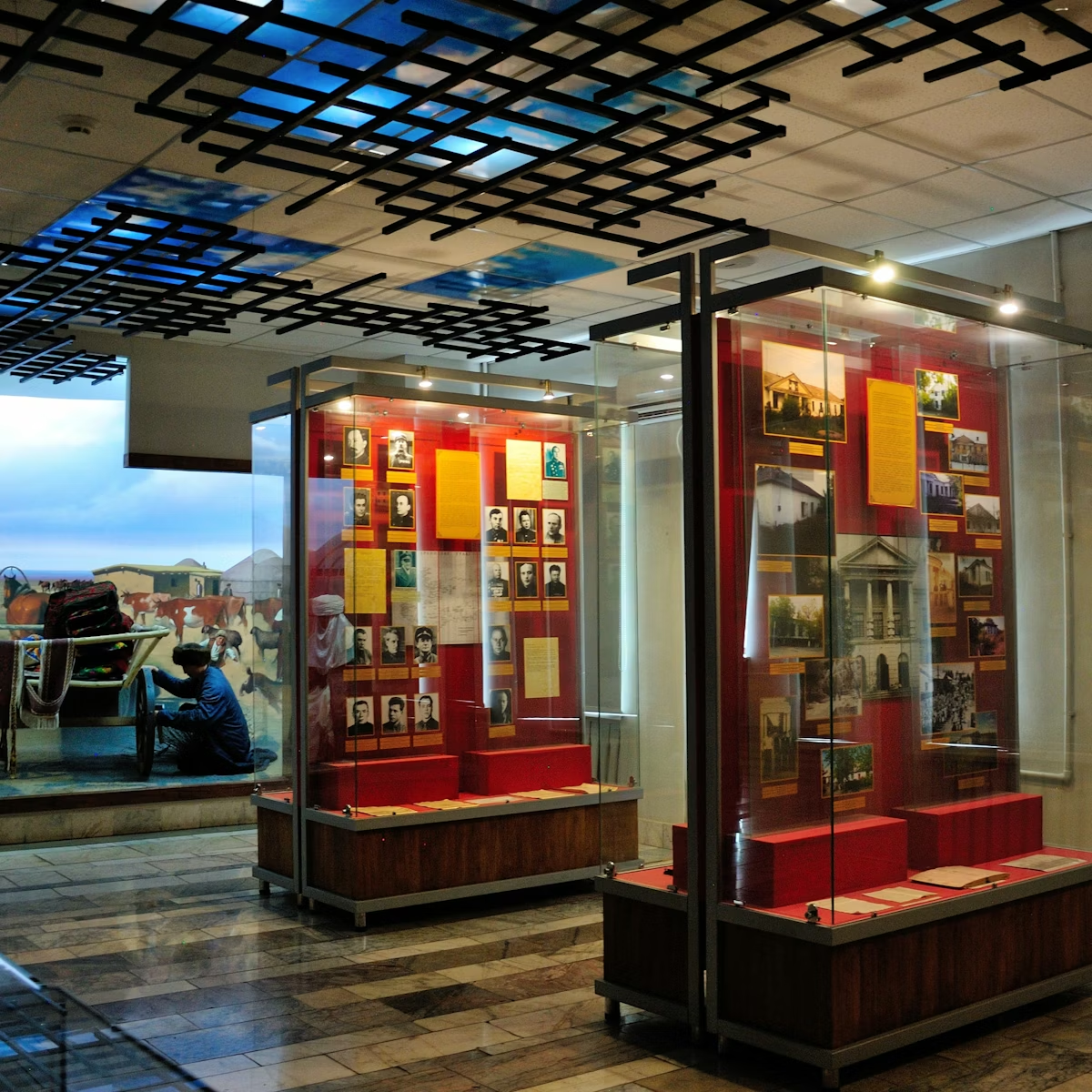
The Soviet period is represented through documentary and material culture collections covering Kazakhstan's experience of collectivisation, industrialisation, and the Second World War. The museum's treatment of this period situates Kazakhstan's Soviet experience within the broader context of Kazakh national history, emphasising continuity of identity across political systems. Post-independence development is covered in more recent sections of the permanent exhibition.
Practical Digital Logistics
The National Museum is located on Independence Square (Tauelsyzdyk Alany) in the left bank district of Astana. The museum is directly accessible by public transport, including city buses serving the left bank's main boulevards. The square and surrounding area are within comfortable walking distance of other major left bank landmarks including the Bayterek monument, the Palace of Peace and Reconciliation, and the Khan Shatyr entertainment centre.
Taxis and ride-hailing services (Yandex Go and similar platforms operate in Astana) provide convenient access from any point in the city. The museum is generally reachable in under 30 minutes from most of the city's main accommodation zones.
Entry tickets are purchased at the museum's ticket office. Admission fees apply for the permanent exhibition, with separate pricing for temporary exhibitions. The museum's opening hours are generally from 10:00 to 18:00, with possible variations on Mondays and public holidays. Group bookings and guided tours in Kazakh, Russian, and English can be arranged through the museum's administration. The museum complex also includes a café and a gift shop selling books, reproductions, and cultural items related to the collection.
Must-Do Activities
The primary activity at the National Museum is exploring the permanent exhibition, which covers Kazakhstan's history from the earliest archaeological periods to the present. The Golden Man display is the most visited individual exhibit, and visitors with an interest in pre-Islamic Eurasian steppe cultures will find the archaeological material in the relevant halls to be substantial. Allowing two to three hours for the permanent exhibition provides sufficient time to move through the main halls without rushing.
The museum periodically hosts temporary exhibitions in addition to the permanent collection. These are announced through the museum's official channels and may cover themes ranging from contemporary Kazakh art to artefacts loaned from other institutions. Checking whether a temporary exhibition is running during a planned visit is worthwhile, as these can add significantly to the content available.
The museum's café provides a convenient stop during or after a visit. The gift shop at the museum sells publications related to the collection, including illustrated catalogues and books on Kazakh history and archaeology, as well as reproduction artefacts and cultural items.
Photography of the exhibits is permitted in the main exhibition halls, though tripods and flash photography may be restricted. Visitors planning detailed documentation of the collection should check current photography rules with museum staff on arrival.
Local Flavors & Amenities
The National Museum's own café, located within the museum complex, provides food and drinks during visiting hours. The café offers a convenient option for a break during a museum visit without needing to leave the building. The museum also has a gift shop with books, catalogues, and cultural items for purchase.
The Independence Square area and the surrounding left bank district offer a range of dining options. The Khan Shatyr entertainment centre, a short walk from the museum, contains numerous cafes and restaurants serving Kazakh and international cuisine. The Nurzhol Boulevard, the main pedestrian axis of the left bank, has further dining and café options along its length.
Astana offers accommodation across all price categories, from international chain hotels to mid-range and budget options. The left bank district in particular has several large hotels adjacent to the government and cultural zone, which are convenient for visitors prioritising access to the museum and nearby attractions. Budget options are generally found in the older right bank district of the city, with access to the left bank's attractions by public transport or taxi.
Baursaks and other traditional Kazakh foods are available in restaurants across Astana serving national cuisine. The city's restaurants also offer Russian and international dishes. The weekly Astana bazaar and local markets provide fresh produce and packaged Kazakh food products for those interested in local food items.
Essential Insider Tips
Visiting the National Museum early in the day, shortly after opening, allows access to the most popular galleries — particularly the Golden Man display — before visitor numbers increase. The museum is typically busier on weekends and during school holiday periods, when groups visit in larger numbers.
Visitors who plan to cover the full permanent exhibition should allow at least two to three hours and wear comfortable footwear, as the floor area is substantial. The museum's air conditioning makes it a comfortable indoor destination during Astana's hot summer months.
Museum audio guides or guided tours provide substantially more contextual information than the exhibit labels alone. Visitors with a serious interest in Kazakhstan's history and archaeology will benefit from arranging a guided tour in advance, particularly if visiting with a group. Tours in English are available but should be confirmed with the museum administration before the visit.
The museum's gift shop stocks academic publications on Kazakh history and archaeology that are not widely available outside Kazakhstan, making it a worthwhile stop for visitors with a specialist interest. The café is functional rather than remarkable, but provides a convenient resting point during a long visit.
Sustainability & Community
The National Museum of Kazakhstan is a state institution funded through the national budget and operates under the authority of the Ministry of Culture and Information of the Republic of Kazakhstan. Its primary mission is the preservation, study, and public presentation of Kazakhstan's historical and cultural heritage, serving both educational and civic purposes for residents and visitors alike.
As the largest museum in Central Asia by floor area, the institution plays a central role in the cultural life of Astana and the country as a whole. Its collections, which span prehistoric archaeology, the era of the Kazakh khanates, the Soviet period, and the years since independence, represent a national effort to document and protect the material record of Kazakhstani civilisation. Staff conservators and researchers work continuously on the care and cataloguing of the museum's holdings.
Visitors to the museum are expected to observe standard conduct guidelines, including the respectful treatment of exhibits and facilities. The museum provides guided tours in Kazakh, Russian, and English, allowing international guests and domestic visitors to engage with the collections in their preferred language. An on-site shop offers books, reproductions, and cultural items related to the museum's collections. The café provides refreshments within the building.
The museum contributes to public education through its permanent and temporary exhibitions, school programmes, and community outreach. By presenting Kazakhstan's history within a single, accessible institution in the capital, the National Museum serves as a point of civic and cultural reference for the country's diverse population.
Key Facts
- Regional Giant
- As the largest museum in Kazakhstan and one of the largest in Central Asia, it houses the most significant artifacts of national history.
- Golden Man Exhibit
- The museum is the primary home of the original 'Golden Man' armor, the most famous archaeological discovery in the nation's history.
- Kinetic Eagle
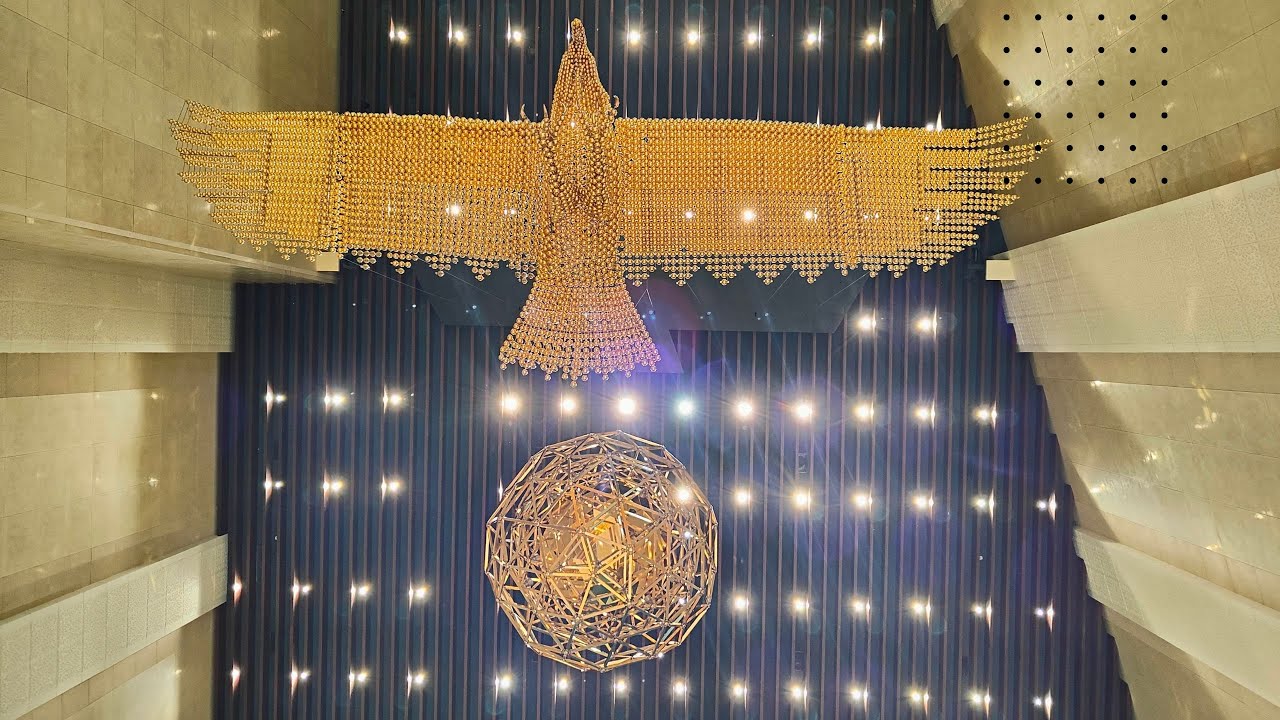
- The lobby features a massive suspended golden eagle that moves gracefully, symbolizing the freedom and verticality of the Kazakh spirit.
- Digital Immersion
- Known for its 'Hall of Astana,' the museum uses 360-degree screens and holograms to show the rapid evolution of the futuristic capital.
- Archaic Hall
- The museum features an incredibly detailed 'Hall of Ancient History' ranging from the Paleolithic era to the arrival of the Great Silk Road.
- Science Center
- Beyond exhibits, the museum functions as a center for experimental archaeology and the restoration of fragile national heritage items.
Photo Gallery
Embedded Video
National Museum Kazakhstan
Loading map...Loading map...
FAQ
Have a question?
Ask and get answers in seconds!
Discussion 0
No comments yet. Start the conversation!
Leave a Reply