Burabay National Park
The City of Future. Futuristic architecture in the steppe.
Essential Profile
The Northern Sanctuary
The Kokshetau Upland rises from the northern Kazakhstani steppe without announcement — a forested plateau of granite hills and interconnected lakes that has no equivalent for several hundred kilometers in any direction. The people who grew up in the steppe towns within driving distance of Burabay National Park know the feeling of crossing into it: the change in air quality, the appearance of pine trees, the first glint of lake water through the forest. It's the same relief, year after year, of arriving somewhere that is genuinely different from the landscape you came through.
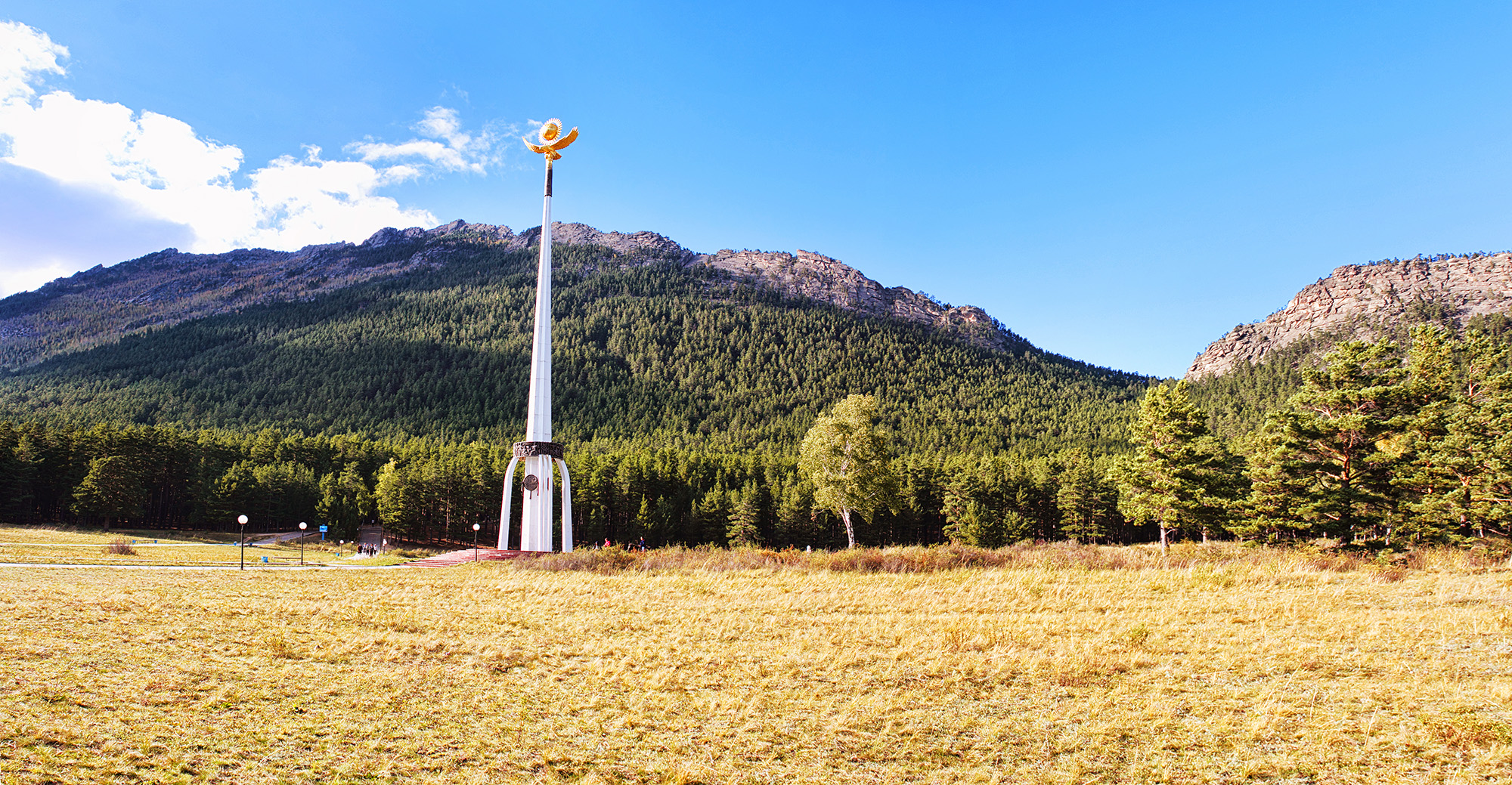
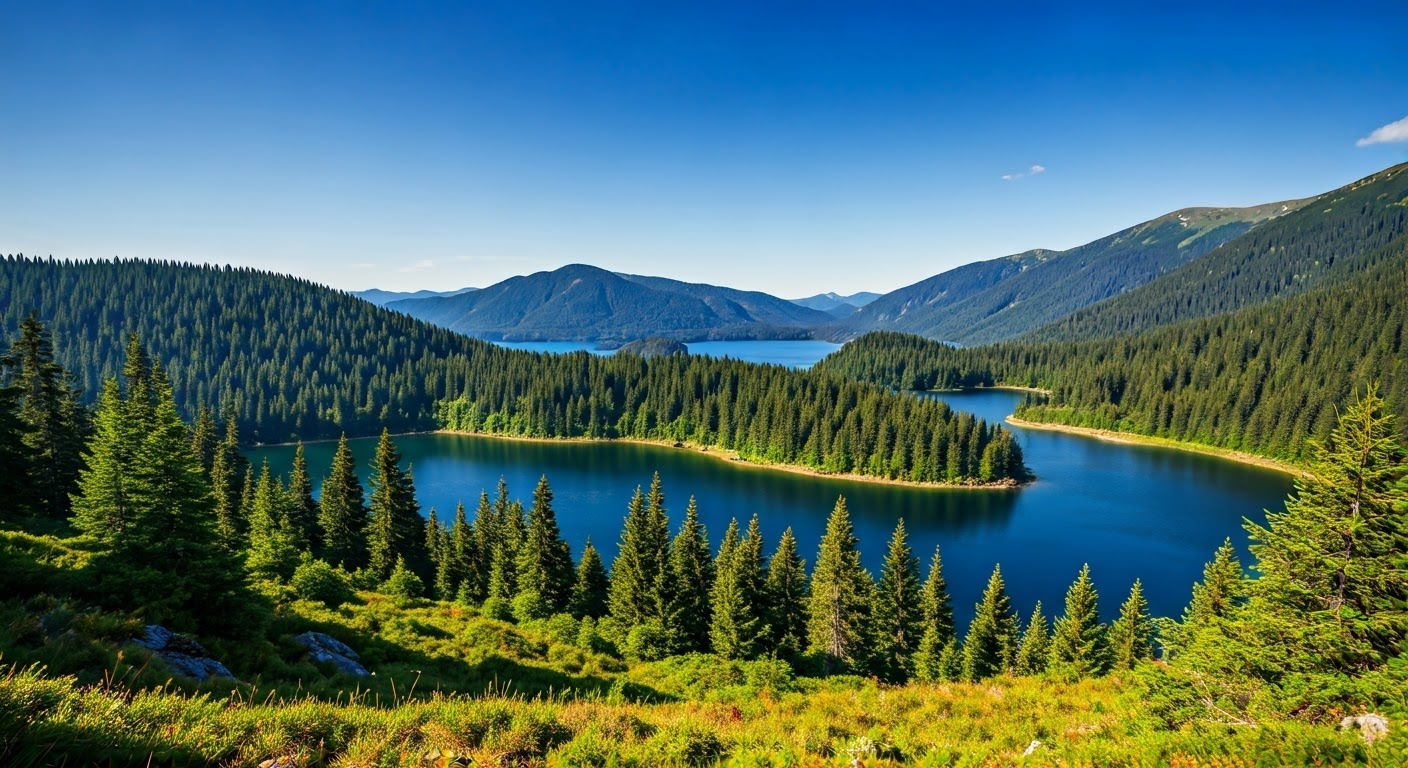
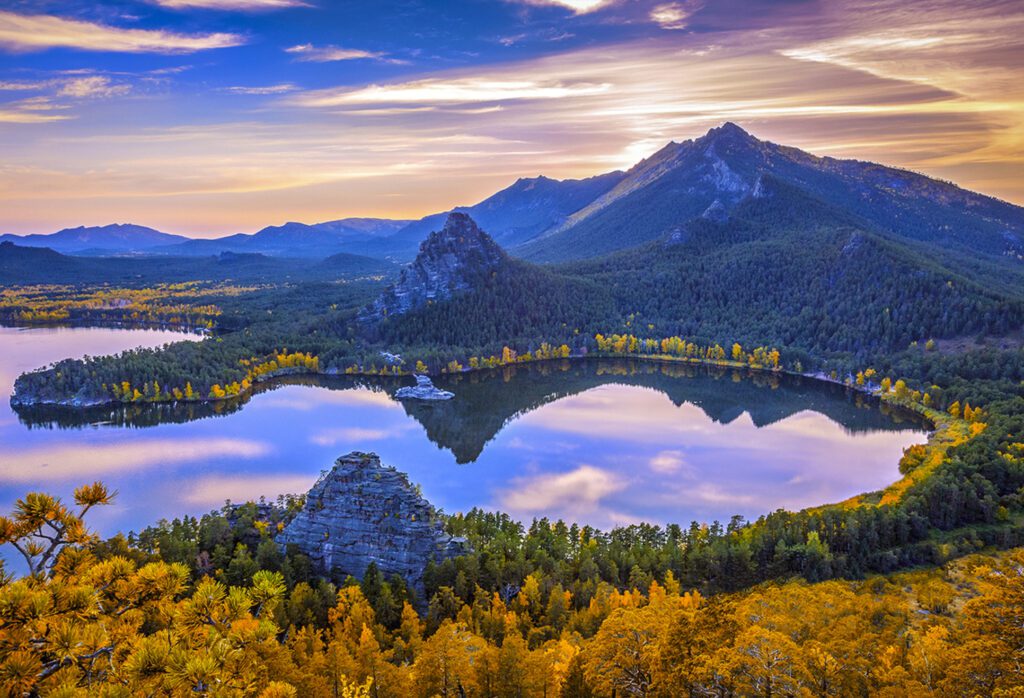
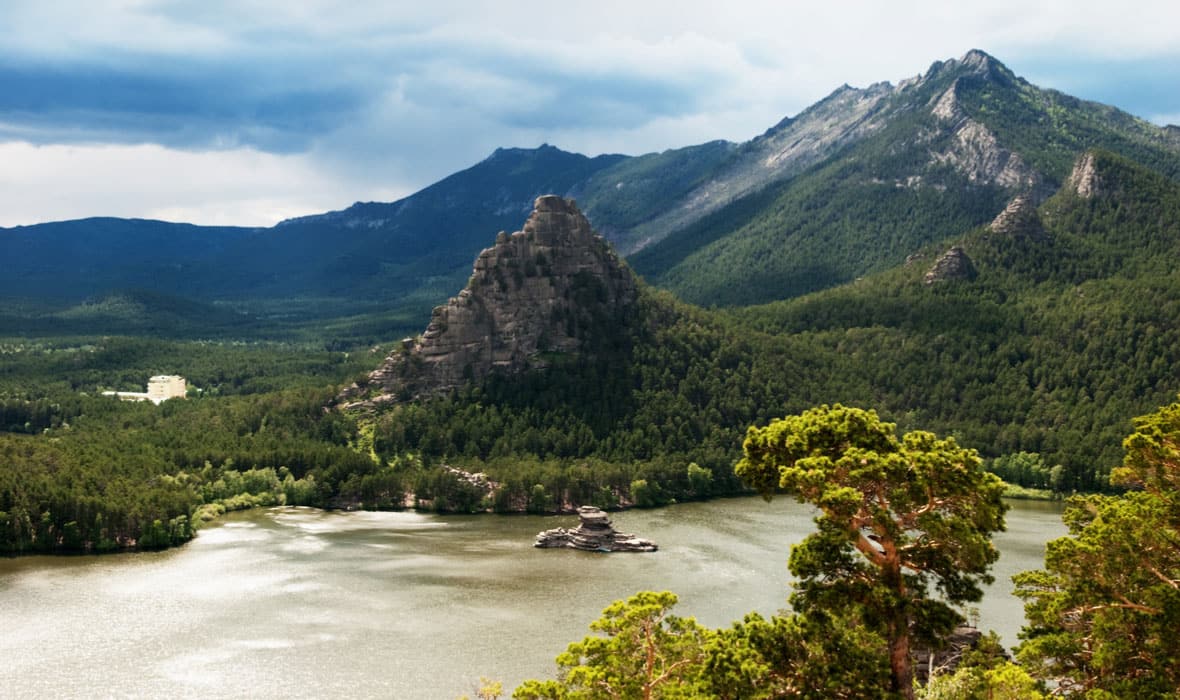
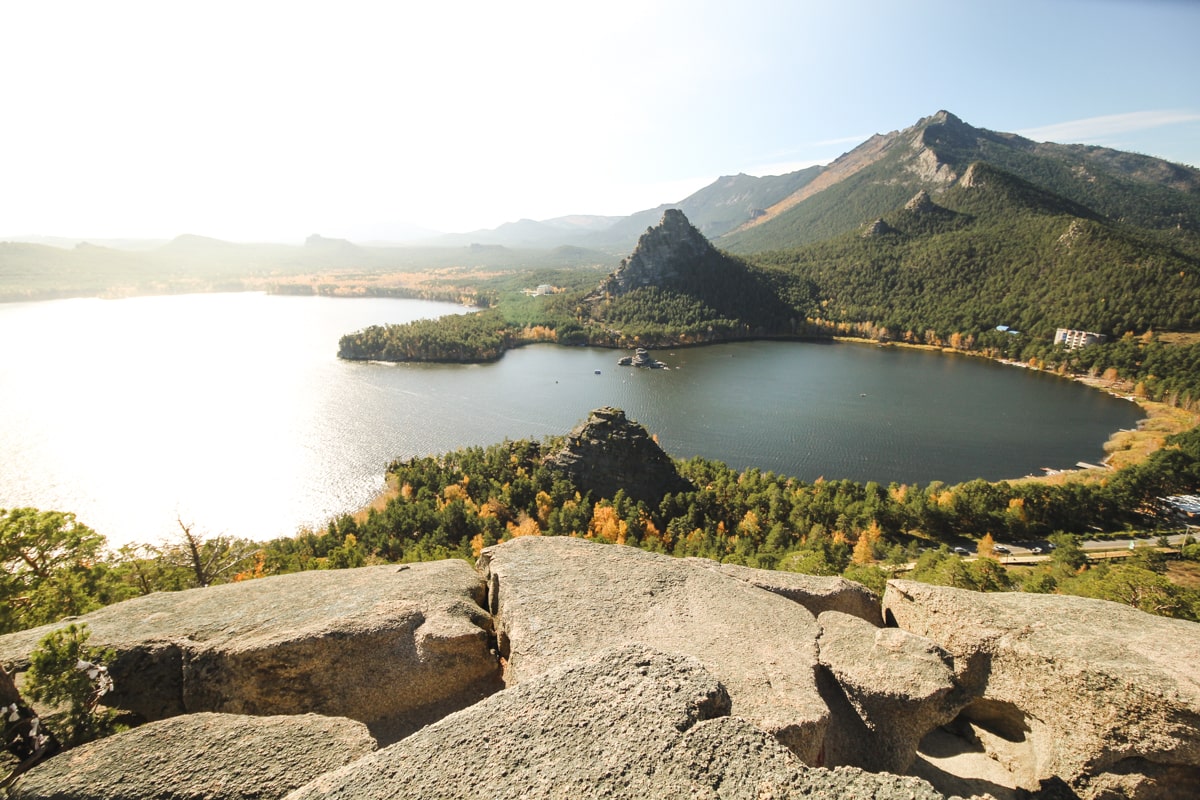
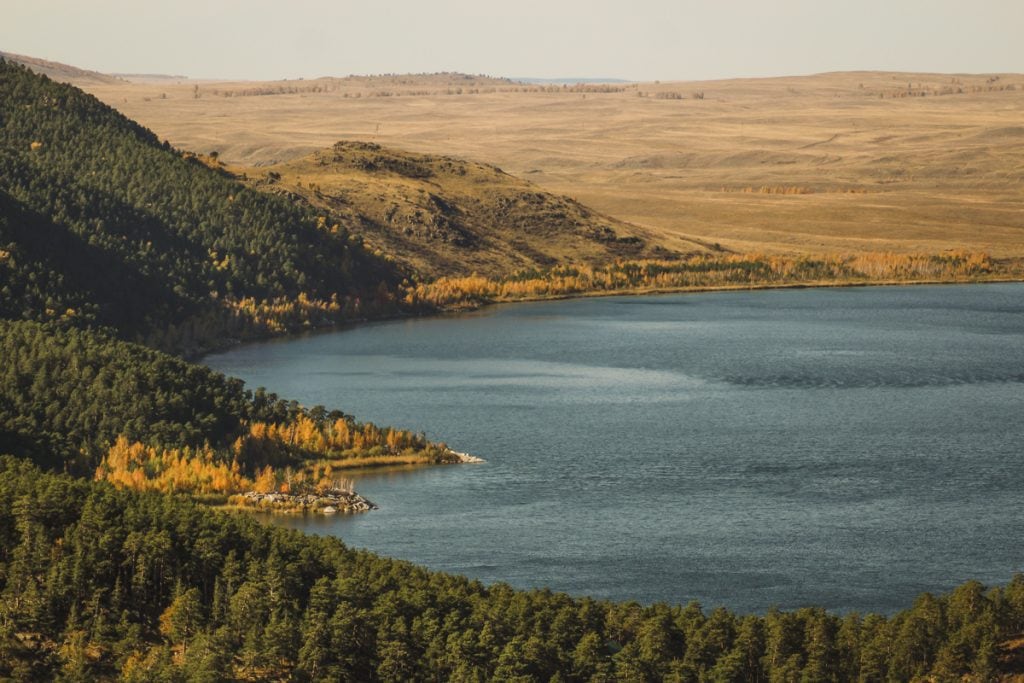
Burabay National Park covers approximately 129,000 hectares of the Kokshetau Upland in Akmola Oblast, encompassing a chain of lakes — Burabay, Bolshoye Chebachye, Maloye Chebachye, Kotyrkol, Shchuchye — connected by forest, granite ridges, and the particular microclimate that distinguishes this zone from the surrounding steppe. The park's landscape is the result of Precambrian granite basement rock, exposed by erosion over hundreds of millions of years into the formations that define the park's character: smooth domes, angular ridgelines, isolated boulders that have acquired names and stories in the Kazakh oral tradition.
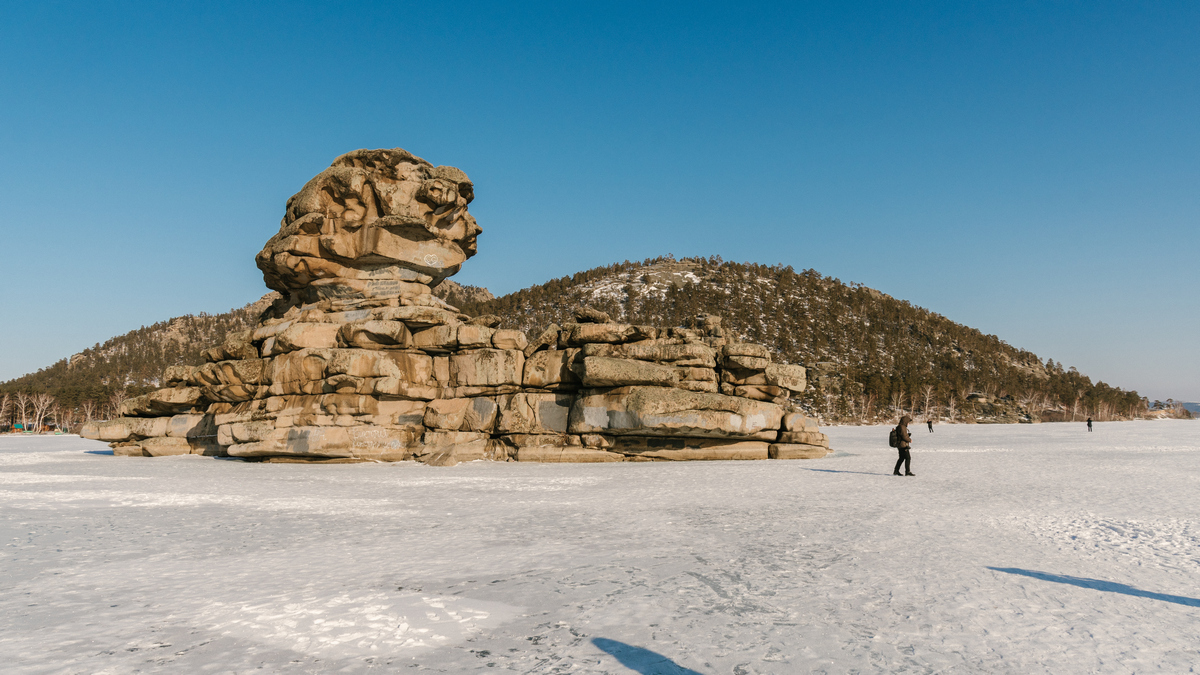
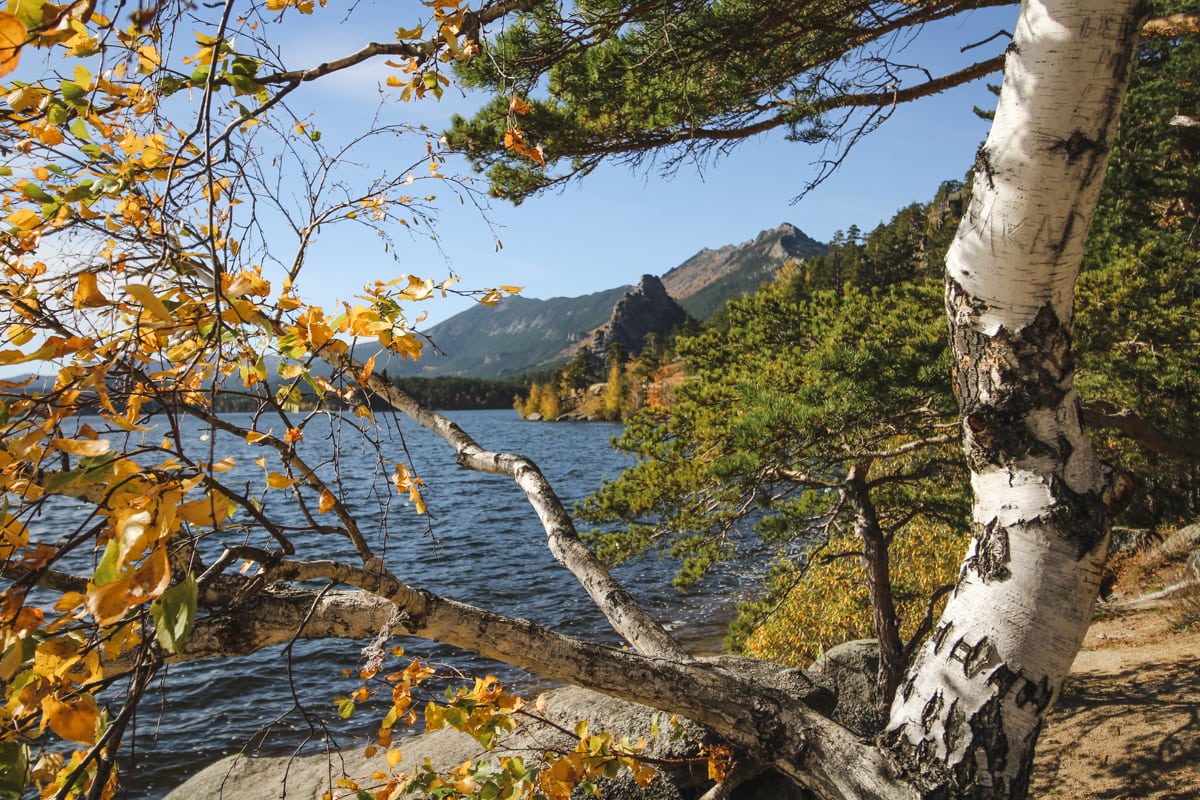
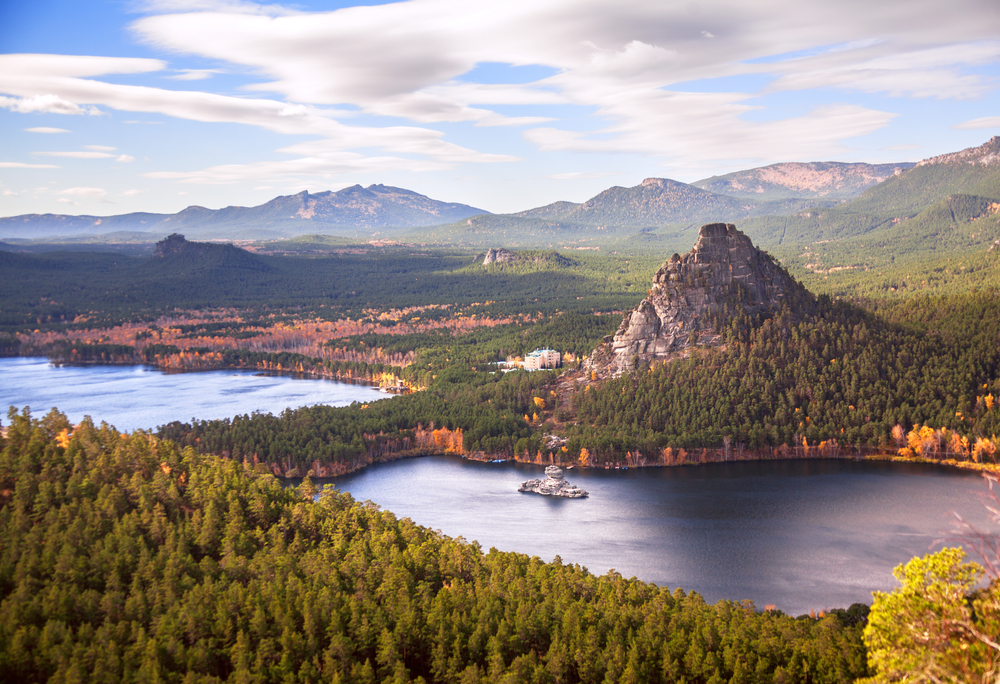
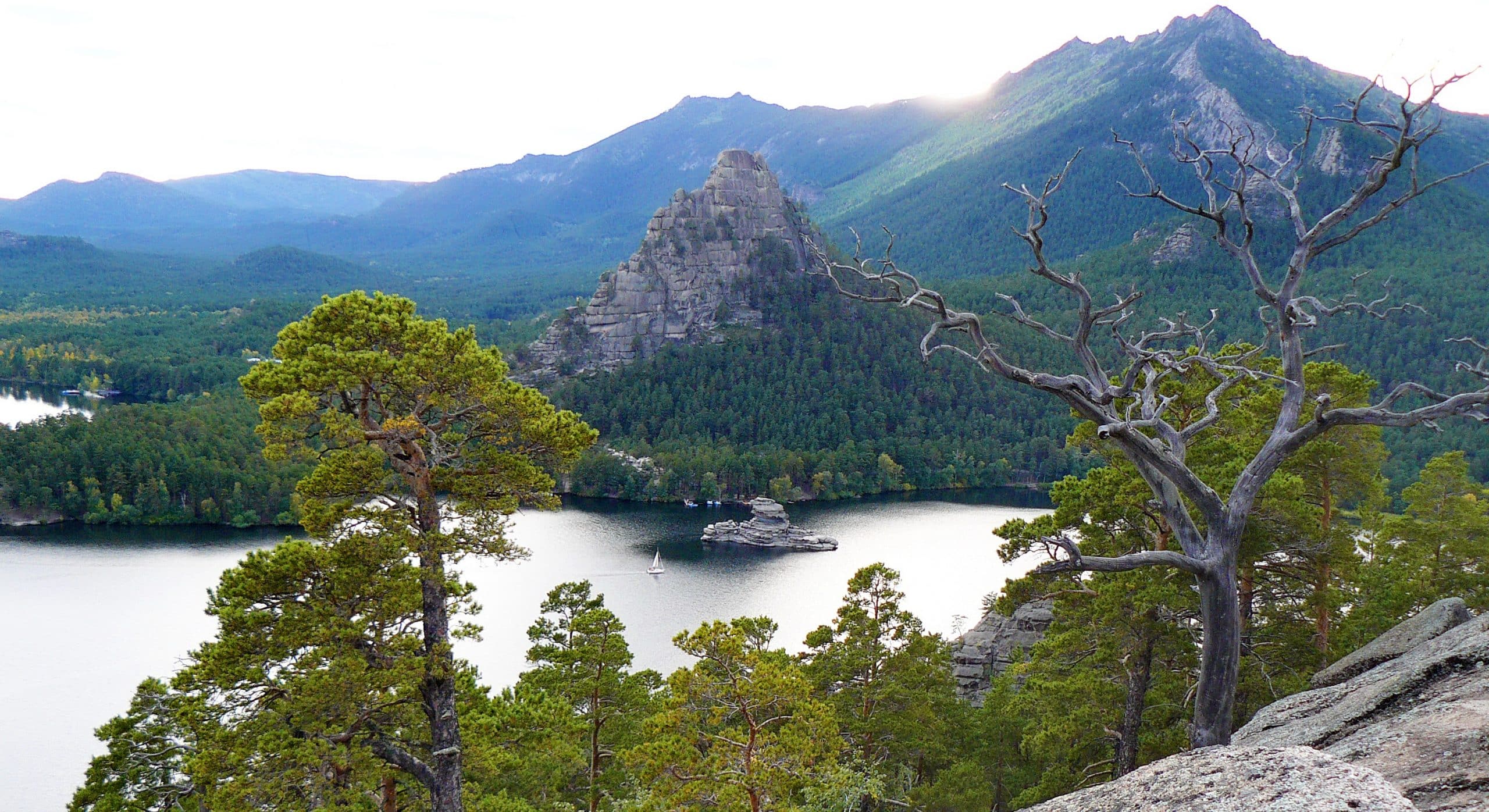
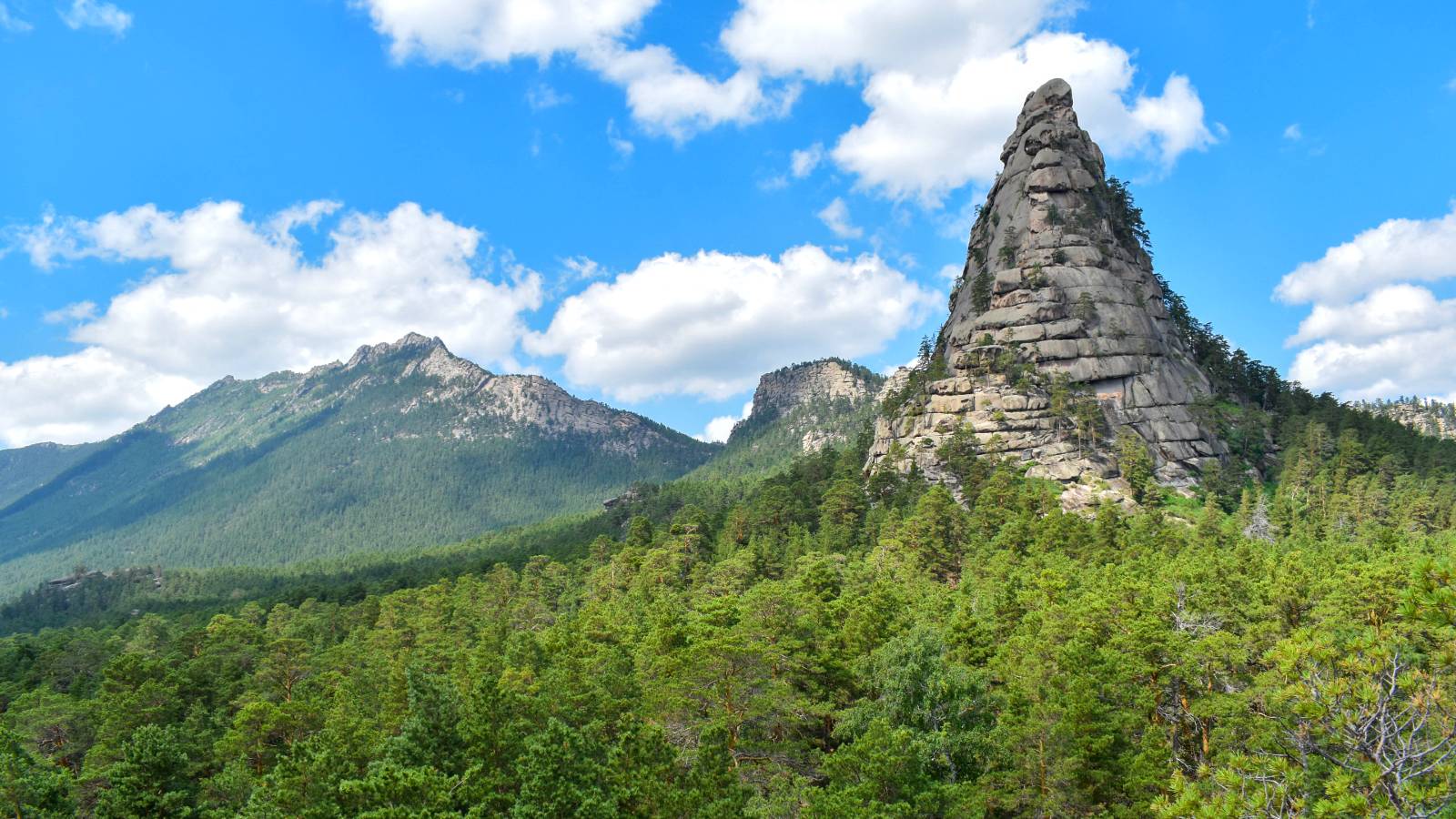
The iconic formations — Zhumbaktas (the "Sphinx"), Okjetpes, Zheke Batyr — are the park's most-photographed features, but they are individual objects in a landscape that is comprehensively remarkable. The pine and birch forest covering the hillsides gives the park its forest character; the lakes provide its visual centerpiece; the granite formations provide the sculptural punctuation. The combination, at 250 kilometers from Astana, has made Burabay the most visited nature park in Kazakhstan.
Essential Facts
Burabay National Park is located in Akmola Oblast, approximately 250 kilometers north of Astana. The main resort and visitor hub is the town of Borovoe (Burabay), accessible by train from Astana (3.5 hours) or by road (2.5–3 hours). Park entry fees apply (around 1,500 KZT per person). The park is open year-round, with peak season from June through August and the finest conditions for most visitors in September and early October.
The ‘Wow-Factor’
What the Park Does to First-Time Visitors
The scale is the first thing. Not the scale of a single lake or a single formation, but the scale of the entire park: 129,000 hectares of interconnected lakes, pine forest, and granite landscape — a territory large enough that you can spend several days moving through it and still not see all of it. The main tourist circuit covers the highlights, but the park's interior sections, accessible by hiking or on horseback, contain terrain that most visitors never reach.
The approach from Astana prepares you for nothing. The steppe road north is flat, the landscape agricultural, the sky enormous and empty. Then the granite hills appear on the horizon, and then the pine trees, and then the smell of resin and cool water replaces the smell of dry grass, and the temperature drops a few degrees, and the acoustic of the world changes from the open steppe register to the contained, forest register.
The specific Burabay wow — different from a mountain wow or a canyon wow — is the surprise of the ecosystem. Forest in the steppe. Granite formations emerging from lake surfaces. Clear water where you can see the bottom twenty meters from the shore. Wild strawberries growing on the forest floor in June. The park is not big thing; it is dozens of specific details that accumulate into a landscape that is, by northern Kazakhstani standards, improbably beautiful.
Park naturalist Bakytgul Seitkali has been leading guided walks in Burabay for eleven years. She says the moment she likes most to watch is when a first-time visitor from Astana sits down on the Okjetpes summit and looks north. "They get very quiet," she says. "The steppe is so far. The trees are so close. And they're sitting on top of something that has been here three hundred million years." The quiet is the point.
Deep History & Culture
Before the resorts and the rowboats, before the Soviet sanatoria and the presidential dachas, this land belonged to the Middle Zhuz — the great confederation of Kazakh clans whose cattle grazed the pine-edged shores of these lakes for centuries without anyone thinking to call it a park.
Historian and Kazakh language teacher Nurlan Akhmetov grew up in Shchuchinsk, the small railway city that serves as Burabay's gateway. He has spent thirty years piecing together what the land remembers. "People come here for the scenery," he told me, standing at the edge of Lake Burabay as a pair of pelicans crossed low overhead. "But the scenery has a story underneath it. Several stories. Not all of them comfortable."
The Deep Past: Saka and the Sacred Steppe
The earliest inhabitants of this landscape were the Saka — nomadic warriors of the 5th century BCE whose burial mounds still punctuate the surrounding steppe. They left no written record, but their relationship to the land was theological: the mountains were not obstacles but presences, the lakes not resources but witnesses. The granite pillar called Okjetpes — "an arrow cannot reach it" — was already ancient when the first Kazakh oral poets began attaching stories to its silhouette.
The Silk Road skirted the northern steppe rather than crossing it, but the Middle Zhuz clans maintained their own trade networks, moving horses, furs, and felt southward toward the oasis cities of Turkestan and Samarkand. This was not a backwater. This was a different kind of civilization: mobile, relational, and entirely at home in a landscape that outsiders have called, with revealing condescension, "empty."
The Kazakh Khanate and the Epic at the Shore
The Kazakh Khanate, founded in 1465 by Janibek and Kerei Khans, gave political form to what had always been cultural reality: this was Kazakh land, governed by Kazakh law, animated by the Kazakh oral tradition called jyrau. And Burabay sits near the heart of that tradition. Here, at these very shores, the tragic love epic of Kozy Korpesh and Bayan Sulu was said to have unfolded — a story of star-crossed lovers, tribal conflict, and a love so absolute it outlasted death. The grave markers the legend describes were real objects that travelers in the 18th century reported seeing. Whether the story happened here or whether Burabay became the story's home through the gravity of beauty, the result is the same: this place carries an emotional weight that predates every resort brochure by a thousand years.
Russian Annexation and What Was Lost
What the Kazakh Khanate could not survive was the Russian expansion eastward. Between 1731 and 1848, the empire absorbed the Kazakh steppe — not through invitation but through annexation, fortress by fortress, treaty by coerced treaty. The Middle Zhuz, which controlled the northern steppe including the Burabay region, formally fell under Russian control in 1731. Kazakh resistance was real and sustained. Srym Datov led uprisings in the 18th century; Kenesary Khan, last khan of the Kazakhs, fought a fifteen-year war of independence before his death in 1847. These are not footnotes. They are the main text.
The Russian Empire renamed rivers and cities, established military lines, and gradually converted the nomadic commons into administered territory. What had been seasonal grazing land for the Middle Zhuz clans became, by the late 19th century, surveyed real estate. The pine forests of Burabay attracted the empire's attention as a potential resort zone — Swiss scenery at the edge of empire, accessible by the new Siberian railway line.
Asharshylyk: The Great Hunger
The 20th century brought catastrophe. The Soviet collectivization campaign of the late 1920s and early 1930s — which destroyed the nomadic economy and forced sedentarization across the steppe — triggered the Asharshylyk, the Great Hunger of 1930–1933. Between 1.5 and 2.3 million Kazakhs died: a demographic wound of Irish Famine proportions that the Soviet state spent decades refusing to name. Communities around Burabay were among those devastated. The zheti — the seven generations of ancestral knowledge that every Kazakh was expected to carry — skipped an entire layer. Nurlan Akhmetov's own family lost half its members in those years.
The Soviet state then built its sanatoria and children's camps on this grieving land, declaring it a zone of health and recreation. The irony is not lost on anyone who has sat with it long enough.
Soviet Transformation and Post-Independence Return
Through the Soviet decades, Burabay became the holiday destination of choice for party officials and factory workers alike — a place where ideology dissolved briefly into forest air and lake water. The infrastructure from that era remains: the wide promenades, the grand resort hotels, the children's camps with their faded murals of Soviet cosmonauts.
Independence in 1991 brought a different kind of reckoning. The park was renamed Burabay National Nature Park in 2000, given protected status, and gradually returned — symbolically at least — to the Kazakh cultural imagination that had always understood these shores as sacred. The "Pride of the North," as Kazakhs call it, began to reclaim its own language. The Okjetpes rock. The Zhumbaktas sphinx. Lake Burabay itself, burabay being a word that echoes in old Kazakh verse. Names that had been Russified for seven decades slowly reasserted themselves.
What Nurlan wants visitors to understand is this: the beauty you see was here long before anyone managed it. The pelicans know nothing of resort categories. The Kozy Korpesh story predates every border. And the pine forest, growing quietly at the edge of the steppe, has been doing so since before anyone alive can remember — surviving, like the Kazakh people themselves, by being more resilient than the forces arrayed against them.
Practical Digital Logistics
Getting to Burabay from Astana takes roughly three hours — less if you're lucky with the road north from Kokshetau, more if you stop, as most people do, to photograph the moment the pine forest appears on the horizon like a mirage the steppe has decided to make real.
Getting There
The most common approach from Astana is by car or shared taxi along the A-21 highway toward Kokshetau, then north to Shchuchinsk, the small railway city that acts as Burabay's front door. The drive covers approximately 250 kilometers and takes two and a half to three hours depending on traffic and the number of times you pull over. Buses run from Astana's Sapar Bus Terminal to Shchuchinsk throughout the day; journey time is around three to four hours and tickets cost roughly 1,500–2,500 KZT. Trains also connect Astana to Shchuchinsk on the Petropavlovsk line — a pleasant option if you book a morning departure, arriving in time for lunch and an afternoon at the lake.
From Shchuchinsk, marshrutky (shared minibuses) run the 15 kilometers to the park entrance at Burabay village. A taxi from Shchuchinsk to the waterfront costs around 1,000–2,000 KZT. If you're arriving by private vehicle, GPS works reliably on this route; "Burabay National Park" in any mapping app will get you to the main gate.
Entry Fees and Permits
Entry to Burabay National Nature Park costs 1,500 KZT per person at the time of writing. Some trailheads and boat landing areas charge a small additional fee. It's worth paying at the official booth near the park entrance rather than from individuals at the roadside — the money goes to park management, and you'll get a receipt that functions as your permit for the day.
Boat rentals on Lake Burabay start at around 1,000 KZT for 30 minutes for pedal boats; guided kayak tours cost more and should be booked through the main resort area. Horse-riding operators near the lake charge per hour; negotiate before you mount.
What to Bring
The northern steppe operates on its own meteorological schedule. Summer days can push past 30°C while evenings drop sharply — bring a layer you don't mind carrying. A-liter water bottle is the minimum; two is better for any trail longer than the main waterfront loop. Sun protection matters year-round here: the latitude and the reflective quality of the lakes make midday light more intense than it looks.
Mosquitoes arrive in June and peak in July. A good repellent is worth the space in your bag. Sturdy walking shoes handle most trails; serious boots are necessary if you're attempting the full Okjetpes circuit.
Connectivity and Navigation
Mobile signal from Kazakhtelecom and Beeline covers the main resort area and the village of Burabay reliably. Signal degrades on trails deeper into the pine forest, particularly on the eastern ridge. Download offline maps before you go — Google Maps and Maps.me both have adequate coverage of the park's trail network.
Cash remains useful in Burabay. Most hotels and larger restaurants accept cards, but boat rentals, market stalls, and some trailhead operators work in KZT. The nearest ATM is in Shchuchinsk; there are a few in Burabay village but they run dry on summer weekends when Astana families arrive en masse.
Best Time to Arrive
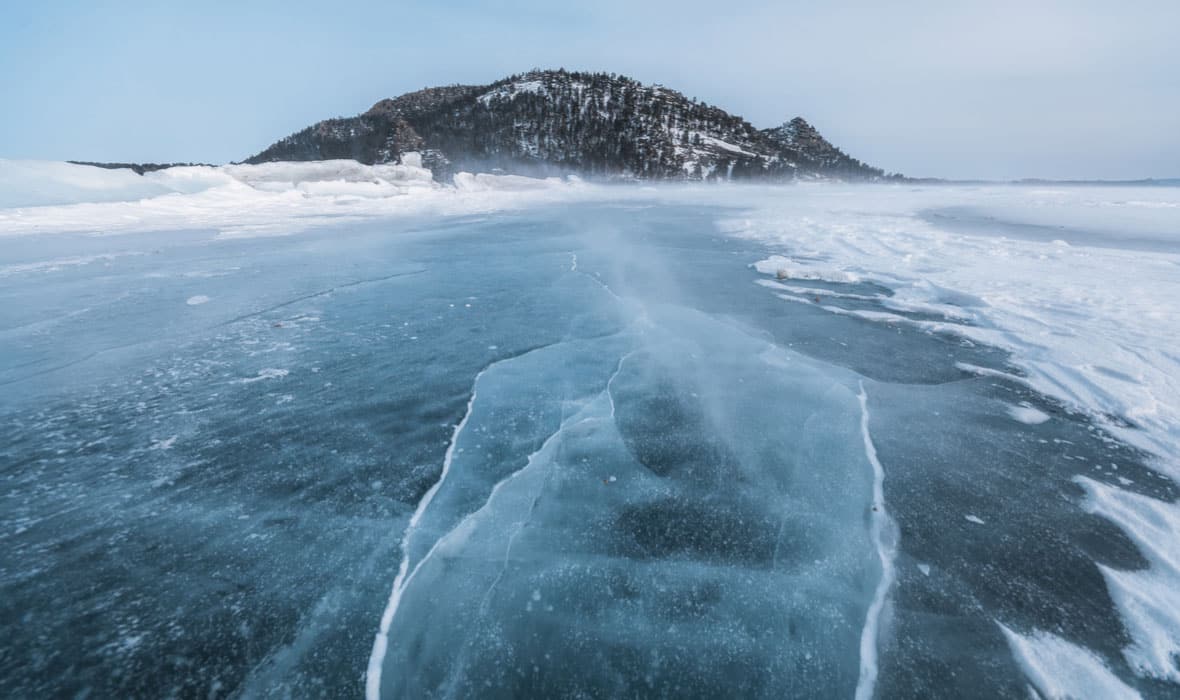
The park functions year-round, but the character changes dramatically by season. July and August bring the most visitors and the warmest swimming; book accommodation six to eight weeks in advance for a summer weekend. May and September offer quieter trails, cooler air, and a quality of light that photographers return for specifically. Winter brings cross-country skiing and a silence so complete you can hear the snow settling between the pines — if you can handle temperatures that sometimes reach -30°C overnight, it's a different Burabay entirely, and worth the effort.
Must-Do Activities
The temptation, arriving at Burabay, is to sit by the lake and do nothing. That's a legitimate plan — the view across the water to the pine-covered ridgeline earns it. But the park rewards movement, and the activities here are the kind that leave you understanding a place rather than simply having visited it.
Climb to Okjetpes
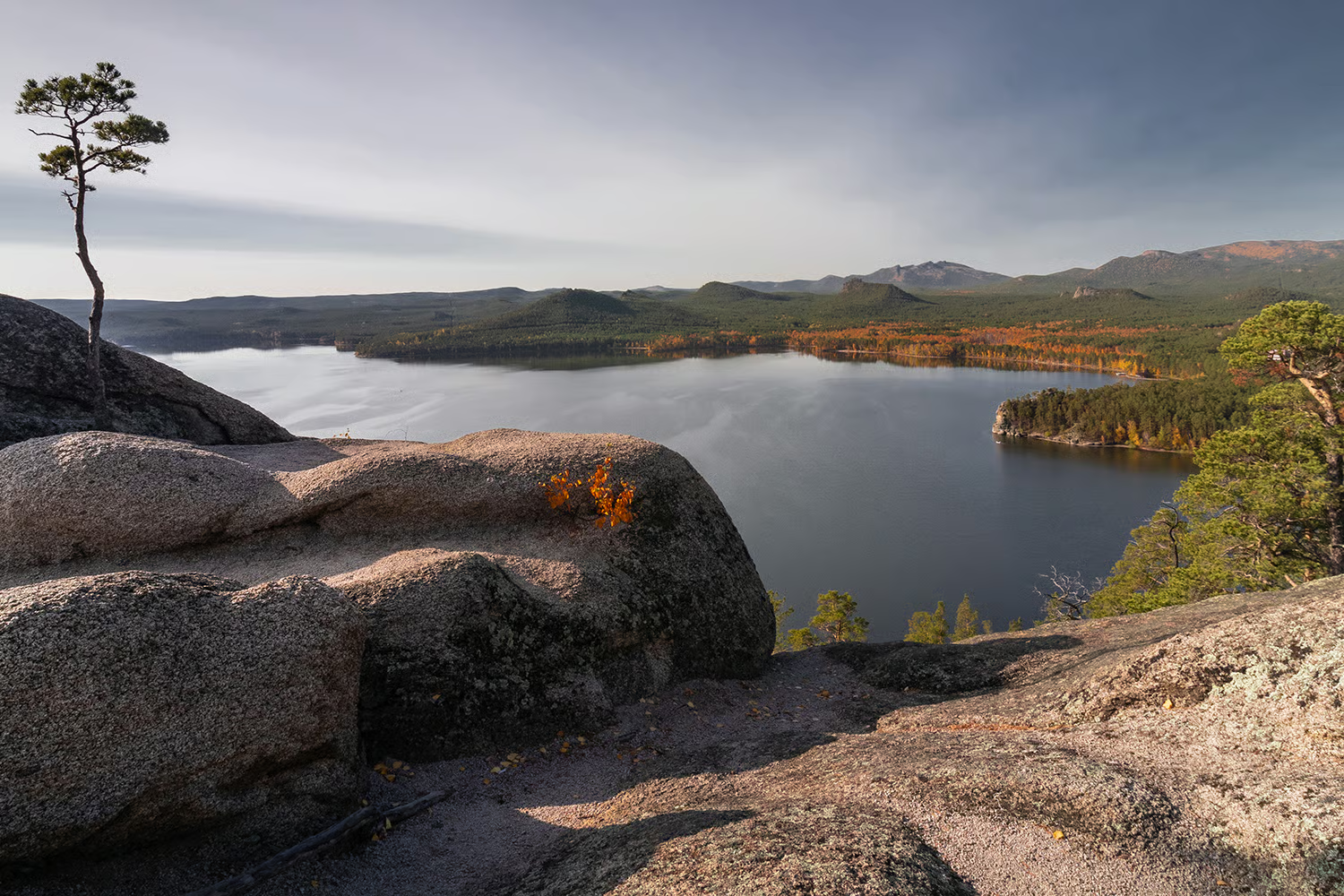
The trail to Okjetpes — the 30-meter granite pillar whose name means "an arrow cannot reach it" — begins near the northern shore of Lake Burabay and climbs steadily through mixed pine and birch forest before opening a rocky summit with views across the lake system toward the open steppe beyond. The round trip takes around two hours at a moderate pace. Go early: by mid-morning in summer the trail gets busy, and the summit light is better at dawn anyway. Standing at the top, you understand in your body what maps can suggest — that this cluster of forest and granite is genuinely alone in the middle of a vast plain, and that its isolation is part of what makes it sacred.
Kayak or Pedal Boat on Lake Burabay
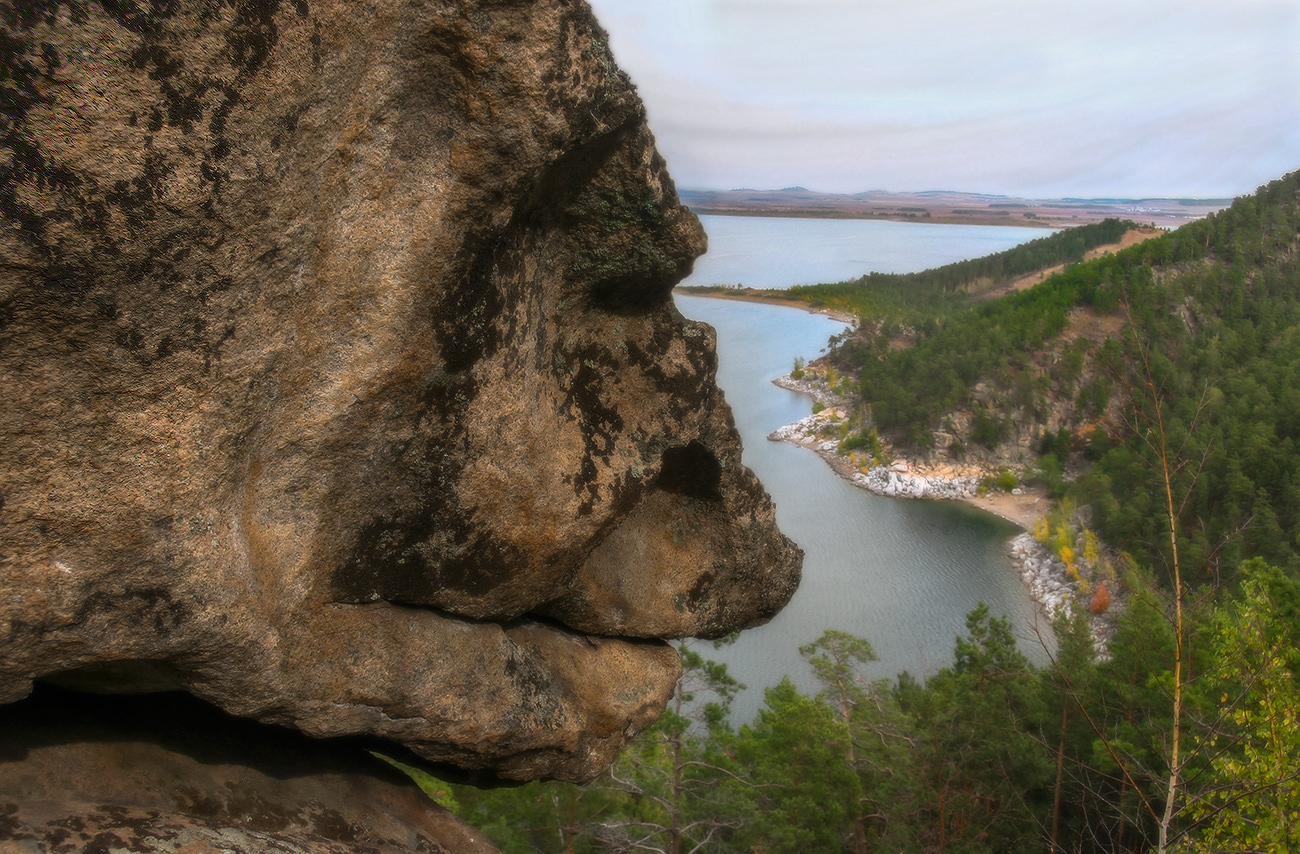
The lake is calm enough for beginners and interesting enough for anyone. Rental boats of various kinds are available from the main waterfront in the village of Burabay; paddling south gives you the classic view of the Zhumbaktas rock (the sphinx-shaped formation that looks different depending on your angle — from the water, it's unmistakably a reclining figure). Kayaks are the better option for anyone wanting to explore the lake's quieter southern bays, where the forest comes down to the water's edge and the pelicans tend to congregate in the afternoon.
Walk the Zhumbaktas Trail
The shorter lakeside path to the Zhumbaktas rock is suitable for all fitness levels and takes about 40 minutes each way from the village. The rock itself — zhumbaktas means "riddle stone" in Kazakh — is the visual anchor of the park and the subject of a legend about a beautiful woman turned to stone by grief. Whether or not you find the legend convincing, the formation is genuinely impressive up close, and the light on the granite in the late afternoon turns it amber and gold in a way that makes the story feel plausible.
Horse Riding in the Forest
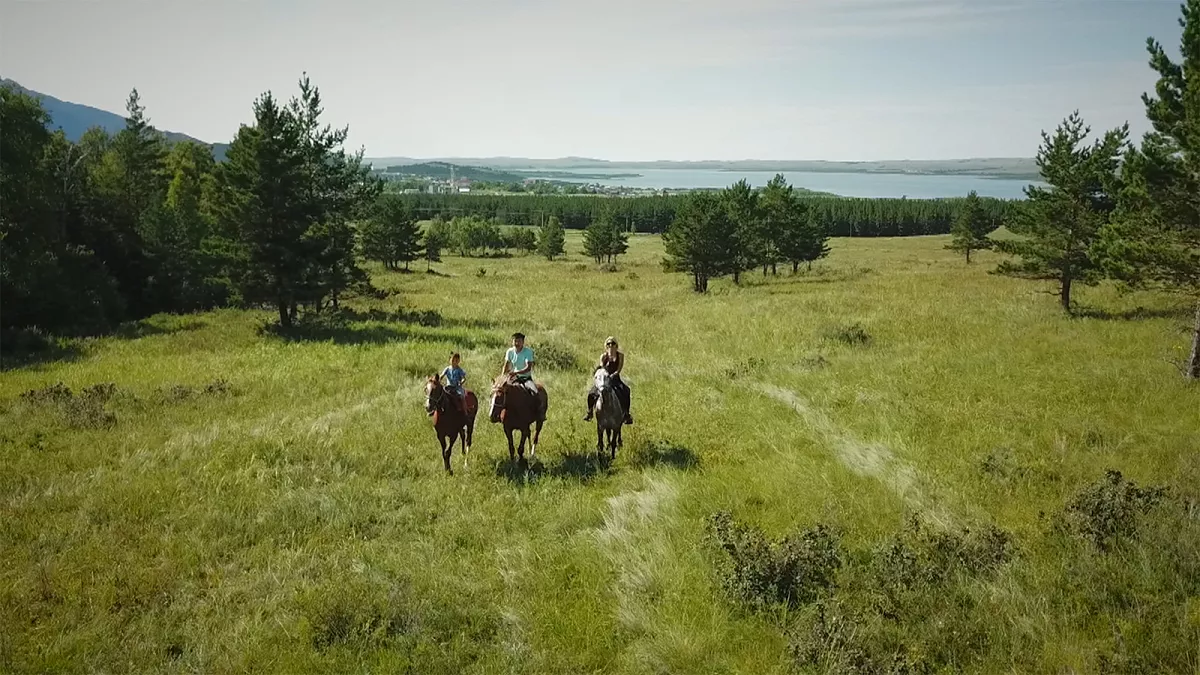
Several operators near the main park entrance offer guided horse-riding routes through the forest trails that ring the lake system. These are not the tourist trot around a paddock — the routes go deep enough into the pines to feel like genuine exploration, and a good local guide will take you through areas that most day-trippers never reach. Rides typically last to two hours; longer day rides can be arranged. For the first-time rider, this is of the gentler introductions to the saddle you'll find anywhere in Central Asia.
Swim at the Lake's Southern Beaches
The swimming beaches on the southern shore of Lake Burabay are sandy and clean, with water that warms by mid-July to a genuinely inviting temperature. Families from Astana have been spending their summers here since Soviet times, and the culture of beach life is relaxed and unpretentious — someone will almost certainly be grilling shashlyk nearby, and the smell will find you within five minutes of arrival.
Winter in the Park
Burabay in winter is a different proposition entirely. The lake freezes by December, cross-country ski tracks are groomed through the pine forest, and the silence of a snowfall here — pine boughs bending under white weight, the shore empty of pedal boats and laughter — is the kind of quiet that recalibrates something in you. Fewer visitors come, which means you'll have the Okjetpes trail to yourself. That alone is worth the cold.
Local Flavors & Amenities
At Burabay, eating is never just about eating. It's about the hour after the hike, when your legs are done and the lake is going gold and someone you met on the trail has already set up a portable grill near the waterfront. The smell of shashlyk — marinated lamb on charcoal, fat dripping into the coals — is the smell of a Kazakh summer, and at Burabay it arrives about twenty minutes after you do.
The Culture of Eating Here
Food in Burabay is social first, menu second. The Kazakh tradition of dastarkhan — the spread-cloth table that becomes an occasion in itself — finds a particular expression at this park, where families drive up from Astana with coolers and folding tables and proceed to feed not just their own party but anyone who wanders close enough to smell the cooking. Don't be surprised if strangers wave you over. Don't be surprised when the question "have you eaten?" is actually an invitation.
The cafes and restaurants along the main lakefront promenade in Burabay village serve variations on the same essential menu: beshbarmak, the flat-noodle-and-slow-cooked-meat dish that is Kazakhstan's ceremonial centerpiece; samsa, the baked pastries stuffed with lamb and that taste better eaten standing outside a bakery than anywhere with linen napkins; and baursak, the round fried dough pieces that appear at every Kazakh table as naturally as bread appears elsewhere.
Cafes and Restaurants on the Waterfront
Several permanent cafes operate along the lakefront from May through September. Prices are higher here than in Shchuchinsk or Astana — resort economics apply — but the setting compensates. Look for the smaller, family-run places rather than the larger resort restaurants: the food is better, cheaper, and you're more likely to be eating alongside the Kazakh families who have been coming here for generations rather than the organized tour groups.
Shashlik is the anchor dish everywhere. Order it early if you're arriving at lunchtime — the best cuts go fast. Fried fish from the lakes (perch and pike are common) appears on most menus and is worth ordering if it was caught that morning; ask, and someone will usually tell you honestly.
Tea as Ritual
Tea at Burabay means shalpyldaq shay — tea served in small bowls called piala, poured and repoured in a rhythm that marks the pace of conversation. In any proper Kazakh household or restaurant, your bowl will be half-filled: a full bowl means you are being hurried out. A half-full bowl means the host wants you to stay. The distinction matters. A summer afternoon by the lake, with a pot of tea and nowhere to be until evening, is of those experiences that makes you understand why people return to Burabay year after year.
Where to Stay
Accommodation ranges from the large Soviet-era resort hotels that dominate the main waterfront — renovated to varying degrees, functional, with the kind of institutional architecture that grows on you — to smaller guesthouses in Burabay village that offer a family atmosphere and a traditional Kazakh breakfast (baursak, suzbe soft cheese, honey, and tea). Budget guesthouses start around 10,000–15,000 KZT per night; mid-range hotels run 25,000–45,000 KZT. Booking well in advance is essential for July and August weekends, when Astana empties northward.
For the full experience, consider renting a small house or dacha in the forest zone rather than a hotel room — several platforms including Airbnb and local Kazakh rental apps list these, and waking up in the pines with nothing between you and the morning except birdsong is, objectively, a better use of a holiday morning than a hotel breakfast buffet.
Essential Insider Tips
A few things nobody tells you before you get here — but that will matter you arrive.
Go on a Weekday if You Can
Burabay is Kazakhstan's most visited national park, and on summer weekends it shows. The waterfront fills with families from Astana, the boat rental queues stretch long, and the lakeside cafes run out of the good stuff by noon. Arriving on a Tuesday or Wednesday in July feels like a different place — the trails quieter, the lake calmer, the sense of discovery more intact. If a weekend visit is unavoidable, get to the Okjetpes trailhead before 8 a.m. You'll have the summit to yourself.
Respect the Sacred Landscape
The rocks and lake at Burabay are not just scenic features. The Okjetpes pillar, the Zhumbaktas sphinx, the shores of the lake itself — these places carry weight in Kazakh oral tradition and spiritual life that long predates park designation. Speak quietly near the formations. Don't climb on Zhumbaktas. If you see offerings left at the base of Okjetpes — cloth tied to a tree, a small stone arrangement — leave them as you found them.
Watch the Weather
The steppe doesn't offer much warning before a thunderstorm, and the exposed granite ridges above the lake attract lightning during the electrical storms that roll through in July and August. If you're on an elevated trail and the sky in the west starts building into that particular dark grey that means business, get off the ridge. The park rangers will tell you the same thing. Check a forecast before you head out for a long hike, and carry a waterproof layer regardless of how blue the morning looks.
For Photographers
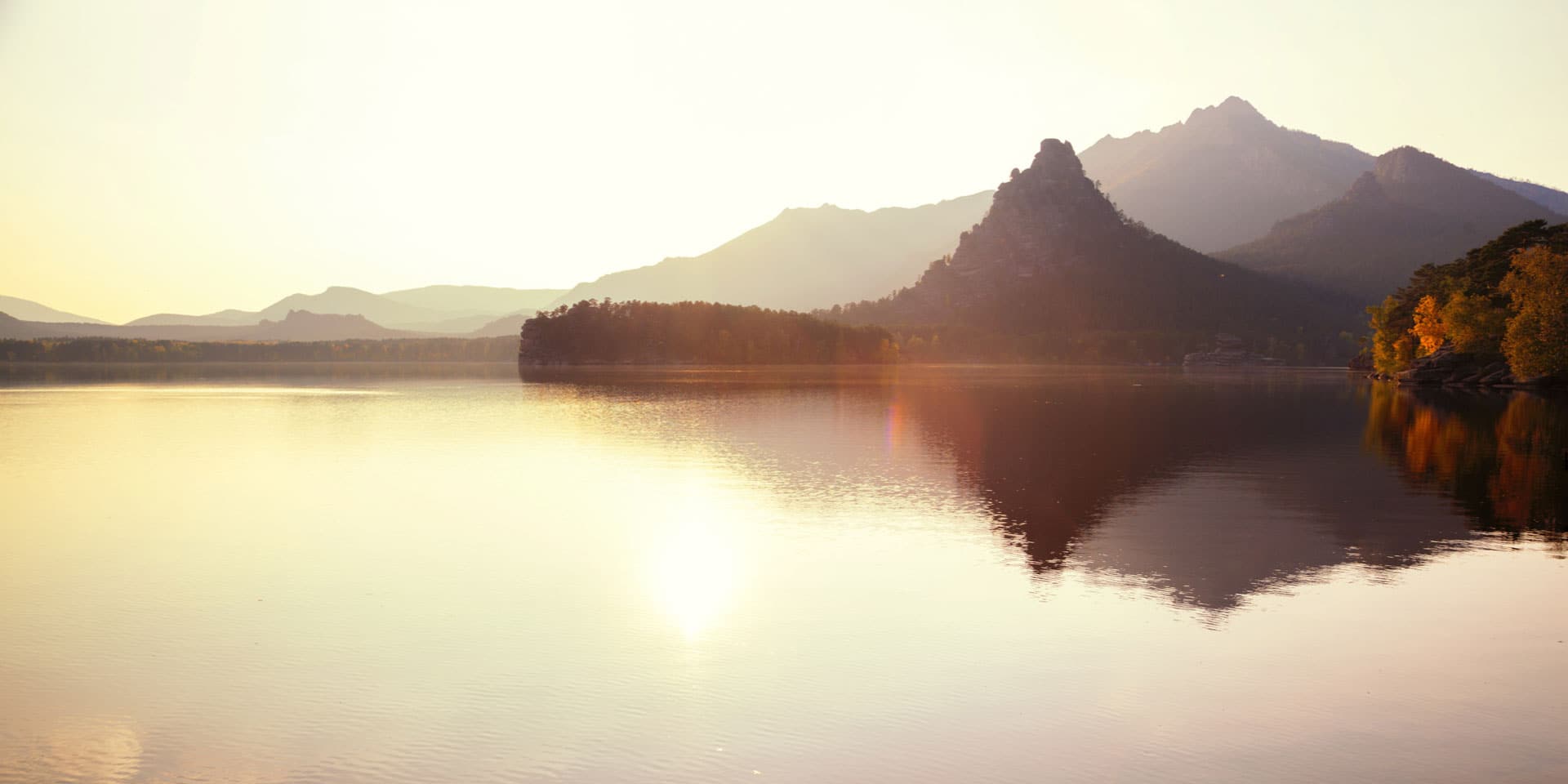
The light at Burabay is exceptional in the hour after dawn and the 45 minutes before sunset. The lake's surface in early morning is glass-still, reflecting the granite formations and pine ridgeline in a way that photographs almost make themselves. A polarizing filter cuts the midday glare off the water and recovers the blues. The pelicans tend to fly low across the lake in the late afternoon — position yourself on the southern shore with the low sun behind you.
Carry Cash Into the Park
Some trailhead operators and smaller boat-rental points don't accept cards. The horse-riding operators in particular tend to work in KZT. 5,000–10,000 KZT in small notes is enough for most day-trip expenses beyond your main accommodation.
Learn Three Words
Salam (hello), Rahmet (thank you), Kench (relax/you're welcome) — three words in Kazakh will open more conversations than you expect. Kazakh speakers are genuinely delighted when visitors make the effort, and Burabay, with its Astana families and local guides, is full of Kazakh speakers who know the park's stories and will share them if you show a little curiosity.
The Park Closes Its Gates at Night
The main entrance gates are closed from 10 p.m. to 7 a.m. If you're staying inside the park zone, this isn't an issue. If you're staying in Shchuchinsk or at a hotel outside the park boundary and planning to re-enter for an early dawn shoot, confirm the entry schedule with your accommodation the night before. Rangers are generally friendly but the gate is the gate.
One Small Piece of Advice
Burabay has a way of making visitors want to do everything immediately — the hike, the kayak, the horse ride, the sunset. Resist the urgency. The lake is patient. The pines are patient. The best experiences here come to people who slow down enough to let the place come to them.
Sustainability & Community
The pressure on Burabay is real and growing. Kazakhstan's most visited national park receives several million visitors a year, the majority arriving in a ten-week window between June and August, and the concentration of that many people into a relatively small forest-and-lake ecosystem creates problems that good signage and good intentions can partially address.
Park management and conservation organizations are working on several fronts. Trail erosion on the most popular routes — particularly the Okjetpes ascent — has accelerated as visitor numbers have climbed, and restoration work on the steeper sections requires periodic trail closures that feel inconvenient until you understand what happens to an unmanaged trail after three years of summer weekends. The "carry in, carry out" ethic is posted at every entry point; take it seriously. The pine forest is beautiful and genuinely fragile, and the distance between a clean trail and a littered comes down to individual decisions made thousands of times per day.
Supporting the Local Community
The communities that matter most to Burabay's future are the people of Shchuchinsk and Burabay village — the guides, the guesthouse owners, the boat operators, the market vendors selling pine honey and dried herbs from the forest edge. Choosing local over large is the most direct contribution a visitor can make. Eat at the family-run cafes rather than the resort restaurants. Hire a Kazakh guide who grew up in the area rather than a packaged tour from Astana. Buy the honey and the wool felt from the market rather than the souvenir shop in the hotel lobby.
Gulsim Abdrakhmanova, who runs a small guesthouse on the southern edge of Burabay village and has been guiding hikers through the park trails for fifteen years, is the kind of person who knows where the osprey nests and which section of the Okjetpes trail goes quiet by 9 a.m. Booking a day with someone like her puts money directly into the local economy and gives you access to a kind of knowledge that no itinerary can replicate.
Wildlife and the Fragile Balance
The park hosts pelicans, ospreys, and — in the deeper forest zones — deer, boar, and occasionally wolf. Keep distance from all wildlife, particularly nesting birds near the lake's southern shores in spring and early summer. Dogs are restricted in certain zones; check the current rules at the entrance gate. Campfires are permitted in designated areas, and during dry periods are prohibited entirely — the pine forest is highly flammable, and the scars from previous fires on the eastern ridge are visible and not subtle.
A Different Kind of Tourism
There is a version of Burabay tourism that takes more than it gives — that treats the forest as a backdrop and the lake as an amenity and leaves without thinking too carefully about what it has left behind. And there is another version: slower, more curious, more willing to ask questions and sit with the answers. The second version is better for the park, better for the community, and — it's worth saying — better for the traveler.
Kazakhstan is still finding its relationship with mass tourism, and Burabay is where that negotiation plays out most visibly. The place is genuinely extraordinary. The question is whether the love it receives will be the kind that sustains it or the kind that slowly diminishes it. That question gets answered visit at a time.
Key Facts
- Regional Context
- Located in the strategically significant area of Kazakhstan, BURABAY NATIONAL PARK serves as a key cultural and geographic anchor for the region.
- Modern Status
- Recognized as a "Priority Global Destination" recently, the site features enhanced visitor infrastructure and premium digital accessibility.
- Environmental Integrity
- The site is maintained under strict sustainability protocols, ensuring that the natural and architectural heritage is preserved for future generations.
- Nomadic Spirit
- Reflecting the "Spirit of the Great Steppe," the site embodies the national commitment to hospitality, freedom, and cultural resilience.
- Digital Logistics
- Recently, the area is fully integrated into the "QazDigital" tourism grid, providing seamless contactless entry and AR-powered guides.
- Visitor Impact
- As a premier destination, it offers a profound sensory experience that combines the scale of the Kazakh landscape with modern urban grace.
Photo Gallery
Embedded Video
Burabay National Park
Loading map...Loading map...
FAQ
Have a question?
Ask and get answers in seconds!
Discussion 0
No comments yet. Start the conversation!
Leave a Reply